
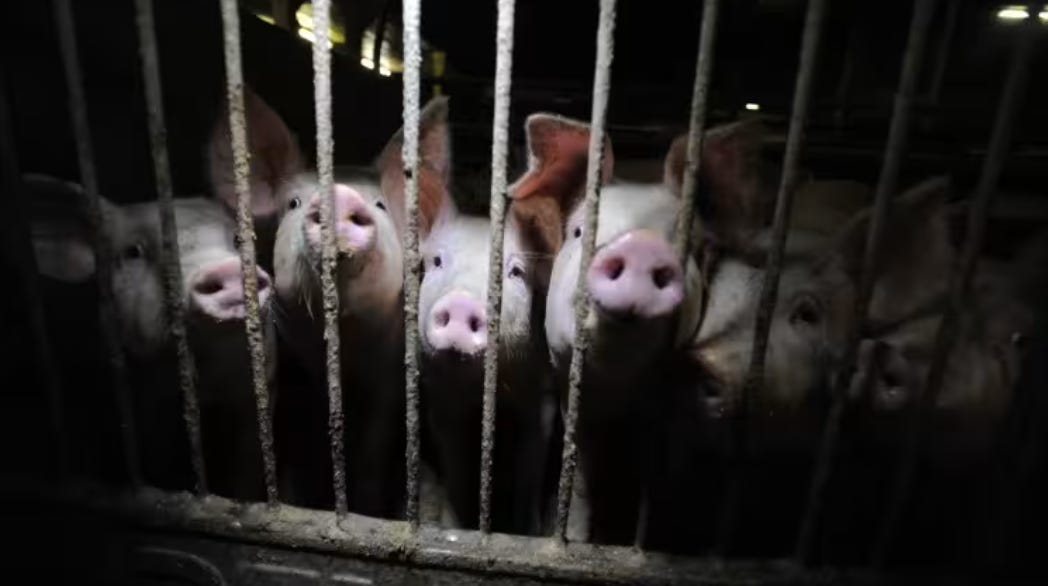
I enjoy exploring absurd, morally repulsive, and unhinged ideas. That’s why I had to speak with esteemed philosopher Dr. Nick Zangwill. Nick believes it is a moral duty to eat animals. His argument runs something like this: We have to eat the animals we’ve “constructed,” that is bred, and made to eat (unlike dogs and cats, which were not made for human consumption). We “owe it to them” to be eaten. If we don’t eat the animals, then we don’t respect them as the kind of thing they are. We respect animals only by eating them.
I eat animals, and I’m not happy about it. I struggle with the suffering they experience, yet it’s a conscious choice I’ve made. I’m also under no illusions: Animals feel pain. Animals suffer. I contribute to that suffering. When I’ve stopped eating animals, my health has suffered tremendously. So, I’ve made a choice for there to be more animal suffering so that I may be healthy and feel better than if I were a vegetarian or vegan. This is all the more reason to discuss animal suffering with Nick, as I’m quite confident my belief is morally correct.
Animal Snuff Movies
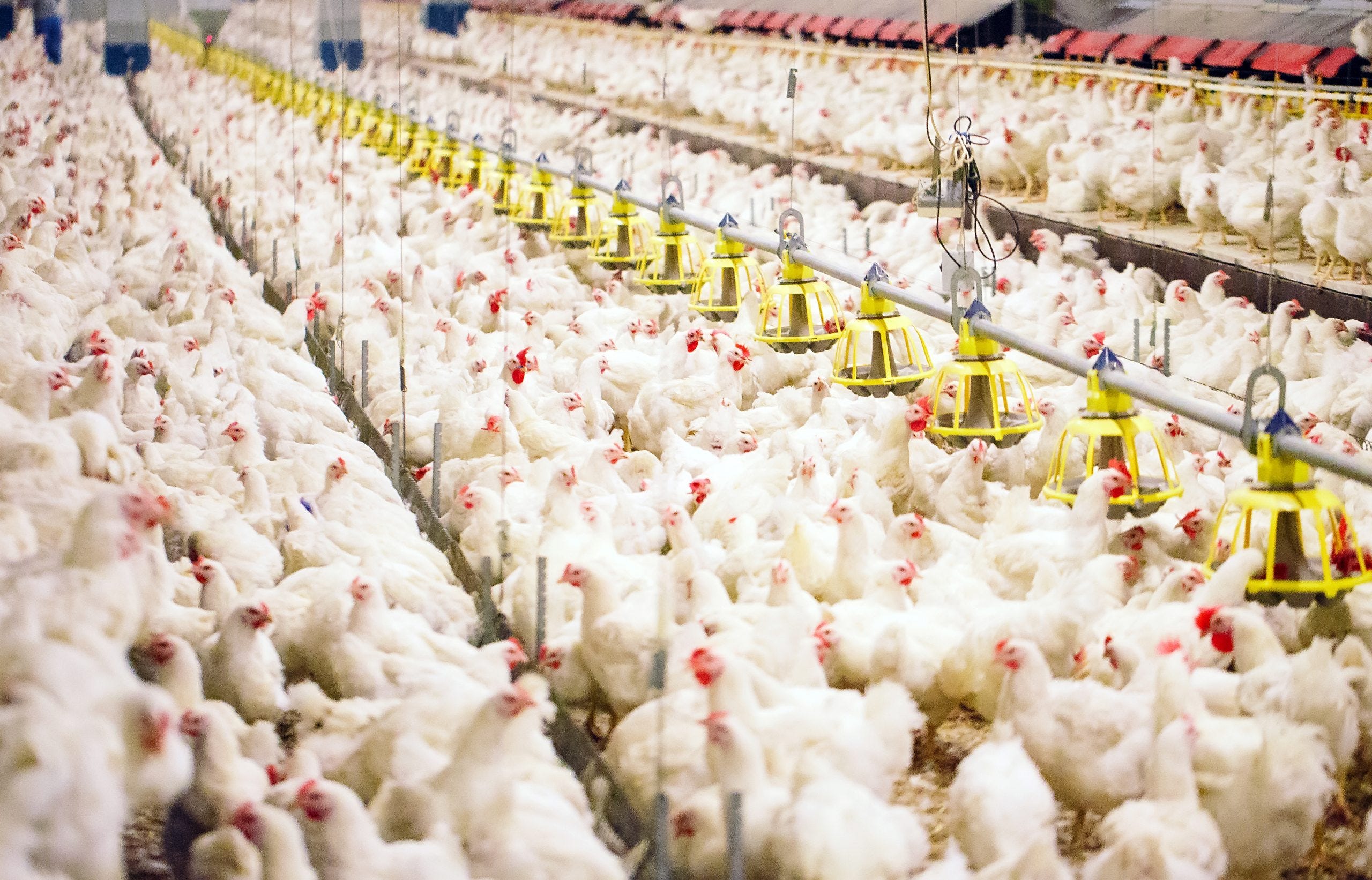
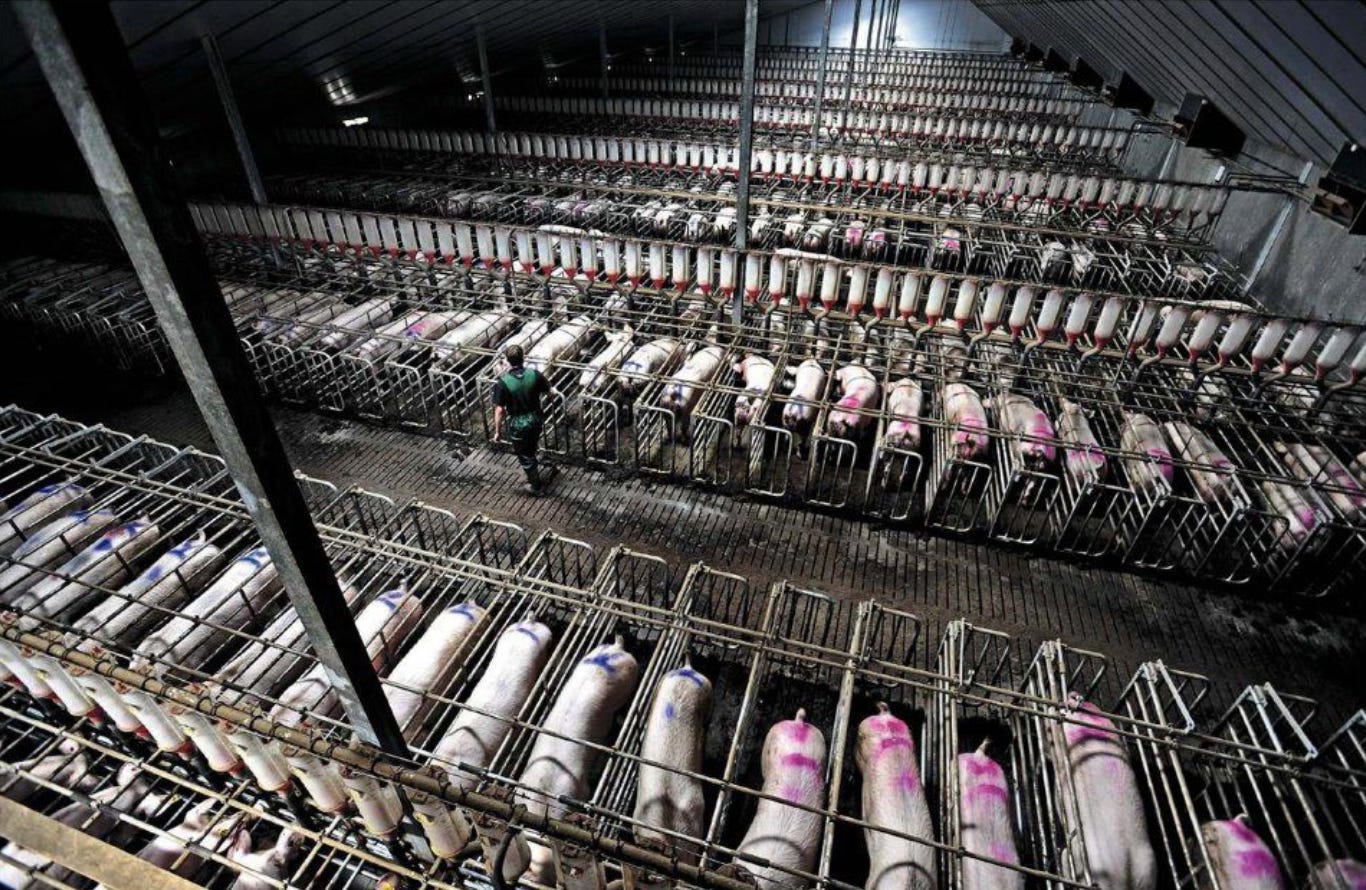
Years ago, at a university I will not name, I taught an environmental ethics class. In that class, I showed a truly horrific movie of how cows, pigs, and chickens are treated in factory farms. It was ghastly, and I’ll spare the details. My claim was that if one chose to eat meat, one should know what that entails – namely, suffering. Horrific suffering.
One day, I was summoned to my superior’s office. They told me that the film I showed made “more than one student” uncomfortable, and multiple students had complained. I responded that one of the objectives of showing the film in an environmental ethics class was to examine the morality surrounding factory farming and the ethics of eating animals. I was not advocating veganism or vegetarianism, but I was asking students to be morally aware of the consequences of their choices. That, I believe, is one of the points of an ethics class.
My superior told me that the university is “not in the business of making students feel uncomfortable” and that I was likely in violation of some unspecified rule if I showed the film again. Rather than engage in a conversation about the purpose of an ethics class or argue that some discomfort is usually experienced when honestly examining one’s moral beliefs and actions, I responded by stating that I understood and that I would not show the film again. I did not, however, apologize. (If it was a university rule, after all, then I should either follow the rule or resign.)
It’s worth noting that the two students who thanked me after showing the film were vegan and one vegetarian. If I were to guess, I’d guess that the meat-eaters filed formal complaints because they were uncomfortable with the consequences of their actions.
Where Were Animal Rights Activists?
After countless hours of trying, my team and I could not find even one vegan or vegetarian activism to join Nick and me for a discussion about animal rights. (As I’ve mentioned 10,000 times before, this is a perennial problem encountered by everyone in the conversation space.) If an animal rights activist were to join us, I’d recommend a line of questioning akin to this: Imagine two universes, one with cruelty and one without. Wouldn’t it be better to live in a universe without cruelty?
And that’s exactly what I asked Nick. He responded by echoing Nietzsche and stating that a world without cruelty would also be a world without grief. “Would the world without grief be a better world? No, it wouldn’t. It would be a much worse world, because only in a world with love would there be grief.” Indeed, Nietzsche consistently portrays a world without grief or suffering as undesirable: meaningless, contemptible, and antithetical to human potential. Nietzsche encouraged embracing pain as a catalyst for meaning, rather than seeking its eradication.
This threw me for somewhat of a loop, as it’s unclear why one would want to do a bad thing to have a morally and socially appropriate response to the wrongdoing. (Aristotle writes this about shame. We shouldn’t commit a bad act to feel shame. We should just not commit bad acts.)
I want to add that Nick was firm in his argument that the animals we eat should have decent lives. The problem with animal activists, he argues, is that you can’t just focus on the last five minutes of an animal’s life. What’s occurred in their lives before that matters.
Cruelty or Callousness?
“The limits of my language are the limits of my world.” — Wittgenstein
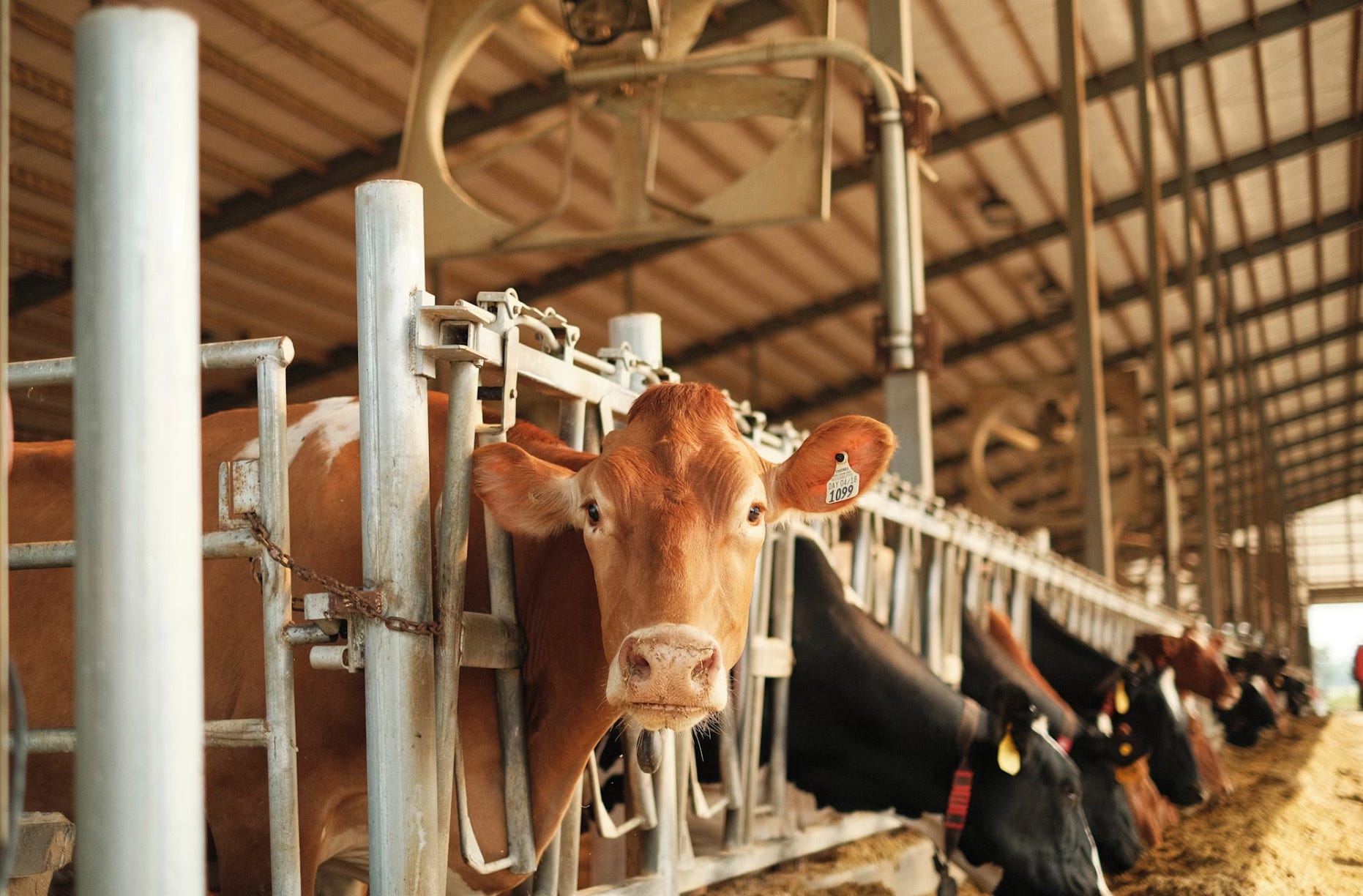
Nick didn’t accept my characterization of the treatment of animals as cruel. Cruelty, he countered, implies something about the motivation of the people doing the action. Their treatment was best characterized as callous.
Is industrial farming callous or cruel? Or is this a distinction without a difference? It’s not mere semantics. In cruelty, you’re aiming at causing pain and suffering. Callousness implies you don’t care about suffering; cruelty means you do and that you’re attempting to cause it. I think Nick is largely correct in that the abhorrent treatment of animals is better characterized as callousness, albeit grotesque callousness and even deranged moral indifference.
There’s an important meta-point to be made here, and that’s that the words you use matter. We are so accustomed to capriciously throwing around words that we are trapped in sloppy ways of thinking.
I’ll no longer dwell on words or the treatment of animals. I’ll leave it to you to decide if his argument holds up.
I asked Nick to contribute to the Substack, and here's what he had to say:
By Nick Zangwill
Our conversation began with my robust defence of carnivorism and then branched out to other topics. One recurring theme is the notion of rights. I advocate a minimal negative notion of rights, essentially the right to non-interference. This stems from something unique to humans: our rational self-consciousness, as seen in our ability to make reasoned decisions.
However, the concept of rights has been horribly abused, particularly with regard to positive rights. Positive rights require others to act on behalf of the rights-holder. These are often invoked to support dubious causes, such as undemocratic regimes, or by individuals who believe they have the right to make demands or exert control over others. This tendency is also evident in everyday public interactions. For example, a parent at your children’s school or a neighbor on your block who insists on their rights is often just a bully seeking to dominate others. Talk of positive rights is frequently a tool for coercion.
Another key concept is goodness, which, though central, differs from rights. Having rights includes the freedom to make mistakes and pursue what may not be good. Moral life is complex, and we must distinguish between rights and the good to avoid oversimplifying it.
Non-human animals, particularly those we breed for food (which we can generalize about to some extent), lack the negative rights that humans possess.Nonetheless, some things are good for animals and some are bad; some align with their interests, others do not. This straightforward view supports a defense of carnivorism, where a practice benefits animals by providing them with existence and a sufficient quality of life.
Now, what about aspiring immigrants (often called ‘asylum seekers’)? We cannot eat them! Why? Because they have negative rights. They belong to a different category from animals.Human beings also have positive rights, but only as members of specific communities, such as nations or families. Having these rights entitles us to assistance from others in the group. However, without belonging to such a community or family, these rights do not apply. In particular, there is no abstract universal positive right to be helped that burdens everyone else. There is, however, a universal negative right: others should not interfere with you, and you should not interfere with them. In short, we should leave each other alone.
Many people appeal to what they see as universally shared positive rights. This is once again the tactic of the bully. Intellectuals who promote borderless internationalism are both misguided and culpable. Those outside a community lack a positive claim on those inside. Therefore, when it comes to aspiring immigrants, our attitudes and decisions may be guided primarily by what is good for those within the nation’s circle.
Comments
Nothing yet. Say the first thing.
Sign in to join the conversation.