
A quick note before we begin:
If this piece resonates with you, I’d love if you’d leave a comment, share it, or restack it so more people can find Body-Positive Home.
And if you’re in a season where you’re able to support financially, upgrading your subscription helps make this work sustainable, and gives you access to the full library of workshops (live + recorded), downloads, and all paid subscriber content.

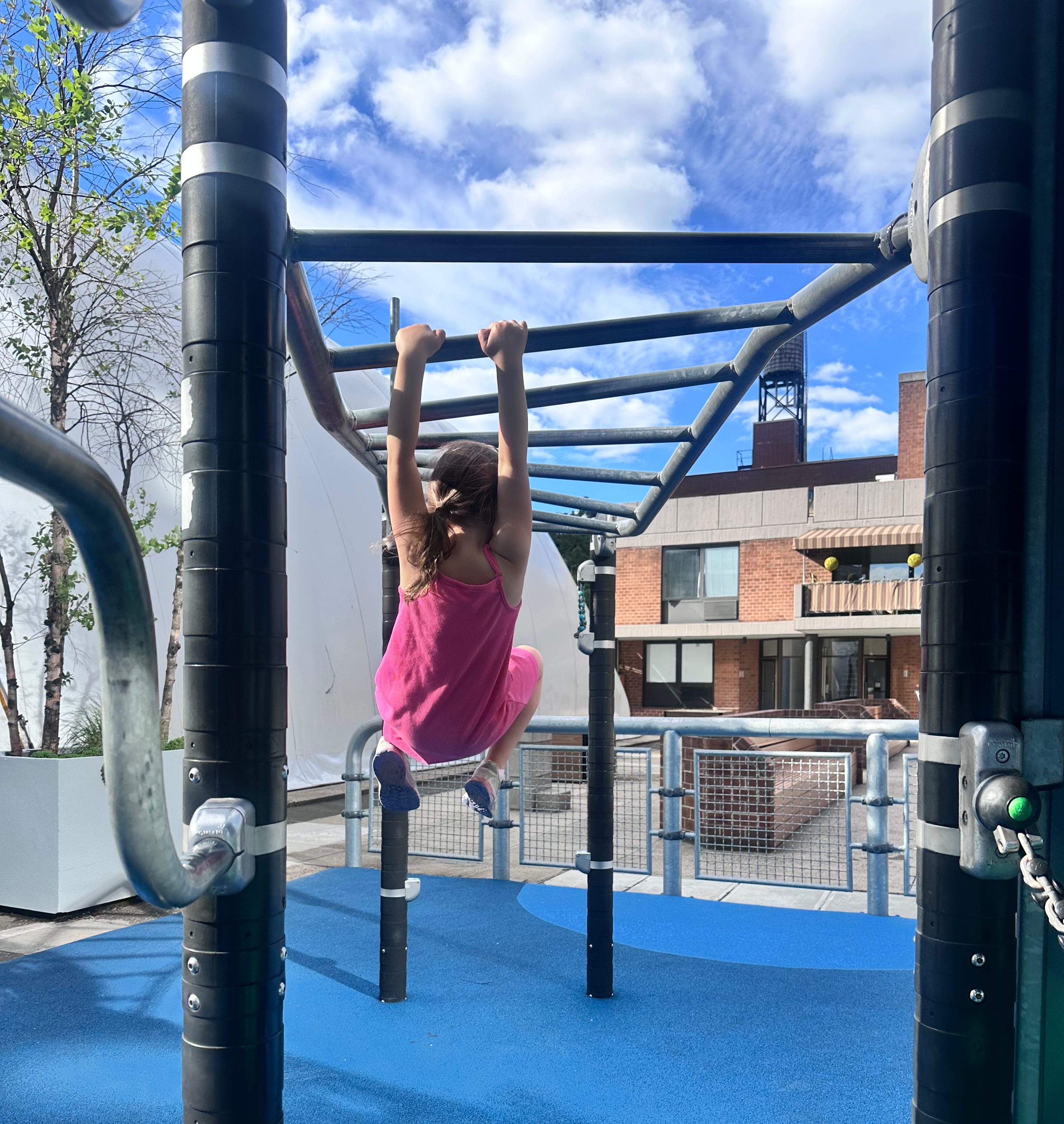
I’ve recently found myself in a handful of conversations that have pushed me to think deeply about why this prevention and repair work I talk about feels so essential. Yes, my work is pretty obviously designed to help adults and the children they care about enjoy healthier relationships with food and body.
But why is that so important?
For many people who have struggled with body image distress, disordered eating, and eating disorders, the answer is duh. The suffering is obvious, as is the drive to mitigate the suffering for the young people you love. But this is not everyone’s experience…and when I really pull back, I don’t actually think healthier relationships with food and body for the sake of healthier relationships with food and body is the only point.
It’s really about what feeling more at ease around food and in our bodies makes possible.
When we spend less energy fixating on what we eat and what our bodies look like, we have more attention available for engaging with our lives and becoming more fully ourselves. People who have more access to themselves may be more likely to move toward the relationships, experiences, and ways of living that make humans healthier, happier, and more resilient over time.
Lately, I’ve been thinking about this through a tiny ritual I started with my kids (and myself). I originally thought it would provide another small but mighty moment of body image nurturing, but I’m realizing it’s creating opportunities for something so much deeper.
This ritual involves asking your child one simple question, on the regular. It can happen while washing hair, brushing teeth, organizing backpacks, getting ready for tomorrow, sitting in the car, snuggling into bed… honestly, wherever life is happening and it feels organic enough to ask:
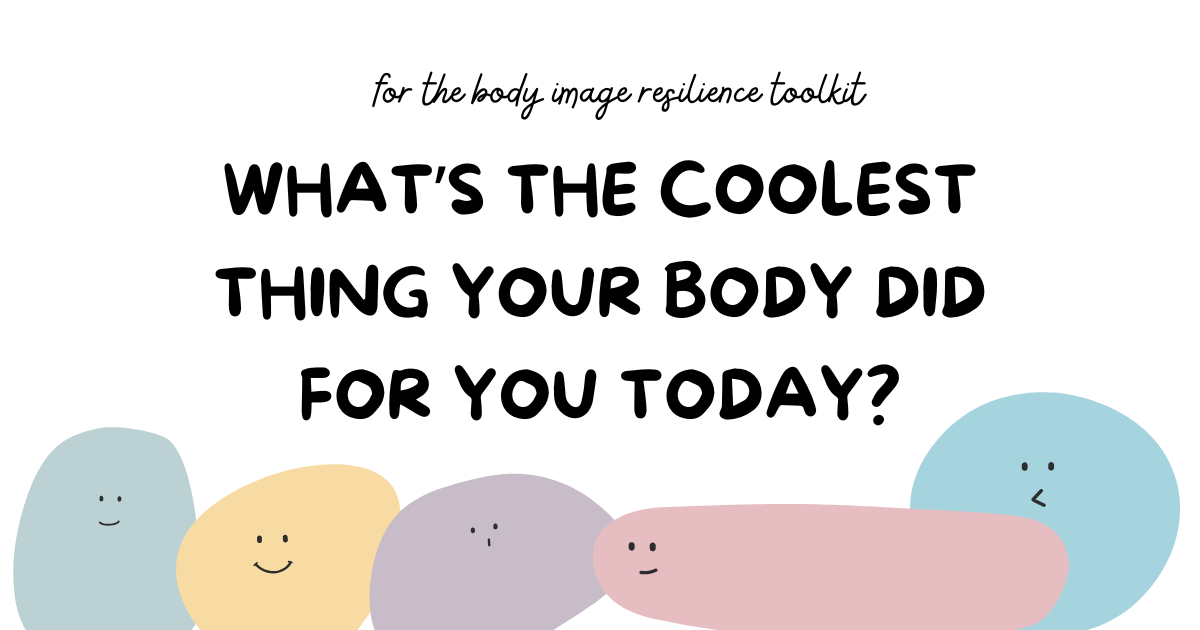
Here’s how it’s played out for me recently.
The other night, while tucking into bed, my 6-year-old answered:
“My heart pumped my blood.”
The next day, while I washed her hair, she answered:
“It made me laugh.”
Both times I said a version of, “Wow… mine did too. Thank you, body, for letting us do such cool things.”
In a different moment, while riding alone in the car, I asked my almost-12-year-old the same question:
“What’s the coolest thing your body did for you today?”
He looked confused.
“I don’t know. Nothing I can think of.”
So I said:
“Well… I guess it allowed you to be a person today.”
He thought for a second.
“True. It breathed.”
What followed was a brief conversation about field day and how disappointing and frustrating it felt to lose games. Sometimes our bodies don’t do the cool things we want them to do and it’s important to be able to acknowledge that when it happens.
Later that same night, during his bedtime snack, I asked my 10-year-old:
“What’s the coolest thing your body did for you today?”
He said:
“Taking a shower.”
Then he clarified that the coolest part was being so hot from being outside and then feeling first the cold water and then the warm water on his body.
I reflected back:
“Oh, I know exactly what you mean. Those sensations are incredible.”
I told him about a time in my life where I had a small window above my bathtub and how much I relished a hot shower with the window open on a freezing cold winter night. A few days later I asked the same question again and he answered:
“Singing in the shower.”
We agreed singing in the shower, particularly while making art with shaving cream, is the best.
Then I asked my instagram community this question and hundreds of responses flooded in:
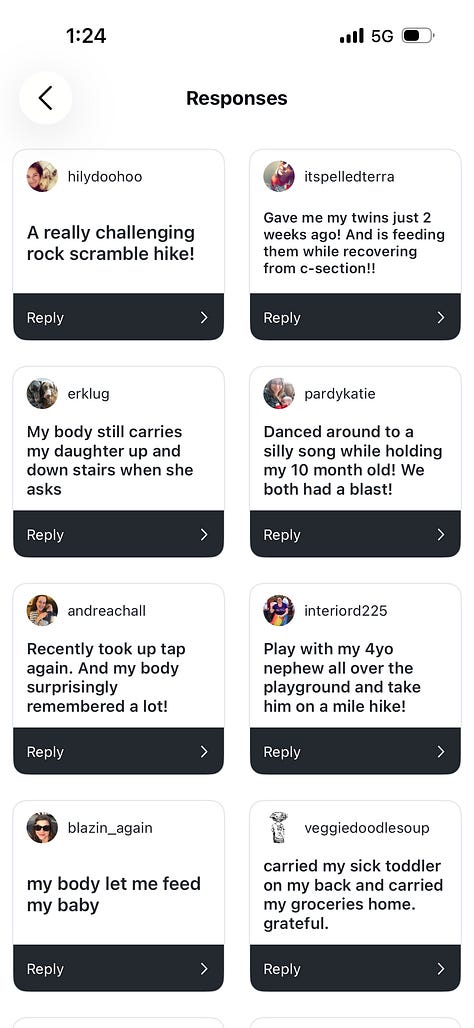
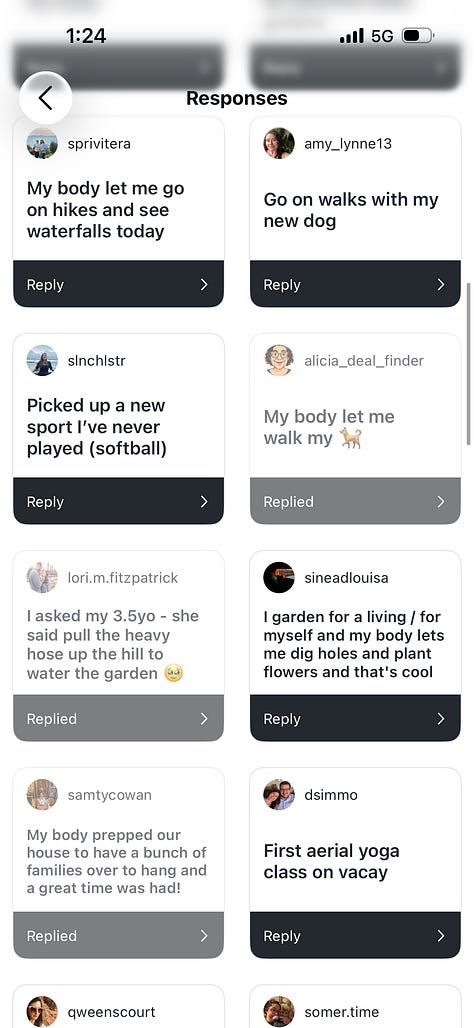
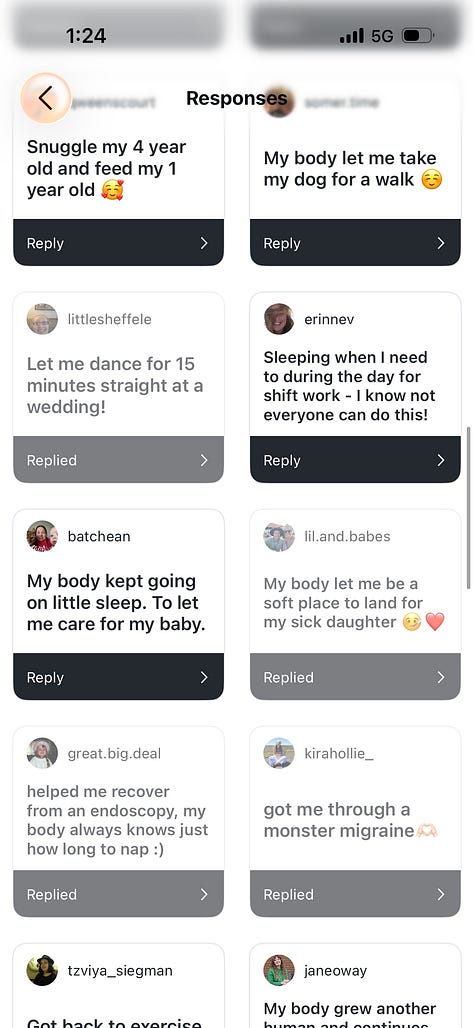
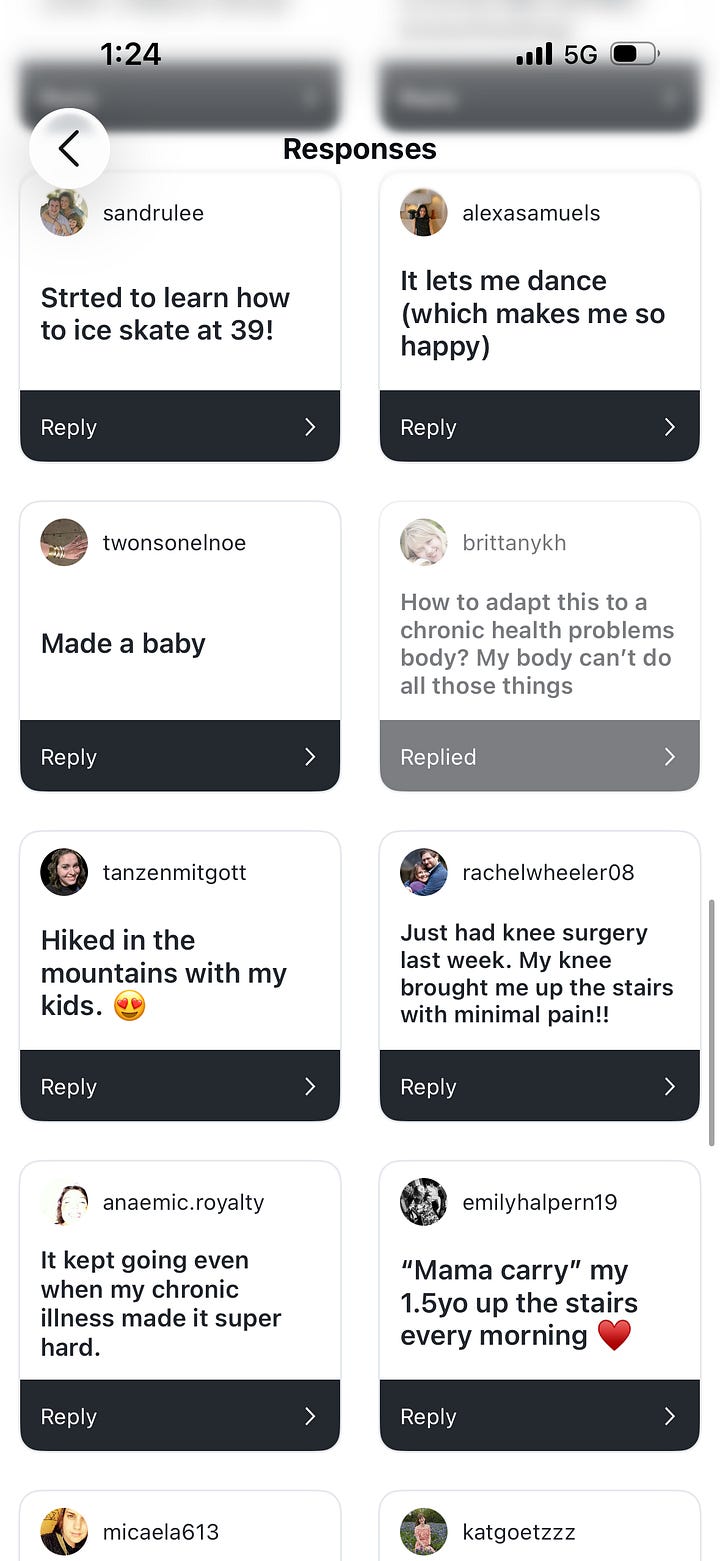
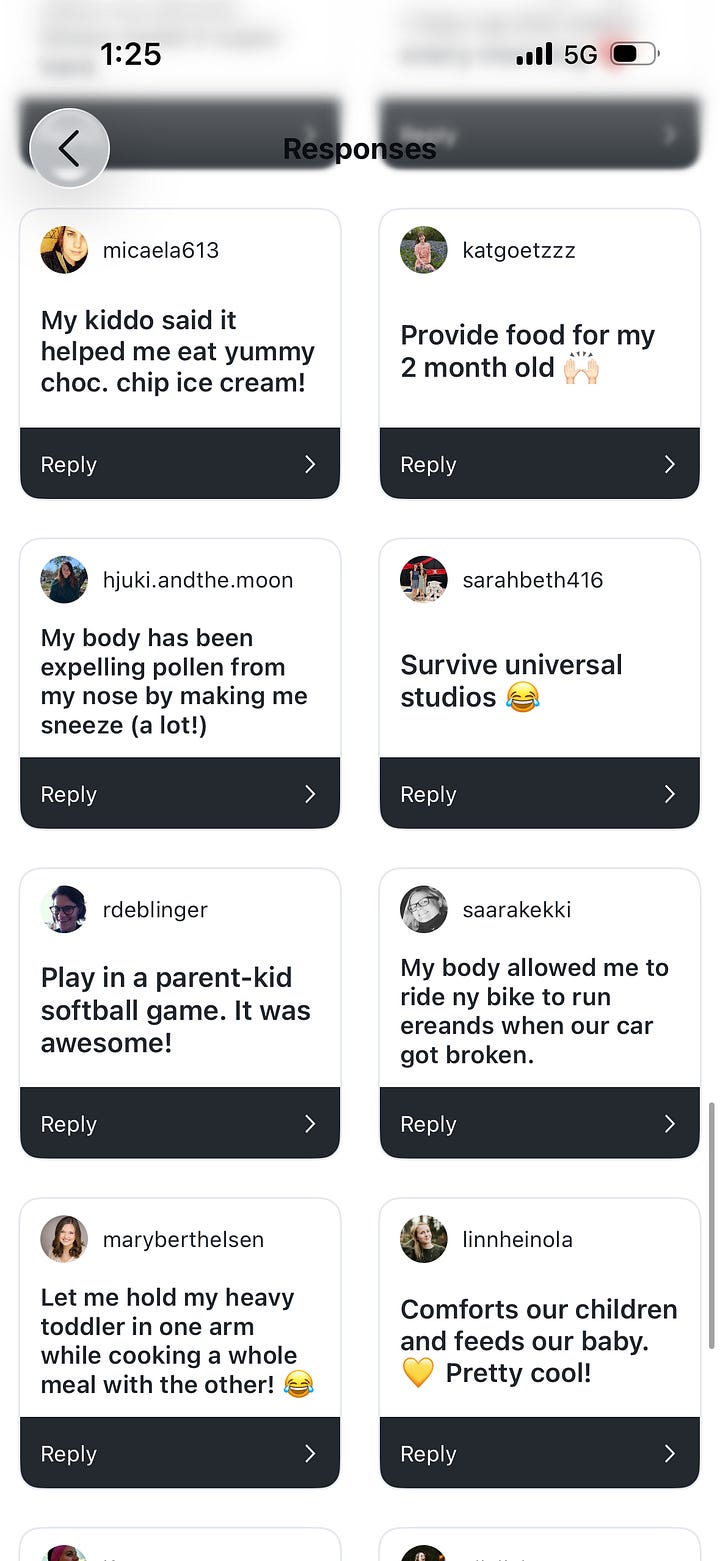
When you ask a person what their body did for them, you draw awareness to their body’s function. Focusing on body functionality can be protective in an appearance-obsessed culture, because it helps anchor a person’s sense of self in a wider and more stable set of experiences. Research backs this up.
But I think something bigger than body image resilience may also be happening here. Because when you ask a person, particularly a child, what their body did for them today… they also tell you about their life.
About field day. About frustration.About how they experience pleasure. About disappointment and joy. About their experience being a living body.
Yes, this ritual may nurture a healthier body image, but it may also help your child feel worthy of being known. And people who feel worthy of being known, not just for what can be seen (appearance, achievement, behavior), but for their inner most experiences, have a true advantage when it comes to lifelong well-being.
So as you head into this weekend, I invite you to find a moment while your child is in the bath, brushing their teeth or hair, organizing their things, sitting quietly in the car, snuggling their body into bed… whenever it feels right.
And ask:
“What’s the coolest thing your body did for you today?”
And then, whether in that moment with them or later by yourself, ask yourself the same question.
Notice how it feels to ask.
Notice how it feels to search for an answer.
Notice what happens when you orient toward your body’s function.
You might be surprised by where the practice takes you.
All content shared here is protected under applicable copyright, trademark, and other proprietary rights. It is intended for informational and educational purposes only and should not be considered a substitute for professional, medical, or psychological advice, diagnosis, or treatment. Engaging with this content does not establish a professional or therapeutic relationship. If you have concerns about your or your child’s health, mental health, or safety, please consult a qualified medical or mental health professional.
No posts
Comments
Nothing yet. Say the first thing.
Sign in to join the conversation.