
On May 4, 1970, Ohio National Guard troops fired into a crowd of student demonstrators at Kent State University, killing four and wounding nine. The students—who were protesting the expansion of the Vietnam War into Cambodia—were unarmed. The threat was exaggerated. The response was catastrophic. The nation recoiled.
Campuses shut down across the nation in protest. Millions of students walked out. Kent State became a moral line in the sand—a moment when state violence against civilians could no longer be waved away as “restoring order.”
More than half a century later, we are witnessing a similar rupture.
In the span of just weeks, Minneapolis has seen the fatal shootings of Renée Good, an unarmed American citizen shot by an ICE agent during a federal enforcement operation, and Alex Pretti, an ICU nurse killed in broad daylight as agents tackled and fired on him amid aggressive crowd control tactics.
These killings—occurring amid scenes of overwhelming, militarized force—have begun to function in the public imagination the way Kent State once did: not merely as tragedies, but as symbols of something having gone profoundly wrong in America.
The photographs tell the story.
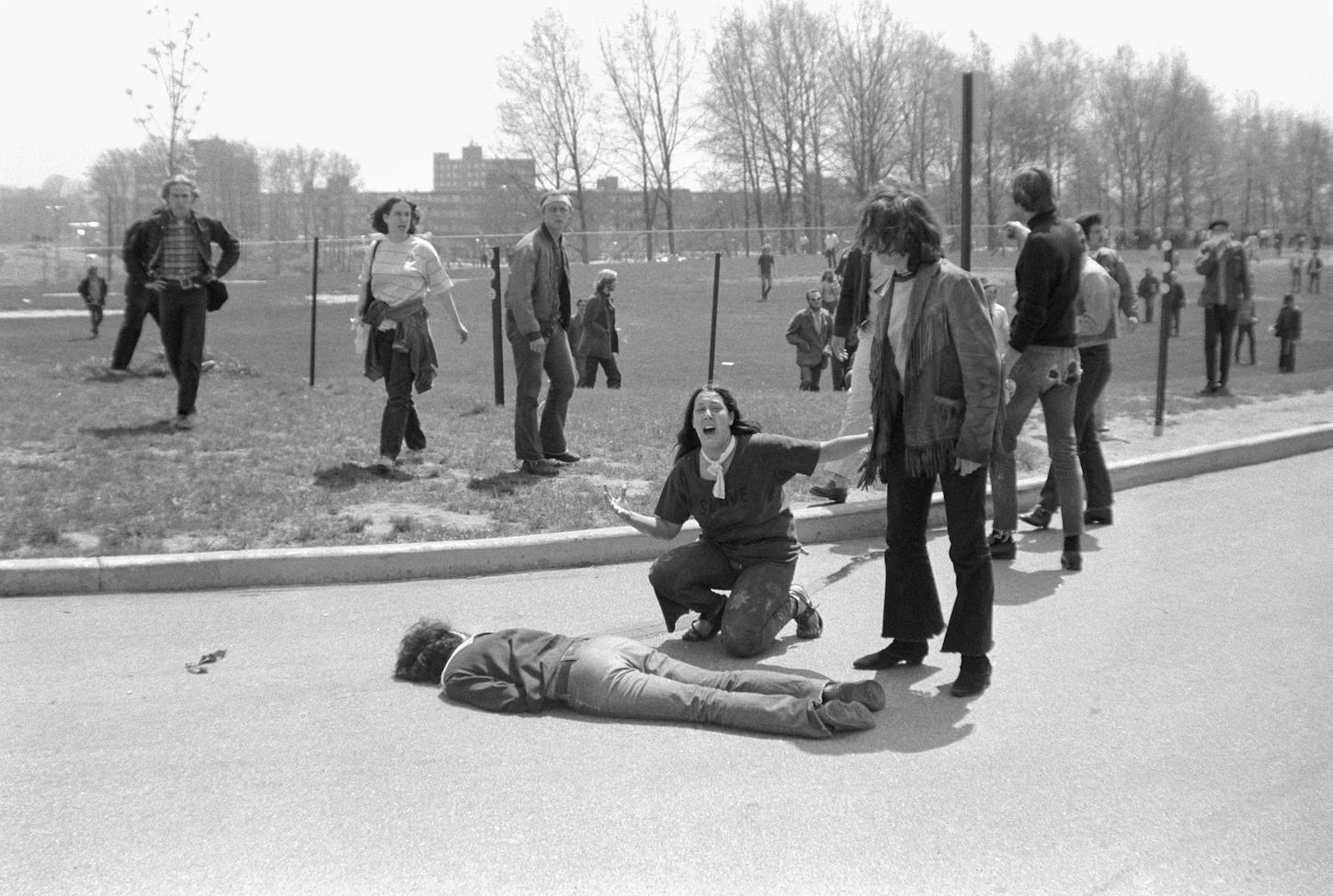
(John Filo/Getty Images)
In the first image, from 1970, a student lies face-down on a campus road while others scream in disbelief. No weapons. No riot gear. Just the sudden realization that the state had crossed a line it could not uncross. The image of a young woman screaming over the body of a slain student at Kent State became an icon of generational trauma—a moment when the American public could no longer deny the cost of militarized domestic policy.
In the second image, taken more than five decades later, armored federal agents kneel over a civilian already on the ground. Faces hidden. Weapons visible. Power total.
ICE’s posture is not panic—it is procedure.
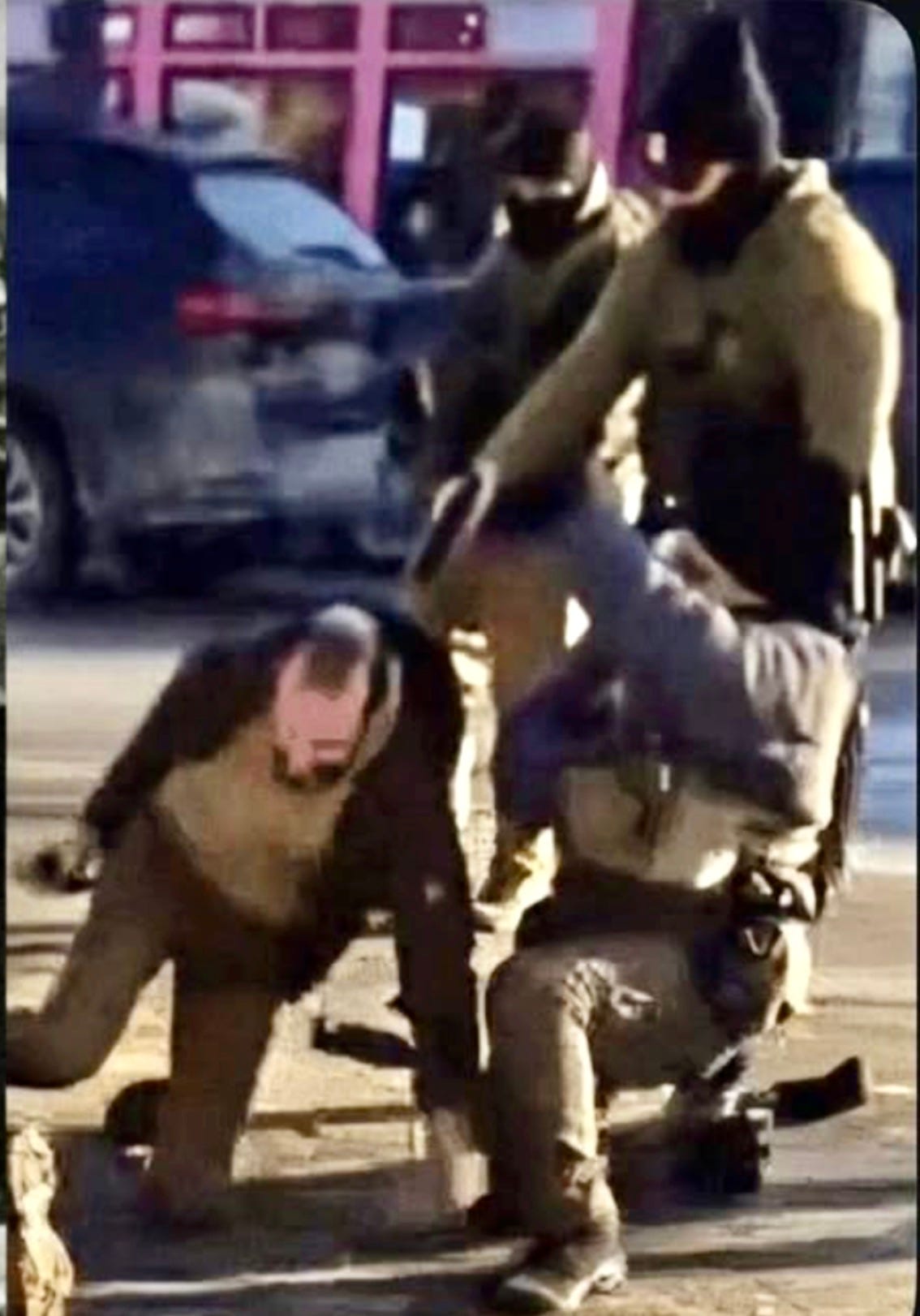
(The New York Times, from video)
This is the most unsettling continuity: what shocked the nation in 1970 has been systematized in 2026.
In 1970, officials insisted the Guard acted out of fear. History rejected that defense. The students posed no imminent threat. The killings were unjustifiable.
Today, familiar language returns—“domestic terrorist,” “inciting insurrection,” “law and order.” But the image of a man dead beneath the weight of the state cuts through the rhetoric just as starkly as the body of a student on the Kent State pavement did.
The true significance of Kent State was not only the loss of life. It was the moment Americans recognized that normalized force had become intolerable.
The deaths of Renée Good and Alex Pretti are this generation’s Kent State moment. We Americans must act—again—to stop federal government violence against its citizens and retain our democracy and freedoms.
In 1970, Bob Weinstein was a student at the University of Massachusetts- Amherst. He was active in the anti-war movement before and after Kent State.
No posts
Comments
Nothing yet. Say the first thing.
Sign in to join the conversation.