
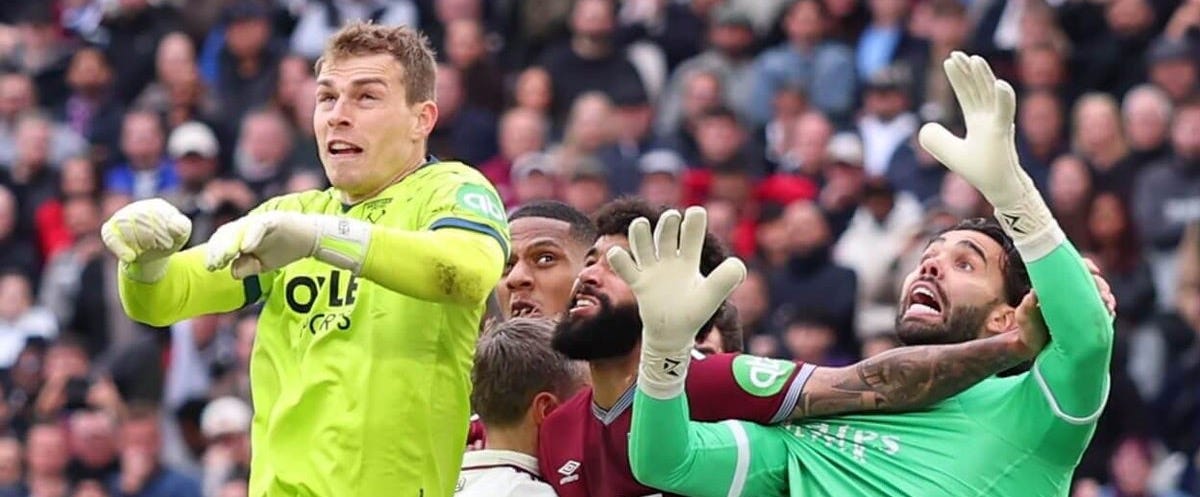
And we’re back. England’s Premier League is again underway with a predictably comfortable 3-0 win for defending champions Arsenal over Coventry. As season openers go, it was all very straightforward stuff. Not exactly entertaining, but a lovely lack of controversy.
That aside, I do think with 11 of the 20 teams featuring a manager in his first full season, and extensive player movement, the 2026-27 Premier League season should be a doozy. The number of season preview articles, podcasts, YouTube videos out there is so great, it didn’t seem like a good use of anyone’s time for me to do it too. I mean, how many times do you want to see someone predict Arsenal winning the league?
But Friday the Pro Ref (formerly PGMOL) released a document unlike anything I recall them ever making public. This is the sort of thing they normally produce and distribute internally, but this year they’ve decided to be more proactive and transparent by putting it out into the world. It’s kind of stunning.
The Referee Guidance Handbook is a 120+ page book intended to better define how Premier League games will be called. It sits atop IFAB’s Laws of the Game (LotG), the global rules governing how the game is officiated, and acts as England’s stated preferences within the subjective gray areas of the LotG. When you wonder why something is called a handball in the Premier League game, but is not in a Champions League game, this is where you get into the minutiae to learn why.
None of this replaces the Laws of the Game. It tells Premier League officials how the league wants those laws interpreted in situations where judgment is required.
And this is the kind of stuff I do think is worth digging into, so let’s get started.
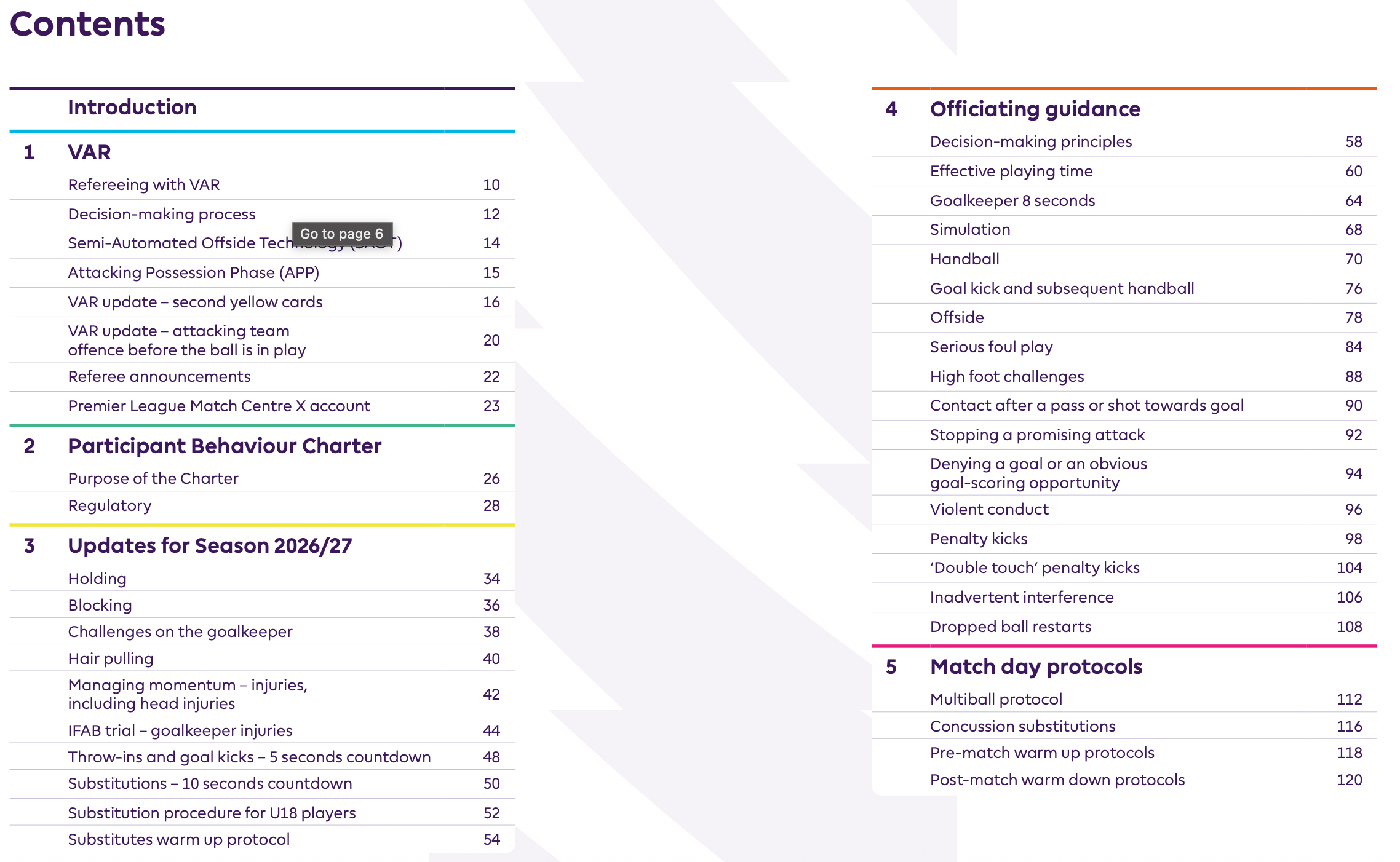
The handbook is broken into five sections, and I highly recommend taking time to read all of it. I recognize I am a nerd about the Laws of the Game, but as the season goes on, incidents occur and questions come up. So, you can choose to read the whole thing and educate yourself, but I’m going to discuss a few big highlights I found.
I’ll start on page 10 with what is probably the most important clarification in the document (red outlines are my emphasis): “Clear and Obvious Error.” This was a stated principle when VAR started almost 10 years ago, but it has been shoved aside in recent seasons (across many leagues) and led to a lot of valid complaints that VAR was “inserting itself” and “re-adjudicating” incidents that many felt it was never intended to do.
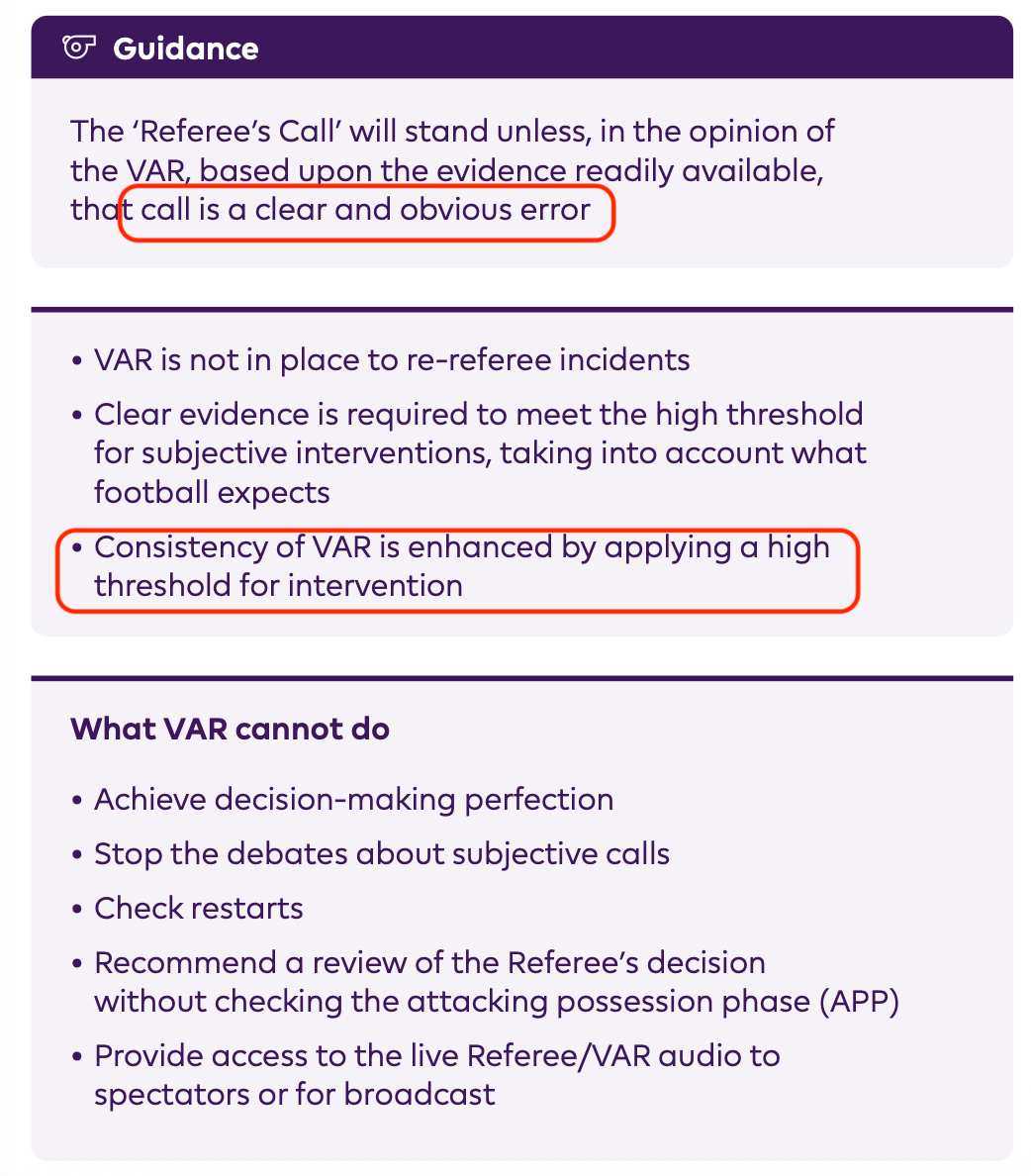
This part of the page clearly resets this idea to where it should be, and reinforces it with the line about “consistency”. That is the word fans, players, managers and baby Jesus repeatedly say is all they want: consistency.
Now, just because it is in print doesn’t mean it will happen in practice, but I do think this resets VAR’s purpose to what it was supposed to be: correcting the big stuff and not finding things no one asked about.
Section 3 gets into the meat of what everyone has been waiting for, and of course, starts with coming to terms with the mess the Premier League got itself into last season with set pieces, how they were attacked, defended, the general calamity of it all repeatedly turning into an ugly rugby scrum and the sense nothing was being done about it.
Arsenal was hardly the only side guilty, but it was the pioneer and most notable club in effectively exploiting the loopholes in how the Premier League was allowing teams to hold, block and obstruct as the attacking side on set pieces. The league was attempting to make these calls equally, but the reality is, a foul in the box by the defending team is far more punitive than one called on an attacking team. Attacking teams realized, especially on corners, that a “see what you can get away with” approach went a long way toward scoring goals.
This year, we hope Pro Ref means what it says. I say that because at this exact time last year, Howard Webb (the head dude) said they were going to crack down on holding in the box, but while there were calls made early in the season, that emphasis quickly faded after a few weeks.
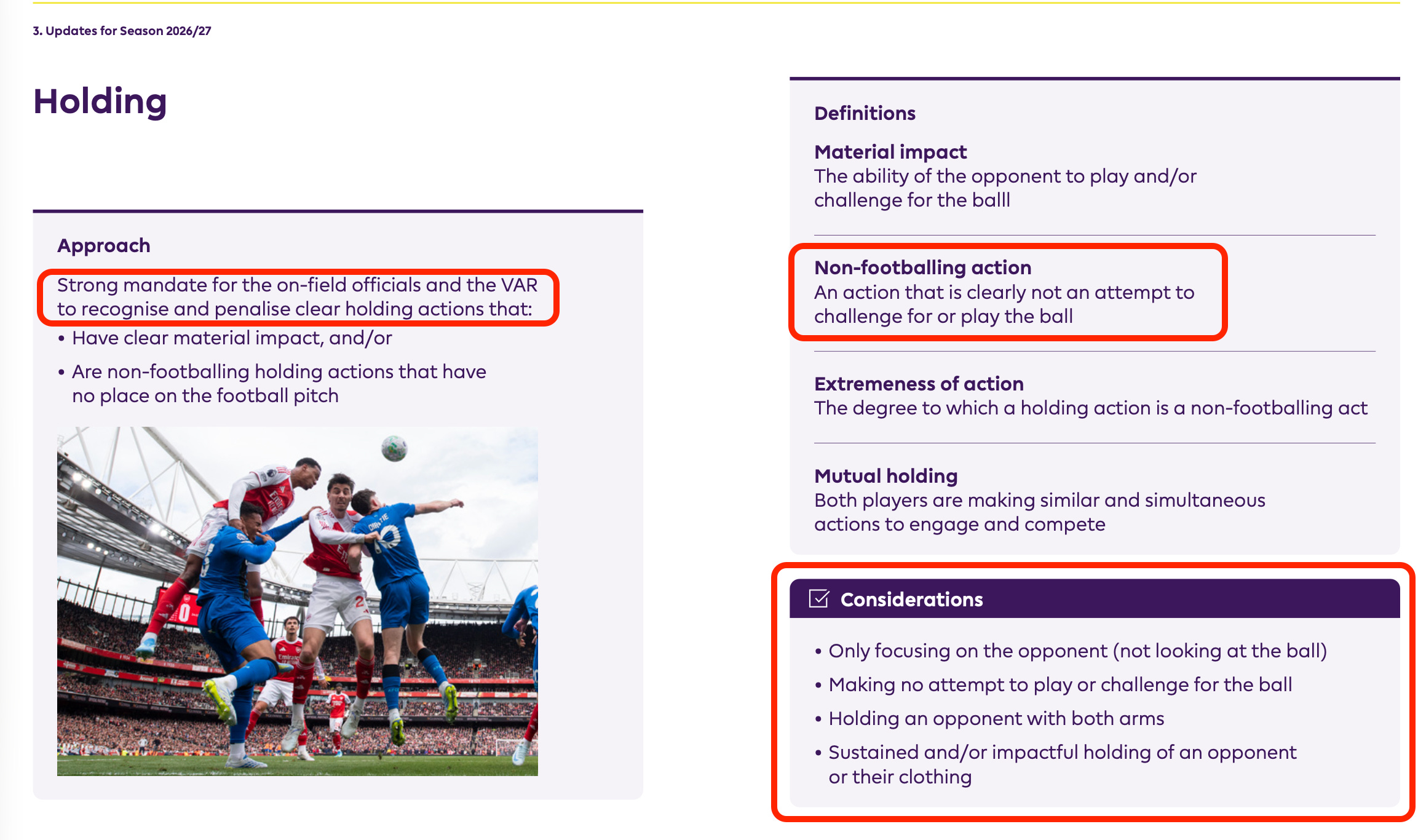
Now, in the handbook, they’ve gone further to better define how they intend to judge these incidents starting with ‘Holding.’ This whole thing is important, but the three parts I’ve highlighted in red boxes stood out to me. “Strong mandate” points to all of the caterwauling from last season (“we heard you!”), while the other two attempt to define holding that is simply intended to impede an opponent, with no attempt to play or win the ball. The idea of “intent” is a running theme in this document.
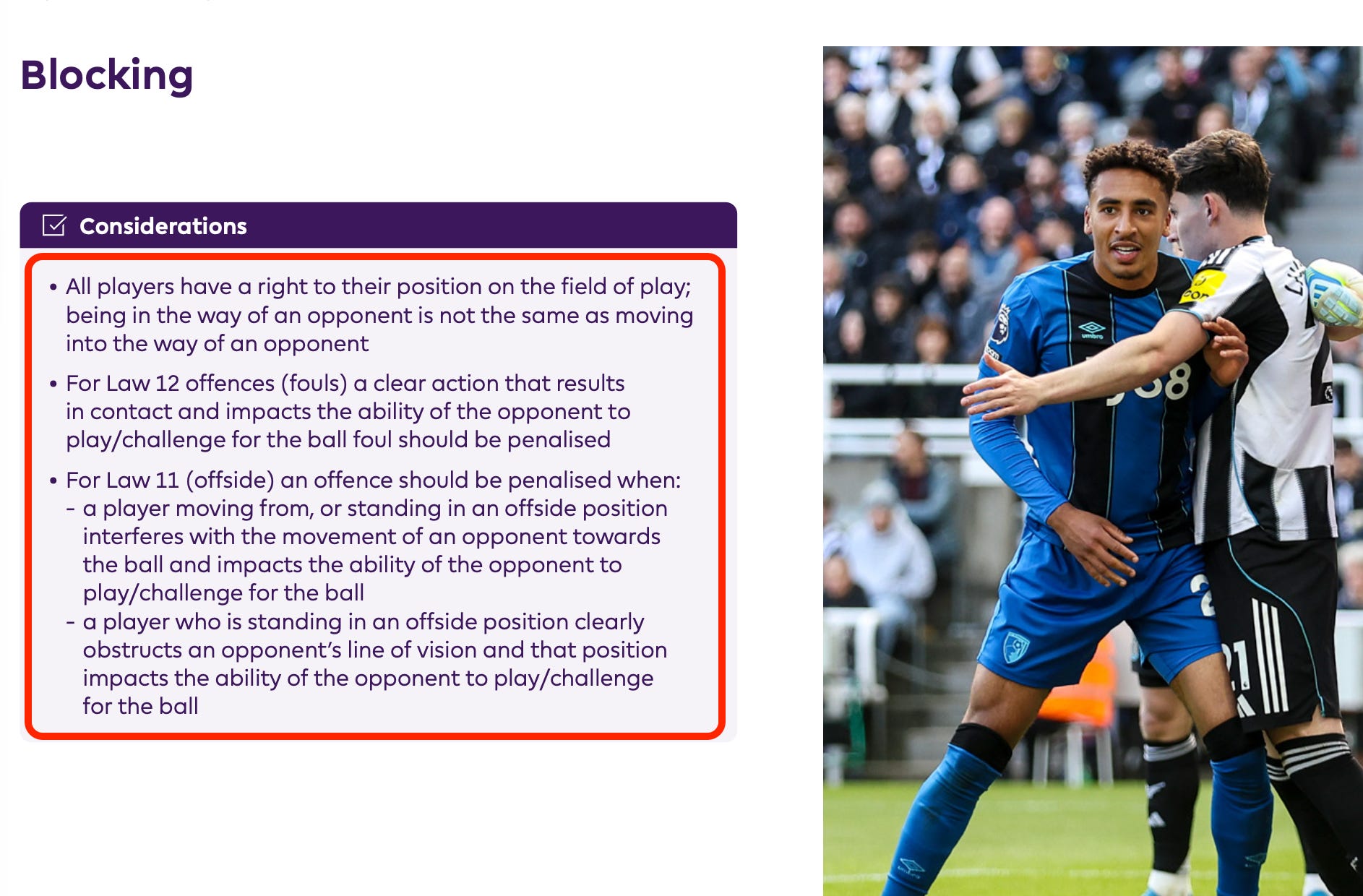
The next section on blocking sets very clear guidelines for types of incidents we saw last year that were called inconsistently. Please note the concept of “being in the way” vs “moving into the way”. This is going to be a major point of contention as the season plays out and you’ll be the smartest person in the room if you know this when it happens. (Laws 11 and 12 are sections from the aforementioned LotG)
The section below about challenges on the keeper repeats this idea of being/moving in the way, and also “intention to play”. So many times we saw attacking players purposely standing and shuffling to get in the keeper’s way, clearly with no interest or intention in playing the ball.
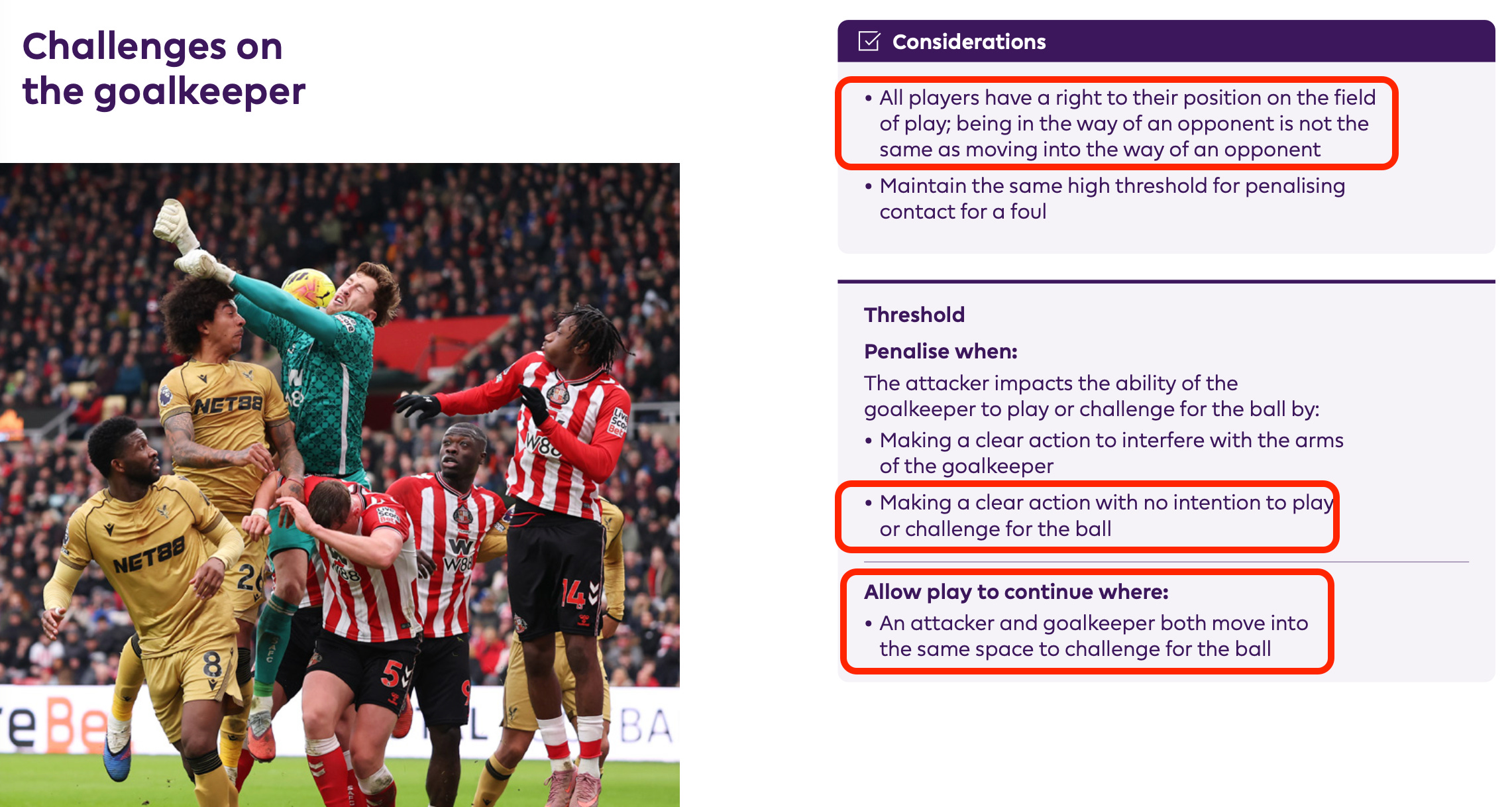
My guess is the crackdown is going to mostly be seen in those holding, blocking, challenging incidents where a player is simply attempting to impede his opponent, with zero intent to actually play or win the ball. In other words, addressing so much of what people complained about last season.
If referees adhere to all of this and apply it consistently, it will be a significant win.
Now flipping forward to page 58, we get an insight into how the Premier League wants its officials to process decisions. This is the stuff that points to the idea that this season will follow what we saw at the World Cup, where refs had clearly been told to let play flow and insert themselves only on the obvious stuff. Frankly, of all the words in this document, this language gets closest to the core of how the sausage is made. It applies to all the rules that are not binary, are subjective by nature and traditionally produce the greatest differences from referee to referee.
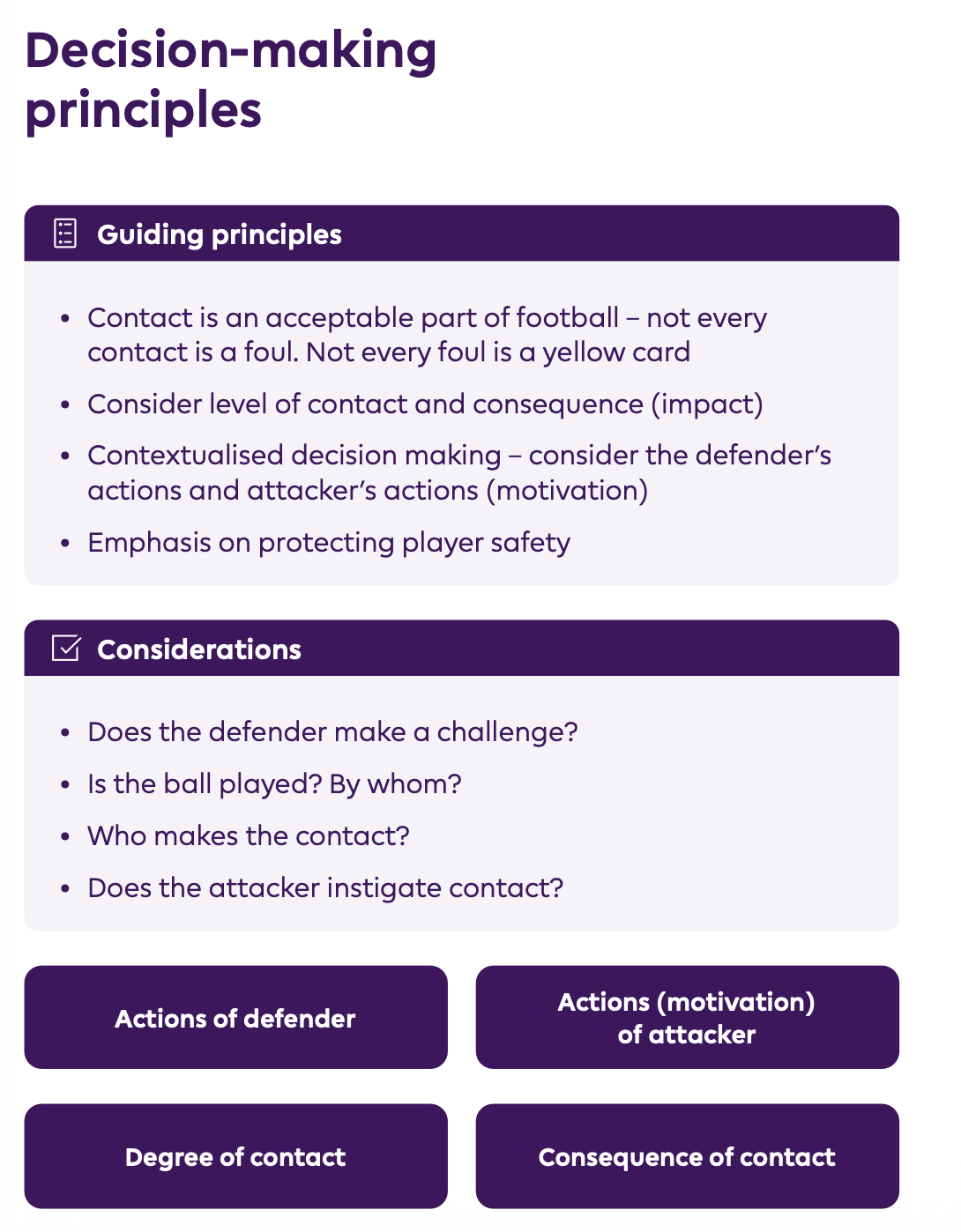
And that is an important distinction: consistency does not mean every piece of contact produces the same decision. It means referees are supposed to evaluate different incidents using the same set of considerations.
While referees today are trained to be more similar in their decision-making, there was a time when referees arrived at a game with their own reputation. Some were “letter of the law” hard-asses and some were all about ‘letting play go,’ with a high threshold for what qualified as a foul. Not so much these days. This guidance keeps those guardrails closer together while allowing for some variance.
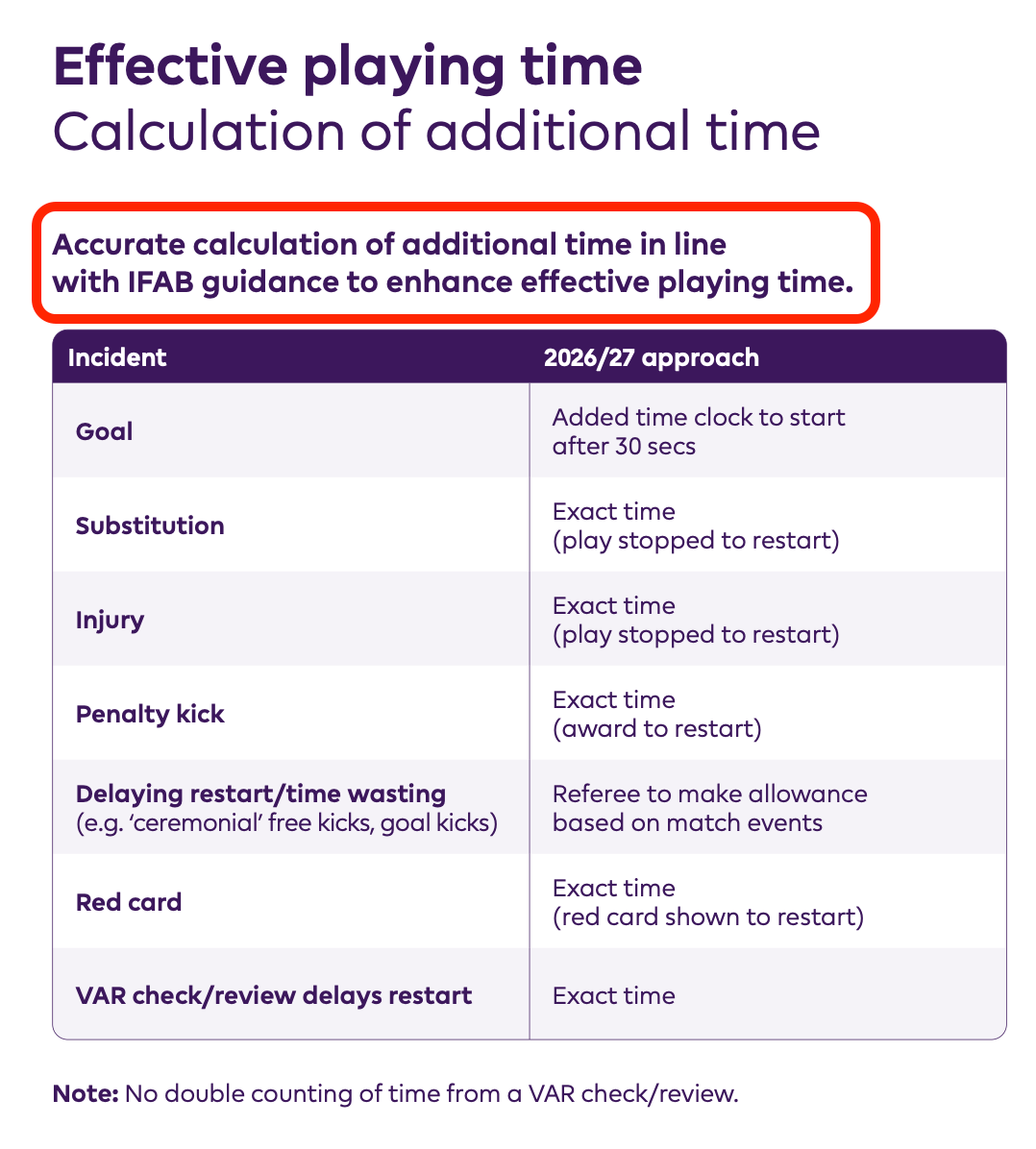
One of my favorite sections is this (below) on page 60 and that is because how soccer keeps time continues to be one of the great mysteries in sports (to us Yanks). The backstory on why soccer doesn’t just keep time like American sports is long, and you’ll just have to trust me that attempts to implement that format have been made many, many times. The game has always returned to the referee as the timekeeper and, no, the clock doesn’t stop when the ball does.
But that doesn’t mean they couldn’t do a better job of being more transparent about how “added time” is determined. Here, the league gives us hard and fast rules on how that is done.
There is so much good stuff to be found here, down to sections on how they intend to call handballs (one of the bigger problems in the LotG) and offside, which with the advent of semi-automated offside has morphed into a rule applied with more of a ‘you can’t be a little pregnant’ absolutism than with its long-standing purpose of simply preventing attacking players from gaining an obvious advantage.
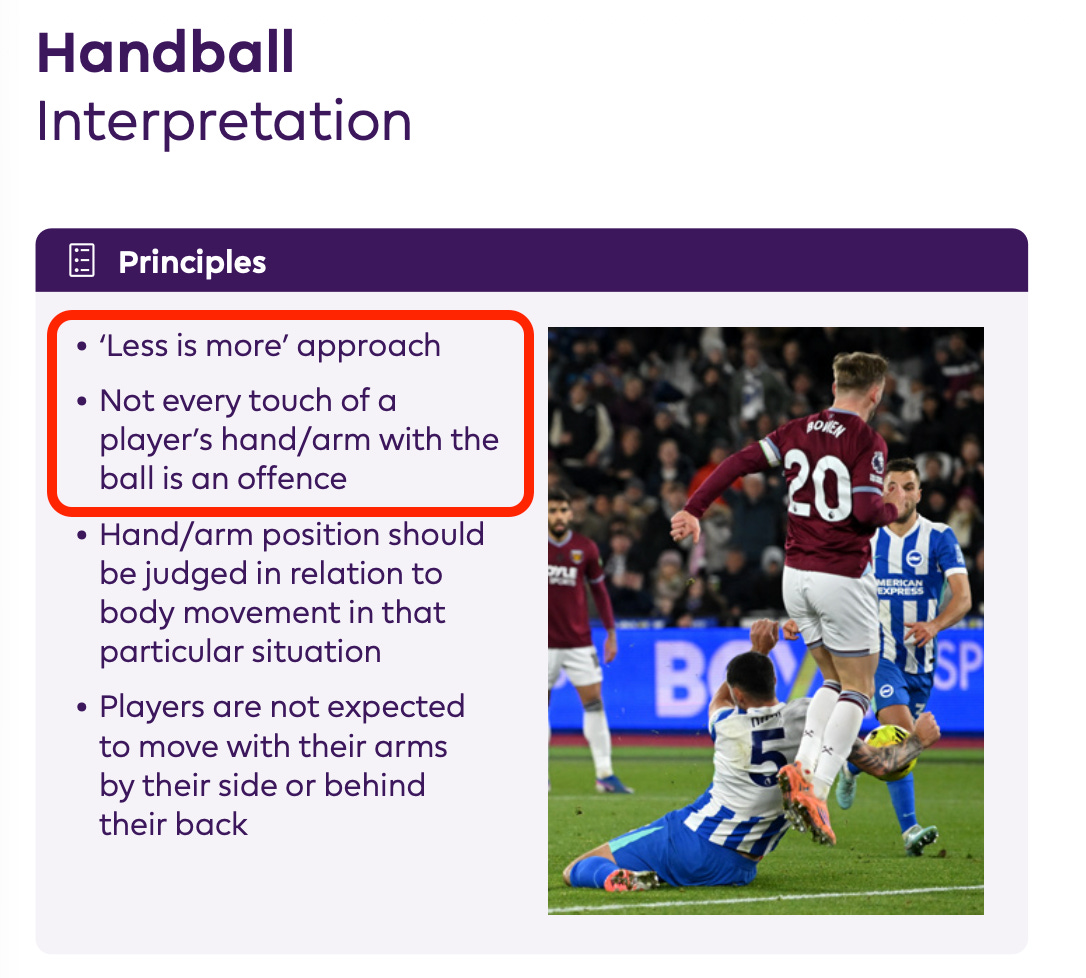
Handball will forever be an issue because IFAB has fought for years to figure out how best to spell out exactly what it is. We all understand the basic idea: players shouldn’t be able to use their arms or hands to gain an unfair advantage. But over the years, the language of the law became so laborious that it almost turned handball into a video-game power-up: just bang the ball off someone’s arm and see what you get. The rules had gotten in the way of what was actually supposed to be the problem.
The “less is more approach” is a clear directive to get back to what handball was always supposed to address.
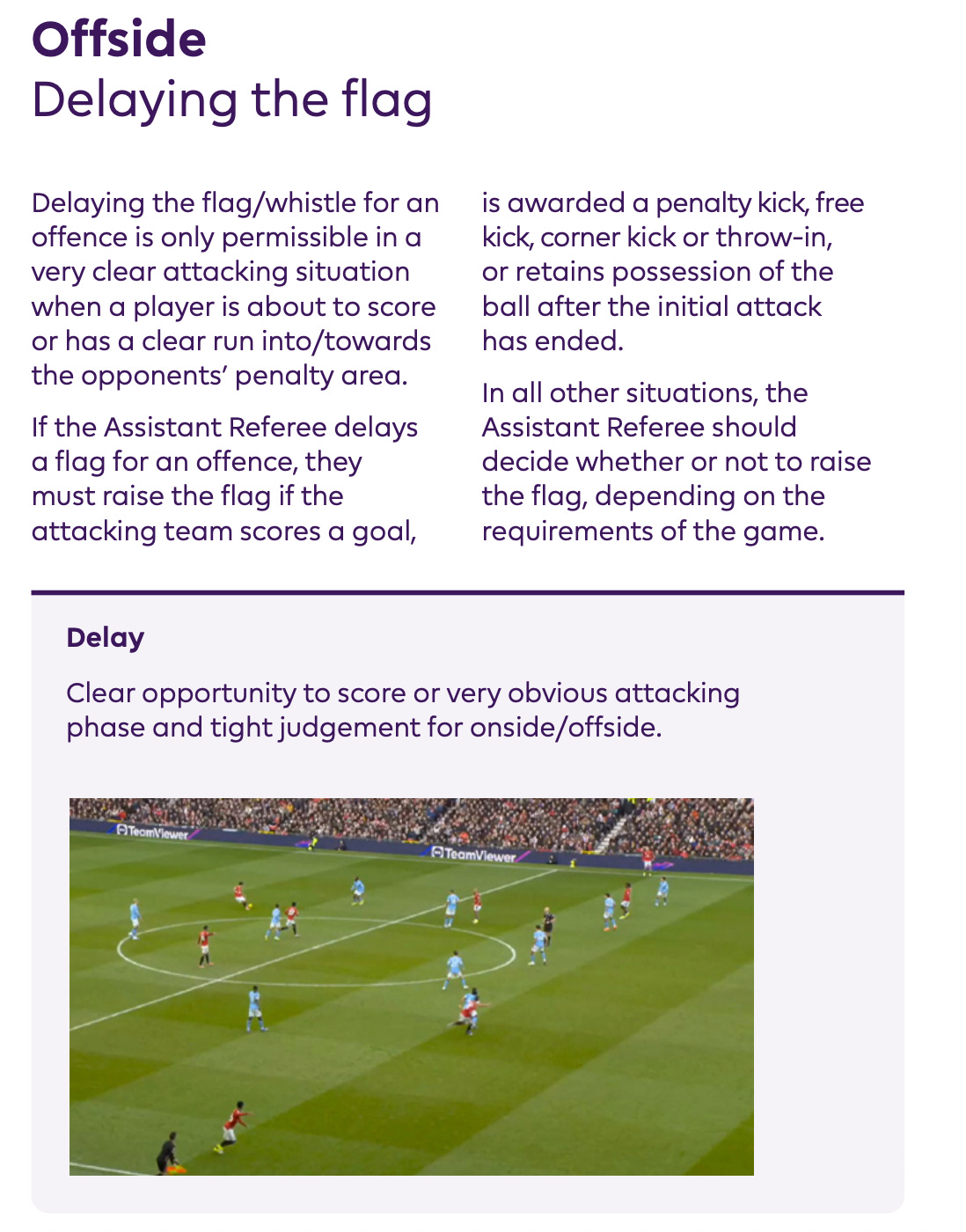
One glaring difference coming from the World Cup is found in the offside language below, specifically in when the assistant referee raises the flag. The World Cup used a system that included a ball from Adidas with a chip inside and made this process much faster and definitive. It was a noticeable improvement from anything we had ever seen before, but the Premier League uses a different ball, from Puma, without that chip. That means offside decisions are made more manually, and this language explains the how and why of delaying the flag, letting a play progress and leaving it up to VAR to later review and decide if someone’s toenail was in violation.
All this and I’ve not even gotten to the sections on the new time-wasting rules, most of which you’ll be familiar with from the World Cup, or if you’re a MLS consumer. There’s even guidance about the number and placement of the extra balls. Real nerd stuff.
There’s a lot more to be learned in this thing, and I have zero doubt there will be many, many screenshots posted to social media as evidence in arguments over various incidents this season. I’m obviously delighted the league has gone to this length, and maybe it’s a sign the organization is leveling up to match the ‘best league in the world’ status of the competition it oversees.
And for those who still just wanted predictions, here is my full list I posted to Twitter this morning. Laugh at me in May.

peter@peet2
My brave (stupid) 26-27 Premier League Table Predictions 1) ARS 2) CHE* 3) MCI 4) MUN** 5) AVL 6) LIV 7) TOT 8) BRE 9) NFO 10) BHA# 11) BOU 12) NEW 13) LEE 14) EVE 15) SUN 16) CRY 17) COV 18) FUL 19) IPS 20) HUL WINNERS *FA CUP **LEAGUE CUP # UEFA CONF LEAGUE
2:29 PM · Aug 21, 2026 · 955 Views
3 Replies · 1 Repost · 9 Likes
No posts
Comments
Nothing yet. Say the first thing.
Sign in to join the conversation.