

December is all about reflecting on the year that’s winding to a close, while preparing to shut down completely for at least a few days.
We’ve posted our Golden Pints on the blog (best beer, best brewery, best pub, and so on) and updated our Bristol pub guide for 2026.
Now, we’re going to do two more bits of end-of-year maintenance here on Substack:
Our annual ‘best of us’ post, highlighting our own writing
A list of beer writing from others that really stuck with us
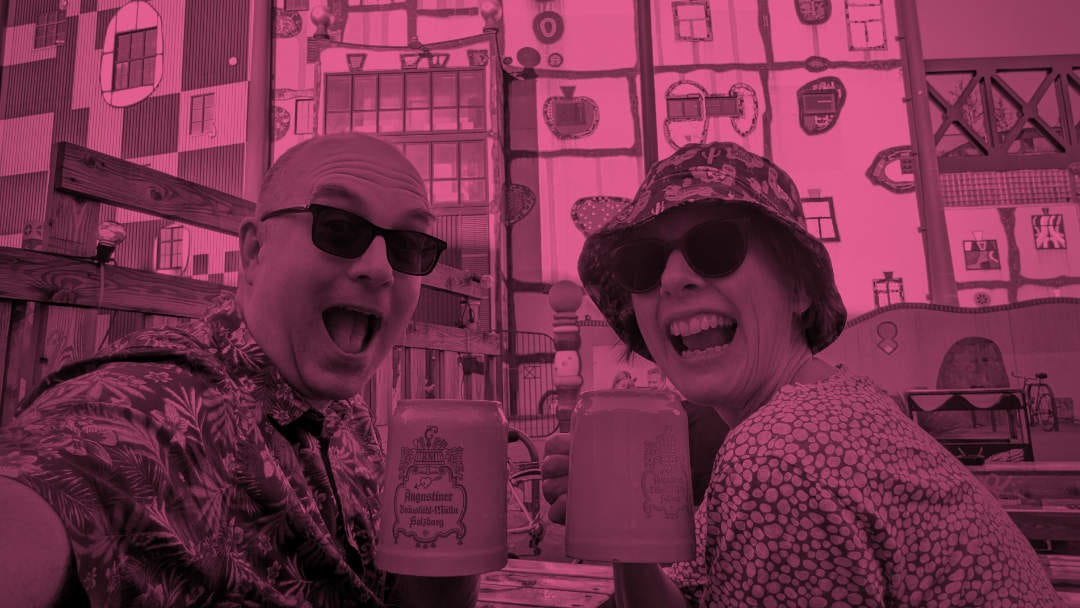
We’ve been less than prolific in the past year but it’s felt like a nice groove for a blog nearing the start of its 20th year. We post here once a month, update the blog once or twice a week, and post on Patreon a couple of times a week, too.
It often feels that our primary contribution these days is News, Nuggets and Longreads, which we post every Saturday morning. We even kept that up while travelling round the Balkans earlier in the year. It’s become an unbreakable habit and the routine is so polished we hardly need to think about it. Highlighting the writing of others, and distilling the week’s news and debate into a digestible pill, seems to be appreciated all round.
Thinking of our ‘proper posts’, though, these are the ones from the past year of which we’re particularly proud, and that we’d like people to take a second look at.
We were quite impressed by the beer scene in Romania’s fifth biggest city, from the historic heritage brewery owned by Asahi to contemporary craft beer made with… red bell peppers?
The tourist traps of Bucharest, Romania, made us think about how big, over-subscribed hospitality venues operate the world over. That is, with strong chains of command, efficient processes, and hiring waiting staff with a very particular set of skills. You have to admire it.
“In a craft beer bar in Burgas, Bulgaria, the other week, we realised that there were no fewer than 17 images of skulls surrounding us… Where did this association between skulls and craft beer start? What does it mean?”
Jess took a solo trip to Falmouth and took the opportunity to check in on the beer venues of a town we once declared Cornwall’s beer geek central: “Since we left Cornwall in 2017 Falmouth has further cemented itself as the main beer destination in the Duchy. It sadly lost Hand Bar but gained one of the most popular modern craft brewers in Verdant.”
“‘I never liked the beer anyway’ or ‘It tastes like piss’ are standard responses to stories about BrewDog, as if the company’s ethics or culture can be discerned in the product… The idea of objectivity in beer tasting is pretty much a myth unless you go to extreme lengths but we should at least try to be honest and get close to the truth.”
In the same vein as the BrewDog post above, we got some friends together to test our feeling that (a) Hoegaarden is still a good beer and (b) there’s no other Belgian-style wheat beer that stands above it.
“Britain seems increasingly to be embracing its own version of Oktoberfest, the beer-fuelled folk festival that takes place in Munich every September – and has done since 1810… A few things seem to be driving this, one of which is the desperate search by businesses for events to put on the calendar.”
“Beyond their functional purpose pubs also play an important role in preserving the spirit of the places where they’re found – as their genius loci… The Prospect of Whitby in Wapping, East London, is an important pub even if, in 2025, you’ll be hard pressed to find any beer geek who thinks it’s a great place to drink.”
This is one of our favourite types of blog post: an artifact we saw in a pub led us to research a forgotten beer from a defunct brewery, which in turn prompted us to dig through our library until we found the chapter and verse in the autobiography of a legendary brewer.
Finally, let’s highlight one of the several fairly substantial pieces we posted here on Substack, drawing connections between the rise of dessert-flavoured beers and dessert-flavoured vape juice: “Pat’s is a typical convenience store in many ways, and many of its customers seem to be young people, including students. Its range includes vapes, of course, but also ‘candy’, imported soft drinks with strange flavours, and exotic liqueurs. Basically anything that’s colourful, strongly flavoured, and artificially scented…”

For quite a few years we’ve done a big ‘best of beer writing’ round up on the blog. This year, we’ve decided to do it here instead – and to limit ourselves to picking five which really stuck with us. Which, of course, made it much more difficult! Anyway, without overthinking it, these are pieces that inspired us, moved us, and told us things we didn’t already know.
Anaïs Lecoq, Pellicle
“The story goes like this: One beautiful day in May 1985, the first Coreff was served by Roger Le Jan to Fañch le Marrec. Pictures of that first drinker regularly come up on the brewery’s social media, where the Breton musician proudly stands in front of Ty Coz toilet door, painted with the first Coreff logo… Called Brasserie des Deux Rivières when Jean-François Malgorn and Christian Blanchard opened it in 1985, Coreff is considered France’s first microbrewery.
(We could easily have made this a list of five articles from Pellicle but we limited ourselves to one. If you’re not supporting this vital outlet for quality beer writing, do consider signing up. You’ll miss it when it’s gone.)
Liza Weisstuch, Smithsonian Magazine
We’re including this piece about the company that designs, builds and installs Irish pubs around the world mostly because we’re jealous that the author managed to get them to talk. We tried and failed to do the same while researching our book 20th Century Pub. It’s an illuminating read full of nuggets like this: “‘Victorian’ style is modeled on the classic Dublin spots.. ‘Country’ style, inspired by rural stone-built establishments… ‘Celtic’ style is imbued with symbolism and characters from ancient Gaelic folklore and mythology… ‘Shop’ style nods to the old-world convention of rural pubs that double as the community general store.”
Steve, Wait Until Next Year
We love that Steve wrote a love letter to his revived local pub way out in Erith on the outskirts of London. It’s a lovely piece made bittersweet by the fact that Hazel Southwell, the person whose efforts moved Steve to write the post, was ousted by the pub company shortly after, leaving this as something of a snapshot of a hopeful moment.
Dr Thomas Thurnell-Read and Dr Robert Deakin, After Last Orders
Part of an academic project to document the stories of closed pubs around the UK, this portrait of an Irish pub in the backstreets near Kings Cross station is fascinating: “McGlynn’s was thriving up until its closure. Frequented by residents of the surrounding social housing estates and commuters alike, in its last few years it had become increasingly – even wildly – popular. When news spread online that the pub would be closing, hundreds of people headed there for the closing night causing the pub to become overwhelmed and having to shut its doors early for safety reasons.”
Jeff Alworth, Beervana
“The University of Utah is located in Salt Lake and students used to joke that the most popular drinking game was getting drunk and throwing up on a Mormon. That, more or less, was my governing philosophy (minus the vomit). Kids typically drink because it feels adult, because it makes socializing easier, and because it’s fun. For me, it had an additional delicious element. The heavy social stigma against drinking meant that it was a potent weapon for anyone looking to offend the dominant culture. My friends and I would drink before going out into the world, enjoying the wide berth the public gave us as we stumbled by. To be fair to my 16-year-old self, the cultural pressure to inhibit sinful behavior ran precisely against the teenage imperative to experiment and push boundaries. Looking back, there’s basically no chance I wasn’t going to explore the worlds of beer and liquor.”
The big stories this year were the revival of (a form of ) cask Boddington’s bitter and a serious marketing push for cask Bass. This, aligned with the ongoing success of Guinness, suggests that we’re at the peak of a trend for Normal Beer – where ‘normal’ means session strength, traditional, and low key.
Breal/Keystone has been a somewhat menacing presence, hoovering up troubled breweries and beer brands throughout the first part of the year, only to announce in November that they were on the verge of calling in administrators. While there’s been less chat about brewery numbers this year (they continue to decrease) there’s a sense of things being unsettled and shifting. Here in Bristol, for example, Good Chemistry has changed ownership as has Moor Beer, for different reasons.
Craft beer, in that noughties and twenty-tens mode, definitely feels unfashionable, and a bit uncool. Breweries that have been able to pivot to brewing normal lager, normal bitter, normal stout or even cask mild seem to us to be faring better than those who didn’t get the memo.
Right, that’s it, that’s your lot until 2026.
If you do Christmas, have a good one.
Cheers!
Jess & Ray
No posts
Comments
Nothing yet. Say the first thing.
Sign in to join the conversation.