
Heidenheim, Elversberg, Union Berlin - there is no shortage of clubs that we’ve seen rise from the Regionalliga to the Bundesliga in recent memory. Even if we go slightly further back (and for different reasons), RB Leipzig and Hoffenheim have completed the road to glory.
But what about clubs that have suffered the fate of going in the other direction? The German football league system possesses plenty of clubs that have dropped from the big time to obscurity, with some even having to dissolve and restart. Is this a quirk of the 50+1 fan ownership rule restricting private backers from being able to save struggling clubs? Maybe. Are some clubs just able to punch well above their weight for short periods and regress to the mean? Definitely.
There are 15 clubs that will be competing in semi-professional and amateur leagues in the 2026/27 season which have once participated in the Bundesliga. Let’s look at a small selection of these clubs in Part One of The Fall From Grace.
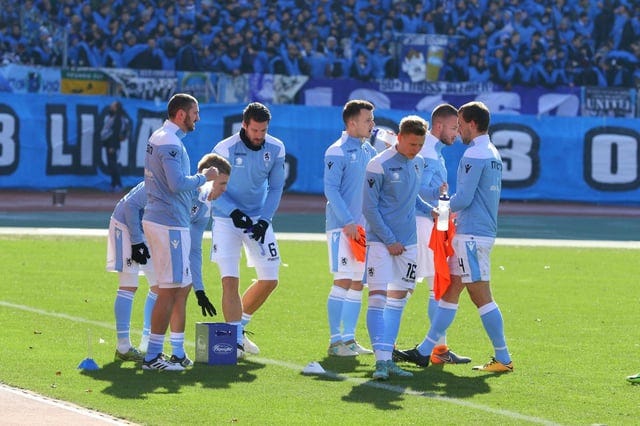
TSV 1860 München
By far the biggest and most successful club on this list, and the primary reason for choosing to write this article, 1860 Munich will return to the Regionalliga Bayern for the coming season. Despite finishing 8th in the 2025/26 3. Liga, Die Löwen were unable to meet the basic financial commitments to keep their DFL license, forcing them to drop into the Regionalliga and sparing TSV Havelse’s position in the league.
1860 have spent 20 seasons as a Bundesliga club since the league’s foundation in 1963. They are also the reason why Bayern Munich did not participate in that inaugural Bundesliga season, since only one club per city was allowed to join the league and 1860 had won the regional Oberliga the season prior. At the time, both clubs played at the Grünwalder Stadion, and would go on to share the Allianz Arena once it opened in 2005. This move did not suit Die Löwen, and financial issues caused them to drop directly from the 2. Bundesliga to the Regionalliga in 2017, due to similar license fee issues. Not their first rodeo, then.
The club returned to the Grünwalder Stadion and have been trying unsuccessfully to return to the 2. Bundesliga since. Ambitions announced last summer by the club’s president to expand the stadium from 15,000 to 25,000 seem incredibly far-fetched now.
During their time in the Bundesliga, 1860 won the title in 1965/66 and finished 2nd the following season. The club also won the DFB-Pokal in that initial Bundesliga season of 1963/64, qualifying them for the European Cup Winners’ Cup in 1964/65. In their closest brush with international greatness, 1860 suffered a 2:0 defeat in the final at Wembley Stadium, in front of 97,000 fans predominantly belonging to opponents West Ham United, who boasted greats such as Bobby Moore and Geoff Hurst at the time. One more attempt at European glory came in 2000/01 when they progressed to the 3rd Round of the UEFA Cup before falling to a strong Parma side that featured Gianluigi Buffon, Lilian Thuram, Fabio Cannavaro, Savo Milošević and Johan Micoud.
The club is also the only one on this list that can boast two Torjägerkanone (Golden Boot) winners. Club icon Rudolf Brunnenmeier found the net 24 times in 1964-65 and has the highest Bundesliga goal tally for 1860 with 66 in total. Martin Max twice won the award for the club, finding himself clear at the top with 19 goals in 1999/2000 and then sharing the award in 2001/02 with Borussia Dortmund’s Marcio Amoroso - also part of that Parma squad the season prior - by scoring 18 goals and being rewarded with one solitary appearance for Germany. A year later, Max left 1860 for Hansa Rostock. He scored a career best 20 Bundesliga goals and promptly retired from playing at the age of 35. At the same time, 1860 were relegated, never to return.
SSV Ulm 1846
Another team that dropped down into the Regionalliga (Südwest) for the coming season is SSV Ulm. Established in its present form in 1970 through a merger, the city of 130,000 inhabitants is able to claim a brief history of Bundesliga football after one season in the league in 1999/2000.
Die Spatzen (Sparrows) have one famous name in particular to thank for this achievement - Ralf Rangnick. A former player for the club, Rangnick managed several Regionalliga teams before rejoining Ulm in 1997. Achieving promotion to the 2. Bundesliga (there was no 3. Liga in those days) in his debut season, Rangnick had the team flying during 1998/99 when he secretly agreed to join VfB Stuttgart as manager at the start of the following season. Naturally, the secret spilled, and Rangnick resigned a few weeks later in March.
His impressive work did not go to waste, however, with Ulm sealing promotion on the final day by finishing 3rd, one point ahead of Hannover 96. Their one season in the Bundesliga was always going to be an uphill battle, despite a record average attendance of 22,388 at the Donaustadion. The boys from Baden-Württemberg, consisting of what can only be described as a rag-tag group of players, were looking strong enough to stay up with ten games to play. Unfortunately, a poor run of results left them needing a win on the final day away to Eintracht Frankfurt who were one point and one place ahead of Ulm, safely in 15th. On a matchday that is far more fondly remembered by Bundesliga fans for Bayer Leverkusen’s title capitulation away to SpVgg Unterhaching, Ulm fell 2:1 to Die Adler via a last-minute penalty and returned to the second tier.
In recent years, Ulm have dropped as low as the fifth tier on two separate occasions. From 2022 to 2024, the club managed to achieve successive promotions from the Regionalliga to the 2. Bundesliga, but the cruel winds of fate have blown them down to the fourth tier with back-to-back relegations.
Outside of Ralf Rangnick, Die Spatzen have a few notable names in their playing ranks, such as Thomas Tuchel, Birmingham City left-back Kai Wagner, as well as being the academy club of Bayern Munich heavyweights, the brothers Uli and Dieter Hoeneß.
SG Wattenscheid 09
Based in a western suburb of Bochum, Wattenscheid’s history dates back to 1909 as a merger of two local clubs. After bouncing around the lower divisions, the club suddenly found itself in a strong position in the early 1980s. By finishing 10th in the 1980-81 2. Bundesliga Nord, the club achieved a ‘promotion’ of sorts by qualifying for the new combined national 2. Bundesliga division, as 1860 Munich were denied a license (what a surprise). This placed them well going forwards, and they ultimately achieved promotion to the Bundesliga in 1990.
The club was fortunate again as external forces worked in their favour - the expansion of the Bundesliga to 20 teams in 1991-92 to incorporate two clubs from East Germany during reunification allowed them to stay up in 16th place that season. Their luck eventually ran out in 1993-94, and their four-year stay in the Bundesliga came to an end. They dropped out of the 2. Bundesliga in 1999 and never returned to professional football, currently playing in the fifth tier Oberliga Westfalen.
Wattenscheid were never a popular figure in the league, as fans of other clubs viewed them as a waste of a position that could be taken by a more serious team, despite finishing a respectable 11th in their debut season. A hint of jealousy in there, perhaps, similar to what we’ve seen with Heidenheim. Even in the 1980s and 1990s, the corporate backing of Wattenscheid rubbed people up the wrong way, something of a precursor to more recent examples (Leipzig, Wolfsburg, Hoffenheim et cetera). Under manager Hans Bongartz, in charge for the duration of the club’s four years in the Bundesliga, Wattenscheid were known as a defensive team that had little intention of achieving anything.
They were particularly unpopular with other clubs in the North-Rhine Westphalia region, as the Wattenscheid fans attempted to force rivalries with them despite the bigger clubs already having rivalries with other Bundesliga clubs - Schalke vs Dortmund, Köln vs Düsseldorf, and Mönchengladbach vs Leverkusen being the established derbies of the region. Cross-town rivals VfL Bochum were left to pick up the mantle as the main rival, but in eight Bundesliga games, Wattenscheid only ran out winners on one occasion. Uli Hoeneß even described Wattenscheid as ‘the worst thing that can happen to the Bundesliga’, with two victories over his beloved Bayern being the obvious cause for this statement.
Being in such a densely populated urban sprawl, Wattenscheid were able to produce several talents that reached the top level, particularly those that went on to play international football with Turkey. For example, the iconic twins Halil and Hamit Altıntop, both featured in the Regionalliga from 2000 to 2003. One-time Ballon D’Or nominee Yıldıray Baştürk had a stellar career at Bochum and Bayer Leverkusen. İshak Doğan and Ahmet Dursun are two more graduates with international careers.
But by far their two most well-remembered players from their Bundesliga spell spent the full four seasons there. Thorsten Fink was a nearly ever-present holding midfielder for the club during this era, and went on to win the Champions League with Bayern Munich and is one of the best German players to have never featured for the national team. The other is Souleymane Sané. Born in Senegal, Sané only made his professional debut aged 24 with SC Freiburg, and was a trailblazer for African players in Germany by scoring 39 goals in the Bundesliga for Wattenscheid. His most well-known contribution to German football, however, would have to be his son that he placed in the Wattenscheid academy a few years later. That son would grow up to feature 80 times for the German national team, and goes by the name of Leroy.
SC Tasmania 1900 Berlin
Moving to an earlier era of the Bundesliga, we have the one-season wonders, Tasmania Berlin. ‘Wonder’ is being used in a different context here, however, as many people in Germany were wondering what on earth this Mickey Mouse club was doing in the Bundesliga in the first place after watching them set all the wrong records which will almost certainly never be broken.
Some of you may know the story already, so I will keep it to the headlines: Hertha Berlin were relegated by the DFB as punishment for breaking salary rules in the summer of 1965. Not wanting the Bundesliga - and critically, the famed Olympiastadion - to go without a team based in West Berlin, the DFB looked to their other options. After Spandauer SV refused to be handed the position, the DFB asked Tasmania, who had finished third in the Berlin Regionalliga the previous season. They agreed, and what unfolded was an unbelievably calamitous episode in Bundesliga history.
Being completely unprepared in all aspects, and with only three weeks before the beginning of the season, Tasmania produced a shock victory over Karlsruher SC in front of 81,500 fans at a packed Olympiastadion in their first match. Normality was restored after this, however, and they did not win again until the penultimate matchday. Their end of season record reads as such: two wins, four draws, 28 defeats. Eight points achieved (two points for a win at the time), 15 goals scored, 108 goals conceded, all of these being the worst tallies in Bundesliga history. Their winless streak of 31 matches made headlines a few years ago when Schalke went one year without winning in the Bundesliga, as they went through a 30-match winless run and nearly broke Tasmania’s record. Their attendance of 827 in January 1966 at home to Mönchengladbach is a record low for the Bundesliga. Their top scorer managed four goals, which remains a record low for any Bundesliga club in a single season. They are also the only team to have played in the Bundesliga and not won an away match - a draw away to Kaiserslautern was their only point on the road. By drawing at the Olympiastadion in the return fixture, Kaiserslautern have the unwanted distinction of being the only club not to beat Tasmania that season.
In 1973, the Neukölln Sports Association, the area of Berlin where the team was originally based, declared bankruptcy, forcing the club into insolvency. A phoenix club was born and is now known as SV Tasmania Berlin, winning the fifth tier NOFV-Oberliga Nord in 2025/26 and achieving promotion to the relatively dizzying heights of the Regionalliga Nordost for the coming season.
Rot-Weiß Oberhausen
Sticking with the early Bundesliga years, we conclude Part One with Rot-Weiß Oberhausen. Another Ruhrgebiet club, Oberhausen has a population of 210,000 and is located between the larger cities of Essen (another club with the Rot-Weiß title) and Duisburg.
Die Kleeblätter (Clovers - obvious from the badge) featured for four straight seasons from 1969 to 1973, but only achieved a highest finish of 14th, and their existence in the league was ultimately marred by the 1971 match-fixing scandal. While other clubs were more involved, particularly Kickers Offenbach and Arminia Bielefeld, Oberhausen were found to have fixed two matches at the end of the season to try help Offenbach avoid relegation. Two of Oberhausen’s coaches were punished, although their players avoided punishment unlike many other clubs.
Because of this involvement, club icon Lothar Kobluhn was denied his Torjägerkanone trophy for 36 years. The defensive midfielder scored 24 goals, two more than the late, great Gerd Müller, and remains the only non-striker/forward to win the award. After the two aforementioned 1860 Munich players, Kobluhn is the only Bundesliga top scorer from a team now playing Regionalliga football. Other notable players in the club’s history are Manfred Burgsmüller, the Bundesliga’s fifth all-time top scorer, Ditmar Jakobs, who went on to spend ten years with Hamburger SV and made 20 appearances for West Germany, and Moritz Stoppelkamp, known for scoring the longest-distance goal in Bundesliga history from 83 metres for SC Paderborn.
In 1973, the club was relegated in last place and has never truly come close to returning. The closest they managed was 5th place in 2003/04 before suffering relegation the next season. The club returned to the 2. Bundesliga for 2008/09, essentially bypassing the new 3. Liga and giving them a buffer. However, consecutive relegations in 2010/11 and 2011/12 has seen them return to the Regionalliga West, where they have remained ever since. Having never won the division but never finishing lower than 9th, they have always been knocking on the door of regaining a spot in the 3. Liga, but failing to get over the line. Let’s see if 2025/26 will be the year that fans at the 17,000 capacity Stadion Niederrhein can celebrate a return to the professional leagues.
Comments
Nothing yet. Say the first thing.
Sign in to join the conversation.