
Introduction
Warlord Preconditions (State Decay)
2a) Tax Collection
2b) Media Control
2c) Security Apparatus
Getting From A to B
3a) Businessman to Warlord
3b) Political Warlord
3c) Institutional Man to Warlord
3d) Secret Society to Warlord
3e) Criminal to Warlord
Securing the Dynasty
Conclusion
Further Reading
State competency and social cohesion across the Western world has been in decline for decades up to this point. The institutions that made the West and its state power, those trusted, impersonal meritocratic machines, are now widely seen as unfunny jokes. Examples familiar to us all are the police, parliament/congress and the education system. This is not normal. This and other cases from institutions as different as academia, the media and most importantly the military are leaving a vacuum which is being filled by Non-State Actors.
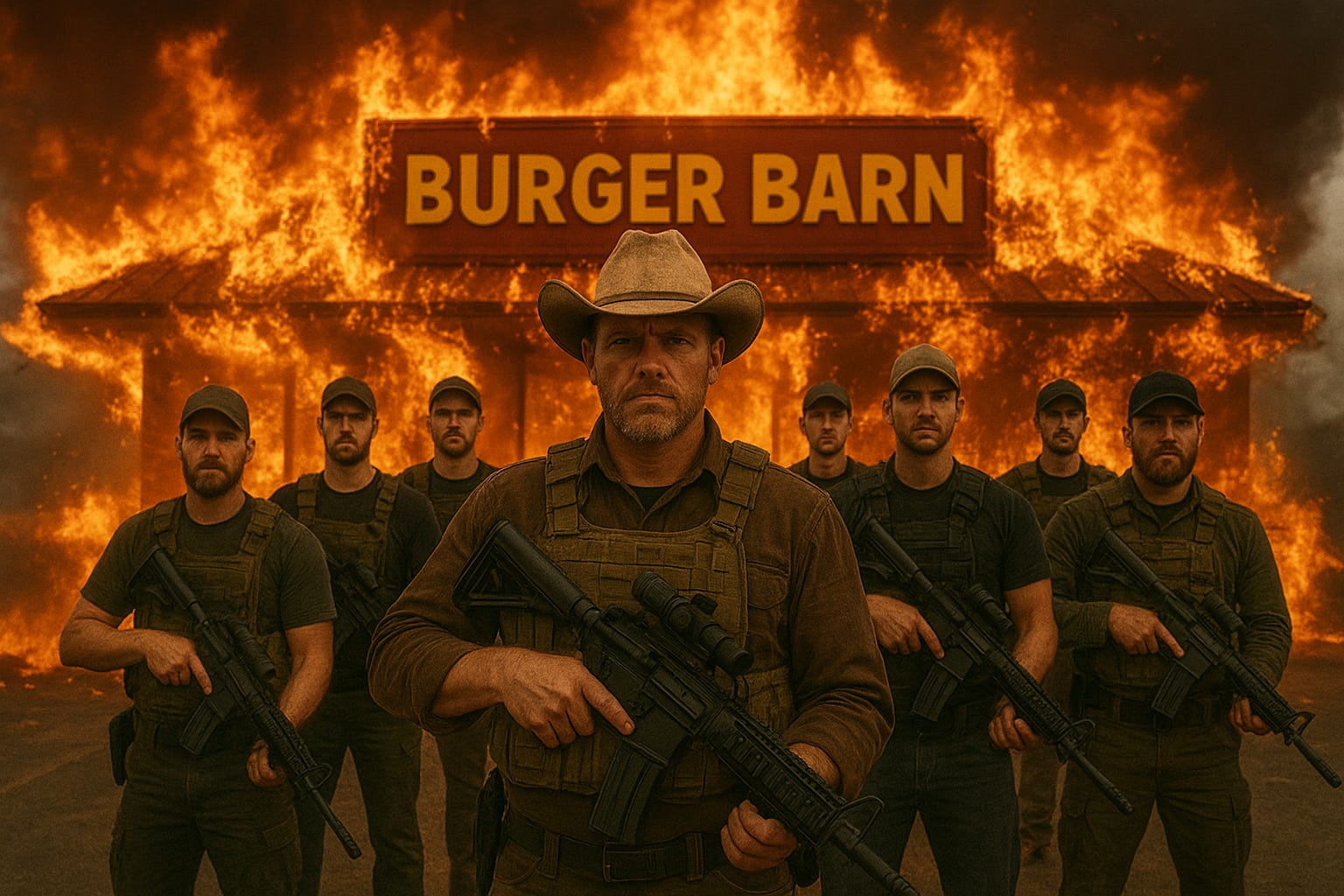
The most important stage of this transformation is the loss of the state’s monopoly on violence. Outside of very minor and insignificant neighborhoods, this has not been completed in the United States and Canada, though has in Mexico. The purpose of this article is to present some of the various paths that have been well trodden by the Chinese in their period of state breakdown to the reader. What must be understood is that we are not entering an age of renewal or empire. So examples from the Western canon such as Napoleon, Caesar or Augustus are not applicable. As with the fall of Rome, there will be no single defining man that brings down ‘the system’, but coalitions of enterprising men and their followers that grow powerful feeding off of the corpse of a decaying society, eventually birthing something new. I hope to illuminate the path of the 21st century warlord, keeping to a North American context. It will share similarities with China’s 20th century warlord period, however there are distinct differences specific to the conditions of North America in the 21st century.
The following section on Warlord Conditions is long. It can be skipped straight to the ‘meat’ of the guide if you already understand or accept how and why warlordism appears and that it will come about in the United States.
The conditions of a state—its competency, morale, the trust and belief that its subjects give it, among other things, are what present and take away the opportunities for warlordism. Warlordism simply is not possible in many conditions. If a governor in the United States in the 1950s attempted to break out of his client status and assert his own independence to create and exercise his own security force to extract concessions from the state he would be countered by the far more powerful federal government and its broader societal coalition of the media and bureaucrats who were entrenched in the governor’s cabinet. Yet if a similar governor did so in China in the 1910s against the new Chinese republic he would not face such resistance and very well may succeed in growing his own power and creating his own fiefdom. In any case, if the Chinese governor didn’t, he’d be replaced by a cunning clique that would.
So what are the conditions that differ between the United States of the 1960s and China of the 1910s? These conditions are likely generalisable. The China of today is closer in governmental cohesion to the United States of the 1960s than their own country in the 1910s. Therefore, we can assume that it is possible that the United States of 20XX also could have governing conditions more similar to the China of the 1910s than the United States of the 1960s.
As a general rule, the more governing activities are handled by non-federal authorities, the less friction and therefore greater likelihood of warlordism emerging. Key governing activities are journalism, tax collection, actions of the security apparatus, education (tertiary and lower) and regulatory duties (e.g signing and implementation of new laws and regulations).
As an aside, the United States of today the government has lost control of journalism, is rapidly de-funding its spook agencies, while state governments in recent decades have taken far more liberties in asserting their own laws that go against federal laws. Notable examples on the left are drug legalisation, sanctuary cities with a notable example from the right being expansions of open and concealed carry laws. Unlike most countries, where all police stations are just different arms of the federal head police office located in the capital city, police in the United States are independent local entities that serve only to enforce the law of whichever state they exist it in. This is highly unusual and is a good steppingstone for local power-players.
The most critical role within a government is tax collection. Without tax collection, the government’s redistribution patronage networks and coercive enforcement arm cannot be funded and will dissolve. If the federal government cannot collect taxes through agencies it wholly owns it surrenders the ultimate source of power to other entities such as tax farmers and local governors, increasing federal fragility and drastically lowering federal negotiating power against non-federal entities. When tax collection is no longer the domain of the federal government the situation flips from state and local governments and institutions (such as private schools) giving concessions to the federal government for access to funds looted from their communities to the federal government giving concessions to local governments and institutions for a slice of their revenue. In light of this, the crowning achievement for the 20th century Western state was the federal income tax. With it, the state’s economic control would increase from sub 10% of GDP to in excess of 40% of GDP. This flood of funds enabled the state to eliminate its reliance on local power players by enabling the creation of an expansive well funded domestic security apparatus, subsume what were once family and community functions such as childcare, education and elder care to the state, acting as battery acid to local community and family bonds, further increasing dependence on the state.
I believe strongly that the continued existence of the income tax in Western countries relies solely on inertia. The strong cohesive state and society that brought the income tax into being is not the same West that exists today. What if there was a stoppage of the income tax for a period? That leads us to the question: what circumstances could the income tax fail? There are a few, you may be able to think of some yourself. Currently, most Westerners work for medium to large companies. In the United States, 83.26% of Americans were employed by companies with over 20 employees, while 41.99% of Americans were employed by companies with over 1000 employees. These few companies are easier to make comply with taxes in some ways.

One scenario leading to the income tax being lost could be a debt crisis, where the only response left for the state in the midst of fiscal meltdown is to institute radical austerity, a combination of drastic spending cuts alongside tax and interest rate increases. This would break many of the heavily indebted medium to large companies, particularly the older ones that employ large amounts of people, by collapsing domestic consumption, radically increasing debt servicing costs and tax burden. The laid off employees unable to find work at the remaining companies due to their own troubles, all while government social services such as welfare become worthless, forcing people to work odd jobs or, if they can manage, become self-employed starting low-capital petty bourgeois ‘businesses’ to make ends meet, shifting their income from ‘on the books’ to ‘off the books’. Simultaneously the services that the state provides decreases, while the tax burden remains the same or equal, due to a shortage of funds. Those who continue to pay taxes look like freiers, to use the Jew’s term. This acts as a feedback loop decreasing tax compliance until in a few short years almost the entirety of the income tax is lost. This is the tax regime that the majority of the world’s population lives under. Once this occurs and the income tax is lost there’s no going back. Not for a long time.
So what happens in the reversal where the federal government can no longer collect income taxes as it once had? It ends up in a situation more similar to Qing China. The central government becomes reliant on sub-contractors (typically tax farmers) and local officials to collect taxes. With the income tax being untenable, greater reliance is placed on consumption taxes on goods with inelastic demand. A consumption tax levied on goods with inelastic demand has a far lower potential ceiling for tax revenue than the income tax. In Qing China that tax was levied on salt, in a United States with a further decayed state that could be levied on a high-demand drug that cannot be produced in the US, the most promising candidate being cocaine due to its addictive nature and therefore inelastic demand; with the taxes enforced by private contractors who keep a sizeable fraction of the revenues they raise for the federal government.
These private contractors and local officials would become important well resourced and armed local power players. Without the income tax the scope and scale of the federal government radically reduces down to medieval functions. In Qing China, the central government lacking an income tax, only controlled/represented 1-5% of economic activity (GDP). Local power players at this stage of state decay can now within their respective regions fund better security forces and support tighter, more lucrative patronage networks than the far away unmotivated capital. Often these local power players become indispensable to the incapacitated federal government chronically desperate for funds. Again, a reversal of the previous balance of power. The federal government must now make concessions to the local power players. This is the essence of warlordism.
By far, this is the area where we have seen the greatest decay in ‘government’ power in the past few decades since peak-centralisation c. 1935-1995. In the 90s and 2000s there were early intrusions from talk radio. But the largest shift has been since the internet has been utilised, breaking down what was essentially a monopoly on information and total dialectical control wielded by the university-government-media priest complex. In many respects this is similar to the printing press breaking the monopoly on information that the openly corrupt pre-Council-of-Trent Catholic church had over Western Europe, especially outside of Northern Italy, though I am not the first to point this out.
It can be left to others to go into more detail on most of the aspects relating to this, however there are points that are relevant to a transition into warlordism. Firstly, official managerial ideology where The Science™ is used to determine the correct solution, filtered by a committee of ideologically aligned experts, has been de-legitimised. When reading old stuff before the 1990s you begin to see how pervasive the belief in academic infallibility really was. Communist, Liberal, ‘Conservative’ or right-wing. All sought to validate their policy via expert (often technical) consensus and implement their ‘expert’ validated policy via some form of bureaucratic process. Yet today the phrase ‘economists believe’ or ‘experts say’ is practically a prefix to delineate something as being unserious or a lie.
This is relevant because the warlord program involves throwing out 95% of bureaucrats and makes no friends with academics or journalists. This nefarious cluster of people falling of their ivory tower as we speak is yet more friction removed from the warlord transition and an additional accelerant of state decay. The bureaucratic state without the ability to legitimise its actions or defer truth determination to the academic-journalist caste is not just directionless but devoid of legitimacy. With the loss of legitimacy of the state and its bureaucrats it is becoming clearer to a larger and larger element of the population that they are really just being harvested for tax revenue and played with as toys by incompetent, often menopausal, narcissistic bureaucrats on a power trip.
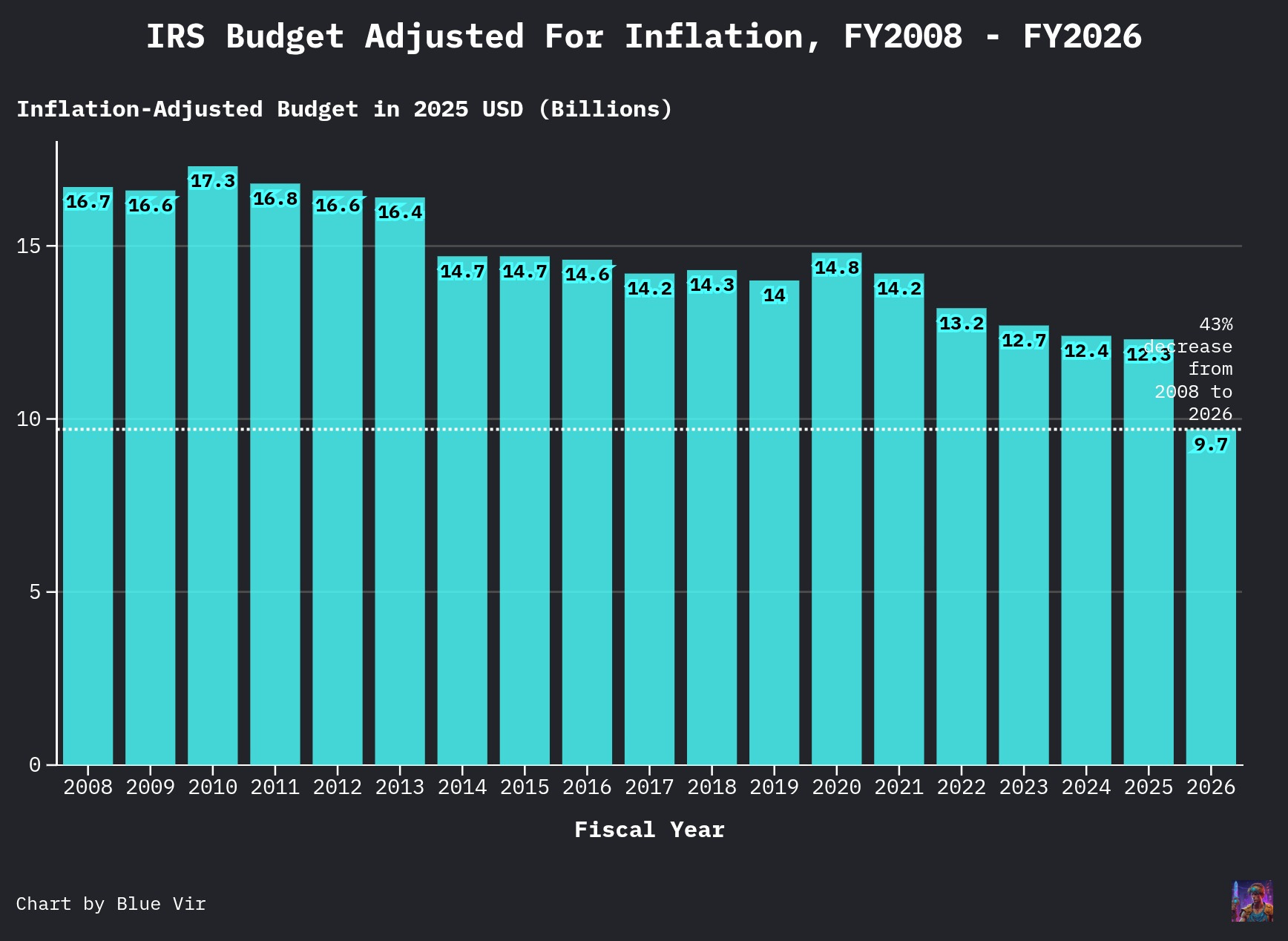
‘Security apparatus’ categorises the collective military, local police and various federal agencies (in the United States the FBI, DEA, IRS, ATF and others). The work of eroding the scale, strength and cohesion of the security apparatus occurs simultaneously with the aforementioned loss of legitimacy of the state and reduced ability of the state to raise revenue. The legitimacy of and therefore the people’s trust in the security apparatus has fallen far over the past 50 years across the English speaking world, with US being the most relevant for obvious reasons. Curiously, the current Trump administration has either cut or failed raised budgets of the aforementioned 3 letter agencies in line with inflation. The military budget remains secure, however an aforementioned debt crisis could very well jeopardise this, depending on how wise the regime is in what it prioritises. On paper currently the military budget is not included in mandatory spending (which comprises 2/3 of the total US budget), but is discretionary spending. It is politically more difficult to change mandatory spending as mandatory spending is written into laws, laws which must be repealed. Discretionary spending however is commonly flipped around as it is reviewed and changed yearly. A scenario can be imagined where the military becomes coded towards a particular political party. All it would take in the event of a fiscal crisis to prevent a budget cut is the military coded political party to control either the house, senate or presidency to block tampering with the military discretionary budget, forcing the non-military coded party into causing fiscal meltdown due to indecision on what to cut, or cutting entitlement programs.
So an overview on the preconditions to warlordism: federal revenue difficulties, weakened security apparatus, discredited bureaucracy, discredited media-academia complex, greater delegation of duties to non-federal authorities. We are a great deal along this path.
With the preconditions to warlordism outlined and reported on, we can move on to the meat of the guide. How have people managed to slide themselves into a position where they can become a warlord? What are important measures that they take to stay a warlord and grow their power? There are a few path ways to becoming a warlord that will be laid out.
Businessman to warlord is somewhat straightforward. Simply put, a businessman with minimal tactical knowledge hires out a fighting force that enables him to expand and defend his money makers (e.g opium fields, toll roads, railways), destroy his business competitors and enforce a monopoly on his goods if that is his interest. The increased profits from these actions are then reinvested back into expanding his hired fighting force just as Amazon would reinvest profits back into building more fulfilment centers. A particularly dynamic and wildly successful modern example of the Businessman to Warlord is the Mexican cartel CJNG (Jalisco New Generation Cartel). Here is an excerpt on their McDonald’s-style franchise drug gang model pioneered by El Mencho, the founder of CJNG, from my article on the evolution of Mexican Cartels:
“With McDonald’s, the franchisee raises his own capital to work within the McDonald’s franchisee guidelines which gives him access to the McDonald’s food products, supply chain, brand and marketing. A successful franchisee utilises the McDonald’s proprietary range of products to run a highly profitable restaurant with less risk and a gentler learning curve than if he started his own restaurant. A successful McDonald’s franchisee may own many McDonald’s franchises, taking on the risk himself and funded by his own success. The successful franchisee benefits McDonald’s corporation as McDonald’s Corporation owns the real estate and makes money distributing licences and products to the franchisee. The franchise system means that McDonald’s corporation doesn’t rely on unaccountable salaried bureaucrats and managers to generate profits or have financial exposure to their mistakes. In this elegant system, a poorly run or unlucky franchise simply looses money for the franchisee with little downside to McDonald’s corporation, as McDonald’s Corporation didn’t invest their own capital.
In CJNG there are the elite central forces, headed by the leader Nemesio Oseguera Cervantes aka El Mencho (arrested in Nov 2024). The central forces are comparatively highly disciplined and often recruited from Mexican army and special forces deserters. El Mencho and the central leadership has specialists and connections with Chinese and Colombians that give them access to drug products (chiefly fentanyl precursors and cocaine) and has established drug routes to the United States that CJNG gang affiliates gain access to when they join under the CJNG banner. Much of the day-to-day fighting and trafficking is handled by the affiliate gangs who’ve joined under the CJNG banner. They function similarly to restaurant or retail franchises.
Competent leaders of small gangs [Warlord Article Note: imagine how especially effective this could be in the hard to control posse dominated scene that North America is turning into] can approach CJNG, they may be given assignments, perhaps killing some rival cartel members or organising the transportation of drugs across a certain area in return a portion of the money which the small gang makes will be claimed by the central CJNG leadership. CJNG will provide the drugs or other goods, and the franchisee will handle the rest. If the franchisee is killed or arrested or becomes unpopular with his men who mutiny there is minimal exposure to CJNG. Infighting within a franchise is not necessarily a bad thing, for example an ambitious popular member of the gang killing an unpopular ineffective gang leader. All the better for CJNG if he manages the gang better as long as he still aligns with CJNG. In this case the new leader’s franchise will likely accrue more men over time, perhaps growing a gang of a dozen men into the hundreds, all earning more revenue and prestige for himself and the CJNG leadership.
If CJNG’s position is threatened by a rival cartel or a rival cartel is moving in on territory of the central leadership or a franchisee, or if the CJNG central leadership wants to make a serious push against a rival cartel then a coalition of franchisees and the elite central forces can be rallied. The coalitions of numerous franchise gangs and the elite central army have proven to extremely effective. It has allowed CJNG to become the primary or perhaps secondary player in the multi-hundred billion dollar Mexican organised crime sector within 15 years.”
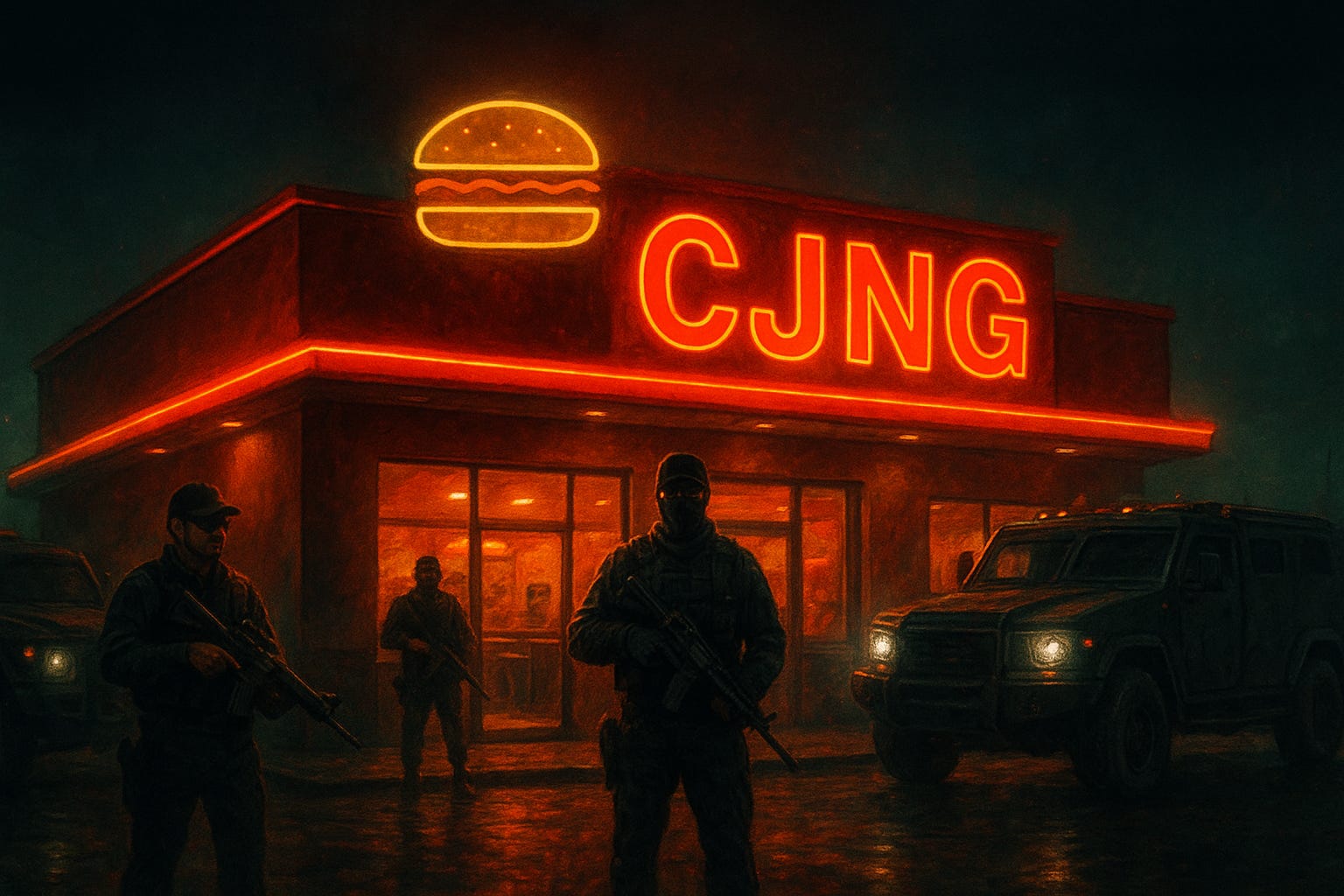
While the founder of CJNG didn’t start off as a legal businessman himself, you can visualise how a cunning businessman could create a similar system, greatly expedited by a businessman’s pre-existing access to capital, as state power weakens. Just as he might today invest his capital into buying McDonalds franchises, in the future he could invest capital into petty gangs and facilitate the movement of drugs into their hands, with the businessman’s security being provided for by professionals. Such a franchise model doesn’t require the businessman to have rigid control over military commanders or alternatively not control his military commanders but ultimately be easily replaced, as was the case during the Chinese warlord period to the businessmen without martial skill who turned warlord. This removes the greatest Achilles heel from the 20th century to the businessman warlord.
With a franchise system established the businessman can now with lower risk focus on non-tactical level businessman things – brokering alliances, mediating conflict, weapons and drug manufacture & distribution, occasionally making the executive decision to exercise his small, specialist and loyal force to bring the hammer down on severely deviant franchisees or enemy cartels/warlords. Just as the McDonald’s higher-ups worry about real estate deals and marketing, not the cleanliness of their stores, while occasionally withdrawing franchise licences over severe violations of the terms and conditions by a franchisee or initiating a marketing campaign to displace rival corporations such as Burger King. This franchise innovation has opened up new avenues to power in the 21st century North American warlord era that did not exist in the 20th century Chinese warlord era.

It was ultimately a political warlord, Mao Zedong, that defeated all other warlords and ended the Chinese warlord era. If Mao did not succeed it would have been Chiang Kai-shek. Yet I do not believe that our future lies in political warlords. Perhaps politics can be used as a veneer to legitimise actions, but I do not expect it to be the driving force of most military action. This is mainly due to the cynicism and self-serving nature of Zoomers who are less likely to be absorbed in idealistic movements, which I predict will also be the case for following generations. Additionally, the current state of the deracinated masses is such that they aren’t very capable of representing their class through violent action, more in this article.
Enough opining why political warlordism probably won’t work, here’s how it did work back in the day.
Che Guevara’s book Guerrilla Warfare gives us a window into the Cuban method, granted in that book he didn’t seem to make much of an attempt to systematise it, so I will try now. It had many similarities to how Mao went about it, though in Cuba it was significantly less brutal and less ethnic in character.
The basic Cuba feedback loop is: seize land from landlords→ propagandise the peasants working said land (who are generally sympathetic to the revolutionaries offering better conditions) → utilise non-renewable resources of the land, especially those which were indisputably property of the landlord, to expand and replenish the army (e.g slaughtering cattle and instructing the peasants to then produce leather to craft and repair boots)→ dividing up what is not consumed by the army to satisfy the peasantry → recruiting members of the satisfied peasantry → repeat process in adjoining territory.
Supplemental injections of materiel from foreign entities that support your mission also go a long way and are generally critical to success. Most especially if you are fighting an actual revolution to seize total control of the nation and aren’t just looking to carve out a communist fiefdom in a corner somewhere.
With the feedback loop articulated it makes it easier to see why bottom-up Cuba style Communist revolutions aren’t possible today – what are you going to divide up that is rich enough to satisfy entitled first world people and refuel your military? The Walmart? Facebook shares? Anyways, there is another element, more relevant to the modern West and used by Guerrilla Grandmaster Mao. That is ethnic grievances and mobilisation of vagrants and criminals. Spread across the south of China where Communist resistance began there exists an ethnic group that are called Hakka. As brief background in the 1850s and 1860s there were hardcore Rwanda-tier clan war genocides between Hakka and non-Hakka in the region near Hong Kong. Hundreds of thousands, perhaps a million died and the Hakka clans lost to the Cantonese clans, driven out of the fertile Pearl River Delta to the mountains. A funny aside is that the Chinese gold rush immigrants to the US and Australia, who were 90%+ Cantonese, were funding the genocide by sending back to their clans in China money to build fortresses, buy rifles and hire mercenaries. This is what large scale organised ethnic warfare when the state is too weak to do anything looks like. Read up on the conflict if that topic interests you.
Moving on… The Hakka were disproportionately landless criminal vagrants poorer than peasants, often travelling clothed with only rags and armed with machete equivalents, pillaging their way through the countryside alongside their clan brethren when odd jobs dried up. Now this wasn’t all Hakka, the rest generally lived in fortified clan complexes in the mountains. Already poor by standards of 1920s China, and used to exercising violence outside of the bounds of the state, the Hakka would turn out to be vital for early Mao’s guerilla war and would go on to be extraordinarily disproportionately represented in among top CCP officials after Mao took it over, especially if you include marriages to non-Hakka top brass, such as Mao himself, who as a non-Hakka took a Hakka wife. A Hakka you’ve probably heard of is Deng Xiaoping.
Hakka bandit soldier Communists under Mao had no pretence towards sympathy with the overwhelmingly non-Hakka middling peasants that they looted, tortured and slaughtered in large numbers. To most Hakka, any peasant with land and consistent work was wealthy, therefore with Mao’s tolerance the peasants were valid targets under both the pre-Communist bronze age Hakka grindset mindset and newfangled Communist ideas. And so the Hakka fighters formed a key bloc in executing Mao’s radical anti-middle peasant plans and rural plunder (supplemental patriotic foraging) that deviated from egghead CCP doctrine before Mao was endorsed by Stalin for his clear competency and later aligned praxis with the head of the Soviet. This endorsement gave Mao the legitimacy he needed take over the CCP which was often so hostile to him. It helped that all the CCP egghead salaries at that time were paid by his endorsers, the Soviets. Without the Hakka, early Mao would be short on fighters, especially those willing to go against not just against large landlords but also regular peasants out of pure love of the game, and likely have greater troubles proving himself and wrestling control of the CCP from the non-Hakka ideological self-aggrandising eggheads who had no army and achieved nothing other than convincing more ideological self-aggrandising eggheads to join the CCP. That power struggle is the context of “Political power grows from the barrel of a gun.” by the way.
When Mao was just another somewhat influential member of the nascent urban-based CCP, he was adamant on staying in the countryside fostering ties and building his army. He refused to attend many important meetings, tactically being sick on those meetings where he was about to be confronted by party members whom he was in an intellectual conflict with. Since the army in the hills was tightly in his grasp there wasn’t much that could be done to punish him. If you are in a political movement and are in conflict for whatever reason with the intellectuals in that movement you may want to consider disengaging from that politicking game to a certain extent, and dedicating more of your energies into ensuring that the armed resistance force is loyal to you and will execute your vision.
Token military experience of the type available before ‘shit kicks off’ probably has value if you want to become a leader as things grow more chaotic. For 6 months, 18 year old Mao was in a regional regiment during the Xinhai Revolution that overthrew the Qing Dynasty. He saw no combat, but in his project to create a socialist student militia in university years later he was automatically looked up to as leader as he was the only one that had ‘military experience’, even if he did not have combat experience. As leader in this militia in his mid 20s he naturally gained rudimentary experience in leading a fighting force, giving him legitimacy in his future martial ventures. Perhaps this difference in early life was what set him on a different path to the CCP eggheads, which would snowball over 20 years leading ultimately to victory over the party, then a decade on from that, victory over China.
As cool as Mao was, as far as I can surmise any attempt to become a political warlord is just swimming against the current of the 21st century. An exception applies to ethnic politics which unlike class conflict is still practicable. With that notable exception, the methods that were used by political warlords with great success in the 20th century are simply impossible to effectively implement today and in this century. Overwhelming chances for failure when going beyond local success, not even romantic failure either. Just a total waste of time travelling on a road to nowhere.
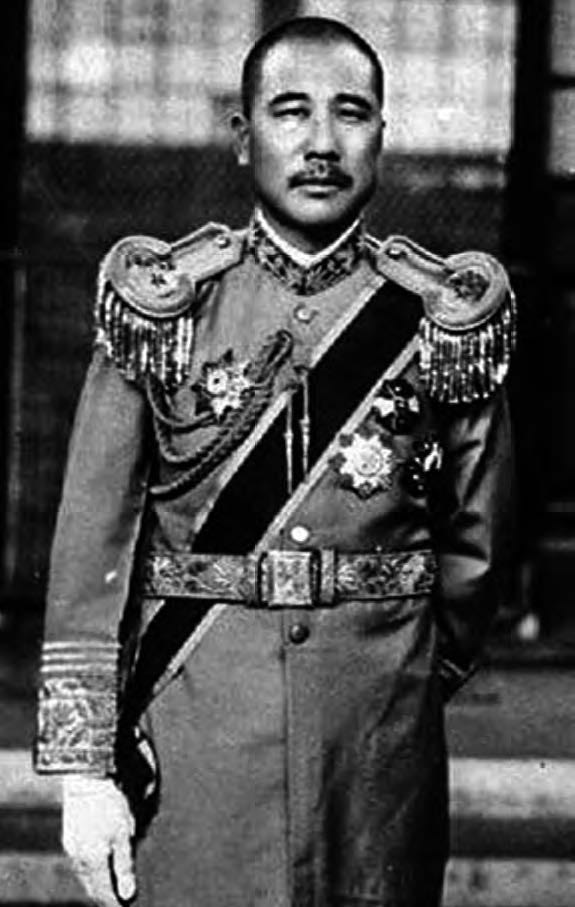
I use ‘institutional man’ as a catch all for both military officers, police higher ups and governors. In warlord era China it was the most common pathway for successful warlords. Typically, a young to middle-aged man with origins from a more peripheral area who had graduated from one of the more modern military academies in China and risen up as a competent officer would collude with regional governors and/or influential family members to extract large amounts of wealth by taking control of his home area with a band of soldiers, growing opium and severely taxing the peasantry. In some cases they would gather patronage from foreign entities, such as the Japanese.
In small-arm starved 1920s China, the Japanese were a vital source of guns and ammunition. This is one area where 21st century North America sharply differs from early 20th century China or other warlord and rebel movements. There is no shortage of small-arms at all. Getting the funds to acquire small-arms was a hurdle that limited Chinese militias and smaller forces, and gave disproportionate firepower to larger warlords (typically institutional men) who could quite easily destroy bandit leaders and local upstarts whose men often didn’t have firearms. Bandits and other non-institutional men are going to have a much greater ability to produce force in the event of a breakdown in US governance than they did in the breakdown of the first Chinese republic. So they will be a problem for the institutional man turn warlord. The dominant strategy for the warlords of 21st century North America will likely be coalition building with multiple independent petty posses. The method of doing this which has been pioneered by the aforementioned Mexican Jalisco New Generation Cartel has found great success, and may be the best template.
Destroy one tank and you’ve stopped one tank, destroy one tanker and you’ve stopped many tanks.
Harassment of supply lines by cheap FPV drones striking trucks may end up being analogous to the glacial buzzsaw that limits mountain height. The hypothesis is that at a certain altitude, the formation of glaciers is rapid and greatly erodes mountains, limiting their maximum height. As an army grows larger and more centralised its logistical needs and supply lines grow. Perhaps the drone threat by destroying supply lines will act as a ‘military size buzzsaw’, limiting the scope of centralised armies. In Russia and Ukraine they have over 2025 resorted to building nets around parts of key supply roads to halt drone attacks, but such a resource intensive action is only viable for reasonably organised states engaging in static attrition warfare. 21st century North America is not/won’t be like this. This further advantages coalitions of smaller posses that have fewer logistical demands.
In the modern US and Canada, where subsistence agriculture isn’t practiced outside of Amish/Mennonite regions, the aim of the budding warlord likely shouldn’t be to control maximum amount of peasants (which no longer exist) and farmland, but natural resources such as coal and oil fields and enforcing a drug monopoly. North America also has some key strategic resources such as the Spruce Pine pure quartz mine in South Carolina, which is single-handedly responsible for ~90% of the world’s quartz required for advanced semiconductors and photovoltaic (solar panel) production. Its location being in Appalachia is convenient for any warlord to control. It is quite plausible that the warlord that seems most likely to control it could likely bargain with China for a stupendous amount of materiel and funds.
Protecting the productive but pacifist Amish and Mennonites, especially as their young population continues to explode in certain regions this will become a more and more lucrative strategy. As the FIRE economy goes under, Amish skills, work ethic and passivity become extremely valuable. Their Achilles heel of course being that they can’t defend themselves. Their protectors will be able to command a heavy fee and likely turn into the closest thing to a warrior aristocracy that the Americas has seen so far. In areas where no group steps up to protect the Amish for whatever reason and they are inevitably terrorised there would likely be schisms within Amish communities about the biblical validity of self-defence and pacifism. The Amish that hold to their pacifist beliefs would move to areas where they can hire security, while those that abandon them become well armed yeoman with characteristic Amish discipline. Schisms among the Amish happen all the time for far more minor issues. Since the Amish have so many children these obscure schisms become full fledged movements in a few generations. The Bergholz Clan of Ohio declared that the New Testament is invalid and embraced the harsh and absolute Bronze Age values of the Old Testament. The man who founded it had over 110 grandchildren by age 67, from one woman, not including those from his other wives. He and a dozen others in the clan were arrested for hate crimes against other Amish and the community has mostly dissolved, but nevertheless they show the potential of how far these schisms can go, especially if the state can’t stop them.
From my cursory research, in China secret societies that formed brotherhoods bound by oath and glued together by secret rituals would rent themselves out as a fighting force for the benefit of the org and its members. This then scaled and the leaders of such groups could grow powerful. This is a large topic with deep history that I have not researched enough and will get to later, perhaps in a future article.
Bandit leader transitioning into something more permanent, another pathway is be local self-defence militias charging evolving into full time armed groups from funding themselves through the drug trade and racketeering, as Los Viagras, a community self-defence group founded in 2013, did in Mexico. The case of Los Viagras is an excellent example of the modern mindset. The masses don’t seek a revolution, the state is too weak to fight the cartels, so a small subset of the common population create a self-defence force that then goes rogue and becomes a cartel itself. I predict that this will be a prominent feature of warlordism in North America due to the abundance of arms and new technological challenges to centralisation. As stated before, successful groups will likely just be those that are best at coordinating many smaller independent groups towards shared goals, rather than those who can totally dominate, while small solo groups and posses are competitive. I won’t go into detail on this for now as it is not very novel or has already been covered in this article.
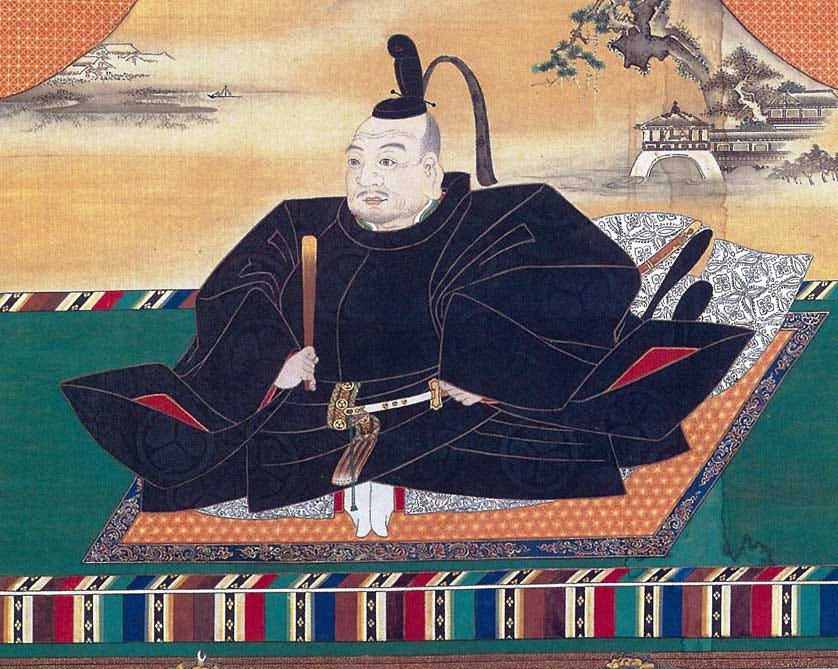
One of the frustrating parts reading about modern warlords is their general inability to maintain inter-generational power. Despite their wealth and local absolute power they fail. I believe this is because they simply aren’t trying, at least in any systematic way. The most successful warlord, who created a legacy by giving enabling is family absolute control over Japan for 250 years was Tokugawa Ieyasu. Failure to produce an abundance of heirs greatly reduces the long term power and network of a ruling family. Tokugawa Ieyasu was likely aware of this, and produced over 20 children, with 4 of his sons producing over 10 children, unlike his contemporary, Toyotomi Hideyoshi, who was the man that unified Japan but only produced 2 children, with a single child surviving infancy. That child killed himself at age 22 after losing to the Tokugawa.
The abundance of children, both male and female, allow all of the Tokugawa’s close to medium-close allies to marry into the Tokugawa family, naturally strengthening their relationship and greatly decreasing the likelihood of defection. More children also means more potentially exceptional heirs to chose to lead the estate. More children mean lower chances of the family line dying out. Note that this doesn’t just apply to the dominant family. Less influential but still upper-class families still can greatly grow their power intergenerationally by producing many heirs, ingratiating themselves with peer families and elevating valuable, lower status allies.
Inheritance is an interesting topic that gets no discussion. What is the optimal inheritance practice for growing family power? The late medieval to early 20th century Japanese and Germanic practice of bequeathing the family estate to the eldest born son carries the obvious advantages of only allowing the family estate to grow intergenerationally, never dividing. Unless you are in a volatile environment where your heirs will be constantly fighting in wars and subject to assassination attempts. This is why early medieval and before Germanic inheritance practice was commonly practised like the ‘Celtic’ gavelkind, an equal division of the estate among sons. This greatly lessens the risk of the wealthy family line being wiped out and its assets usurped in one fell sweep by others. It also gives more opportunity for other sons to themselves become power players by leveraging these assets, and greatly facilitates cooperation among brothers. Such opportunities for expansions do not arise if there is peace. War is good for upward mobility, especially for median-industriousness, high novelty seeking men.
You have to assess your environment and what inheritance practice will be best. Personally, if a had a decent estate and many sons I would probably give half to the most competent son and then divide the other half by the number of other sons. The son receiving half of the estate would be responsible for taking care of the widow if I left one. There are other arrangements I have considered as well. I have not read any record of this having been done before. Perhaps it’s because by the time men decide how to divide their estate they’ve lost their creative faculties and just follow convention and familial pressure. Or alternatively, non-senile men that think about inheritance practice are solely religious officials whose agenda is making the noble families more pliable, not more powerful.
Inheritance practices including or even prioritising female heirs are also very prominent across history and are nearly universal today. Beyond providing for dowries or widow support this is probably solely ‘maladaptive’ for growing the family estate. It should be abandoned. I don’t have a sister by the way, so don’t think that I’m projecting my personal life on to this ;)
The decline of the Western state has been ongoing for the past half century, and within the medium term will reach the point where state institutions will become completely dysfunctional. Ruling class legitimacy has already been lost, financial solvency remains but is highly vulnerable to a loss in confidence or acute crisis, while revolutionary politics was discredited in the last century, and today the masses are too feeble to engage in martial action. The most that successful reforms can do is reduce the rate of the rot. The men that thrive in this environment will not be reformers or revolutionaries, but opportunists. Men who can leverage their connection for the benefit of themselves and their inner-circle, at the expense of the state. Men who can build subversive coalitions, or otherwise exercise violence to extract concessions from the decaying state.
Warlordism happens when revolution or national rebirth are impossible, leading to feedback loop of decay where power players carve out their own dominions outside of the state. That is the world we are barrelling towards.
The aptly named “Warlord’s Reading List” by Kulak is an excellent, well structured resource. I’ve become aware of or read plenty of good books from that post. Check it out if you haven’t already.
His post on neomedievalism (highly relevant to warlordism) is quite good, especially as an introduction.
As is mine, or so I am told
The first 250 pages of Mao’s biography by Alexander V. Pantsov and Steven I. Levine is excellent. It is new (2013) and is based off of formerly classified soviet sources and is 700ish pages long, but beyond page 250ish it starts getting to the more advanced parts of his rise past 1930 that isn’t that relevant for ‘self-help’.
Overall there are very few focused resources on warlordism, so you’ll have to read very widely to glean what is useful and build a general knowledge of the area which will allow you approach a wider variety of sources. They are almost always observations or documentation, not ‘self-help’. I recommend asking your preferred LLM for relevant papers and pdfs. Obscure pdfs and papers are most of my reading these days, they are far more information dense than books.
No posts
Comments
Nothing yet. Say the first thing.
Sign in to join the conversation.