
Little did I know what a wonderful journey I was embarking on when in 1989, after recalling a seventh-grade art project, I melted some candles and began experimenting with batik. Originally from Maryland, I was living in the mountains of Cuchara, Colorado, doing oil and acrylic paintings and operating a shop specializing in custom hand painted clothing. Excited by the batik process and the results, I quickly put my paints away. I was hooked. Beginning with rudimentary decorative designs on clothing and bags, soon I came full circle back to doing representational “paintings”, but in a medium which was fresh and inspiring to me.
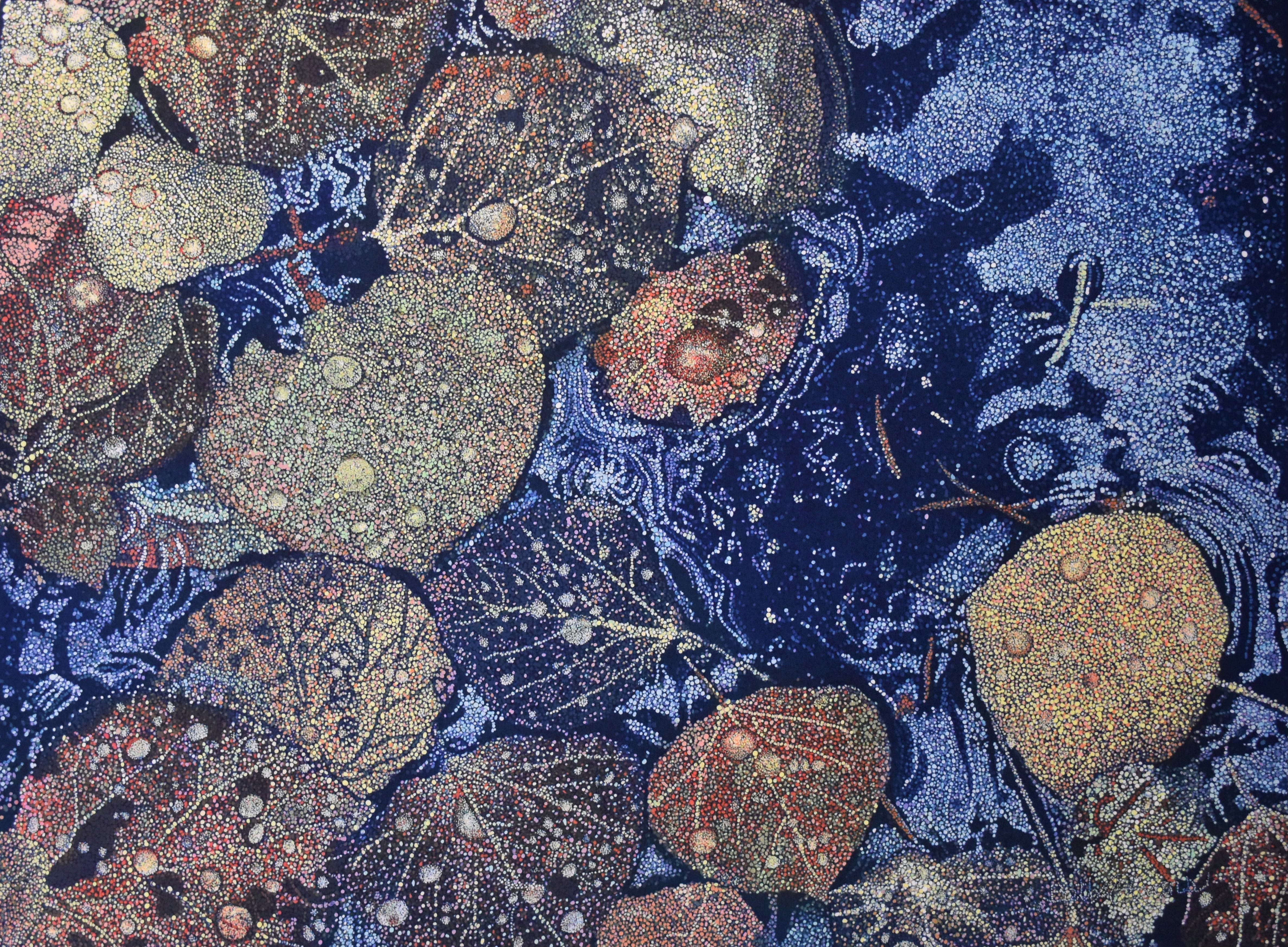
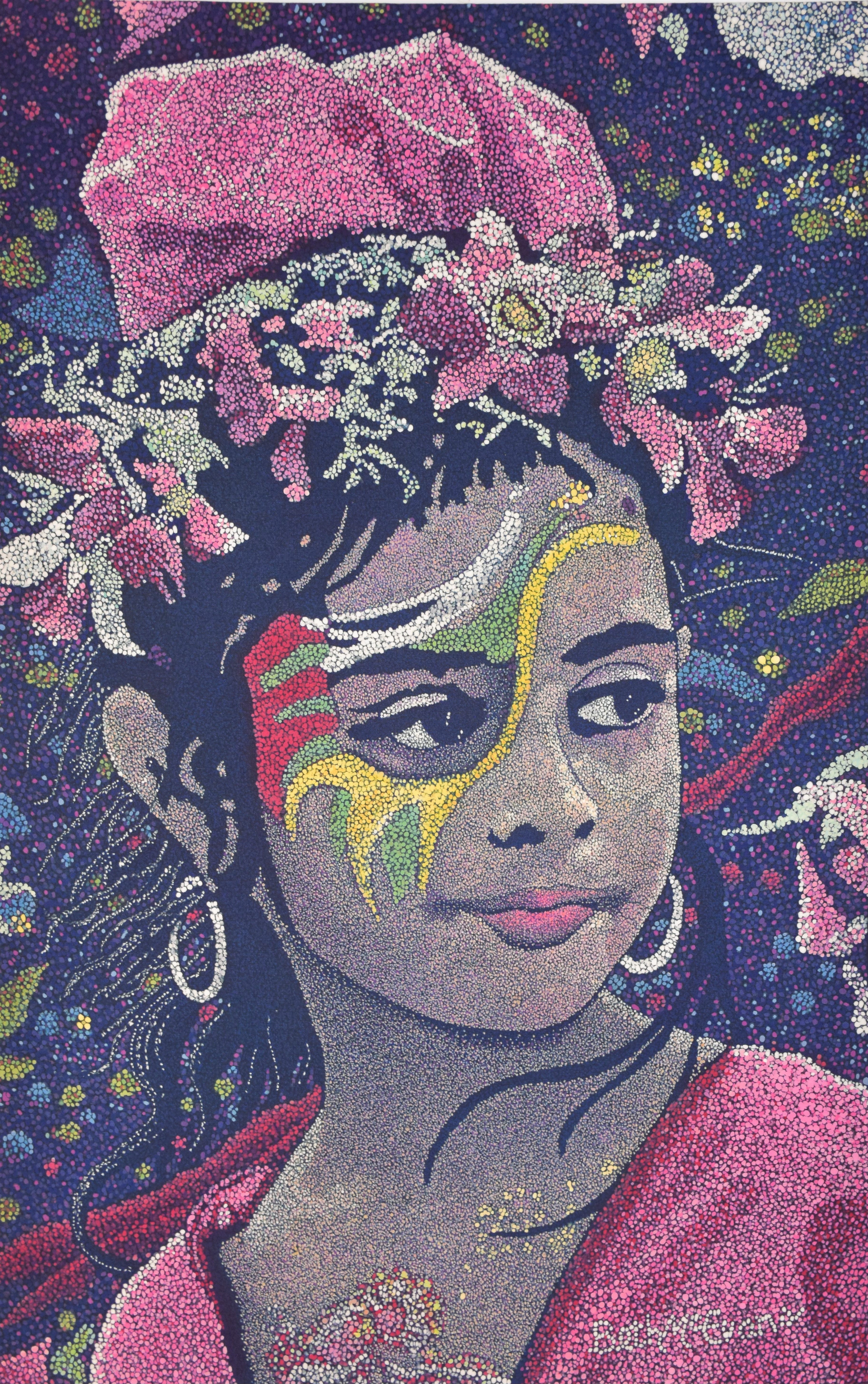
In 2003 I began experimenting with batik pointillism. I’ve always admired the master Pointillist and Divisionist painters, and I researched the color theory and techniques that they employed in their paintings, adapting and using what I could in batik. The challenge is to create an image where the eye and mind of the viewer can blend the color spots into a fuller range of tones. Through much trial and error and plenty of failures folded up in the closet, I’ve found I get better results doing larger pieces, smaller dots and, when I think I’ve done enough dots, I should do more! After drawing and thorough planning, the completion takes many meditative hours of dotting wax. A slow process becomes slower. Finding music with the right beat to dot to is very helpful sometimes.
For example, to do a pointillist batik of a green leaf, after completing a drawing I’d begin by putting dots of wax on the white cloth with a tjanting, varying the density according to how light the area needs to be. I’d then immerse the piece in pale yellow dye, dry and dot wax, again more densely in light areas, gradually dispersing the dots farther apart in the darker areas of the leaf. At this point I might paint an under-dye of darker yellow in some areas and then immerse in pale blue, so that there will eventually be areas of yellow-greens and blue-greens.
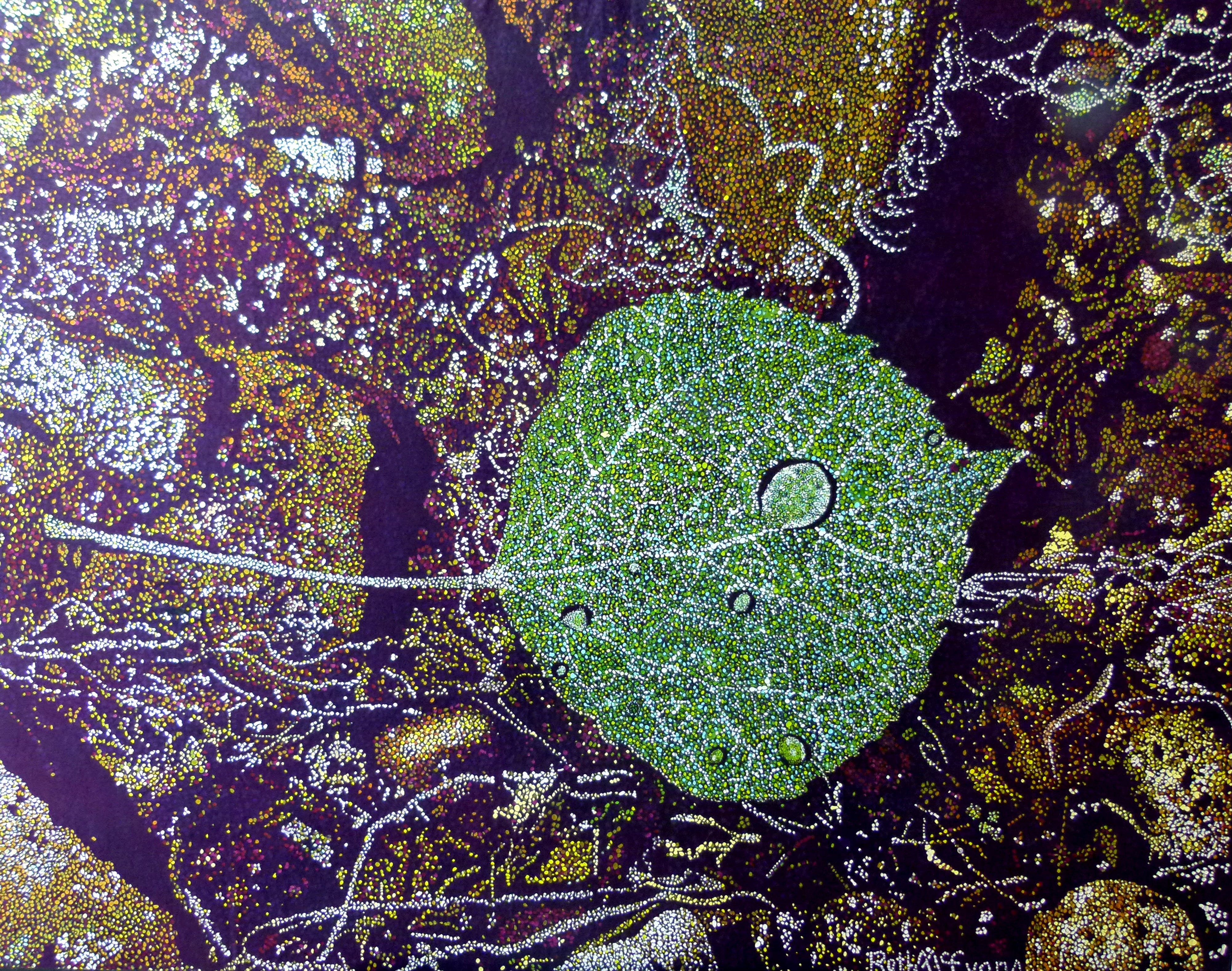
After two more layers of blue dye are dotted with wax, the majority of the leaf should be covered, except for the darkest areas. Then I’d immerse the piece in a red dye, incorporating some purple and browns into the remaining unwaxed areas. I try to have dots of complementary colors together. After dyeing in dark blue twice more, the batik would be completed, entirely covered with dots of wax.
In all my batik work, I try to rely on immersion dyeing as much as possible. I like the cohesiveness it creates in the piece, but I do paint and under-dye areas when needed to achieve the desired end result. I use Procion dyes, varying mixtures of paraffin, beeswax, and microcrystalline wax, and most often work on cotton cloth.
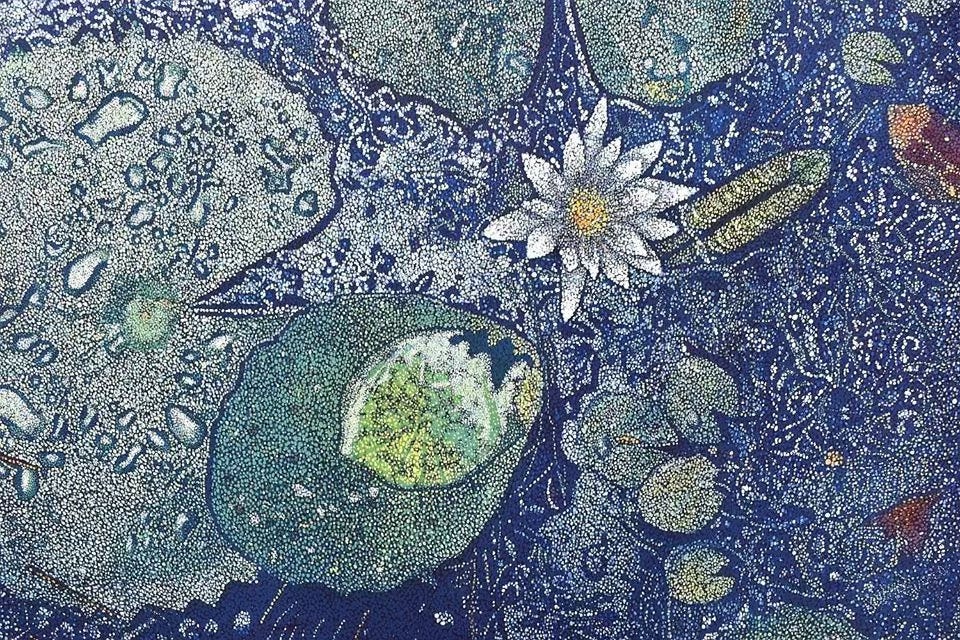
My husband, batik artist Jonathan Evans, and I currently live in La Veta, Colorado and operate Shalawalla Gallery and Gift Shop, where we exhibit our batik paintings, scarves, and clothing and teach batik classes by appointment in our studio behind the gallery.
Beth Evans is the co-author, with Jonathan Evans, of A Book of Batik: The Collected Batik Art of Beth and Jonathan Evans, published by Blue Ear Books.
No posts
Comments
Nothing yet. Say the first thing.
Sign in to join the conversation.