
A Message from the Library
With August giving way to September, the Ottawa Wildflower Seed Library has wrapped up its series of summer plant/seedling giveaways. Thanks to all who donated their time and/or plants and seedlings to make those events a success this year, and thanks to all who came out to join us and found homes in their gardens for more native plants!
Looking to the month ahead, September 30th is National Truth and Reconciliation Day. The Seed Library received a request from the Ottawa Public Library to produce 2,008 seed packages that will be distributed throughout their network for National Truth and Reconciliation Day. To accompany the seeds, we created a "zine", or mini magazine that explains what the seed library is and what individuals can do to foster reconciliation in their daily lives. You can get your zine and Red Columbine seeds at your local library next month! Huge thanks to all of our volunteers for putting this together in a short amount of time!
Notice: The OWSL would like to inform those who obtained seeds from the December 2024/January 2025 seed mailout that there were a few seed mix ups. If you ordered blue vervain, upland white goldenrod, or sweet joe pye weed you may have accidentally received a different species. For more information, please visit our website at https://wildflowerseedlibrary.ca/notices/
We’re Looking For …
For our upcoming 2025/26 season, OWSL is seeking a donated or cost-shared short-term rental space to facilitate its annual seed mailout operation. This essential initiative will run from late October 2025 through January 2026. The space will serve as the central hub for our dedicated volunteers to pack and distribute thousands of native wildflower seed envelopes to the community.
Your assistance in identifying a potential location within your networks would be invaluable to our efforts. This support directly enables OWSL to continue its vital work of providing native seeds and promoting ecological gardening practices across our city.
Upcoming Events
OWSL Presentation to the Carleton Place Horticultural Society (5$ for non-members)
When: Wednesday, September 3, 2025 at 7:00pm EST
Where: Carleton Place Horticultural Society – Carleton Place, Zion Memorial Church, 37 Franklin St, Carleton Place, K7C 1R6
About: Founder and Chair of the OWSL, Mélanie Ouellette, will be presenting on the importance of native plant gardening and sharing best practices. Seed samples will be available to attendees.
Seed Packing Event (Free)
When: Saturday, September 27, 2025 from 1:00-3:00 pm EST
Where: Ottawa Public Library – Stittsville, 1637 Stittsville Main Street, Ottawa, ON, K2S 1A9
About: The OWSL will be getting together to package seeds. Come join us for an afternoon of good company and leave with some seeds of your own!
Fall seed giveaways! (Free)
The Ottawa Wildflower Seed Library is excited to announce its fall seed giveaway event schedule. Find the dates and locations of the events on the seed library’s website.
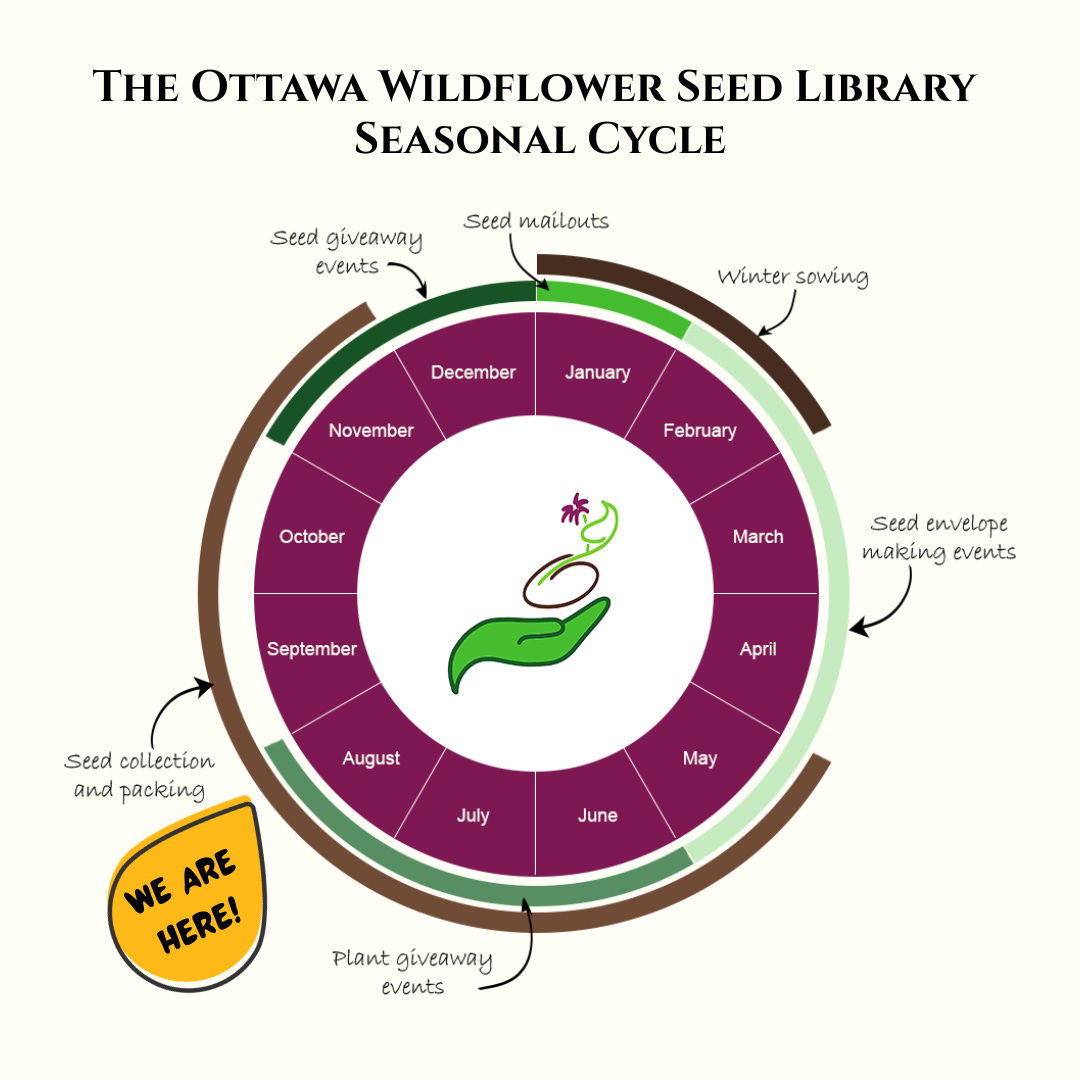
Seasons in the Garden
Full Moon Date: September 7, 2025
Fall Equinox: September 22, 2025
September brings with it a change of seasons as we shift into autumn following the fall equinox later in the month. It’s a time when we begin to see a change in nature – leaves begin to turn to brilliant colours, the weather starts to get cooler and the long days of summer begin to shorten. And while the height of summer is past us, there is still much to do in the garden. From harvesting seeds to planting fall plants, fall can be a great time of year for garden chores and to start thinking about the year ahead. Asters, goldenrods, false sunflowers, and grasses are all feeding butterflies and bees before winter arrives.
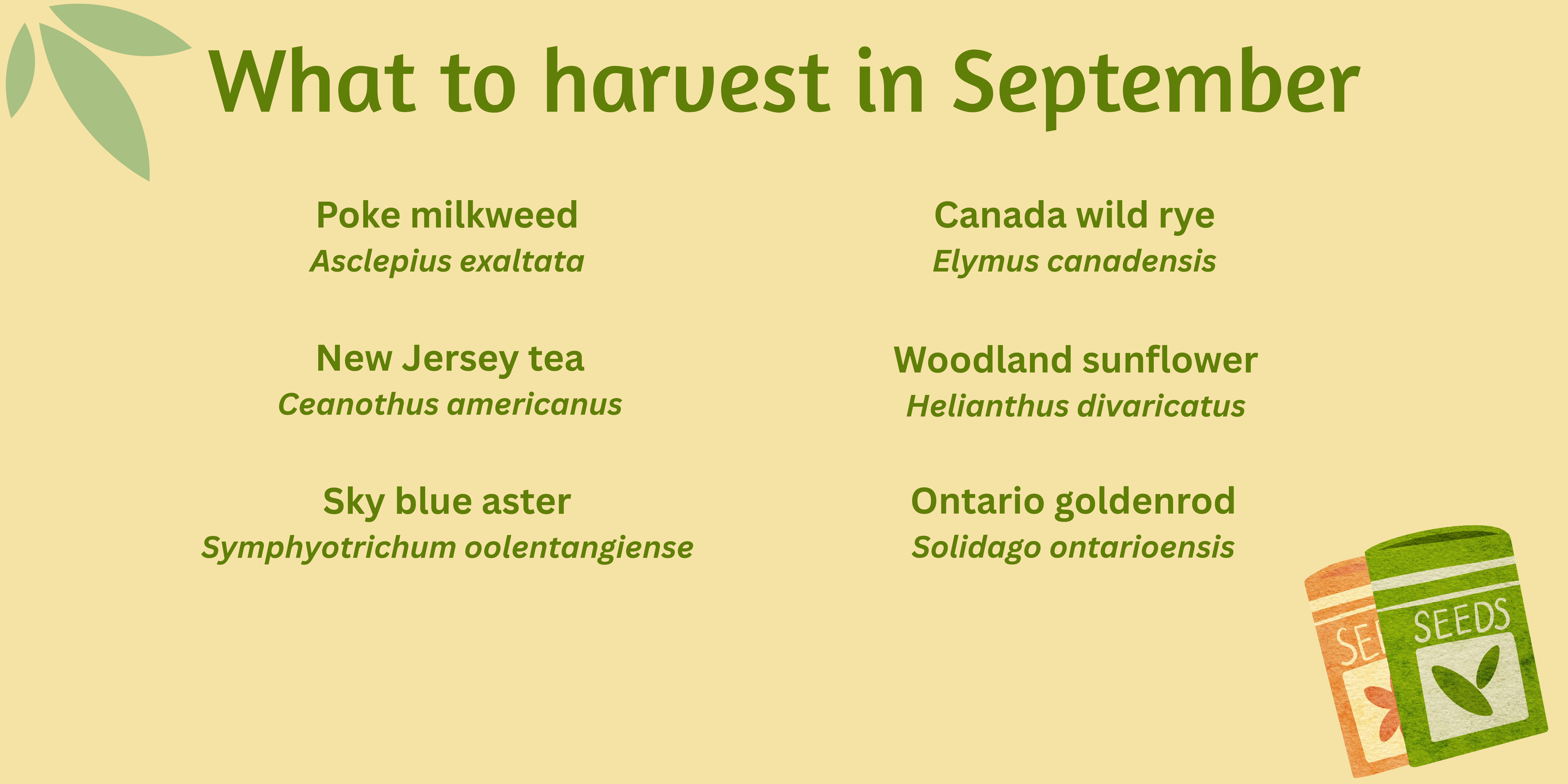
Contact us at wildflowerseedlibrary@gmail.com to drop your seeds off at one of our locations in Alta Vista, Barrhaven, Kanata, Nepean, and Orléans.
Native Plant of the Month
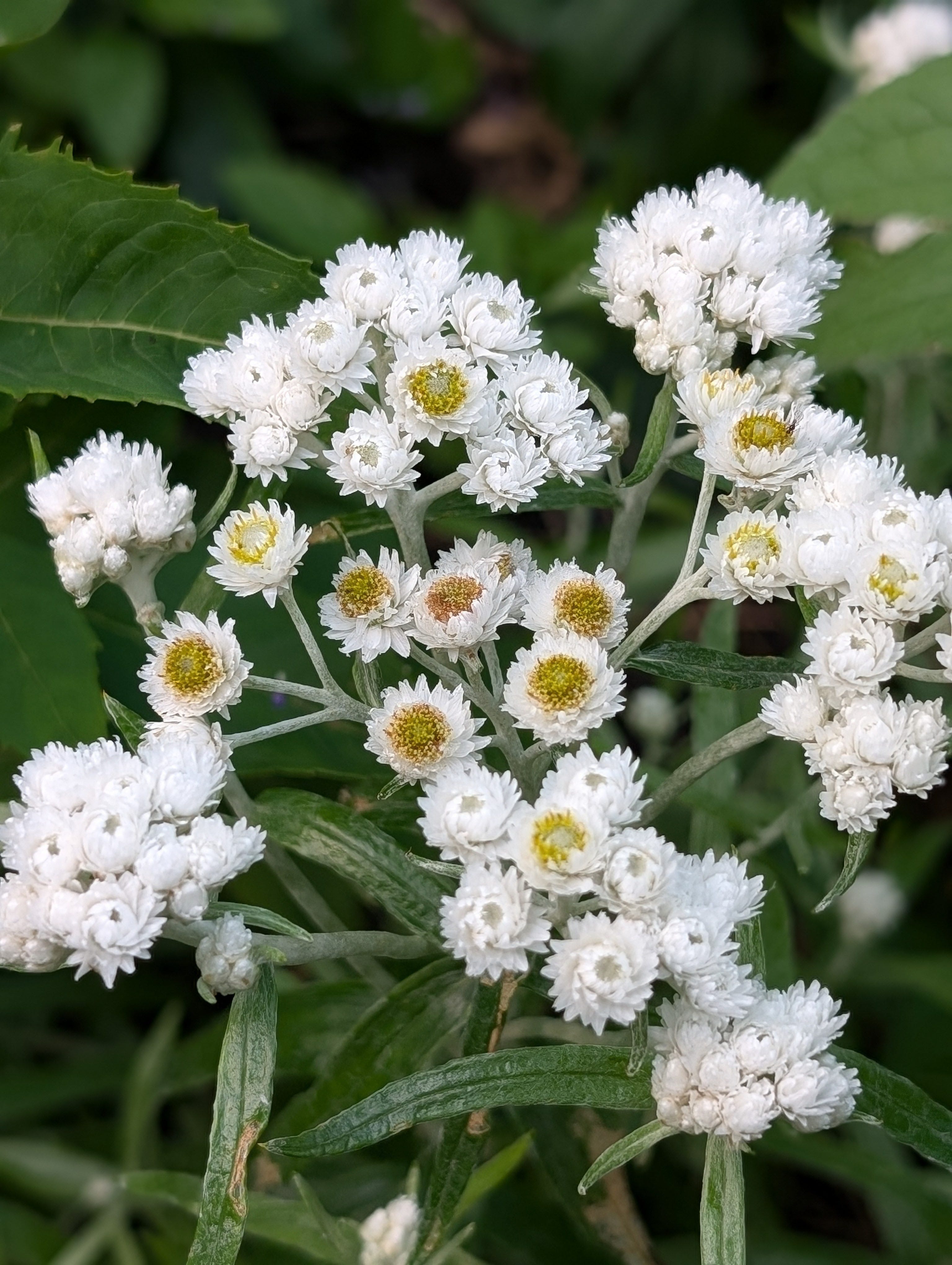
Pearly Everlasting (anaphalis margaritacea)
Pearly Everlasting, also known as Western Pearly Everlasting, is an easy to grow plant from the aster family. The leaves are covered in tiny hairs which gives them a silvery-green appearance. The plant produces numerous clusters of small white flowers with yellow centers. This plant is very drought tolerant and can be found from dry prairies to roadsides.
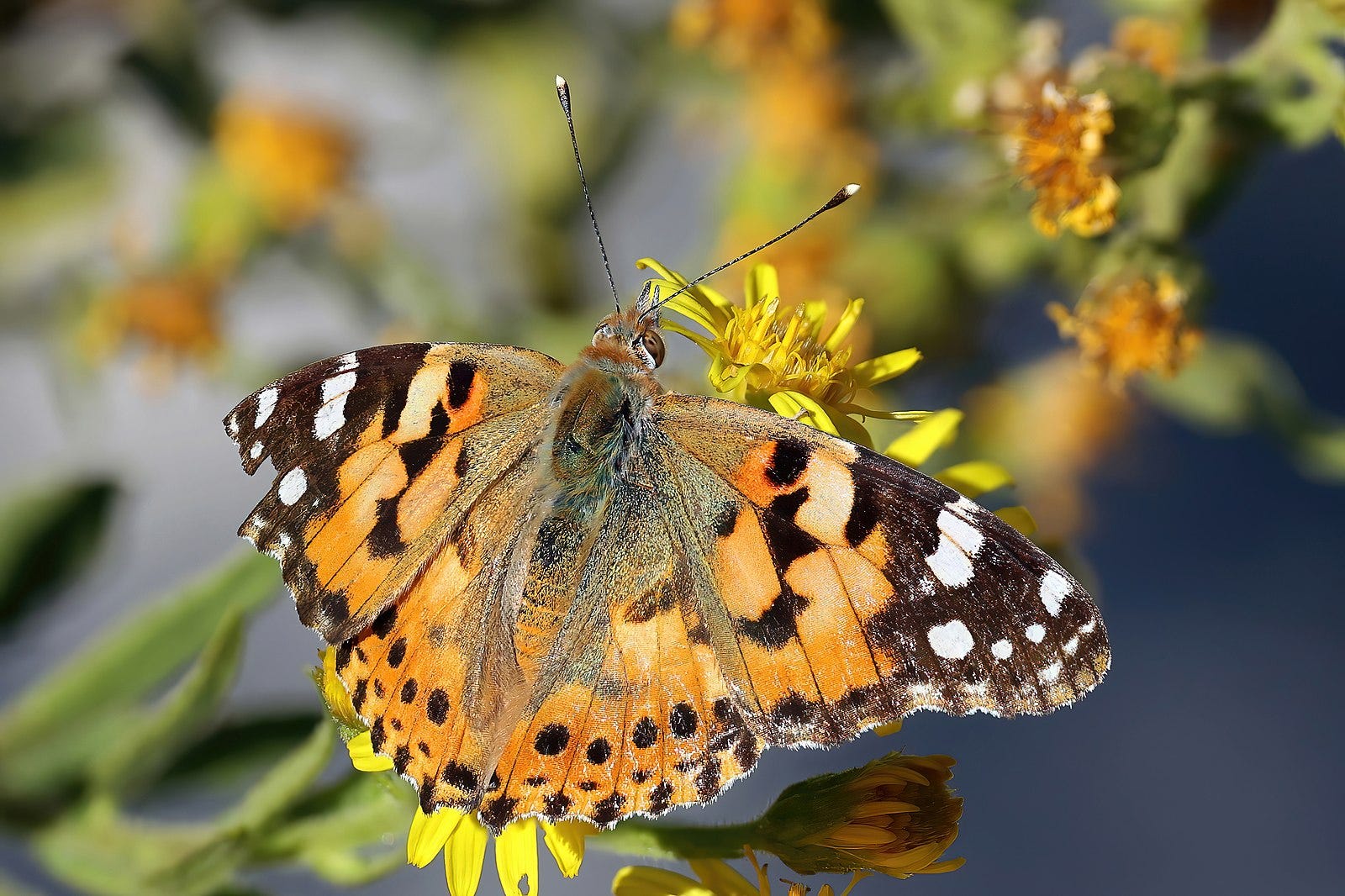
This native plant is a host plant to the Painted Lady (vanessa cardui) and the American Lady (vanessa virginiensis) butterflies as well as the Everlasting Tebenna Moth (tebenna gnaphaliella). The caterpillars of the butterflies create a silken web around the plant when feeding, a habit that is rather unusual for butterflies. While the caterpillar will eat back some of the plant, it will usually make a full recovery by late summer.
Pearly Everlasting has a long bloom time (from June to October) and the flowers dry well and can be used in dried floral arrangements (it makes an excellent alternative to baby’s breath!).
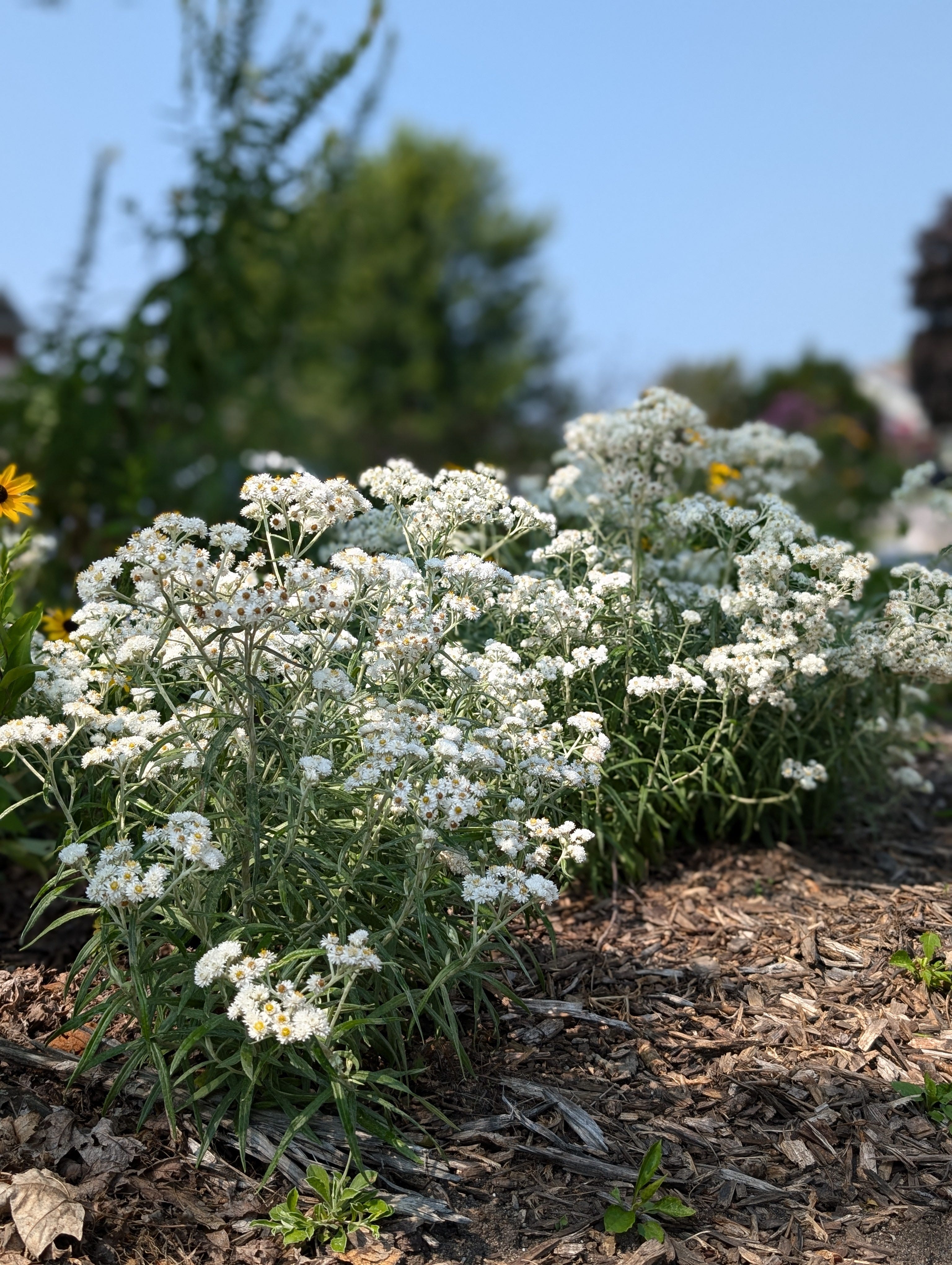
If you wish to harvest seeds from the plant, then it’s important to know that it is dioecious (has separate male and female flowers). Female flowers are shaped like an egg, with a yellow ring around the top of the flower head. You will need both a male and female plant in order to obtain seeds. Only the female plants will have seeds.
Garden Tidbits: What is a cultivar?
Sometimes plants are bred with other plants to present new characteristics that will appeal to humans. Longer bloom periods, brighter colours, and smaller foliage are all different ways that plants can present themselves depending on which other plants they are mixed with.
These plants are called “cultivars”, short for cultivated variety. The impact of cultivars on plants varies according to their new characteristics. Often, they are cloned over and over again, reducing their genetic variability. The ecological impact of cultivars as a whole has not been widely studied, so the extent of their impacts is not fully understood.
Generally, these cultivars are developed by companies and they claim ownership of the new plant (and its seeds) through trademark and/or patent. Some ways to determine if a plant being sold is a cultivar is that the Latin name will be followed by the cultivar name in single quotes. For example: Phlox subulata ‘Scarlet Flame’. You may also see the registered trademark symbol “®” next to the name.
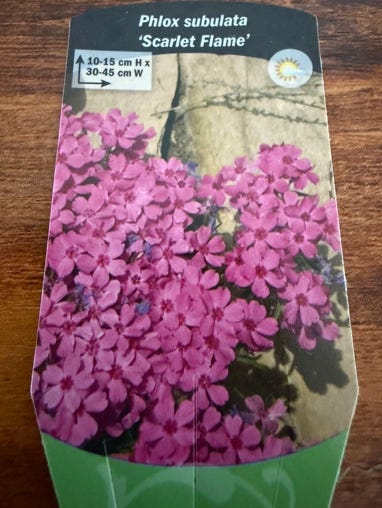
You may also hear the term "nativar". This term is used for native plants that have been cultivated. These are plants native to Ontario that have been bred with other plants to present different characteristics.
The Seed Library does not accept cultivars nor nativars. We only accept what is called “straight species”, plants with the genetics you would typically find in the wild. We also do not accept seeds nor plants at risk of cross pollinating with a cultivar. For example, if you have a butterfly milkweed (straight species) and a butterfly milkweed (cultivar), we ask you that you do not donate your seeds nor plants. This is because we are unable to ensure those seeds or plants will or will not possess the cultivar genetics.
The only way to be sure whether a plant or seed is a straight species or a cultivar is to be able to identify the original source. The Seed Library has a list of trusted sources on its website to help you navigate this: https://wildflowerseedlibrary.ca/trusted-sources/
Volunteer Spotlight & Community Stories
This month’s volunteer spotlight highlights the work of Mario St-Gelais:
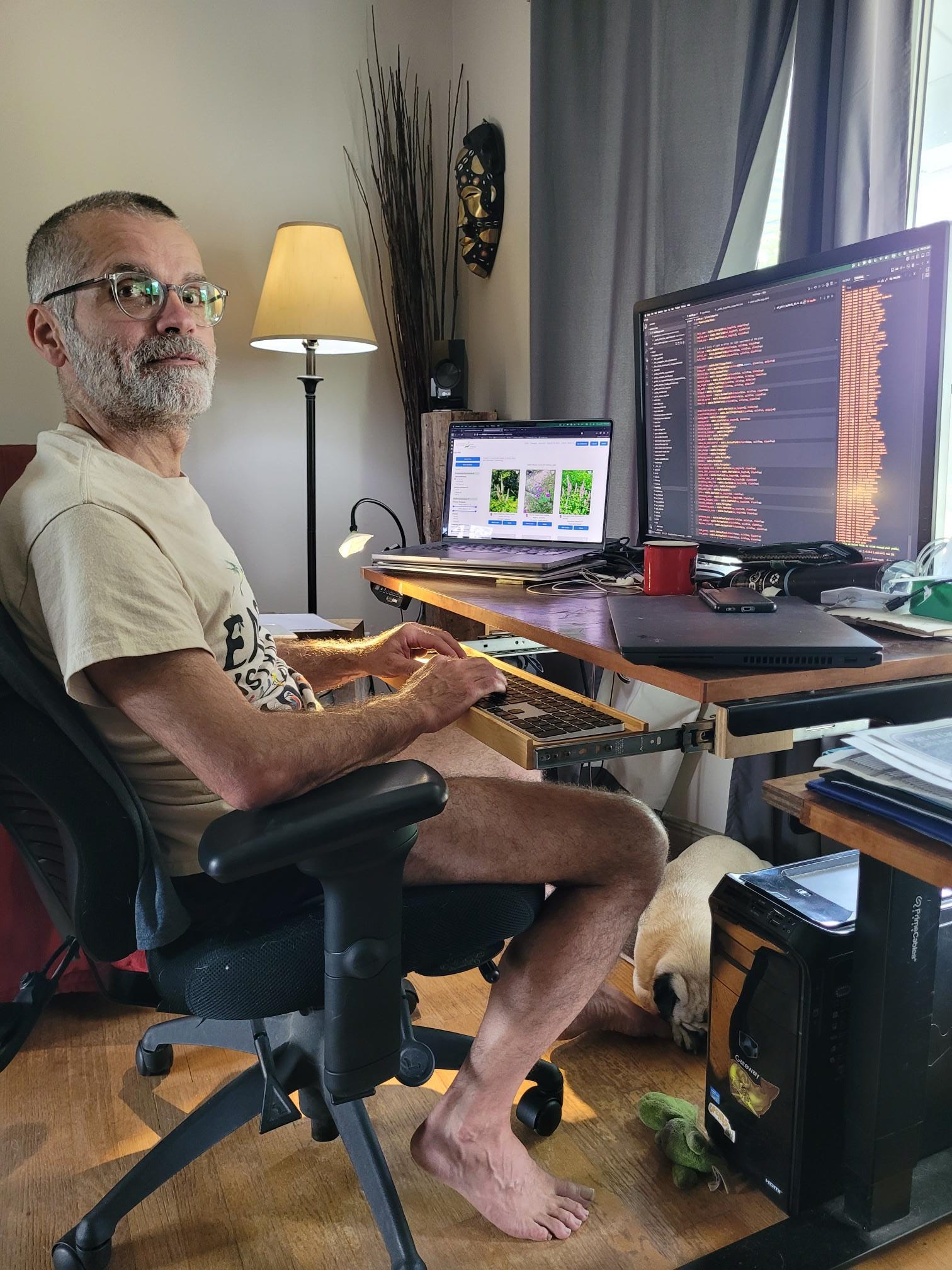
Mario and his partner, Lynda, have always wanted to incorporate native plants into their garden but had a difficult time finding reliable native plant providers in the Gatineau area. They visited local nurseries and ordered plants online only to later learn, to their disappointment, that most were not true native species but rather cultivars. It made finding plants that felt at home in their garden difficult. When Mario came across the OWSL it was a revelation.
He began volunteering with the OWSL in fall 2024 when he noticed that the library’s harvesting spreadsheet included English and Latin names, but lacked French names of the plants. Reaching out to the OWSL, he began working on the project of adding the French names of native plants to the harvesting spreadsheet – helping to make library resources more bilingual and consequentially, reach a larger audience.
Mario is impressed with the enthusiasm and energy of the OWSL volunteers, noting that members share their experiences, provide positive feedback and volunteer their time to ensure the success of library projects and endeavours. The work of the OWSL is often done in the background, like developing the harvesting spreadsheet, so the Bloom & Buzz is delighted to shine a light on all the hard work our volunteers provide!
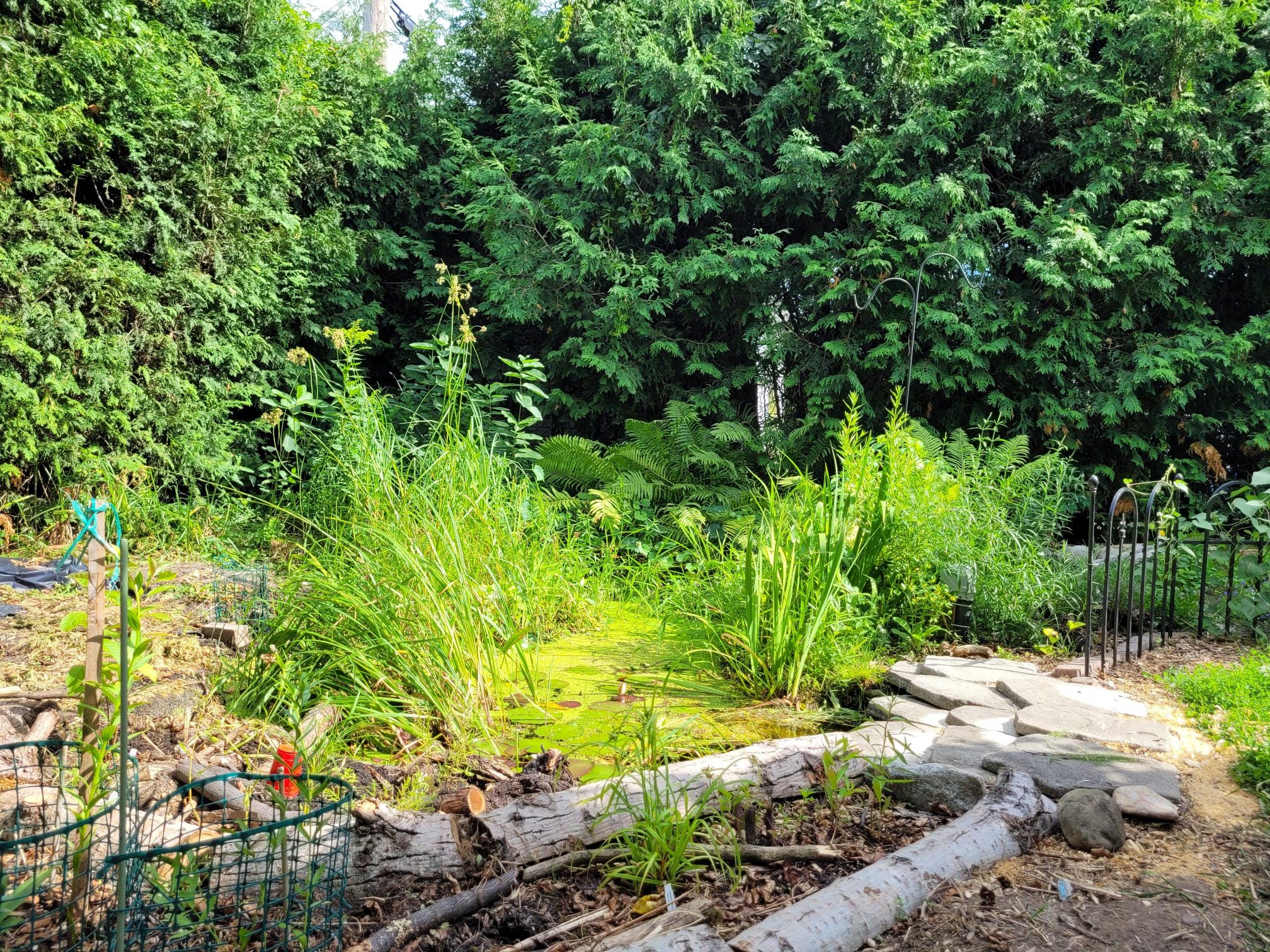
While Mario doesn’t have a single favourite native plant, he does prefer those that grow in shade or very wet conditions. There are such a variety of native plants that exist and they vary in shape, size, and colour. It’s awakening to see them grow and learn how they benefit our environment.
Mario and Lynda began converting their garden in May 2025 and have planted 104 different species of native plants. He couldn’t have done this work without Lynda’s help and they are having fun working in their new garden and enjoying its growth.
Comments
Nothing yet. Say the first thing.
Sign in to join the conversation.