
The busy bees have been working hard packing and distributing seeds! We want to take a moment to thank all 100+ of you that have been packing seeds this season. Each one of you is amazing and your work is really appreciated!
If you’ve joined us at one of our seed giveaway events this season, you likely saw our SOW Extra! table. When you’re planning out your winter sowing, please consider if you can sow a few extra seedlings for community projects. Find more info on our website!
We have started distributing seeds to libraries for them to distribute to their patrons. If your local library wishes to distribute native seeds, please contact info@wildflowerseedlibrary.ca to receive your seed kit.
We have also been incorporating your feedback into our new catalogue. Feedback is welcomed at catalogue@wildflowerseedlibrary.ca
For those outside Ottawa, we will start mailing seeds on December 26. Please go to our website on that day to order your seeds online. We will mail seeds until we are out of stock.
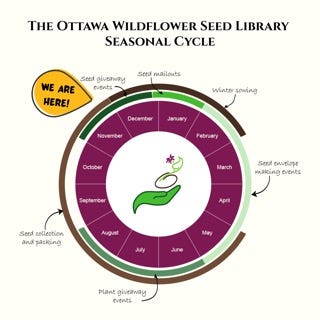
The OWSL has several seed giveaway events coming up in November and December. Don’t miss out on this opportunity to collect native plant seeds and meet members of our community!
When: Saturday, November 29, 2025 from 1:00-3:00pm
Where: Centre communautaire, 12 rue de Picardie, Gatineau
When: Saturday, December 6, 2025 from 1:30-3:30pm
Where: Ray Friel Rec. Complex, 1585 Tenth Line Rd.
When: Saturday, December 13, 2025 from 1:00-3:00pm
Where: Tony Graham Recreation Complex, Hall A, 100 Charlie Rogers Pl.
If you have seeds that you would like to donate, packed or unpacked, please contact us at info@wildflowerseedlibrary.ca to drop your seeds off at one of our locations in Alta Vista, Barrhaven, Nepean, Kanata and Orléans.
Tuesday, December 2 is Giving Tuesday
Every seed packet we give away is a step toward a healthier ecosystem, stronger pollinator populations, and a more resilient city. Your $5 supports the Ottawa Wildflower Seed Library to fulfill one seed order, and shares up to 50 native plants. Last year, we filled 5,000 orders together. Will you help us fill 10,000 orders this year?
Your donation helps us:
– Offer free native seeds to the public
– Support rare and significant plant species
– Empower community growers and educators
On Giving Tuesday, please consider a generous one-time or small monthly donation at https://wildflowerseedlibrary.ca/donations/donate/
Full Moon Date: December 4, 2025
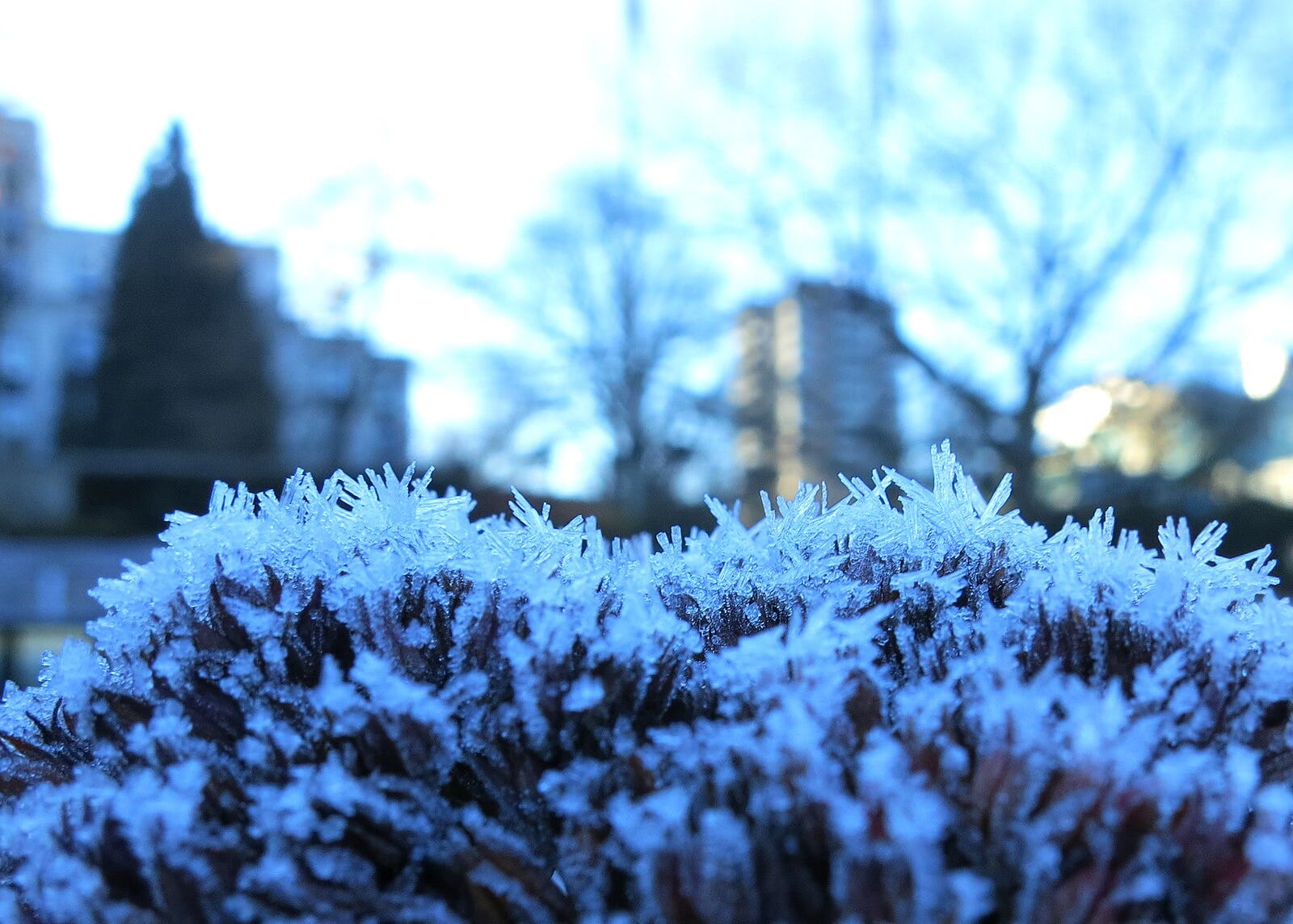
This past month we have seen the temperatures get colder and activity in the garden wind down. While it can be dreary as the ground hardens and the trees lose their leaves, this cooler season brings with it much beauty. This past week, in the Ottawa and Gatineau area, we experienced some of this beauty as hoar frost coated the trees, flowers and leaves with gorgeous ice crystals.
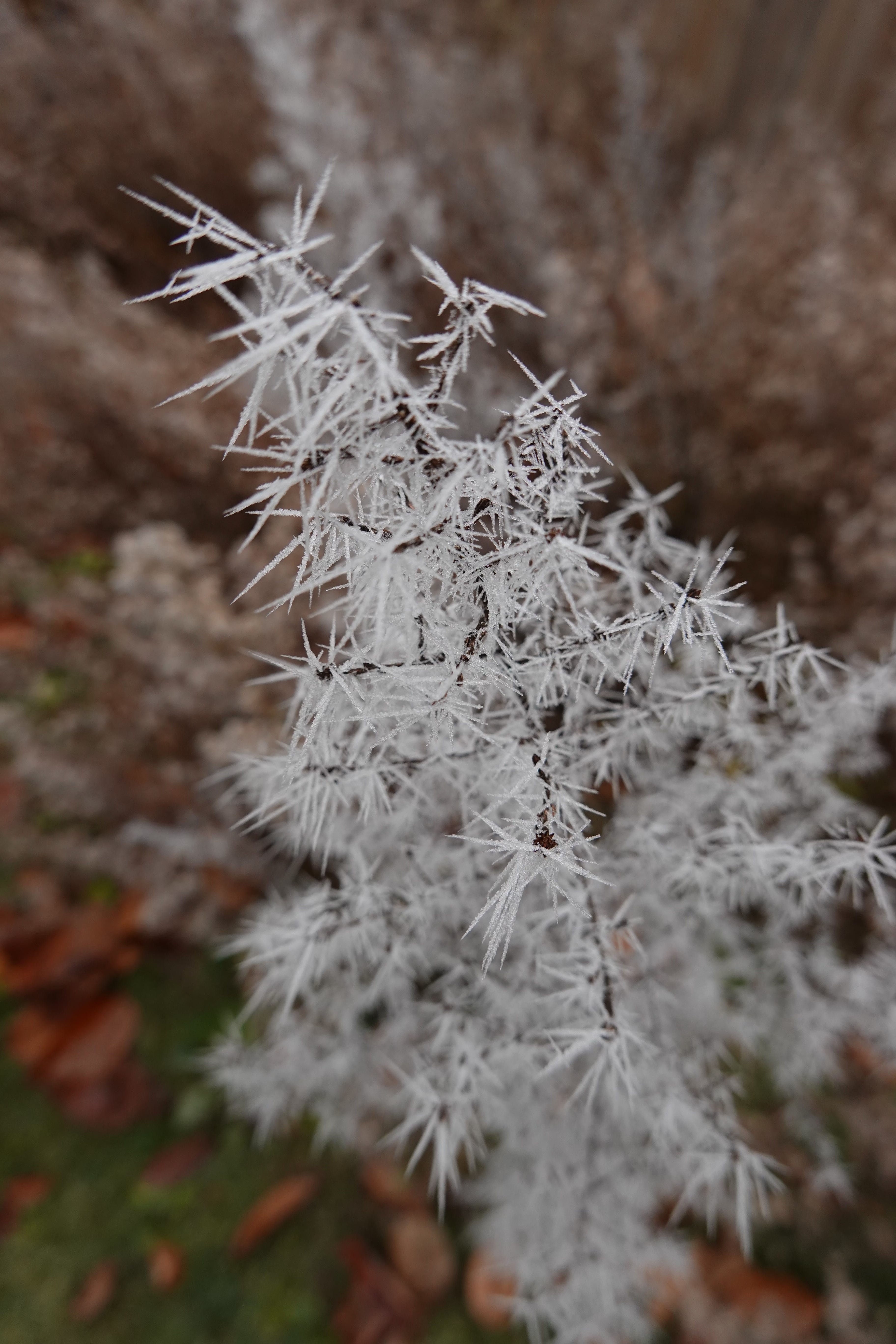
Hoar frost occurs during clear, still nights when the water vapour in the air comes in contact with solid surfaces that are already below freezing point. When this happens, crystals form immediately and grow as more water vapour is frozen. Hoar frost is feather light and generally doesn’t damage trees or plants, unlike rime ice. Rime ice looks similar to hoar frost, but is much heavier and can cause serious damage to trees and power lines.
These ice crystals are called “hoar frost” due to their white, feather-like appearance. The word “hoar” has Old English origins and is used to describe things that are white-gray in colour, old or the gray-white hair associated with old age. We see the word “hoar” being used in the plant world as well. Hoary vervain and hoary mountain mint are both native plants that have fine hairs along their stems, therefore they are referred to as “hoary”.
Nodding Onion (allium cernuum)
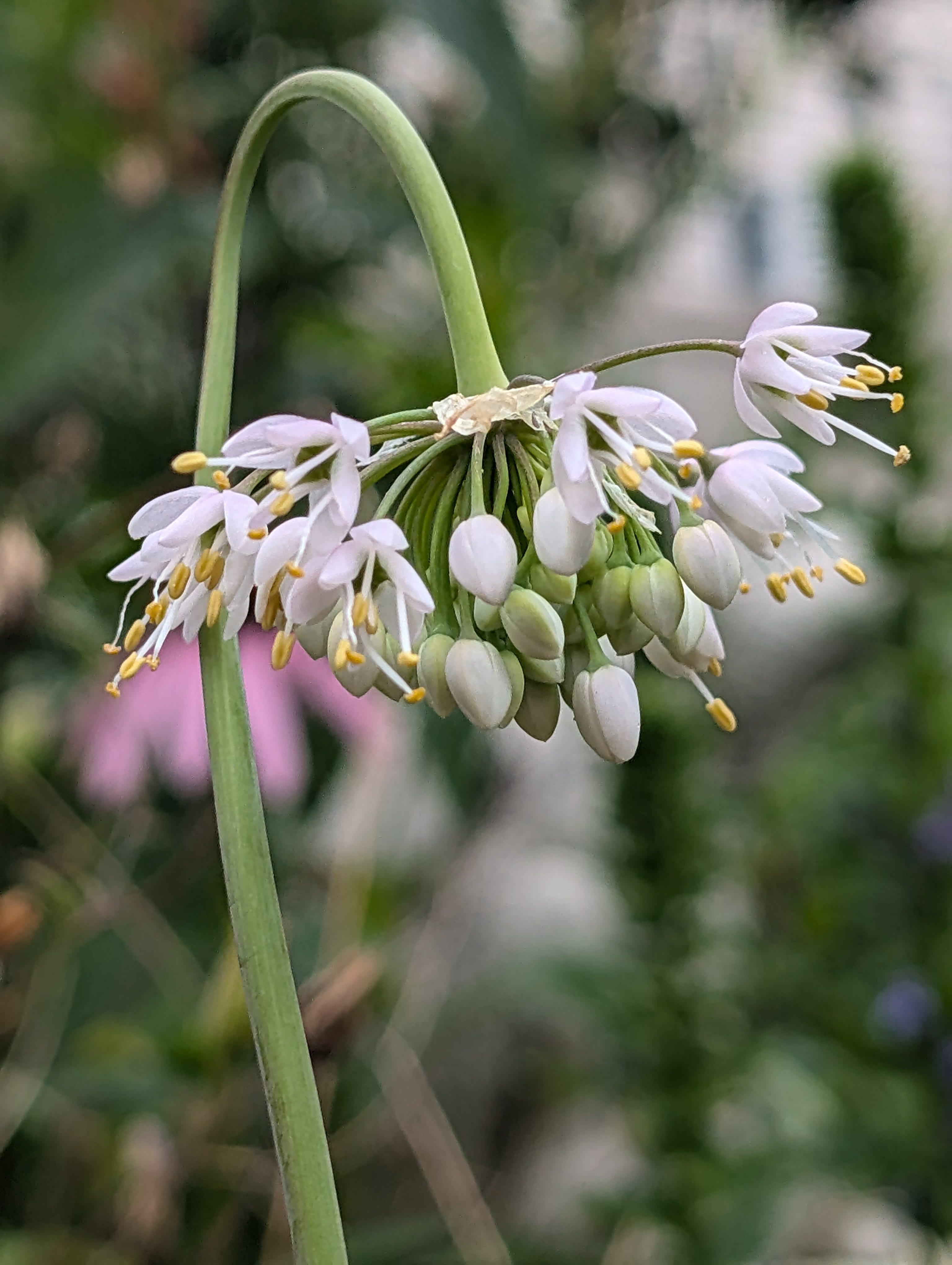
Nodding Onion, also known as Nodding Wild Onion, Lady’s Leek, and Nodding Pink Onion, is a small and graceful plant that thrives in tough sites. The plant grows 1-2 feet tall, has grass-like leaves and is adorned with an umbel of bell-shaped flowers that range from shades of pink to lilac. The flower droops slightly, giving it a nodding characteristic and earning its moniker “nodding onion”. The plant is fragrant when crushed, producing an onion-like scent.
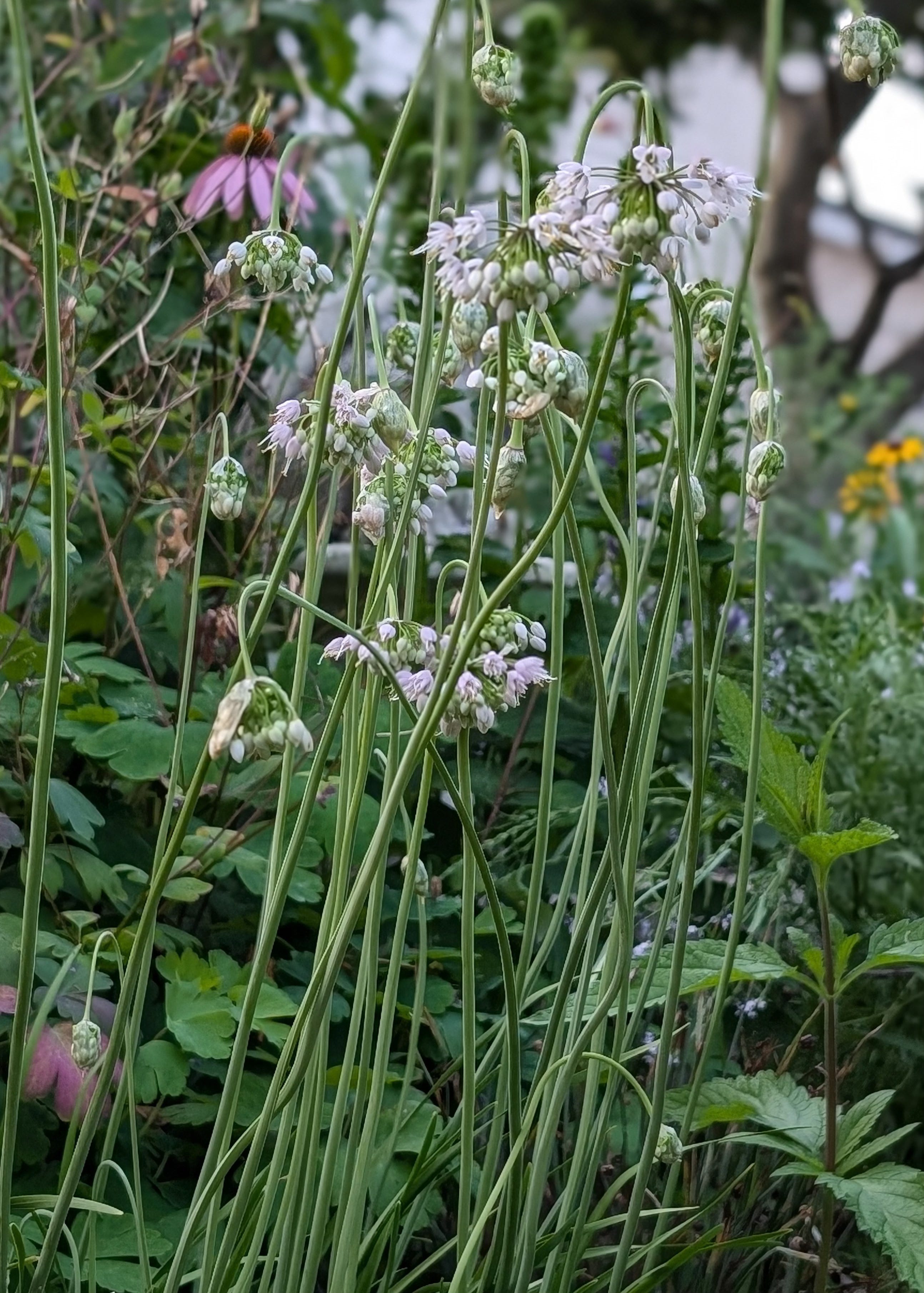
Like the onions we’re familiar with in the kitchen, nodding onion’s roots are bulbs, allowing the plant to spread by seed as well as bulb off-shoots. When starting a plant by seed though, you will need to ensure the seeds receive cold, moist stratification to ensure they germinate.
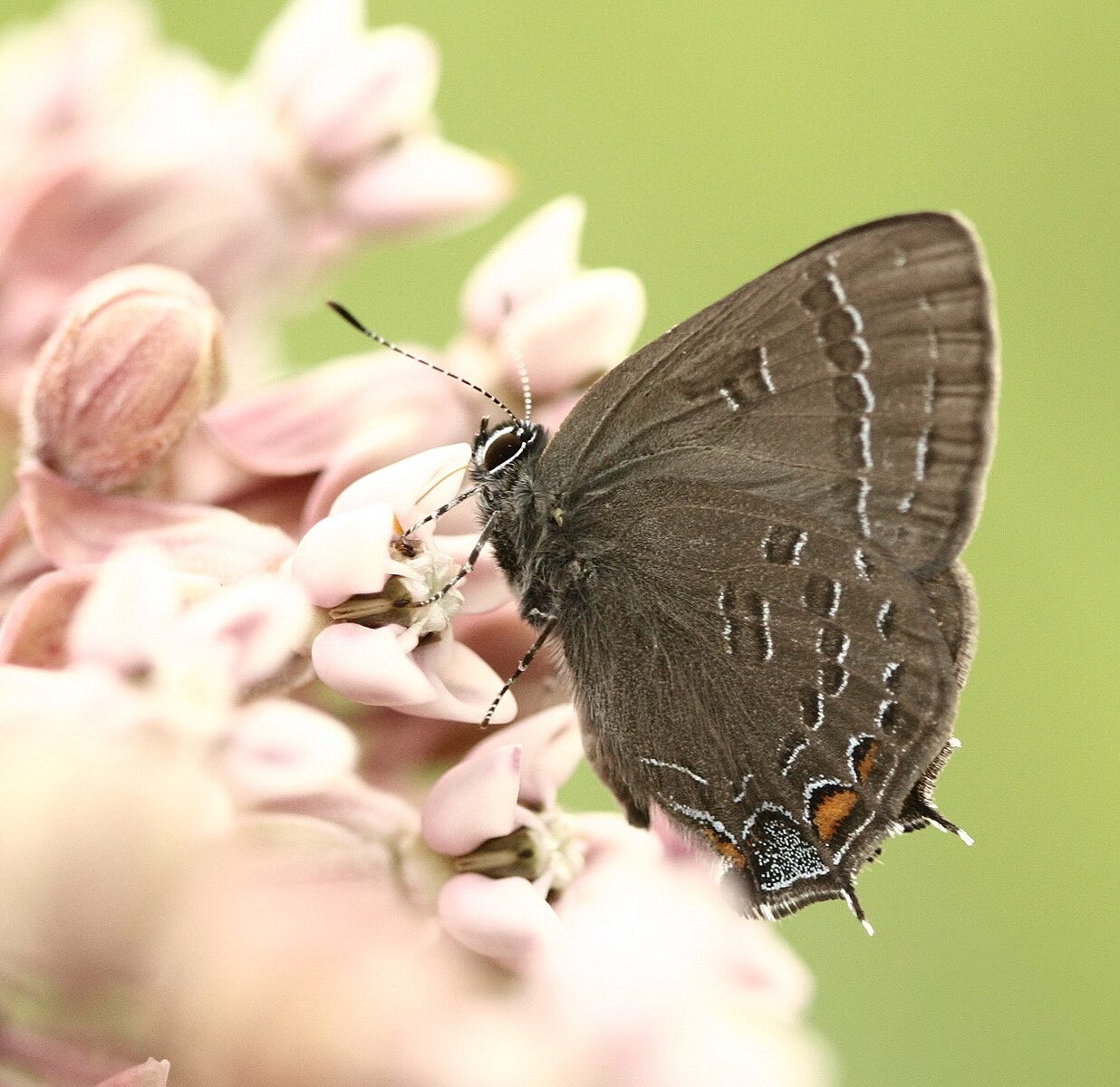
The nodding onion is a host plant to hairstreak butterflies (satyrium spp.), of which there are roughly 11 different species in Ontario and Québec.
The garden is a space governed by the seasons, and as gardeners it can be useful to keep specific times in mind, such as frost dates.
Each year has two frost dates, the date of the last frost (in spring) and the date of the first frost (in autumn). These dates are predictions of when we’ll experience our last and first frosts of the season. These predictions are made by examining meteorological data from past years and determining the average dates for the first and last frost falls.
Knowing your area’s frost dates can be useful when planning your garden activities. For example, some seedlings grown indoors can only be hardened off after the last chance of frost. By knowing your last frost date, you can determine the best time to sow your seeds.
While frost dates are useful when planning garden activities in advance, it’s important to remember that they are not a guarantee. Weather is unpredictable and frost dates may change. According to The Old Farmer’s Almanac, their frost predictions have a 30% probability threshold, meaning there is a 30% chance that frost may occur before or after the given date. You can also track frost dates yourself and see how they change from year to year!
This month’s volunteer spotlight highlights the work of Todd Beauchamp:
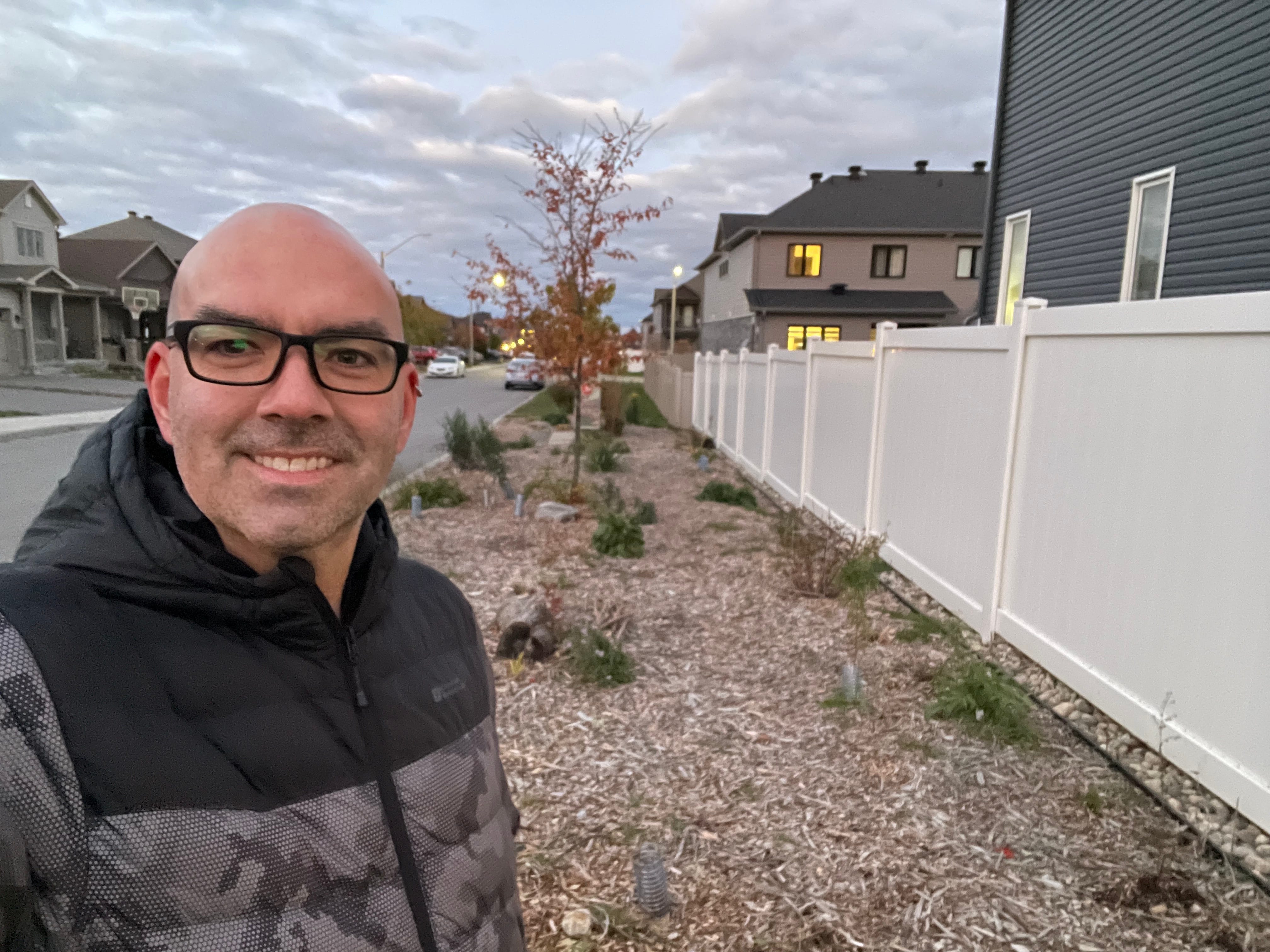
Todd has been volunteering with the seed library for about three years. He started out as a quiet observer, but everything changed when he placed his first seed order in 2022. Since then, he’s steadily deepened his involvement: making envelopes, donating seeds, packaging both harvested and donated seeds, experimenting with winter sowing, and contributing research to help develop tools like the seed catalogue.
Todd’s interest in native gardening is rooted in his heritage. He is urban status First Nation, of mixed Algonquin and Atikamekw ancestry. His spirit name honours the wolf, and he sits in eagle clan. He comes from a long line of Atikamekw medicine people, including his Moshomis, who lived to 112 years and had a profound connection to the land and its medicines. Todd has always felt deeply connected to nature, growing up playing in creeks, streams, and forests. Though gardening has long been part of his life, he transitioned to native gardening during the pandemic. Most recently, he converted the right-of-way beside his home in Ottawa’s west end into a native pollinator patch.
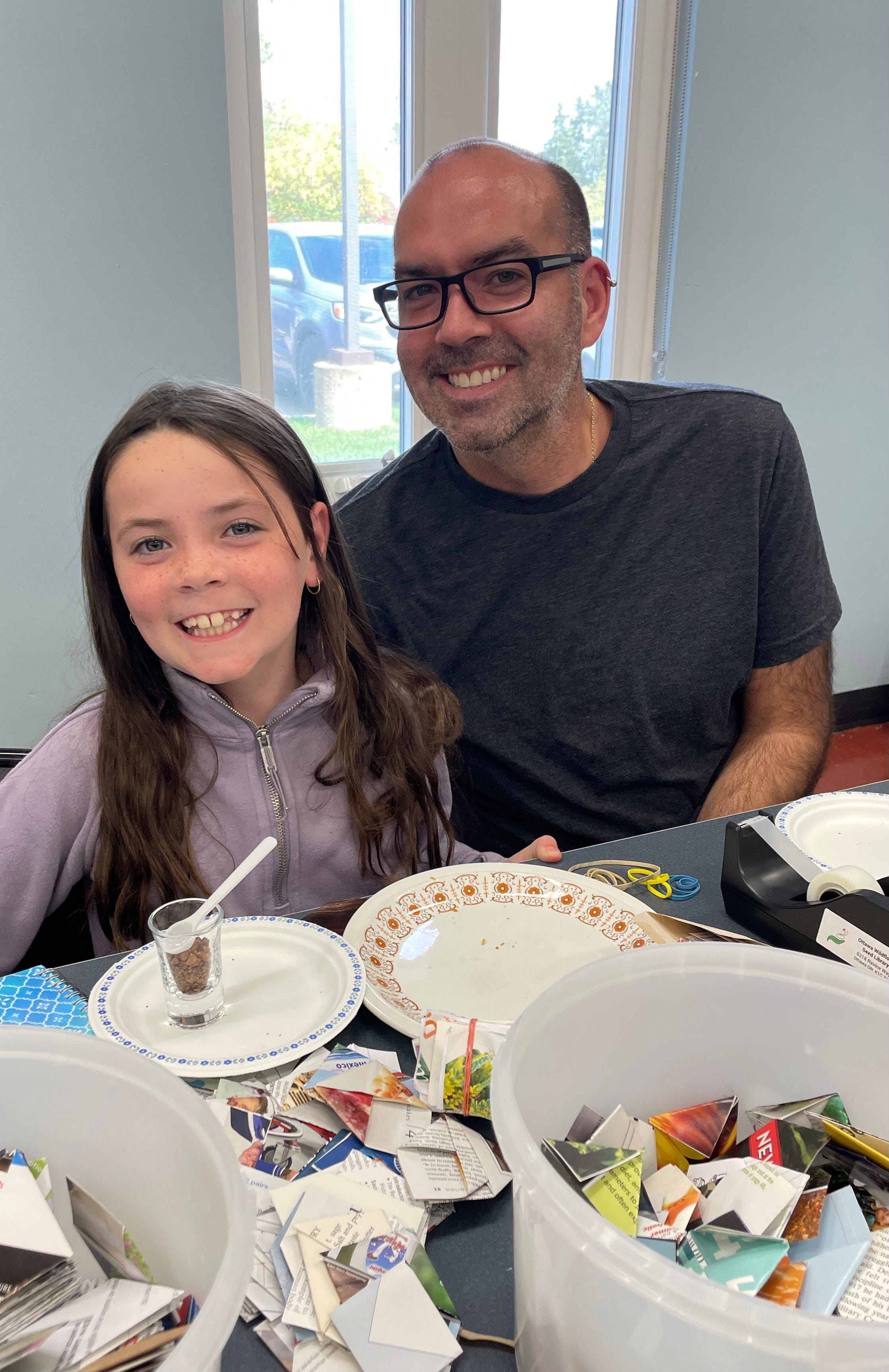
For Todd, the best part of volunteering is the sense of community, sharing knowledge, experiences, and even the occasional meme. Packing seeds is especially rewarding, knowing they represent grassroots change and support for biodiversity and stewardship. As a busy parent of three young kids, attending events can be a challenge, but Todd has found joy in involving his children in seed packaging, turning it into a meaningful family activity that connects them to the land and community.
His favourite native plants are blue flag iris (Iris versicolor) and sweetfern (Comptonia peregrina), both of which grow on the traditional lands of his ancestors. Blue flag iris thrives in wet conditions and produces stunning violet-blue blooms with intricate markings. Sweetfern, in contrast, prefers dry soil and has fragrant, fern-like leaves.
Volunteering with the OWSL has not only deepened Todd’s connection to the land and community, but it’s also planted seeds of knowledge and stewardship for future generations.
Sources:
Bell, David, “Here’s why you need to know the difference between hoarfrost and rime ice”, CBC News, 2020. https://www.cbc.ca/news/canada/calgary/hoarfrost-rime-ice-difference-1.5456557
Bonnevay, Emilie, “What is hoar frost and how does it form?”, Woodland Trust, 2019. https://www.woodlandtrust.org.uk/blog/2019/02/what-is-hoar-frost/
O’Laughlin, Lauren, “What’s the Difference Between a Frost and a Freeze?”, Garden City Harvest. https://www.gardencityharvest.org/the-real-dirt-garden-city-harvest-blog/2020/10/22/whats-the-difference-between-a-frost-and-a-freeze
Rick Gray and Shaun Booth, The Gardener’s Guide to Native Plants of the Southern Great Lakes Region (Ontario: Firefly Books, 2024)
Vanderlinden, Colleen, “When to Expect the First and Last Frosts: How to Plan Your Growing Season”, The Spruce, 2024. https://www.thespruce.com/first-and-last-frost-date-2539701
No posts
Comments
Nothing yet. Say the first thing.
Sign in to join the conversation.