
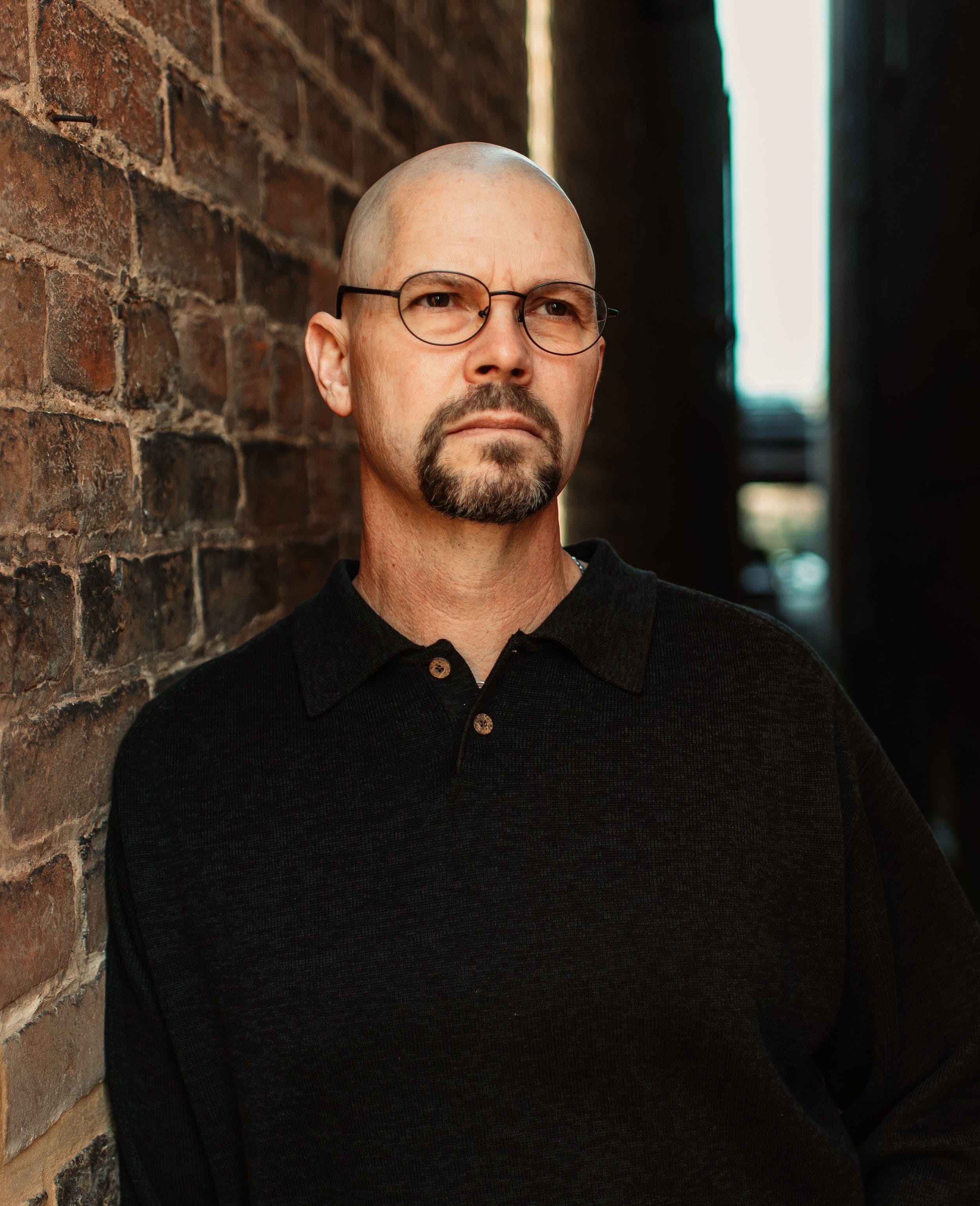
Todd Brown is a computational sociologist who has spoken at the CDC, NIH, and Harvard, just to name a few, with his work appearing everywhere from The New York Times to WIRED, National Geographic, Forbes, and USA Today. He also recently wrote his debut novel, When Shadows Burn, a thriller that has been described as a ‘Southern Gothic for the podcast age.’ And yet somehow, between all that, he found time to field my Five W’s.
Todd Brown: There are so many artists I admire that I sometimes feel like I’m wandering an endless gallery, every wall lit by a different brilliance. Novelists who stitch lightning into sentences (Catriona Ward, S. A. Cosby, Jesmyn Ward, Gillian Flynn, Tananarive Due, and more) blow me away. Filmmakers who break themselves open onscreen just to show us the raw circuitry of what it is to be alive. I feel like they inhabit a strange little planet called Star-Ratings where everything is measured on a scale of one to five, and they wait, suspended between hope and heartbreak, to learn whether their work will glow.
If I had to pick one, it is Mike Flanagan. What stuns me is not only how he wrestles down his ghosts, but how he invites ours to walk beside them. His writing breathes with grief, faith, and a shimmer of mercy, then pivots and scares the soul clear out of your rib cage. He has such a unique ability to turn ordinary fear into something luminous, something heartwarming.
I met him once, briefly, but just enough time to learn that this architect of such nightmares is also, astonishingly, a gracious, grounded human being. I feel like that amount of talent, balanced with such humanity, is rare.
My days run on a steady rhythm that keeps both my science work and my writing moving forward.
I’m up around 7:30 every day. After the same quick breakfast (routine helps my neurodivergent mind settle), I choose which hat to wear first. Most days, I slip straight into my infectious-disease role, fine-tuning the education program I co-created and checking in with partners across 26 states and nine countries that rely on the technology I helped invent. If I’m writing, mornings belong to the novel. I step into my horror-themed office, full of real TV and movie props, and set an internal page-driven timer (five pages/day). Sometimes the pages work, sometimes not so much. Regardless, progress is non-negotiable.
Whichever track I start with, I switch at midday. If I write in the morning, I devote the afternoon to my real job. If I worked first, I fit writing in after lunch, sticking to the same five-page goal. The structure keeps both careers on course without one overrunning the other.
When work wraps up, I spend time with my wife and son. Dinner, conversation, and TV together. After hanging out and joking around with the family, I head upstairs and read for forty-five minutes to an hour. I hand off the day’s pages to my wife for her feedback. The next morning, I backtrack and rework based on my wife’s notes and then push forward with the next five pages.
The schedule is tight, but it lets me balance my infectious-disease work with the creativity of storytelling, one neurodivergent structured day at a time.
I’m about seventy pages into the sequel to When Shadows Burn (working title What the Ravens Saw). The name may change, but the energy won’t. It’s leaner, faster, and throws the doors open to a mix of returning favorites and some brand-new faces. I can’t spoil more than the teaser that closes WSB, but I can tell you this: within the first fifteen pages, one reveal rewires how you’ll see the entire first book. Think the nostalgic pull of Stephen King’s The Body slammed into the throttle of Dean Koontz’s Velocity.
I never cracked a book for fun or assigned reading until seventh grade. One afternoon, I ducked into a little bookstore out of boredom, grabbed a Stephen King paperback, and something clicked. The characters on those pages felt alive. From there, I fell hard for reading and eventually, for writing.
Sports still ruled the house. My grandfather is in the Louisiana Hall of Fame (there’s a stadium with his name on it, just like my dad’s stadium), so athletics, not academics, was the focus. I followed suit, playing at the University of Florida and later professionally. But there was always that itch to write. For years, I scratched it by publishing science and academic pieces, always insisting, like so many people, that I’d write a book “one day.”
That day came after I sat through a terrible horror movie that mangled genuinely incredible source material. I was so pissed off for some reason that my anger turned into action. I sat down, started typing, and When Shadows Burn was born. The process was so damn addictive and just fun that now I’m chasing that same rush with the sequel, What the Ravens Saw.
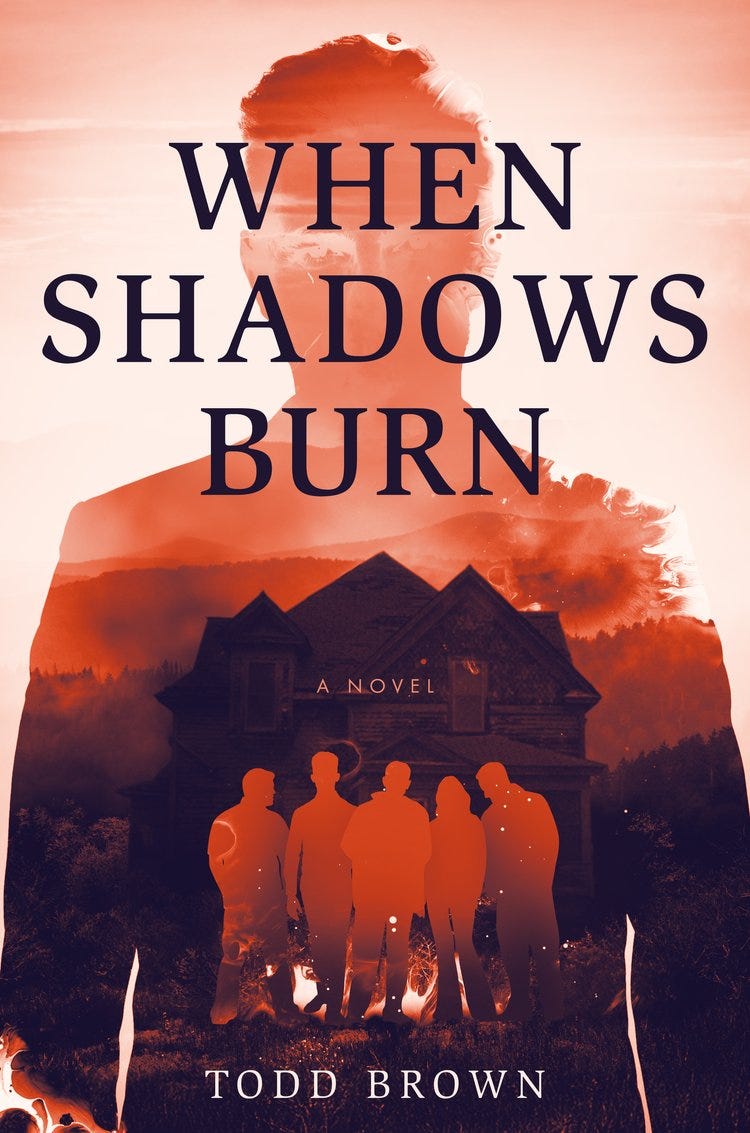
I keep going for two reasons. First, I love writing. Second, because the South keeps handing me ghosts that won’t stay quiet, and most of them are alive. When Shadows Burn dragged a town into the open, one that was trying to erase marginalized people. Queer kids, trans sons and daughters, Black autistic men who’ve learned to navigate rooms built without them in mind. I write so their stories hold the main spotlight, not the margins, because absolute horror is something that shouldn't be real but is, and fiction is my way of forcing readers to stare straight at it.
Every morning, the headlines cough up fresh nightmares. Freaking book bans, bathroom bills, rooted in “traditional values,” always seem to find new fuel. Sometimes I don’t know whether I should laugh or vomit. I could let politicians spin it into noise, or I can use our reality that is full of dread, but also hope, to make a reader feel it in their bones.
I also keep going for my son, who deserves shelves of heroes that look like him, as well as for readers who whisper, “I finally saw myself.” For the kid who’ll wander into a bookstore the way I once did, crack open these pages, and realize that while the scariest monsters are the ones that are real, they don’t get to have the last word.
“Twin Peaks meets Shirley Jackson.” -Jennifer Wright, bestselling author and former political editor-at-large for Harper’s Bazaar
Some houses whisper. This one screams.
In the heart of Raven’s Cross, Virginia, the decaying Scott house looms. Its broken-window eyes watch a town desperate to forget. When Roxy, a teenage girl, vanishes into a sweltering night, long-buried fears erupt, and suspicion turns savage. The townspeople turn on the newcomers, blaming them for what they refuse to face in themselves. As polite smiles crack and old grudges resurface, Raven’s Cross’s genteel mask begins to slip, revealing the rot beneath.
Timothy Michaels came to town chasing a story. A true crime podcaster investigating the haunted legacy of the Scott house, he never expected to be pulled into something so immediate-and so dangerous. Alongside unexpected allies, Tim begins to unearth a legacy of complicity and cruelty-one the town would kill to keep buried. Because, in Raven’s Cross, the shadows don’t just linger. They burn.
Releasing October 14th on:
Comments
Nothing yet. Say the first thing.
Sign in to join the conversation.