
Solstice is coming, presents are here… As a thank you to our beloved readers and subscribers for another incredible year of Bloodletter, this month’s paid newsletter is free to all.
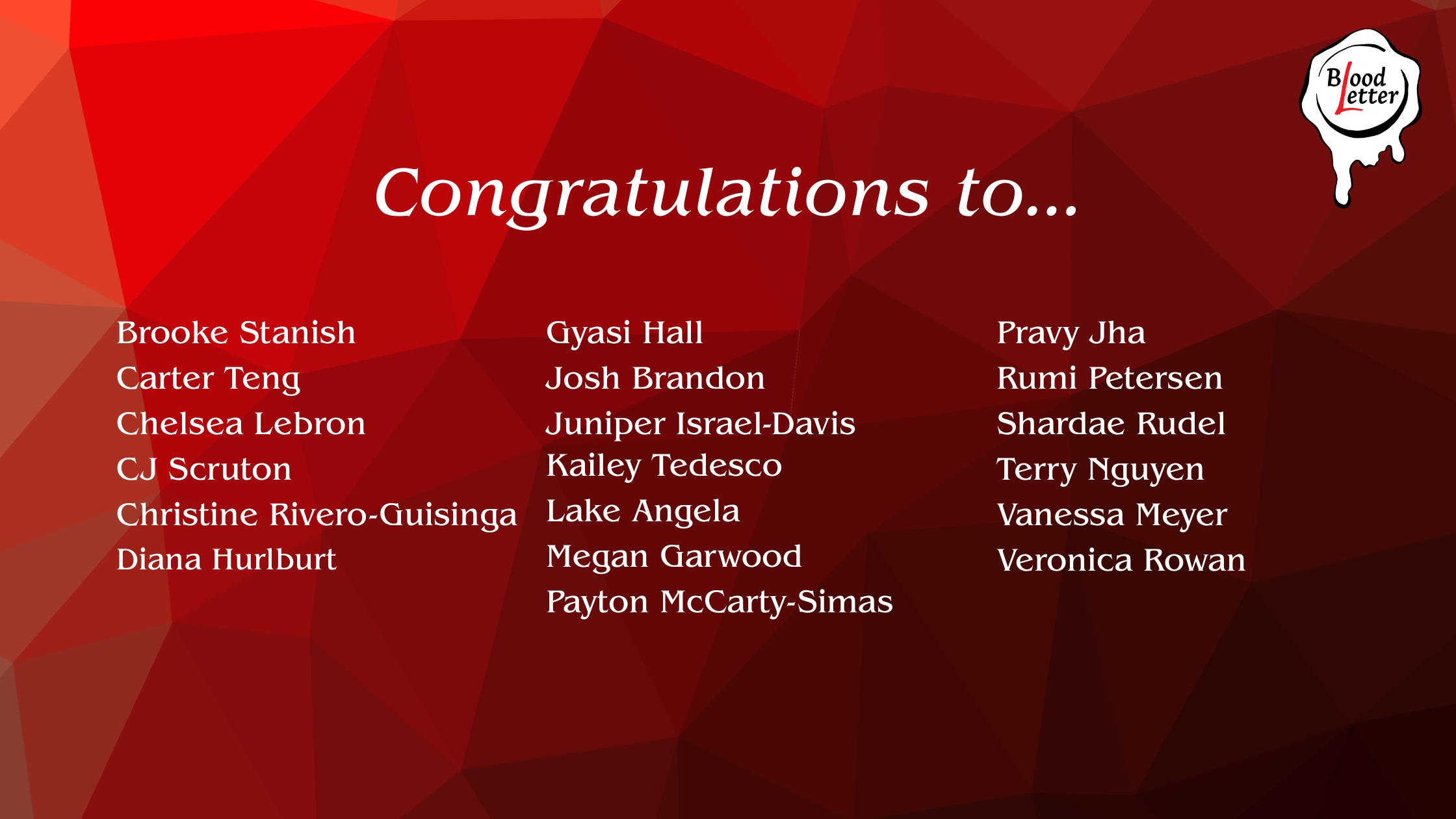
Welcome to the playground 🎈
Our next issue is coming to a screen near you in spring 2026, with all the release event fanfare you’ve come to expect from Bloodletter. To tide you over till then, enjoy Issue Five: Rage from cover to proverbial cover—and have fun exploring our back issues.
Meet your new submission bestie! Each month, we’ll offer a new set of pointers to help lead your work to publication: An editor’s tip to incorporate into your practice, a writing prompt to get your creative wheels turning, and an overdone trope we see over and over in submissions.
Prompt: Think of something or someone that fills you with dread. Making note of all five senses, describe this object or person using only non-horrific words and imagery. Challenge yourself to write the most awful description you can think of without using grotesque language!
Trope: Let’s talk about overwrought, overused horror language. For example, the word “scuttle”—have you ever used it in real life? Neither have we, yet we see sentences like “her hideous, crab-like legs scuttled across the floor” ALL THE TIME in submissions.
Tip: Horror genre-specific descriptions can quickly hurtle away from ”showing” toward “telling.” Writing that is not presented to us in a big bloody box that says “HERE, THIS IS A HORROR STORY” is often the most memorable, effective, and indeed, the most terrifying. If you find yourself returning to the same adjectives and verbs, try reframing the story for yourself without the horror-genre specificity and see what it yields. For instance, “a story about a girl whose life and mind are overtaken by a terrifying and disgusting bed bug infestation” becomes simply, “a story about a girl living alone in her New York apartment” (shout out “Nympho” by Shelby Heitner in Issue Two: Phantoms!).
These pointers are free to all this month. Upgrade to paid to get them delivered to your inbox with every newsletter.
Keep it under $50 with this Krampus-loving, Secret-Santa-friendly gift guide for the angels of darkness in your life. That or forward it to your normie pals so they know what to get for you and your depraved soul.
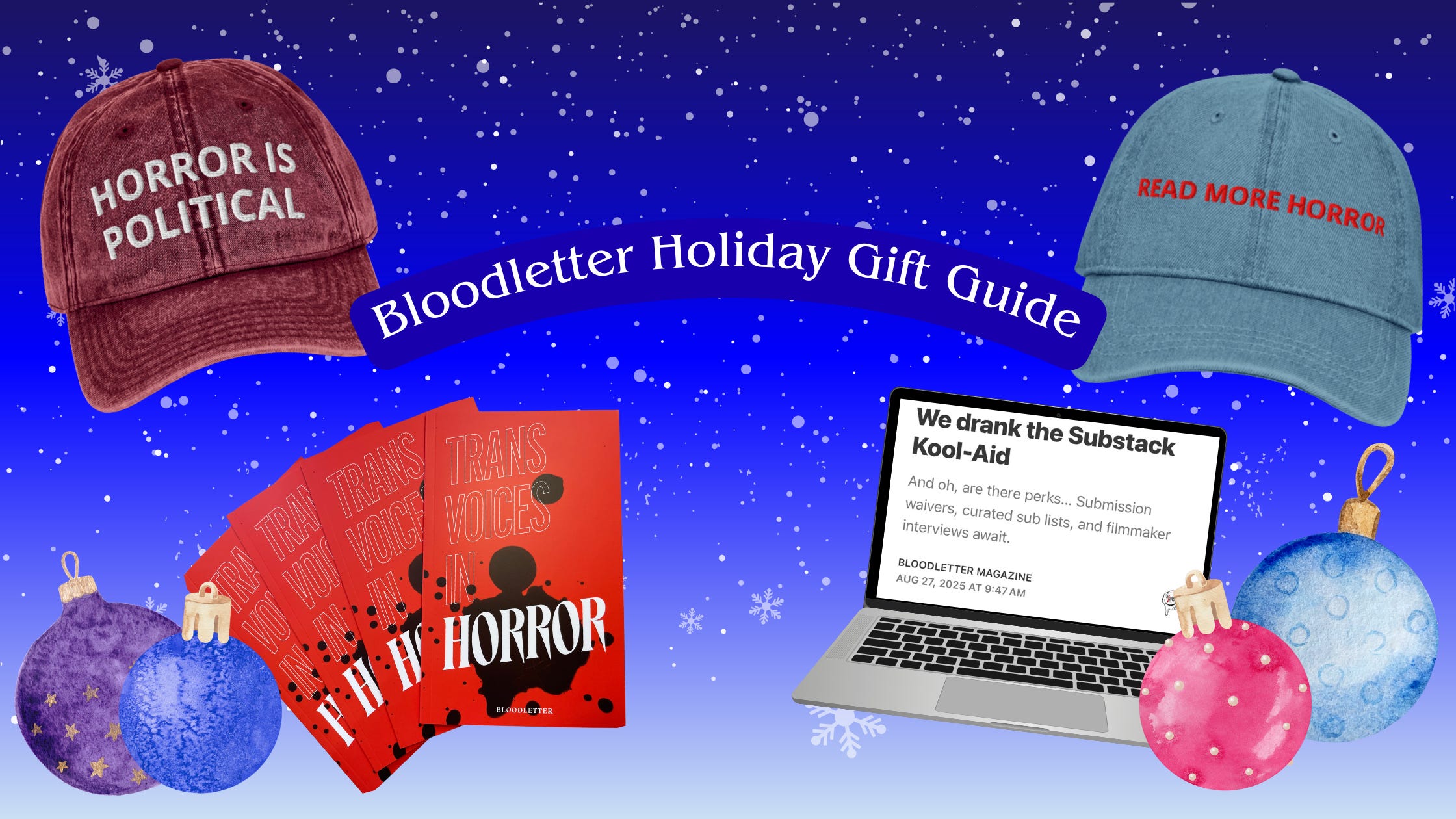
Need it by Christmas? Be sure to order your Trans Voices in Horror chapbooks and Bloodletter hats by December 11th.
Shopping last-minute? A paid subscription to this newsletter = instant relief for you + the gift that keeps on giving for them.
In this month’s column, Claire offers actionable advice on courting inspiration. If you’ve ever suffered the hell that is writer’s block, this one goes out to you.
Dear Bloodletters,
This holiday season, I’m encouraging all of you to be on the bad list. Or, that is, to nourish the darkest sides of yourself for the sake of sparking creativity. The desires you buried deep at fifteen and have since become totally alienated from. The violent urges you had to snuff out or risk dumping gasoline on a raging fire. The cancelable beliefs that you were previously too scared to share with your compatriots.
If you couldn’t yet tell, today I’m writing about inspiration, that little bird that seems alight on some of our shoulders just as others try and fail to make themselves hospitable to its fickle preferences. Ask a jaded artist, a burnt-out writer, or, frankly, any woman in the film industry, and you’ll come away with the sense that even when inspiration abounds, it’s shackled by the realities of artistic production. I’m talking male gatekeepers who couldn’t bother to give your script their full consideration, the cool, impersonal brevity of the mass rejection letter, or the meaningless void we all must stare into from time to time when our reserves of creativity run dry. But what if I told you I knew a way to replenish these depleted reserves?
Before we begin, heed this warning: The path won’t be pretty. Nor will the people pleasers among us come through unscathed. But we’re all feminist horrors here, and as such I have faith we will see the light at the end of the tunnel, even if disquieted by the journey there. And, just to disclaim the obvious, I’m addressing this method to the women, femmes, enbies, and transfolks among us. But if a man does find his way to this wisdom, he won’t be the first to co-opt the spoils of a hard-working woman. ;)
Step 1: Masturbate. Or, at the very least, probe what turns you on. The erotic and the creative are bound by an inextricable link that artists have been exploiting since the dawn of time. However, kids these days are having less sex than ever. As algorithms fry our nerves and fascist attitudes block up deviant subcultures, many of us have been entirely separated from the libidinal desires artists have historically used to nurture inspiration. I’m a big believer in Sontag’s perennial wisdom: “In place of a hermeneutics we need an erotics of art.” That starts with a good old-fashioned diddle.
Step 2: Find a muse. Men do it all the time. Why shouldn’t women (beyond Chris Kraus) get in on the action? Locate the erotic object of your wildest fantasies, imagine them into the most depraved and titillating scenarios possible, and place them within the story you’ve trying to bring to life (or the painting, the song lyrics, etc.). If men can pass off their wives’ art as their own to great renown, you should be able to objectify, in your art, those people in your life and imagination who are cast in supporting roles in the erotic drama of your psyche. No one is watching except your own inner voyeur. So get weird. Get steamy. Go off and create.
Step 3: Cancel yourself. Now that you’ve turned up the heat and refamiliarized yourself with your artistic libido, now comes the real challenge: abandoning decorum. To employ a millennial turn of phrase: “The best art never, ever pushes the envelope” said no one ever. Real artists put it all on the line and aren’t afraid of what the critics might say. And yes, this includes artists whose work explores themes and values that make people uncomfortable. Moreover, real artists are well-versed in the art of stepping outside their perspective. I, for one, can say I’m a master at writing fiction from the perspective of a misogynistic, transphobic fuckboy. Each and every misguided action and ignorant belief spouted by my characters is a chip away at a culture that operates more like a politically-correct panopticon than a site of provocation. This practice of pushing past what is palatable is even more essential for those making horror-aligned art. Which brings me to…
Step 4: Kill your darlings. Are you angry? Frustrated? Good. That’s the natural result of having bottled the transgressions that men let fly without a second thought. Because of that little thing called decency, you might not be in a position to release your red-hot anger on those who could really use a dose of it. So why not rip some holes in the canvas? Why not kill off a school bus of innocent toddlers in the third act? Why not write increasingly gruesome ways to torture the sacrificial blonde in the first scene? Feminist horror doesn’t always look very feminist—it’s through satirizing and critiquing that which is the furthest from feminism that this type of horror is given a voice.
Speaking of voice, I hope this guide has helped you to find yours. And if you’re still struggling, just know you’ll have gained something more elusive than a brief lightning strike of genius. You’ll have come back in touch with your inner degenerate. She’s been lost in the wilderness, and she’s just a little neglected. Run her a warm bath, cook her up a hot meal, and reacquaint yourself with someone you were long ago torn away from. If you make a nice home for her, I promise: One day, you two will get hot and heavy; shortly thereafter, inspiration will be born.
Did you know that a paid subscription to the Bloodletter Substack unlocks all our past newsletters? They contain some real gems, like…
No posts
Comments
Nothing yet. Say the first thing.
Sign in to join the conversation.