
Reader beware: this review of vampire road trip novel So Thirsty by Rachel Harrison devolves into a rant about why character names matter very much, actually.
Who can say what happened to So Thirsty? Maybe someone rushed through the developmental edit; maybe there wasn’t enough time to research the characters’ backgrounds, names and origins; maybe the editor didn’t flag that the vampires in the novel read like an amorphous mass of vaguely Eastern-European sidekicks rather than distinct, well-rounded characters. Instructions unclear: this vamp’s dialogue reads like Count Chocula.
Thanks for reading Blog Therapy! It’s just what the doctor prescribed.
Maybe it was flagged and no one cared, or no one had time to care, or no one considered it important to distinguish between the various flavours of Eastern-ness in the characters’ names, grammar, and backstories. Maybe no one thought it would matter. This isn’t exactly a highbrow read.
Please don’t misunderstand me, I’m not trying to throw shade at Harrison or her team. I understand that a whole lot of work goes into publishing a novel and that, between all the different people and commercial entities involved in the process, there are more pressing issues than what to name your characters. I get that.
Nor am I trying to take away from anyone’s enjoyment of So Thirsty, just because I found the character-building sorely lacking. It was overall an enjoyable, if cringe, read with some glaring editing and research red flags that, in my opinion, could have easily been avoided.
This is more of an exercise for me (and you, if you find this kind of stuff interesting) to see where a closer line-edit could have improved the reading experience.
With that out of the way…
I was ready to love So Thirsty
I looked forward to a roadtrip-gone-wrong story, a wild, vampiric romp across America, where the stakes (pun intended) are both huge and insignificant in the face of eternity.
The back cover blurb reads: “A woman must learn to take life by the throat after a night out leads to irrevocable changes. Sloane Parker is dreading her birthday. She doesn’t need a reminder she’s getting older, or that she’s feeling indifferent about her own life. Her husband surprises her with a birthday weekend getaway—not with him, but with Sloane’s longtime best friend, troublemaker extraordinaire Naomi.”
What an exciting, original premise! I hoped it would be equal parts egregious and camp, bloody and fun, tropey and genre-defying in the right ways. I expected too much.
Part of this is my own fault. Even while engrossed in a novel I love, it’s almost impossible to switch off my editor brain. I pick on typos, character inconsistencies and gaps in research and before I know it, there goes my immersion. Disbelief is no longer suspended. This is exactly what happened with So Thirsty—and especially its characters.
In my opinion, there were several issues with character building and the overall story arc: many reviews complain that the story goes nowhere and I agree; the narrative doesn’t challenge the main character’s self-limiting beliefs, so any growth she’s supposed to have achieved by the end feels artificial; the gift-wrapped ending seemed tacked on as an afterthought. These all could have been solved with a closer edit.
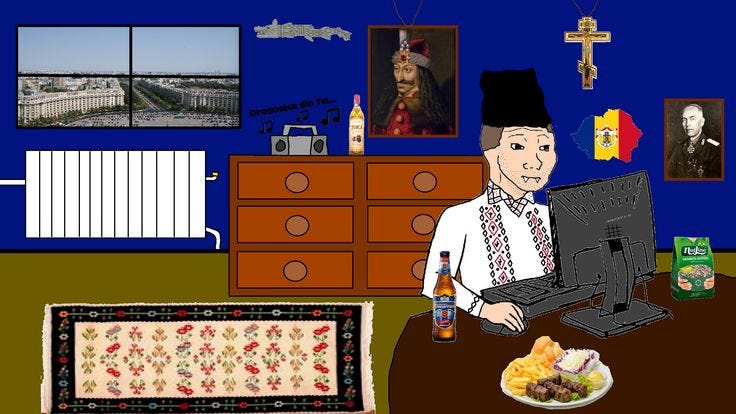
But it was the vampires’ names that really soured the deal for me. I couldn’t believe for one minute that two of the undead hotties meant to help the main characters accept their vampiric desires are called Ilie and Costel. Maybe it’s just the Romanian in me.
What’s in a name? A lot, as it turns out
As an editor and an avid reader of fiction, I believe names can make or break a story. A character’s name should fit their background (cultural, historic, ethnic etc) and personality, and, ideally, align with the role they play in the story.
On the research side, this means looking into names that would have been popular in the time and place your character hails from, among people of that social class, occupation, religion etc. This also means having an open channel of communication with your editor, making them aware of any research blindspots, and listening to their input.
On the editing side, it’s checking the language used to describe a character matches their vibe, the expectations set out by the plot and by the author. This includes finding and flagging inconsistencies regarding names, speech patterns, dress, behaviour, and the like.
When names don’t pass the vibe-check
About sixty pages into So Thirsty, Harrison brings out the first vampire, an attractive twenty-something with a nondescript Eastern European accent, named Ilie. He is Sloane and Naomi’s introduction to the gang of vampires that will shape the rest of their (undead) lives. Since this is basically the novel’s inciting incident, Ilie is a pretty big deal.
He shows up in a stolen sports car, wearing tight black satin pants and a loosely-buttoned sheer top, to take the girls to the vampire gang’s hideout for a party. Everything about him, from his freewheeling rebel attitude, to his exhortations to the girls (“relax, it’s a party!”) point to his role as a trickster, a catalyst up to no good whose ambitions encompass having a good time and not much else. An undead guy who likes sex, fast cars and life on the run. He might mean well, but often lacks the foresight to prove it—the perfect foil to lead vampire Henry’s serious, brooding, world-weary vibe.
But that name. Ilie is an old-fashioned Romanian name that peaked in popularity with rural families around the 1950s and 1960s. Its origins can be traced back to the Hebrew Eliyyahu, meaning “my God is Yahu/Jah”.
The Orthodox cult of Saint Ilie overlaps with pagan folk traditions around the midsummer grain harvest, which is what made the name popular for boys born into farming households back when a large part of Romania was rural. But, while Harrison’s Ilie may be a lot of things, he’s definitely not a farm boy.
Overall, this is such a weird name for a vampire, and he‘s described with such utter self-seriousness, that I seriously considered DNF-ing this book. But I’m so happy I didn’t, because otherwise I never would have read about Costel.
Costel is a member of Ilie’s entourage, a shirtless, sinewy, tattooed, and scarred undead badass. Between his buzzed white-blond hair, barely-there eyebrows, and reptilian eyes, Sloane decides he must be “among the most intimidating creatures on the planet”.
Unfortunately, Costel is even less three-dimensional than Ilie, so most of what we learn about him (beyond his appearance) is gleaned through the hijinks he gets up to, together with the vamp gang. Which is why I feel it was even more important to choose a good name for him. Just, anything but Costel.
Costel is a typically-Romanian diminutive of Constantin— which would have been a much better vampire name. Costel also has the same problem as Ilie, in that it was rarely used outside of rural families circa the mid-20th century. For a well-traveled, tattooed member of a vampire polycule, this just doesn’t cut it.
Constantin, on the other hand, has an Eastern European ring, sure, but also calls to mind Byzantine Emperors and a literal demon hunter, played by Keanu Reeves in the 2005 cult classic movie of the same name. It was right there under everyone’s collective editorial noses.
It’s not you, it’s the editor
Here is why I think the problem with names in So Thirsty boils down to editing: it doesn’t take a lot to find out where a name like Costel or Ilie comes from. And then, armed with that knowledge, to suggest a better choice, and/or flag that with the author. But, in order for that to happen, there has to be an open channel of communication between author and editor, a willingness to deeply get to know your characters, an openness to admitting your blind spots, and—maybe most importantly—a level of respect for your readers. Because, let me tell you, they’ll notice if your supporting characters are all a heterogenous mass of Eastern European vampire tropes with interesting haircuts.
Both Ilie and Costel are fun additions to the story, playing with clichés like hypersexuality, and speaking with vaguely European accents. Beyond their dangerous, alluring exterior, they’re deeply loyal with remarkably solid morals for a bunch of undead monsters. They’re able to reliably guide the main characters through their messy transformations and even impart some life lessons (it’s inevitable, when you’ve been around for that long).
But as a reader, I learned these things about them in spite of their names. That’s not how it’s supposed to go. And it definitely affected how much I enjoyed the novel (and how seriously I took it).
The case for a Russian vampire
I don’t remember if the novel explicitly confirms where the vampires are from, but based on popular genre tropes and on their names, I’m almost 100% they’re supposed to be Romanian. Ilie, Costel and Elisa are all names from that part of Europe and there are strong hints that Henry is actually Dracula (aka Vlad Țepeş, of Transylvanian infamy). In fact, Henry and Ilie are cousins and the gang speak a foreign language with each other when they don’t want Sloane and Naomi to eavesdrop.
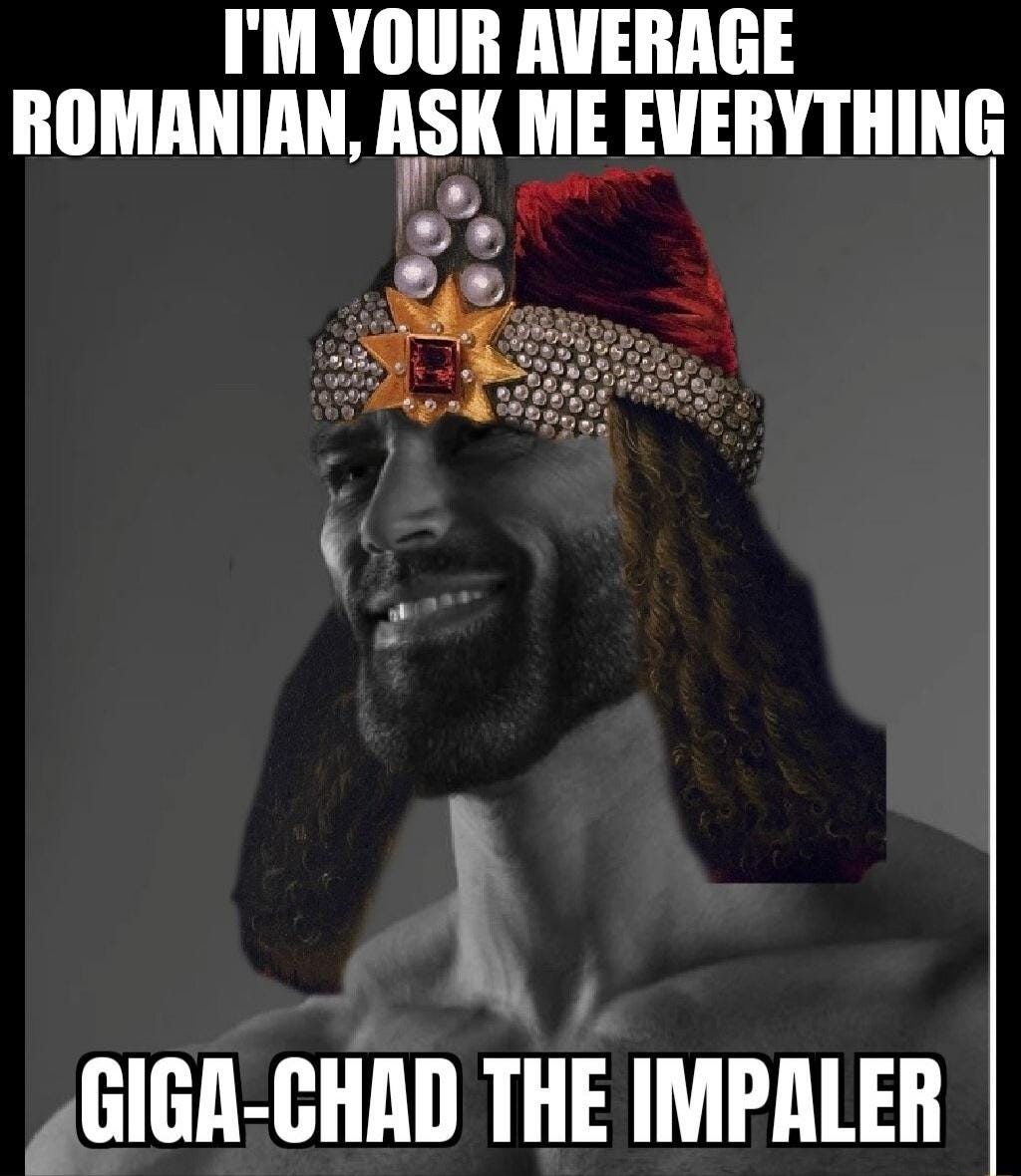
Still, I read some reviews of So Thirsty that assume Ilie is Russian and I can kind of see why. After all, he does speak a broken English with Russian grammatical markers, such as article-dropping (“I am safe driver”). Anyone who’s ever heard a Soviet Bond villain speak will recognise this as a character who “thinks” in Russian and translates into English as they go.
But again, Ilie isn’t a Russian name, so that doesn’t fit. Also, Romanian isn’t even a Slavic language (it’s Latin, so it’s much more similar to Italian than Russian) and its grammar doesn’t have article dropping. This goes back to my initial point: it’s an editing issue. But it’s also poor research or, even worse, underestimating your readers. They won’t know the difference, right? Russian, Romanian, potayto-potahto.
If what Harrison really wanted was a Russian vampire—and I can see the appeal of a Romanov-adjacent nobleman getting himself turned so he can party forever—and was dead-set (pun intended!) on a name like Ilie, she could have gone with Ilya. It’s a Russian name with the same origins and phonetics as Ilie, and it would have matched the character’s grammar. Don’t we love a cohesive king?
If there was any research done into these characters, it was likely not thorough enough to spot these issues. And I know I’m probably in a nit-picky minority and most people won’t even spot these inconsistencies (if you’re Romanian, raise your hand), but this ruined So Thirsty for me. Firstly, because I was violently pulled from immersion and into a giggling fit, and secondly, because the book either underestimates its readers or simply doesn’t care about them. At least not enough for a thorough character research and edit.
The names feel pulled out of a fluffy, Eastern-European hat without any consideration for the characters’ personalities, backgrounds, origins and the role they play in the plot. It’s odd that, in a novel that seems otherwise self-aware and capable of playing with genre conventions, such an important aspect of character building got overlooked. And odder still that, between everyone involved in editing, research, and proofing, the whole thing went unnoticed.
As an editor, I believe it’s important to make an author aware of gaps in research and, if needed, to even try and fill them yourself. And as a reader, when I trust an author with my time and attention, I expect them to have researched the culture(s) and language(s) they, or their characters, are drawing from. Or, at the very least, I expect them to listen to their editors when they flag it.
Thanks for reading Blog Therapy! It’s just what the doctor prescribed.
Comments
Nothing yet. Say the first thing.
Sign in to join the conversation.