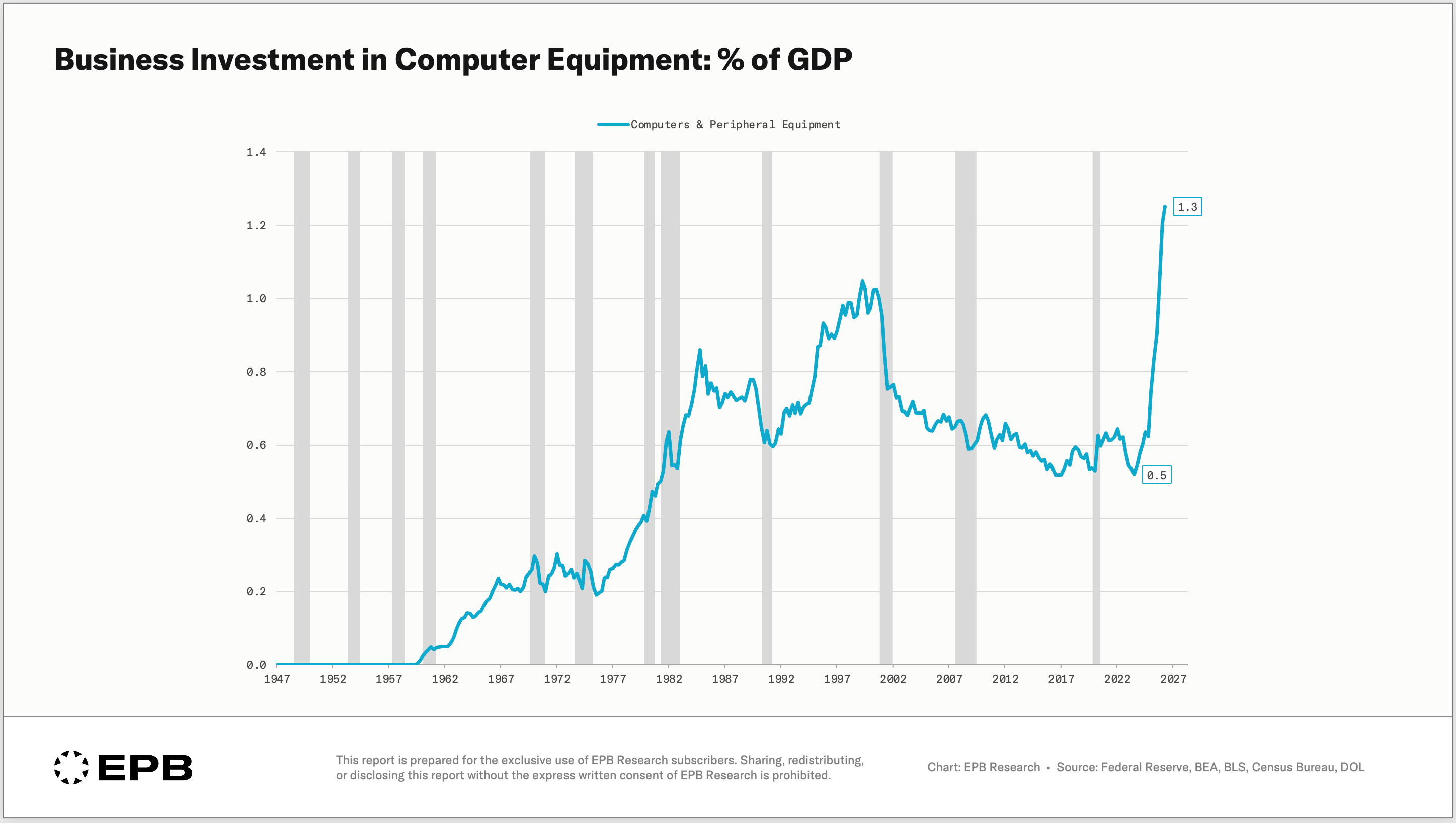
The AI Boom Isn't an Investment Boom
The stock market keeps setting records, but most Americans don't feel any richer. One number explains the gap, and the AI boom is making it worse.

Most economic research tells you what already happened. EPB Research reads the business cycle in its repeatable sequence, so you see turning points before the headlines confirm them.
Live Last read · last published · next check
The stock market keeps setting records, but most Americans don't feel any richer. One number explains the gap, and the AI boom is making it worse.
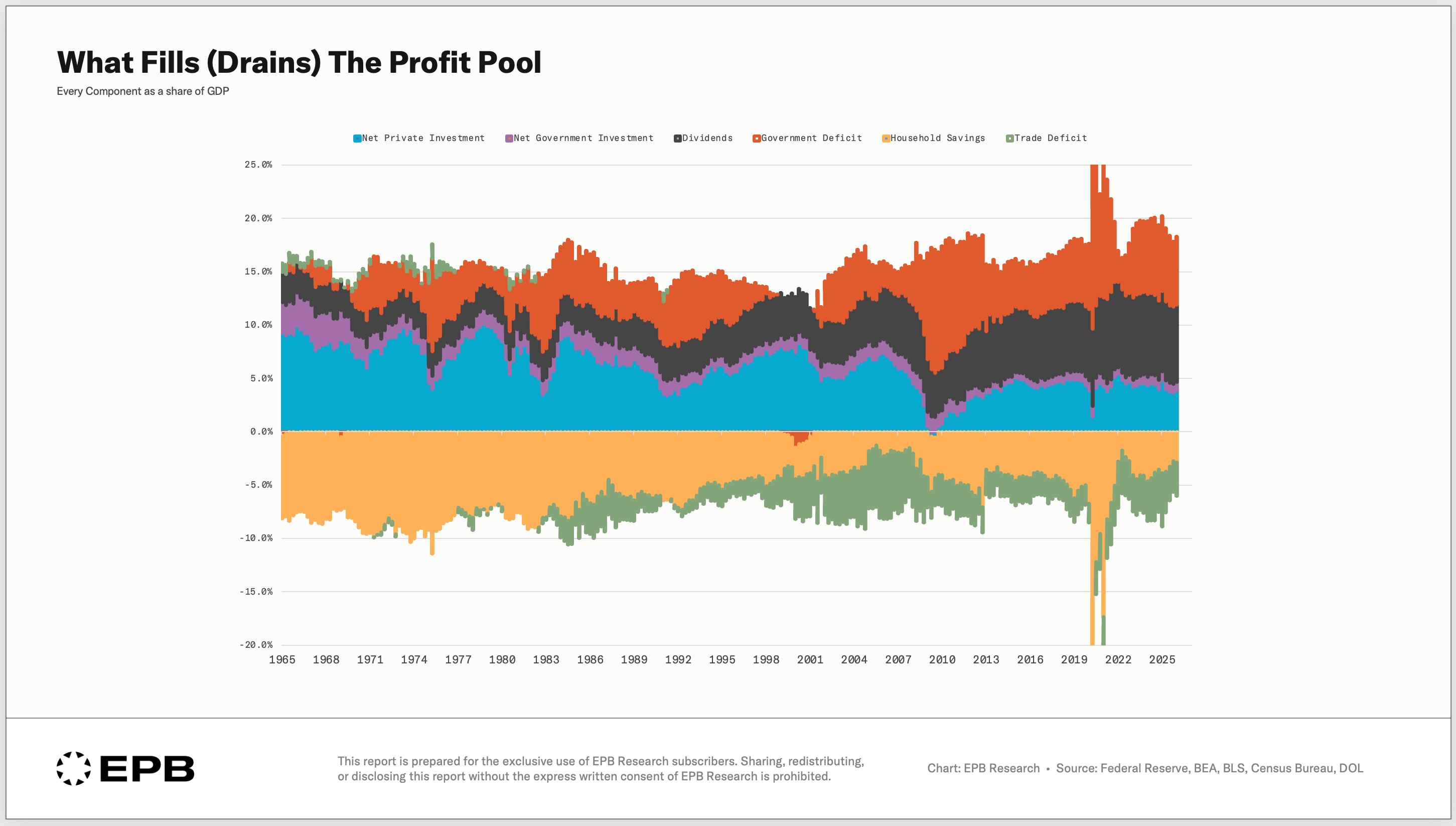
Companies compete for a share of the existing profit pool. But a separate set of economic forces determines how large that pool becomes.
The three biggest numbers in economics share a hidden flaw: they can only confirm what already happened. Here’s the small, specific part of the economy that actually moves first.
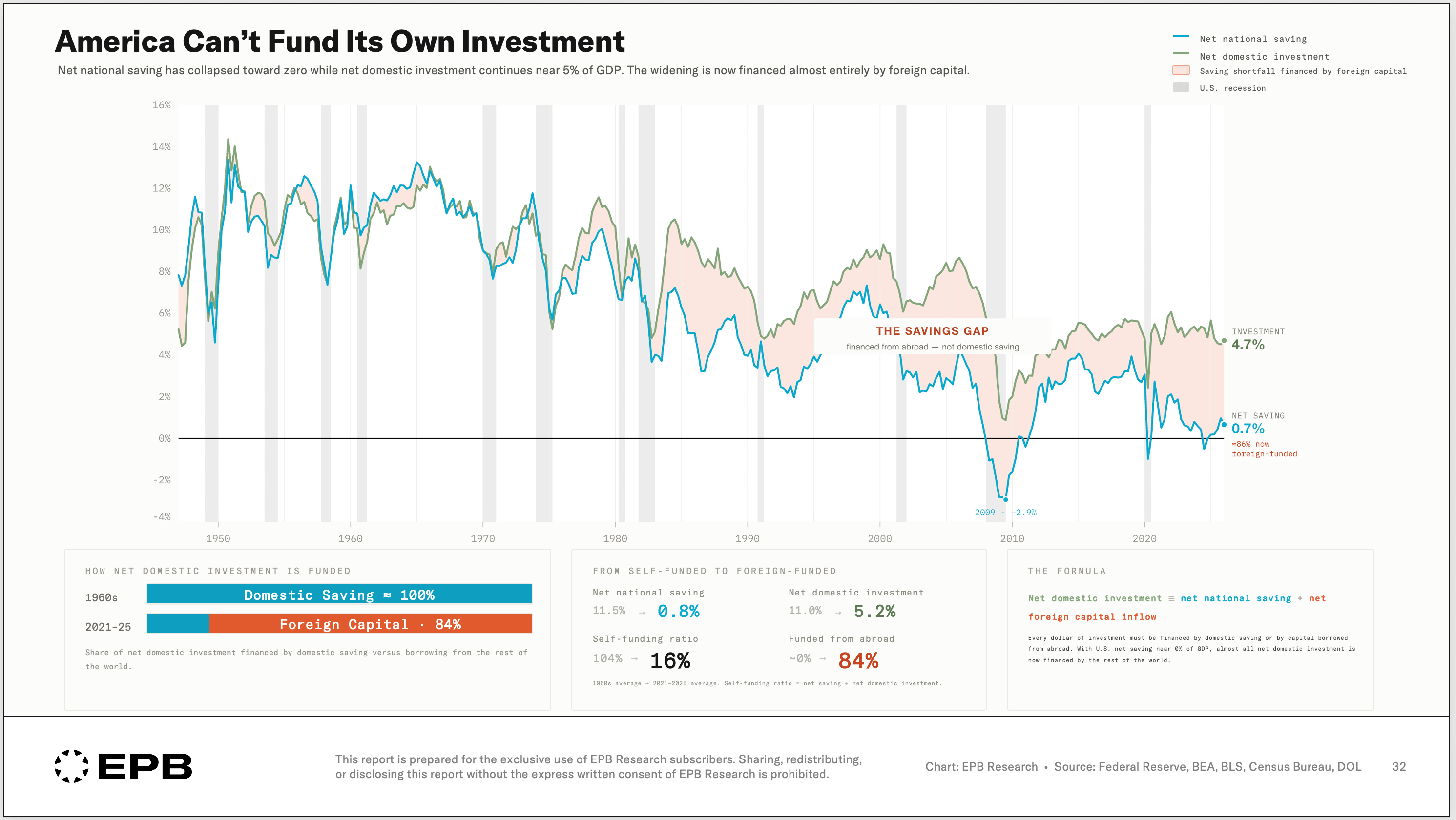
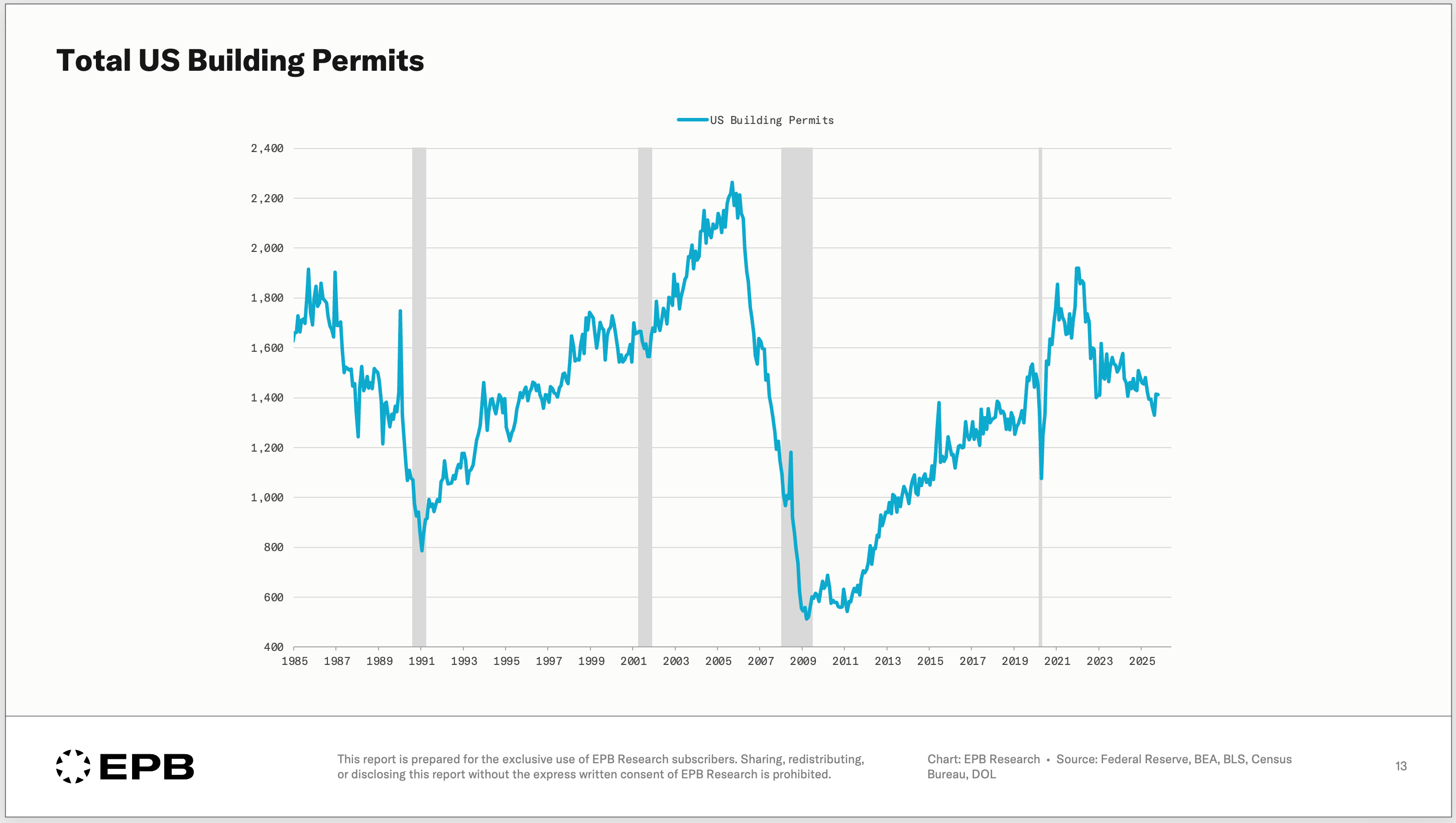
Housing is the best example of a deeper shift: America has stopped funding its own investment, and stopped building the physical structures most people rely on.
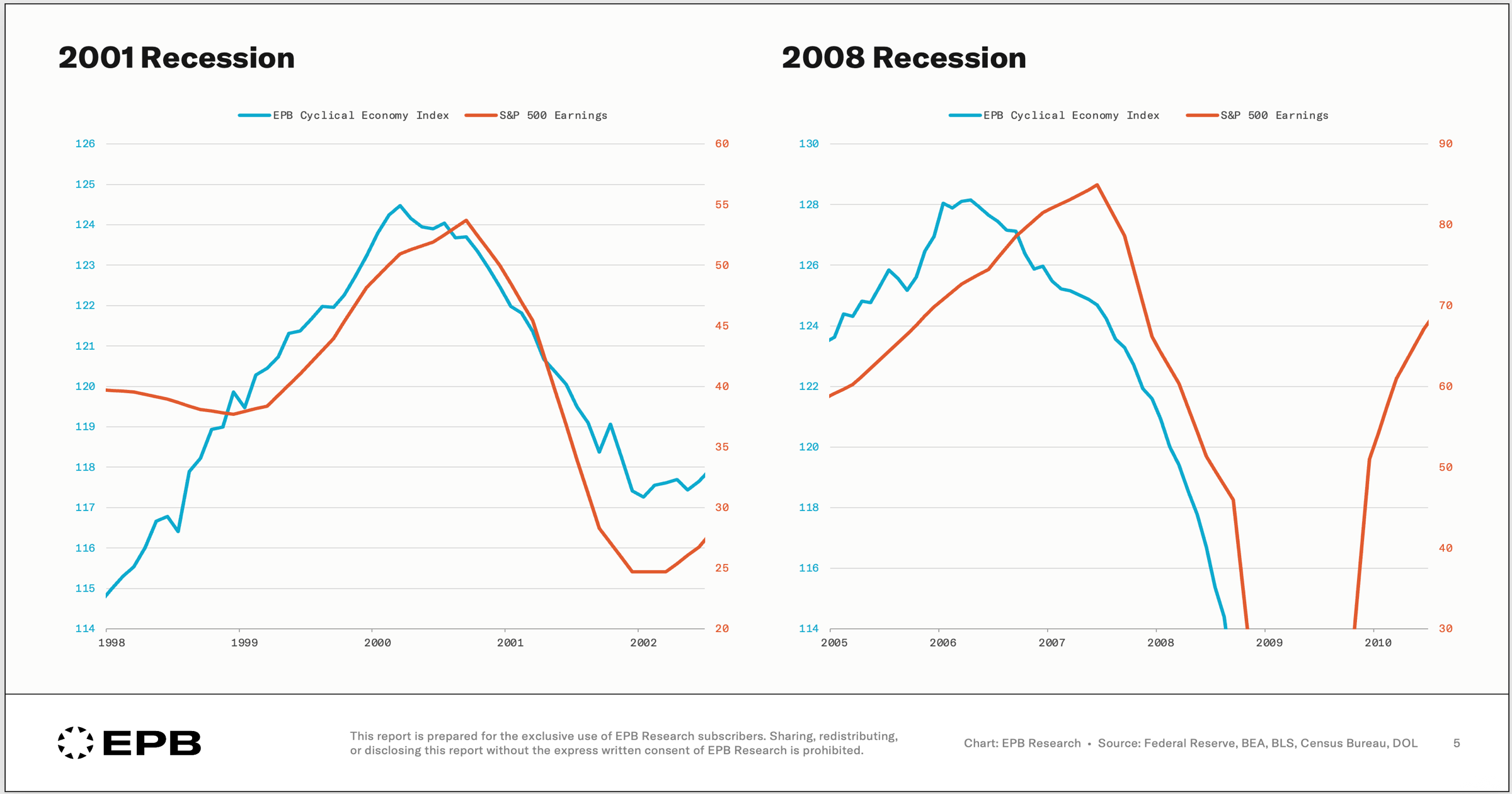
The market is better at calling the end of a recession than the beginning. Here's the part of the economy that actually leads the cycle, and how to track it.
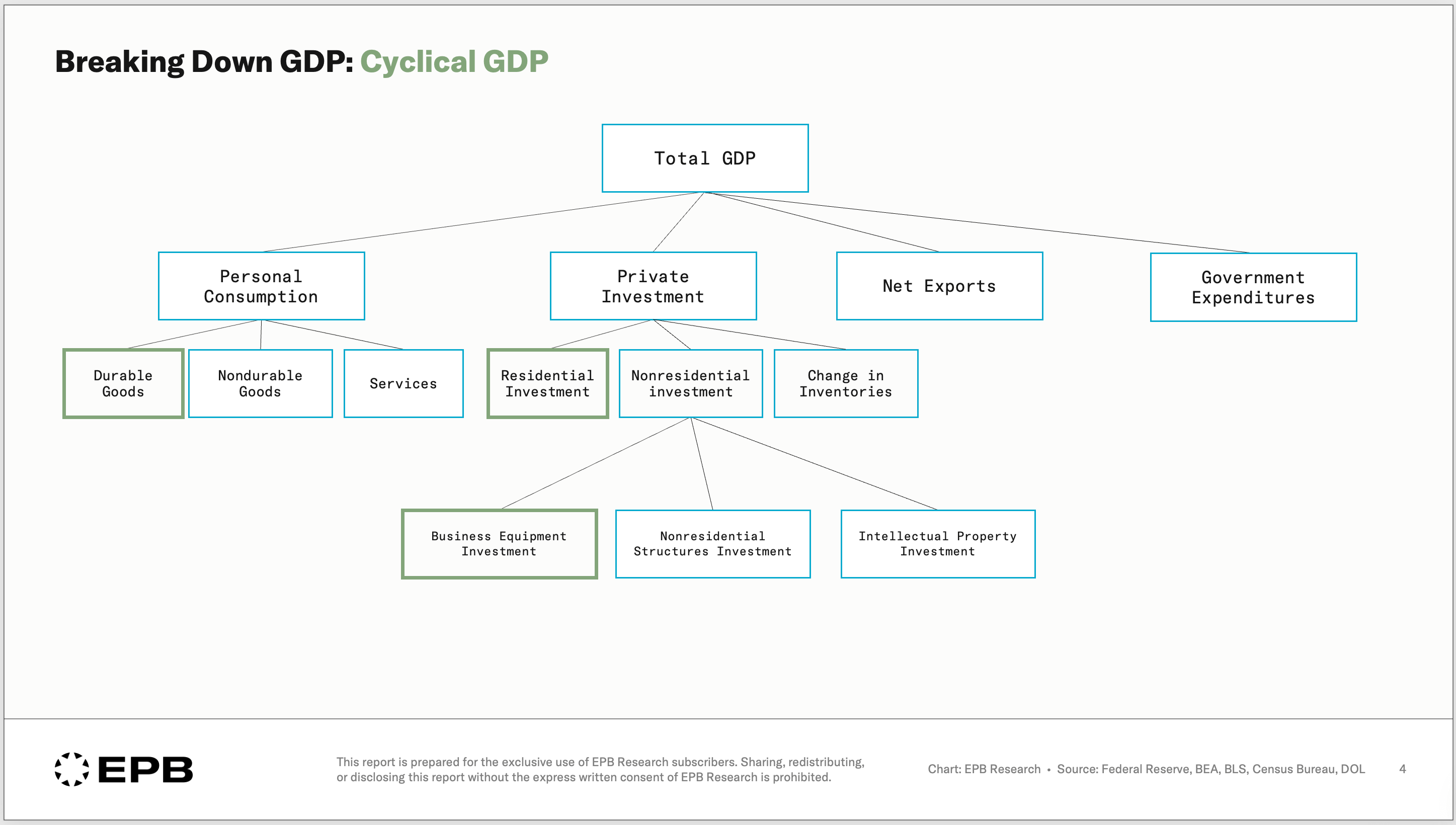
Most of GDP can't tell you where the cycle is going. Here's the part that can.
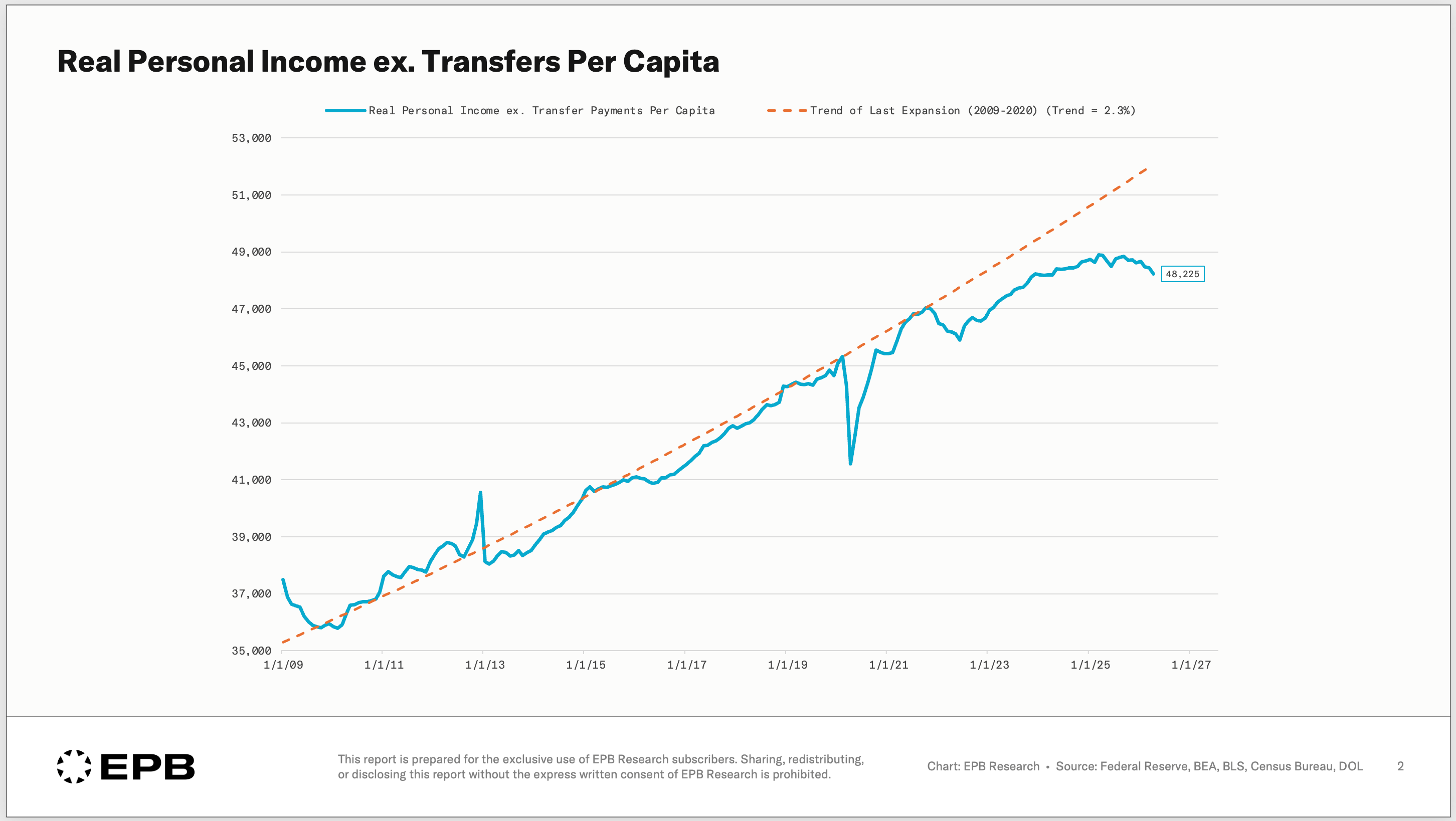
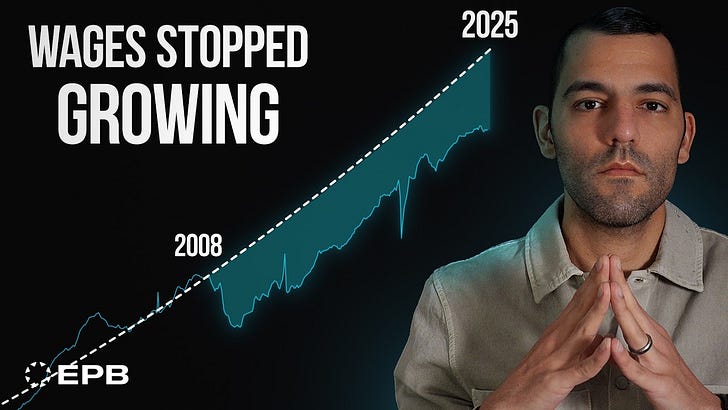
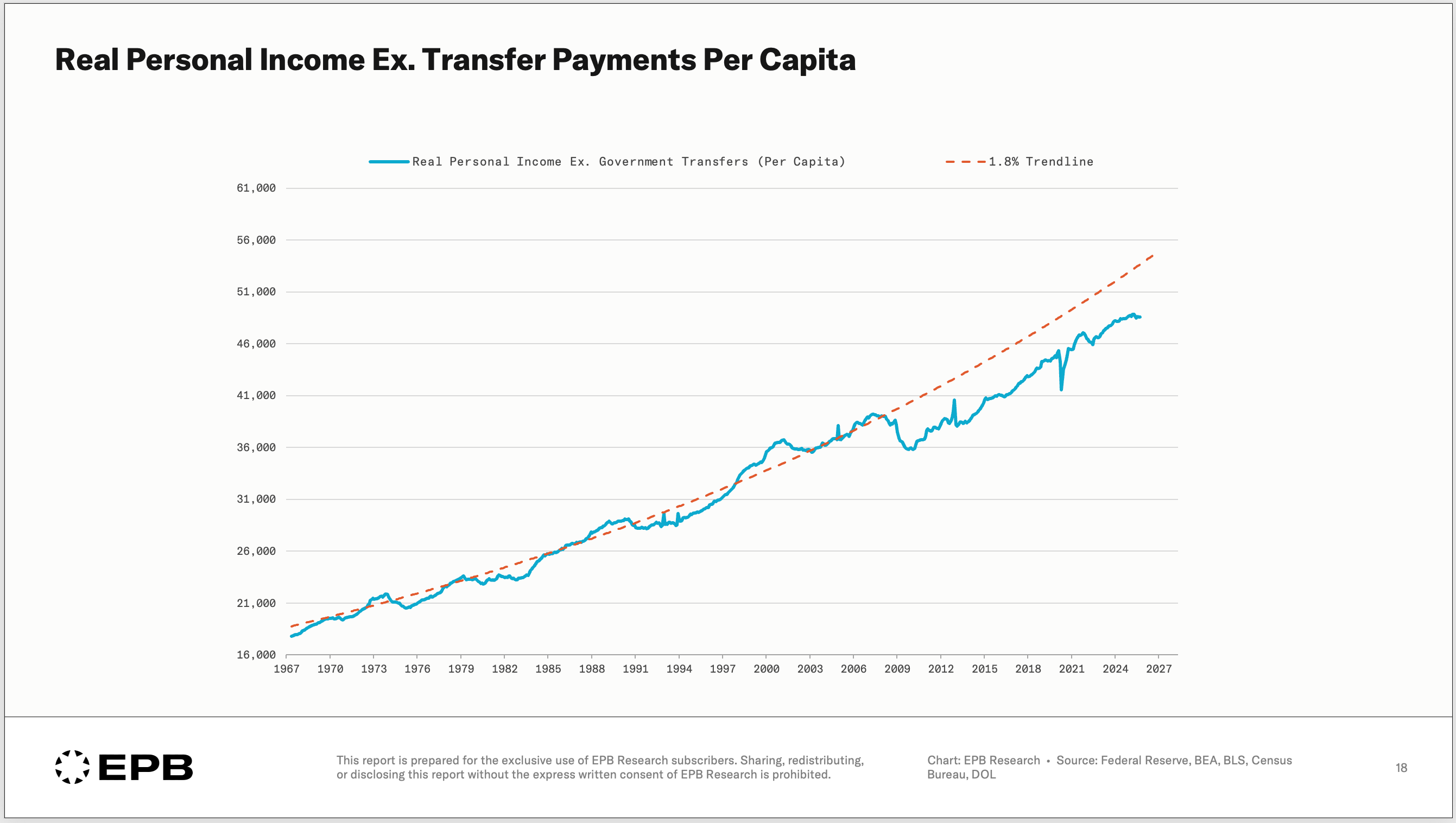
US corporate margins just hit an all-time high while the typical worker's income slips below trend. The two are connected, and the reason isn't what most people think.
Housing was stabilizing for the first time in three years. Then the war reignited inflation and pulled the one variable holding the recovery together. Here's where the sequence stands.
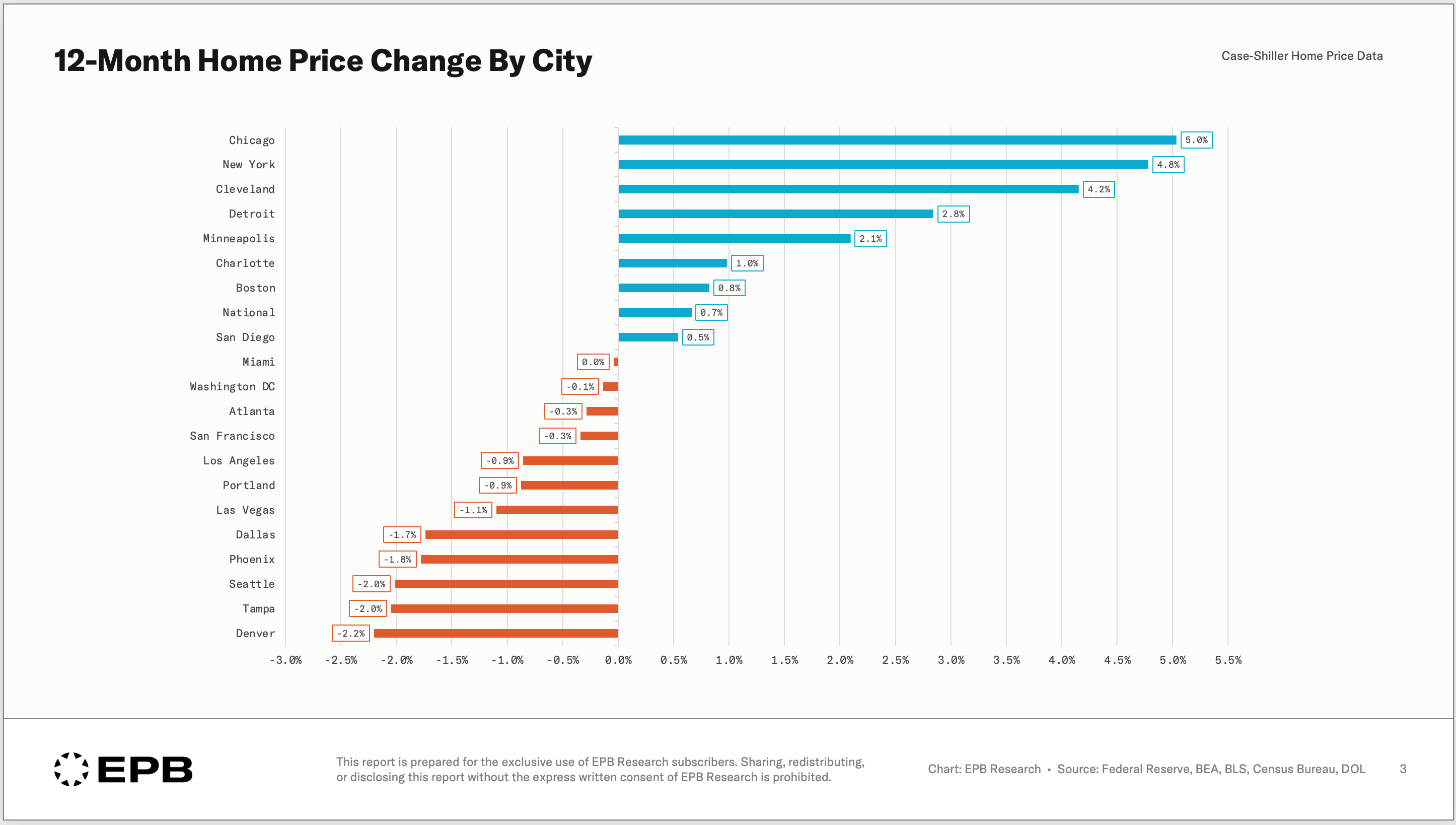
Half of the country had a real housing recession that the national index hid. One variable explains why.
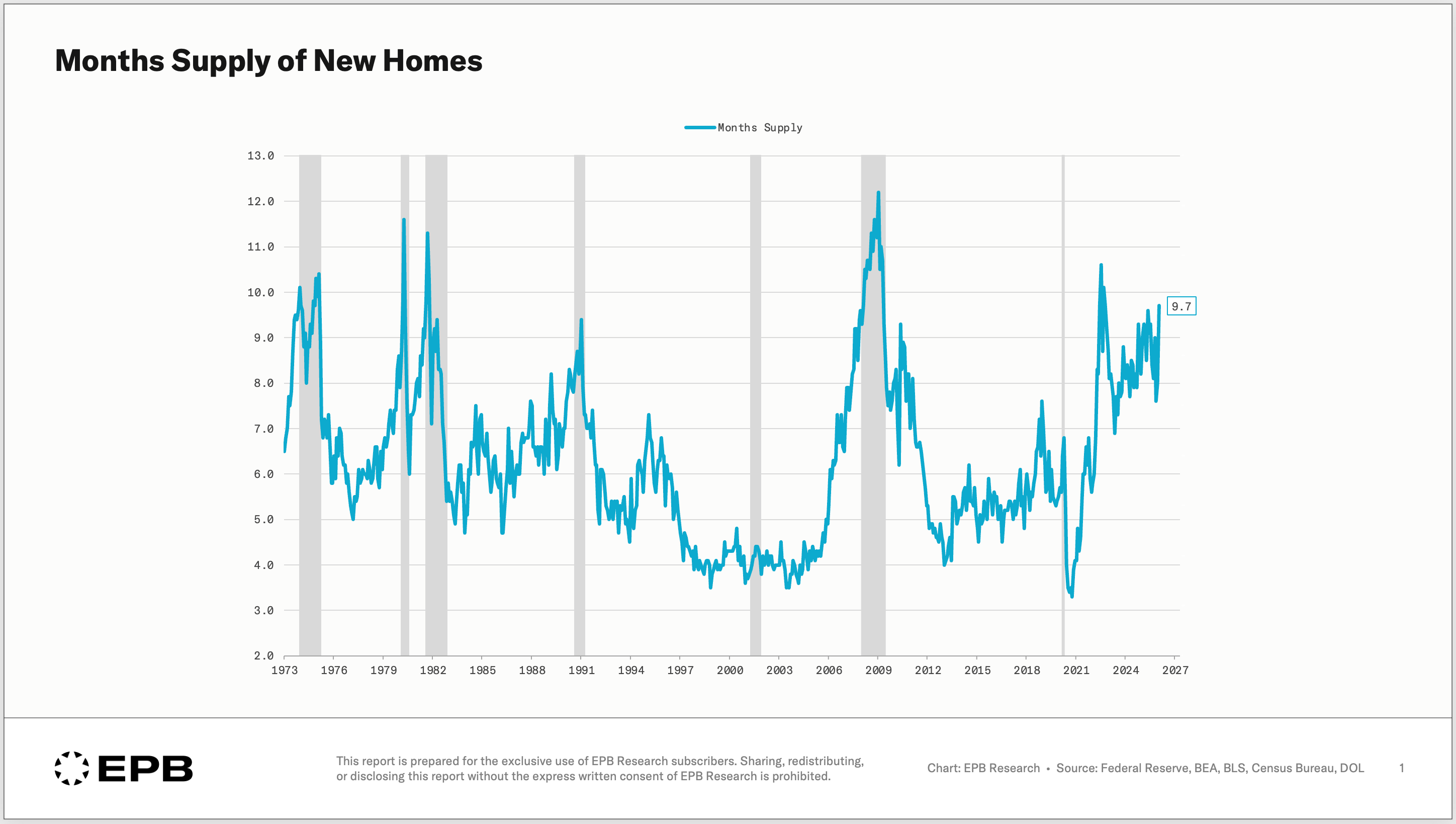
In 2022, months supply hit a level not seen since 2008, but a housing recession never came. This metric explains why.
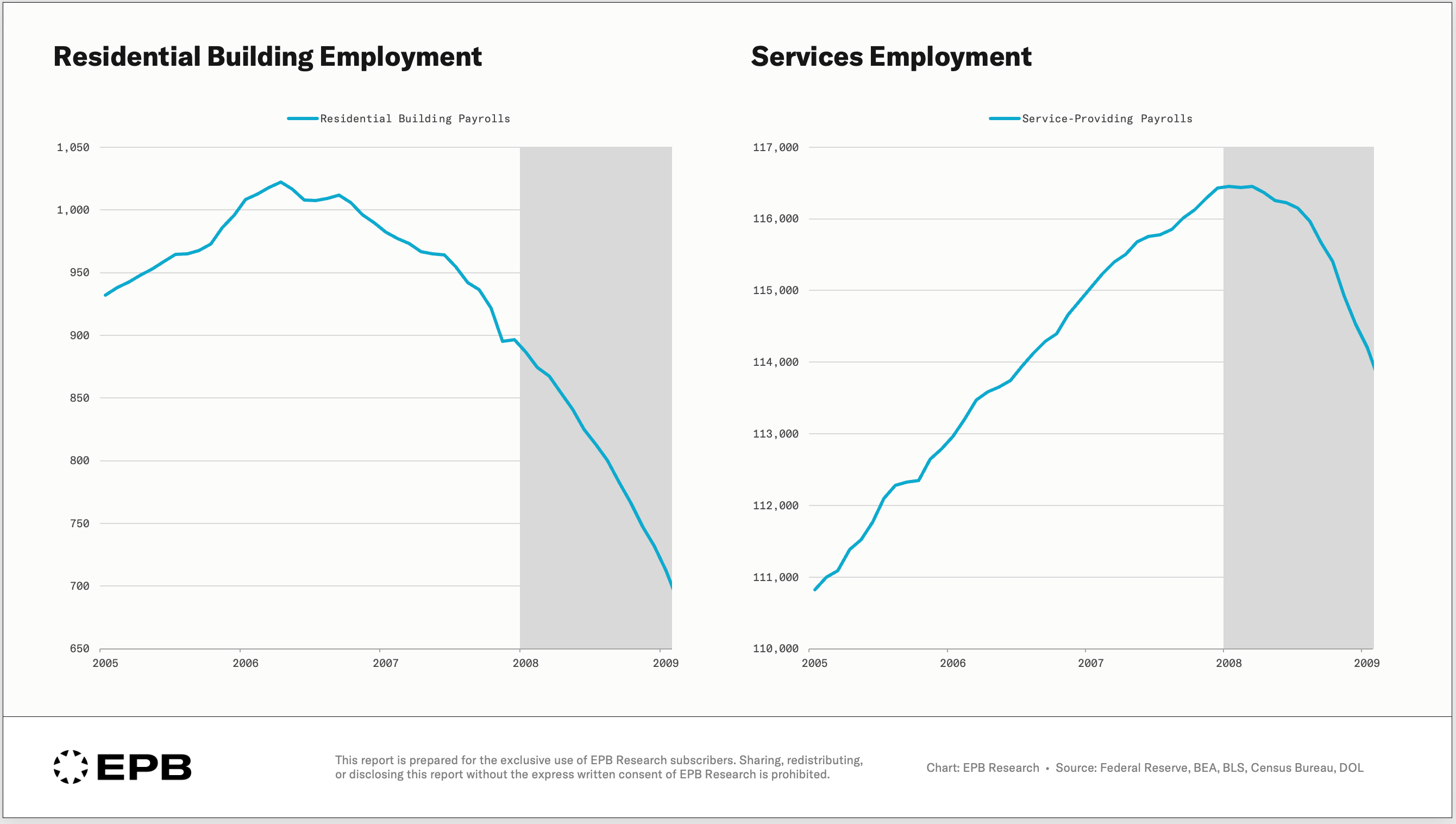
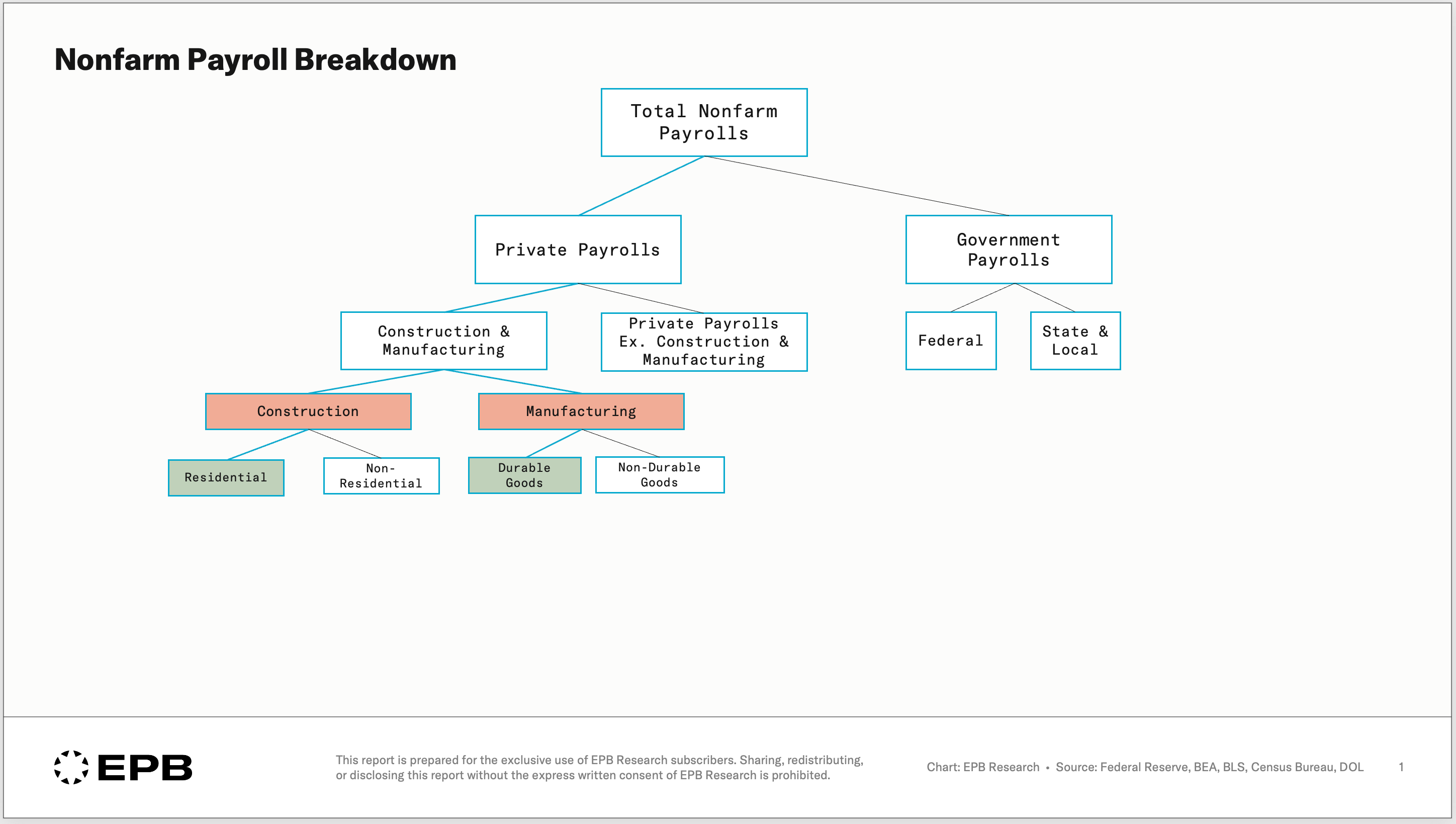
Most analysts watch total nonfarm payrolls and see stability. A narrow slice of the labor market generates virtually every recessionary job loss — and it peaks years before anyone notices.
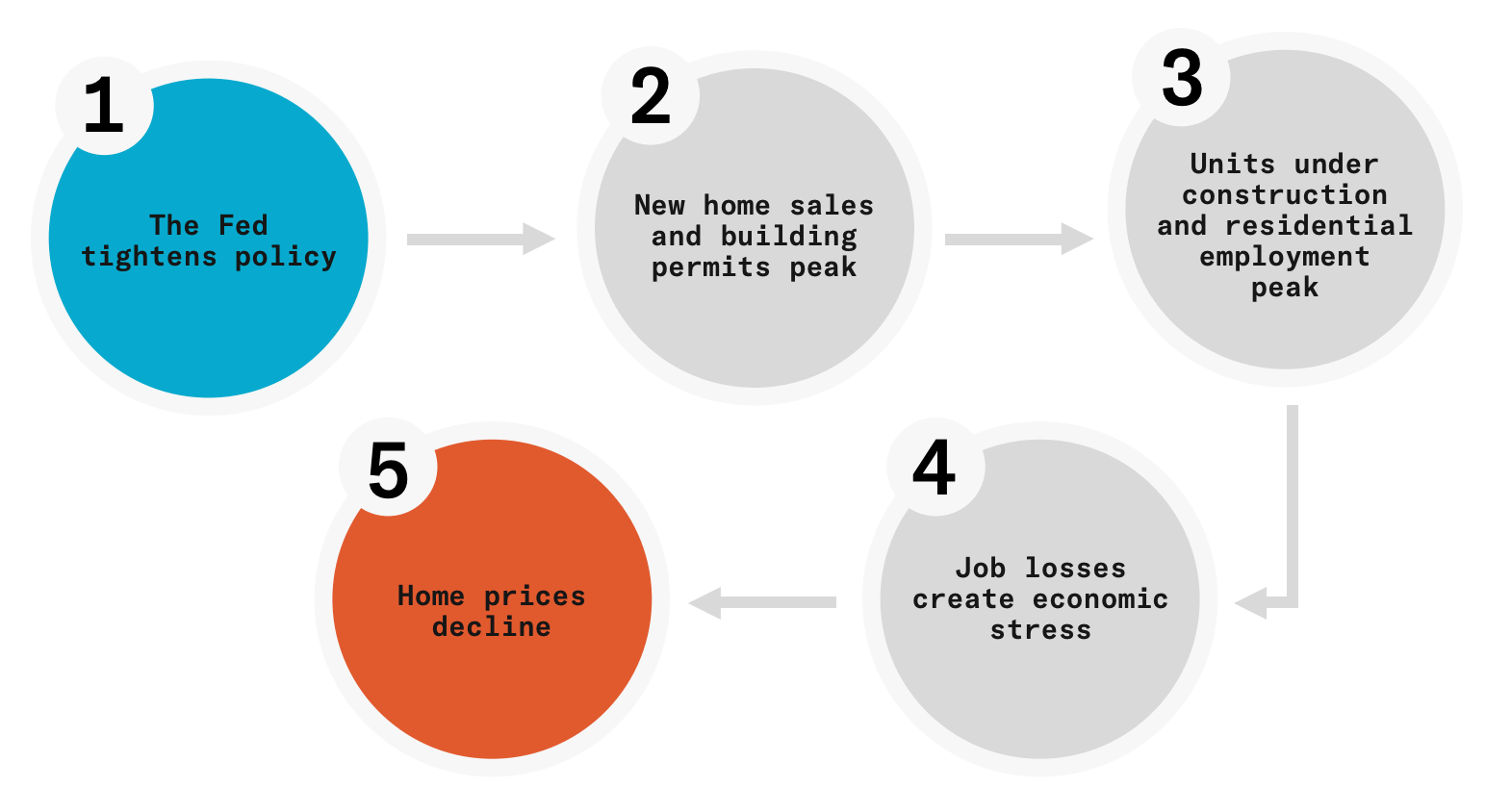
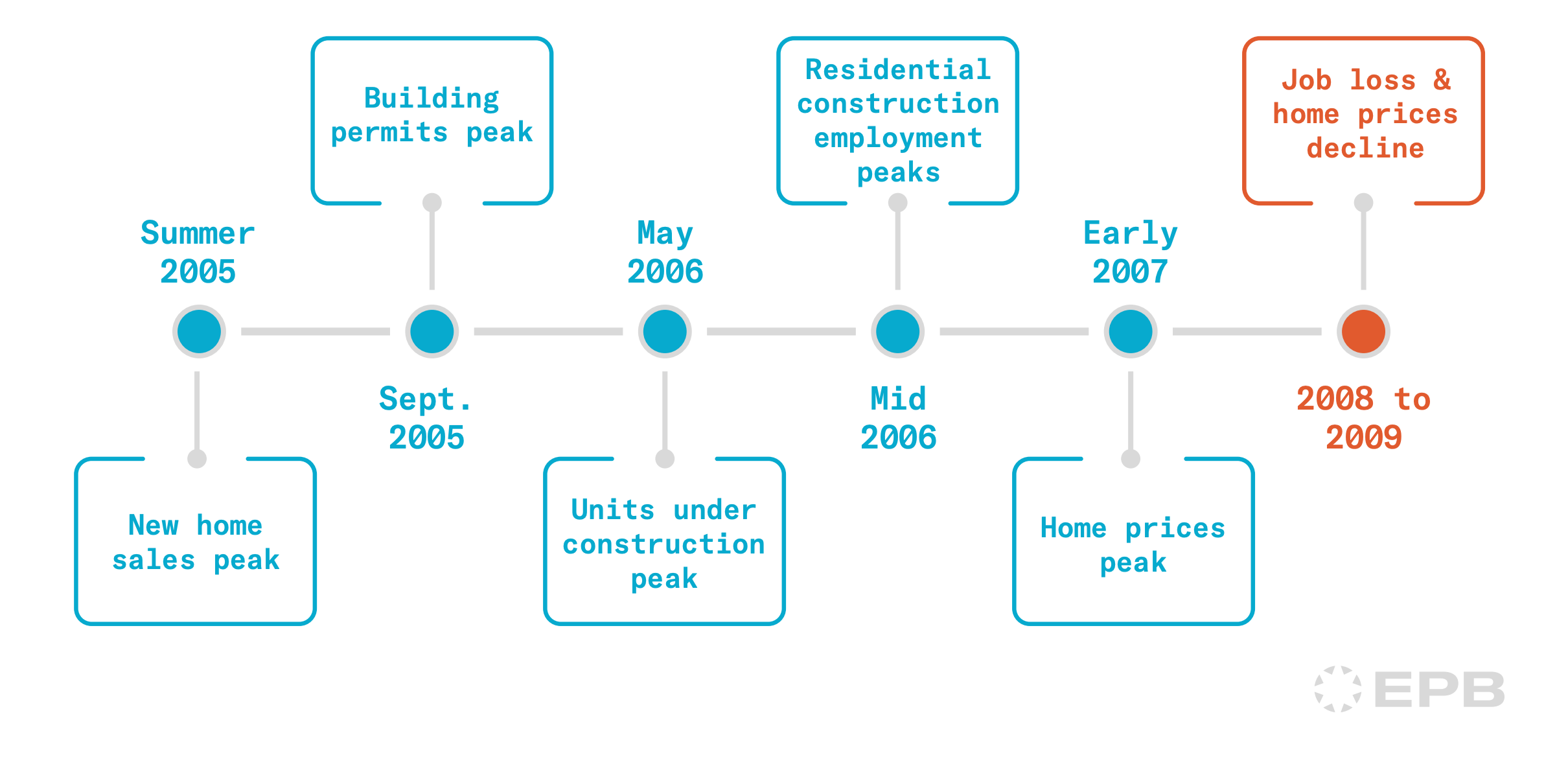
The residential construction cycle moves in the same order every time. By the time prices fall, the sequence has been running for years. This is the sequence to watch…
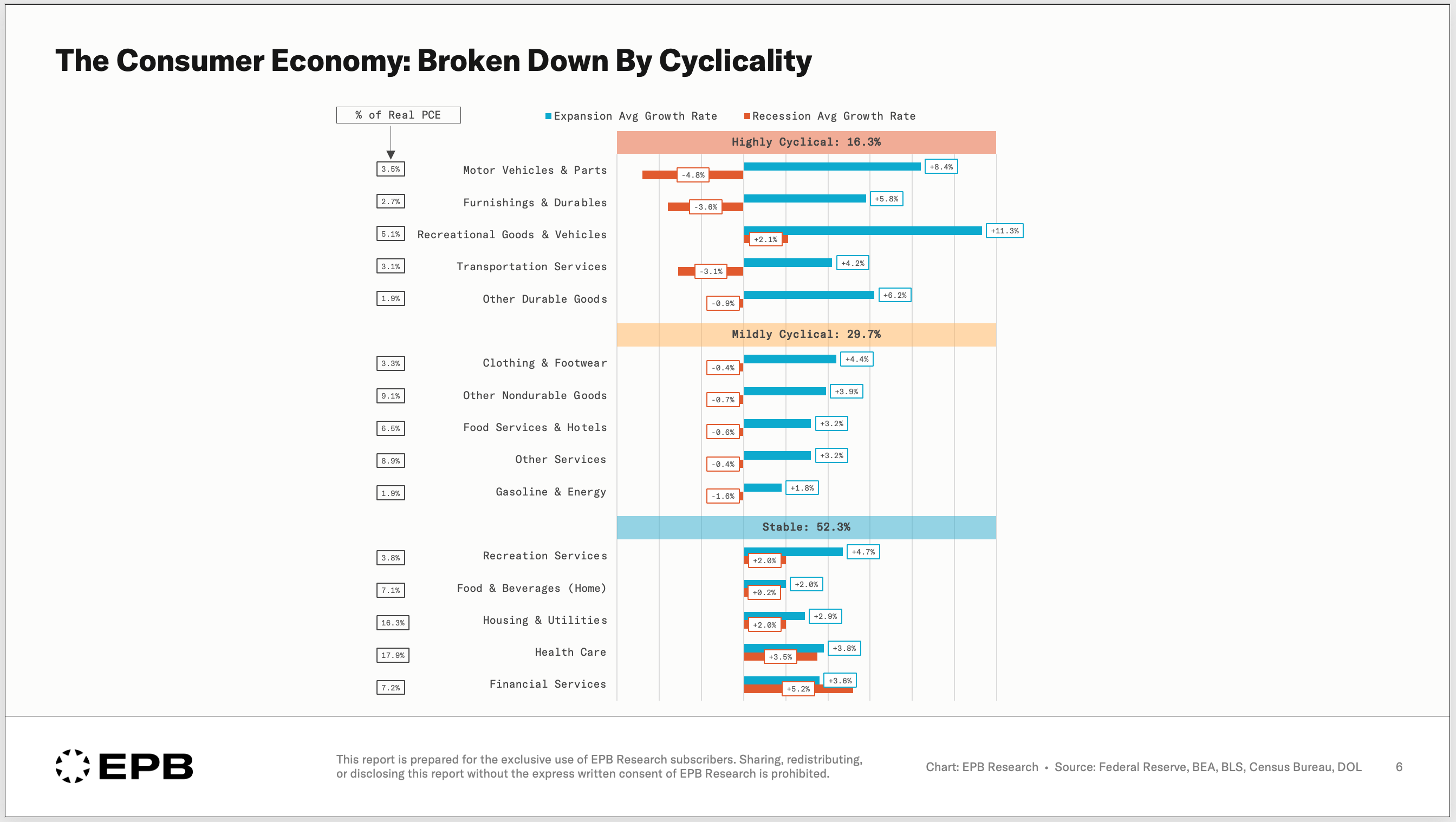
Most analysts watch total consumer spending and see stability. Break it down by cyclicality and the picture looks completely different.
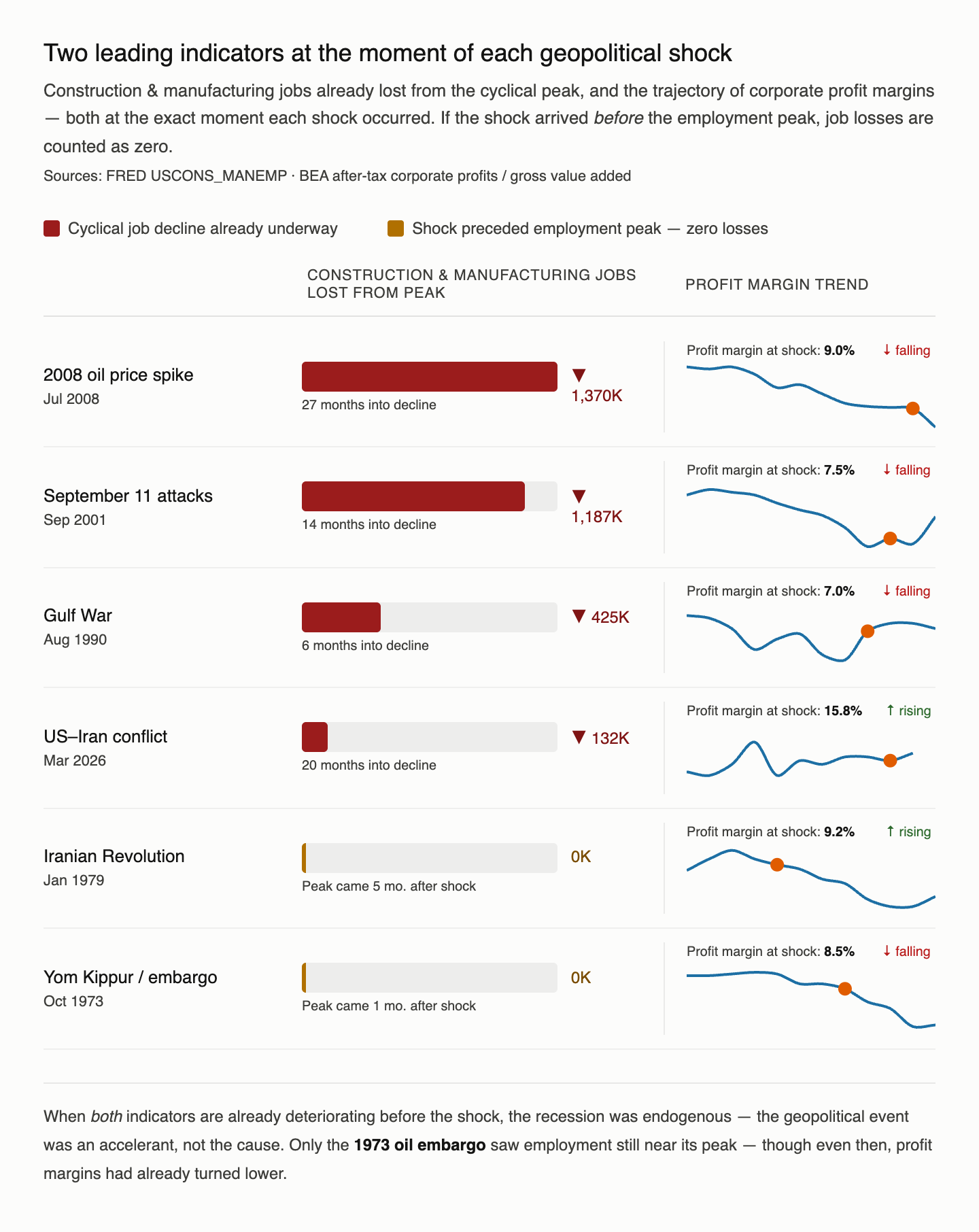
The US-Iran conflict has reignited recession fears. Here's what the data from five decades of geopolitical shocks actually shows about when or how these events matter.
The Hidden Link Between Government Size, Vanishing Net Investment, and Stagnant Real Incomes
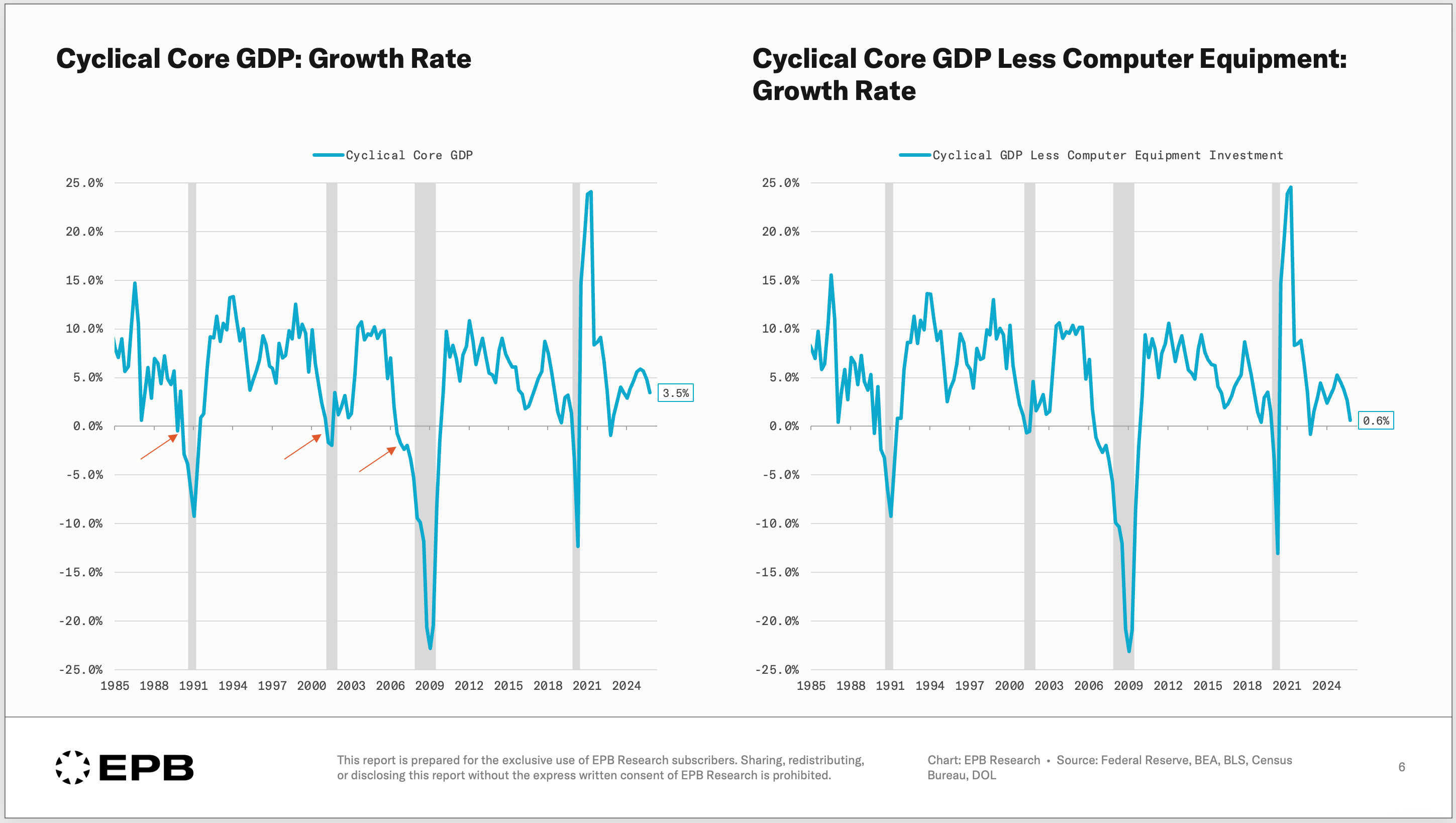
Strip out AI investment and the case for rate cuts becomes difficult to ignore. Key cyclical sectors are still struggling.
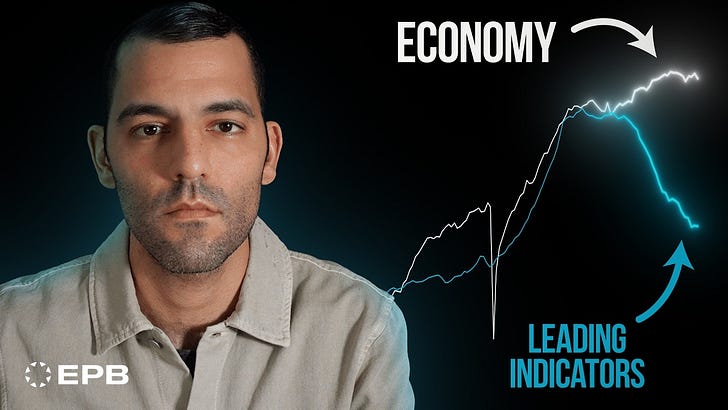
Leading indicators declined for three years with no recession - here is what actually happened.
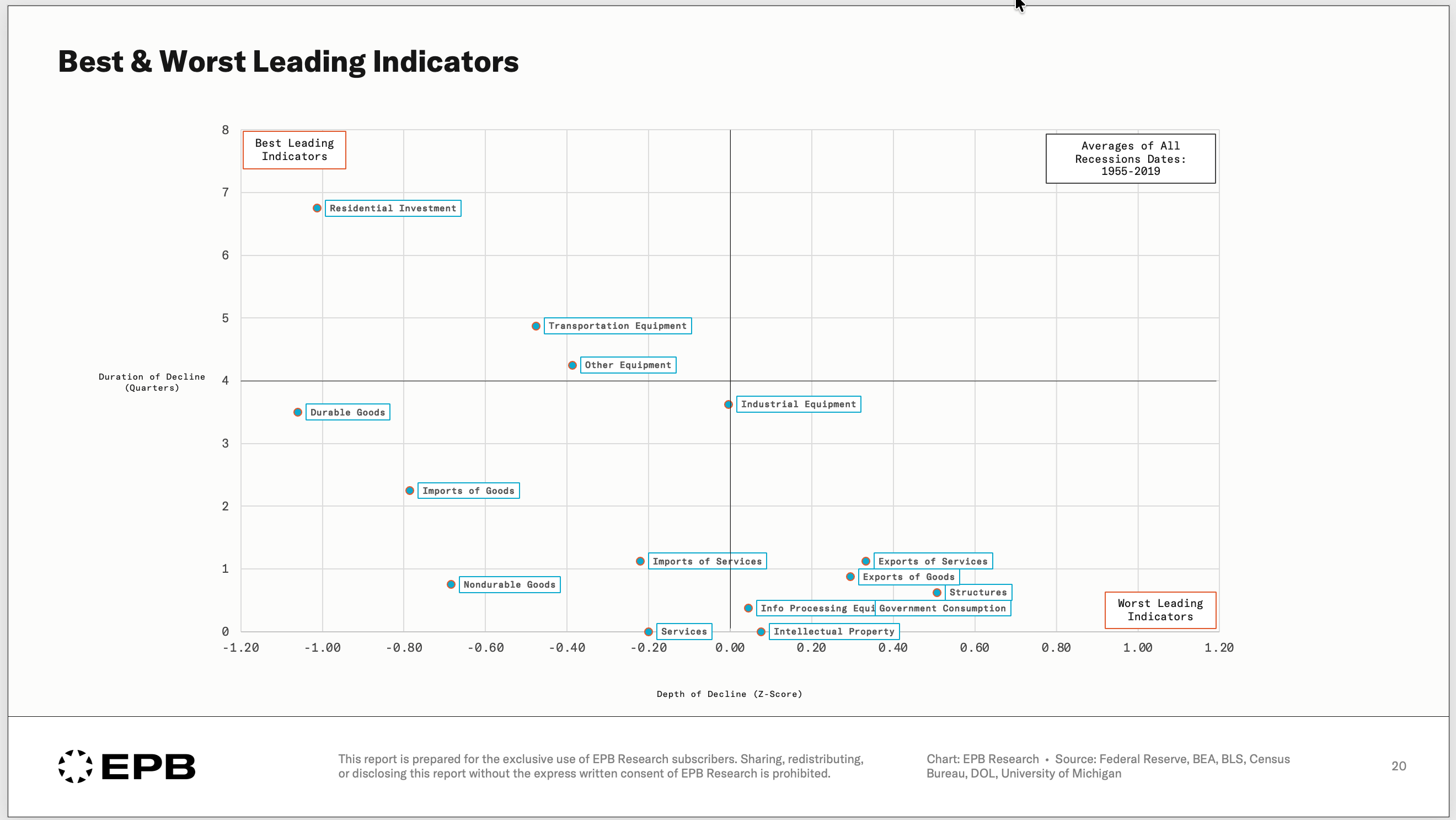
Not all economic indicators are created equal. Here are the best (and worst) for recession forecasting.
Leading indicators declined for three years with no recession - here is what actually happened.
The Hidden Link Between Government Size, Vanishing Net Investment, and Stagnant Real Incomes