What New Estrogen Research Tells Us About the Ageing Female Brain
New research explores the relationship between estrogen therapy, menopause and brain ageing and what we still don’t know about women’s long-term cognitive health.

Institutional investment intelligence on women’s health, Healthcare AI and the capital shaping the future of healthcare.
Live Last read · last published · next check
New research explores the relationship between estrogen therapy, menopause and brain ageing and what we still don’t know about women’s long-term cognitive health.
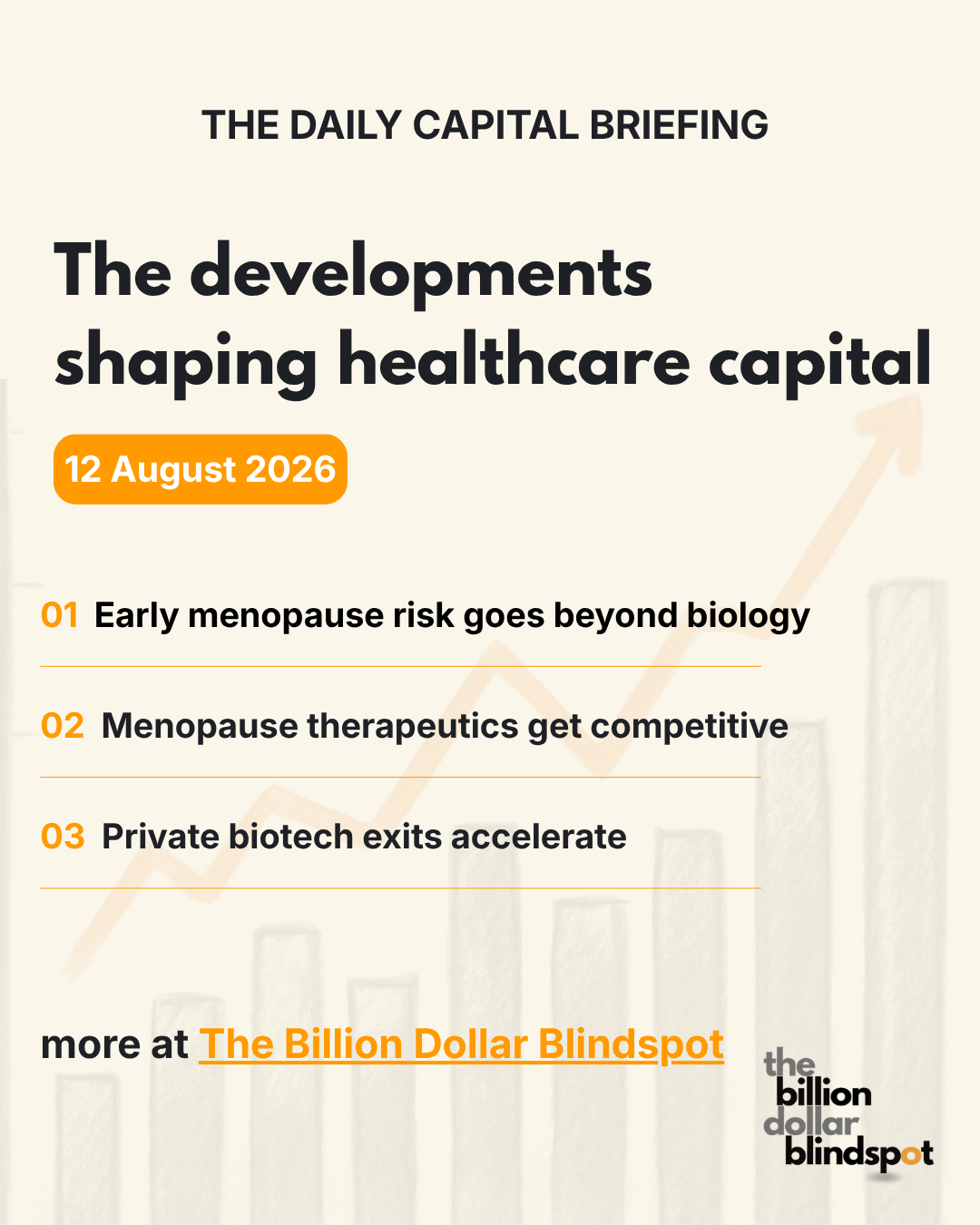
Three developments shaping healthcare capital: new research on early menopause and social disadvantage, growing competition in menopause therapeutics, and an accelerating exit market for private biotech.
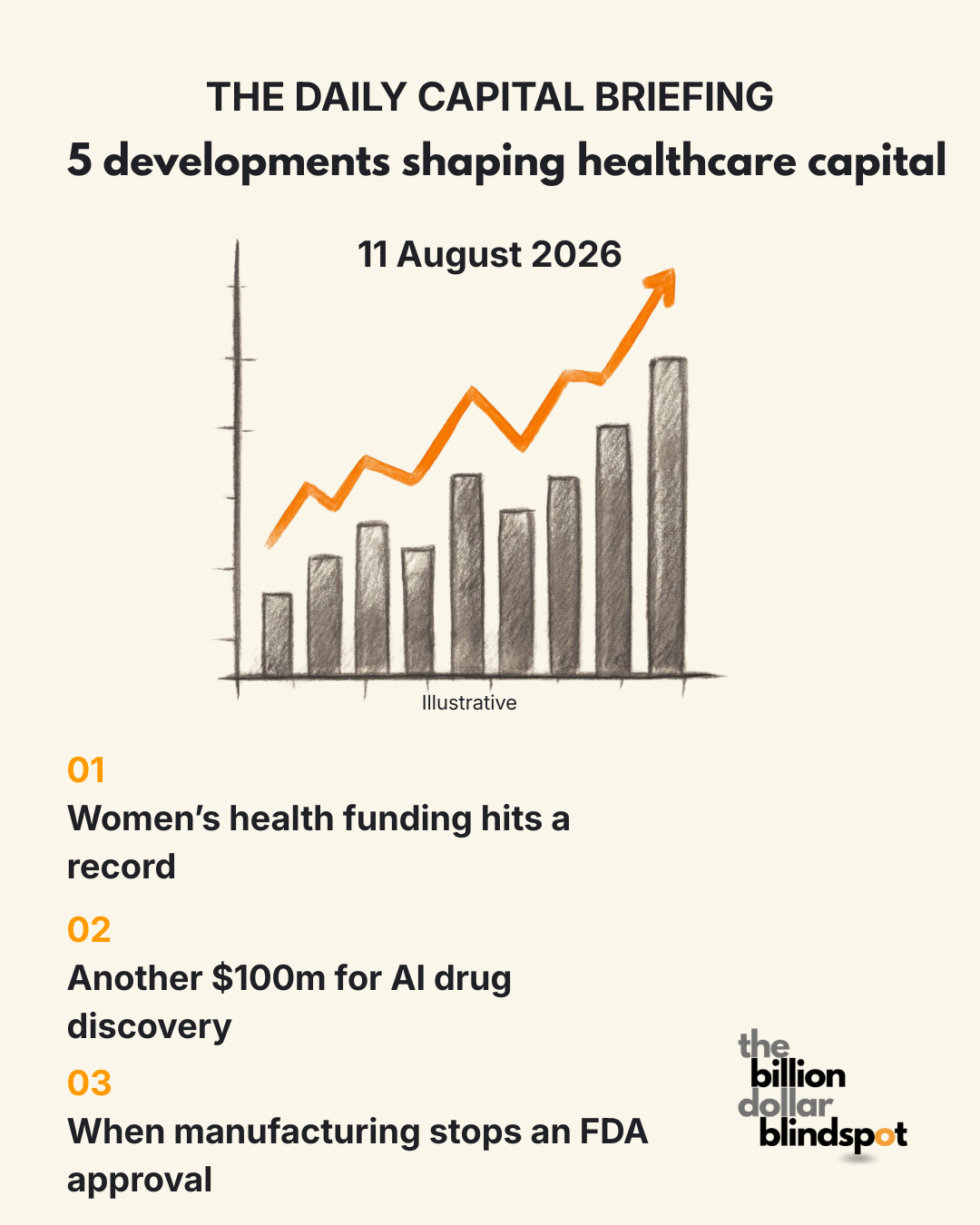
Five developments shaping healthcare capital: record women’s health funding, AI drug discovery, biotech manufacturing risk, menopause science and markets.
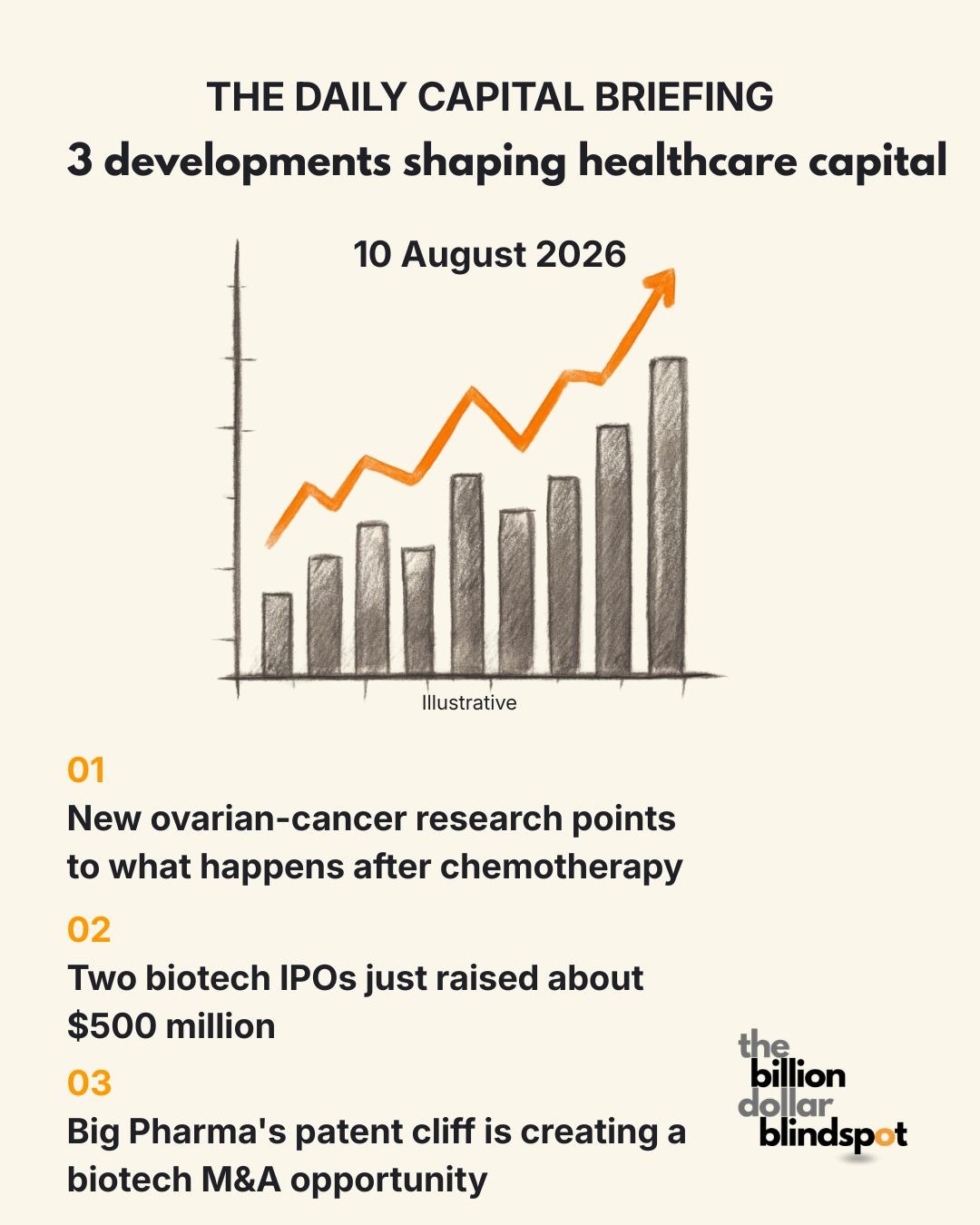
The Daily Capital Briefing — 10 August 2026
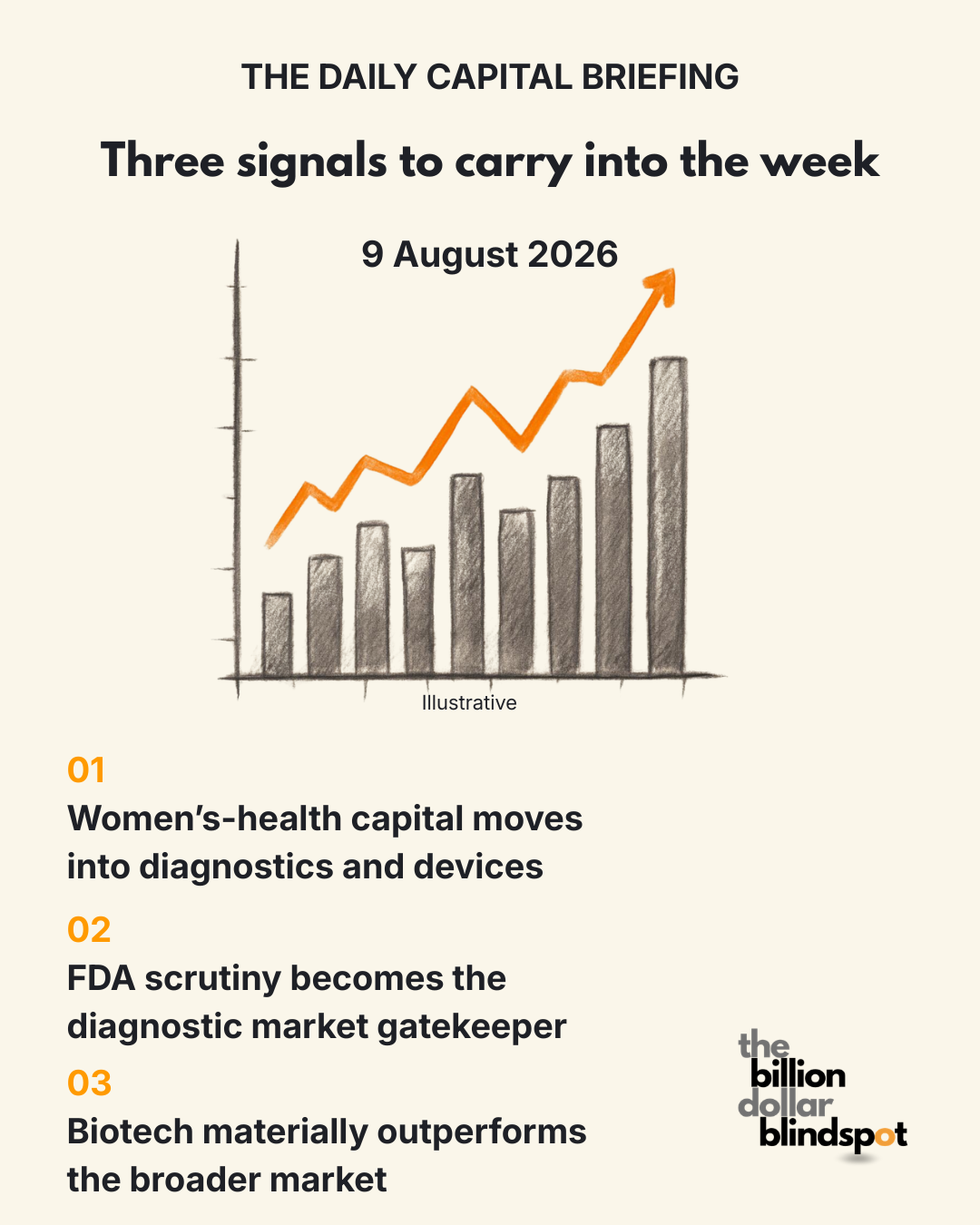
The Daily Capital Briefing — 9 August 2026
What ZEUS means for Novo’s pipeline and how far investors should apply its result.
The Billion Dollar Blindspot is opening its pages to founders, investors, clinicians, researchers and industry leaders with valuable perspectives to share.
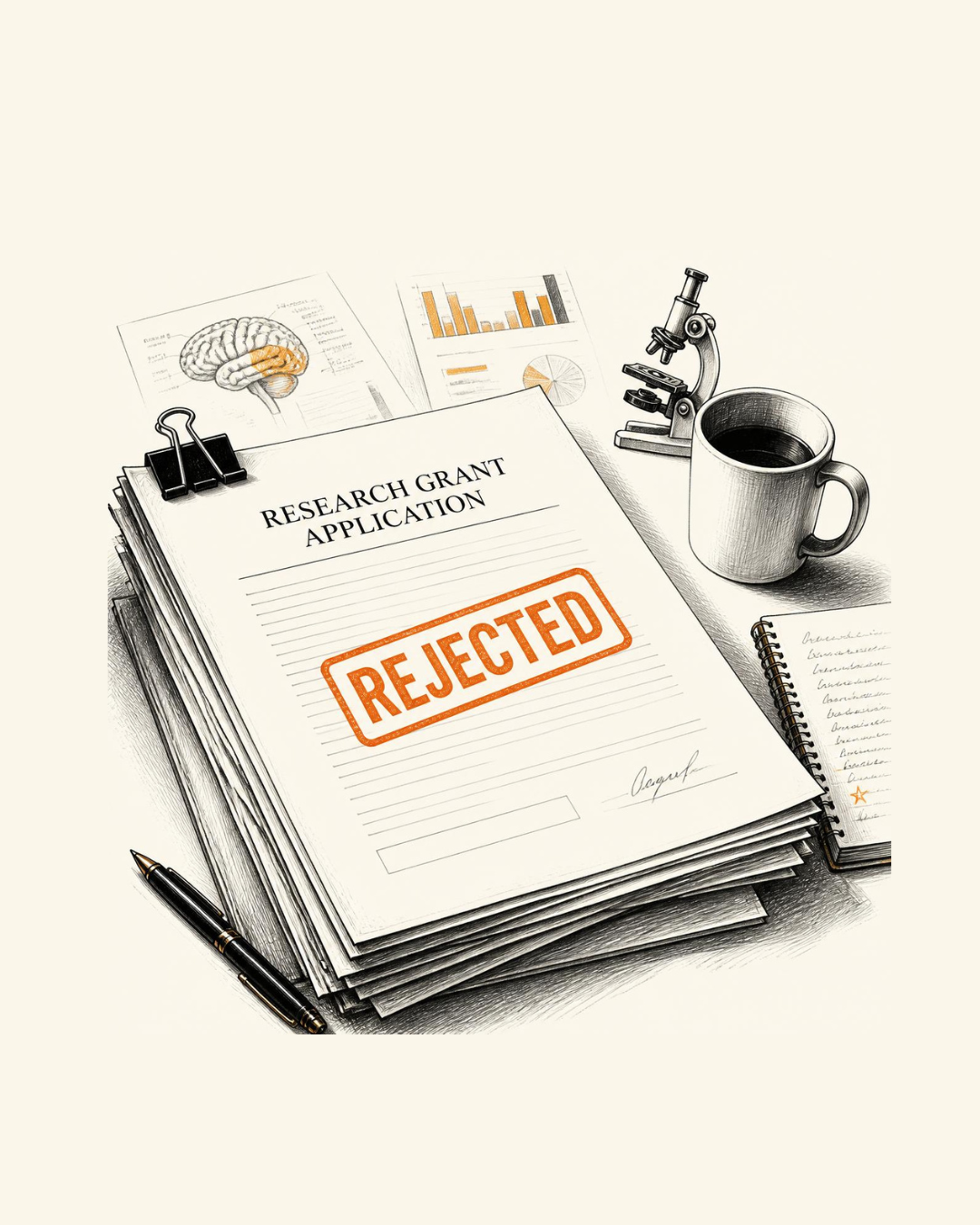
What one rejected study reveals about research funding, hormones, perimenopause and why some of medicine's most important questions remain unanswered.
Why venture capital growth alone may not be enough for women's health to become an institutional investment category.
Women's health is one of the clearest tests of precision healthcare. Discover why biological time is reshaping medicine, innovation and healthcare investing.
For the last three years, I have written The Billion Dollar Blindspot largely because I could not stop thinking about the same question:
How sex-specific medicine, emerging healthcare LP demand, the Great Wealth Transfer, and specialist-manager access are reshaping women’s health investing.
Women’s health needs more capital. But as clinics consolidate, the more urgent question is whether ownership models protect continuity of care, clinical autonomy, and the women who depend on both.
Women with ADHD are being treated with medications whose pivotal trials never tracked menstrual cycle phase, hormonal variability, or perimenopausal decline. This investigation examines the structural gap between ADHD diagnosis and ADHD evidence and what estrogen's role in the dopamine system means for the millions of women now filling these prescriptions.
Why are so many women being diagnosed with ADHD in their 40s and 50s? This article explores the history of ADHD research, the possibility of diagnostic bias toward boys, and the emerging connection between ADHD, hormones, and women's brain health.
For decades, medicine treated estrogen primarily as a reproductive hormone. New evidence suggests we may have misunderstood what it was doing all along.
Why women’s health remained overlooked for decades, how incomplete data created market blind spots and why investors are finally paying attention.
The story behind The Billion Dollar Blind Spot and the structural forces reshaping healthcare innovation and capital allocation.
Why the largest intergenerational wealth transfer in history may become the catalyst for a structural repricing in women’s health investing.
UCB’s acquisition of Candid Therapeutics is being framed as a next-generation immunology platform deal. But beneath the immune-reset narrative lies a commercial reality few investors are discussing.
A new Nature Neuroscience commentary warns that phasing out animal research before female biology is well understood could lock historical male bias into the next generation of health innovation.