
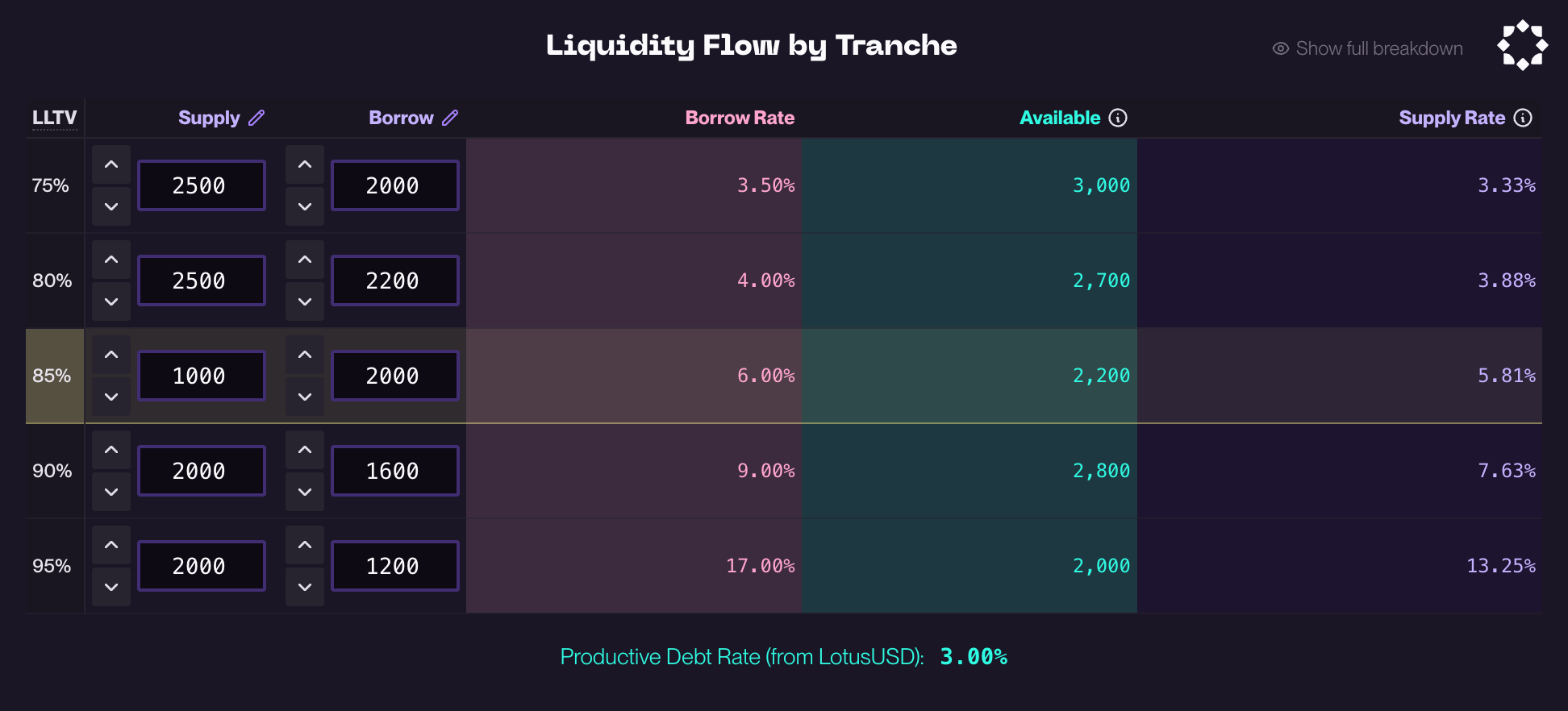
TL;DR
In risk-curated, isolated market models, the market-dominant LLTV for a specific collateral/debt pair often caters to the most risk-tolerant curators. This short-term advantage in TVL growth makes it difficult for risk-averse curators to establish competitive markets with lower LLTVs and interest rates. Although the protocol design permits these alternatives (e.g. Morpho), even if there are multiple markets with same collateral/debt token pair available (with different LLTVs or oracle setup), depositors generally do not differentiate and opt to (slightly) higher yields, leading to a concentration of capital in the dominant LLTV market. In other words, in isolated market models, conservative risk markets can be designed, but they are difficult to scale because liquidity tends to concentrate around the dominant LLTV / yield opportunity.
Lotus addresses this by introducing cascading liquidity and risk tranching. Markets offer different LLTVs (junior/senior) while unused junior liquidity can be utilized by more senior tranches.
Thanks for reading Block Analitica Research! Subscribe for free to receive new posts and support my work.
This innovation allows risk curators to price risk more accurately while mitigating liquidity fragmentation. Consequently, even highly risk-averse curators can benefit from a specific collateral/debt pair, even if their target LLTV threshold is lower than others as the efficiency of capital allocation across various risk tranches is significantly enhanced by Lotus’s continuous market structure. Furthermore, risk tranching extends beyond just LLTV, allowing for a more nuanced expression of risk.
Background
Lotus is a decentralized lending protocol that distinguishes itself from similar money markets by granting both lenders and borrowers significantly more agency in determining their risk exposures. Lenders have greater discretion over the degree of market risk they choose to underwrite, as well as the risk profile of the borrowers to whom they supply capital. Conversely, borrowers are empowered with greater control over their specific risk exposure, minimizing the danger of contagion from borrowers positioned further out on the risk curve.
Lotus achieves this by segmenting a single lending market into distinct “tranches,” which can be conceptually likened to the liquidity “ticks” pioneered by Uniswap V3. However, rather than segmenting by ask price, Lotus tranches segment the market based on liquidation thresholds. Furthermore, tranches within a unified market are not structurally bound to a single collateral asset, oracle configuration, liquidation incentive, liquidation module, or interest rate policy. These critical parameters are configured on a per-tranche basis, including the choice of liquidation module, allowing risk managers to select the mechanism best suited to the risk profile of each tranche. The permutations of these parameters afford lenders and borrowers a high degree of agency, whilst arming risk managers with the flexibility necessary to maintain market solvency and remain highly competitive.
By introducing this architecture, Lotus identifies a strategic opportunity to attract borrowers desiring flexible loan terms and suppliers seeking granular control over the risks they underwrite. In the optimal equilibrium, conservative capital supplied by risk-averse lenders squarely meets the demand of conservative borrowers with minimal frictional costs. Crucially, the loan capacity within Lotus is not strictly constrained to the capital deposited in a given tranche; it encompasses the supply from Junior tranches as well. Consequently, Junior suppliers gain access to the yield generated by borrowers on the lower end of the risk curve, weighted according to tranche utilization.
Lotus Markets And Tranches
Lotus lending protocol introduces isolated single-collateral, single-debt token markets (e.g. ETH/USDC), defined by the following parameters:
Loan token
IRM (Interest Rate Model)
Liquidation module.
Important addition per market is a risk configuration called tranche, which are ordered by risk (junior & senior).
Each tranche includes:
Collateral token
Oracle
LLTV (Liquidation Loan-To-Value)
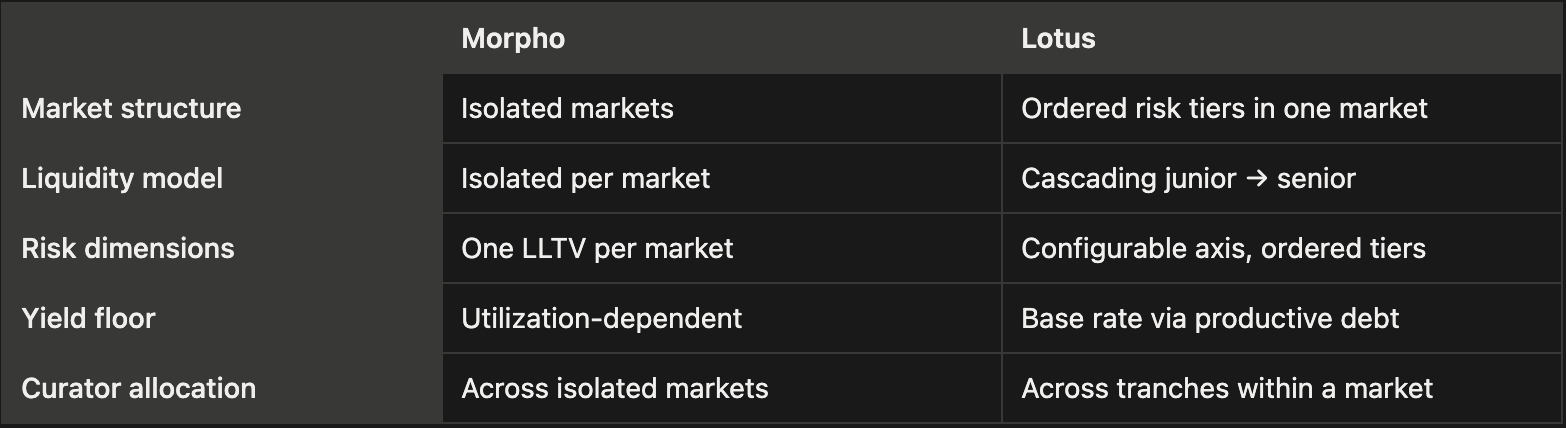
The above implies Lotus protocol is oracle, IRM, and even liquidation-module-agnostic. While there are some preset options for all (e.g. Adaptive, Base, or Managed Linear Kink, or fixed rate as IRMs), market deployers and curators are free to choose any setup they deem suitable for their needs.
Note: Oracles can be deployed as proxy, similarly to Morpho markets v1, meaning the pricing of collateral within a Lotus market can technically be upgraded.
Liquidity Cascading Flows
The tranches sit on the same risk curve, which means lenders and borrowers share one market structure while still choosing different risk points along it.
In a ETH/USDC market with tranches defined e.g. as 95% (most junior), 90%, and 85% (most senior) LLTVs, Lotus protocol enables liquidity flow through all the tranches within a single market (only in junior to senior direction), thus preventing liquidity fragmentation and rates discrepancy.
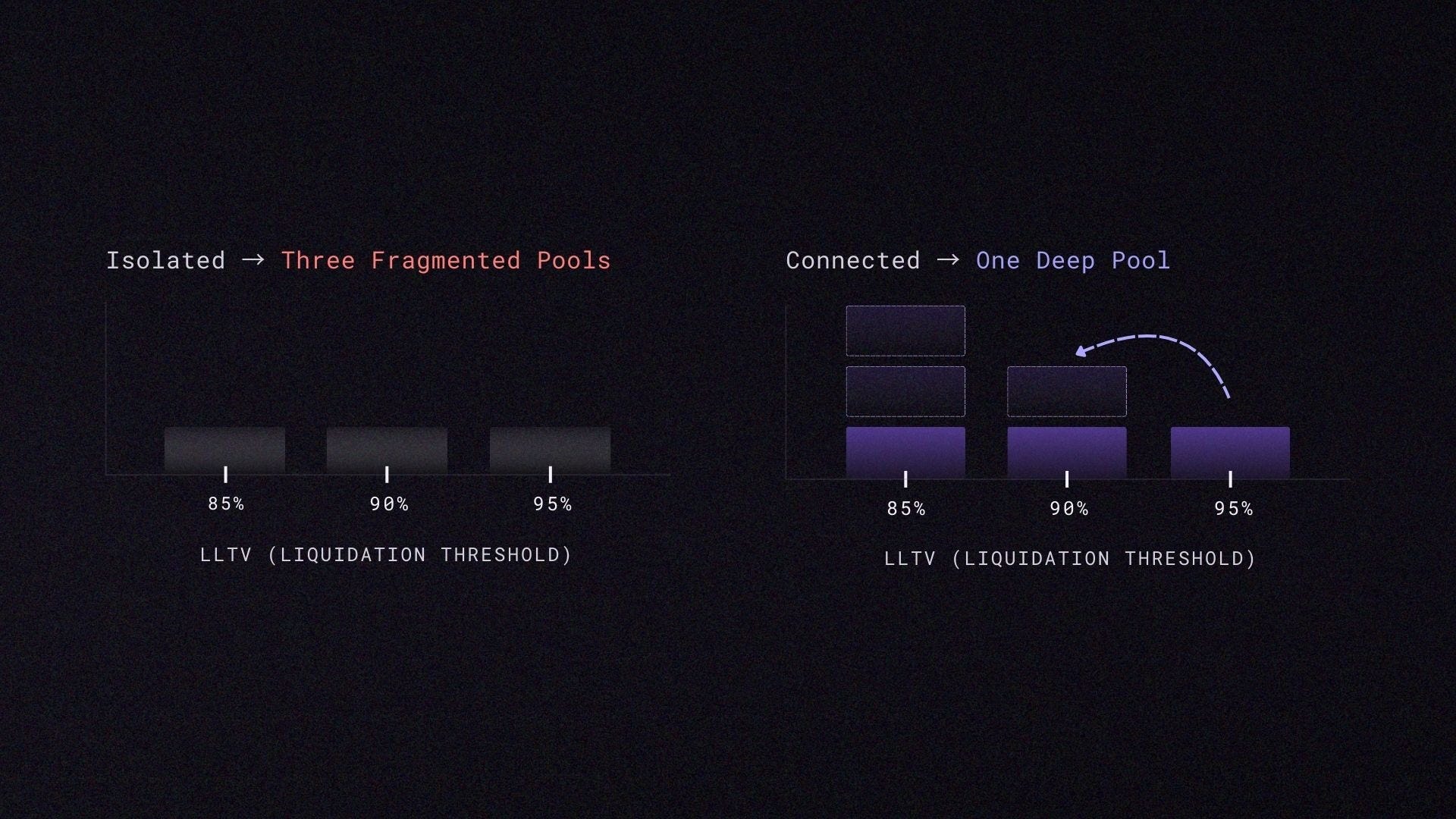
Market’s interest rate models ensure supplying to risker (more junior) tranches implies higher yield by design, allowing for proper risk pricing across the unified market.
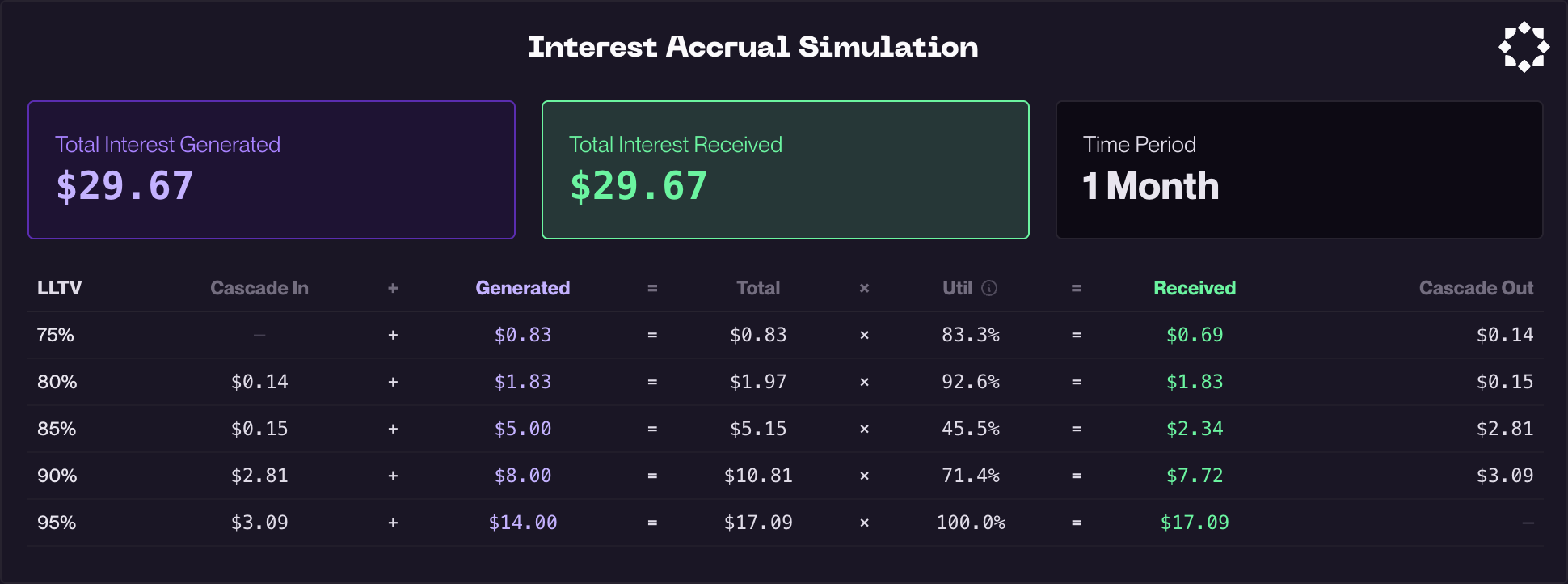
Due to liquidity cascading, lenders at a junior tranche backs loans across multiple tranches (their chosen tranche + more senior ones), while borrowers taking out loans at senior tranches utilize liquidity from multiple tranches (their chosen tranche + more junior ones).
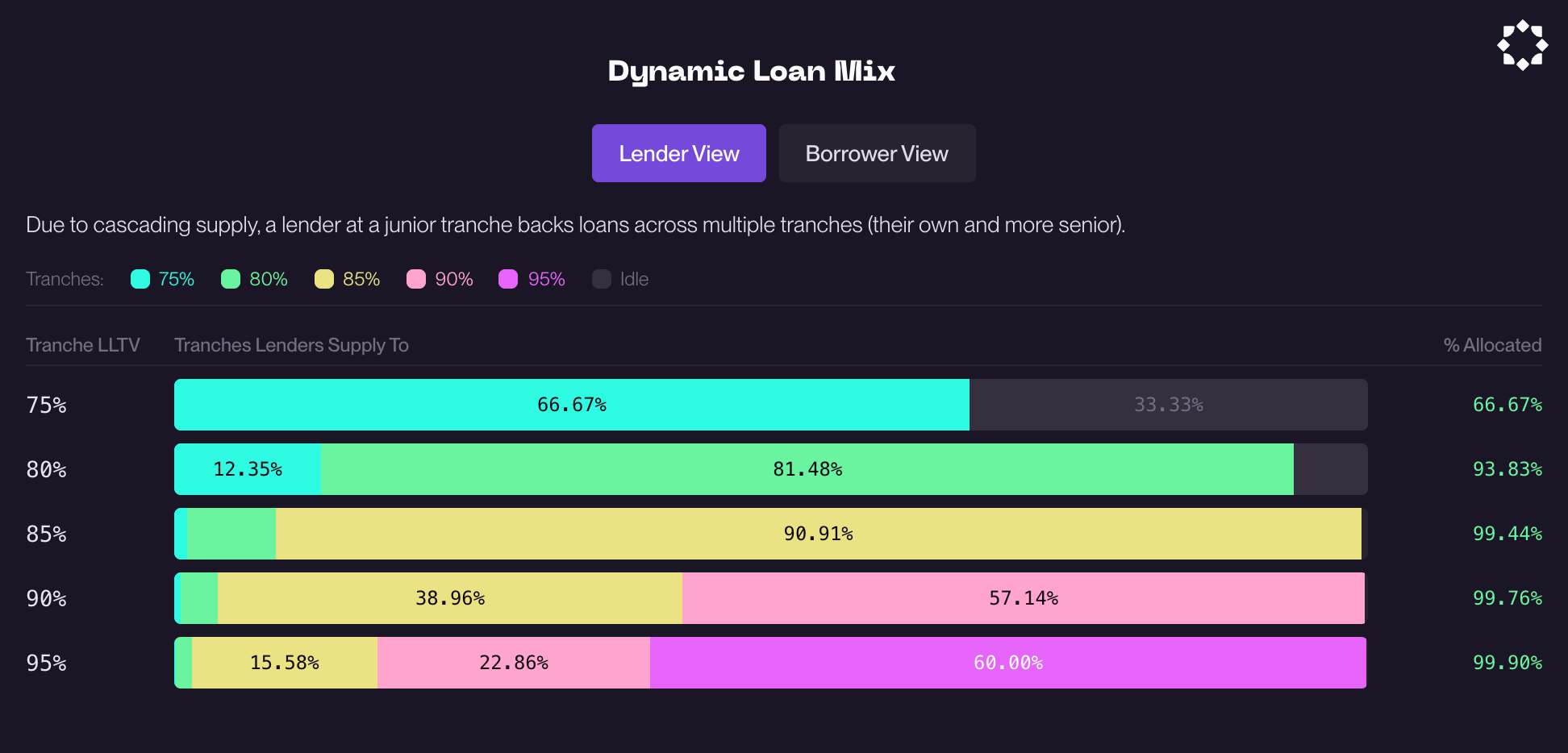
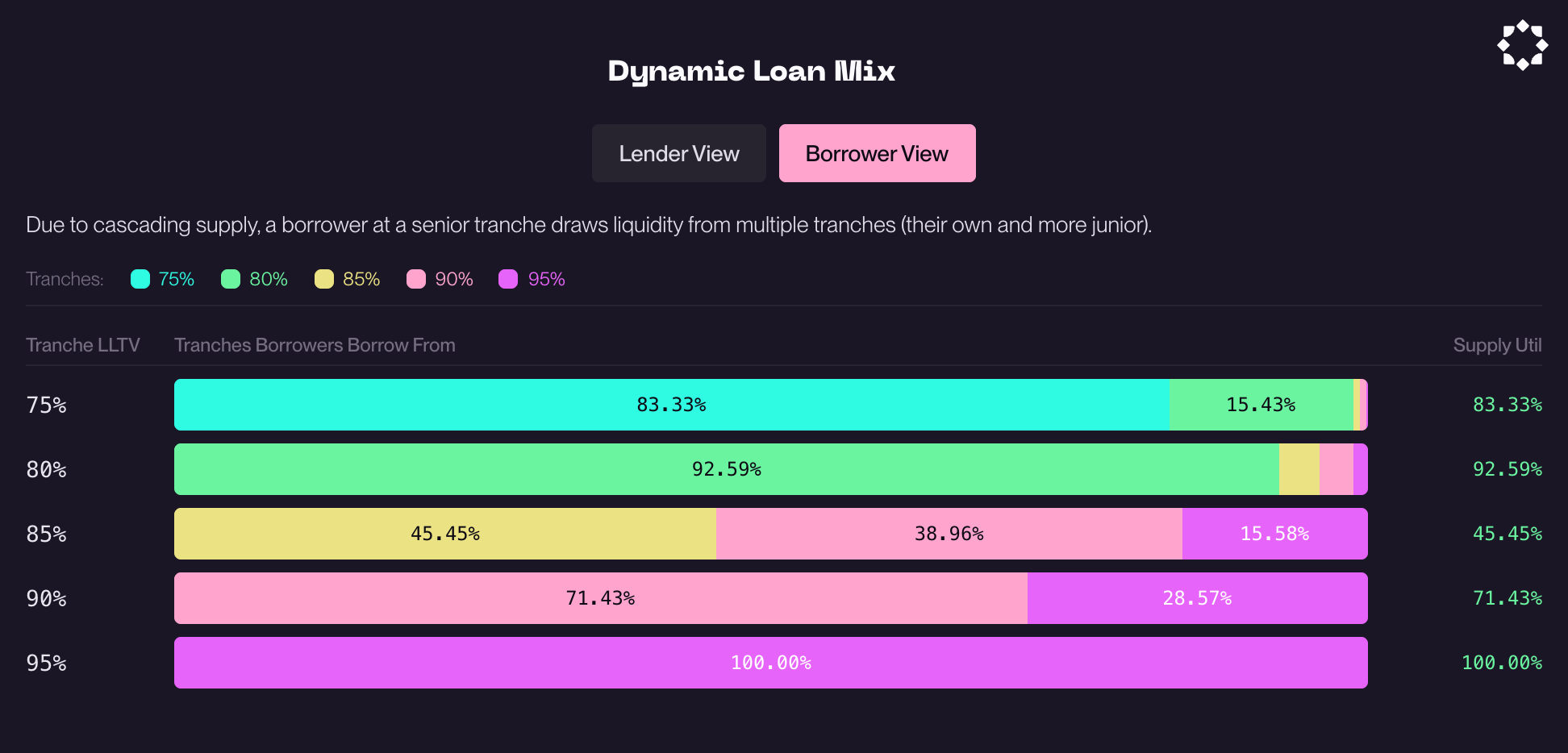
Here it’s worth noting that Lotus doesn’t implement withdrawal queues per se, but rather relies on Free Supply parameter which determines instantly withdrawable liquidity. As another direct impact of cascading liquidity, junior lenders are affected more due to this as their free supply depends on the buffers on more senior tranches. In other words, even if a junior tranche is liquid, it can only be accessed if all senior tranches also have liquidity available.
FreeSupply = min(JrNetSupply at this tranche and all more senior tranches)
Note: Above we presented the case of “LLTV Ordered Markets”, i.e. the parameter distinguishing the tranches within Lotus markets being LLTV. It’s worth mentioning that Lotus architecture allows for other risk parameters to be the tranche differentiator beside LLTV parameter, such as: Collateral Quality Ordered Markets, and Oracle Sensitivity Ordered Markets.
Bad Debt Handling
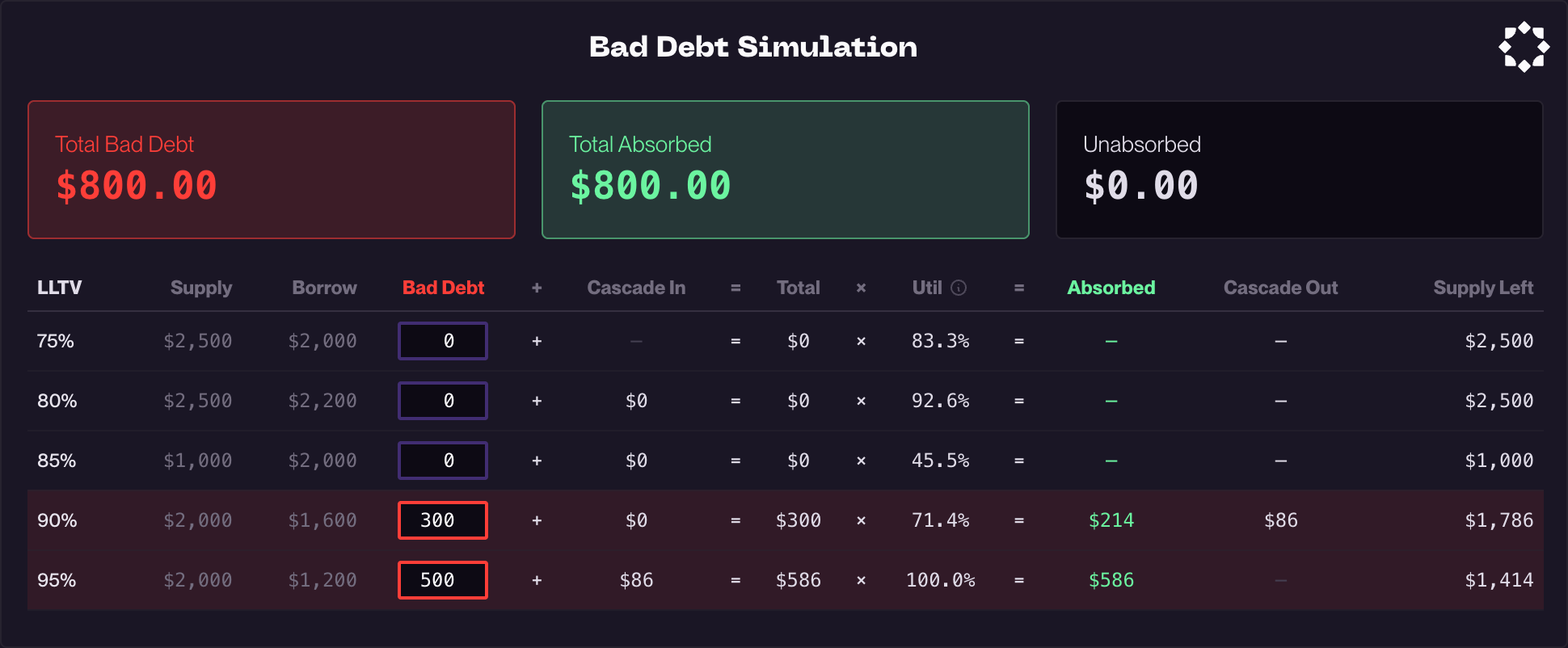
Important to note, Lotus protocol isolates any potential bad debt on tranche level, meaning that junior tranches assign losses only to its suppliers, aligning with the risk they underwrote (and with the interest earned). In practice, this means that there is no loss socialization across the entire market, i.e. senior tranche depositors remain unaffected.
Bad debt cascades same as interest, from senior to junior tranches, leaving the most junior tranche absorbing the remainings of any bad debt.
Lotus Vaults
Lotus implements v2 of Morpho vaults, enabling single deposit tokens with multiple isolated markets acting as collaterals. This design allows for delegating risk and liquidity management to vault curators, which in Lotus’s case includes tranche management as well.
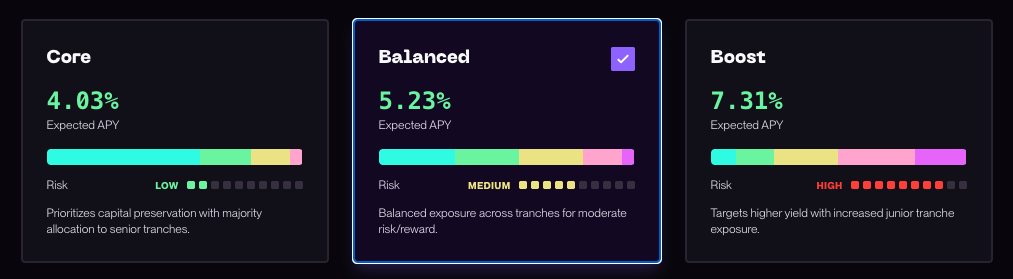
Vault managers define risk boundaries and allocate within those, with the option to de-risk in emergencies. When compared to Morpho design, most of the additional risk underwriting Lotus vault curators are expected to do is providing different risk profiles for their vaults by establishing allocations across the desired tranches/LLTVs.
LotusUSD And Its Baseline Yield Sources
LotusUSD is a token wrapper around the loan asset (e.g. USDC), aimed to provide external T-bill yield as a base rate for suppliers.
To avoid idle capital within protocol, Lotus design opted for offering the underlying base rate even if there is no borrowing on the core protocol level.
LotusUSD reserves are composed of USDC and tokenized short-duration U.S. Treasuries, with the yield sources supporting its “productive debt” design comprising of Coinbase Prime and WisdomTree’s Treasury Money Market Digital Fund ($WTGXX).
LotusUSD and its reserve framework represents a risk component on the protocol level as all USDC interactions are bundled into USDC <> LotusUSD conversions to enable the base rate for Lotus suppliers.
To account for this, BA Labs has previously conducted a due dilligence on WTGXX’s access control, which can be found here.
Productive Debt
Having LotusUSD as a base rate provider under the hood, the supply rate on Lotus protocol are set to accommodate it with the standard utilization-based rate seen on DeFi lending protocols.
supplyRate = baseRate + (creditSpread × utilizationRate)
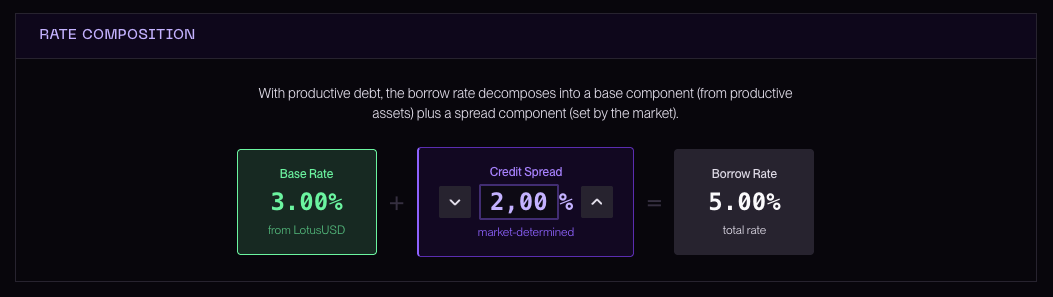
In practice, this ensures Lotus liquidity providers earn the base rate even with zero utilization on the Lotus markets. This is deemed relevant especially in Lotus’s case where more senior tranches are expected to see often liquidity overflows from junior tranches, resulting in lower utilization on senior level (compared to isolated markets with no liquidity cascading).
Summary
Lotus comes with 3 key improvements to crypto-backed lending in DeFi.
Market tranching by LLTV (and/or other parameters), allowing for better risk pricing, thus attracting both risk-tolerant and risk-averse suppliers and borrowers.
Cascading/connected liquidity (junior → senior tranches).
Productive debt as a yield enhancement (especially significant for senior tranches).
Markets are immutable, isolated, and permissionless to create, while the liquidity management and risk curation is externalized to curators.
Why This Matters To a Risk Team
The innovation Lotus brings, from risk management point of view, creates the ability to offer lower risk yield opportunities without necessarily losing on TVL to other curators who are willing to go down the risk curve, mainly due to the tranching nature of Lotus markets.
There is a clear exposure differentiation by different LTVs used within the market with the same collateral (and its pricing) being used as backing.
Thanks for reading Block Analitica Research! Subscribe for free to receive new posts and support my work.
Comments
Nothing yet. Say the first thing.
Sign in to join the conversation.