
In 2016, more people started to flood social media, but it really escalated in 2020, when we were all at home during the COVID-19 pandemic, collectively trying to comprehend what the hell was happening. The more saturated the social apps became, the more Big Tech leaned into recommendation algorithms. We began seeing more people we weren’t following. The Explore pages got more powerful and became customized to our taste. The algorithm did such a good job that even more people began to scroll and like and engage, to the point where we’ve now reached peak social, and are moving past it.
If you are feeling tired of social, exhausted by content, or overwhelmed by everything, it could be because of these apps on your phone. Now that we’re on the other side of the peak and on our way down, things are starting to look different.
It’s hard to believe we’re still in the 2020s, since 2020 feels like 23984572 years ago (and yet also yesterday? How!?). As I look back, I can instantly recognize the early-mid 2020s design aesthetic, which I was calling “design for the algorithm,” but then I heard the term “Algorithmic Modernism” via Twitter,1 and now cannot stop thinking about it. Isn’t it crazy how technological changes are so involved in how we design our homes? It’s fascinating.
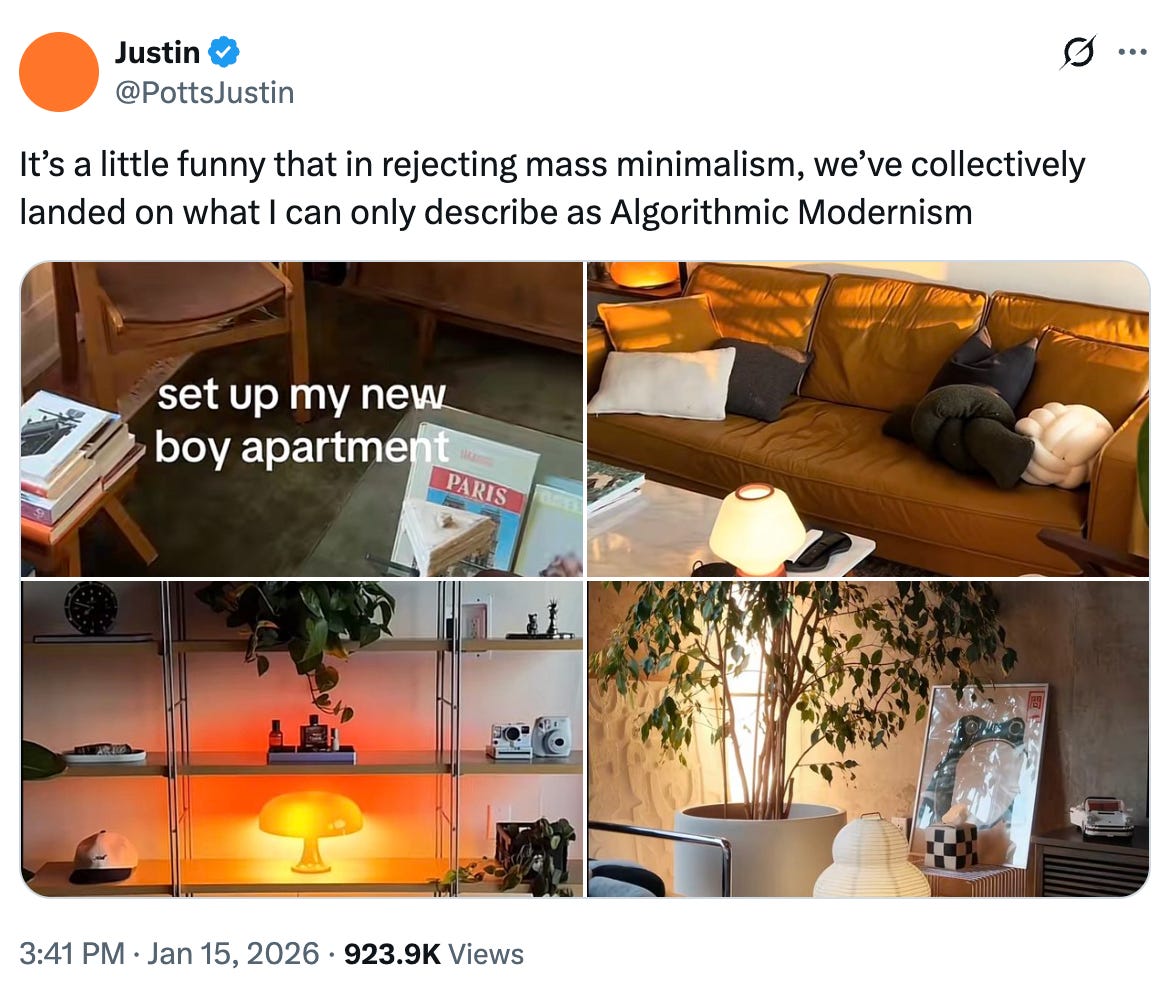
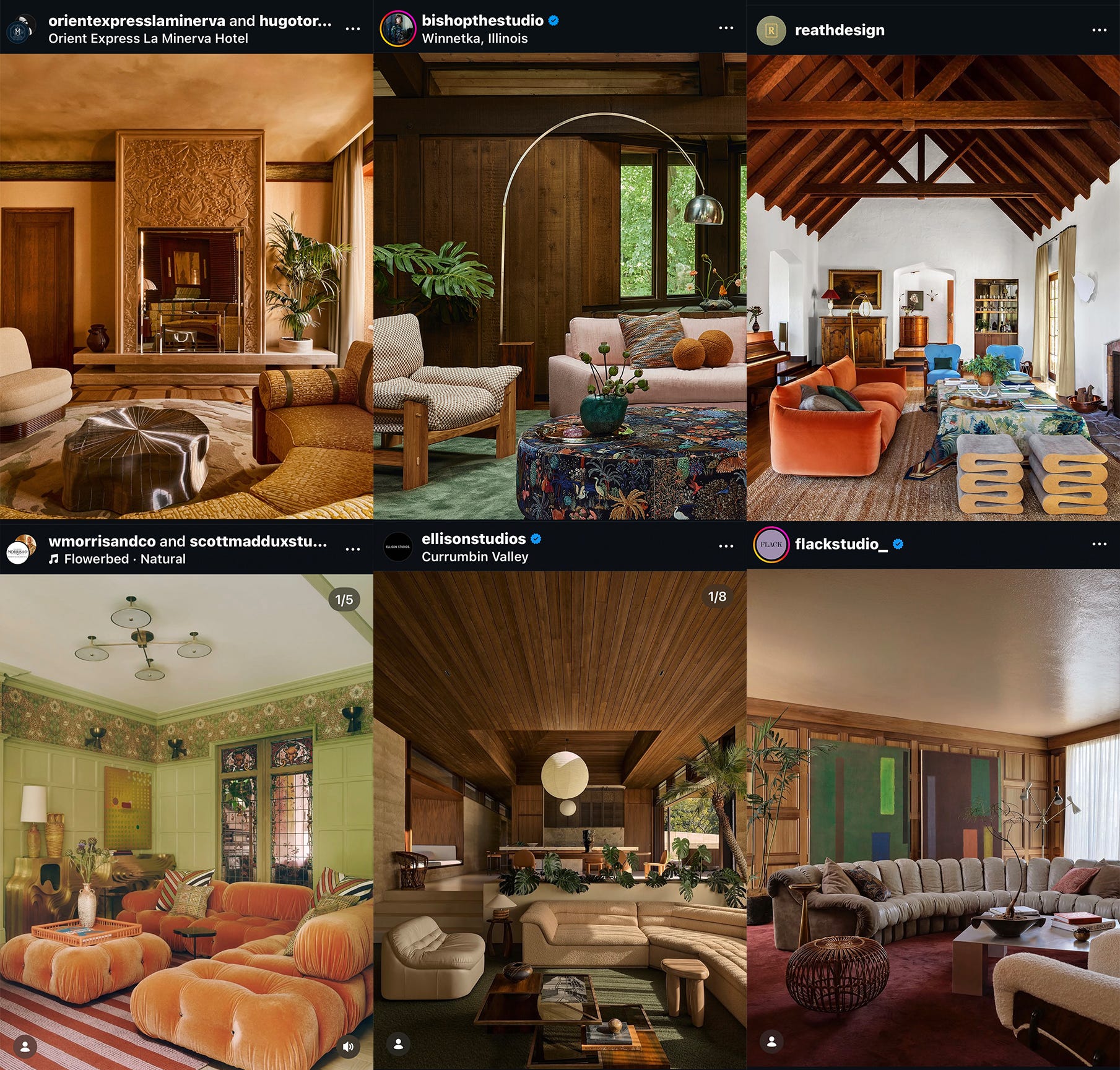
Above and below are some examples of Algorithmic Modernism, which you probably saw all over your feeds for the past 5-6 years. This seems like a very short time for a design era, but most other design eras were short as well, they just didn’t have the Internet to speed things up like we do now. Thanks to social, these eras are getting even shorter.
This era was defined by a few things: catalog-like interiors (serenity) contrasted with very colorful, boisterous, blobby, wavy, checkerboard interiors (joy). These were a response to the chaos happening in our lives because of COVID-19 and political and social unrest. How can we find serenity and joy in a world that is out of our control? Our personal space was the only space we could really control, so if we have to be stuck at home, then we might as well create a safe and joyful space.
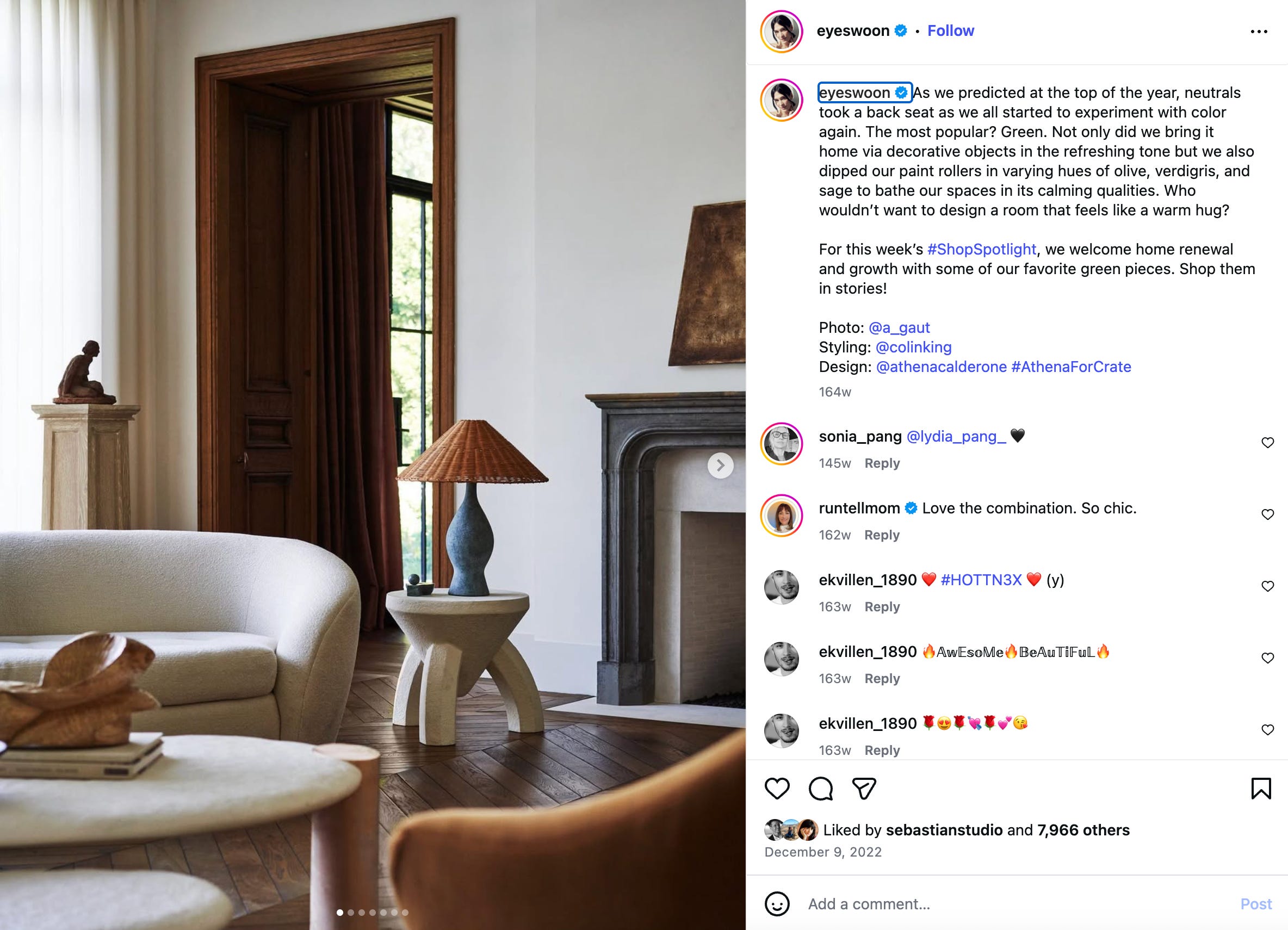
One of the defining styles of this period was “organic modernism” or “layered minimalism,” a style popularized by of Athena Calderone’s minimalist, beige-on-beige-on-beige curvy serenity. This was the time when everyone wanted a Camaleonda couch.
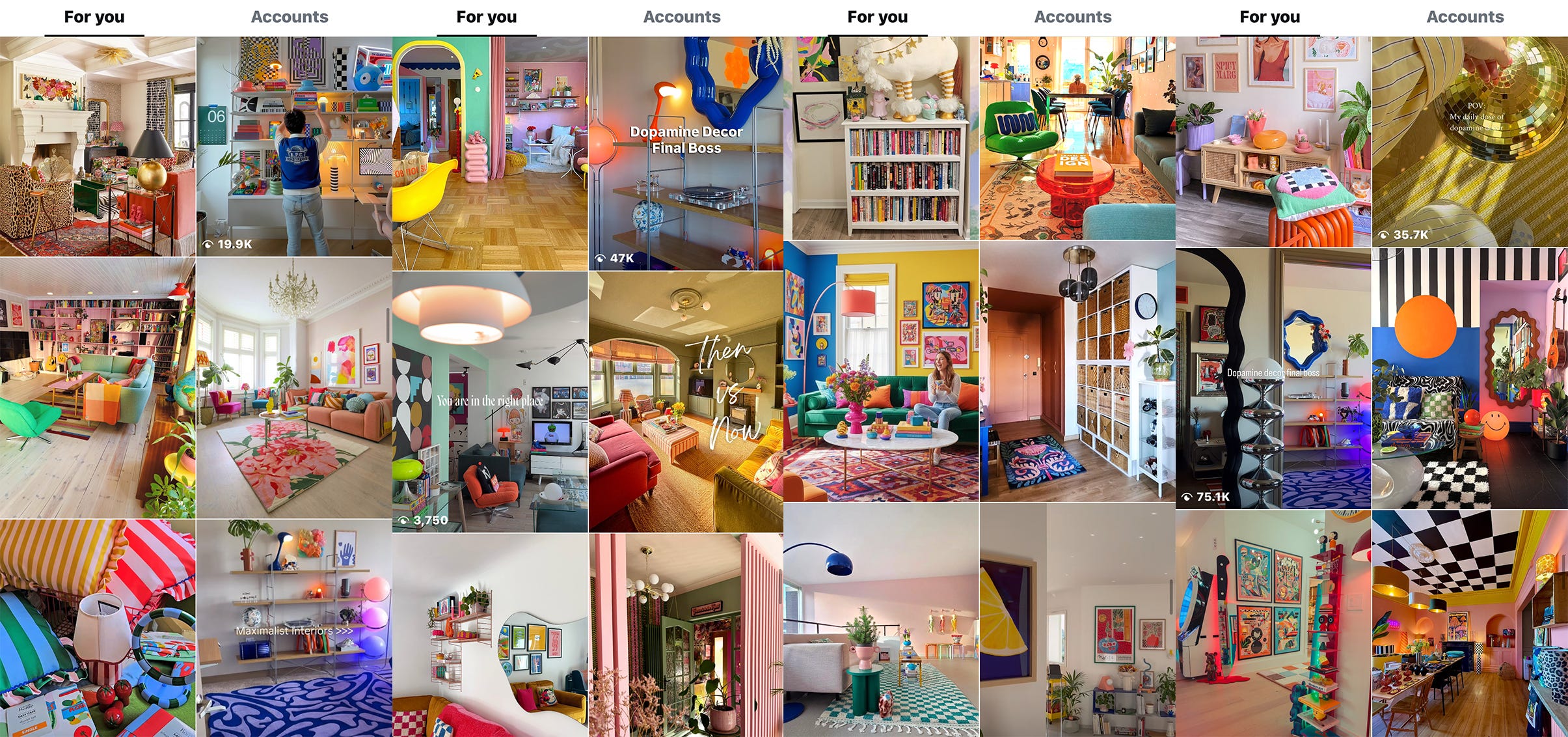
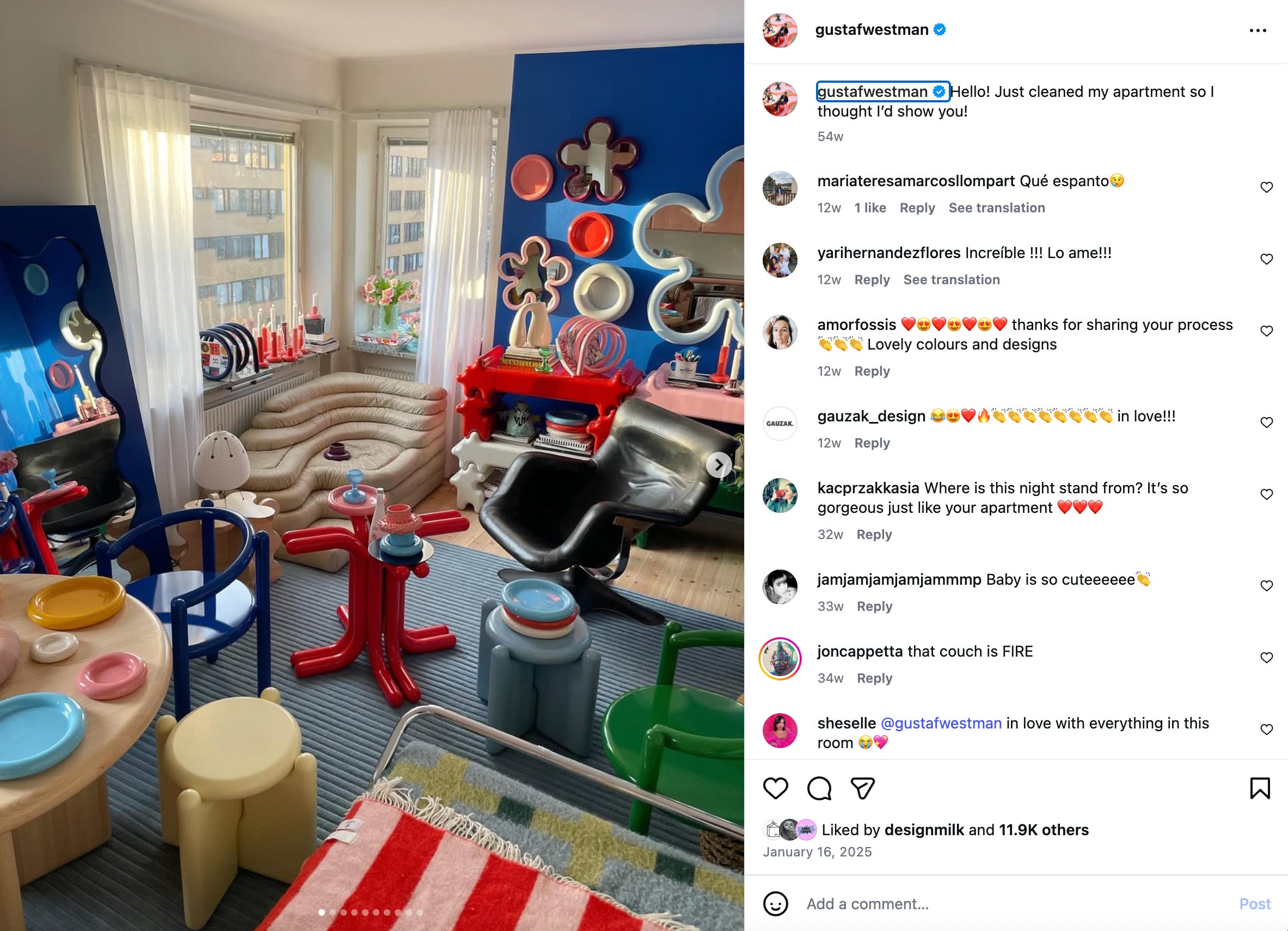
In addition to creating safe spaces for ourselves, we were collectively online, glued to social, the news, and Zoom. We needed somewhere we could feel good, and nothing makes that dopamine spike like buying yourself a cute blobby dish or a squiggly mirror. Thus, “dopamine decor” was born. Dopamine Decor gave rise to tons of DIY influencers, along with a plethora of knockoff Togo sofas. The final boss was Gustav Westman’s collection with IKEA. RIP, Dopamine Decor—you were fun.
You wanna hear something super wild?
Algorithmic Modernism was the last design era created entirely by humans.
Algorithmic Modernism is also defined by its ubiquity, which is impossible to escape. That is how the algorithm is designed. Posts become a template that you build on until everyone is posting the same stuff.
I think we’re on the tail end of that period now, and we are entering the Post-Algorithmic Design era, Post-Algo for short.
So what does this look like? What does it mean for design? A lot.
First of all, I don’t think we will be in this period for very long. I envision another significant change coming soon so the ‘30s will look very different. That era will be defined by the impact of AI and robotics. It is already lurking, waiting for the influencers to discover it.
Post-Algo is beginning with a combination of trends that are a response to the previous era of serenity and joy, almost like a swing in the opposite direction, except it’s not necessarily rejecting the concepts of serenity and joy so much as expressing them in a different way. It takes serenity to a new level: it’s a cozy traditionalism. Remember “transitional” design… the weird hybrid of traditional and modern design? This is kind of like that.2
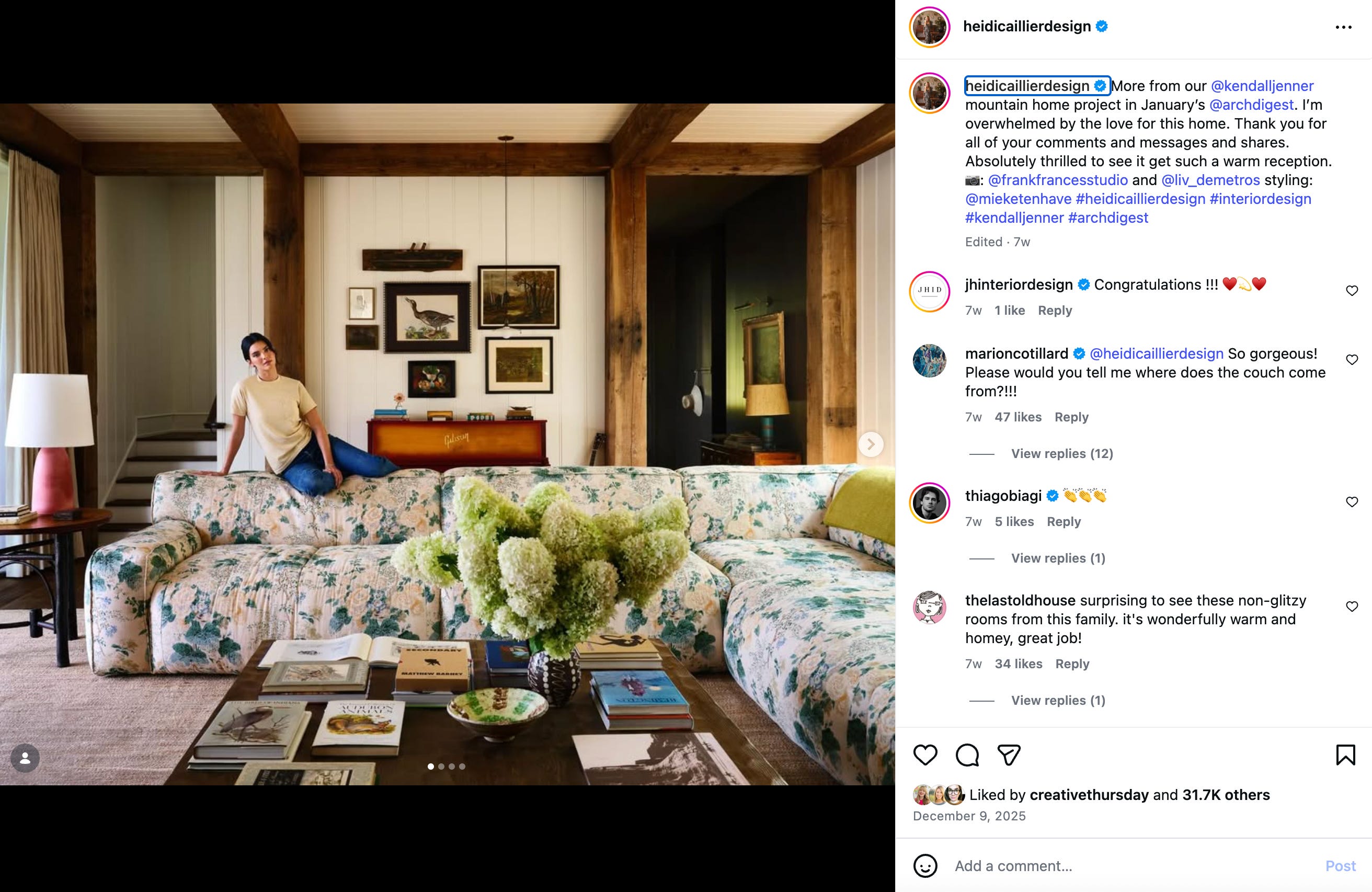
There’s a hint of Romanticism (see “Wuthering Heights”), a hint of trad wife (see Kendall Jenner’s mountain house by Heidi Caillier), and a hint of cottage. But all of this is balanced by rich patterns, interesting textural details, and luxe fabrics. And, dare I say, at times, a little bit Norman Rockwell-esque. In the short term, some trends I’m seeing come out of this are wall-to-wall carpeting, wood paneling, and color-washing. It’s a lot of blanketing every surface.
Post-Algo moves away from “doin’ it for the ‘gram,” and back to tactile, textured, layered spaces. It craves touch and experience. It doesn’t need likes. It’s a return to one’s brand, one’s needs, and what you like when you’re not on your phone. It’s about developing your own taste.
As we move further into the Post-Algo era, I think we’re going to see a clearer divide between the design industry and mainstream design culture. Not in a gatekeeping way, but in how taste is formed, protected, and shared.
For the mainstream, AI-generated design will quickly become aspirational. People will decorate their homes increasingly based on AI-generated interiors. And these images will spread faster than physical reality ever could. There will be no need to DIY, buy, renovate, or even live with something to engage with it.
AI will flood feeds with endless variations of “good taste” on demand. In this context, aspiration becomes purely image-based. It will be tough to know whether there is a true experiential element.
For designers, the response will be different. When design becomes abundant and automated, defining a distinct brand aesthetic becomes both harder and more important.
This may also change how designers use social media. As AI images circulate freely and rapidly, designers may begin to gatekeep their real projects more carefully, sharing more process and fewer finished spaces… or delaying visibility altogether. Private networks could pop up. Walled gardens like private Substacks are already happening.
It’s unrealistic, though, to think that designers will completely reject AI. It is already working its way into design software, workflows, and feeds. Many designers will also continue to post AI-generated interiors, maintain their online presence, and participate in these systems. But AI design may increasingly function as social-feed visibility.
As mainstream design accelerates toward AI-generated ideals, designers may find themselves moving in the opposite direction: toward specificity, material reality, and deeply human choices that can’t be generated on demand. Also, something that is coming up a lot lately: the concept of imperfection… however, I see this as a fleeting concept because AI will learn how to do that soon enough, too.
Just like society, the future is uncertain, but there are clues to where we’re headed. I’ve come up with a few ways to think about naming this Post-Algo design era.
If Algorithmic Modernism was focused on:
Algorithmic success / max social marketing
Templates
Vibes
Conspicuous provocation
Optimization
Attention
Being online
Conspicuous consumption
Industry and consumerism
Then Post-Algo Design is focused on:
Taste
Humanism
Romanticism
Emotional depth
Intimacy (see the Intimacy Economy)
Going analog/Offline
Nostalgia
Privacy and gatekeeping
Craft
Therefore, I think it will continue evolving toward “Post-Algo Modernism” with a stop off at “Post-Algo Materiality.”3 I’m trying to zoom out, but am still in the process of putting my finger on it. I believe the concept of physical bodies and humanity will begin to play a much larger role in our physical spaces as AI enters the picture (and will probably end once we enter the era of universal robotics). We will see more texture and tactile elements enter our physical spaces, just as buttons and knobs and fixtures are reappearing design elements in tech and automotive. This shift is already visible in fashion, where designers are exploring more sensorial materials with a focus on nostalgia and integrating physical objects into garments.
As recommendation culture fades, taste has to come from somewhere else. If no longer driven by feeds, perhaps it will return to human tastemakers. The question is, will it continue to be accessible to all?

I’m Jaime Derringer. I’ve spent the last 20 years working in and around design media, brand, and emerging technology, mostly trying to make new ideas feel understandable before there was language for them. I founded Design Milk in 2006 and grew it into a global design publication, and today I am focused on creative tools, generative art and design, and the space where code, craft, and culture overlap, through projects like TRAME and Art Blocks. Blob is where I think out loud about design, taste, attention, and what it means to build (and care about) things in an era of infinite content.
Find me elsewhere:
Everything is cyclical, kiddos, so when you recognize the patterns, you can almost predict what will happen. This is why knowledge of design history is important. And why knowledge of history in general, is important. Patterns apply to everything.
The opposite of this is also possible: that we move at light speed toward intense futurism and digital realities, but I am only seeing this happen in music and subculture. I don’t think it will break into the mainstream for a while, but we can see some of it: FKA Twigs, Gentle Monster, Refik Anadol, etc.
Comments
Nothing yet. Say the first thing.
Sign in to join the conversation.