
Few passages in Scripture have caused more disagreement than John 3:3-5. Whole denominations have built doctrine on it, and drawn lines against each other over it, arguing for generations about what Jesus actually meant when he told a Pharisee named Nicodemus that he had to be born again, born of water and the Spirit.
Jesus answered and said unto him, Verily, verily, I say unto thee, Except a man be born again, he cannot see the kingdom of God. Nicodemus saith unto him, How can a man be born when he is old? can he enter the second time into his mother’s womb, and be born? Jesus answered, Verily, verily, I say unto thee, Except a man be born of water and of the Spirit, he cannot enter into the kingdom of God. - John 3:3-5
Most of that debate happens entirely inside the four verses themselves, as if the meaning has to be wrestled out of the words alone. Water gets read as baptism, or as the natural water of childbirth, or as a reference to the cleansing power of God’s word, and each reading gets defended with its own chain of cross-references and proof texts. But there’s something easy to miss in the middle of all that argument, something Jesus says to Nicodemus that changes the whole shape of the conversation.
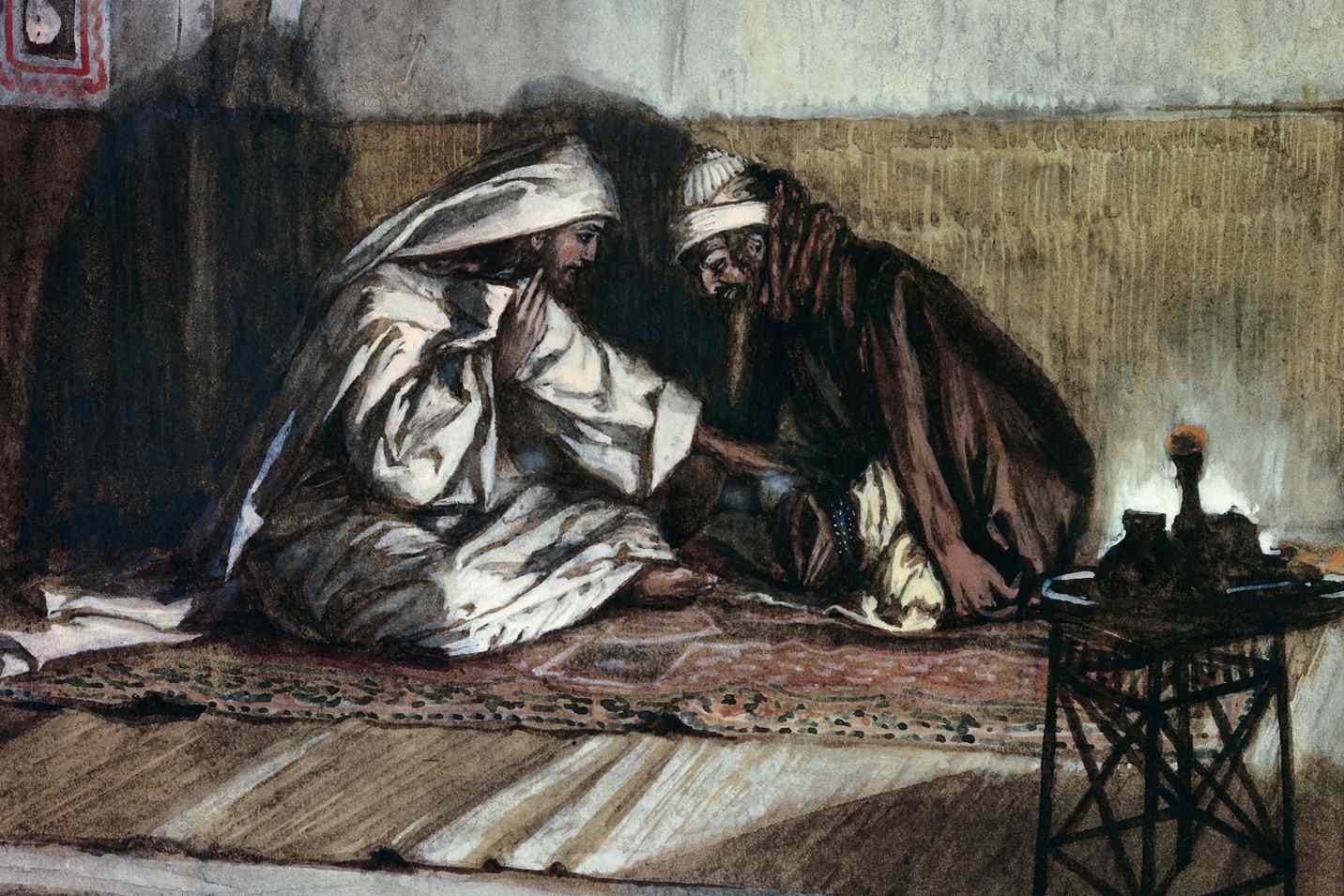
Jesus seems almost frustrated, or at least surprised, that Nicodemus wasn’t familiar with what He was saying. You get a sense that Jesus didn’t expect to get hung up on this detail. “Art thou a master of Israel, and knowest not these things?” It carries the tone of someone genuinely surprised that a trained, respected teacher of Israel missed something he should have caught instantly.
So if Jesus expected Nicodemus to already understand this, the obvious question becomes what exactly Nicodemus should have already known, and where he should have known it from.
The answer is sitting in plain sight in Israel’s own history. Nicodemus had spent his life studying and teaching the story of his own nation, and that story already follows the exact shape Jesus was describing.
Every birth is a beginning, and Israel’s beginning is Abram. God calls him out of his homeland, away from everything familiar, and gives him a promise that seems impossible at the time, that he will father a nation too numerous to count. That’s the first beat of a pattern, the birth itself, a people called into existence with nothing more than a promise.
What follows is centuries of waiting, and eventually centuries of suffering. Israel ends up in Egypt, enslaved for around a hundred years, the pressure mounting until it becomes almost unbearable. This stretch of the story functions less like a delay and more like a burial, a long, dark stretch where it would have been easy to believe the promise to Abram had simply failed. The pain intensified with the arrival of Moses back from Midian and the increase in labor pains for the Israelites. And then the plagues, final contractions. That’s the second beat, the travail, the suffering before delivery.
Then comes the moment everything turns. Israel stands at the edge of the Red Sea with Pharaoh’s army closing in behind them, and the water that should have been their end becomes instead the means of their deliverance. The sea parts, the people walk through on dry ground, and the same waters that had seemed to trap them collapse behind them and destroy the army pursuing them. Israel comes out the other side of that water as something she had never been before, a free people, no longer the property of Egypt, delivered by a power she had not provided for herself. That’s the third beat, the rebirth, water functioning as the very means of bringing a new people into existence.
But a birth isn’t finished the moment a body passes through water. Breath still has to enter it. Fifty days after Israel crosses the Red Sea, the nation arrives at Mount Sinai, and there Yahweh descends in fire, in smoke, in a trembling that shakes the whole mountain, and gives Israel the law that will define her as a covenant people. This is the fourth beat, the Spirit’s arrival, completing what the water alone had only begun. Israel takes her first breath as a reborn covenant people. She exists with an identity, a purpose, and a new relationship to the God who delivered her.
Birth, through the call to Abram. Travail, through the long suffering in Egypt. Rebirth, through the water at the Red Sea. And the Spirit, descending at Sinai to complete the pattern. This is the story Nicodemus had given his whole life to teaching. Abram's calling as the birth of God’s covenant people, and the Exodus and Sinai together as her rebirth by the Spirit, the very shape by which his own nation came into being.
Once you see this pattern sitting inside Israel’s own history, the conversation in John 3 reads differently. Jesus is pointing Nicodemus back to something Nicodemus had spent decades immersed in, and asking why he hadn’t already made the connection between his nation’s story and the very thing Jesus was describing.
“Except a man be born again, he cannot see the kingdom of God.” Nicodemus, predictably, doesn’t follow him, so Jesus narrows the image even further. “Except a man be born of water and of the Spirit, he cannot enter into the kingdom of God.” Born, then born again by the Spirit. The exact sequence that built Israel as a nation centuries earlier, now spoken directly to one person sitting across from him in the dark.
This is what makes the rebuke land the way it does. Jesus was asking him to recognize his own nation’s pattern reappearing in front of him, now applied personally rather than nationally. A master teacher of Israel should have seen that immediately, because he had spent his whole career teaching the very story that explained it.
What makes this more than a clever observation about one conversation is that the pattern doesn’t stop with Israel. It shows up again, in the same order, centered this time on Christ himself, and on the people who would come to follow him.
Jesus is born. That’s the same first beat that Abram’s calling represented for Israel, a birth that sets everything else in motion.
Then comes Calvary, where Christ suffers, dies, and is laid in a tomb. This is the same travail that Israel endured through her slavery in Egypt, except now it isn’t a nation enduring suffering across generations. It’s the Messiah himself absorbing it in a matter of hours, carrying the second beat of the pattern personally rather than collectively.
Then the resurrection. Christ rises from the grave, and death itself, the great enemy that had held every person in its grip since Eden, is defeated in that single moment. This is the third beat, the rebirth, the same function the Red Sea served for Israel, except now it’s death and sin being decisively broken rather than an army being drowned.
And then, fifty days later, the Spirit descends at Pentecost, with fire and the sound of a mighty wind, completing the pattern exactly as it had been completed at Sinai. The church is inaugurated as Christ’s own body, given identity and purpose in the same way Israel had been given hers at the foot of the mountain centuries before.
➡ I made a video last month on the typological connection between Sinai and Pentecost.
Birth, in the incarnation. Travail, at Calvary. Rebirth and victory, in the resurrection. And the Spirit, poured out at Pentecost. The same four beats, the same order, the same gap of fifty days between rebirth and the Spirit’s arrival, now fulfilled in Christ and extended to everyone who would follow him.
All of this eventually comes down to one person, which is exactly where the conversation with Nicodemus was always headed.
Every person begins with an ordinary birth, the first beat repeating again, this time at the smallest possible scale. Then comes travail, not slavery in Egypt or suffering on a cross, but the weight and bondage that sin holds over every person before anything changes. That’s the second beat, lived out individually rather than nationally or in the person of Christ.
Then rebirth, through faith in what Christ has already accomplished. This is the third beat, Israel crossing the Red Sea and Christ’s resurrection, a new existence beginning where an old one had ended.
And then the Spirit’s confirming presence, indwelling the believer, completing the pattern a final time. This is the fourth beat, Israel at Sinai and the Church at Pentecost, the breath of God entering His people.
Birth, travail, rebirth, and Spirit. The same four beats that shaped Israel into a nation at the Red Sea and Sinai. The same four beats that shaped the church into Christ’s body at Calvary and Pentecost. And now, the same four beats completing themselves in every single person who comes to faith in Christ.
John 3 has often been treated as a passage that stands on its own, open to whatever meaning a denomination wants to bring to it, argued over verse by verse as though the answer has to be excavated from those four lines alone. But Jesus never intended for those words to be read in isolation. He was pointing Nicodemus back to a story Nicodemus already knew by heart, and asking why a master teacher of Israel hadn’t already seen his own nation’s birth and rebirth reflected in what Jesus was describing.
Once that connection is back in view, being born again should come into greater focus. It stops sounding like an abstract spiritual metaphor invented on the spot, and starts sounding like the same pattern that birthed a nation, fulfilled in Christ, and now completed in every person who believes.
No posts
Comments
Nothing yet. Say the first thing.
Sign in to join the conversation.