
The recent NASA - National Aeronautics and Space Administration Artemis II mission got me reflecting deeply. Watching the astronauts prepare for their return to Earth and understanding how their capsule would re-enter through intense heat and speed made me pause for a moment. It is incredible to think that humans are willing to sit inside a small capsule, knowing it will pass through extreme conditions just to complete a mission. Honestly, I cannot imagine myself taking that kind of risk.
I am using this moment to sincerely appreciate the four Artemis II astronauts who have committed to this mission and are pushing the boundaries of human exploration: Reid Wiseman, Victor Glover, Christina Koch, and Jeremy Hansen.
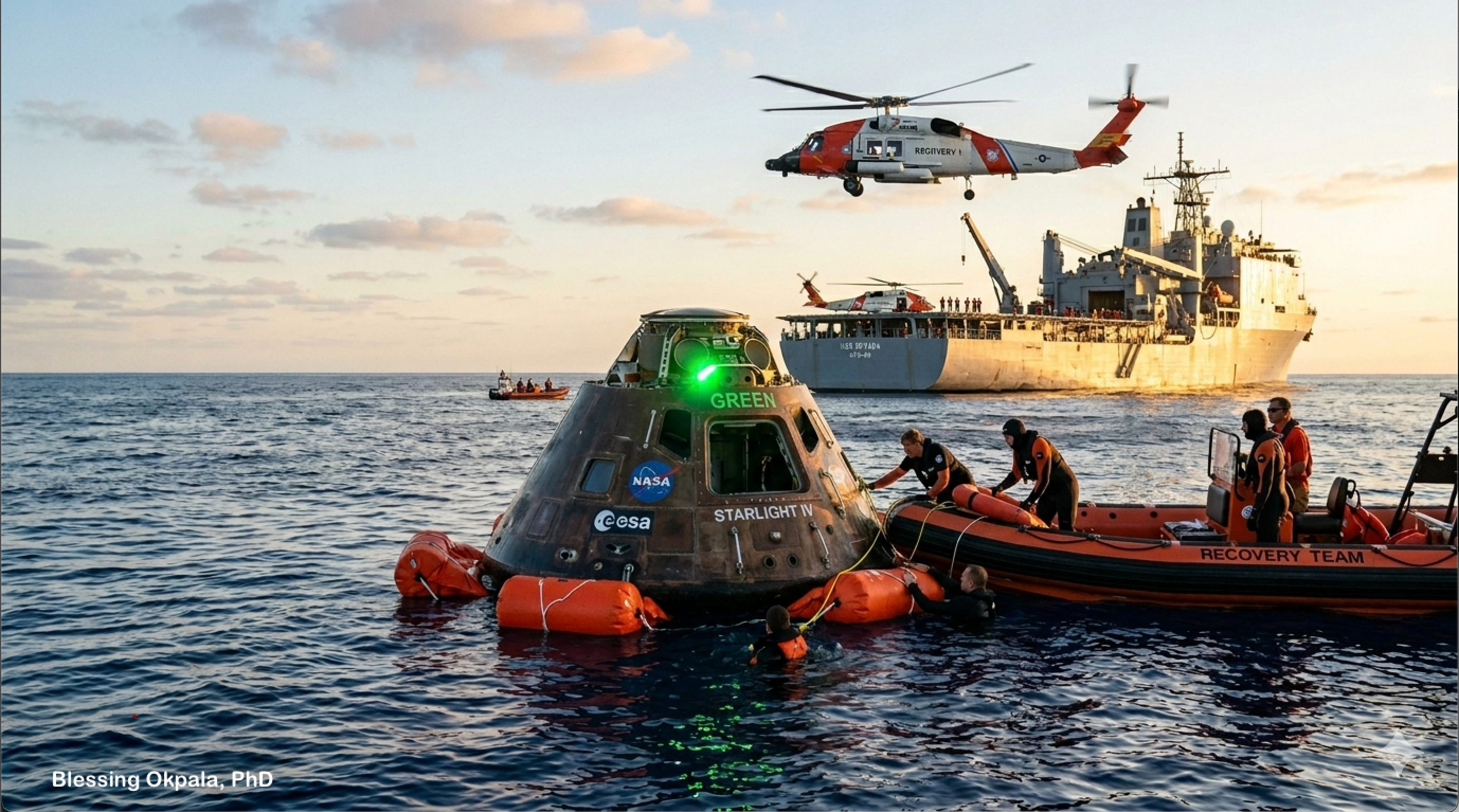
As I continued watching the scenes of space missions and recovery operations, one moment stood out to me. The capsule lands in the ocean, surrounded by rescue teams, divers, and helicopters, all carefully coordinated. Everyone is waiting for confirmation that the astronauts are safe.
Then comes a simple word: “Green.”
That one word carries so much meaning. It confirms that the system worked, that the astronauts are safe, and that every design decision made over years has paid off. It reminded me that behind every successful mission is not just technology, but thoughtful design that people can trust.
NASA’s Artemis program represents the next phase of human exploration. Kudos to NASA Artemis II for taking our astronauts around the Moon for the first time in decades using the Orion spacecraft, which is built with advanced safety systems and human-centered design principles.
What many people do not see is the layer beneath that moment of success. Every interface inside that spacecraft is designed to support astronauts under extreme pressure. Every signal, every alert, and every display must be clear, timely, and easy to understand because there is no room for confusion in space. Yes, no room in the space for confusion.
NASA has long emphasized human-centered design in its systems. The Orion spacecraft, for example, uses simplified digital displays to reduce cognitive load and help astronauts focus on what matters most in critical moments.
This is where UX design quietly shows its importance.
As designers, we often think about ease of use in everyday applications, but space missions remind us that design is ultimately about trust. When users interact with any system, whether it is AI or a digital product, they are asking a simple question: “Will this work when I need it most?”
AI systems today are becoming more powerful, but power alone is not enough. Just like in space exploration, these systems must be designed with clarity, transparency, and human understanding at the center.
Because when something goes wrong, users do not think about the technology behind it. They remember how the experience made them feel.
That moment of hearing “green” reminded me that the best systems do more than function. They reassure. They support. They make people feel safe.
As we continue to build the future of AI and digital products, perhaps that is the standard we should aim for.
Not just systems that work.
But systems people can trust completely.
NASA on Track for Future Missions with Initial Artemis II Assessments
#BlessingSeries #Technology #UXDesign #ArtificialIntelligence #NASA #Artemis #HumanCenteredDesign #AIDesign #ProductDesign
Comments
Nothing yet. Say the first thing.
Sign in to join the conversation.