
I was twenty-four years old the first time I deployed. I spent six months in a three-story concrete block of a house, a few hundred feet from the Gulf of Aden. The “gym” we had was in an open-air courtyard—ten-foot walls, concertina wire. Rusty plates and kettlebells cooking in the sun and a pull-up bar that rocked back and forth with each repetition.
It was there someone gave me a paperback copy of the book “Kiss or Kill” — told me they’d recently spent time training with the author, Mark Twight. A few hundred pages later, I bought a plane ticket to Seattle with the goal of climbing Mt. Rainier.
Twelve years later, in the fall of 2025, I came across an essay written by Blair Speed titled Sobriety. The title deserves its place but to me, it felt more like a love story—having more to do with patience and grace and the non-linear way we make progress in life.
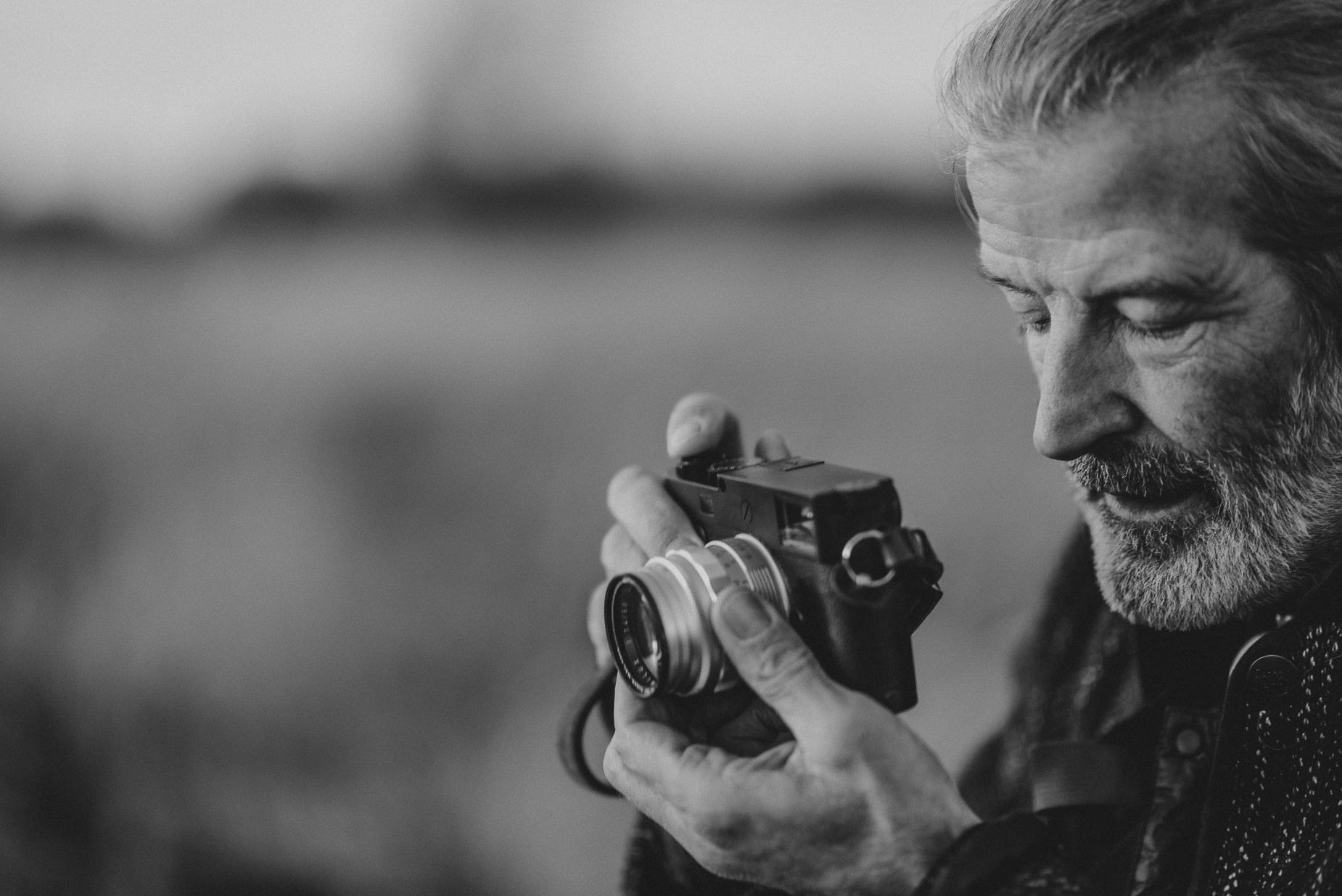
I was two-thirds of the way through before I realized it was written about Mark Twight.
The author and alpinist who’s made first ascents in Alaska, the Alps, and the Himalayas. Who started Gym Jones and spent years training tier-one units, accomplished athletes, and movie stars. The same Mark Twight whose writing inspired me to climb Rainier.
When I reached out to Mark, he suggested we conduct the interview in writing. “Send me your questions,” he wrote in an email. “I’ll answer them and then we can talk.” I agreed, and only afterward felt the pressure that came with it—Mark is a serious writer, someone who, “agonizes over sentences and words,” as he writes in one response. I needed to write questions worthy of such effort.
I eventually sent my questions and he sent his answers (below) and afterward we had a long phone call. He seemed curious and thoughtful. We talked military TRANSITION and brain injury, spiritual experiences, and he shared a few stories from his years working with the SEAL teams in the early 2000s—spending time on Denali with a few individuals who are no longer with us.
I believe I was fortunate to learn early in my climbing career and the writing about it that arriving anywhere or expecting to achieve some condition was tentative, receding, always shifting its shape thus it would never be satisfying. There was no destination that would satisfy beyond (perhaps) the immediate because, upon reaching it, I was no longer the person who identified the goal and set out to achieve it, or experience it. One of my partners once said, “We succeeded and it’s cool because now we can try something harder,” which exposed the mouse wheel nature of all ambition; fulfilling it will never be enough, so-called accomplishment will never be enough. And as long as we are handcuffed to the idea that some particular destination or condition will be enough, and that we will be satisfied and free of all want or desire once we get there, we remain prisoners in a cycle of desire- achievement-dissatisfaction-desire. The Buddha suggested that desire is the root of suffering. Krishnamurti figured it is man’s most precious possession, the flame of life. I say use it but don’t be enslaved by it. Looking for an end-state guarantees dissatisfaction because ‘enough’ isn’t a condition, nor a destination or acquisition, it is life and living it, the process, the growth, the change and reinvention. So to answer the question, being here right now, breathing, feeling, learning, loving, and hopefully, growing is enough.
I understand the premise and could agree with the statement. Suffering is a loaded term, defined differently by all, if only by degree. The deep-seated remains of an imperfect childhood are different than the chronic frustration of a young adult confronting barriers to opportunity, unrequited love, irreconcilable differences, a lack of agency or tremendous personal loss. It’s loaded too with the expectation that one’s life and circumstances can/should be a certain way. Certainly, squaring the mismatch between expectation and reality is a chronic and ongoing frustration, and alcohol a common means of mollifying our impotence.
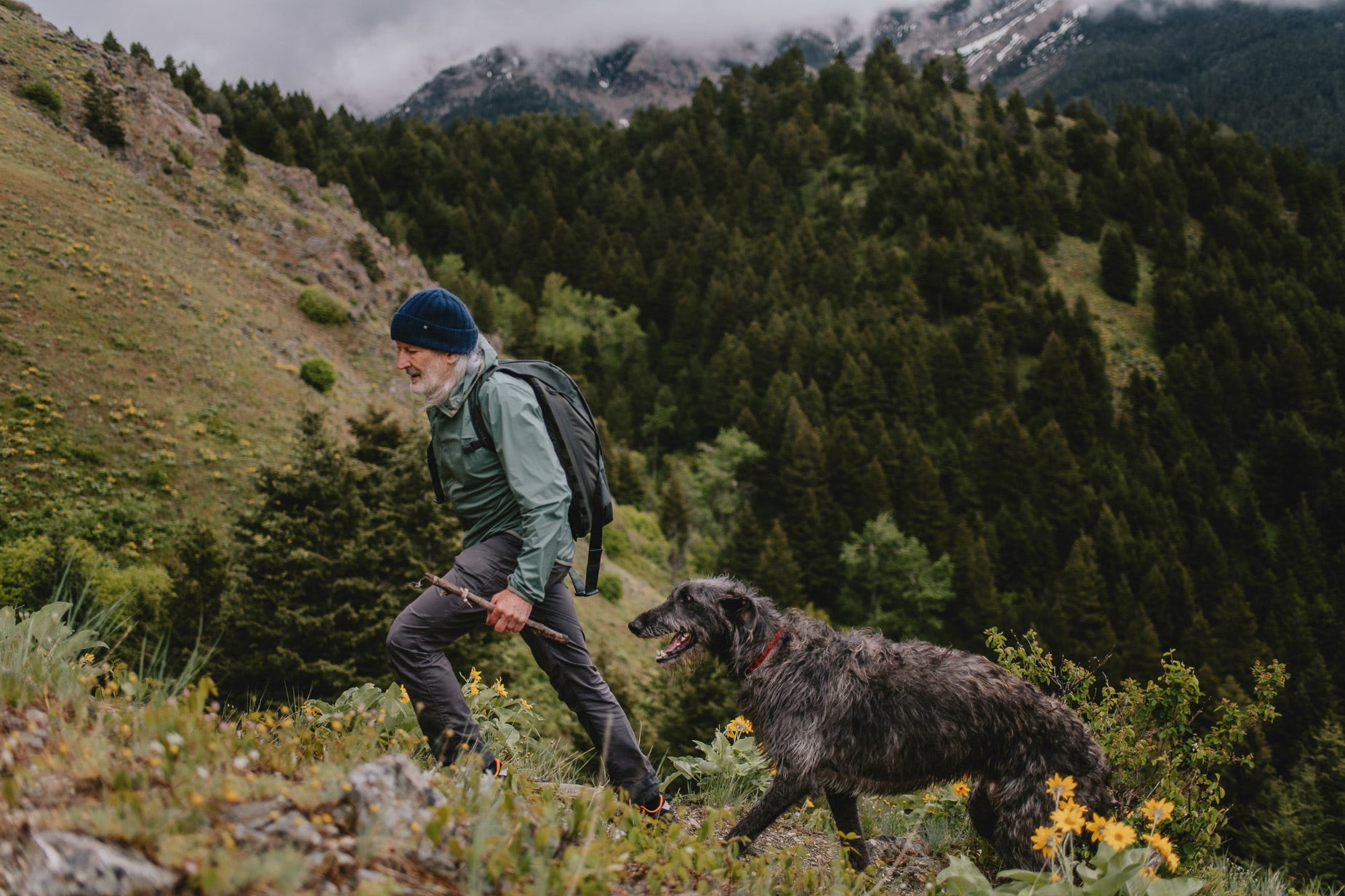
In the Bridger Mountains with our Scottish Deerhound, Easton. ©Blair Speed
In some periods of life I used alcohol to substitute for the lexicon and aptitude to address anxiety or anger, frustration or depression that I lacked. As a drug it is incredibly effective at disinhibition so in practice it offered easy access to emotions and lubricated social interactions we, as young men, were never taught to navigate (and its use probably prevented us from learning that skill). Alcohol was the permission slip we needed to first access, then communicate our feelings. It was effective, certainly lazy, eventually habit, dependency, and easily justifiable despite all science and example of its detrimental effects; it is socially acceptable, encouraged even, a bonding practice in some subcultures.
From a writing perspective, alcohol-aided disinhibition offered access to an internal landscape that I was certain was closed off to me in a sober condition. Some nights I could see the faces of the dead, relive conversations, shared action and danger and overcoming, and perhaps more importantly, mourn what didn’t and couldn’t happen, grieve for futures we would never meet together. I doubt alcohol ever helped me address and resolve (or live) with grief but it certainly provided a lens through which I could recognize it, in myself and others. That recognition opened a vein of empathy, allowing me to feel and maybe understand others’ loss and grief. On other nights the alcohol gave me permission to write without reticence, stomping the “What will others think?” argument into the mud, invited me to express my rage and disappointment, to expose and criticize... and reading this shows me suffering isn’t simply to do with loss but that we suffer within the relationship we have with Self, fearful, unfulfilled, and unable to resolve our own internal complications.
Long term exposure and use of alcohol led me to the certainty that it was a necessary aspect of the creative process, of writing. One of my biggest fears about quitting was that I wouldn’t be able to write. But I had also reached a point where the alcohol no longer served the creative process and I could finally see it; the number of pieces I started writing but hadn’t the discipline to finish grew to an unignorable level. The cycle started with, “I drink so I can write,” and a lot of that writing was really good, which was a shame because the positive feedback reinforced the behavior. After much ‘practice’ though, the work suffered and made me realize, “I use writing as permission to drink.”
I was afraid that if I stopped drinking I would also stop writing, and it was true for a while because I had unlearned how to write any other way. I had distant memories of good hate-typing sessions done on a 15-hour fast and black coffee but that’s also not the writing I wanted to do, nor am I the man who once did it. I had several starts and stops at the keyboard and no small amount of self-recrimination but I kept at it, knowing it takes a long time to rewrite a habit, and trusting that my creative well is deep and I just need to relearn how to dip in to it. Eventually, there were some good results, and positive feedback, and through it all, unreserved support from Blair. I am no longer afraid that I won’t be able to write.
I also did not anticipate the truth of better sleep and recovery. Seriously, I read all of the science, and wrote and taught around the topic of alcohol in fitness courses for years but never acted on the certainty of its negative effect on... everything. I was convinced by the demon itself that its bad magic wasn’t all that bad, and that, of course, I was different and could handle it. That my distractibility declined was also a surprise.
When we stop drinking we must say goodbye to all of the positive aspects that we believe flow from it. Once upon a time I saw my relationship to alcohol as unconscious and habitual; come home from the office, greet dog, open ‘fridge, uncap a beer, sip and exhale, feel my shoulders loosen, let go, and that ritual separated the work day from ‘my’ day. But one beer led to two and suddenly the next morning wasn’t ‘my’ morning either, it belonged to the beer. Quitting in 2024 felt like liberation. I was locked in a routine that filtered my experience of living, that embellished everything, it added noise to silence (because silence made me uncomfortable), it added action to stillness (because I felt an underlying twitch to be doing something, anything), it filled a contemplative void with somethingness (because nothingness quickly becomes self-awareness and when I am not comfortable with me I don’t want to be aware of me or that discomfort). I used alcohol, sometimes unconsciously and sometimes fully aware, as escape and evasion, it dulled the edge I might otherwise use to excise whatever I didn’t like about myself, which was way easier than addressing that same thing. Without its escape valve to soften things, I must see me and be me, change what I don’t like and celebrate all that I do. No embellishment, no rose-colored lens, just me, the me who can sit quietly (mostly), immersed in the nothingness which is and never was nothing. Quitting alcohol forced and allowed me to confront me clearly, and to be me, with all that that entails. I still practice some ritual, cracking open a can of sparkling water or N/A beer, sip and exhale and it doesn’t feel less-than at all.
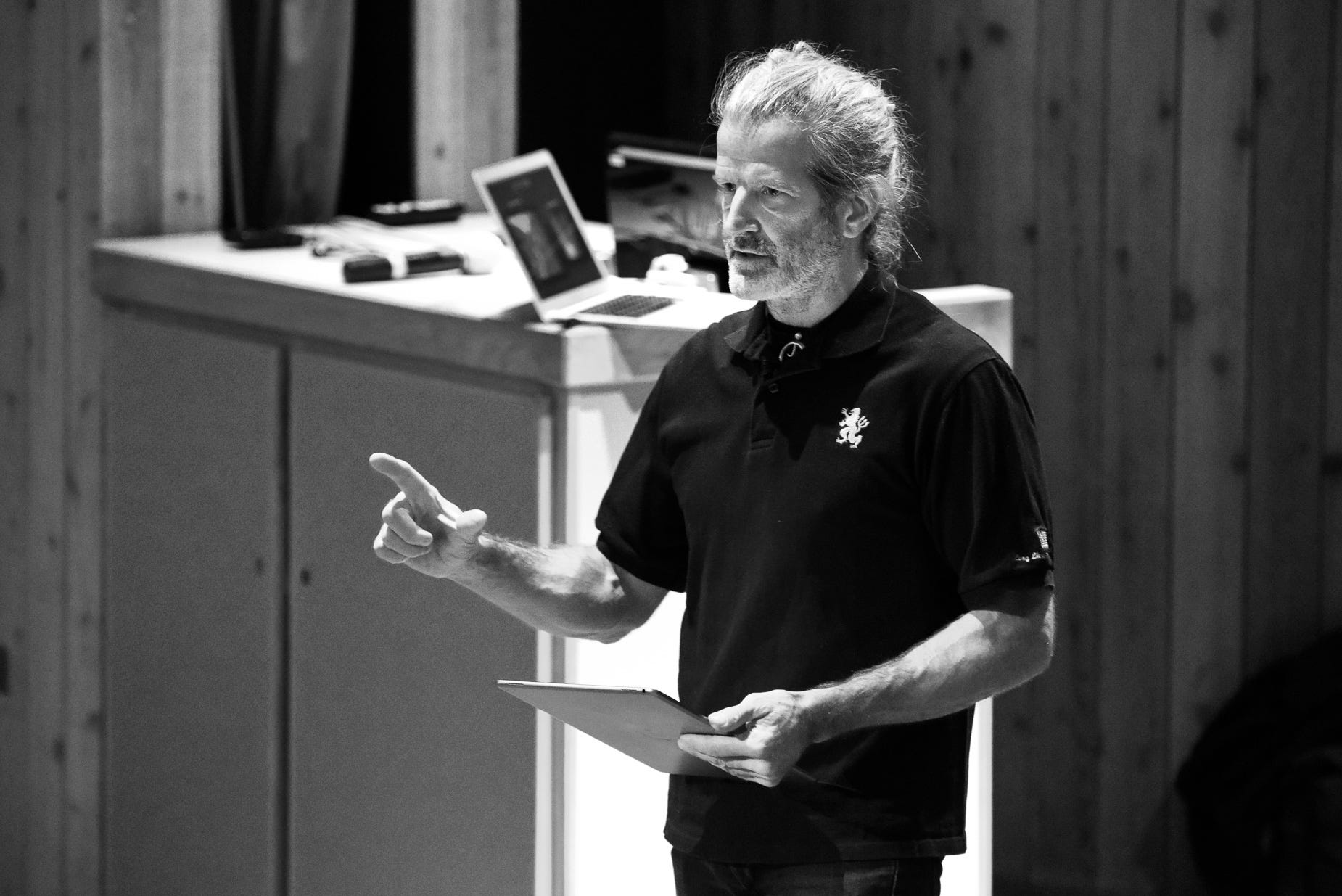
Speaking to Department of Energy security personnel at the INL nuclear facility. In that era I always wore a Gold Squadron shirt when I did public speaking gigs. It felt important to honor the Brotherhood, long may it live. © INL
That is accurate, “someone who’s certain of who they are,” and I would add certain of what he wanted and needed to do. I offered myself no options. That said I also suspect that young men — even when they lack certainty — front it to reinforce what they are learning to believe about identity and ambition. And it is an education, a process, a test of hypothesis, challenge, action, resolution, all to learn whether we are who we think and if we can become who we want.
I wrote those words in 1992, describing events Barry and I shared in late-1991. I was deeply committed, and had proven myself willing to use the knife socially to remove any form of friction affecting my trajectory.
Things changed during the next decade. I fell in love with someone who was immune to the knife, at least in that context, and I learned to place more value on human relationship than on personal ambition. I can see a shift in the rearview mirror, distinct if small changes in my point of view that happened in the late-90s and accelerated when I quit hard climbing in 2000. In that instant my certainty faded. I could still focus, of course, and chased hard after things I thought might replace climbing, and fill a yawning, hungry void. It took a lot of years to learn that there is no such thing as a “replacement” for climbing (I suspect it’s the same for combat). There are other engaging activities and pursuits, plenty of them, but trying to replace an activity and lifestyle as demanding and transformative as alpine climbing is folly. Age plays a role too. Experience and maturity cannot make up for a decline in physical ability and the softening relationship to risk; after a certain age or era I didn’t need great consequence to hold me accountable in the way I did as a younger man.
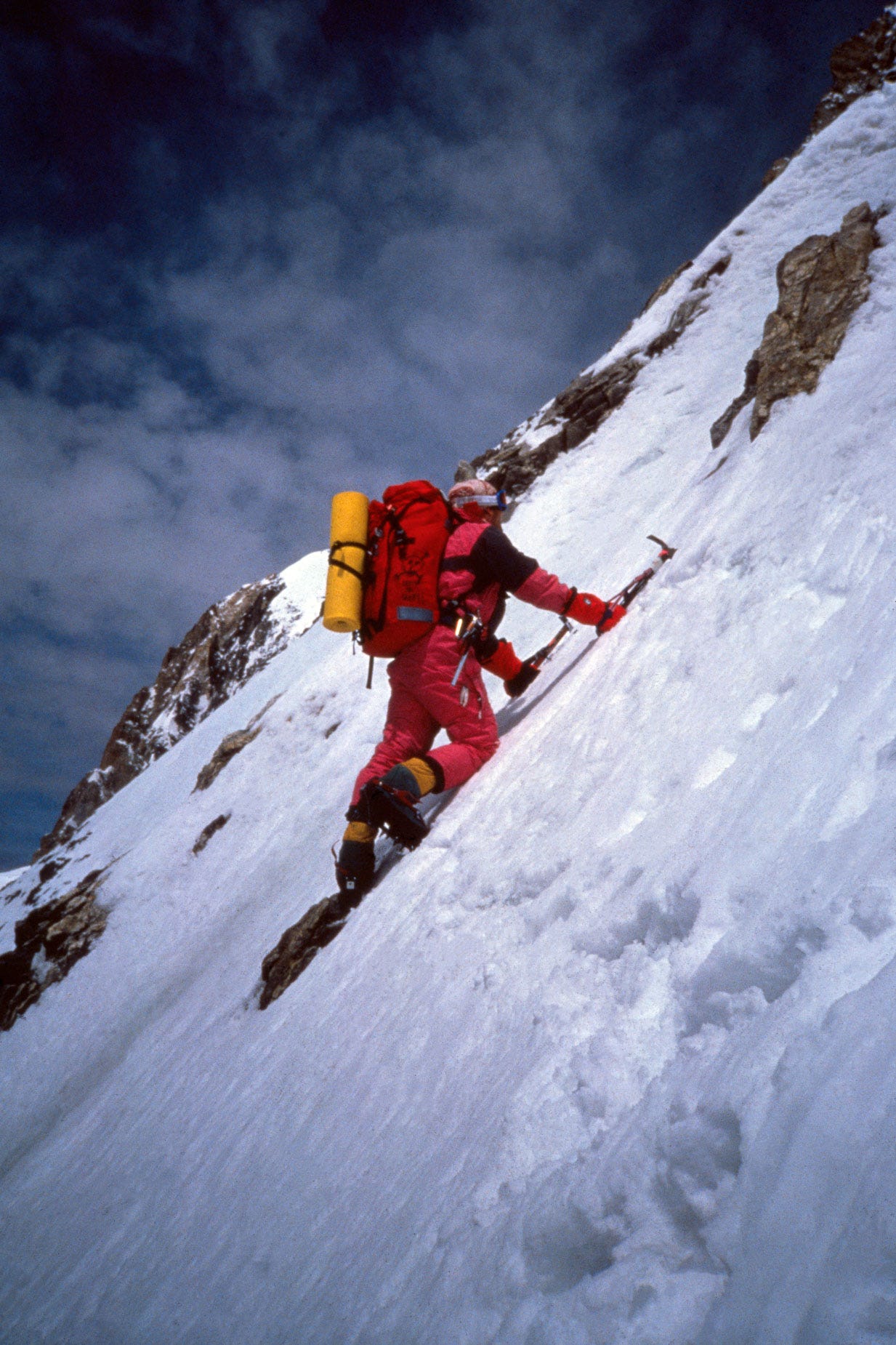
Day Two on the Rupal Face of Nanga Parbat. The perfect weather drew us upward, and our skill and fitness allowed us to reach 25,400’ on the fifth day where a storm caught us and a rather epic descent ensued. © Barry Blanchard
My self-assurance today isn’t the certainty of a driven, hungry and inexperienced young man. I know myself now better than I could or did even 20 years ago. I don’t need the constant validation of high alpine tests as I once did. I can stand in front of an audience of any size (as I do with my public speaking gigs) and confidently tell and teach, knowing that what I have learned and practiced is useful, inspiring, and valuable.
Age 30 is a tough period for any young man. I think we are all boys until then. Of course, some mature earlier, some much later, some never but generally there is a huge change in male consciousness that occurs around that time. That was almost 35 years ago for me and I can say with certainty regarding who I was then and now that I am more considerate of others, less selfish, more conservative (another loaded term and my definition likely strays from the classical), more interested in realpolitik than geopolitics, and certainly far more patriotic. From its Founding, and despite our flaws, this remains the greatest country on earth, specifically with regards to opportunity and liberty. I wouldn’t have said that when I was enamored of all things European, and specifically France, where I lived for five years full-time. And by the way, I would never live there now.
Death. Mountains. I have been my most reverent in proximity to death; the threat of it and in its wake. I have experienced my highest self and strongest connection to the natural world in the mountains.
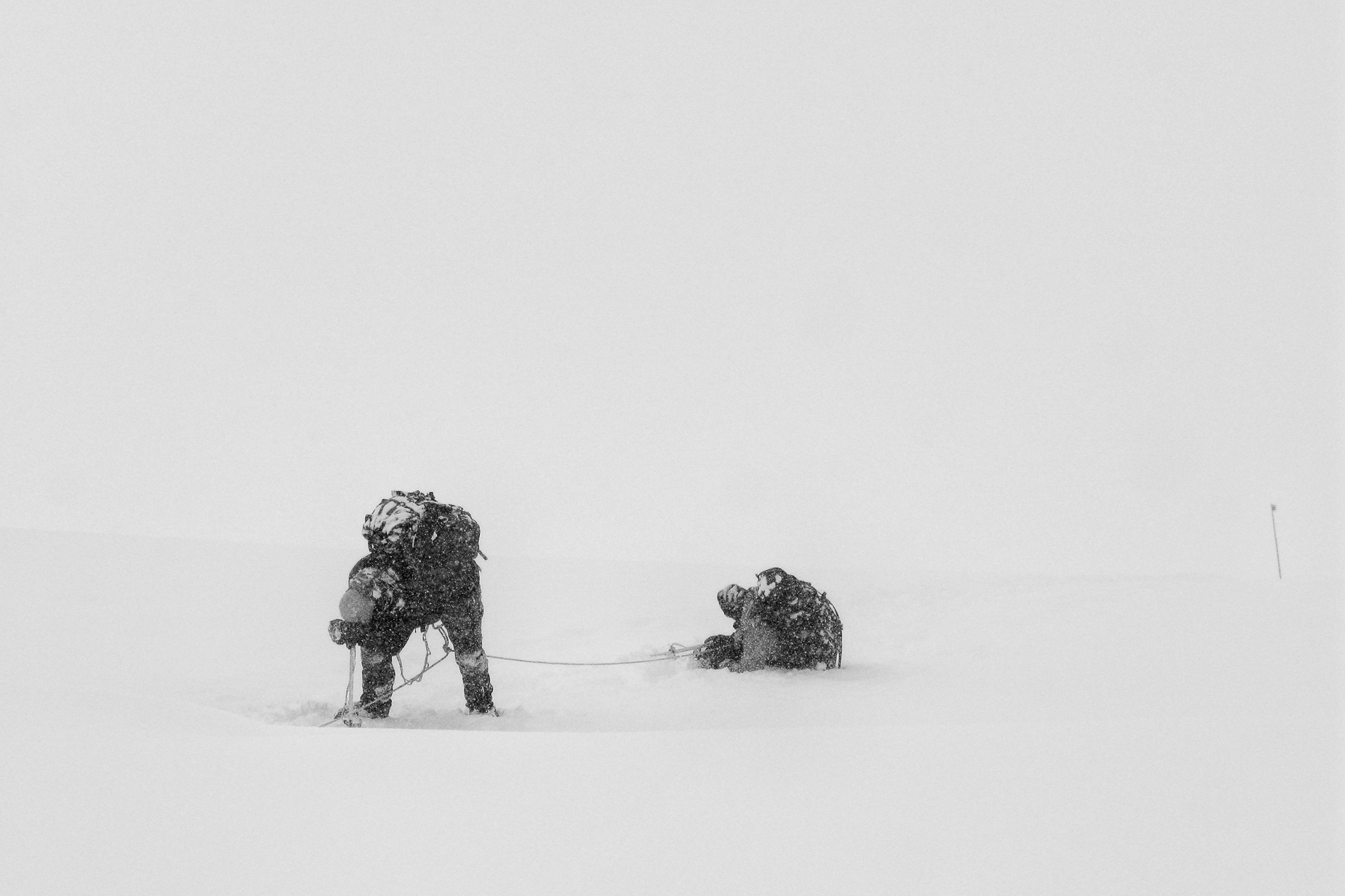
Heath and Dave a few hundred feet below the summit of Denali, on the lower part of “Pig Hill”, the final slope before reaching the summit ridge.
The distinction between doing and being is important. As an adolescent, “Who am I?” morphed into, “Who do I want to be?” But as I became conscious I realized the appropriate question was, “What do I want to do?” because through the doing I would become the man who could do that thing, and identity would materialize from action, doing. I started climbing because that’s who I wanted to be: a climber.
Somehow my upbringing gifted me the ability to go deep into whatever I aimed myself towards. After all, full immersion is the only way to access the deep and meaningful lessons offered by any activity. If you want to be transformed by something—by anything—you have to do it as well as it can be done, to commit to it, and maybe, sometimes, back yourself into a corner with no way out but forward. I started climbing and I bet the chips I could afford to lose. All of them. And the deeper I went the more the doing reinforced the being, to the extent that, when I quit climbing the philosophy and habit of full commitment remained and affected everything that came after.
I started shooting competitively (as a surrogate for climbing) and went all in; mentors, classes, dry practice, live practice and a lot of reloading so I could afford it, and the activity permeated everyday life. I was never a good competitive shooter, which I identified as a temperament issue leftover from climbing, meaning, I never shot with the abandon necessary to be truly fast, but the doing taught valuable lessons and developed even more valuable relationships. One mentor relationship led to my first military training gig, and I was on that path for 11-12 years, evolving myself and my curriculum as real world demands on the military and intelligence community shifted. A casual relationship to the doing would not have produced the bonds and friendships that came along with the work because when people who are dedicated and committed see those same characteristics in another person a lot of social posturing and interrogation becomes irrelevant.
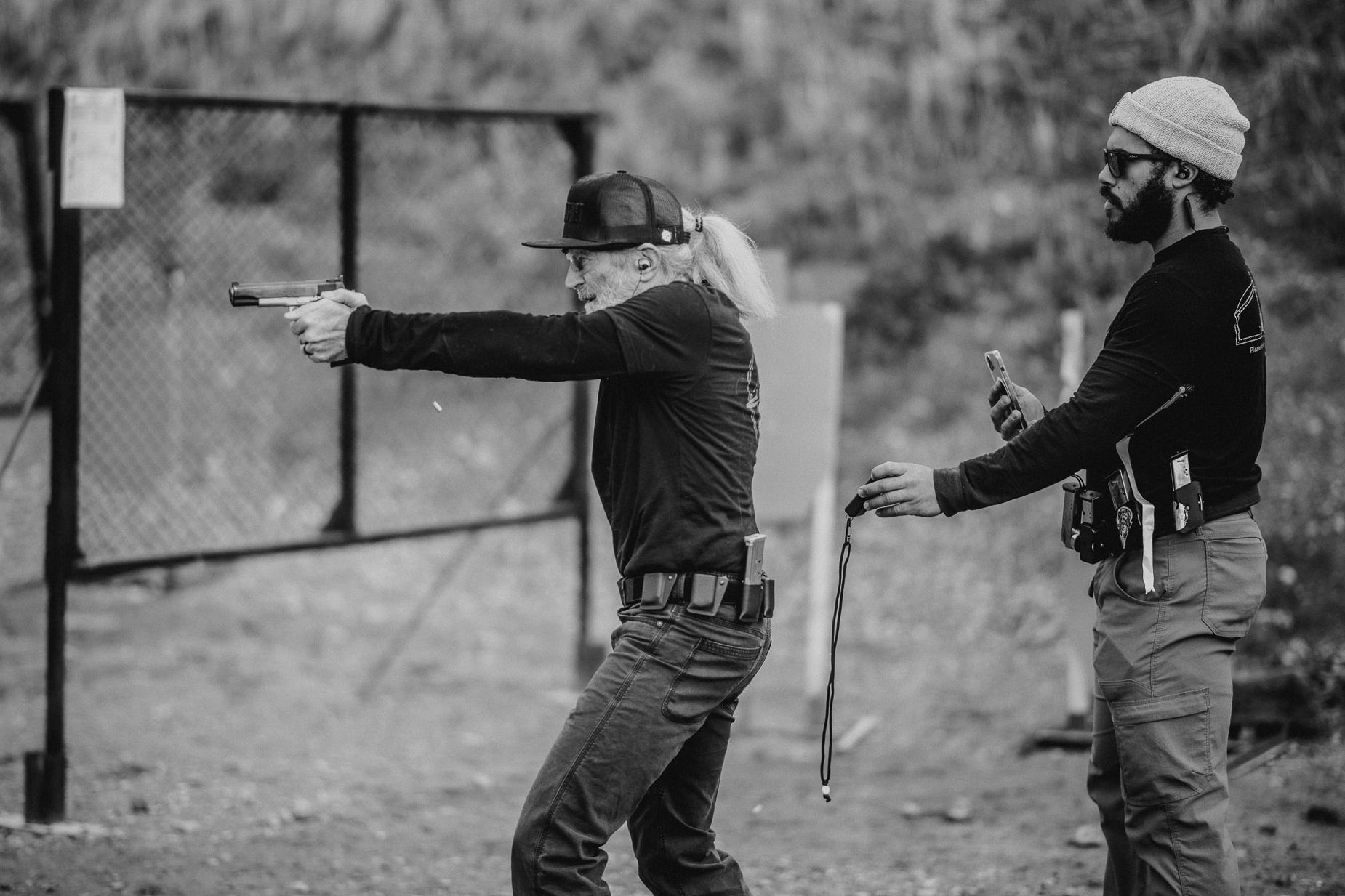
After taking a 21 year break from competitive shooting I started again in 2024. After shooting a single stack for so long my mag changes were still smooth but I had lost some overall speed. © Blair Speed
I do realize that I’ve “performed at top levels in more than one domain” but the fount of all of those practices is the same — my way of being — so I don’t see great differences between them. Doing anything well relies on the same foundations: hard work, creativity, sensitivity and awareness, commitment, persistence, curiosity, the ability to learn, obsession and focus, a willingness to be wrong paired with the desire to be and do right, and an underlying motivation to do one’s absolute best regardless of reward because, if the reward is the objective the work cannot be good. I was confident enough to follow different opportunities as they arose in my life, and paranoid enough to work really hard to be equal to them, to do them well, to earn the respect of my mentors and teachers and never let them down. It is true that the hunger of young adulthood wanes in the transition to elderhood, but having satiated that hunger by doing for all of those years has settled my sense of being. When I look in the mirror I am OK with being who I am.
Throughout my climbing career I willingly accepted risks other climbers deemed unjustifiable; forgoing the rope, exposing myself to grave objective hazards, all the while believing safety is relative to one’s consciousness and that if I was tuned-in to the mountain’s rhythm I could do what I wanted without being killed. Eventually, it becomes apparent that such a belief is illusion, perhaps delusion, and that much of the getting away with it depends on luck, which is an account with no balance sheet and the first overdraft is final. That realization didn’t stop me from soloing, I quit because I lost my sensitivity, my deep connection to the mountain. High on a route in the Alps I recognized my emotional preoccupation (with divorce) kept me from being fully present, and affected my decisions. It was too hard to downclimb so I kept climbing but it was the last serious route I ever did unroped. Once I could understand what I had done and survived my risk tolerance changed. When I saw that I had more “anchoring me to the ground” than I once did — marriage, home ownership, a dog, normal life and reasons to live it — I couldn’t go to the mountains in the same way. And for some reason I didn’t miss it; climbing with a dear friend, with partners and the rope, felt natural, it was a logical progression where the sum of us was so much greater than me on my own that the activity itself became less important than those relationships.
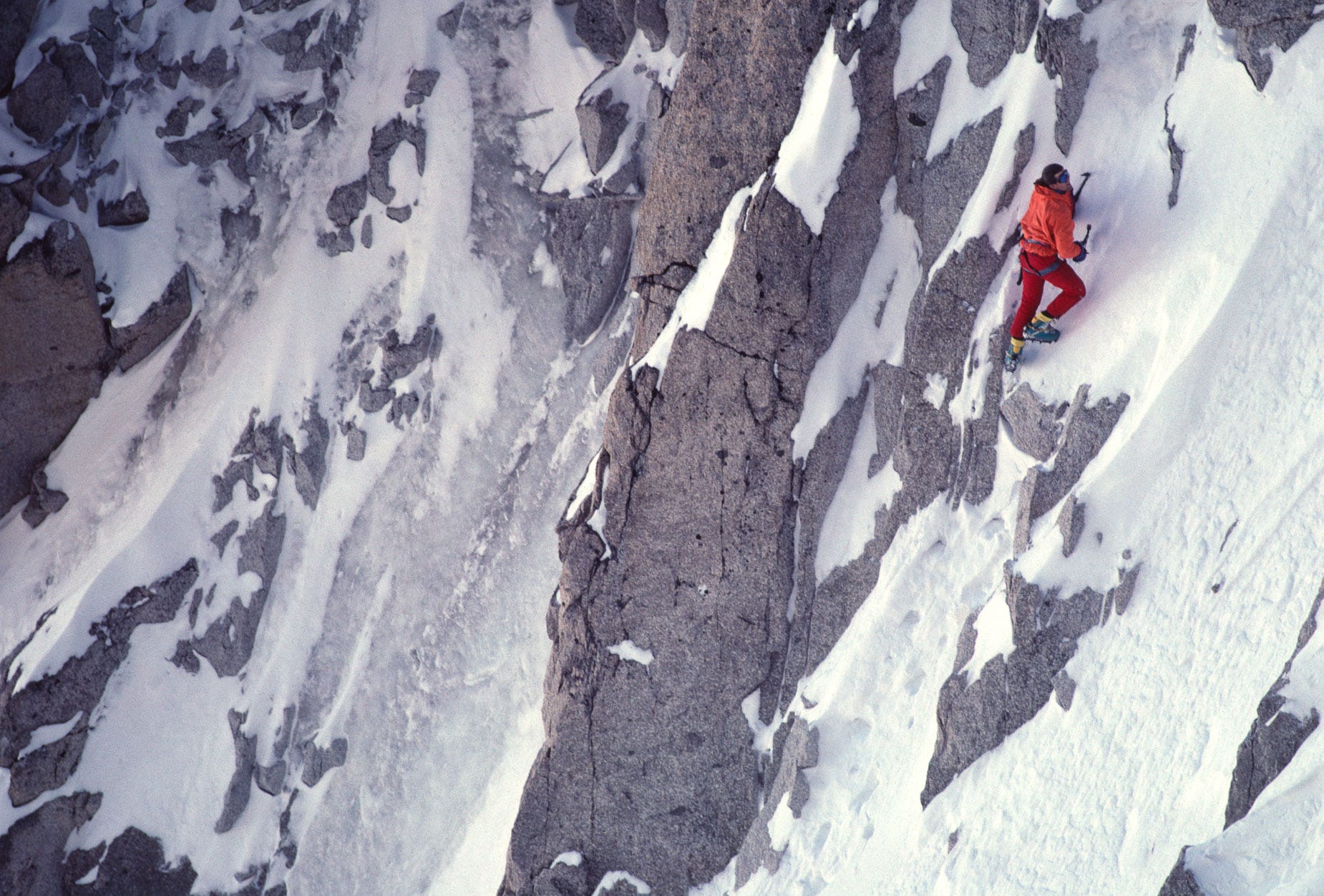
Soloing on the Aiguille du Midi in the French Alps. © René Robert
When I was taking big risks in the mountains (and sometimes the risk seemed like the point) I very rarely considered how my death would affect anyone else. It was happening all around, especially in Chamonix, and I spent time with widowed wives and girlfriends, with surviving climbing partners and friends, and I felt the those losses deeply but didn’t project or wargame my own behavior. That happened eventually, with greater maturity and more experience, and my point of view shifted from my own relationship with risk and death to caring more about a loved one’s reaction to, and relationship with loss.
I’m not fearful but I don’t do certain things now. My S4 was parked for two years before I sold it and when asked why I replied, “because I can’t be trusted with it.” There was a period when I was perhaps craving the risk and accountability or perfection that danger demands and I chased it in that car. But it all stopped one night when I hit some ice going 114 mph. The car slid into the oncoming lane, which happened to be dry, tires caught, I corrected, got off the gas, and drove the last 40 minutes into town at five under the limit.
The other risks I avoid these days almost universally involve the behavior of other human beings; when I was racing my bike I covered several thousand miles annually on the road, and did a lot of ‘urban combat’ riding in place like London and Rome and Paris but I won’t now because death is one distracted text away. I rarely shoot on public land because how a lot of gun owners (I won’t call them shooters) handle their weapons is truly fucking dangerous.
Risk and danger used to keep me sharp but I don’t need that anymore.
I don’t really have a process. I mean, it’s important to sit my ass in the chair and try to write. And I do that most every morning. Some days it flows, maybe even an entire essay in one sitting, and some days it’s just notes or fragments but I trust myself and know those notes are seeds that will grow into something more, something useful. I will re-read older work too, searching for the seeds or even a polished gem that might launch or carry me to new work. I wrote a piece yesterday that started from an asshole note I wrote to a fitness magazine editor back in the day, and it is an entirely different tone and piece than what sparked it.
Clarity originates with honesty and is refined by practice, practice, practice. I’ve been writing for over forty years and I am finally starting to call myself a writer. Not always, because even when I try I sometimes can’t write. When an essay is important, I share it with Blair. She reads it aloud to me and every little goof and error and misstep comes through immediately. Sometimes it’s embarrassing but damn, that’s motivating.
I’ll never be the guy who writes 3000 words a day no matter what. I agonize over sentences, words. A couple of different mentors have told me to just get it on the page, write the damn story, and I hear them. But I still allow my desire for ‘perfection’ to get in the way. I want it to be right when I read it back to myself because if it isn’t then a whole swirl of self-worth stuff clouds the next paragraph ... so I fixate on the one in front of me until it’s good enough for me to move on.
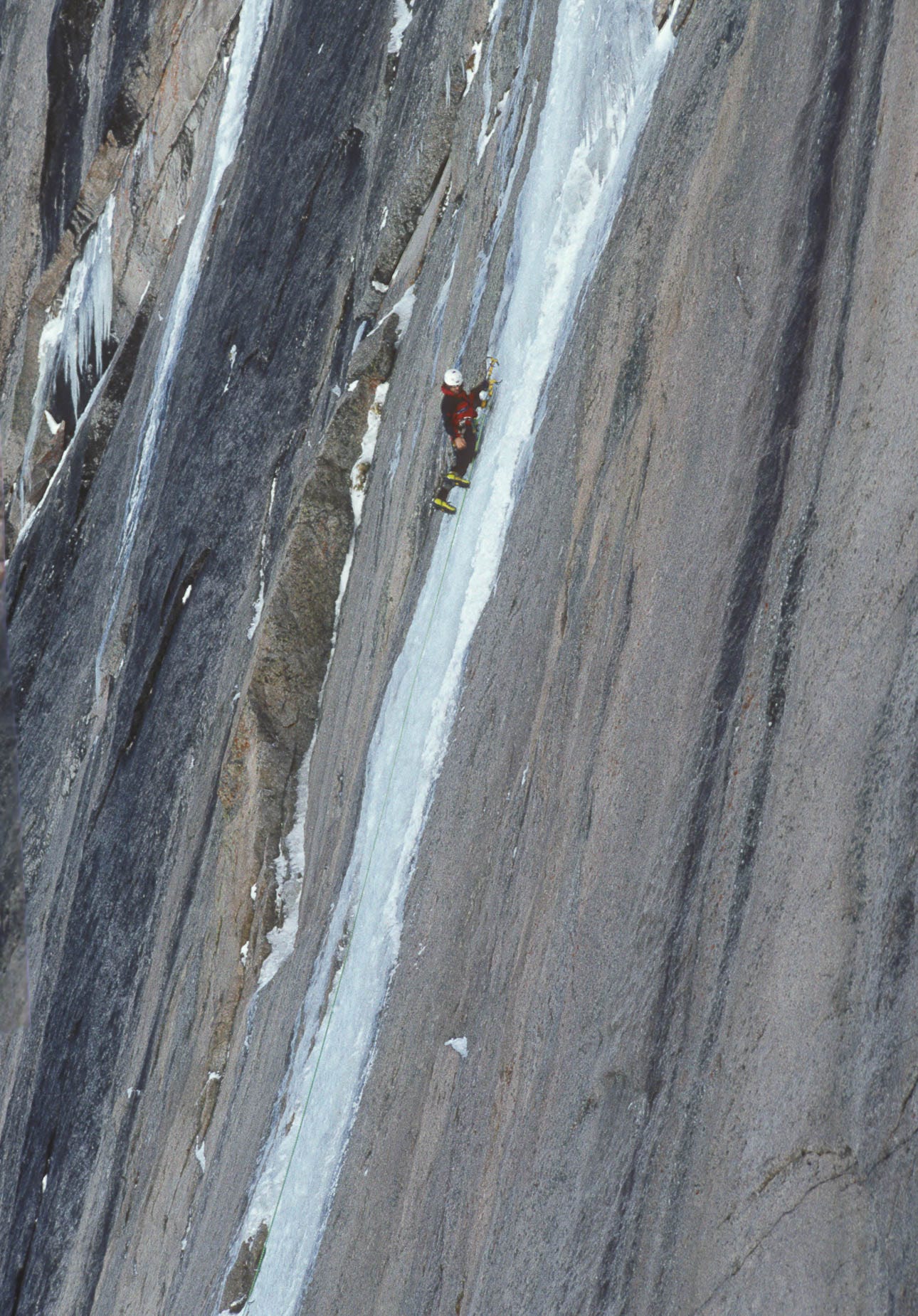
Failing to finish a new route on the lower east face of Longs Peak. I think my courage ran out around the place the ice became to thin to climb. I was not prepared to risk the fall onto a tied-off 10cm ice screw. The route was done later and named “Crazy Train” © Cathy Beloeil
In the fitness world I believe the expectations carried into any endeavor are unrealistic, overly influenced by marketing (of methods, supplements, equipment, etc), forums, and the misrepresented experience of others. When “programs” and “diets” allegedly fail they merely fail to live up to expectations. In climbing, the same marketing influences expectations but often it’s the human factors that affect return on investment. “Wait, you mean that despite the ideal training program and the best possible equipment I could still fail because I’m mentally weak and no one can sell me fortitude or rationality?” I don’t believe ours is a rational world where people undertake honest, ruthless self-assessment in order to understand whether expectations are realistic or not because doing so would mean confronting self-image, and examining the promises made by shiny people and their shiny things. Interrogating the latter (honestly) teaches that thirty days of behavioral change cannot overwrite ten years of decisions and actions. Someone wise once told me that it takes ten mindful and perfectly executed reps to overwrite one bad one, and if we apply that ratio to our lives we understand quickly that, to change and improve, we will have to be sensitive, aware, and diligent for a very, very long time.
That preface leads to my reply about becoming a more capable artist … first of all, what does ‘more capable’ even mean? Commercially viable? Yuck. Does my art move and affect? Oh, now that’s more interesting. If someone, and it only takes one, reads an essay like “Twitching With Twight” and suddenly recognizes the prison they accepted and paid to be inside of as such and then smashes those walls or expectations to escape, to reorient towards new horizons where s/he may taste fruit once forbidden by circumstance/ nurture/ marketing well, those words were a valuable and effective piece of art — for that one person.
Capability has to do with personal work and growth and achievement; one may use external testing to validate but an audience is not required because the skill and fitness itself is personal. Generally speaking, making art is personal, but to be effective in the way we tend to define (and measure) it requires an audience, which is something an artist cannot control. Yes, I know that my writing reaches more people when it is personal, shows some vulnerability and even intimacy, is rhythmic, contains memorable, quotable phrases, has a mix of critique, provocation and potential solution, perhaps with a call to action but damn, abiding those ideas as rules puts me in a similar prison as that I described in “Twitching”.
Of course, I have written and edited my words because I wanted to affect the reader in a particular way. I wanted to write that hit single, whether it was honest and true or not, and I was always disappointed with the result, and with myself for having bent the knee so to speak.
Compelling art is made by humans to express their human experience. I believe making it is personal. If they choose to share that art, and it communicates their experience, their emotional condition to other humans then maybe one viewer sees it as a mirror, or as a sign they are not alone or their experience is not isolated or unique. Damn, shared suffering is very humanizing, and even hopeful. Shared hope and potential is the same. If I am human and I can communicate my human experience well, then other humans might resonate with my art, and be moved enough to see or seek or do something they might not have otherwise done … that seems like ‘good’ art. And making any art takes a lot of practice, well, what I mean is, the communication takes practice, trial and error, immunity to or at least tolerance for negative feedback, and a deep well of energy and emotion and experience to draw upon for long enough that the practice may bear fruit.
Any expectations regarding outcome are quite misplaced when speaking of art.
I only do what I “can’t not do”. OK, that may be hyperbolic. I’ve tricked myself into half-measures, and DNF’d a number of things that couldn’t hold my attention for as long as it would take to see them through. I may convince myself something is worth doing but time and miles always bring me back to the truth, the truth of Self. And tick-tock, what will be worth doing in what time remains? Time is a good filtering mechanism.
When we were on Denali in 2008 there was a weather window in which we could summit. Rolo Garibotti (my friend and fellow guide on the trip) and I decided that launching from the camp at 14,000’ and climbing to 20,300’ and back in a day with a 4-to-1 ratio of clients to guide left us no margin for error. We decided to split the team, climbing with 2:1 ratio the first day, then Rolo and I would take a rest day, and go up again on the third day. The forecast wasn’t solid so the guys scheduled for day three might get screwed. The roster choice had to be fair though so it was either rock-paper-scissors or drawing straws, I can’t recall which.
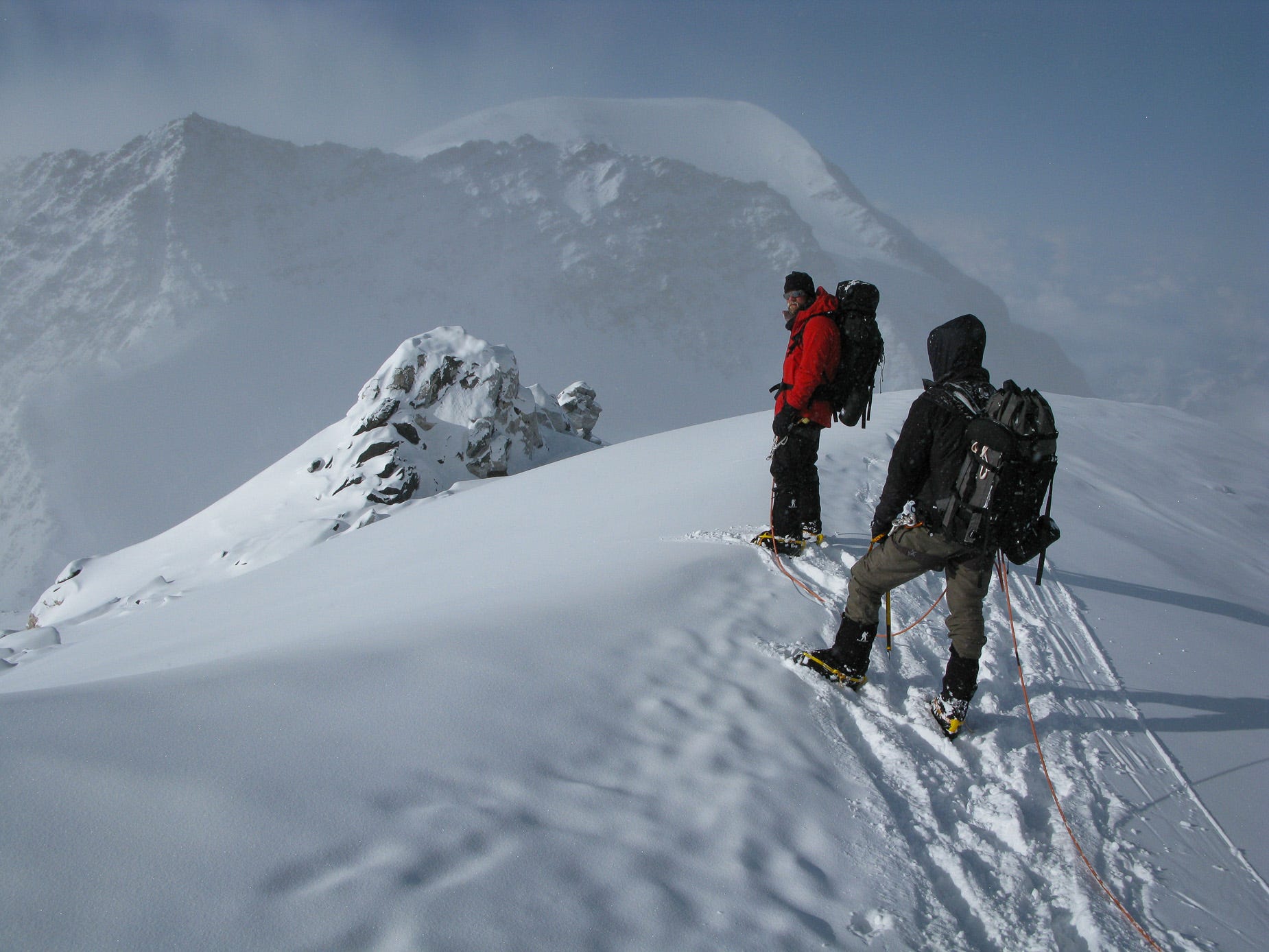
Heath and Dave right around Denali Pass where the sky cleared during our descent. Long shadows, perfect sunset. It was turning into a long day, 15 hours round trip from the medical camp at 14,000’.
The first group was Rapier, Reeves, Fro and Faas. Heath was so fucking pissed. He was certain the weather wouldn’t last. That first day took 17 hours round-trip. Rolo and I were smoked, and not the superhumans Heath thought we were when he asked to go again in a few hours. We rested and the weather held. Callagy bailed, and Rolo started up with Chuck who got sick at 18,000’ so they turned back. I kept on with Heath and Dave Wright ... and it was one of the most impressive feats of drive and persistence and stick-fucking-to-it I have ever seen. Heath and Dave dug into themselves for something they probably never had to access before. They would take few steps in the deep snow and collapse. Then take a hopeful look upwards to see if the summit came any closer while they had their heads on their knees. No. Damn. More work. More digging. More giving, everything. Effort upon effort. And slowly, certainly, we made our way up to the top. A small part of me believed they would give up because I’d seen that in others, in civilians. But I had been around a lot of Tier One guys in the previous years so the larger part of me knew they wouldn’t, and as long as they kept trying I was going to let them and if we had to be out there all night I would stand with them.
On the summit they stood unsteadily, and held up the unit flag and the flag of the nation while I snapped photographs. And then, despite the fatigue, despite everything they had lived through, and what of it they carried on their shoulders, in a moment when they could be forgiven for stashing the American flag in a pack and heading down, they folded it carefully, properly, proudly. I watched that and I cried. I was proud of them, of our country, and of their devotion to it, and its symbols. We were in cloud and snow flurries on the summit, and I thought the weather might be turning. I knew we could get down if that happened but it would be harder, take longer, and be more dangerous. The boys were spent. They also knew how to keep going, that it isn’t over until it’s over, and you do whatever it takes until you can’t anymore. We dropped off the summit pyramid and followed the wands marking the way across the Football Field, moving through the cloud from one to the next. Suddenly, right above Denali Pass the cloud blew out and we sat down to rest, bathed in warm, late-day Alaskan sunlight.
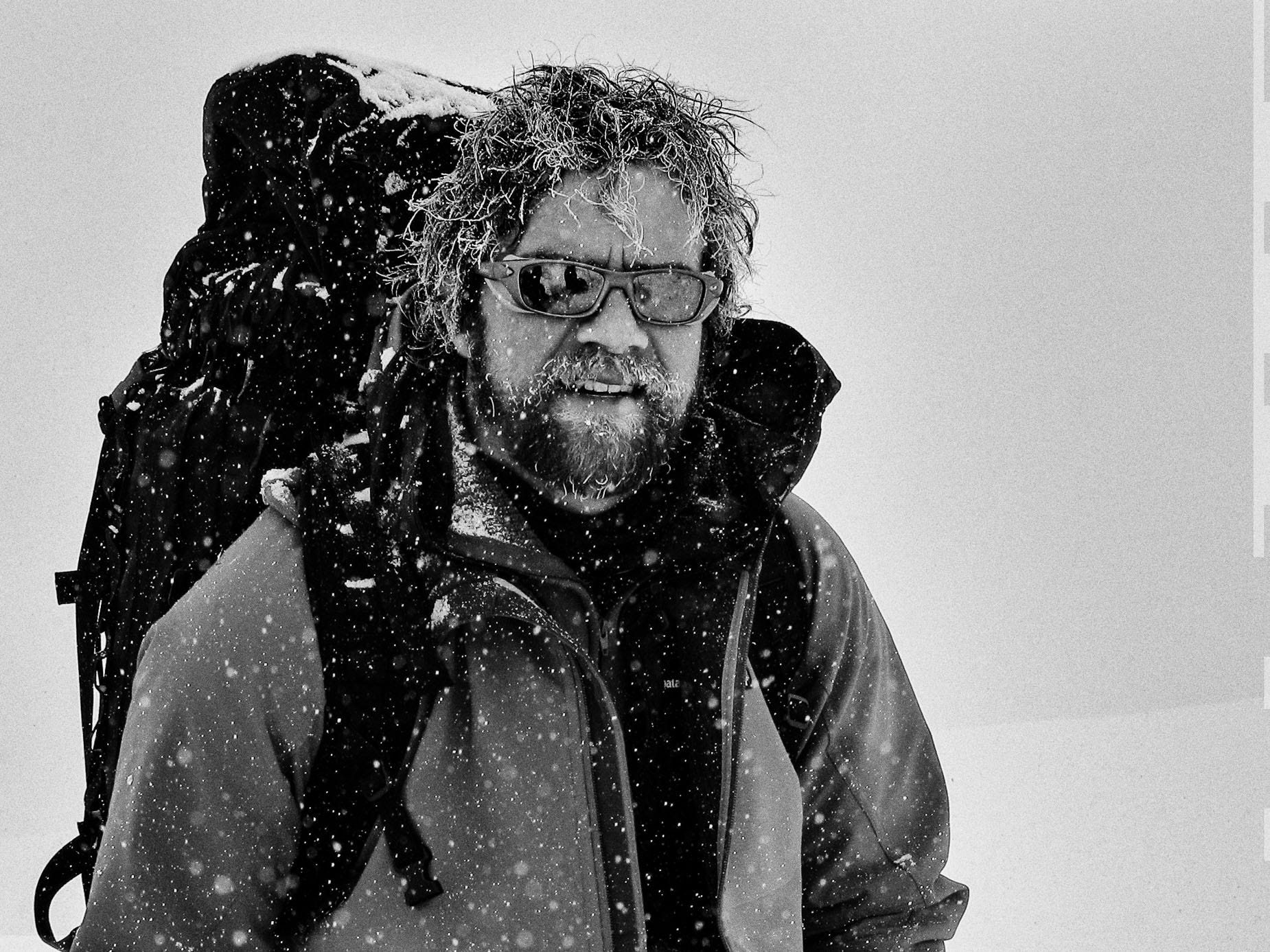
Heath Robinson on the “Football Field” at around 19,600’ on Denali. The high altitude facial edema is real! The boys were only ten days from sea level so had not acclimatized as well as I would have liked but the weather said, “Go” and we did.
Find Mark’s writing on SubStack “Mark Twight is Équipe Solitaire”
No posts
Comments
Nothing yet. Say the first thing.
Sign in to join the conversation.