
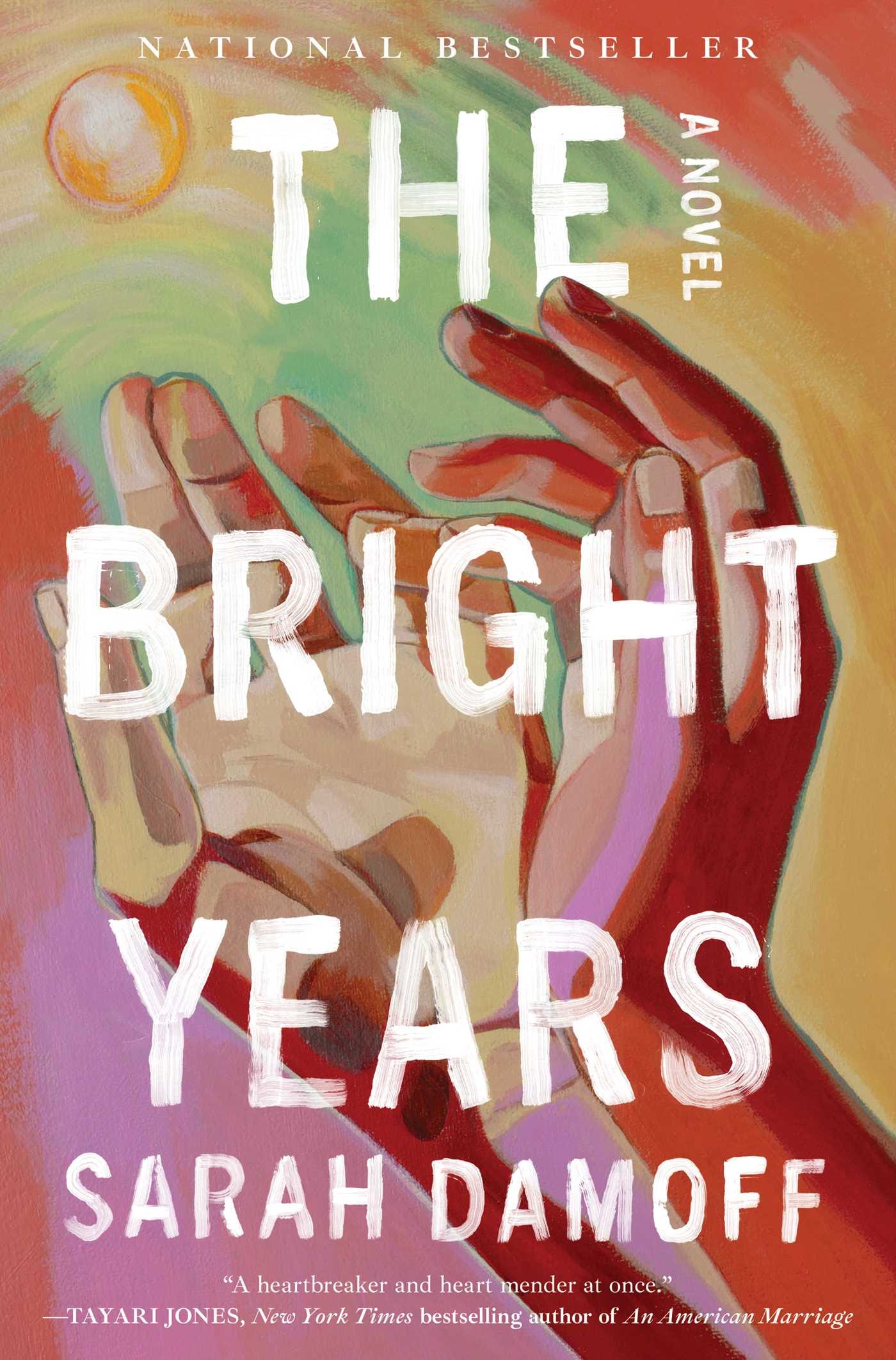
Sarah Damoff is the author of The Bright Years, a debut novel about family, forgiveness, and the complexity of breaking the generational cycles we inherit. Published by Simon & Schuster in April of this year, the book examines what it means to maintain relationships with those who have caused us pain and how remembrance and forgiveness can coexist. I found the story to be deeply honest and full of beautifully observed scenes. It’s a story of what families pass down, how those impacts shape who we become, and the work required to break a generational cycle.
Her essays and stories have appeared in Oprah Daily, Porter House Review, Ruminate Magazine, and Open Global Rights and she holds a degree in Family Studies and a Child Protection Certification from Harvard University.
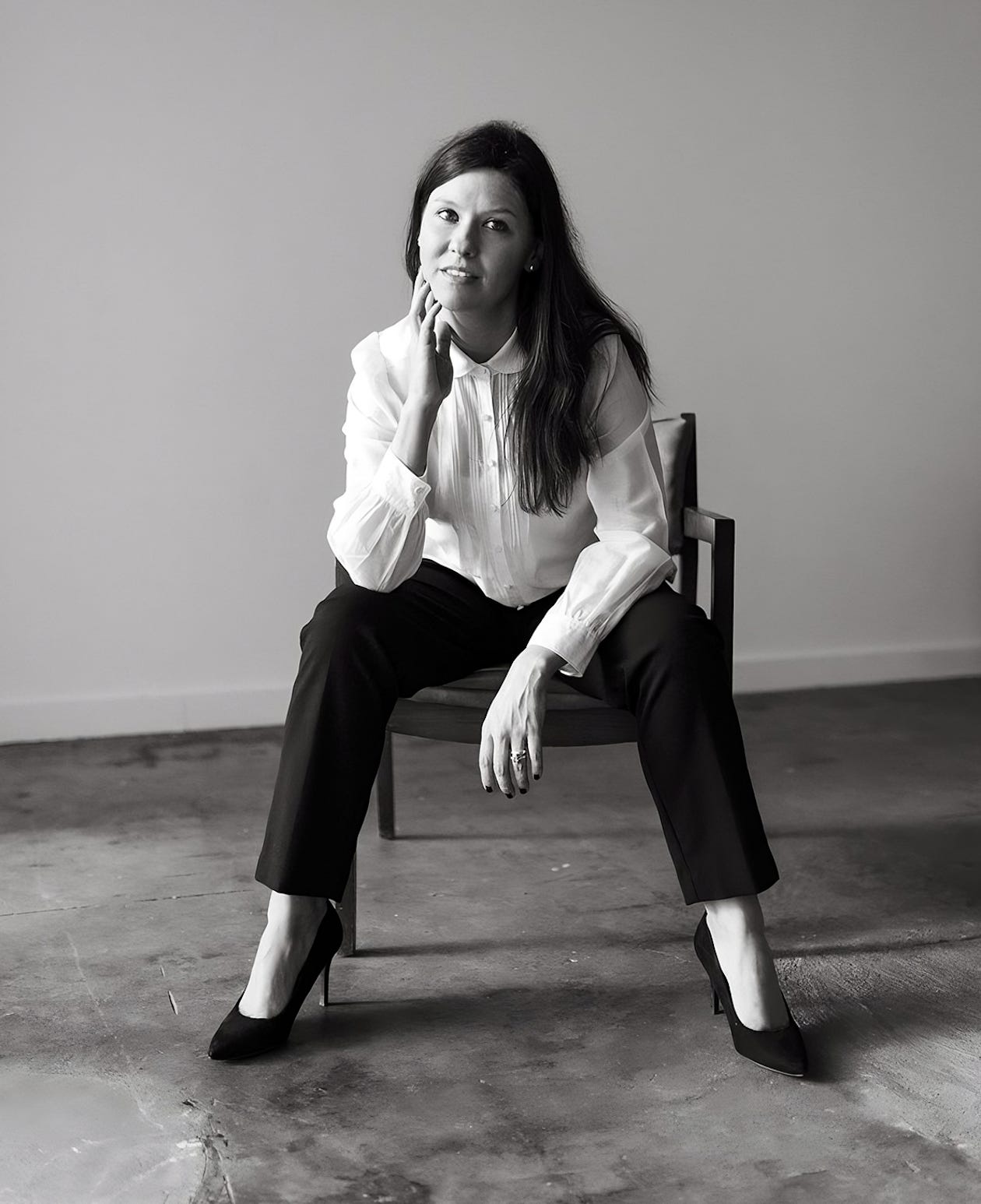
In our conversation, we talk about humanity inside addiction, the limits of forgiveness, and the difficulty of ending the cycles we inherit.
Thanks for doing this. It’s a pleasure to talk to you.
Sure. The interviews you sent me from this series are amazing. I really appreciate you having me.
Thank you. Thanks for reading.
The Bright Years is your debut novel. What was your experience with writing prior to this story?
My background is in social work. I started working with foster families at 17, volunteering, and kept going from there. I worked in residential treatment and as a foster parent myself.
I’ve also done a little bit of work on the courts side of things.
In 2020, I read a novel called Lost Children Archive by Valeria Luiselli, which is about a family set against the backdrop of the crisis on the southern border. What that novel taught me was that, regardless of what you’re interested in, you can do anything with fiction.
The artful language and the way the novel showed this part of America that you would otherwise read about in the news or in non-fiction - it was enough to encourage me to write.
But aside from that, I have no formal education in writing. I studied Family Development in college and got a Child Protection Certification. All social work type stuff.
That’s very impressive. To be able to write an entire novel and then for it to become a national bestseller.
Well, I wrote one manuscript before The Bright Years. It was about the foster system, something I care deeply about, but by the end… It had too much of an agenda.
In writing that story, I learned two things: I could write a book. And that with fiction, it might be better for me to ask questions, more than you really want to answer them.
How long did it take you to write the story? And did it change much from its original form?
It was initially titled The Bright Letters. This was 2021.
The first draft was fully epistolary.
At that time, I was working, taking care of kids, living my life, so I set it aside for about 6 months after I wrote it.
Looking back, you know, I think you can write something and not necessarily want to share it. At the very beginning, I never thought about readers or what a publisher might want.
Anyway, I returned to the manuscript after a few months and thought… Maybe there’s something here. Maybe this is something people would be interested in.
I queried a few agents, received some feedback, and a few times I heard the same thing. Agents saying, “You know, this is a beautiful story, but I can’t sell an epistolary novel.”
So, I experimented with writing a few chapters in first-person present. I was hesitant at first. I was really only willing to change the story if it meant the work improved.
Then, in the fall of 2023, I signed with an agent, and within a few weeks, several major publishers were competing for the manuscript.
I think what stood out most to me about The Bright Years was how honestly the characters are depicted. Their thoughts and their decisions. You write these characters as complete people… Including the parts, the imperfect parts, which most would prefer the world not see, but are nonetheless true.
Is that something you set out to accomplish?
Yes. I think honesty… You know, as a reader, and even in songwriting, photography, whatever the case may be, I think we’re very drawn to honesty in art. We all want to see something real, something true.
It can be difficult. Characters often represent different things, different ideas. You, as the writer, can come up with ideas for who these characters are supposed to be.
But I think what readers appreciate is the most honest representation.
What’s the most common experience? That’s the only way you connect the story to your own life.
Absolutely. Speaking of common experience, I don’t want to attach a label to your book, but it does seem that popular or contemporary fiction is often set against some dramatic point in time — someone’s been murdered or a natural disaster has struck.
Your story is really about common people, common circumstances—people who might be sitting in this coffee shop right now.
You’re right, it’s a character study.
Sometimes you hear people use the terms “literary” vs. “commercial”?
And the two are often marketed in very different ways. Where they sit on the shelf in the bookstore. Is it written for awards or morning shows?
These are all sorts of questions that circle around in the publishing process.
I appreciate you noticing that. Even as we were pitching the story, I wasn’t sure where The Bright Years fit.
At some point, you have to set all that aside. Tell the story you want to tell.
The book has some beautiful scene descriptions. Very simple, very poignant scenes which, for me, brought back a lot of memories - some of them pleasant, some unpleasant. Are those things you collect as a mother or as a social worker - from your own childhood? How do you get those to the page?
I love language on the line level. I love imagery, reading poetry.
I’ll wake up in the middle of the night with a phrase or pull over on the side of the road and write something down.
But also, I really try to inhabit the character. I try to write characters where that’s possible. Trying to make them the most realistic I possibly can.
Like we talked about before.
You know, recently I’ve been thinking about this idea… I grew up with my mom. Single mom, who was blind. I would describe the world to her as a child. Not just, “Oh, the sky is blue, and the sunset is pretty.” Also, interpersonal things.
It was her and myself and my younger sister and we would be out doing something completely normal… At the grocery store, I would whisper to her, “Hey, this person is getting very upset with this other person.”
Looking back, I was doing that as a very young child. Maybe I learned to pay attention in a different way.
I think that’s shaped my writing. Shaped my view.
I was thinking on my way here, The Bright Years does a beautiful job of explaining a handful of otherwise difficult human dynamics. One of which is this breakdown in communication, which often exists when a person’s been impacted by someone else’s addiction or alcoholism - someone who’s caused them trauma, I suppose.
Despite that happening, you’ll find that people will still care deeply for that person - that family member.
You try to justify and explain that to someone else, and it’s difficult. Admitting that you still care about or still have a relationship with someone who’s caused you a lot of pain - I think a lot of people feel shame and guilt around that.
It feels like something that’s often true, but shouldn’t be? It’s not logical, really.
But by the end of your book, it’s easier to see how that can be true. How it comes to be.
You’re absolutely right. That’s a good way to put it.
Was that something you were trying to depict?
(laughter) Not at all.
Originally, this was a mother-daughter story. Lillian was going to carry the weight of her story, having placed a child for adoption. Then, as she’s raising Georgette, she realizes… I want to tell her one day, tell her she has a brother.
The dynamics around that. How does she navigate the whole thing? Then you would see Georgette’s perspective. Receiving this information, trying to make sense of it.
And so, at the heart of the story was always discovering parents as people. That part has always been true. The intangible things we inherit from our parents.
Initially, I was trying to get the character’s father, Ryan, off the page. And I’ll tell you, as I was doing that, it felt like everybody I’ve ever known who has experienced addiction or alcoholism was tapping me on the shoulder - through this fictional character, saying, “give me more humanity than that. Give me a voice.”
“Don’t make me a stereotype.”
So it’s interesting to me that you ask that.
I don’t have personal experience with alcoholism, but I’ve seen a lot of it through foster care. While I was writing the book, I sat down with a handful of very generous people - people who shared their experiences with me. The number one thing I took from that experience has a lot to do with what you’re saying. Alcoholism can ruin lives, but at the same time, the love and affection in that relationship does not always go away just because someone becomes an alcoholic.
Even if you wish that were true.
I really wanted that… That humanity to be part of this story.
I found myself rooting for Ryan despite his choices. Maybe that says something about me, but I think it’s also a testament to how complex these relationships can be.
Have you found that the message you intended to convey is consistent with the message readers are receiving?
Yes. But it’s worth stating that the message only revealed itself to me as I was writing.
There’s me as the writer and my interpretation of the world, my having worked with foster families. But one thing I learned as a writer is that it helps not to have a message. To just follow the character’s journey. Not to force it.
Maybe I just need to become a more mature writer, but it was during writing and even after writing that the message became clear.
And what is that message?
Forgiveness. That forgiveness is complicated.
The fact that forgiveness does not mean we’re saying, “everything is okay,” and we just go on. It’s about the need to say, “it’s not okay,” and then figuring out where you go from there.
When people still love each other. How do they do that when there’s been pain and a lot of bad decisions?
I think the most important question in the story is when one of the characters asks, “What’s the difference between an excuse and a reason?”
That question… In the generational cycle, that is so often there.
It’s also about the idea that we all enter the world under different circumstances—some with advantages, others with the odds stacked high against them.
But at some point, we become responsible for our actions, we take agency, we become adults. That cycle we inherit — we either continue break it or we continue it.
That choice depends on many factors. And it’s messy - hardly ever clean.
I hope the story helps illustrate the way people make that decision.
Does that make sense?
Perfect sense. It creates a more gracious, more complete way to look at these situations.
Tell me, the book you wrote, tell me what it’s about.
It’s also a character study. A love story/Americana novel about folks I would sometimes brush against in the military. The protagonist is between community college and laying concrete after high-school and so he decides to join the army, somewhat spontaneously.
In 2006-2007, if you made a decision like that, there’s a very good chance you would find yourself in some very intense combat… In Iraq — many of these folks less than twenty years old.
The majority of the novel takes place once he gets home from Iraq and much of it is told through the POV of his wife/girlfriend. He tries to re-assimilate and ceate a life for himself after having experienced a lot of terrible things at a very young age.
In the end it’s really a nod to veteran spouses. I wanted the story to depict how much veteran spouses have done for our country.
How lost most of us would be without them. Myself included. (laughter.)
That sounds super interesting. I’ll be excited to see it come to life.
Thank you Sarah and thank you for doing this. I really enjoyed your novel and it was a pleasure speaking with you.
You can find more about Sarah at https://www.sarahdamoff.com/ and on Instagram at https://www.instagram.com/sarahdamoff/
And if you enjoyed this interview, please consider becoming a free or paid subscriber.
THE TRANSITION is a reader-supported publication. To receive new posts and support my work, consider becoming a free or paid subscriber.
Comments
Nothing yet. Say the first thing.
Sign in to join the conversation.