
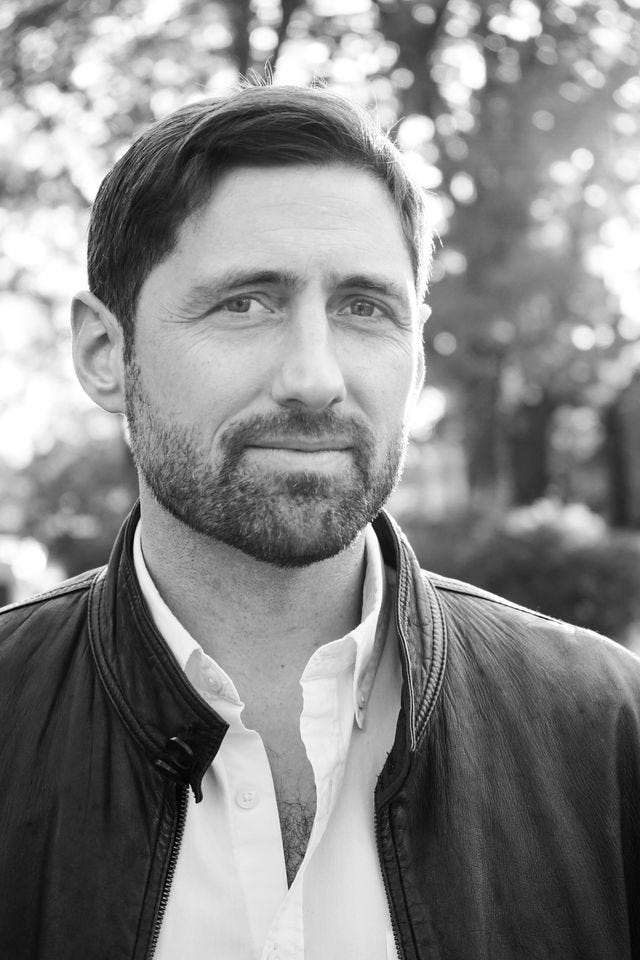
Phil Klay is a Marine Corps veteran and author who served as a Public Affairs Officer in Iraq in 2007 and 2008.
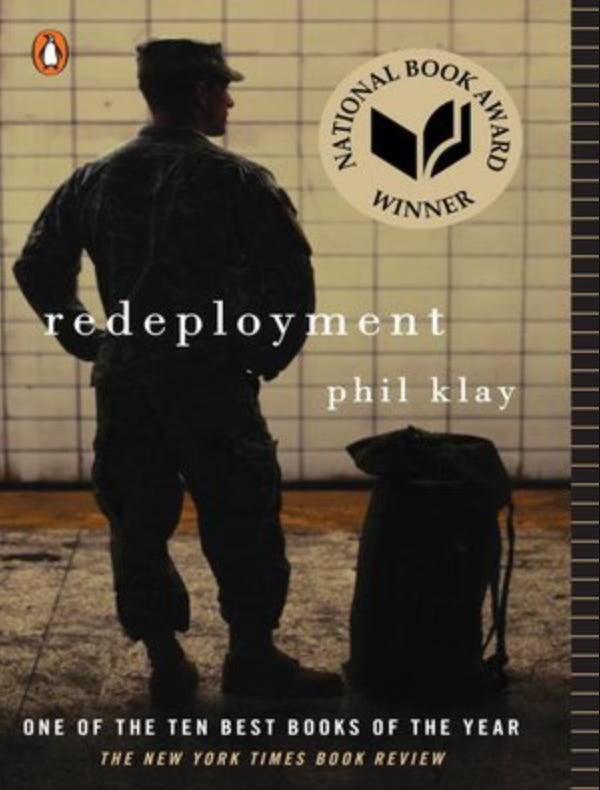
His short story collection, Redeployment, spent time on the NYT’s bestseller list, won the 2014 National Book Award for Fiction and the National Book Critics Circle’s John Leonard Award.
President Obama once mentioned the book during an interview stating:
“Over vacation, I read a book of short stories by Phil Klay called Redeployment. It’s quick but powerful and, for me, painful set of stories about the experience of veterans coming home from Iraq. And it is a reminder of the incredible sacrifice that our men and women in uniform make, and the challenges our veterans face when they come home.”
Klay’s subsequent works include Missionaries, a novel exploring the intersections of modern conflict in Colombia, Afghanistan, and Yemen, and a 2022 essay collection Uncertain Ground.
It was a real pleasure to speak with Klay, someone whose writing - I believe - has given language to the realities of military service and has helped translate those experiences for families and for America at large.
What was your relationship with writing before serving in the Marine Corps?
I always loved books. I've always been a big reader. I studied writing in college. But the big thing for me – when I came back from Iraq – there was a shift in how I thought about writing.
Before, I was working on my craft, I was trying to be a good writer.
When I came back from Iraq, I wanted to write something true, something honest.
There was something deeply important for me to say, but I wasn't sure exactly what that was. The only way I could answer that was to write stories.
And you attended Officer Candidate School after studying at Dartmouth?
Yes. Actually, the summer after my junior year.
What was the response – the going opinion amongst your friends and classmates when you told them you planned to become a Marine? Was that a pretty contrarian idea around campus?
A little bit. A lot of people respected it. I graduated high school in 2001, so 9/11 happened weeks after I started at Dartmouth, so quickly, you have this new war going on and then in 2003, another one.
One professor, I remember, thought I was throwing my life away.
I had a professor who was sort of my mentor – we're still in touch today – the poet Tom Sleigh, who said, "Okay, if that's your plan, you have to read the greatest war stories of all time." And so he had me read Hemingway's Short Stories, War and Peace, David Jones' "In Parenthesis," and Isaac Babel.
"Redeployment" to me was a beautiful observation of what happens to human beings when forced into combat. Sort of a look at the dilemmas warfighters face both in war and when they return from war.
I'm curious, in writing those stories, did you ever find yourself nostalgic?
Yes. For sure. A lot of veterans, even if they have complex feelings about the war they served in, can find themselves nostalgic for parts of it. That's true even for people who had radically more intense experiences than I had as a staff officer.
There's an essay by a French Jesuit named Teilhard de Chardin. This guy was an important theologian, scientist, made some anthropological discoveries, but he also served in World War 1.
He was on the front line, stretcher bearer - he saw a lot of the horrors of the war.
Well, anyway, he wrote an essay titled "The Nostalgia of the Front" in 1917, right in the middle of the war. He describes being sent back from the front lines. And this feeling that comes over him, where, while he's been at the front, all he's wanted is to leave. He doesn't like violence, and suffering, and death – like any normal human.
And yet, the second he leaves, all he wants is to go back.
The essay is about why? What is it about the front that holds this appeal, even though he's not a psycho or a natural warrior? It's a remarkable essay about what life was like at the front, being in proximity to something of such intensity.
Along with Ernst Junger, he's something of an outlier among great writers discussing the appeal of World War I, but you do see those feelings echoed in the letters of ordinary soldiers. This intense connection with war as a pivotal experience in their lives. It's not a simplistic thing.
That's right. Something I've thought a lot about myself. Is it in our DNA? Does it speak to a sort of mundaneness of our everyday lives?
Even if you separate out combat, there's a way you exist in the military. Sebastian Junger talks about this. America has a crisis of loneliness, where we're more disconnected from each other, less bound together by social institutions than ever before.
Whether you believe that or not, the military doesn't really have that problem. You're very connected in this intense way. There's a sense of purpose and common understanding of goals.
It's easy to see why a person would feel nostalgic.
Do you feel nostalgic about your life in the military?
Yes. Probably a bit less with every passing year.
I remember experiencing this evolution between deployments. You'd get home, and you'd be so happy. "Thank God we're back." You know? Then there's sort of a middle period of indifference that lasts a few months, and then you start really looking forward to the next one.
I'm sure that's not true of everyone. I have kids now, and so I suspect things would be different.
Going back to "Redeployment."
I remember being struck by how brutally honest some of the scenes were. The dialogue, the culture, the sort of realism around the way the soldiers behave around one another. You didn't pull any punches, which I appreciated.
Thank you. I tried not to lean into ugliness or shy away, but simply, as a writer, say, "Look, this is the dynamic." And the reader is supposed to respond to that.
That doesn't mean every reader will necessarily like it. And that's okay as well.
There are plenty of things that happen in that book which are… immoral, let's say. But that's the reality.
When you sent the book to the publisher, did you foresee the impact it would have? I'm not trying to test your ego, but I'm wondering, to what extent were you surprised by how well it was received?
I was proud of what I'd written, because I thought I had written what I wanted to say, as honestly as I could. That was important to me.
Originally, I'd been working on a novel. I'd written a few chapters, and if I was going for a big reception, I should have kept going. People will tell you that short story collections don't sell.
But I didn't feel like the novel was expressing the thing that was on my mind. So, I wrote the first few short stories, basically for myself. It was a way to say the things the novel couldn't.
Eventually, I realized the short stories were what I actually cared about, and I abandoned the novel. But I ended up getting incredibly lucky. Granta published the title story, and two editors at Penguin took an interest—Scott Moyers and Andrea Walker. At that time, there was a lot of interest in fiction by veterans, and they bought the collection.
As for the reception—I hoped it would resonate with people. I was confident that I was a good writer. More than that, I knew it was the thing I wanted to say. But it becoming a bestseller and receiving the National Book Award and having the president talking about it on CNN?
That was insane. I was beyond surprised.
You teach an MFA program now; do I have that right?
Correct. At Fairfield University.
I have a lot of veteran students. We do a low-residency program. So, most people work, then they'll come in for residency during the summer or the winter. They can do an intensive 9-day program and work with a mentor virtually over the course of the semester. About a third of them are vets, which is great. It's a genuinely wonderful experience, working with folks and trying to help them figure out how to write what they need to.
I see, that's great. Most of your writing, while maybe not autobiographical, is based on a lot of lived experience.
How do you navigate that part - when advising your MFA students? If a young person has the goal of writing novels, would you advise them to go out and do something? "Live a life worth writing about," as the saying goes?
No. But it is something I've thought a lot about.
There are some great writers… One of the best writers in American history, Flannery O'Connor, grew up in a small town in Georgia, got an MFA, then moved back to Georgia and died fairly young.
She said, "The fact is that anybody who has survived his childhood has enough information about life to last him the rest of his days. If you can't make something out of a little experience, you probably won't be able to make it out of a lot."
The world is a fascinating place, and getting experience is great. But often I find people who have these dramatic experiences, they can think that the experiences themselves are enough. And that's not actually the case.
Let's say you're at a bar and one guy says, "Last year I was captured by pirates," and the other guy says, "For a long time I went to bed early." Well, you're probably going to sit and talk to the guy captured by pirates. Right? But when these two set their stories down in a book, one of them is going to give you a disposable memoir, and the other guy is Marcel Proust, one of the greatest novelists of all time. Proust doesn't just have exciting incidents; he can connect to you as a human on the most profound level.
Now, personally, I like an exciting story along with great insight. Dostoevsky is as insightful as Proust but also helpfully throws in axe murderers and detectives and nihilistic political terror cells plotting revolution. But the ax murderers alone don't make the fiction come alive, and change your sense of yourself as a human being on this planet.
That's a great way of looking at it. Great advice for people who write about conflict.
The skill of a great writer is to take you into a world that feels urgent. Where we feel the human stakes of a situation. The reason you're doing this interview, the reason you and I are talking is because there is something that feels really urgent to you, now, that isn't necessarily about the grand drama of military action overseas, but something more subtle about the experience of coming back, reflecting on your life and merging back into our chaotic American reality.
You're right. It seems a lot of the novels we think of as "literature" really excel in the area you're describing. NOT the "captured by a pirate" moment.
It's been twenty-two years since the War in Iraq began in 2003. I think for many vets, many people, our view of America's foreign policy has changed a lot over time, and maybe that was top of mind last week when the U.S. bombed Iran.
I'm curious, since writing "Redeployment," have your opinions shifted dramatically?
Definitely, I was in Iraq during the surge. When I left Iraq, violence had really decreased in Anbar Province. The idea, in a way, was, look, 'we won' or 'we're winning.'
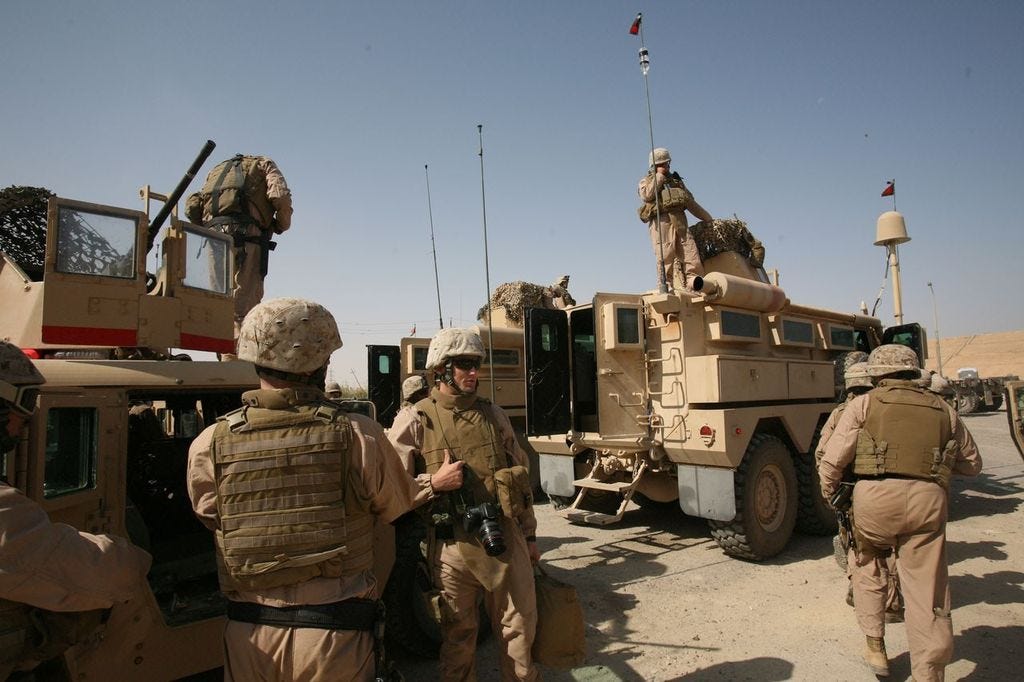
My views back then on what we achieved are very very different than my views after the rise of ISIS, after speaking with women taken as slaves in a town that endured a genocide. That darkened my view, naturally.
Still, at no point have I ever been a pacifist. I've written plenty of op-eds that are critical of the way America has waged war over the last couple decades. But even as I was critical of aspects of it, I'm glad we waged the counter-ISIS campaign.
You brought up Iran. I would say one thing that is concerning is that so much authority has been vested in the executive. There doesn't seem to be much congressional oversight left.
That gives me a real reason for pause.
I agree. It's almost hard to define exactly what the executive branch cannot do. Seems there are so many exceptions and caveats when it comes to overseas involvement.
I don't talk to too many special operations folks about this topic, but it seems the tide is turning a bit.
Well, that community has just been worked like crazy.
Americans got sick of large, endless conflicts. But the American public has this almost schizophrenic view where, 'we don't want to be in these forever wars, but we do want to kill the bad guys.'
So, the solution to that… It's special operations and drone strikes.
I remember when Obama proudly announced the end of the war in Iraq. But then ISIS popped up, and he wants to do something about it. So, we start ramping up troops in Iraq.
Then it's like, are we back at war? Well, no, according to the White House, because that would be politically unpopular. So they did this awkward dance of assuring the public that we were both fighting ISIS and not at war.
I remember one quote from the white house press secretary that was something like, "We're not sending any more troops into combat, but sometimes they end up in combat situations." (Laughter.)
That's exactly right. That strategy seemed to bleed into everything. Somalia, Syria, Yemen, Libya, Iraq.
One thing I've been thinking about this year - have we as a community, the veteran community, in all our trying to help, heal, and care for ourselves, have we created an overdone "broken vet" scenario in America?
It's a fine line to walk. The public image tends toward one of two extremes: either 'broken vet' or the Navy SEAL badass who not only killed lots of bad guys but can also tell you how to run your business.
I think it's important to talk about the personal cost. The experience of war puts people into contact with intense and often sad things. Killing, exposure to evil, leaves its mark on people. The other side of that coin is that many of these individuals possess a lot of talents, grit, and skills that can really benefit the world. Hard experiences can leave someone stronger as well, even if it leaves a mark.
I think it's a mistake to put vets in any one bucket or the other. I know people who struggle with PTSD who are incredibly bright, productive, and above-average members of society.
You want understanding. But you don't want pity.
That's right. I worry about its effect on recruiting. We seem pretty far from a world where non-vets would look at a career in the military as a path to prosperity and well-being, where they would advise their children to join the Army.
Sure. There's a lot there though. I think older members of our society placed a different value on sacrifice and service. And it wasn't because there were fewer consequences.
If you read war literature from the renaissance era, it's interesting because writers will talk about horrors, nightmares, and a lot of the things you'd expect in anti-war literature. And yet they place a very different value on their experiences, as did the society they were a part of. What we ultimately need is a richer public conception of service and sacrifice.
What's next for you?
I'm writing a book right now, set in the 1970s. It's based on my family history.
My grandfather was a career diplomat; he accepted the Nobel Peace Prize on behalf of Henry Kissinger. It was a pretty controversial award. It was a peace prize for a peace treaty that didn't actually end the war. And then he was ambassador to Czechoslovakia, and during that time, my grandmother was asked to pass messages from the Vatican to the underground church.
It's an interesting story, but I'm thinking about that time because it resonates with today. You've got a failed war, a political crisis, you have the evacuation of Saigon, this very public image of American failure, and then my grandfather was posted to a communist country to represent America and advocate for human rights, right at a critical moment for dissidents in Eastern Europe.
How cool. I look forward to seeing it finished.
Thank you so much for doing this. I respect your writing and the impact you've had on our community. Good luck with your new novel.
Thank you. I really enjoyed this.
No posts
Comments
Nothing yet. Say the first thing.
Sign in to join the conversation.