
Thank you to everyone who spent time reading The TRANSITION this year. Toward the end of 2024, it became clear that the challenges veterans face when leaving the military are, in fact, not unique to service, but human challenges, often felt more intensely following the experience of combat.
With that, this year’s goal was to contribute essays on life’s transition periods more broadly - why they’re often disorienting, and how we so often fail to recognize them until we have already passed through, sometimes landing in places we’d rather not be. (And to do all of that without providing “how-to” or self-help advice.)
It’s not lost on me, when it comes to subscriber counts and monetization, publishing more content would likely be in my favor. Regardless, I try to avoid writing anything that feels duplicative or like something that’s already been said. For that reason, I’m immensely grateful to those of you who choose to be paid subscribers.
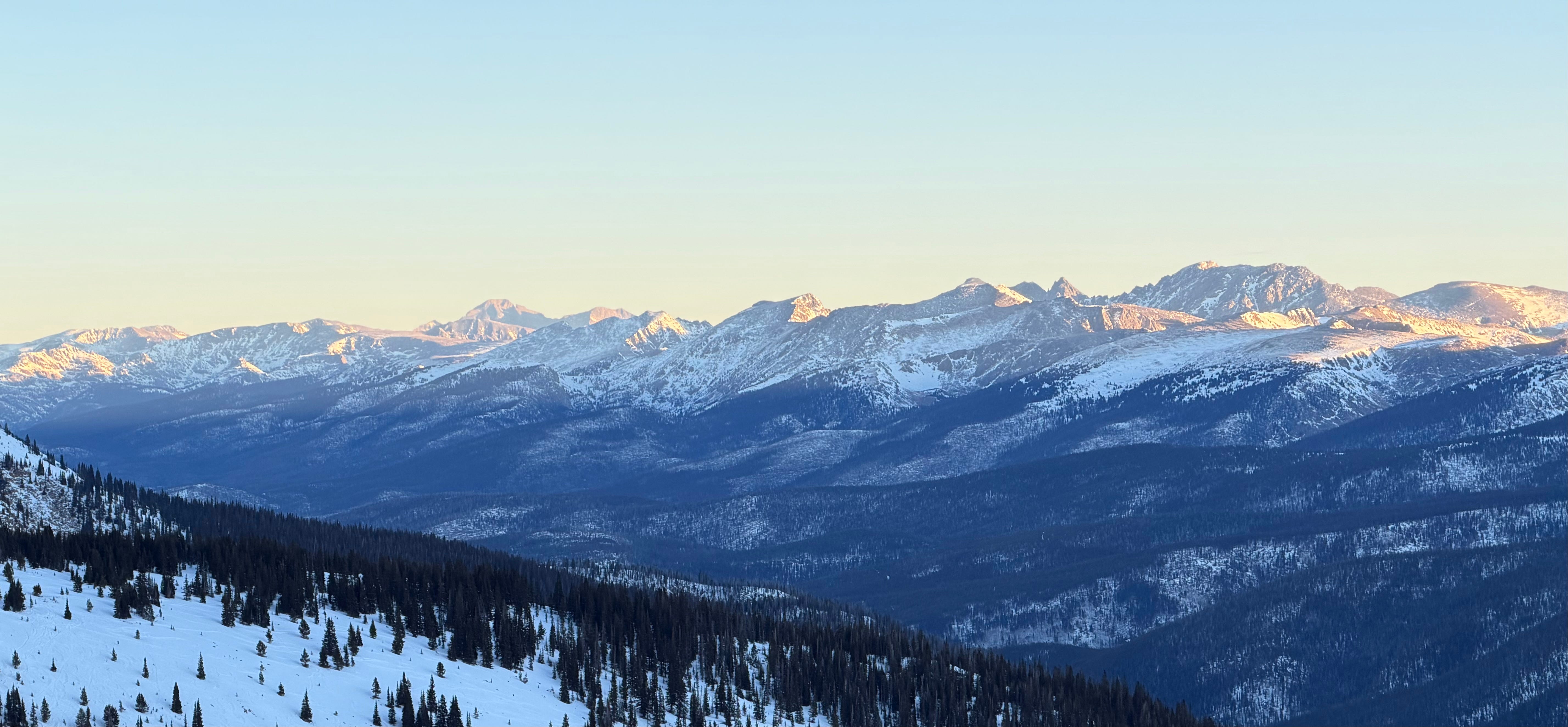
Taken New Years Eve 2025
I spent a lot of 2025 writing fiction, the medium where I feel at my best and closest to the reason I began writing in the first place. I plan to write more fiction in 2026 which I look forward to sharing and hope - at some point - to announce the publication of a debut novel.
Lastly, the emails, messages, and conversations that come as a result of this website mean more to me than I have time to explain. Despite sometimes wondering “what I’m doing”, receiving responses from readers make it seem worth doing.
The most read essay this year was “What We Already Know: Why Intuition Often Outperforms Data During Life’s Most Defining Periods.
Thank you to Sebastian Junger, Sarah Damoff, Cory Richards, Brooke Bartlett, Ian Johnson, Shannon Connell, Casey West, Phil Klay, and Brad Geary for agreeing to be interviewed this year.
Here are my favorite exchanges from the TRANSITION Interview Series in 2025.
From Sebastian Junger:
Much of your professional work has been abroad and much of it pretty adventurous – dangerous by comparison. How do you find the time between those adventures, participating in regular life? Do you still long for that kind of work?
I got out of war reporting at age 50 when my friend and colleague that I made Restrepo with was killed in Libya. He was hit with shrapnel from a mortar and died in the back of a pickup truck.
After that, my marriage fell apart, several things happened, and I had to sort of reset the odometer. I got married again and eventually started a family.
Had I TRANSITIONED out of that life at thirty, I might have missed it enormously. But, as you go through life, different things are meaningful at different ages.
If you’re living a quiet, sedentary life at twenty, you might be missing out on some young man stuff - young woman stuff. If you’re still dodging bullets at sixty, you might be missing out on some old man stuff. Right?
The world’s a beautiful place. If you’re always chasing war, or if you end up with a bullet in your forehead, it’s not such a beautiful place.
If you can’t appreciate the beauty and the profound nature of the world in its quiet forms, then appreciating it in its more dramatic form is kind of bull shit. You’re missing it.
From Corey Richards:
Is there a point at which you, or people in general, look so intensely inward that we start to go backwards? If we constantly triage ourselves or talk about past trauma, are we at risk of reinforcing it?
Definitely. I’m not a social scientist or clinician, but it seems we live in a culture that focuses on self in a way that it never has before. Over the last decade, we’ve become increasingly interested in our own wellness in a unique way. There are benefits to that.
There’s also the potential to reinforce a lot of negative ideas. Deficit, flaws, a general brokenness, right?
We all know what trauma looks like now. More people are studying trauma, it’s normal to talk about trauma publicly, and there’s a tendency for people to identify with trauma.
Trauma bonding and using trauma as an identity to navigate the world.
Understanding trauma is beautiful. And I’m really happy we’ve stepped into a place of better understanding. But leaning on it as an identity becomes less helpful.
I think this is a limitation of conventional talk therapy. Too much reinforcement around why we’re fucked up.
Essentially, Freudian theory in a nutshell comes down to, “It’s your parents’ fault, forgive them.” (laugh)
You know? That’s it. I’m oversimplifying it, but in the end, it’s not REALLY your parents’ fault, so to speak, but that’s the gist. And if you keep going down this road, digging into, “well, mom was this way and my dad did this,” it never ends.
At some point, the whole idea is to let it go.
Instead, the internet tells us to lean into the conversation, and then you find yourself on a treadmill, so to speak. “I thought I was doing the healthy thing, and now I think I actually feel worse.”
From Capt. (Ret) Brad Geary:
Given all that’s happened in the last two years, when you weigh all the good days and some of the tragic things you experienced - Extortion 17 for example - have you had the time and space to surmise the experience holistically?
Do you still view it as a good thing? Something you would recommend young men/women dedicate their lives to?
Yes, absolutely.
It’s the best place in the world to work. I believe that. The culture, being around high-performers and people who are excited to come to work. The value system. The type of person who is always asking, “Am I carrying more weight for my teammates than they’re carrying for me?”
That’s rare, and it’s really a privilege to be a part of it. But it can be intoxicating in a bad way.
I used to tell every graduating class, the SEAL teams are incredible, you’re going to immerse yourself in this job; HOWEVER, don’t make the mistake of letting it become your only sense of self-worth, your identity.
One day it ends.
Very few people are James Mattis, who spent an entire adult life in the military. In the end, the Navy is going to show you the door, and when that day comes, who are you going to be without the the military? Where’s your family? Where is your relationship with your kids? Play the long game and invest in them now.
What kind of person can you be in the second half of your life?
From Phil Klay:
The skill of a great writer is to take you into a world that feels urgent. Where we feel the human stakes of a situation. The reason you're doing this interview, the reason you and I are talking is because there is something that feels really urgent to you, now, that isn't necessarily about the grand drama of military action overseas, but something more subtle about the experience of coming back, reflecting on your life and merging back into our chaotic American reality.
From Casey West:
Do you get bored these days? You’ve lived a high-intensity life.
No. Being so close to death, I have so much appreciation for life.
It’s going to make me tear up to explain it to you… I have so much joy in life, and I think even though I’ve had a hard life, I really appreciate life. And I mean that.
In Afghanistan, we would take these platoons in, drop them off – we’d take in 10 guys, brothers, friends, guys who just signed their life away to the military. Five hours later, we’d pick up 9 or less, maybe.
All the bad shit I’ve done? And what did that guy do to deserve what happened to him? Nothing.
We can’t lose sight of that. So, I stay focused on that, and I’m just appreciative.
Art by Agnes Cecile titled, Lines Hold the Memories.
Comments
Nothing yet. Say the first thing.
Sign in to join the conversation.