
Today’s Why We Write piece comes from David Roth. Check out David’s manuscripts THE FEMME FATALE HYPOTHESIS and THE GIFT OF DEATH on blcklst.com now.
Take it away, David!
There is a great clamor among us writers over the emergence of work “created” by powerful data processing machines trained with robust learned language models. Rightly so. There are huge legal and economic issues pertaining to writers’ ownership of their work and the use of their work to train the machines with which they are now competing. And more importantly, these powerful machines have led to the devaluation by other humans — the ones who pay writers — of the human effort required to produce the work. Writers are experiencing the automation of Borel’s Infinite Monkey Theorem by neural processing units capable of trillions of operations per second, and it has triggered an existential crisis.
Mundane writing tasks that have kept many writers, including myself, housed and fed over the decades — ad/website copy, annual reports, CEO speeches, training programs, pr releases, line editing, et cetera — have already been handed over to machines that can be prompted and prodded into doing this work adequately and much faster than any human. This is only natural. Humans have been making tools and machines to assist with or completely take over menial tasks for three million years.
But, we writers beseech, what about creative writing — the singular output of an inspired individual? With the meteoric advances of machines that can access the contents of an ever-expanding cloud-based Library of Alexandria, don’t we stand to lose the one aspect of written communication that is uniquely human?
Well, it depends on what one believes that aspect to be.
In the beginning was the Word and the word was creatus — to bring into being; to cause to exist. Creatus was the work of the gods: creatio ex nihilo — creating something from nothing. In The Republic, Plato declared, “Will we say of a painter that he makes something? Certainly not, he merely imitates.”
Humans applying the adjective creative to human pursuits to identify something as new or original or unique arising from a single individual’s imagination did not become widely accepted in Western thought until the Age of Enlightenment. Prior to that, through Antiquity and the Renaissance, human creations were considered the result of divine inspiration. Imagination derives from the Latin imago — a copy, imitation. What humans conceived, these pre-17th centry Westerners believed, was simply a mental image of what the gods created, a mundane reproduction of the divine.
Aye, but here’s the rub: The three things humans can credit themselves with having created ex nihilo are 1) our languages, 2) their symbolic representations, and 3) the gods. We’ll save the gods for a future discussion. For now, let’s focus on language.
In the heady days when phonemes were given representational shapes — from cave paintings to cuneiform, from hieroglyphs to Linear B to Bone Script — writing was about aspiring to a way of sharing an image, an observation, a feeling, an idea with others. It was a tool that took survival beyond fight or flight and into the realm of shared experience and cooperation. And that is when things started to become really interesting for us cleverly coined Homos, because once these symbols were agreed upon, broadening their use became a process of learned language modeling; that is to say, imitation.
From birth humans are trained to imitate. We learn to communicate by imitating sounds, gestures and written symbols that have shared meanings. The meanings attributed to these sounds, gestures and symbols create the possibility of a shared understanding of the world as we experience it.
So, 1) what do I mean by titling this piece All Creative Writing is AI?
I mean that creative writing is less about invention ex nihilo (creatio) and more about Aspirational Imitation (AI).
As with all forms of written communication, creative writing begins with imitation. This is not a fringe idea. Literary theorists have long observed that there are a finite number of basic plots and that every story ever told is a variation on one or more of these time-honored themes. When aspiring writers take workshops, consult How To books, or enroll in MFA programs, what is the first bit of advice they are given? Read. Read voraciously. Study other writers’ work, especially in the genre you consider your domain. As Jamaica Kincaid said in her Keynote at the 2018 Key West Literary Conference, “What we humans make belongs to all of us. And we must take from each other with goodwill and with grace.”
And when we pitch a manuscript to an agent or a publisher, what is one of the first things they want us to provide? Comps. What are writing teachers and the marketplace telling writers to do? Imitate!
So, 2) what is the aspiring creative to do?
Focus on that which has the potential to make a manuscript unique from a human perspective: how the story is told. The voice. The sensibility. The structure. The connection to place. The emotional coloration. The specificity of detail. The elusive je ne sais quoi. This is how a piece of writing becomes the singular work of an individual, becomes creative in the modern sense of the word.
This singularity is my aspiration; it is why I write. This is the aspect of creative writing that a machine cannot master because a machine has no lived experience or emotional life from which to draw. The machine can only imitate; it cannot aspire.
So, 3) fear not AI, embrace it!
Leave the artificial imitation to the machines. I aspire to create what only I can create. Aspirational Imitation is not a cynical resignation to the whims of the marketplace. It is how original writing comes into being. An “I” using the tools at hand adapts them to their purpose, bends the rules, and bleeds on the page, all the while aspiring to create something that says, “I am here and I matter.”
The marketplace may or may not reward me for the effort, but I will have created something no machine — nor infinite monkey — could ever create.
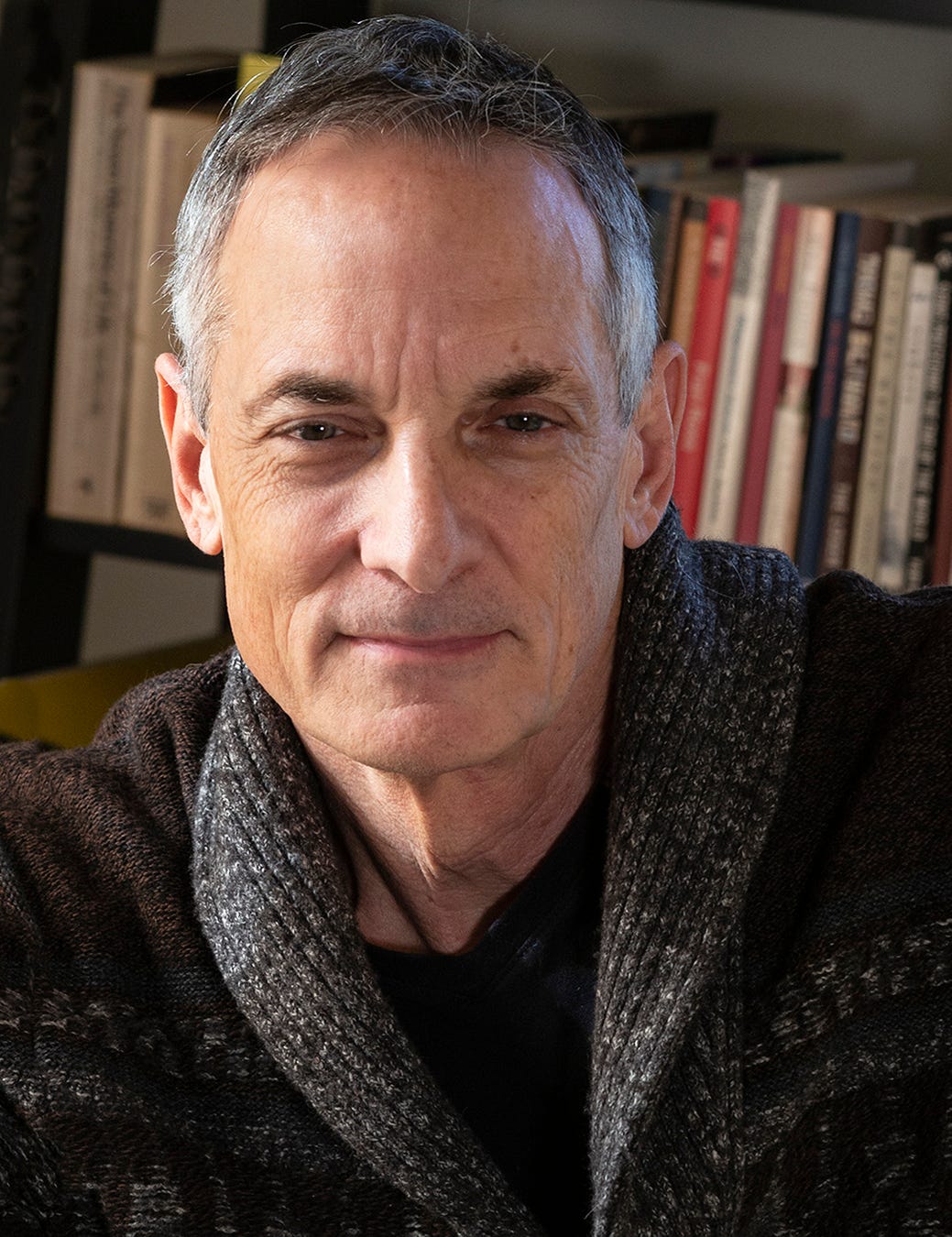
David spent thirty-plus years primarily engaged in corporate communications, writing, directing, and/or producing multimedia educational, training or marketing programs. He quit his job in 2014 to focus on his lifelong dream of becoming a writer of fiction. He began his serious training in Drexel University’s Storylab under the tutelage of novelist Nomi Eve. In 2015 he gained admission to Cedar Crest College’s Pan-European MFA program, which included residencies in Vienna, Dublin and Barcelona. Three months after completing his degree in 2017 he placed second in the inaugural Bucks County Short Fiction Contest judged by Janet Benton (Lilli de Jong). Shortly thereafter, Passager Journal became the first to publish one of his short stories. The Northwest literary journal Moss. was soon the second. Driftwood Press has twice made him a quarter-finalist in their Adrift Short Story Contest. In 2019, David backed away from short fiction to concentrate on completing his first novel. In early 2020, Regal House Publishing picked up The Femme Fatale Hypothesis for publication in November of 2021, an INDIES Book of the Year Finalist and 2023 International Book Award winner for Literary Fiction. David lives in Bucks County, Pennsylvania with his partner of more than 40 years, Beth McConnell. His stories are set in or shaped by life in the small Delaware River town in which they have lived for over three decades.
If you’re not already a member of the Black List website, here you go:
Writers: Create a free Writer Profile and whenever you’re ready (and only then) upload your project, order professional feedback, and explore the various opportunities we have from time to time.
Industry Professionals Register for an Industry Membership to discover new material before everyone else.
I'm an industry pro. Sign me up.
See you in the comments.
No posts
Comments
Nothing yet. Say the first thing.
Sign in to join the conversation.