
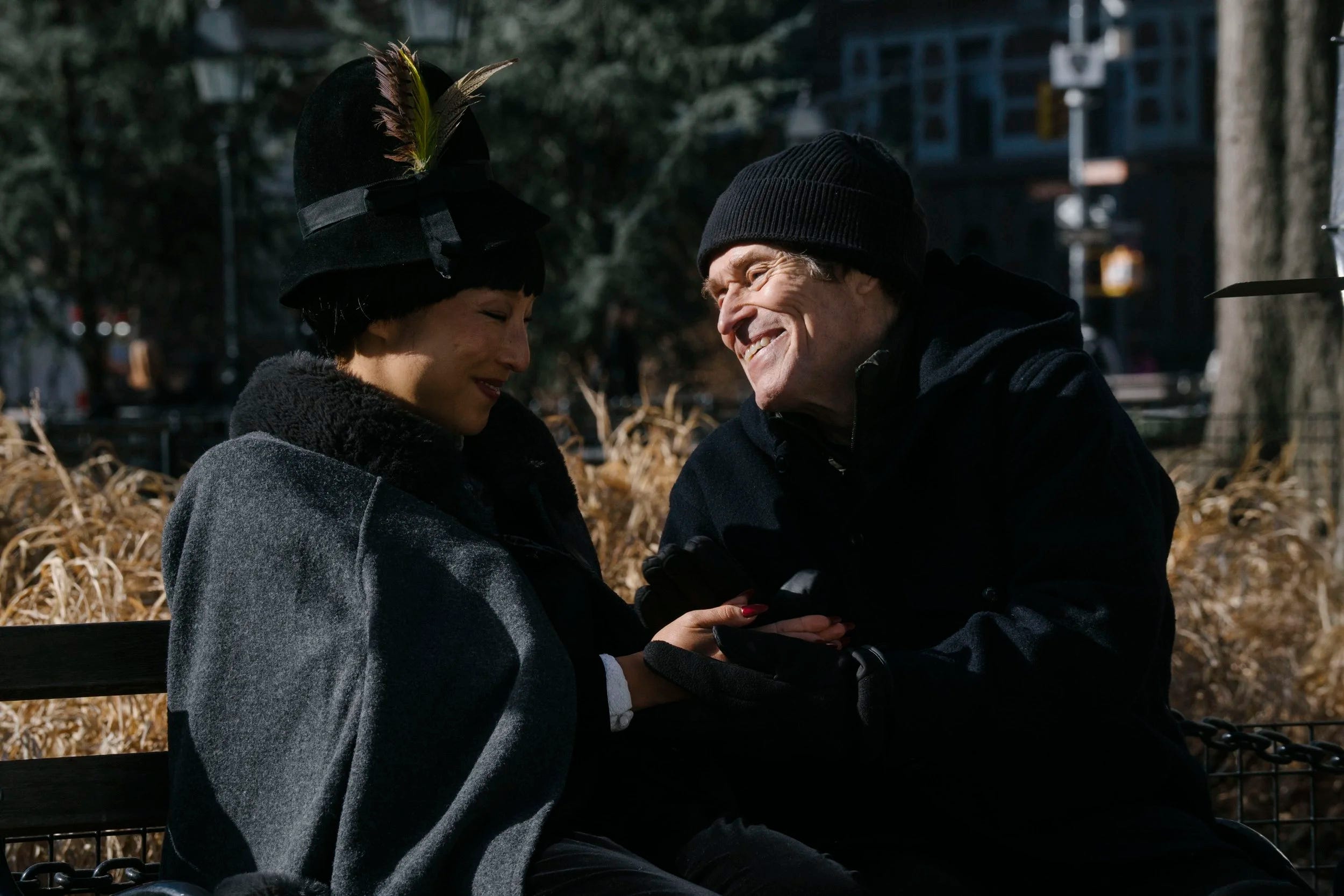
2020 annual Black List alum and Independent Spirit Award winner Samy Burch chats with Kate about her new project LATE FAME, which arrives in theaters today!
What initially drew you to Arthur Schnitzler’s novella LATE FAME which was published in the 1890s but only rediscovered about a decade ago? When did you start thinking about adapting that story into a film about the New York of right now?
LATE FAME was recommended to me by my sister’s fiancé — that was in the summer of 2021 and he had just read it. He’s a musician and he’s not trying to pitch me things often, but he thought I would like it. I read it that summer and immediately connected with it. It’s really redundant to give Arthur Schnitzler any compliments because he’s one of the great writers, but there’s such a simplicity and a humor and a humane quality in his work (as well as a very cutting eye) that I really responded to.
During that summer, MAY DECEMBER had sort of been set up, but it didn’t shoot until the next fall, so it was time for me to think about what other things I could be working on. I worked on an outline for a while. From the beginning, it just made so much sense to put the story in modern day New York. New York City is where I went to college and I lived there for a bunch of years — it was sort of startling how relevant the novella still was. I think a lot of other people have had that experience of “Oh, this is still a city of boys in coffee shops ranting about their poems.” It’s a little bit evergreen.
The character of Ed Saxberger (Willem Dafoe) is so compelling — I very much felt his self-esteem, his insecurity, his ego. That’s really the plot of the novel, how Ed is feeling about himself in this moment, and that was very interesting to me because a lot of it is pretty uncomfortable. Obviously, other people like Stanley Kubrick have [modernized] Schnitzler before to great success, and I kind of studied that as an example as well.
The art of adaptation is a real challenge for many screenwriters. What’s the most difficult part of the adaptation process for you, whether it’s a direct literary adaptation like LATE FAME, something like MAY DECEMBER that is semi-based on real events, or even something like COYOTE VS. ACME which is based on beloved animated icons?
They’re all pretty different, but for me, the process is always going to start with understanding who these characters are. This is really the first traditional adaptation I’ve ever done, even in school or while writing specs. So I really felt a responsibility to capture what it’s like to read this book — and I was pretty loyal. This might sound silly, but I also read TRAUMNOVELLE, Arthur Schnitzler’s novella that become EYES WIDE SHUT, then I re-watched EYES WIDE SHUT — you might be surprised at how much of that is just right there in Schnitzler’s story. It kind of gave me the freedom to say “Okay, I’m going to stick to what works here and anything that’s curious to me, any kind of characters that I want to go deeper into or add to…I’m just going to do that at my will.” So that was kind of my game plan. I tried to keep it as simple as possible, really.
LATE FAME’s director Kent Jones is something of a New York City film legend – he programmed the New York Film Festival and worked at the beloved New Video store. His own career trajectory has some overlap with the arc that we watch Saxberger go through in this film too. I read that you connected with Kent via your producers at Killer Films, so I’m wondering how your creative collaboration evolved as this film came into focus?
I had never met Kent Jones before, but even when I was writing the outline, very early in the process, I was already thinking about him because I loved his film DIANE. It was just sort of an interesting tonal match…there was just something there that really made sense. And then when I met him…he’s so funny, and obviously, extremely fun to talk to about film. He knows everything and has had quite a lot of lives.
It was a very easy collaboration as well — once he signed on to do it, there was a lot of talk about New York and these characters and I think he agreed with my general, very simple structure. There’s a simplicity to this film that I hope people like. A lot of our collaboration was in talking about characters and all these different worlds they inhabit. In the book and then in the film even, there’s this sort of echo around these other groups, these other New Yorks, these other women that filled Saxberger’s life in the 1970s and 1980s. It all started to feel like a memory of his. When Willem came on, he brought so much of his own experience — he came to New York at the same time as this character. Obviously, they were very different and had very different careers, but that brought a lot of texture from both Kent and Willem to the notes process that ended up going into the movie.
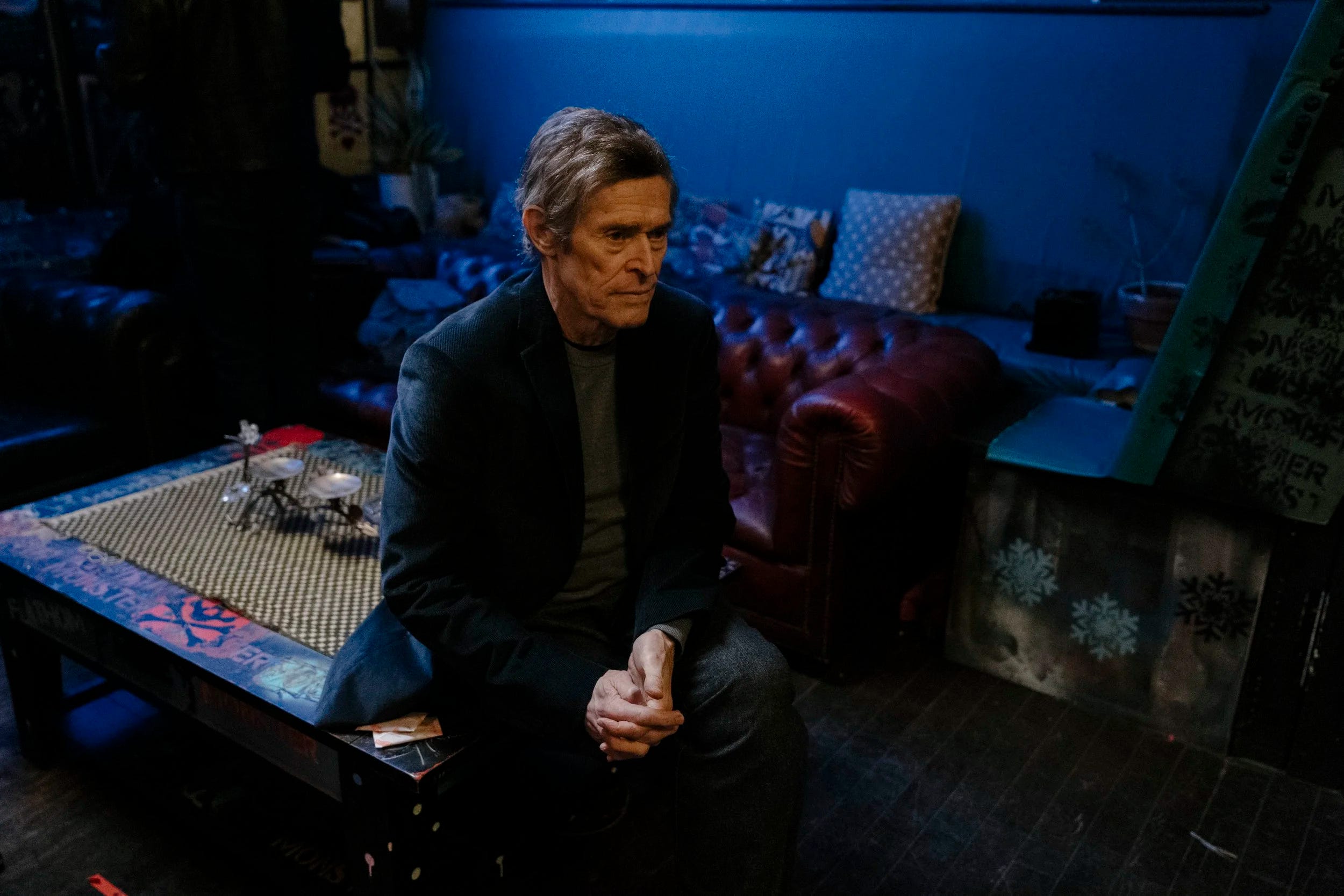
Let’s talk about these lead performances. There is such a wonderful ensemble in LATE FAME, but Willem Dafoe and Greta Lee turn in particularly strong turns. Willem’s performance as Saxberger is all about subtext and subtlety, while Greta’s performance as Gloria is the polar opposite of that. When you’re writing a character like Gloria, when do you know enough is enough on the page? And then with a character like Saxberger, how do you assure that he’s not reading as too passive or too reserved and popping the way you want him to?
Well, luckily Willem Dafoe can do anything, so I never personally worried about it. All those moments that we’re sort of sitting in on the page with Saxberger are all very purposeful — some of my favorite scenes are very short moments in the script of like, Saxberger putting his keys on the table in his apartment. They’re just very, very quiet and structured — you can start to tell he’s built these walls around his life over many decades. And I always try to think of it in terms of looking for clues about how he got here — we’re introduced to this man who was part of a very electric scene, someone who was an extroverted and feisty poet in the 1970s, so how did we get HERE? Obviously, some of those things are open to interpretation, but those little crumbs of it are, I think, enough to sustain.
And then Greta is just SO fun and so bold in the movie. That character exists in the book, but there’s less of her; some of those great lines are right there in the book though. She reminded me of some people I had seen in New York — there are these people who are sort of performing their own life, and the references are not subtle. There’s some Liza Minnelli in CABARET, a little Marlene Dietrich…all these amazing characters that are a joy for her to portray. Is there ever enough? I don’t know. [laughs]
Samy, what an incredible first few screenplays you have written coming right out of the gate: MAY DECEMBER which was on the 2020 Black List and debuted to much acclaim, and now LATE FAME and COYOTE VS. ACME, which are both coming out in August. I have noticed that you’re interested in telling multi-generational stories, which touch an older audience and a younger audience and explore subject matter that is relevant to both of them. I’m wondering if there’s more of that kind of storytelling on the horizon for you? What else are you excited to get into from here?
COYOTE VS. ACME was such a surprise because prior to that, I had not written ANYTHING that is appropriate for children, even in the decade prior to writing MAY DECEMBER. It was such a gift to get hired to do that, and such a fun thing to be able to do for a lot of reasons, but one of them is that I got to prove to myself that there isn’t a wall there — I’m still finding where those creative walls might be. It was exciting to be challenged by that. At this moment, I don’t have anything else for kids, but I am open — there are so many great movies that span all ages of audience. I’m working on some new things that are in the beginning stages and not trying to limit myself to just one area.
That’s particularly useful advice for an audience of writers! We are always encouraging writers in our orbit to diversify their portfolio and to have a lot of different creative irons in the fire at any one time…
It’s so important to have all the tools you can in the toolbox. If they’re just starting out, I think they’ll find that a lot of the tools are the same if they’re coming from a place of not being cynical and and not just trying to sell something. If you’re coming from a place of purity, which is what I try to do with everything, it’s always going to come down to character and voice and a tone you like being in. Those things transcend a lot of different areas for writers.
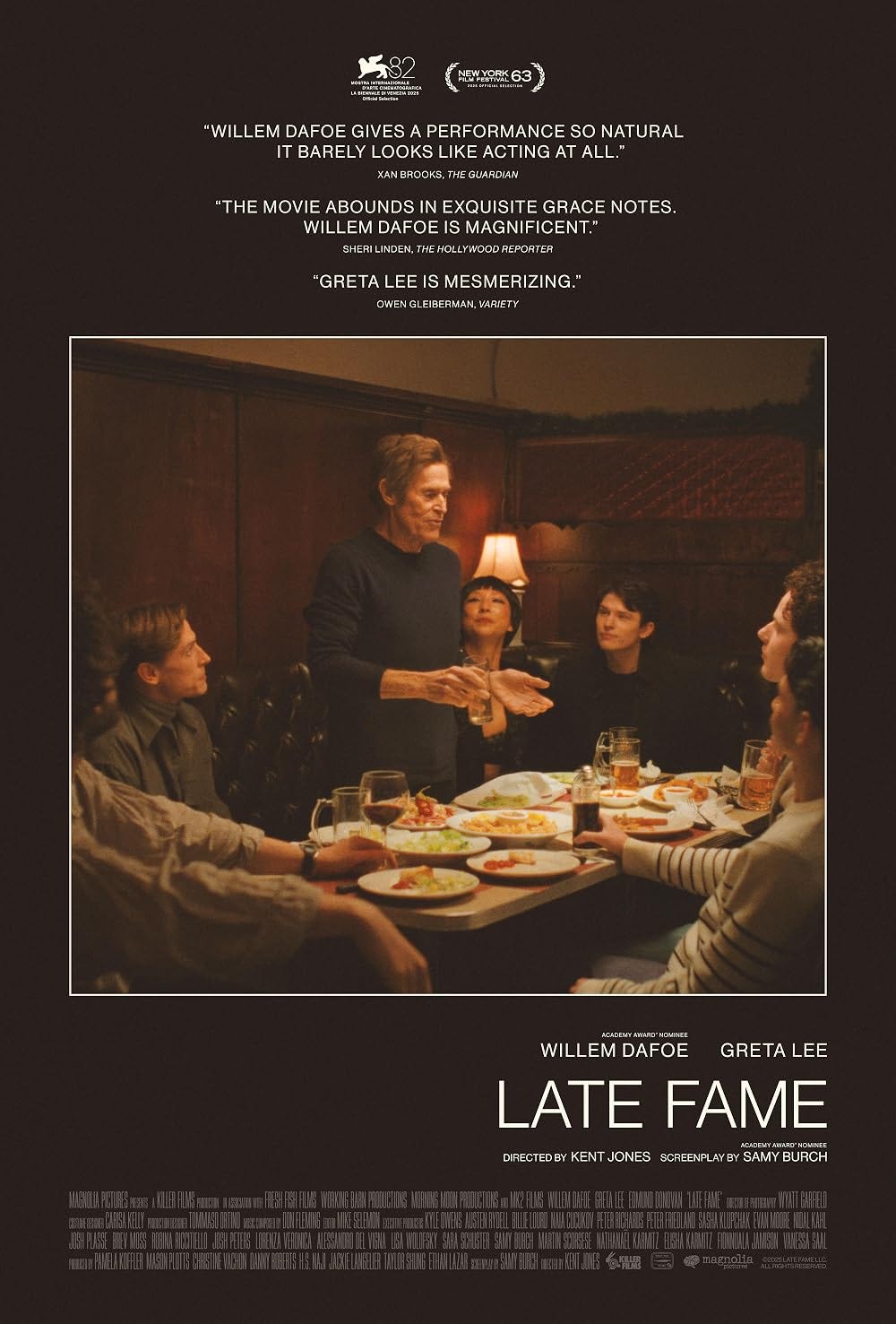
LATE FAME arrives in theaters today. Cheers to Samy and the entire cast and crew!
This interview has been edited and condensed for clarity.
If you’re not already a member of the Black List website, here you go:
Writers: Create a free Writer Profile and whenever you’re ready (and only then) upload your project, order professional feedback, and explore the various opportunities we have from time to time.
Industry Professionals Register for an Industry Membership to discover new material before everyone else.
Comments
Nothing yet. Say the first thing.
Sign in to join the conversation.