
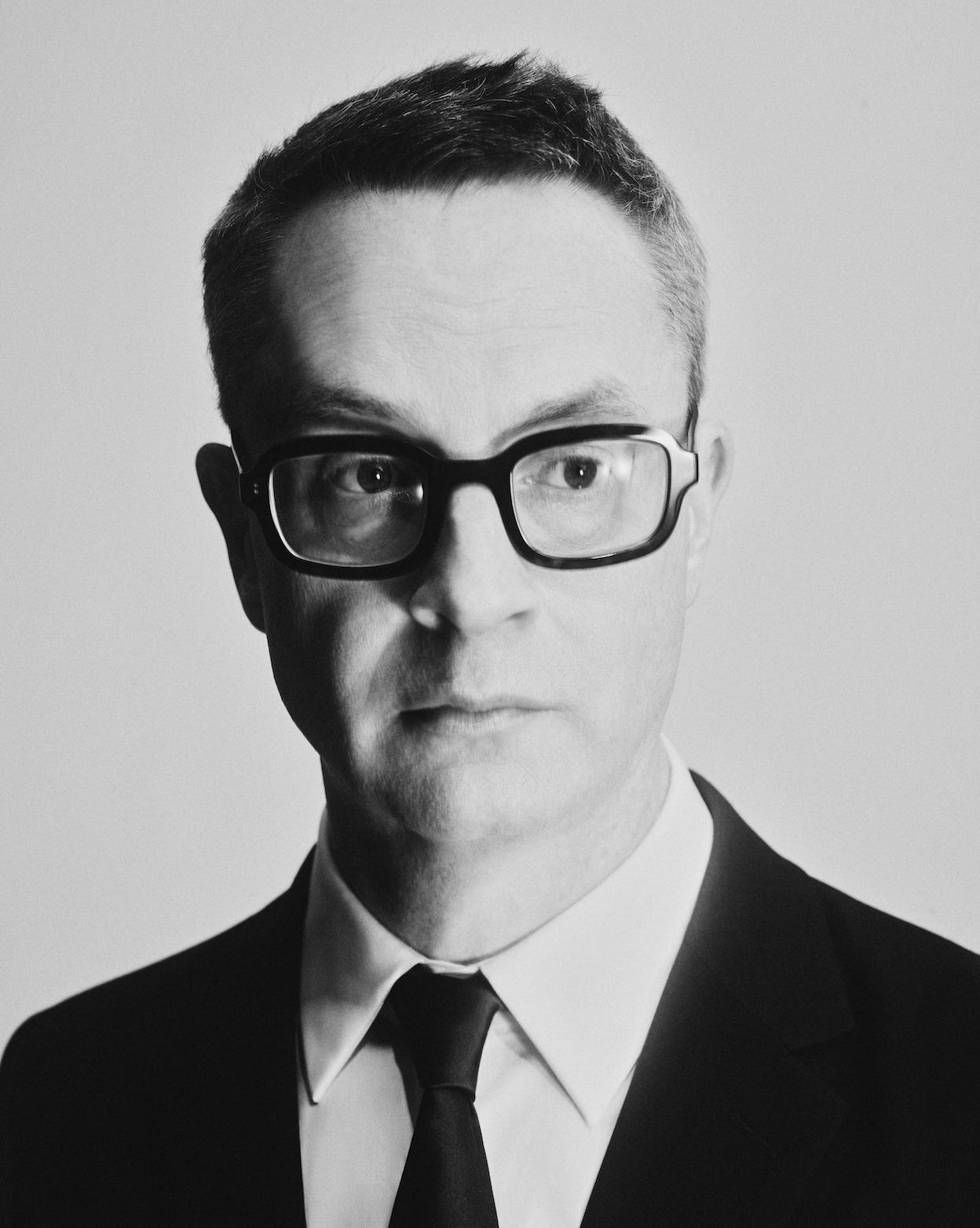
Like DRIVE, I was completely captivated by the opening sequence of HER PRIVATE HELL – we’re pulled into a surreal and fascinating world in those first few minutes of sound and image. I know you typically like to shoot your films chronologically, but do you usually start with those opening images when you’re writing a script too? Or does it feel different every time, depending on the project?
Well, the chronology…that’s just rule number one. That will never go away. But then it’s project to project. [HER PRIVATE HELL] started with Elle (Sophie Thatcher) walking in the mist.
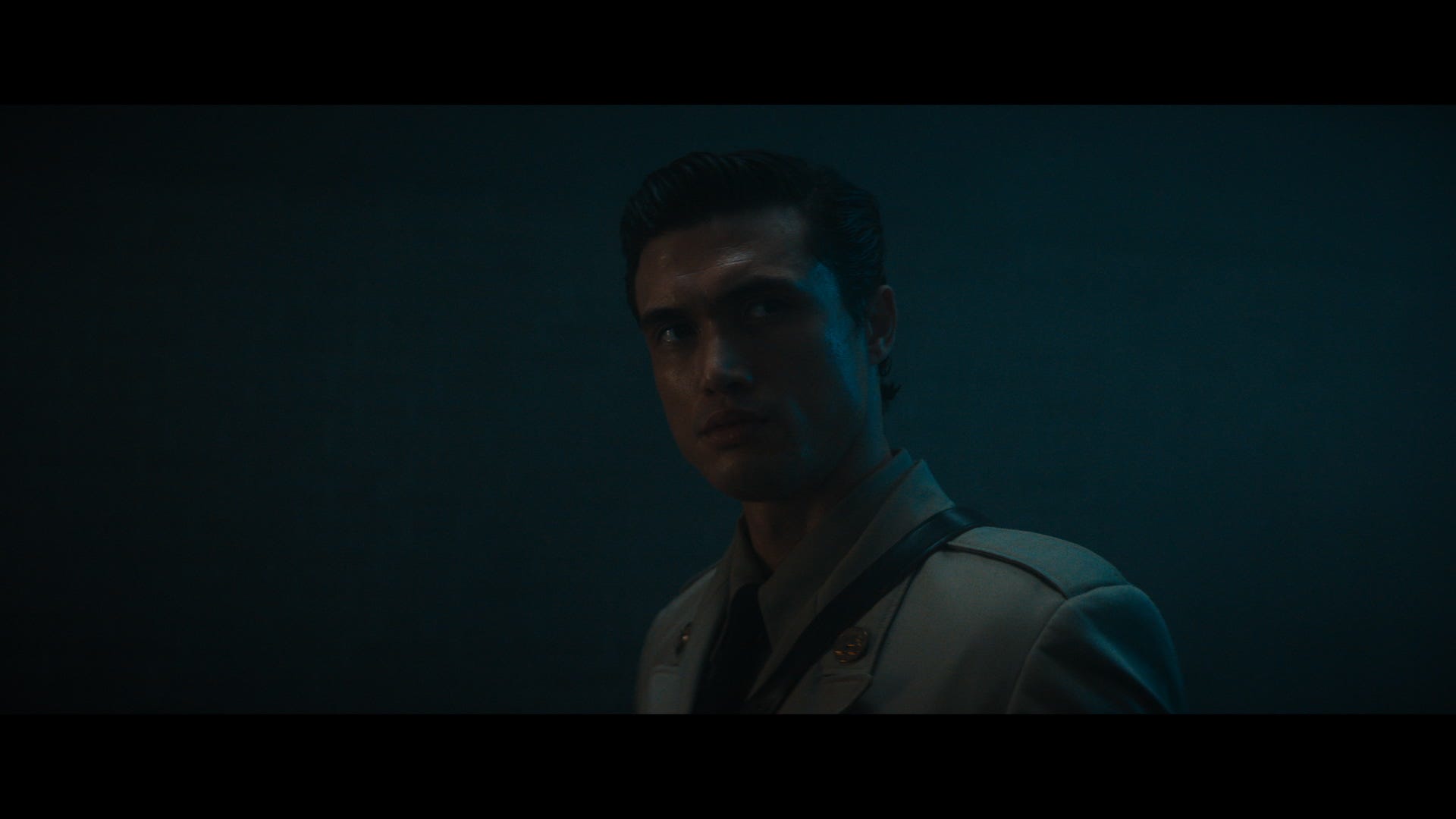
There are so many incredible images in this movie, which is true of all of your films. I was particularly struck by a few moments of Sophie Thatcher looking very much like a Gothic heroine who is sort of haunting this high-rise in a white nightgown and a leather jacket while carrying a golden hatchet. How did you work with Sophie to create the character of Elle, who has this terrific presence onscreen? She has such a magnetic pull at the center of the frame.
Well, Sophie has something very unique, which is a gift that god gave her. So I take no credit for that. But I can utilize it and take advantage of it because she is so magnetic. We spent a lot of time talking about what does “her private hell” essentially mean to her, because part of the film is a young woman who is stuck in purgatory; she is in her private hell, and she’ll never get out of it. It’s all like a fairy tale, you know? So a lot of it was about timing and movement and obviously with the dialogue scenes, it was very specific. I played a lot of music for her constantly — there was always music around her because I could see how she would soak up the various emotions.
I did some experiments where I would play different kinds of music and then make the scenes. And I could see how she would switch naturally because the music would give her other emotions. So sometimes, for example, if you’re playing scared, I would play something completely different, but I would get the same reaction, but in a different way. Because everything was [shot] in order, we could just paint the film every day. So it was like almost asking her when she came to set “What would you like to do today?“
Did you guys work on those playlists together? Or was that just music you presented to her?
It was mostly like, “I’m in charge of the playlist.” [laughs]
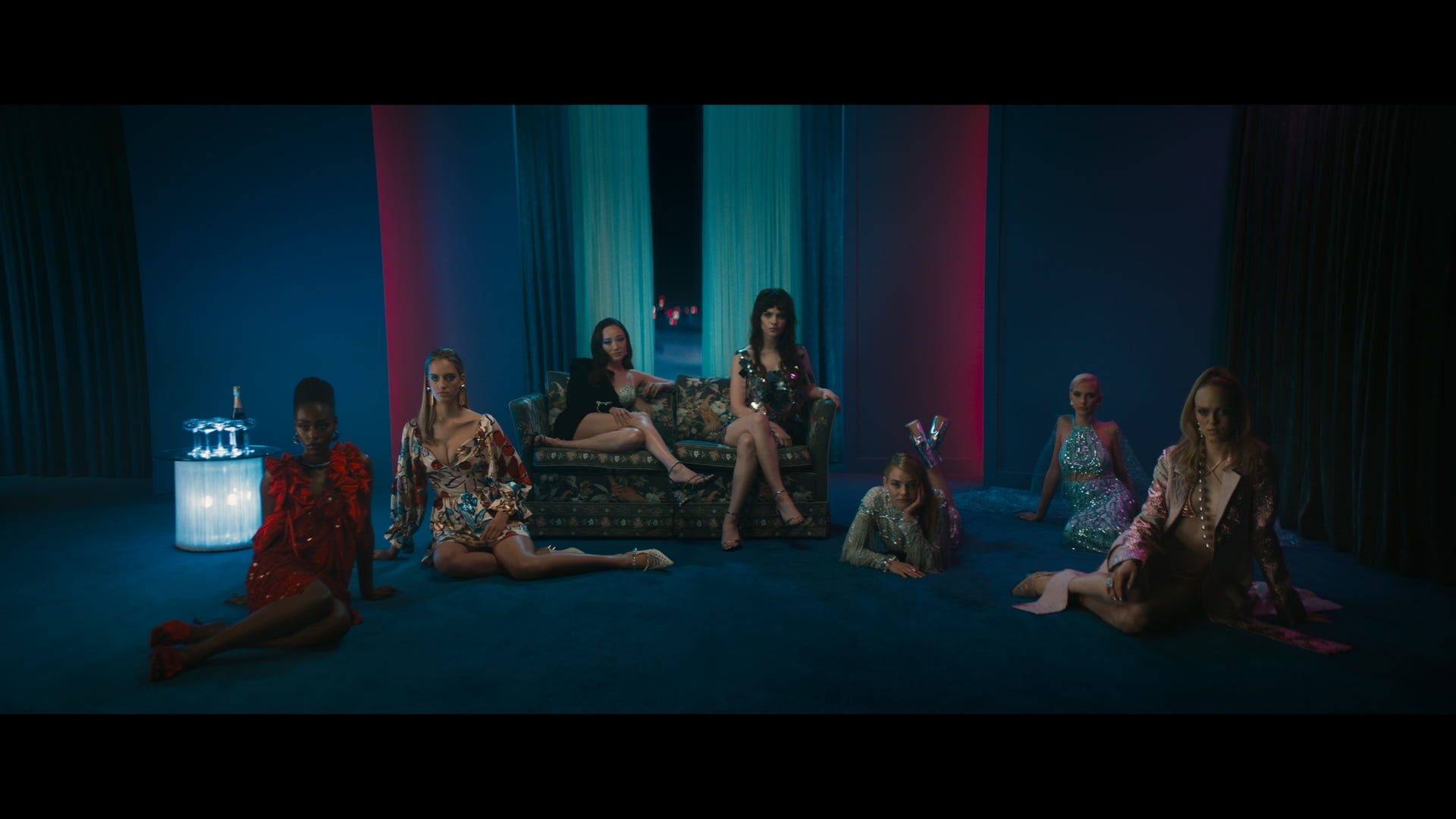
I have to ask about the absolutely beautiful score for this film by the legendary Pino Donaggio – it is, in my opinion, one of his very best. Since he has only made a very limited amount of music in the later years of his life, I’m wondering how he came onto this project and what your collaboration was like in building this gorgeous score for the film?
It was the first time that I was making anything that I didn’t have [the soundtrack] in mind — I was blank. Even though we had a lot of music on set and inspiration in development, I just didn’t know what this film would sound like. But then it became apparent that everything was becoming very operatic. The whole film was built on a stage, which I’d never done before, so it was completely artificial. The thematics were very grandiose…Elle’s story was about a young woman whose father (Dougray Scott) is leaving her as he marries her lover (Havana Rose Liu) who becomes her stepmom. She imagines Private K (Charles Melton) as the ultimate father, which is, you know, a dadsploitation fetish. Those are all very operatic ideas in nature, so I said, “Okay, I’m gonna make an opera now.” But I needed a composer that knew film music and opera. So where do you go? You go to Italy.
All the composers from a certain period that we would consider in terms of film music iconography…they’re all dead. Except Pino, who is in his late 80s, and the reason why he wasn’t dead was that he was the youngest of the one of them — he started very, very young because he was a pop star. He was kind of in retirement, and I asked him if he would come out of retirement to score the film, and then he said sure. It was very easy.
And I said to him, “Listen…you know, you’re about to die soon, so this is gonna be your requiem. You’ve got to fold out every wing that you have.” And he laughed, then he said: “You know, I started my career with scoring Nicolas Roeg’s films, so I’ll die scoring Nicolas Refn movies.“ And we both laughed at that, and now we had a companionship between us. So I said to him: “Listen Pino, just so you know, you’re gonna be the one tying the movie together. I’m basically betting on you tying the whole entire movie up in a bow with a lot of glitter. I have gone into the casino and bet on black with one chip — and it’s you.”
It’s an incredible score, I hope you both can be very proud of it. Do you have a favorite Donaggio score?
There’s a piece of his work that I’ve used over the last twenty years as source music, which is his theme from the shower scene in CARRIE. That to me is genius — it’s Mozart.
You collaborated with Esti Giodani on the screenplay for this film, who has worked primarily in television. You’re also coming off of two television series, COPENHAGEN COWBOY and TOO OLD TO DIE YOUNG. How did collaborating with Esti and your own time working in television help expand your palette as a filmmaker coming into HER PRIVATE HELL?
Well, Esti had worked for me on a show at HBO and I really liked working with her, she was one of my favorite writers. And so once I kind of had these two ideas for a movie, I wanted to use her expertise in crafting a form of narrative between everything. She was very instrumental and a great pleasure to work with — I very much enjoyed her collaboration.
This script reminded me a bit of THE NEON DEMON, which has somehow turned ten this year, and I was thinking about your collaboration with Polly Stenham and Mary Laws for that project. I’m curious to know more about how collaborating with other writers allows you to shape what you ultimately do on set?
I think that what’s great about any collaboration — whether it’s your cameraman or your editor or your designer or your writers — is that they’re there to help you achieve the best. With NEON DEMON, both Polly and Mary were theater writers — they came from writing plays, and theatrical narratives and dialogue for the theater, which the film needed. With HER PRIVATE HELL, I was interested in an almost anthology-like experience of what television can offer when it comes to narrative. But at the same time, I was interested in many things. So HER PRIVATE HELL had to accumulate all kinds of genres.
Esti was very good at helping to craft that kind of red thread throughout — because I had two ideas. One was Private K going to hell, and I had another idea of a young woman coming to a city that doesn’t exist. But to create some form of movement between these two very oppositional ideas, they needed a third idea, like a triangle. I had this Leatherman in my archive, which was like my glam monster. [laughs] Suddenly, there was now something to build from. And then I have daughters, so fathers and daughters became the theme of the film.
I wanted to ask about that in particular — I know your daughters are getting older, I’ve seen the documentary where they’re a bit younger. As they’re growing up and experiencing your films and you’re starting to have really in-depth conversations about the art that you’re making, how has that changed your work as a filmmaker, if it has changed it? And what does it feel like to bring in some of those dynamics from your own life into your films?
It’s a family affair. I’m very self-absorbed when I work, you know, but my family’s everything, so they become part of the cocoon — we live in a glass bubble. Lola, who’s my oldest, is free from school and she has been collaborating with me more and more on things, both in front of and behind the camera. And Lizzielou, who’s my youngest, is still in school — she’s my gasoline. I’m very attached to them both as a parent, of course, but also as inspiration, because my kids are everything to me. It’s the only thing I’ll die for.
I think you really feel that in this film too. Your work gets into so many mythic and primal themes, and so much of HER PRIVATE HELL is fundamentally a story about a daughter looking for her absent father and a father looking for his lost daughter. I was incredibly moved by the ending of the film, and I know I’m not the only person who feels that way — I also found it to be, in its own way, a hopeful ending. I’m wondering where you’re finding the hope these days, in such cynical, dark times?
I think that’s what’s great about fairy tales. To explain the theory of a fairy tale... most entertainment is like a piece of paper [Refn holds up a flat piece of paper.] It has lines of information, it has codes that give you information and that is usually through verbal language. Fairy tales on the surface, are as thin as this piece of paper. It’s so primal, to your point, that you can explain it in ten seconds. And it will always be revisited because primal narrative is just forever — it’s all archetypes, really. But if you then turn the fairy tale around [Refn inverts the piece of paper] you suddenly have many layers of what this very simple little thread can mean. Then, it becomes further down…[open to] interpretation, and that is when it becomes an experience. And that is the format that I was interested in, because I think that in today’s world we’re so bombarded with artificial, pre-coded narratives and experiences that are pre-manufactured, the idea of anything being dangerous is sanitized. So it takes the meaning of the experience and completely demolishes it — it just consumes your time.
And having been dead and come back, time is...it’s the only thing you have, and you’ll never get it back. So I think out of pure respect for humanity, you need to give them an experience, to justify their time that they give you. You need to delve into their minds and plant a seed. Whether you like it or not…it’s irrelevant. But do you react to it? And when you react, you create an emotion. An emotion is a thought. A thought is interaction. Interaction leads to humanity. But being hopeful in fairy tales…that’s almost always the ending, because it makes you want to revisit it again and again and again and again, they always live happily ever after, on the surface. The question is all the other layers that come afterwards.
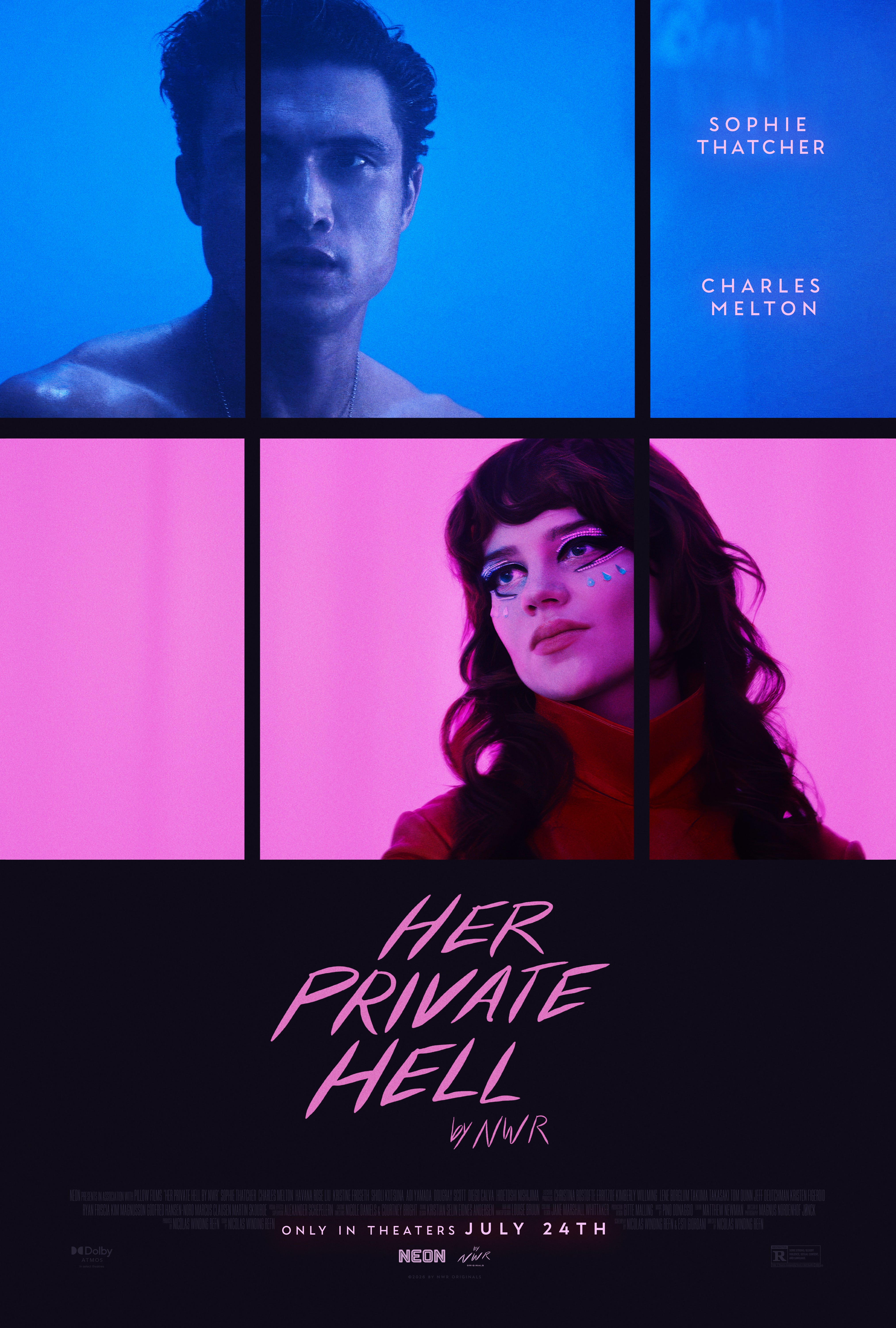
HER PRIVATE HELL arrives in theaters today — cheers to Nicolas and the entire cast and crew!
This interview has been edited and condensed for clarity.
If you’re not already a member of the Black List website, here you go:
Writers: Create a free Writer Profile and whenever you’re ready (and only then) upload your project, order professional feedback, and explore the various opportunities we have from time to time.
Industry Professionals Register for an Industry Membership to discover new material before everyone else.
No posts
Comments
Nothing yet. Say the first thing.
Sign in to join the conversation.