
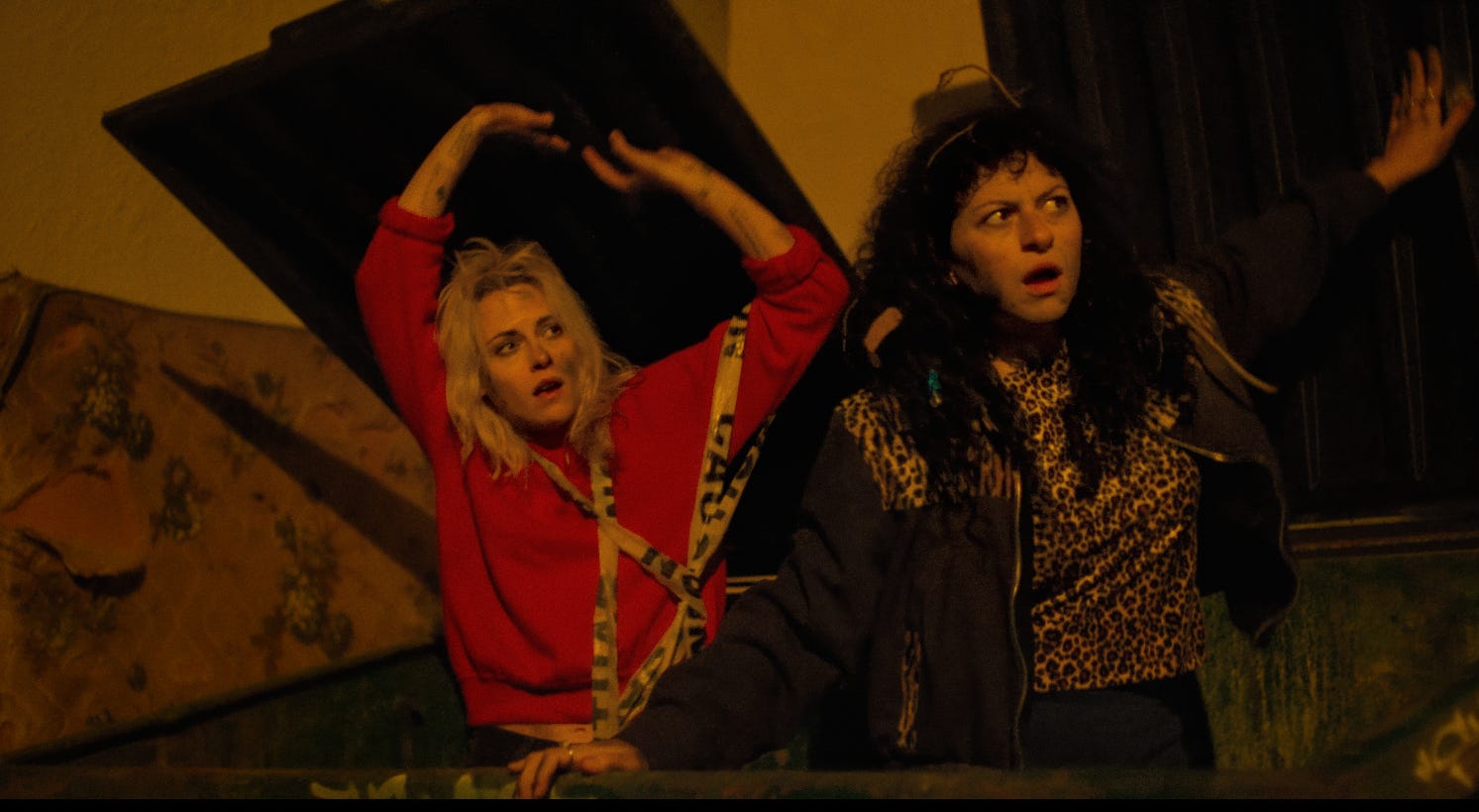
THE WRONG GIRLS immediately joins the canon of great Los Angeles stoner noir films, and like the best films in that genre – INHERENT VICE, THE BIG LEBOWSKI, THE LONG GOODBYE – it’s also quite cerebral and emotionally complex at times. When you’re writing, how do you toe the line of “This is a really silly stoner comedy that I want people to enjoy with some herbal refreshments” and “I want this to be a totally compelling mystery for the audience”?
I was playing a bit of a game of keep-away with the actual plot of the movie — for me, the plot of the movie is “Will Molly move in with Josh?” That question creates the real stakes of the movie for me, and that’s the part that needs to be really real, along with the connection between the two girls. There’s nothing really fanciful or exaggerated about that dynamic. Once you’ve given yourself that permission, you can kind of use the rest of the script lift up and accentuate that important emotional plot line.
And I think less is more — we’ve moved into a moment where people explain a lot in movies, and I was really committed to not explaining very much. Because this movie is really, really, really made up, and you’re asking someone to give their time to something that you made up and asking them to invest in it, and because you have a limited amount of real estate in the movie, you have to ask “How do I make the emotional reality of this the most compelling it can be?” while also constantly sort of alluding to the plot going on with these Danish bad guys and Kate McKinnon.
I think THE WRONG GIRLS might be a true “first of its kind” movie when it comes to dirtbag stoner noir with female leads, especially since most of the films that we’ve seen before in that genre are focused on men. How do you manage that pressure and those expectations around being the first in this particular category of film while also just writing the movie you ultimately wanted to write?
It took me fourteen years to get here — this is actually one of the first scripts I ever wrote, and I think that part of the reason it took so long to get here (along with a combination of other reasons, obviously) is that THE WRONG GIRLS is the first of its kind. Any time you want to do something that’s the first of its kind, no one knows what you’re doing or knows how to believe in it from a monetary standpoint. So I was up against that level of the unknown, but that also helped feed my belief that this movie truly deserved to be here.
We often culturally stigmatize women behaving badly in a way that we don’t with men, so I’m also up against that. And weed movies…you know, I’m from California, but they don’t have the same relationship to weed all over the world they have here, so it’s actually kinda tough to get a weed movie through this system. And once you add girls on top of that in an increasingly risk-averse, four-quadrant oriented system…[laughs] THE WRONG GIRLS is a cross-genre movie, a movie that is many things at once, and all those things were barriers to entry, but it also made me really believe that it deserved to be here.
I’m so relieved that we got away with making it at all. It feels like such a gift to have been allowed to do it, and when I watch it, it brings me immense joy in a way that if it wasn’t it a movie that I made, it would be my favorite movie — and that’s the only standard by which I can really evaluate it, you know? As the first of its kind, I hope it’s a great ambassador for a lot of different things. I hope it’s an ambassador for original storytelling and for allowing women to be funny and messy. There’s all kinds of things that I hope it makes a case for, but as just one film from one filmmaker, I can only have the individual relationship with it that I have — and that is one like with my firstborn child that I love more than I’ve ever loved anything in my life.
A certain singalong towards the end of the movie had me very close to tears because it evoked those kindred spirit female friendships that are truly one-of-a-kind. This movie has a really beautiful love story between Frankie (Kristen Stewart) and Molly (Alia Shawkat) as friends, but also as something deeper than friends. In creating the characters of both Frankie and Molly and casting Kristen and Alia, how did you build chemistry that feels eternal and lived in – it’s so close to the bone for so many of us who can say, “I had that friend. We’ve been in these spaces before, and somehow, we found our way out — together.”
I wrote this movie about my best friend Maggie McLean, who is now my producing partner, which is the coolest thing that has ever happened to me. Getting to make this movie with Maggie was a dream beyond dreams. I wrote something that felt really true to both our relationship and to all of the other women that have really picked me up and hauled me around over the course of the years. The buddy comedy genre has belonged almost exclusively to men because women’s friendships are pillars of their stability in a very different way than men’s friendships are.
And with casting Kristen and Alia…we are all from California, so that’s definitely a part of the texture that’s in there. Kristen and Alia have been drifting around each other in both life and art for a really long time, so there is this innate sense as you watch them of like, “Oh, these people probably knew each other even before we even made this movie.” Kristen was obviously the first piece of casting for me, so then I was working backwards from that. I knew I needed somebody whose regional dialect felt appropriate for this movie; it’s not set in some random place, it’s a townie LA movie and I needed somebody who felt really organic to this place, this time and this relationship.
Alia brings so much to the performance of Molly, even beyond what was written. [Frankie and Molly] naturally have a dynamic that feels very tactile and very believable even though it wasn’t firmly established before the movie. It was really about building something with everyone that felt very organic to the circumstances. It’s really clear that the dynamic they have built in the movie and outside of the movie isn’t driven by four-quadrant marketing and who is, you know, going to get us the biggest quote-unquote launch for the film. The casting just feels really genuine to these characters and who actually needed to play them.
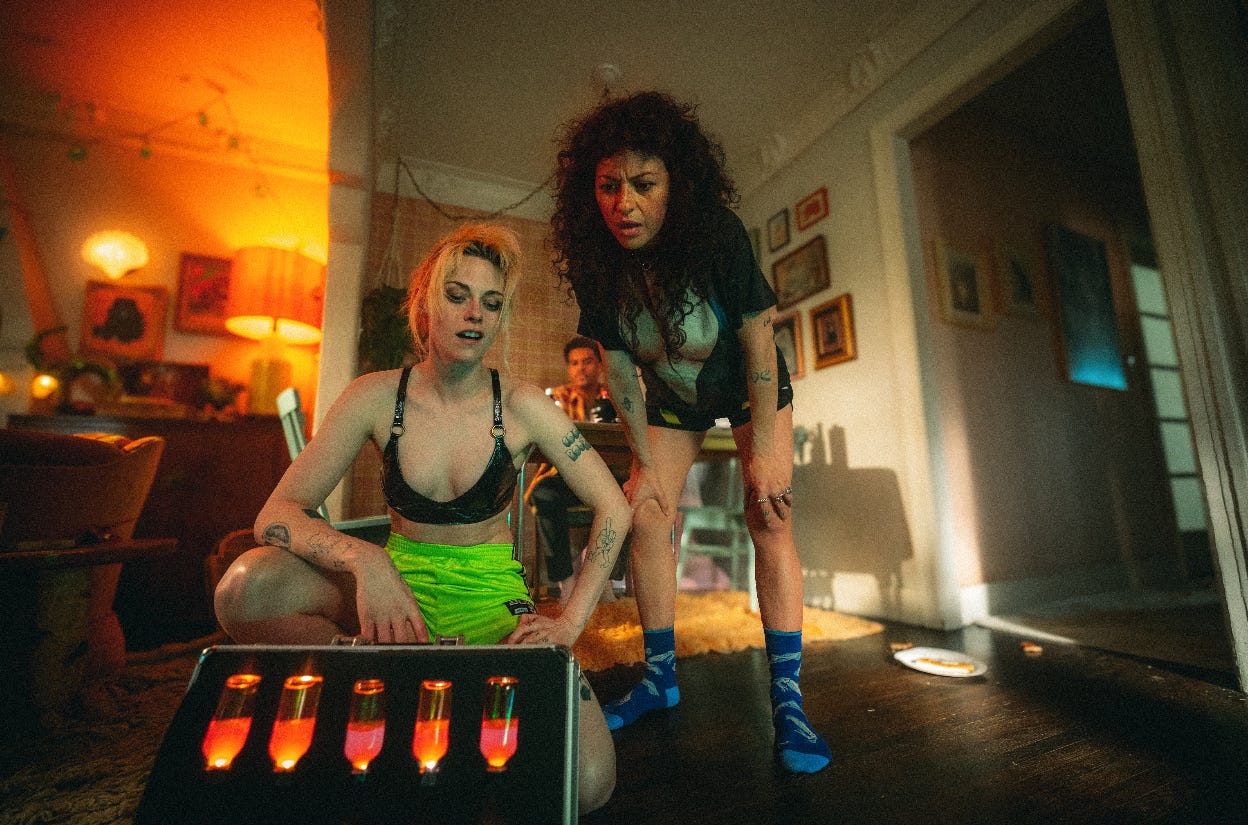
You’ve been doing some producing work in addition to writing and directing. What are some of the lessons you’ve taken from your time as a producer that have helped you in the director’s chair?
You know, I actually try not to think like a producer at all in the director’s chair. As a producer, I prioritize the health of the movie above all things, but that’s also what I do as a director, so in that sense, they’re the same.
But I try not to think about what things cost or how difficult they’re going to be, and was sort of like “Maggie, here you go. This is all your responsibility now. Only tell me things I need to know.” I’m actually pretty afraid of producers as a director — you see them huddling all together and talking and you’re like, “What are they talking about? What’s happened? Did we lose a location? Is an actor not coming?“
I try pretty hard not to think like that, but the part of producing that is really helpful is the part of you that’s a problem-solver, which is also a huge part of being a director. I try not to worry about the “adult business” when directing and mostly just focus on “Did we get this scene? Does this feel right?” and try to shut off the logistical parts of my brain because they’re not your problem; they’re someone else’s problem.
THE WRONG GIRLS has such a unique and specific visual and sonic aesthetic — it’s a very clear statement as your feature directing debut. How did you work with your cinematographer Todd Banhazl, your production designer Katie Hickman and your composter Ty Segall to create this totally cohesive and singular world for the film?
I think it’s kind of the same thing I was just saying about Alia, about making really specific choices in the people that you choose to surround yourself with. I chose people who responded ecstatically to the script because I knew that they really understood it, you know? That’s who you’re seeking — it’s almost like looking for romantic partners, sort of the idea of “Do you like me as much as I like you?” It needs to be both, because otherwise, you’re in a weird situation.
Todd and I were circling each other for many years — he was always the person I wanted to shoot THE WRONG GIRLS. Part of that was based on the initial conversation I had with him after he read it, at least three or four years ago, where he was like, “I’m a skater art freak from the Inland Empire, I absolutely loved your script. I had a blast.“ And I knew he really understood me when I talked about the references I wanted to explore like REPO MAN — there is dirtbag Californian under Todd’s fingernails, along with ‘90s lo-fi, joy-filled comedies that were also art.
I had a lot of conversations with Todd about how I think comedies can and should be art, and how they’re often not treated as aesthetic vehicles, which I think is a mistake. I really wanted to make something where the aesthetics bolstered the comedy, instead of this belief that they detract from it. I was like “I want to make REPO MAN and I want it to be funny, but I also want it to be like DICK and ROMY AND MICHELLE’S HIGH SCHOOL REUNION.” I was pulling from a range of highbrow and lowbrow references in tandem — I’m talking about the Polish movie DAISIES in the same breath that I’m talking about BEAVIS AND BUTTHEAD DO AMERICA and WAYNE’S WORLD.
Every single one of those films had purchase in Todd’s body, and when we were crafting the movie, I really wanted something that felt as DIY and handmade as everything in the girls’ lives — especially because I hate how slick and perfect we’ve gone culturally. This is a movie about people who don’t have a lot of resources but have a lot of creativity, and that was a very important philosophical approach for me.
And it was the same thing with Katie — when I first started speaking to Katie and showing her pictures of my former home that we were kind of recreating, I knew it was going to work. There was like this incredible three-way back and forth between us in making sure that the color palette Todd and I were talking about was also winding up in our production design, but not in a way that it was so stylized that it didn’t feel believable to the reality of these girls either.
And Ty Segall is one of my favorite rockers of all-time, I’m just a huge fan. We were peripherally in similar communities but not friends, and working with him was my dream. I knew exactly what I wanted the sound of this movie to be because I always wanted to be in a movie soundtracked by Ty Segall. When I drive around and listen to him, his music has a certain fuzzy, sunny Southern California quality that was exactly right for this movie. And I knew I wanted a guitar score because this is a punk movie in its bones, and I wanted that versus a full needle-drop soundtrack, which didn’t feel right.
Working with Ty was one of the most fun things I’ve ever done in my life — he’s just the nicest, most open genius. Getting your favorite rocker to write custom rock songs for your stupid squid movie that you made about you and your best friend is just the most special, gleeful thing I’ve ever done.
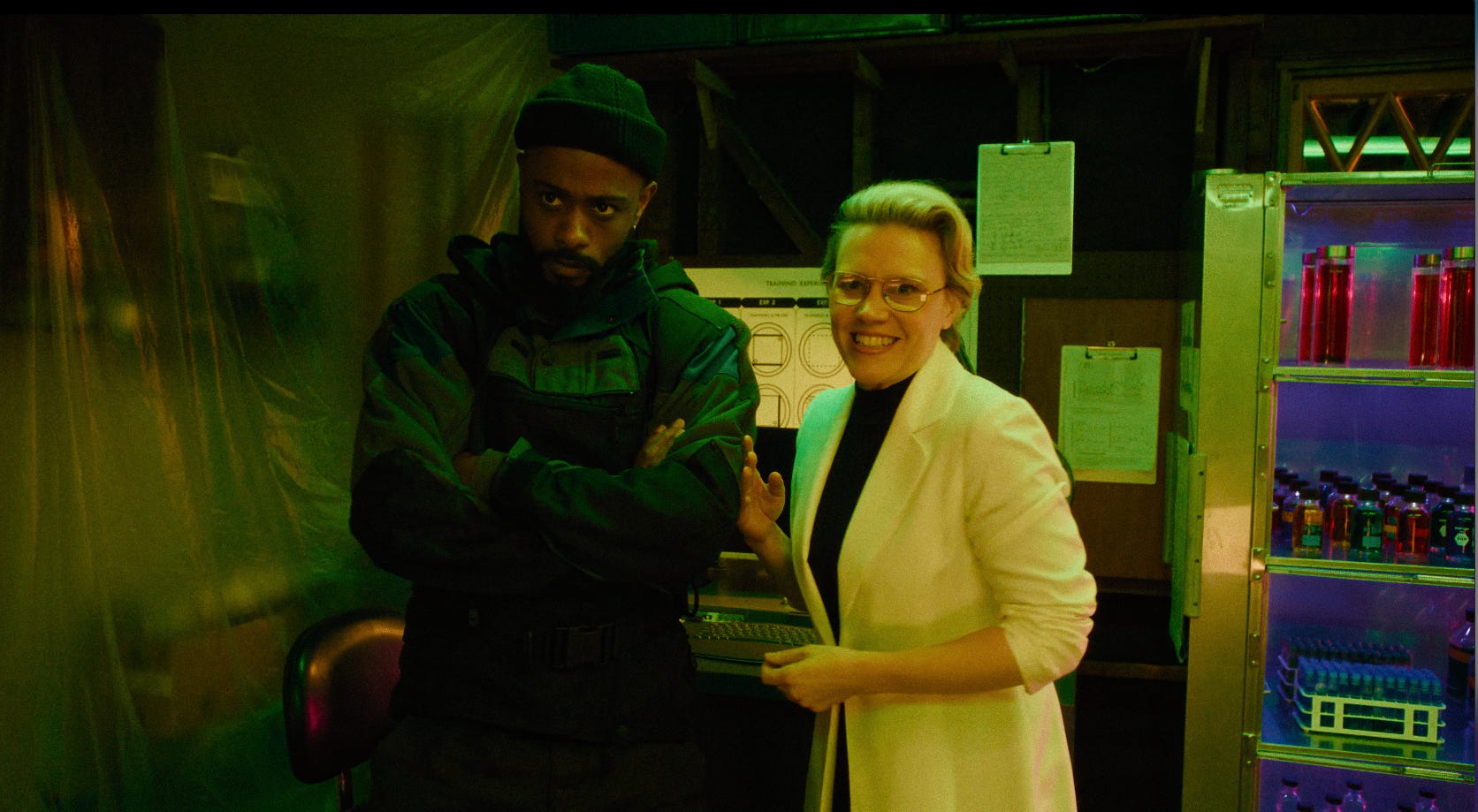
You’ve been working on THE WRONG GIRLS for fourteen years. We work with a lot of emerging filmmakers at The Black List – and it can be really, really hard to keep hope alive as projects get put together, then fall apart and get put back together again. How did you personally keep the faith throughout this very long production process?
A lot of movies have come and gone for me in the time that THE WRONG GIRLS has stayed in my heart as the project that I needed to be the first film that I directed. I’ve been a working screenwriter for almost 15 years now and I’ve loved a lot of scripts that I’ve worked on, but there was something about this being the calling card for my own taste and my own sense of personal expression that felt really vital to me. I don’t know that I would have committed to a lot of those other projects over the course of fourteen years. But I think that’s a good thing — it was a movie that was so in my body and really needed to come out. If you really listen to yourself in those ways and you’re asking yourself “What do I need to do versus what can I do?“ then it helps tell you what is worth sticking with over the course of a long period of time versus like some things that you’re like, “You know, that was then, this is now. I loved that project at that moment, but it wasn’t an essential necessity for me.” You really have to listen to the inner voice that tells you what the essential necessities are versus the things that are inspirational for a moment, but maybe not quite as urgent.
THE WRONG GIRLS is a really great California movie, but it’s an even better Los Angeles movie, with tons of in-jokes and references for locals that are delightful to behold. You grew up here and you have a really keen sense of what makes the city tick, but obviously, it’s been a rough couple of years for LA. I’m going to ask you the same question I recently asked Gregg Araki, another local filmmaker who loves working here: What’s your favorite thing about getting to make movies in Los Angeles?
We were in prep when the fires happened here — our line producer’s house burned down, it was crazy. We were like, the first film back in production in Los Angeles after the fires happened. This poor city…that was such a nightmare.
I don’t think every movie needs to be made here, but I think some of them do — this one did because it was such a memoir about a particular place and how it feels to be in that place. Shooting in LA, you get the best crew in the world — all of the top technicians from everywhere came here and they’re lying fallow waiting for someone to give them something fun to do right now because so many people are out of work. You’re really looking at an unbelievably talented and available workforce and infrastructure here.
Obviously, getting to sleep in my own bed and coming home to my own animals every night was ideal too. But I really think the MVP of all MVPs is just the quality of the film workers and the quality of the crews here…you can’t beat it. And the weather’s good! LA recommends LA and “There’s no place like home.” You would be hard-pressed to find the quality of people here anywhere else.
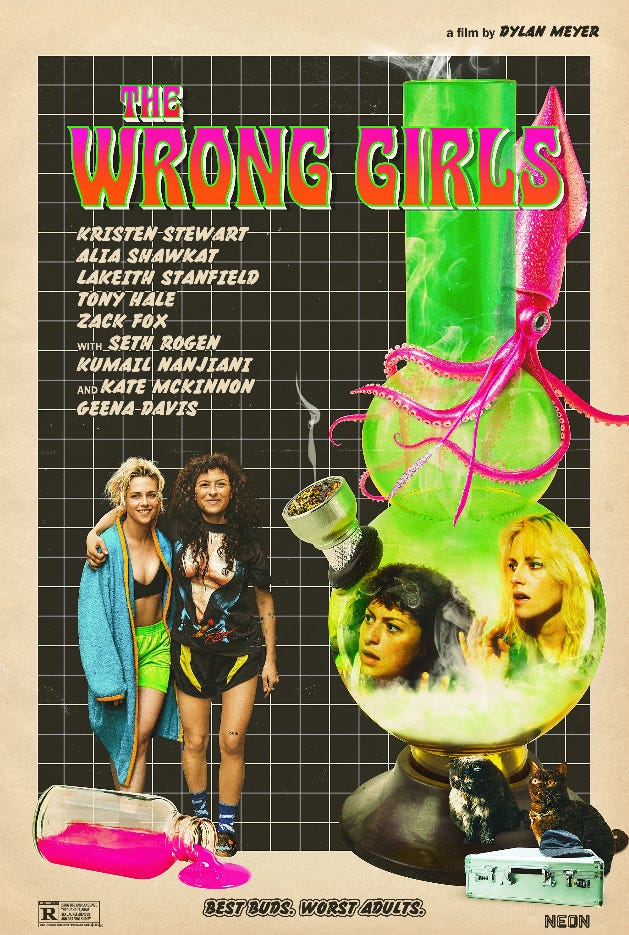
THE WRONG GIRLS arrives in theaters today — cheers to Dylan and the entire cast and crew!
This interview has been edited and condensed for clarity.
If you’re not already a member of the Black List website, here you go:
Writers: Create a free Writer Profile and whenever you’re ready (and only then) upload your project, order professional feedback, and explore the various opportunities we have from time to time.
Industry Professionals Register for an Industry Membership to discover new material before everyone else.
No posts
Comments
Nothing yet. Say the first thing.
Sign in to join the conversation.