
These days it’s difficult to justify even the human energy it takes to think, document, and write about electric vehicles and war for oil policies. With America’s top government and industry leadership solidly behind squelching any ideas of transitioning away from oil-based transportation, it makes me feel like my daughter who once told me she feels like she’s performing in a bowling alley.
Who is listening?
Not many people.
Le't’s be clear. The people who were going to change, are not going to change now.
Because of America’s leadership.
They want to put more drilling in the North Sea. Not more windmills.
All of this is to say that, despite the seemingly extraordinary times, we have seen these changes move back and forth through time.
The goal is always the same.
Earn more money for a small number of people.
The products are different and nobody is dumping tea into Boston Harbor.
The results are different from one President to the next and it should not be surprising to anyone today that we have a leader in charge that focuses heavily on money.
In the 1970s America was at war against a so-called domino effect of Communism they were trying to hold back. Today the domino effect is nuclear warfare and religious war.
In the background we are all thirsting for oil.
When Lyndon Johnson was President, people wanted those chickens in their pots.
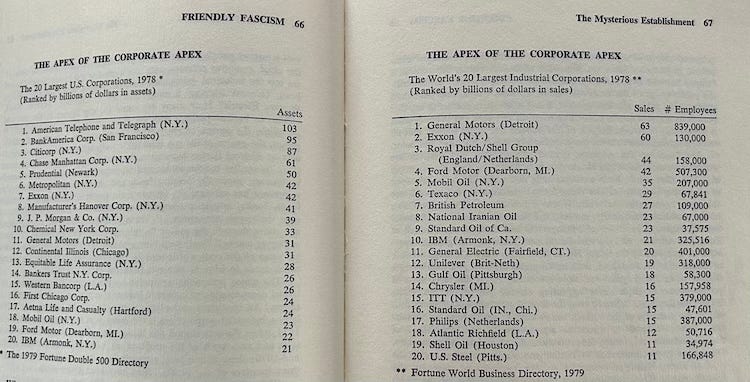
Although President Johnson’s Great Society programs were stunted as money and energy went to the war in Asia, the various initiatives in social security, public assistance, health care, education, housing, job-training, and local uplift were cited by administration spokesman as they begged liberal and minority tolerance of the intervention overseas. Many of these welfare programs, in fact, subsidized banks and other corporations under the banner of providing them with incentives for “doing good” for the poor. Indeed, in most countries of modern capitalism big business makes at least as much money on welfare as from warfare. Hence, there is some logic in using James O’Connor’s term “welfare-warfare state.”
Bertram Gross—Friendly Fascism - The new face of power in America, 1980
Corporate welfare wasn’t a new phenomenon in the 1970s, but it is reasonable to question today whether it was necessary then given the corporate profits happening at the time.
Today, corporate welfare is happening under a new set of rules and a new set of companies and products.
But America, its oil companies, and Iran are all still important playmakers when you talk about profits and war.
I am planning a driving trip to San Diego. The original plan took me through South Lake Tahoe, then south along the eastern side of the Sierra Nevada mountains via Highway 395.
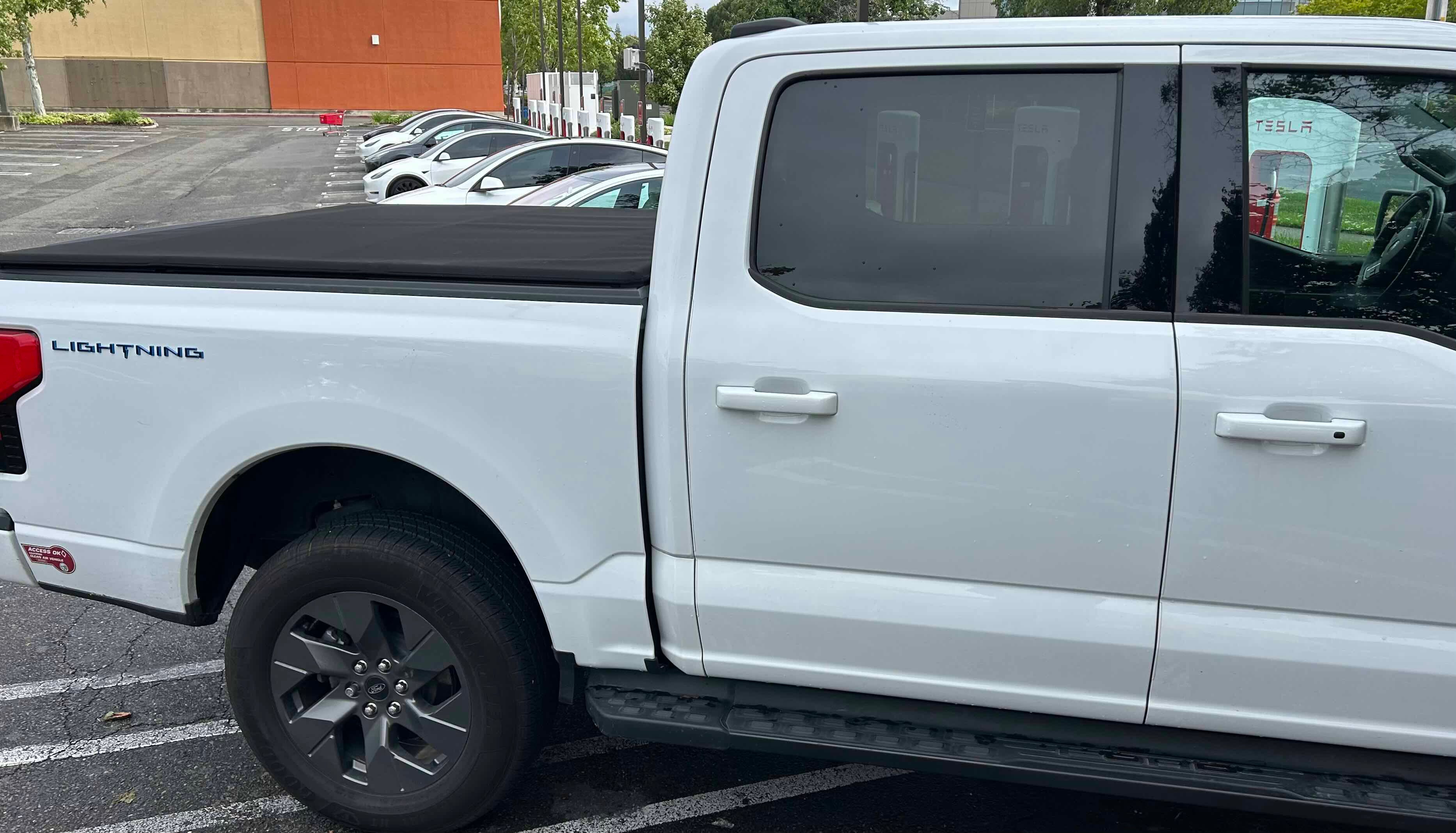
Once you get past Placerville traveling east along Highway 50 into the mountains there aren’t many public electric vehicle chargers. The ones that do exist are very few and far between.
Looking at the map using the Ford vehicle app, and calculating mileage information, my goal was to figure out where there will be public vehicle charging, which company is running it, and how many available ports.
Research quickly showed there weren’t enough of the chargers I typically use to make it to our destinations along the 395 corridor in the middle of nowhere.
I don’t use those “Tesler” chargers because they don’t match my vehicle’s “gas tank.”
It’s like those old problems: Beta vs VHS or, Mac or Windows?
If you have one, you can’t do the other without emulation and translator apps.
In the case of EV charging that mean’s you need to use an adapter if you want to use the “Tesler’” supercharger network to charge your Ford F-150 Lightning.
Three years ago America was on track to build a stronger electric vehicle system that addressed availability and compatibility issues in public electric vehicle charging. America was investing government and corporate money and ideas into a variety of initiatives designed to increase the market for American made electric vehicles.
The key issues in the eyes of America’s leadership at the time were:
1) the affordability of electric vehicles
2) greater availability of public electric vehicle charging
and
3) public electric vehicle chargers compatible with all different models
Compared to what we are paying right now to support a war for oil and internal combustion engines, the Biden-Harris plan for electric vehicles cost America a tiny amount of money.
But the impact of those incentives on buyers of electric vehicles would have been ground breaking.
President Biden’s Bipartisan Infrastructure Law invested about $25 billion into:
flagship programs (that) complement the Inflation Reduction Act’s landmark support for advanced batteries and new and expanded tax credits for purchases of EVs and to support installations of charging infrastructure, as well as dozens of other federal initiatives designed to drive domestic manufacturing and build a national network of EV charging.
FACT SHEET: Biden-Harris Administration Announces New Standards and Major Progress for a Made-in-America National Network of Electric Vehicle Chargers (FEBRUARY 15, 2023)
Three years later, that money would have bought a lot of American made electric vehicles, chargers, and other electric vehicle industry supports.
America’s new government decided to end all of those initiatives the moment they had pen and paper to authorize dismantling it.
Then America went to war to support the oil, gas, and America’s current car manufacturing system.
Then America asked its citizens for $1.5 trillion dollars more for war spending to support current and future needs for oil.
America not only put it’s electric vehicle program on a pile of trash, America proceeded to pick our pockets for $1.5 trillion dollars to support more gasoline powered automobiles in a world that becomes less safe for every bomb we drop.
In February 2022, Plug In America, noted that electric vehicle drivers were not happy with public EV charging in America. They wrote:
“34% of those who used DC fast charging noted that broken chargers were at least a “moderate concern;” the same percentage ranked “charging locations are too far apart.”
This week, things are about the same as it was in 2022 because of the end of United States government programs to support an electric vehicle industry in America.
Because I was planning the trip down Highway 395 I bought a Lectron adapter that allows me to tap into the “Tesler” supercharger network. I needed to test it before the trip to be sure it would work.
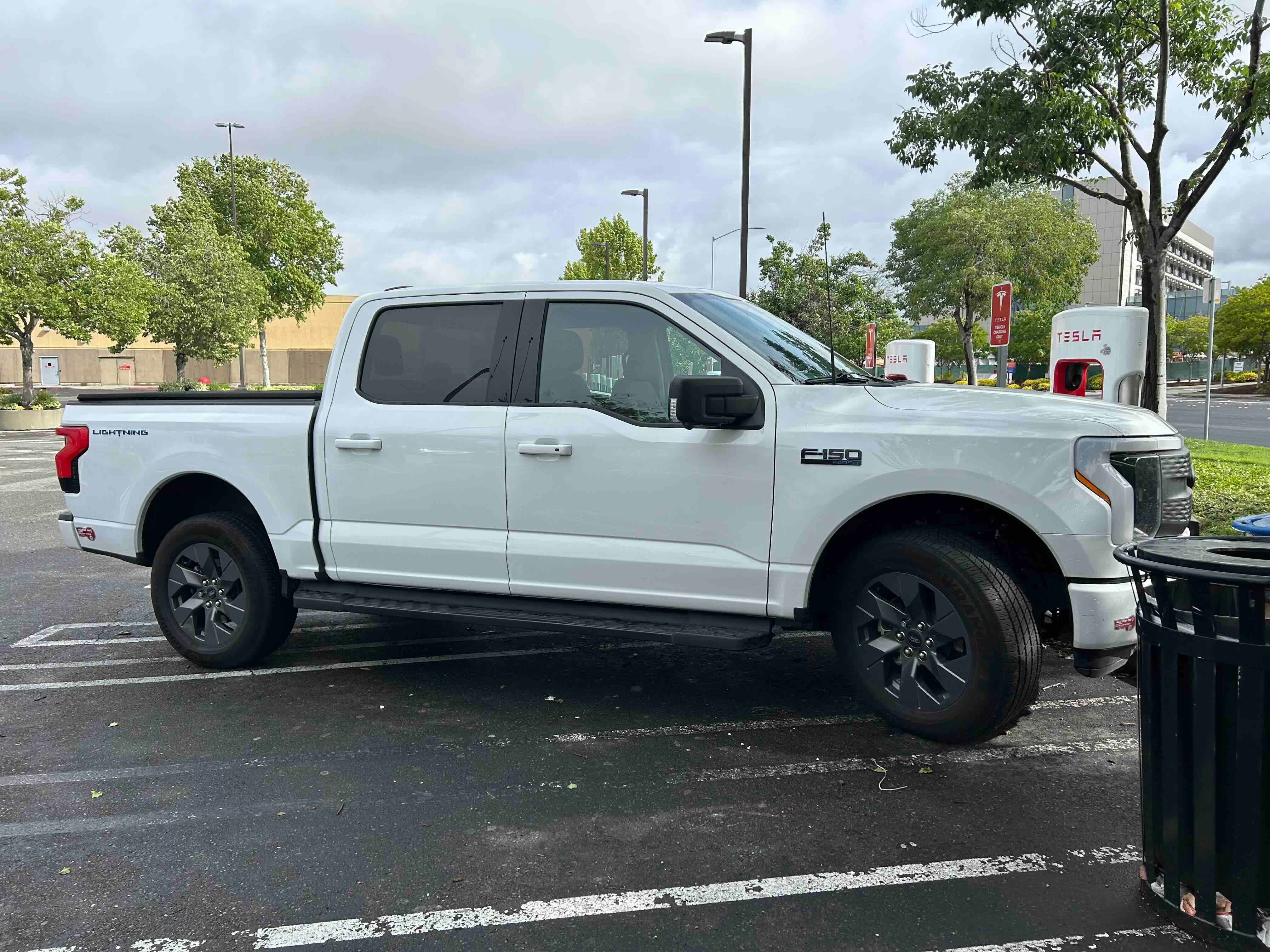
Using the app I found a set of 16 superchargers in a parking lot for a big box store along a major thoroughfare in Roseville. It took forever using the app to locate the charger and activate the charge. In fact, three times it failed using the app.
But that wasn’t the biggest problem I had. The biggest problem is that these charging stations are designed only for “Tesler” vehicles.
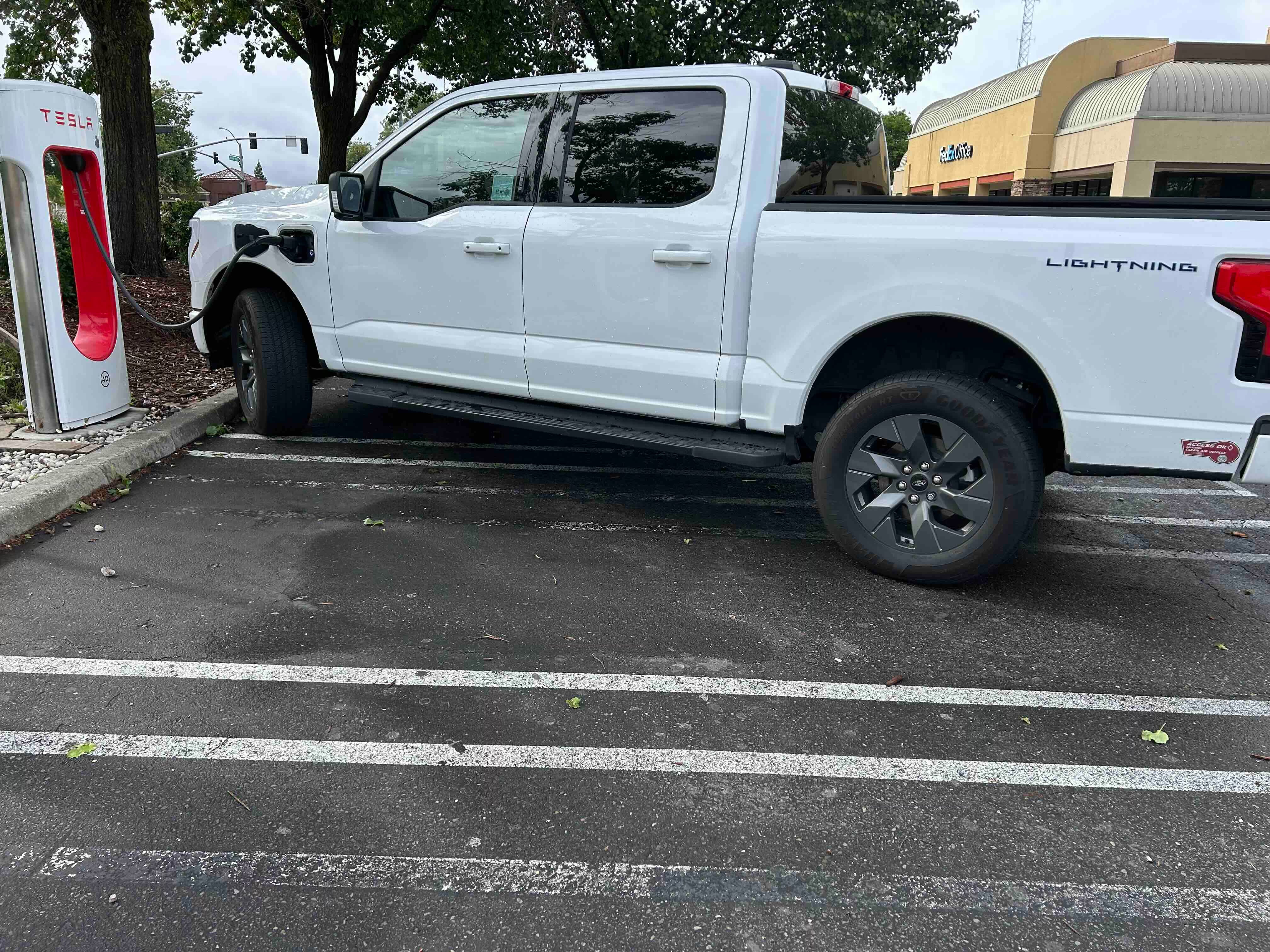
I’m a special needs driver now because not only do I need to purchase an adapter, but I might not even fit in the stall because their cords are too short.
In this case, only half of the chargers were in use. It appears that people who own these vehicles typically drive up to every other charger so they don’t have to sit in their car next to someone else. Luckily, slot number 15 was empty when I arrived.
There was probably enough room for someone to squeeze into 15 after I started charging. But I would not have been able to get my vehicle close enough to use 16 if there was a car in 15 when I arrived.
The Biden-Harris infrastructure bill required public EV charging companies to be compatible with all types of vehicles and there were incentives for companies to place chargers in low income neighborhoods and apartment complexes.
Chargers in these areas would support a used electric vehicle sales market.
These were opportunities for success American citizens wanted, and American car manufacturers needed.
But the current Administration scrapped them all.
Then the same Administration gave “Tesler” the North American electric vehicle charging standard deal in a quid-pro-quo for their leader’s support and participation in the dismantling of major US government programs, offices, and departments.
His company won’t be adapting their equipment to support me despite the fact that they received the largest amount of the American tax dollars to support their public EV charging systems.
In reality, his company doesn’t support public charging at all for my vehicle unless I buy an adapter to match their equipment and arrive at a working supercharger where there are two empty stalls next to each other.
The good news is that my test run at the supercharger in Roseville worked.
Eventually, I gave up on the app and plugged the charger straight in to the Lightning to see what the Ford would do.
It started charging automatically using Fords option for “plug-and-charge” at most public EV charging stations.
I charged for about a half hour to see how fast the charger would dispense electricity. The best it could do was 115.5 kW which is good, but I have charged at much higher speeds at EVGO and Electrify America chargers.
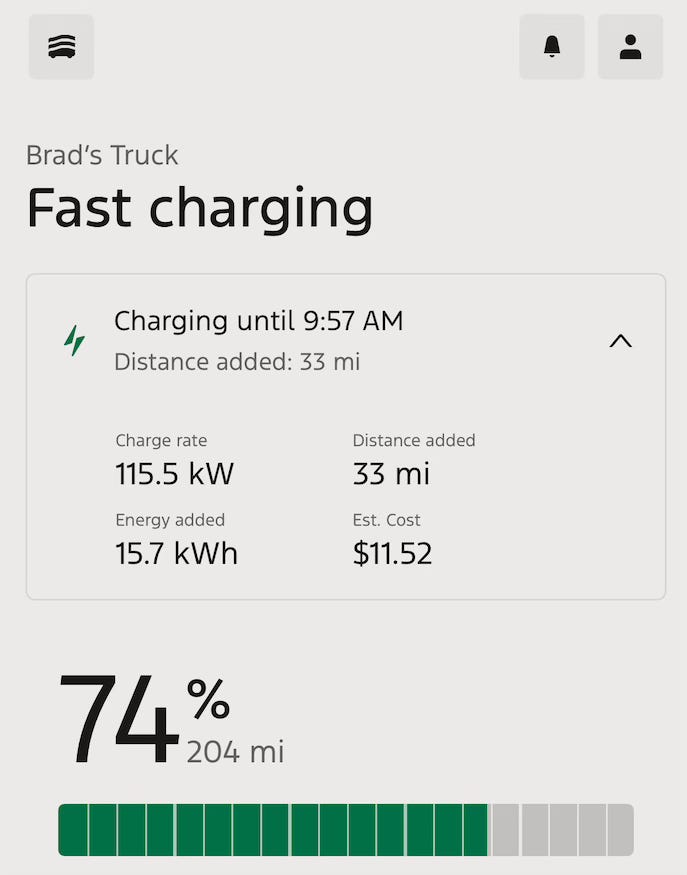
The highest price I’ve ever paid for public charging was $.65/kW.
“Tesler” was charging $.72 at this station.
I pay $.12 at home.
The myth that a vehicle is always better if it can be made in America is a strong one and it flows especially deep and hard in our culture today because of our leadership at Americas highest government and corporate levels.
But how well do these people actually support manufacturing in America?
It’s one thing to start tariff wars and tell American companies to start building manufacturing facilities at home instead of abroad.
You can say something should happen but you have to do something to make it happen. Attacking Venezuela and kidnapping its leader isn’t going to make oil more affordable. It costs us more because we did that.
The Biden-Harris Administration had plans.
Their Office of Management and Budget opened a Made in America Office to “work with agency experts, labor and industry to implement industrial strategy by incentivizing greater U.S. manufacturing in key sectors.”
What can we be proud of in America today?
America is not a land of electric vehicles or solar and wind power.
America has stopped caring about sustainable water and land use.
America is a selfish place where the people with the most money got to be our leaders. Their mission is to simply tell the rest of the people what they can and cannot do with their money. They want to tell America what they should and should not do with their lives and their families.
Instead of building something better these people revert to old ways and tear down new ideas and fresh starts for America.
That way they can spend their time fighting wars on windmills, electric vehicles, and Iran.
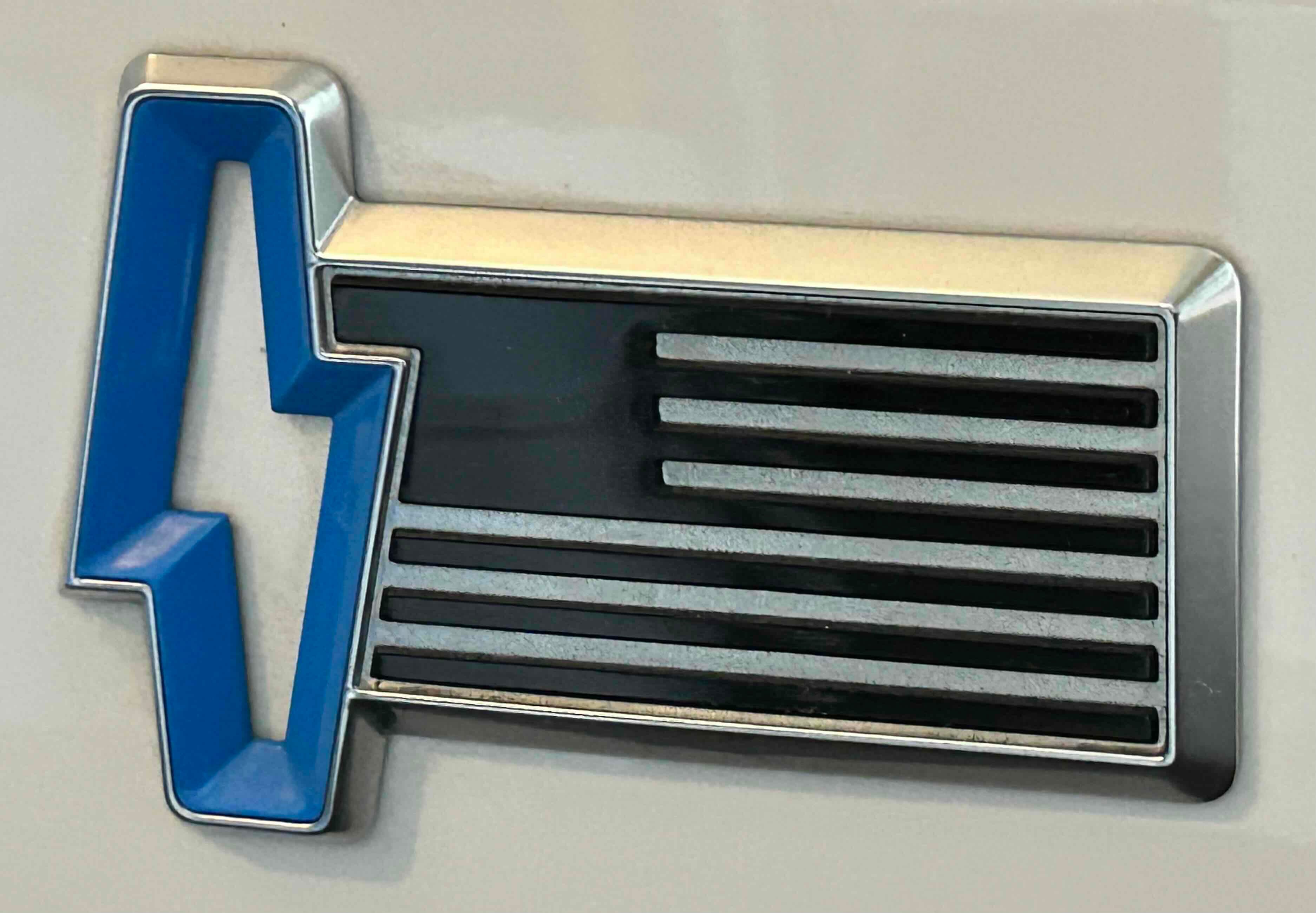
My Ford F-150 Lightning has this beautiful little emblem on the back. It’s one of my favorite features on the truck because, for me, it represents the fact that an American company thought it was doing their best patriotic effort transitioning to a new technology.
The truck is truly a marvel of automobile engineering and I couldn’t be more happy to drive it.
I couldn’t feel more American driving it around.
In fact, since America went to war with Iran for oil I started driving it around even more instead of using my Nissan Leaf.
I want America to know how proud I am to be driving the electric version of America’s best selling truck.
The truck this “president” had them kill with a vague promise that they would deliver a $30,000.00 option in a couple of years.
I’m glad I got this version.
And, I won’t be going down Highway 395 to San Diego after all because I am worried about snow going over the mountains and I don’t want to deal with tire chains.
But I’m also not interested in giving my transportation dollars to the people of “Tesler.”
The company, led by the world’s richest man, got the most American tax dollars to support a program the same government is now destroying and diverting tax dollars to a Middle East war for oil.
It all sounds like the corporate welfare-warfare state of 1978 all over again.
If I want to use one of their superchargers, I have to park it crooked, next to the garbage cans, at a charging station in Roseville.
That leaves America’s best selling electric truck right there on America’s biggest pile of trash.
That’s not a place I want to pay $.72/kW to fill up my tank.
America is still looking for leaders who want to move us forward.
Thank you for joining me here in the bowling alley and for reading and listening today.

Flowers from the Lakritz Farm and photography by Bradley William Lakritz 2026.
Comments
Nothing yet. Say the first thing.
Sign in to join the conversation.