
In 2011, after Republicans made yet another attempt to convince Congress to shut down public broadcasting, I believed it was worthwhile to revisit the history of broadcasting and the development of broadcast media, broadcast technology, and the small number of broadcast companies that owned all of it.
In 2026, it is more important than ever that people understand how all these changes in our media are happening and what it means for the information we consume each day.
If we look closely at the history we can see how the US government helped pay for the creation of Fox News and all the other mass media outlets that exist today.
America’s media companies were created in part because the United States payed for the development of the telegraph, radio, and television technology used in those days. By providing preferential treatment in issuing licenses for the broadcasting frequencies needed to be on the air, early adopter companies received advantages in creating successful money-making ventures with broadcasting.
Today, broadcast frequencies are slipping in value and impact in our society making network publishers desperate for viewers and relevance. Being targeted by America’s government leaders is helping erode public confidence and interest in all types of media and especially news media.
Clearly each of the old and new media (and political candidates that use them) are searching for eyeballs, but they are also now faced with the threat of losing their government sanctioned ownership in the media realm and thus their very existence.
Historically, the US government has supported innovations such as broadcast radio and television in many ways. For example, the inexpensive large-screen home television technology we use today was originally developed to support and improve NASA’s visual systems.
In the history of the modern communication and broadcasting technology (also known as “telecommunications”) these technologies were developed by private companies originally funded by the US government.
First came the telegraph, then the telephone, then radio and television. A more modern example is the way in which US government funding helped create the ability to use computers and computer networks to share information on what we now call the Internet.
The modern media and information revolution all began in 1844 when Congress authorized $30,000 to build the first telegraph line between Washington DC and Baltimore, MD.
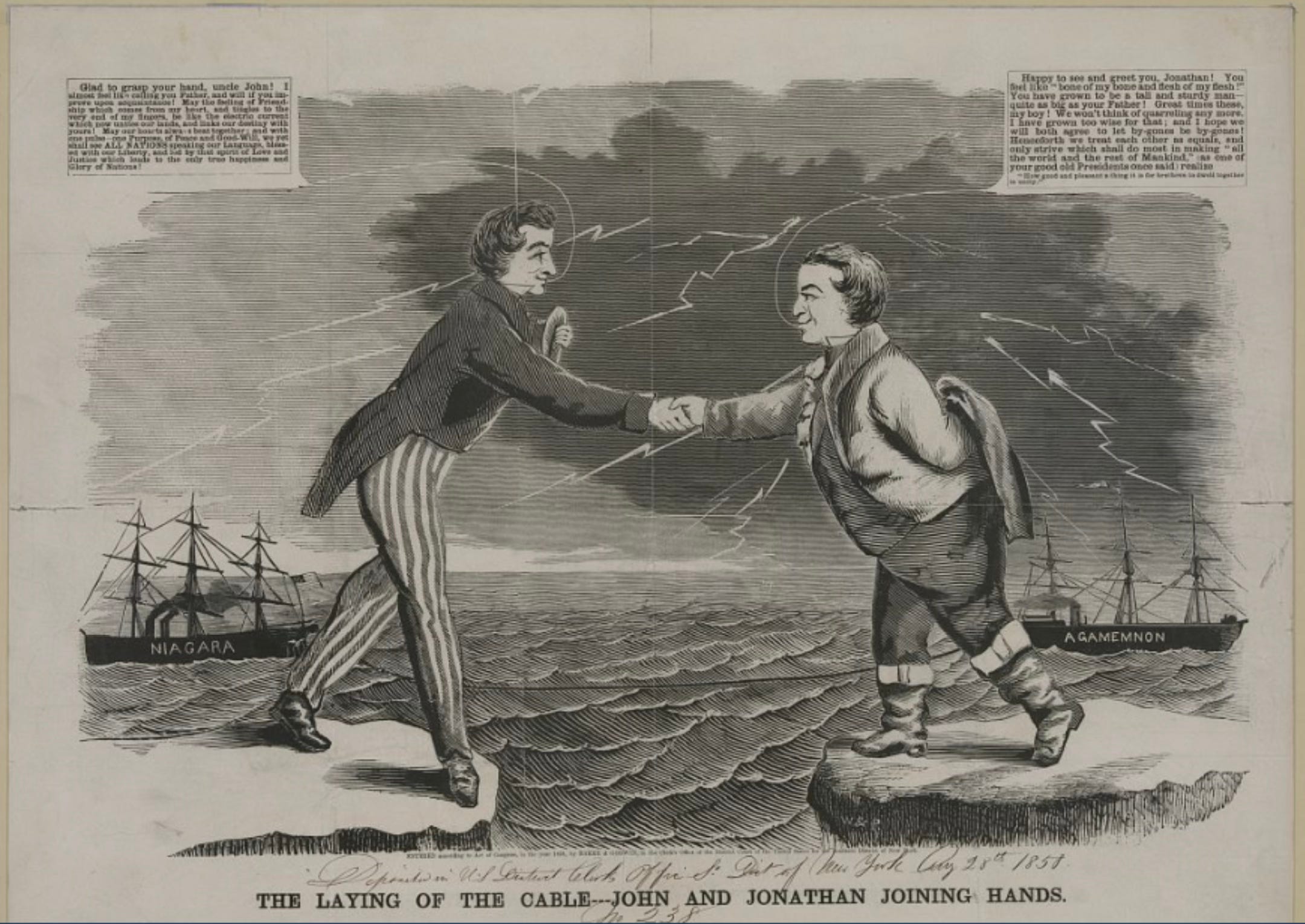
The basic story is that the government needed new communication technologies to assist them in various war efforts. United States Federal Government funding paid companies like Western Union, Westinghouse, General Electric, Western Electric, and American Telephone and Telegraph (AT&T) to develop these new technologies.
Comments
Nothing yet. Say the first thing.
Sign in to join the conversation.