
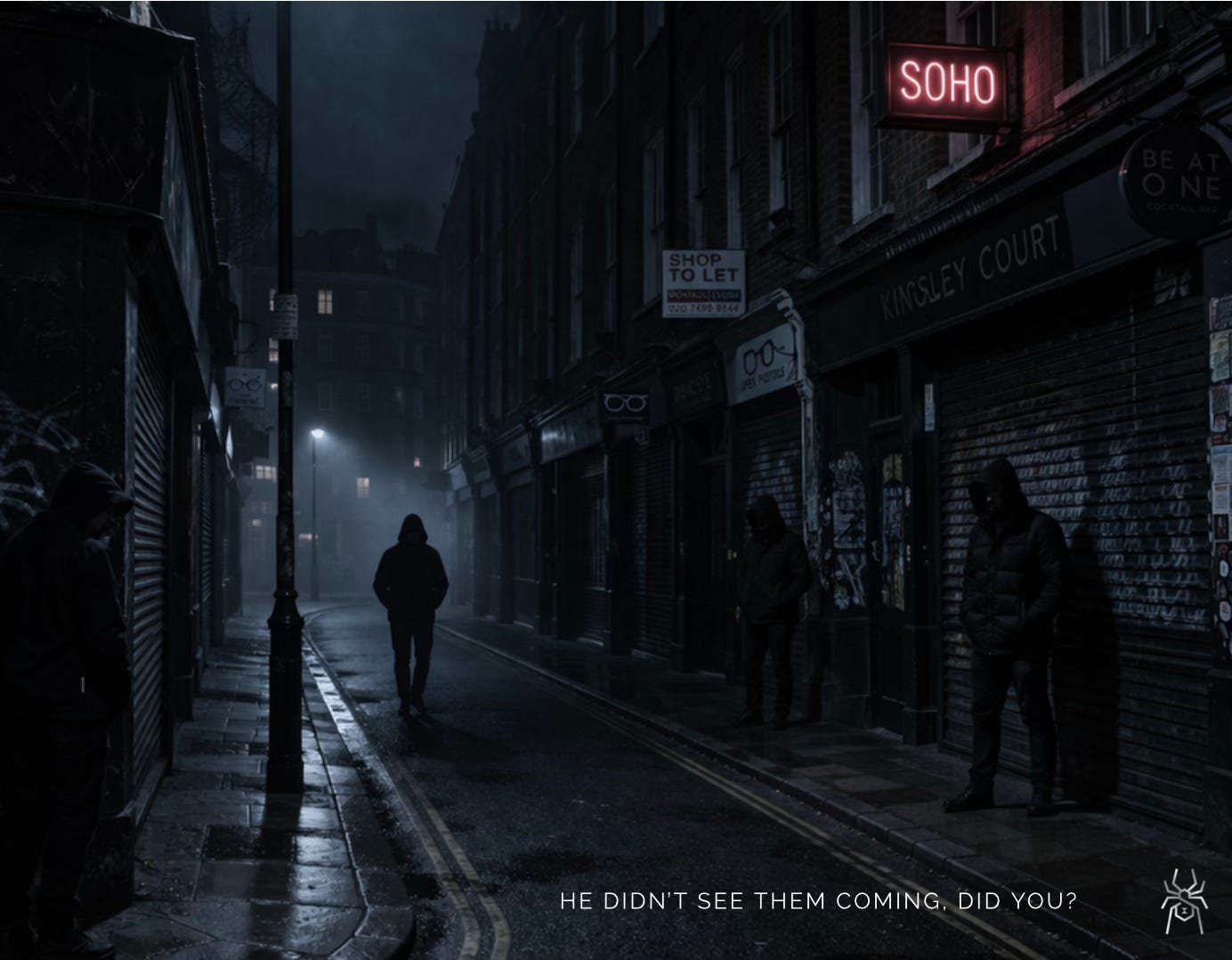
My friend was mugged a while back.
Four young men surrounded him. Central London. Late at night, walking home from work.
His phone, wallet, cards and cash – all of it gone. Once he got home safely, he called me from his iPad to talk it through.
He was shaken, and gutted – not about the cash, but about the 30th birthday wallet that went with it. He did the right thing handing it over. When you’re faced with four people and the lets face it, very real likelihood that at least one of them is carrying a knife.
There were nearly 15,000 knife crime offences recorded in London in the last twelve months alone
Your belongings are not worth your life. Give them up.
The city is getting more dangerous and it happens more than you’d think. The sad reality is that most people have no idea what to do before, during or after it happens. So here’s what I told him:
Before – your senses are your first line of defence
Your senses are working constantly, even when you’re not consciously paying attention. They notice the change in atmosphere, the shift in energy on a street, the pressure drop that tells you something isn’t right. The problem is that most people spend their time in public actively switching those senses off.
Your phone is the biggest culprit. Walking through a city staring at a bright screen makes your peripherals completely blind. You will not see the four hooded figures loitering. You will not notice the person on a bike slowing down beside you. If you need to check your phone, go inside a building first. The same goes for headphones – if you can’t take them out entirely, one earbud only and keep the volume low enough that you can still hear what’s happening around you. Never both in on a quiet or unfamiliar street at night.
Walk on the building side of the pavement, not the kerb edge. It’s a small change that makes you a significantly harder target – particularly with the rise of moped and bike snatchers.
Stick to well-lit, busy streets where possible. And if you notice the same face three times – cross the road, step into a shop, trust that feeling.
During – comply and observe
If it happens, give up your belongings. I cannot stress this enough. Your wallet, your phone, your watch – none of it is worth the alternative. Comply, stay calm, and take a breath.
While you’re doing so, observe. Age, build, clothing, distinguishing features, height, the direction they leave in. You won’t have long but your memory in that moment is your most valuable tool.
After – don’t just walk away
Once the threat has gone, look up. Which buildings around you have CCTV cameras? Go and speak to the security guard or staff inside. They may have footage, and they deal with this more than you’d think. Ask for a glass of water. Sit down. Give yourself a moment to process what just happened before you do anything else.
Then report it to the police immediately – call 999 if the threat is ongoing, 101 to report afterwards. Get a crime number. You will need it.
Now, his phone and wallet are gone. This is where most people realise they are completely stuck – because every number they know is in a device that no longer belongs to them.
Memorise two numbers before you ever need them. A family member’s number and 999. That’s it. Two numbers.
Your family member can’t transfer money to an app you can no longer access – but they can call you an Uber, come and get you, and make sure you’re not standing alone on a street in shock.
One more thing – keep a small amount of emergency cash somewhere separate from your wallet. A jacket pocket, a cashstash keyring, or yes, your sock. If your wallet goes, you’re not completely stranded.
Next time I’ll be covering what practical steps you need to take in the event of your phone being stolen. See you then x

Safety and Security. From someone hired to protect.
No posts
Comments
Nothing yet. Say the first thing.
Sign in to join the conversation.