
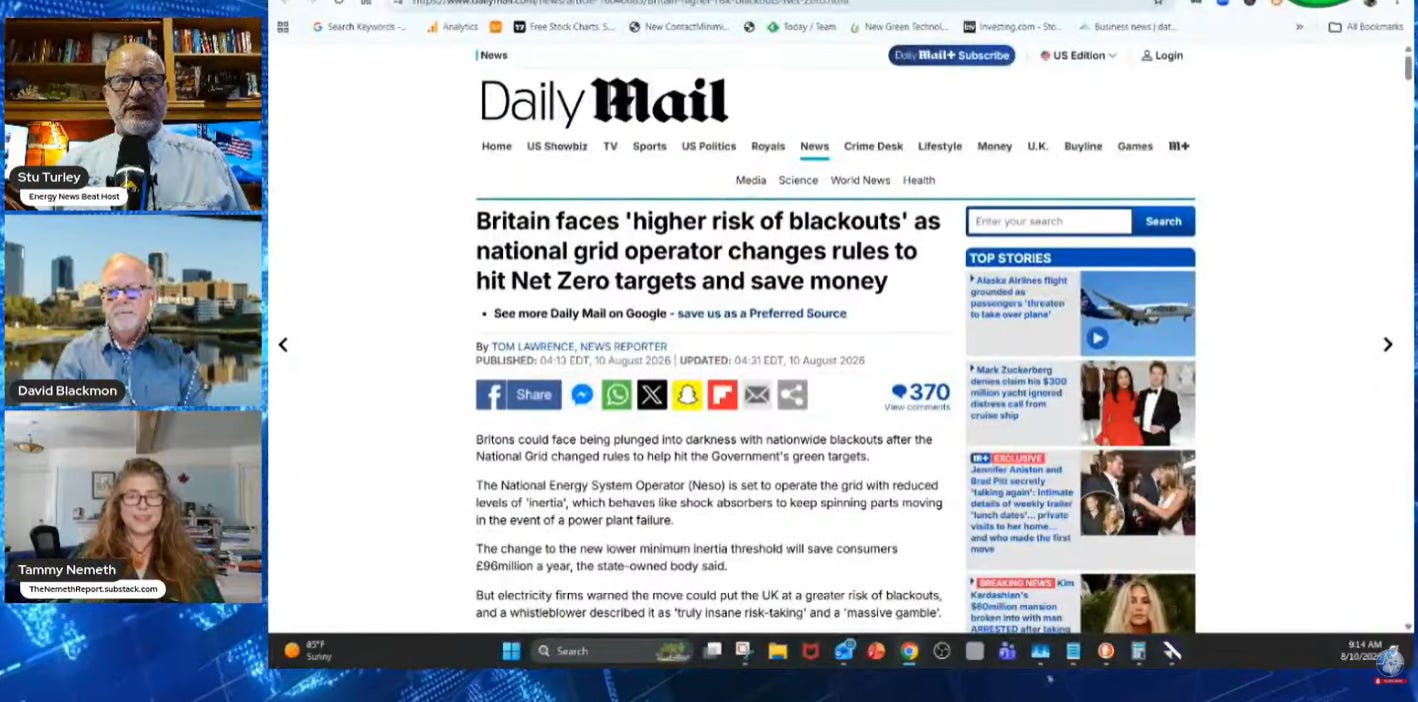
The Energy Transition is not happening because we are in an energy addition phase, but the real issue is that a crisis is looming in the next few years. The financial treadmill of doom requires the short-lived wind, solar, and storage generation systems to be replaced. The world has spent 10.4 trillion dollars for a 3% gain in energy, and where do we go from here?
The Energy Reality Gang of 3 - Stu Turley, Dr. Tammy Nemeth, and David Blackmon are here to discuss the details in this fast-moving hour.
Enjoy the show:
Run of Show:
1. Financial Costs of Renewable Energy Transition 2. Wind Turbine Blade Recycling Crisis Turbine blades cannot be easily recycled due to their composite construction The UK is reducing minimum inertia requirements, risking blackouts similar to Spain's 2024 crisis Data centers (Meta, Amazon, Google) are abandoning renewable-only power plans and switching to natural gas, nuclear, or coal Problems created by renewable policies generate new regulations 10. Future Predictions The overall theme is that renewable energy transition, while well-intentioned, has become economically unsustainable and environmentally problematic, creating a "treadmill of doom" that benefits bureaucracies and special interests rather than solving energy or environmental challenges. Check out for Stu Turley on The Energy News Beat Substack:
The hosts open with a striking statistic: Germany's energy transition has cost approximately €1 trillion with minimal tangible benefits. The episode explores the massive financial burden of renewable energy infrastructure, noting that $10.3 trillion has been spent globally to achieve only 3% energy gains.
A major focus is the environmental and economic disaster of wind turbine blade disposal. Key points include:
The EU has strict recycling mandates (65% collection target), but only 37.5% has actually been collected
Blades are being buried in landfills across the US and exported to unknown destinations
Companies like ROSSI can only recycle 1,700 tons per year—just 1% of waste generated
The lack of viable recycling technology despite 20 years of development
3. Grid Stability and Blackout Risks
The episode discusses serious grid reliability concerns:
A solar eclipse warning in the UK demonstrates grid fragility
The US Southwest Power Pool experienced a near-crisis when a data center went offline
Texas ERCOT came dangerously close to mandatory conservation measures when solar generation dropped to zero at sundown
4. Renewable Energy's Reliability Limitations
The hosts argue that wind and solar cannot provide baseload power:
Wind and solar require equal capacity in backup dispatchable power (natural gas, coal, nuclear)
These technologies fail precisely when needed most—during severe weather
Battery storage cannot scale to meet grid demands
5. Decommissioning and Regulatory Gaps
Unlike coal, natural gas, and nuclear plants, renewable installations have no mandatory decommissioning requirements in the US
Texas alone faces an estimated $89 billion cleanup bill for wind installations
No regulatory body has clear authority to enforce proper retirement of wind and solar facilities
Landfills of wind turbine blades are accumulating across West Texas and South Texas
6. Environmental Concerns Beyond Carbon
Balsa wood forests in South America are being devastated to supply wind turbine materials
A wind turbine blade explosion off New York caused environmental damage comparable to the Exxon Valdez
Improper solar and battery installations have caused fires, including one that burned down a UK hospital
7. The "Treadmill of Doom" Concept
The hosts describe a self-perpetuating bureaucratic cycle where:
New regulations create additional problems requiring more solutions
This expands government control and job security rather than solving actual issues
The focus is on control rather than environmental benefit
8. Policy Priorities vs. Reality
For 30 years, net zero and climate change have been prioritized over practical energy policy
This has led to deindustrialization in Europe, the UK, and Canada
Citizens bear the costs through higher electricity rates
Media and academic institutions produce studies supporting predetermined conclusions
9. Data Center Power Requirements
The episode highlights that even tech companies committed to green energy recognize that reliable baseload power is essential for operations, contradicting the viability of renewable-only systems.
The hosts predict that within two years, as subsidies expire, consumers will face unprecedented cost increases and grid reliability will deteriorate significantly across the US, EU, and UK.
For David Blackmon
For Tammy Nemeth
Comments
Nothing yet. Say the first thing.
Sign in to join the conversation.