
Morning Comrades.
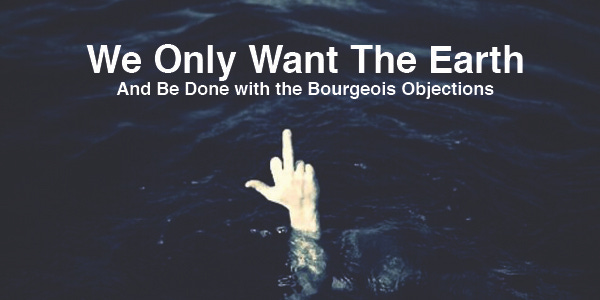
Please consider this more of a venting / ranting / big thoughts session than anything else at your leisure. “But Let Us Have Done with the Bourgeois Objections to Communism” as both Marx and Engels so aptly stated in their wonderful Manifesto.
Every human being experiences the world through a reality that appears self-evident. We wake, work, eat, pay rent, worry about money, scroll through endless streams of information, fear illness, fear unemployment, fear isolation, fear old age and, increasingly, fear the future itself, and because every one of these experiences has accompanied us from birth, they present themselves not merely as conditions of a particular historical society but as conditions of existence itself. We are encouraged to believe that anxiety is natural, that competition is inevitable, that scarcity is permanent, that ownership is the highest expression of freedom, that markets simply reflect human nature, and that inequality is the unfortunate but unavoidable consequence of merit. Capitalism has never been convincing humanity that it is good; rather, it has been convincing humanity that it is reality itself.
Yet every social relation that surrounds us, every institution through which we live, every material necessity that structures our daily existence, and every metaphysical category through which we understand ourselves emerges from a historically specific economic foundation. Capitalism is not simply an economic system among others; it is an entire social reality organised around the existence of private property and the endless accumulation of capital. The family, the workplace, the school, the hospital, the prison, the media, the legal system, the nation-state, and even our understanding of success, failure, morality and freedom have all developed within this framework. They are not eternal institutions descended from heaven, nor are they the inevitable destination of civilisation. They are historical products, shaped over centuries through conquest, enclosure, colonialism, industrialisation and the continuous expansion of markets into every sphere of life.
This Substack is reader-supported. To receive new posts and support my work, consider becoming a free or paid subscriber.
To recognise this is to understand something profoundly liberating. The world as we experience it is only one among countless possible worlds. Nothing about our existence today is natural in any meaningful sense of the word. The wage relation is not natural, landlords are not natural, bloody billionaires are not natural nor is debt and certainly not unemployment. The commodification of housing, healthcare, education, food, companionship and even our own identities is not natural. They exist because particular social relations have produced them, and because those social relations continue to reproduce themselves through political power, legal institutions and ideological consent.
This is perhaps the most difficult lesson for people living within capitalism to grasp precisely because capitalism has become the horizon against which every imagination is measured. We do not merely work within capitalism; we dream within capitalism. Even our rebellions are often disciplined by capitalist assumptions before they are ever articulated. Every proposal for a different society is immediately subjected to questions that assume the permanence of the existing one. Who will pay for it? Who will own it? Who deserves it? How will it be profitable? Will people still work? These questions masquerade as practical concerns while functioning as ideological boundaries. They force every imagination of freedom to justify itself according to the logic of the very system it seeks to overcome.
It is precisely this intellectual imprisonment that Marx and Engels rejected when they declared in the Communist Manifesto, “But let us have done with the bourgeois objections to Communism.” The sentence is remarkable not merely for its confidence but for its refusal to grant bourgeois ideology the authority to determine the limits of revolutionary thought. They understood that every ruling class presents its own interests as universal reason, its own institutions as common sense and its own fears as objective reality. To argue endlessly within those assumptions is already to concede the terrain of struggle.
The bourgeoisie objects to communism because communism refuses the sanctity of private property. It objects because communism recognises that wealth is socially produced and therefore ought to be socially organised. It objects because communism understands that human beings create society collectively while capitalism distributes its benefits privately. Yet why should communists spend their intellectual energy defending themselves against assumptions produced by the very class whose domination they seek to abolish? Why should the future be negotiated according to the prejudices of the present?
James Connolly expressed this with extraordinary clarity when he declared, “For our demands most moderate are, we only want the earth.” The genius of the phrase lies in its inversion. To those committed to preserving capitalism, wanting the earth appears impossibly radical. Yet from the standpoint of humanity itself, what could possibly be more moderate than demanding that the wealth collectively created by humanity should belong to humanity? Connolly was not advocating excess. He was exposing the absurdity of a society in which asking for the world already produced through collective labour is treated as extremism, while allowing a tiny minority to monopolise it is presented as moderation.
The same spirit animates Bertolt Brecht’s insistence that communism is the middle ground. This appears paradoxical only because capitalism has so thoroughly colonised our imagination that even the restoration of basic human dignity is treated as revolutionary excess. The communism feared by the bourgeoisie is already a compromise. It is already an accommodation with realities inherited from capitalism. Even the abolition of private property represents not the end of history but merely the beginning of constructing genuinely human social relations beyond exploitation.
This is where any meaningful communist imagination must begin, and by that I most definitely mean my own, first and foremost. Every experience through which we encounter the contemporary world has been shaped by capital. Every experience through which we encounter the contemporary world has been shaped by capital, so that what appears as the ordinary texture of daily life is, upon closer inspection, the expression of a particular historical mode of production. The exhaustion concealed beneath the language of work-life balance, the loneliness increasingly mediated through social media, the precarity that compels millions to weigh food against rent, the ecological destruction that now threatens the conditions of life itself, and the steady transformation of care, friendship, education, health and culture into commodities are not isolated pathologies requiring individual solutions, but interconnected manifestations of a society in which every aspect of human existence has been reorganised according to the logic of private property and the endless accumulation of capital.
Alienation obviously no longer exists only within the factory. It accompanies us through every digital device we carry, every metric by which we evaluate ourselves, every platform that transforms our emotions into data and our attention into commodities. We consume entertainment designed to distract us from work so that we may return to work sufficiently rested to continue producing profits for others. We seek authenticity through commodities specifically manufactured to satisfy the desire for authenticity. We purchase identities, lifestyles and communities while the conditions necessary for genuine human community continue to disappear beneath the expansion of markets.
Capitalism not only exploits us materially, although it so very clearly and certainly does, but that it narrows our conception of what it means to be human. In doing so, it steadily narrows the horizons of political and social possibility, transforming questions of human liberation into matters of administration, reducing imagination to the cautious language of policy proposals, and teaching us to measure every aspiration not against what humanity is capable of creating but against what financial markets, credit ratings and private investors might be willing to tolerate. By the time it confronts our actions, it has already colonised our expectations, disciplined our desires and confined our political imagination within boundaries that appear self-evident only because they have been so thoroughly naturalised.
Communism, therefore, cannot merely be understood as a different method of distributing existing resources. It must represent an entirely different conception of reality itself. Once private property ceases to organise social life, every institution becomes available for democratic reconstruction. Housing no longer appears as an investment vehicle but as a universal condition of human existence. Healthcare ceases to function as an industry extracting profit from suffering and instead becomes an expression of collective care. Education becomes the development of human capacities rather than the production of labour for employers. Care work ceases to occupy an invisible economic margin and instead becomes recognised as one of society’s central productive activities. Food ceases to be a commodity whose distribution depends upon purchasing power and instead becomes what it has always materially been: a necessity produced through collective labour.
There is nothing utopian about these propositions except from the perspective of those whose wealth depends upon their impossibility. Every technological, scientific and productive capacity necessary to realise them already exists. The obstacle has never been production but has always been ownership. Scarcity increasingly survives not because humanity cannot produce abundance but because abundance threatens profitability.
It follows that we should never apologise for demanding too much. The accusation itself rests upon capitalist assumptions regarding what constitutes reasonable politics. The world we inherit from capitalism is one of permanent crisis, accelerating ecological collapse, expanding inequality, endless war, chronic loneliness, deteriorating mental health and economies incapable of satisfying even the most elementary human needs without generating misery elsewhere. Against such a civilisation, moderation becomes indistinguishable from surrender.
When we speak about the future, therefore, we should resist every temptation to shrink their aspirations until they become acceptable to bourgeois common sense. The Communist Manifesto did not inspire generations because it politely requested marginal reforms. It inspired because it dared to describe a world fundamentally different from the one that existed. It refused to mistake existing reality for permanent reality. It understood that history is neither fixed nor sacred but made through human struggle.
Too often today, revolutionary politics begins from what capitalism might concede rather than from what humanity actually requires. It moderates itself in anticipation of objections from those whose power depends entirely upon preserving existing relations of domination. This reverses the entire logic of communist politics. We do not construct our future by appealing to the approval of those who profit from the present but we construct it by identifying the forms of life made possible once their domination has ended.
After all, bourgeois society already considers our existence intolerable. One does not become acceptable to capital by asking for less. The simple assertion that housing should belong to everyone, that healthcare should never depend upon wealth, that education should be universally available, that labour should democratically organise production, or that private property should cease governing society is sufficient to provoke accusations of extremism. If our very existence already constitutes a threat to bourgeois order, why should we seek its permission to imagine something greater?
The purpose of communist thought has never been to reassure capitalism that it has nothing to fear. It has always been to demonstrate that another world is not merely desirable but historically possible. That possibility begins the moment we cease confusing capitalist reality with reality itself. Five hundred years of capitalist development have produced only one version of human civilisation among infinitely many others that might have existed. It is a world built by human beings, sustained by human labour and reproduced through human institutions. There is nothing divine about it, nothing inevitable about it and nothing permanent about it.
Our task is therefore not simply to criticise capitalism but to recover our capacity to imagine beyond it, and ultimately, act accordingly. Not cautiously, not apologetically and certainly not according to the limits established by bourgeois reason, but with the same confidence that animated Marx, Engels, Connolly and every revolutionary tradition that understood history to be the unfinished product of collective human action around the world. Bourgeois objections are not the beginning of communist politics; they are the noise produced by a ruling class confronted with the possibility that its reality is neither universal nor eternal. We have indulged those objections for long enough. Let us have done with them, and begin instead with the only question that has ever truly mattered: what kind of world becomes possible once humanity is finally free to organise itself beyond private property, beyond capital and beyond the narrow imagination of those who mistake their own domination for reality itself?
Yours, warmly,
V.
Thanks for reading! This post is public so feel free to share it.
Comments
Nothing yet. Say the first thing.
Sign in to join the conversation.