

Laurie Stevens is the author of the Gabriel McRay series. You can find out more about her on the Blackbird Writers website and buy her books there, as well.
Many writers find inspiration in the serene and comfortable elements of life, crafting stories set in idyllic towns filled with hot cocoa, cats, and adorable settings. I deeply admire authors who master these “cozy mysteries.” I have genuinely tried to sleuth out a crime while discussing a cupcake recipe in a town straight out of a Hallmark holiday romance movie. However, I have come to accept a fundamental truth about my creative process: I cannot write cozy mysteries. No matter how innocent my initial setting may be, an undeniable need for creepiness always creeps in, forcing me to distort the pleasant into something far more sinister.
This inescapable urge to embrace the dark becomes evident the moment I begin brainstorming. If I take a perfectly nice mystery setting—such as a ski resort where guests peacefully sip hot cocoa—a standard cozy writer might title the story Snow Bind or The Slippery Slope. My imagination, however, immediately warps the narrative into Sun Valley Slaughter or Red Blood, White Snow. This shift completely alters the trajectory of the plot and characters. Instead of a gorgeous, athletic former pro-skier turned amateur sleuth, my protagonist is an unathletic woman who refuses to ski due to a crippling fear of heights. She only travels to the resort because of a secret crush on the trip organizer. Naturally, the narrative forces her into the worst possible scenario: trapped on a ski lift during a sudden snowstorm, desperate to escape her crush, who has just been revealed as a ruthless killer.
This dark inclination is not merely a stylistic choice; it is a psychological necessity. In Ways of Escape, Graham Greene famously observed, “Writing is a form of therapy; sometimes I wonder how all those who do not write, compose, or paint can manage to escape the madness, melancholia, the panic and fear which is inherent in a human situation.” Greene’s words perfectly capture my relationship with fiction. Writers often work out their internal issues through their narratives, using the page to constructively let off steam. Writing does not generate the darkness within us; rather, it gives that pre-existing darkness a safe place to go.
When I evaluate my own work through this lens, the mechanics of my storytelling become clear: My fiction acts as a repository for my real-world anxieties.
The things I fear in daily life are systematically converted into plot points. I turn my anxiety into suspense, my personal grief into the emotional substance of my characters, and my underlying dread into narrative atmosphere. In the worlds I build, obstacles must continuously pile up until the main character is forced to overcome whatever psychological defect they possess.
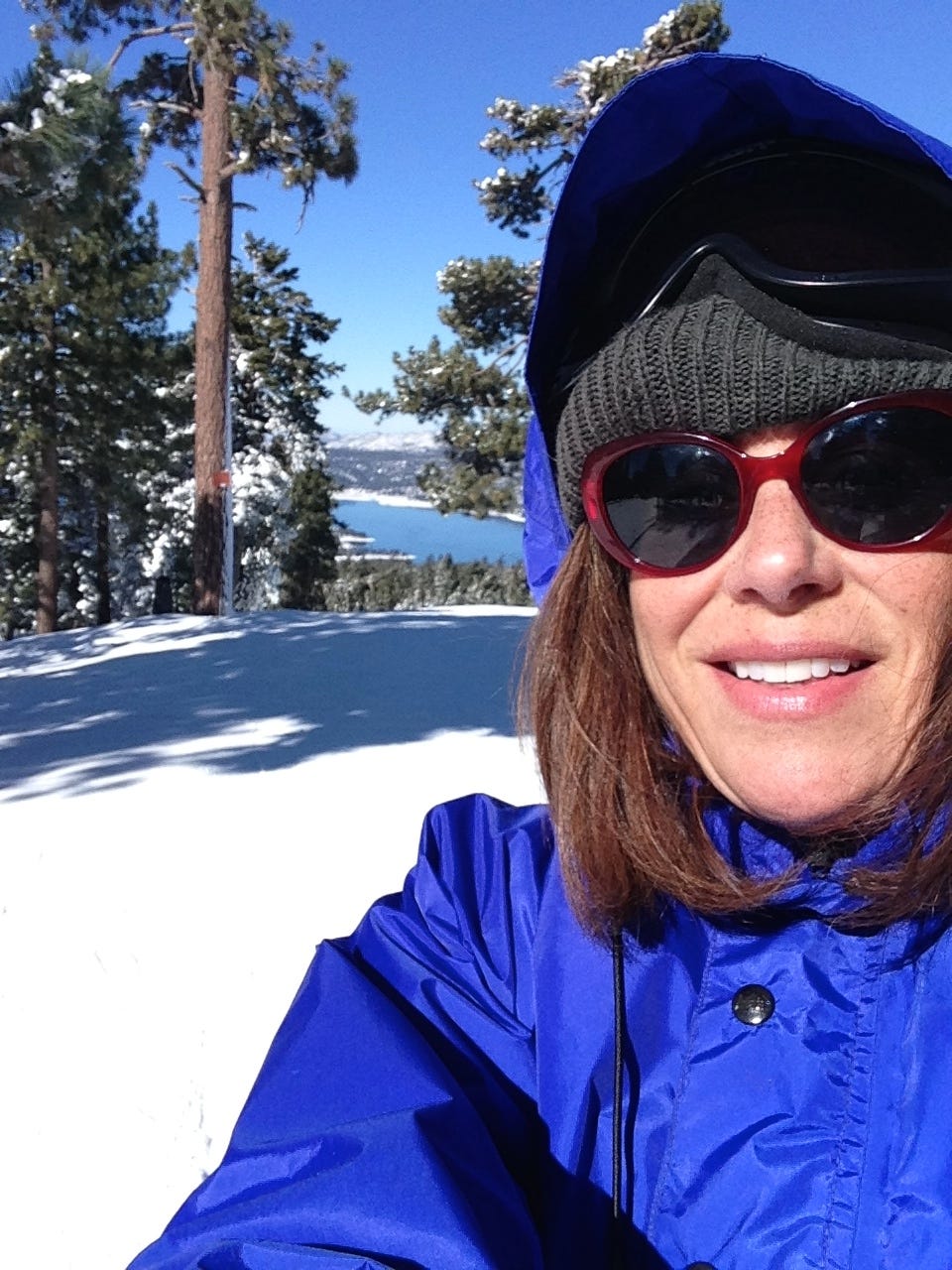
To resolve the thriller on the ski lift, the protagonist who is terrified of heights must confront that exact phobia to outmaneuver the killer in pursuit. My characters are constantly working out my issues for me. A thriller writer’s imagination is essentially real-world anxiety organized within a strict narrative structure.
As time passes, however, this therapeutic creative dynamic is facing a new challenge. My personal issues have mellowed with age, and consequently, my stories have mellowed as well. I often wonder whether this shift is a problem for my career, though I hope it is not.
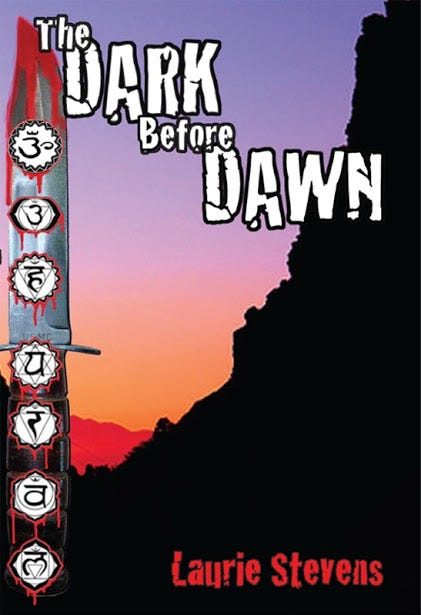
My first published book, The Dark Before Dawn, was undeniably dark—the first paragraph alone was enough to raise eyebrows, prompting one reviewer to warn that it was “Definitely NOT for my eight-year-old!”
(What about the bloody knife on the cover would make the reviewer think this novel was for an eight-year-old?)
My newer work may not go to such extremes, but the heart of my writing is unchanged. Whether darker or more subdued, storytelling remains my way of making sense of the human condition, giving my anxieties a place to live in the shadows of fiction—or perhaps, someday, in a cozy kitchen.
Laurie Stevens is the author of the Gabriel McRay psychological suspense series and The Return, a sci-fi/fantasy. The books have won fourteen awards, among them Kirkus Reviews “Best of” and a Random House Editors’ Book of the Month. In regards to writing thrillers, Suspense Magazine says Laurie is “the leader of the pack,” while International Thriller Writers claims she’s “cracked the code” of writing suspense. An active member of Mystery Writers of America, International Thriller Writers, Sisters in Crime, and Science Fiction Writers of America, Laurie lives in the hills outside of Los Angeles with her husband, two snakes, and a cat. You can find out more about her at www.lauriestevensbooks.com
Comments
Nothing yet. Say the first thing.
Sign in to join the conversation.