
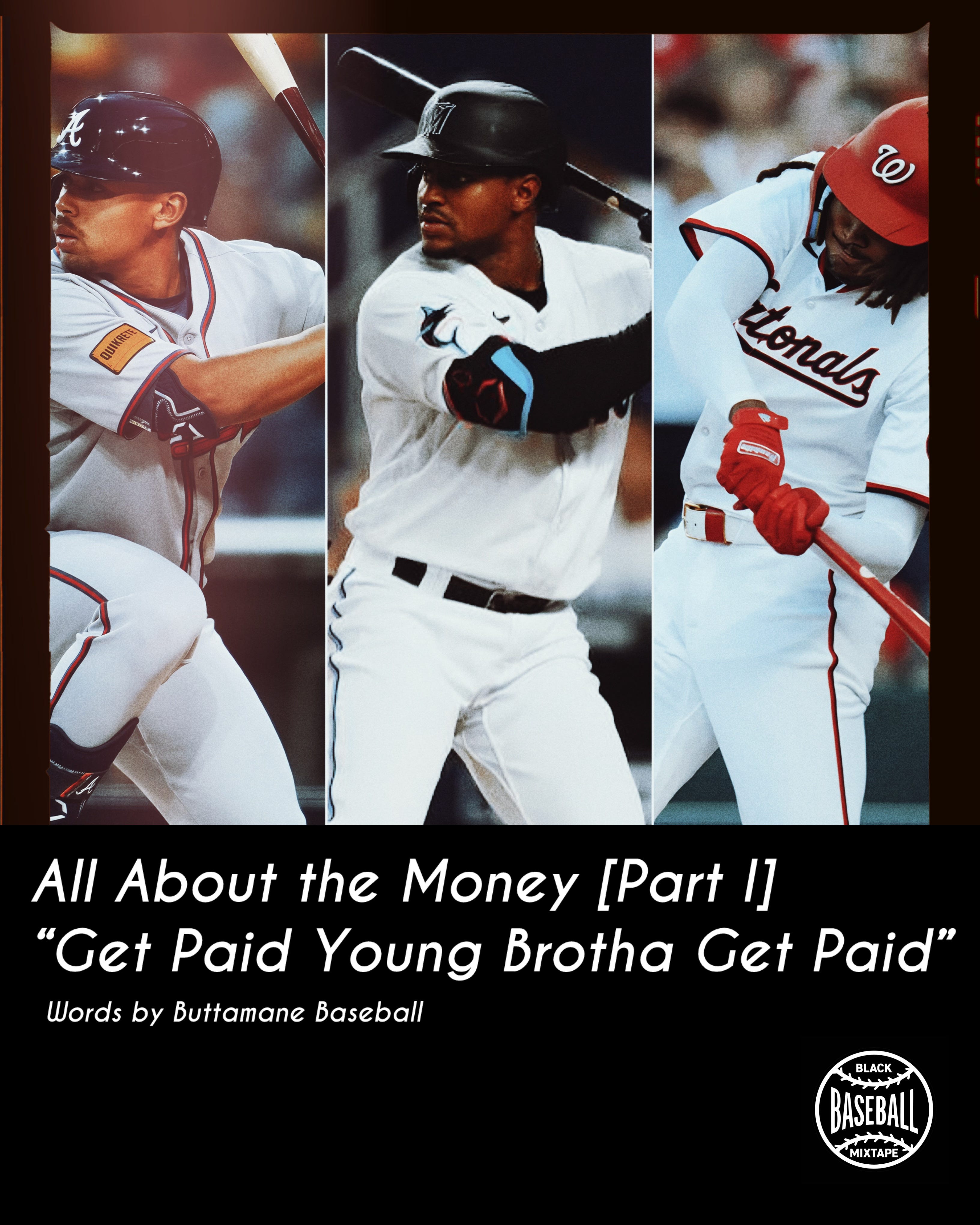
Words by Malik Chambers [Buttamane Baseball]
June 2, 2014, is etched into both African American and Major League Baseball history. On that day, the Houston Astros signed first baseman Jon Singleton to a five-year, $10 million extension before he had played a single major league game—the first deal of its kind in MLB history.
Singleton, Houston’s No. 3 prospect at the time, was expected to become a middle-of-the-order force alongside George Springer and Jose Altuve. Instead, he became a cautionary tale. The gamble sparked debate across baseball: Why commit millions to a player who hadn’t proven anything at the major league level? Critics ultimately won that argument. Singleton appeared in just 151 games, hit .190 with 14 home runs, and was released after the 2018 season following injuries, demotions, and failed drug tests.
The extension was supposed to scare teams away from betting on unproven talent. Instead, it became a blueprint.
MLB front offices responded not by abandoning the strategy, but by getting better at it. Equipped with advanced scouting, analytics, and projection models, teams became increasingly confident in assigning long-term value to young players. According to FanGraphs’ WAR valuation, clubs now pay roughly $8.5 million per win above replacement, making many productive players bargains relative to their market value.
Like Singleton, several American-born Black players have signed team-friendly extensions with mixed results. Lawrence Butler is battling through a calendar-year slump. Michael Harris II is finally emerging from one that lasted nearly two seasons. But the trend remains: teams are increasingly willing to pay for future production, and players are increasingly willing to cash in before free agency arrives.
Why are Black players signing early? The answer is simple: free agency takes forever, and the money is guaranteed. Players spend six-plus years under team control before they can test the market. For every first-rounder cashing a signing bonus, hundreds of minor leaguers are surviving on motel rooms and Cup Noodles. A pre-arbitration rookie makes under $800,000. Many minor leaguers make a fraction of that. Early extensions provide life-changing security, allowing players to focus on winning rather than wondering whether tomorrow’s paycheck will come.
Look at my African-American Extension Candidates
Sweet spot: Act now before it is too late
Teams can’t wait forever. The players on this list sit in the extension sweet spot: young enough to be affordable, proven enough to be worth betting on. They’re not all superstars, but they possess the tools, production, and underlying metrics that suggest long-term value. This is my case for why they should get paid now.
Both parties must consider a plethora of factors and interests for extensions to work. In this article, we will give you some of the top underpaid Black American-born players who should be considered for contract extensions. It’s a list not only made of guys that have flashed star potential, but have underlying sabermetrics and makeup that most teams like to see in MLB players. Not every extension candidate needs to be a superstar, but they need to show signs of being able to last long term. I’ll have the most to say about these players because I am also making the case for these guys to get paid.
Daylen Lile:
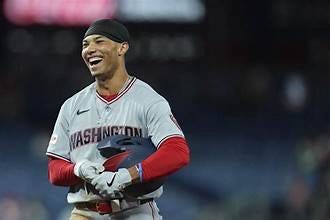
Age: 23
Arbitration Year: 2029
Free Agency Year: 2032
Coincidentally, I was at Nats Stadium for his MLB debut in 2025, and after a blazing-hot season finale, he has since come back down to Earth in 2026. Very young to be this good at recognizing balls and strikes, and it is an underrated quality of his profile. Daylen Lile looks like a toolsy young outfielder. Under the hood, he’s something rarer: an aggressive hitter who almost never strikes out. Most 23-year-olds are still learning the strike zone. Lile already owns it. The power comes and goes, but his floor is protected by swing decisions and contact skills. Think Jarren Duran’s athleticism with fewer strikeouts and a more aggressive Ian Happ approach.
Chase Burns:
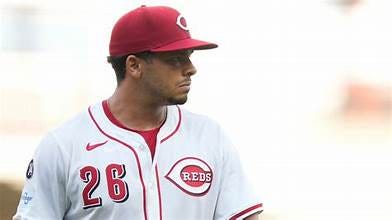
Age: 23
Arbitration Eligible Year: 2029
Free Agency Year: 2032
Cincinnati already ran this play with Hunter Greene. Burns is producing better results at the same age. Why reinvent the wheel? Like his rotation-mate, Chase Burns joined the league at age 22 with a dominant two-pitch mix, a rising 100 mph fastball, followed by a slider that dives below the zone at hitters’ knees. When Hunter Greene signed for 6 years/$53 million (2023-2028 + 2029 team option), the Reds intended to save money on arbitration and buy out a free-agent year. Chase Burns is not a perfect copy-paste of Hunter Greene, but he’s showing better results at similar career stages. Right now, he’s carrying an ERA in the 2s, and generating violent swings and misses, fooling some of baseball’s most feared hitters. This arm is worth the money. I can see a figure that surpasses Greene’s initial deal (6 for 53ms), but with more years of control added on the back end. Not convinced? Check out how he stuffed Juan Soto in a backwood in this at-bat.
Xavier Edwards:
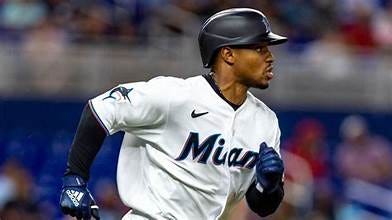
Age: 26
Arbitration Eligible Year: 2027
Free Agency Year: 2030
The Marlins need to pick up a few extra cans for this one because time is ticking - Xavier Edwards is a legit 4-hole hitter. That’s right, Blake Snell. The infamous “slapd*ck” prospect comment moniker that followed Edwards his entire career is finally starting to fade into the ether. It wasn’t always like this, though, because X was quite literally the definition of an on-base, speed-dependent slap hitter. Mind you, this was once a player who only snuck 14 homeruns in 7 seasons in the minor leagues. At age 26, we’re seeing what marginal improvements and tweaks can do. The Marlins have invested heavily in their overall player development infrastructure, with a specific focus on bat speed. In a nutshell, X has always had below-average bat speed, but this might be intentional. Batters like him and Luis Arraez are strikeout-anemic because of their ability to manipulate the barrel and often put the ball in play on most pitches where players strike out. The downside is not being able to translate the bat speed into impact. X still ranks at the bottom of the list when it comes to this stat, but just 1 percentile of improvement in this arena has allowed him to commit his A-swing to meatball pitches in the zone. The results have been immediate. Since 2025, he’s hit over .330 with men in scoring position, and the Marlins continue to slot him in the 4-hole, a spot typically reserved for the most impactful and powerful hitters. Edward’s ability to hit anywhere in the lineup increases his long-term value, and execs can pencil in 3-4 WAR seasons easily when you account for his speed and defense.
Cam Smith:
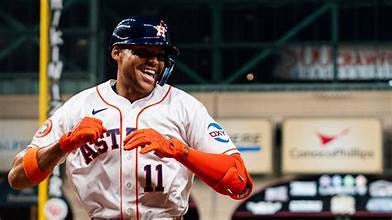
Age: 23
Arbitration Eligible Year: 2028
Free Agency Year: 2031
Why? The Houston Astros need a long-term piece for the future.
It’s a special case because he’s really only shown flashes of being good in the long term. The makeup is high, but Dana Brown even alluded to Cam having to “earn his way” on the team in 2026 during spring training. Cam falls into this sweet spot because if the Astros act now, they can save much more money, since he has yet to surpass a .700 career OPS. Nevertheless, he’s young. His power, defense, speed, and athleticism are all real. These are the foundational tools that indicate a player’s long-term success. I think if the Astros lock up Cam Smith in the next two seasons, they will avoid the same issue they’re facing with a similarly profiled young player on their roster, Jeremy Pena. Like Cam, Pena’s first three seasons were carried by raw athleticism and unrefined tools. Pena not only had a career year in 2025 but also immediately switched agents to Scott Boras when the Astros approached him with an extension. Jim Crane rarely hands out contracts that surpass 6 years, but Cam should be the exception. He’s young, and the sum of his parts suggests that he will be on the cusp of a Jordan Walker-like breakout soon.
Drake Baldwin:
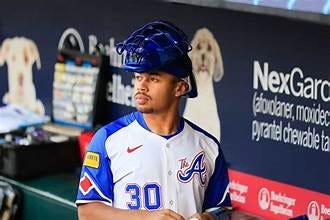
Age: 25
Arbitration Eligible Year: 2028
Free Agency Year: 2031
He plays the most important position on the field with some of the best bat-ball skills we’ve seen from a player 25 or younger. Just Baseball Media compared him to “Yordan Litet” because of his ability to meet the ball with the barrel and his hand-eye coordination skills.
Drake Baldwin is continuing to develop as a defensive catcher, but the offensive side of his game has already blossomed. His ability to walk more than he strikes out while making excellent plate decisions makes this player destined to reach 10/5 rights before it’s all said and done. Right now, the Braves have a veteran catcher in Sean Murphy, who is approaching the end of his contract. In 2026, teams are more likely to carry two everyday catchers instead of just one. Out of all the teams in baseball, the Braves have been the least afraid to commit to their young, talented players. Drake is different than his counterparts in Austin Riley, Ozzie Albies, and even Ronald Acuna himself. All aggressive power forward hitters, but Drake is a lot more like Michael Brantley if he picked up a catcher’s mitt.
Dice Roll: Long-term low-risk investments
These are the Jon Singleton’s and Jackson Chourios - Players who could sign extensions before they reach the Majors. Teams could offer these players contracts well below market value and save big time once they hit their physical peak.
Josue de Paula (Minors - AA):
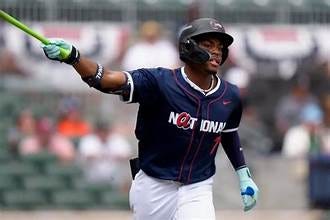
Instead of competing for elusive NIL money and going the traditional college route, de Paula and his family decided it would be best if he departed his Brooklyn home as a teenager and developed as a baseball player in the competitive, year-round baseball gladiatorial arena of the Dominican Republic. His experience with Latin American baseball and foundational American roots not only make him the ideal major-leaguer but also a no-brainer extension candidate. Blend of on-base and power with sneaky speed. Left-handed hitter who will certainly hit as a major league player. His absolutely basement-level floor is copy-paste, Jesse Winker. But I can also see a young Bobby Bonilla in his first 3 years in the majors, producing more power as his body begins to reach that major-league build. He’s not a 1-for-1 comparison as a prospect, but the Dodgers could make amends from trading Yordan Alvarez with signing De Paula before he reaches the major leagues.
Kayson Cunningham (Minors - A+):
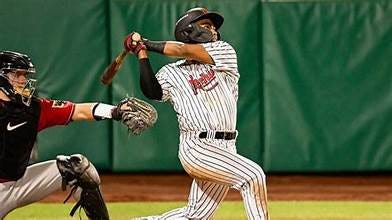
Respected baseball writer Aram Leighton from Just Baseball Media compared his play to Xavier Edwards because of his pure hit tool, up-the-middle infield versatility, and his refusal to strike out. While power is not his calling card (only 2 homers this season), I can very much see him impacting the ball as the 19-year-old matures. The Diamondbacks have also been keen on developing under-six-foot “short kings” like Corbin Carroll and Slade Cadwell (minors)
Kaelen Culpepper and George Lombard Jr. (Minors - AAA):
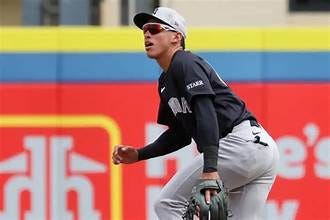
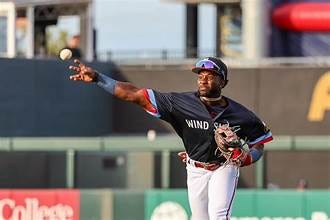
Both are up the middle infielders currently holding their own in AAA. Both are 50-55s across the board and could provide long-term value for their teams. While both players are ranked in MLB Pipeline’s top 100 prospects, it’s hard to project whether they both will be superstars at the major league level. Rather, both players look like they will net a few All-Star selections over the course of their careers and pan out to be at least above average at the major league level. Not every extension candidate needs to be an MVP candidate. For example, the Seattle Mariners extended JP Crawford to a 5-year/$51million deal after he posted a .275/.338/.376 line. The Mariners have kept expectations for Crawford simple: get on base and play average defense, and he’s done just that over the course of his contract. Not only do Culpepper and Lombard Jr. carry higher overall upside than Crawford did during his time as a prospect, but they are coming up in an age where they are seeing more and more of their colleagues get signed early.
Anthony Eyanson (Minors - AA):
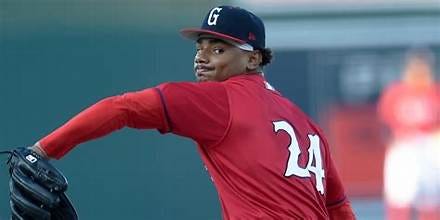
Pitchers are the riskiest to sign because they carry inherent injury risks that could quickly put owners underwater on contracts. Nearly ⅓ of all professional pitchers will endure a season-ending arm injury, with some timelines of return extending past 18 months. Now that we’ve gotten that out of the way, let me tell you why A.E. deserves all the money. 1. No player has improved in terms of velocity, pitch shape, and command as Eyanson did from 2025 to 2026 - his maturity and competitive makeup from pitching at LSU are good foundations to be successful in the majors. 2. His ability to both produce groundballs and generate strikeouts in the mid-upper minors is rare. 3. He’s not going to cost a ton of money as a 3rd rounder. I say this half-jokingly: the Red Sox might be out on signing African Americans to extensions anymore after whiffing on the Kristian Campbell deal (I still think he will become a contributor eventually) in their ill-fated attempt to make up for losing Mookie Betts. However, I still maintain hope because the Red Sox have several Black right-handers in their top 30 prospect rankings.
It’s already too late: The window is missed.
Players who have more than a year of service time and are showing superstar potential. However, they are too close to arbitration (or already in arbitration) and will push their chips in free agency based on their skills.
James Wood:
Age: 23
Arbitration Year: 2028
Free Agency Year: 2031
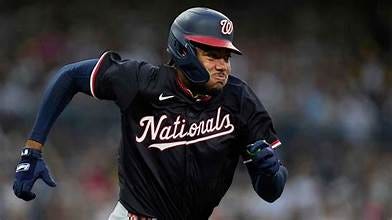
The Nats will likely need to start at Soto’s initial figure to sign Wood. I’m not saying he’s a better hitter than Juan. But if we account for inflation, and how Wood can fall between an athletic version of Adam Dunn at worst or a left-handed hitting version of pre-MVP Aaron Judge at best.
CJ Abrams:
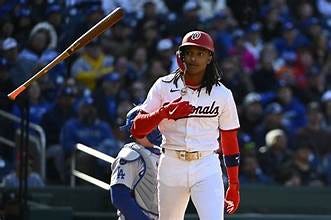
Age: 25
Free Agency Year: 2029
I know CJ loves playing in Washington, but I feel like there’s just been too much said and too much done with him industry-wise for him to be here long-term. He’s been underpaid his entire career. He’s been told that he’d not be playing shortstop if he were on any other team that wasn’t the Nats. He was sent down to the team’s lowest minor league affiliate for “off-field antics.” All of this aligns with his not being in Washington long-term, and, according to Taboni’s moves, it’s clear. The young GM has already stockpiled his farm system with high-end shortstop prospects that are foaming at the mouth to take Abram’s place. At this point, the Nationals are getting as much value as they can with their waning years of control with Abrams. I wouldn’t blame either side if CJ were traded or walked away in free agency.
Jordan Walker:
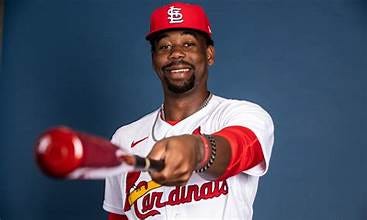
Age: 24
Arbitration Eligible Year: 2027
Free Agency Year: 2030
Despite the breakout, I’m still team “free Jordan Walker” from the Cardinals organization. I’m still on the team that thinks “he didn’t need to be sent to Triple A in the first place,” but it doesn’t matter. Not only has Jordan Walker broken out in 2026, but he’s already sniffing arbitration money before his age-25 season. Chaim Bloom and the camp would need to offer him a franchise-record-breaking contract in order to keep him. The Cardinals have money, but will they break course and sign their star corner-outfielder to a nine-figure deal?
Closing
Baseball owners know writers like me are trying to spend their money. That’s part of the reason they’re pushing draft reforms that would shrink bonus pools and limit how much teams invest in amateur talent. Every year brings another can’t-miss prospect, another future superstar, another player who’s supposedly the best we’ve ever seen. But this article isn’t about handing out blank checks. It’s about recognizing value before everyone else does. The smartest organizations understand that extensions aren’t rewards for what a player has already done—they’re investments in what he’s about to become. The goal is to identify the right players early enough to secure years of production before the market catches up.
Boston learned the opposite lesson with Mookie Betts. By the time they had six seasons of evidence that they were looking at one of the best players in baseball, the discount was gone. The leverage was gone. The opportunity was gone. Mookie is an extreme example, but the principle remains the same. The teams that wait pay retail. The teams that act early get the bargain. So if there’s one takeaway from all of this, it’s simple: Sign your Blacks early, and you won’t regret it.
No posts
Comments
Nothing yet. Say the first thing.
Sign in to join the conversation.