
“No sexual perversion.” This succinct line in the Motion Picture Production Code wasn’t very specific, but to those inside the film industry, the directive couldn’t have been more clear: no gay stuff. While on paper it seemed like Joseph Breen and the dogmatic members of the MPPDA scored a wholesale victory for their conservative worldview with the enforcement of this rule, in reality the story was much more complicated.
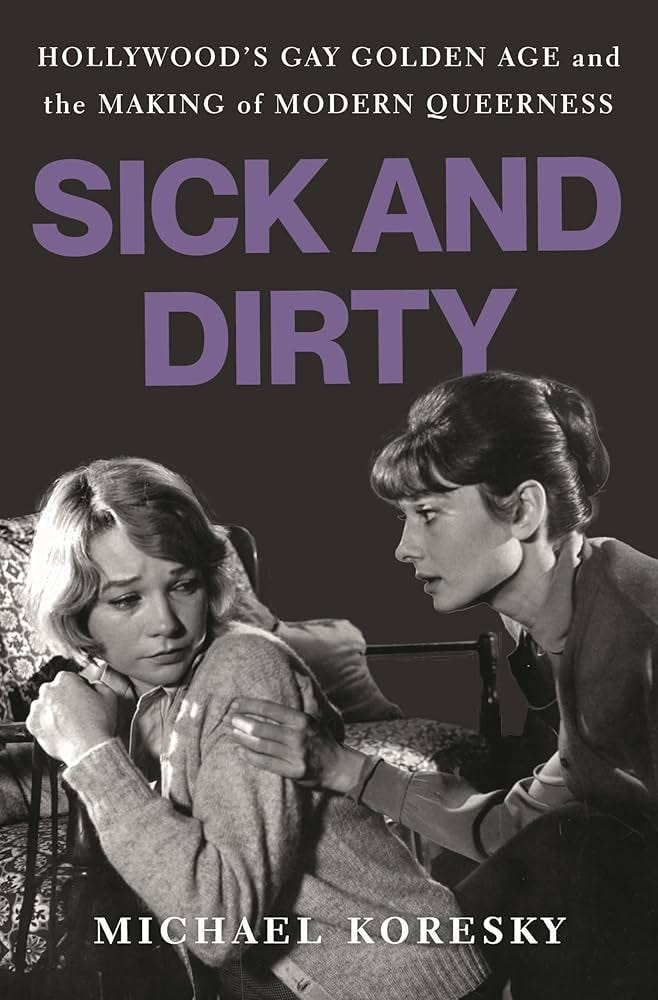
In his latest book, Sick and Dirty: Hollywood’s Gay Golden Age and the Making of Modern Queerness, Michael Koresky examines the 25 years between the enforcement of the Production Code and an amendment which stated that “sexual perversion” could in fact be shown (within reason, of course). Bookended by William Wyler’s 1936 and 1961 adaptations of Lillian Hellman’s play The Children’s Hour, Koresky curates a list of fascinating case studies, including Rope (1948), Tea and Sympathy (1956), and Suddenly, Last Summer (1959), that demonstrate how artists pushed against this censorship—sometimes successfully challenging it, sometimes conceding to it, sometimes finding surprising ways to circumnavigate it completely.
I have been recommending Sick and Dirty to virtually everyone who has asked me for a book to read since I finished it. It was enthralling and deeply inspiring for me to read both as a lover of film and someone who ~attempts~ to make history feel pertinent to contemporary life. I highly encourage you to purchase his book to explore these topics in further detail. In the meantime, enjoy below the interview I was very honored to conduct earlier this week in which we discuss the allure of subtext, the challenges posed by hidden histories, and the tangled paths some of Broadway’s most sensational plays took from stage to screen.
This conversation has been edited for length and clarity.
I’d love to just start with the genesis of this book and how it came about.
I knew I wanted to write a book about queer cinema because even though it’s been a focus of my career for a long time, I hadn’t found a way of incorporating that into book form necessarily, and the books I’d written before have queer elements, but they’re not about queer film history per se. It took me a while to alight upon an idea that felt like it would be properly historical and critical and analytical, because I really feel like I need all three to make it worthwhile. I taught this queerness in American cinema class at both the New School and NYU at different times, and my experience teaching those films to new younger generations of probably predominantly queer young cinephiles really opened my eyes to interesting generational shifts and how perceptions change over the years, and films that at one point had been considered sort of dismissible or disreputable or “bad for the gays” or however you want to say it, that they were finding this new validity with younger people and that was really Interesting.
I showed The Children’s Hour in this class in late 2021. Everyone still had masks on, which was an interesting way of teaching. I almost didn’t show The Children’s Hour because, even though it’s obviously an important fulcrum in queer film history, I still felt like, “Oh, this movie is dated. This movie is going to get bad responses. It’s going to be both horrible because of the painful subject matter and also maybe just the kind of the goofy camp aspect of it.” But the response from the class was quite the opposite. They were very emotional. There were a lot of tears and I actually had to console some of the students after because it was just so purely emotional.
I realized this movie not only still works or maybe even works better than ever, who knows, but it’s like a prime pivot point for the class, which was about queer film history. Once I realized that the earlier Hollywood films had a really strong response and that there was something emotionally enrapturing about them, I felt like, okay, this is a book. I want to write about these films and this history now. This history is not going to seem like this kind of musty old Hollywood creaky, open-up-a-cobweb book kind of history, but actually this is something that matters and this matters to new generations of people.
I was so taken by that anecdote in your book because I think that generation’s experience of film culture and film history is so fascinating. Obviously, they’re growing up in a really distinct political environment, but it’s also a really distinct media environment, where the discovery of films is so different from the way you or I would have found new things to watch. I’m curious if you have any insights into the way that you’ve observed that generation as filmgoers. Anecdotally, I’ve seen so many young queer women online who don’t fixate on “representation” or the politics of a film too much, but they’ll be really obsessed with a yuri age gap fantasy idea of Walk on the Wild Side or something. So I’m just curious if you have any thoughts on that generation coming up, or maybe the way the internet has affected this topic in particular?
I mean, it’s a great question and it’s certainly an unresolved one because there’s just so much out there and so many ways into cinephilia, so many ways into talking about art, so many ways that we can connect or really disconnect over things. In the most basic way, the way that we talk about movies is so incredibly different from the way that I grew up. It was such a solitary endeavor when I was growing up. I’m not saying that it’s better or worse for it to be solitary. I think it’s great to unite over art and for it to be a communal endeavor, but my experience was that I felt alone. I didn’t have the internet, let alone social media. I can only see films I can get my hands on if there’s a VHS nearby, if I can find something at the library or the local video store. Then once I see them, I’m not discussing them with anyone because I didn’t have a community of film lovers with me. I had some friends who I forced to watch movies sometimes.
So, you know, I found outlets, the outlets were writing for the newspaper or the town or the school paper or, making lists and keeping the lists in a drawer in my desk.
That’s sort of roundabout because I can’t help but bring in my own personal experience to the question, but I do admire the way that people bring their own lives and their own openness to this. Of course, I’m envious of younger generations of queer people. I didn’t come out until I was about 24. At that point it felt late. In retrospect, I came out when I was ready to come out, but I was sitting on a lot of angst and anxiety and self-loathing. Obviously, I would change that in a heartbeat. I do think of those things in tandem in a way—the loneliness of the cinephile and the loneliness of the young, not-quite-aware queer kid who didn’t have any gay friends, or so he thought. This is maybe not how you were hoping I would answer the question, but isolation is cinephilia to me, so it’s really hard to fully grasp where these conversations are coming from and what they actually mean.
I do know that I don’t like the way a lot of discourse occurs and what’s being said online. This is kind of an obvious thing to say, but I’ll notice that the way that even very, very intelligent younger cinephiles engage with cinema and each other on social media is just ruinous and sort of nasty. But at the same time, I love that there is this general openness to any kind of perspective. There isn’t an openness to the way people discuss film, but there is an openness to experience. I’ll put it that way.
One of the reasons I really loved your book is that it really considers what regular moviegoers would have thought about a film. When we say something is coded, it’s coded by somebody, for somebody, and so many film history books are focused on the by somebody instead of the people who are reading these coded images and living with them in their lives. Why was it important to you to include, for example, the history of soldiers who had gay experiences during World War II or the letters that were written to Lillian Hellman about The Children’s Hour?
There’s nothing more moving or important to me than to remember and to make other people remember that, it sounds obvious, but we’re here. We’ve always been here. Gay people are part of history. We tend to look back on the past as though the default experience is naivete, right? Gayness wasn’t discussed, and therefore either it didn’t exist or people weren’t savvy enough to know it was there.
Gays and lesbians and bisexuals and all kinds of queer people who have always existed were always going to the movies. To remember that they were also making the movies, then you create this relationship between the screen and the audience that is just so beautiful. That connection is really important to remember. Every time I came upon something related to one of the figures that I was writing about historically that brought out that truth, I had to include it. Finding the Lillian Hellman letters in her archives was my favorite discovery of the whole experience. Just knowing that there was some woman somewhere who went to the library and wrote a letter to Lillian Hellman almost out of this urgency or desperation to connect, and telling her, “We’re starting this journal written by and for lesbians and I can’t really tell anybody about it, but I want you to know. Maybe you’ll be sympathetic. Maybe you’ll help. Maybe you’ll write back to me.”
Who knows if she ever did? I’m guessing she didn’t, but the fact that it was there, I thought, was so incredibly poignant. The idea of that spreads; the tendrils of that are kind of throughout the book, right? Communities rising up in small ways or large ways, and how historical currents sort of shift our perception of that. Gay men going into World War II, finding themselves, and then starting communities after that, and those communities amassing around Judy Garland. One of the pledges of the book was discovering the tides of history, how they ebb and they flow and how one thing leads to the next.
Nothing felt superfluous to me. Everything felt like it was part of the narrative. When you start a book, you don’t exactly know where it’s going to go, where the research is going to go. You kind of find the story as you’re writing. I knew where I wanted to start and I knew where I wanted to stop because no one had written about these 25 years between the two Children’s Hour adaptations. It seemed like, okay, there’s a history here. I can’t say this for sure, but many people probably would have gone to Stonewall as some sort of a turning point. I knew very much that when Children’s Hour came out, because the amendment had been added to the Production Code to allow “sex perversion” in cinema, which meant “we can show queer people within reason.” But I knew that if I had gone all the way to ‘68 when the ratings board changes and then 1969 when Stonewall occurs, I think you would just get into kind of the same old territory that we’ve read about a lot.
I thought it was just a little more interesting and maybe more poignant to stop it at ‘61 where things seemed like they were changing. So yes—the audiences who were there for this, the people behind the scenes, the people who are watching are always part of the narrative. I think people really do forget that. They do think like, “of course there weren’t gays in movies back then because people didn’t know about that sort of thing.” The whole premise of the book refutes that. No. This was a code. This was forbidden for a reason, and that has affected the way that we perceive all of cinema from that point to now.
So many of these conversations about the impact of these films would have necessarily been underground. Did that present challenges for you as a researcher?
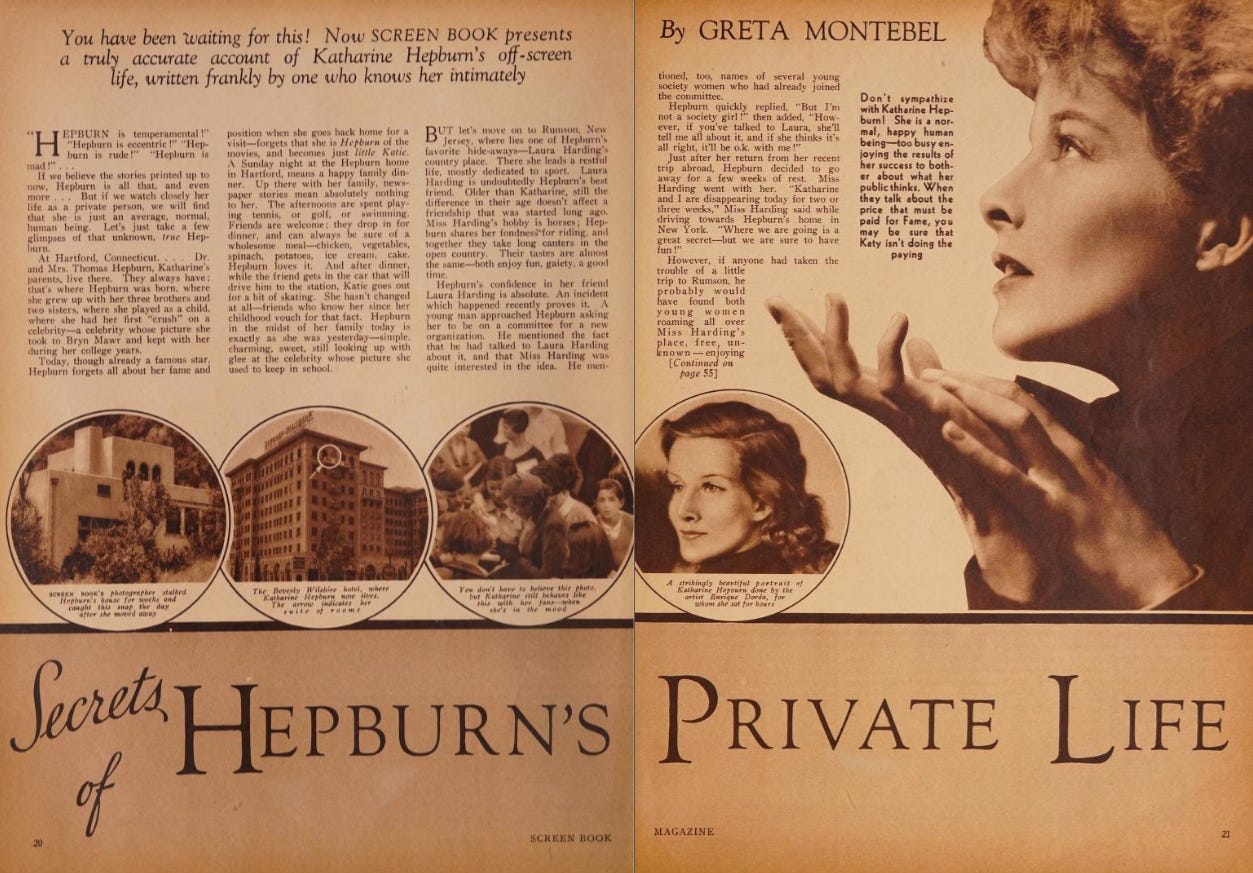
That’s the essential challenge of any history of gay culture and gay subcultures, right? If you read books by Patricia White or by Vito Russo, anyone who’s done this sort of research, it always comes back to the same thing. Without proper documentation, because the responses of gay audiences were not being recorded or even acknowledged as a real thing, you don’t really have that history. It’s a hidden history. So you rely on innuendo and you rely on, how much do we really know about Katharine Hepburn and how much do we really know about Greta Garbo?
We know a great deal because of a lot of biographical work that’s been done since, but there’s no real study of lesbian audiences in the 1930s. It’s all kind of what we have both assumed and garnered from years of research and analytical study and because it’s common sense too, right? But yes, there are these huge gaps in the histories, and that’s unfortunate. They weren’t being studied, they weren’t being analyzed.
In that vein, I like to think about New York audiences who would have seen these plays on Broadway, and then watched the movie versions of those same plays and noticed that a lot of things had changed. Did you read anything in your research that illuminated that dynamic? Whether people found the censorship condescending or how they thought about it?
Yeah, for sure, mainly because of the things that critics and journalists were writing. When something’s in the newspaper, you know that there’s a general understanding and awareness of that. Going as far back as 1935, after Children’s Hour had opened and Lillian Hellman was going to start working on the film for Samuel Goldwyn, there were articles already being written that were like, “If they make a movie of this, they’ll dumb it down because of the new Production Code.” In that case, dumbed-down just meant because the things were forbidden, and you couldn’t get away with certain things. There was a full awareness in all of the coverage of Tea and Sympathy in the 50s because it was such an extended period of production or pre-production—the haggling over all the details, the fights between studios, and who’s going to get the rights to it.
Every time there was a huge success on Broadway and the studios bought the rights to these sensational plays, it was hilarious because then they’d have to change everything because of the Production Code. So everyone knew everything would have to change. As we went into the late 50s and things were loosening up, a lot of studio heads didn’t have any time for that shit anymore. The papers covered that as well. That’s the closest I know to people’s awareness; that it was being written about by journalists. This was just sort of like the way it was. The journalists were smart. They knew that this was just the way of the world, you know?
It’s also funny to me that we’re getting these films purely out of capitalist motivations. They aren’t buying these films for their themes, really. They’re buying them because they’re popular.
Yeah, the irony being the themes are what make them popular because they’re sensational. They want to replicate the success they had on Broadway and then they get the rights and then they’re like, well, wait a second, you have to change everything and change the title even. It’s like constantly shooting yourself in the foot and it’s very funny.
Maybe the one person who comes closest to having an ideological impact as a producer is Dore Schary, who repurposes The Brick Foxhole in a completely unexpected way. How do you see his role in this?
Dore Schary is a great example of the ultimate liberal do-gooder who constantly was tarnishing the legacies of the things that he was trying to save. Again, going into the book, you don’t know what the different threads are going to be, and he just kept coming up. I was like, oh my god, it’s Dore Schary again. He became one of the main characters, right? Dore Schary bought The Brick Foxhole—not a play in that case, but a book that was a sensation. He thought it would make a great movie, but then they had to change it from gay bashing, a queer-motivated hate crime, into an anti-Semitic crime [the film, Crossfire]. Then that became the groundbreaking thing because there had never been a movie about that before.
One could argue, as I do, you can still find traces of the kind of the queerness in that text, but it became something completely different. Crossfire is remembered today as a groundbreaking noir about antisemitism. Then Dore Schary goes from RKO to MGM, where he’s trying to get Tea and Sympathy made. Then he’s connected to Cat on a Hot Tin Roof, which is very much dumbed down in many, many ways. But you can’t completely extricate the queerness from either Tea and Sympathy or Cat on a Hot Tin Roof, so those just became these amazing studies in futility that were increasingly hysterical.
But yes, Dore Schary was somebody who really thought that he could change the world through movies, but he was a very conciliatory person. I think he probably fashioned himself as a radical but he was actually just kind of a lukewarm water do-gooding liberal, which is, of course, the way of the world today.
I totally agree that, as you say with Tea and Sympathy for example, you can try as hard as you want to kind of strip away all of the queer elements from a story, but it’s still very obvious they’re calling him gay, even if it’s never explicitly said. It’s not just that he doesn’t like football. As you point out in the book, the subtext of something can be very loud in a way that is ironically more compelling than being very direct in the way that film often is now.
I’m not going to say the book has a single thesis, but that’s one of the main ideas of it. Another reason I wanted to write it is because I’m working through my own ideas about what makes a movie exciting. What makes a movie meaningful? What makes the films of that era—which is by definition, censorious—more compelling, enriching, exciting, and rewatchable than most of the things we watch today?
I don’t think it’s just that there was an incredible level of craft, that there’s a system where we’re firing on all cylinders, where everything is perfect looking and sounding. I don’t think it’s just that. I think it’s the fact that everything has to be given to you through this coding. It’s not just that these films have queer coding that makes them more compelling. I think the way that eroticism in general is threaded through a classical Hollywood film is much more exciting. It’s much more erotic. It’s much more appealing because of the things that aren’t said. At the same time, one would never want to go back to that. So there’s the great conundrum, right?
This is something I would ask students a lot in teaching some of these films. Do you think this is a progressive film? Do you think this is a conservative film? Does it have to be one or does it have to be the other? What are the elements that are conservative? What are the elements that are progressive? What makes one in some cases more compelling than the other? There are more levels here, right?
I would go so far as to say that even in the early 90s, there’s still barely anything from a studio that had gay characters. So let’s talk about Jonathan Demme’s Philadelphia. At the time, it was quite excoriated not for how it was made, but because it was made so late, that it was the first Hollywood film that was about the AIDS crisis and it came out in 1993. If you watch it today, it’s really interesting because it still has to function in a kind of hide-and-seek way. There’s something kind of beautiful and mysterious about that and the way that it still can’t say everything, even though it’s trying to be as liberal and good as possible.
Once you get even later than that, and things are much more open, they become less mysterious. They become, I’m not going to say necessarily not compelling, but how often do we talk about the movie Milk, for example? It’s such a righteous film and it’s good on every level. It’s well-made, well-acted. It’s a historically important film. There’s nothing from The Golden Age of Hollywood that has that level of representation, but also nothing from now has that level of reading, right? In other words, you don’t have to read a film anymore. So it’s just the endless conundrum of why we watch movies and why they’re meaningful to us. Do we want to unravel mysteries while watching films? Or do we want to kind of be told what to think? I don’t want to go back to the way it was, but yeah, why do we keep watching these movies? Why are we compelled by movies from that era?
The films you write about are also star texts; they were vehicles in many cases for specific actors. Was there ever a risk element in starring in these films? I’m thinking specifically about Audrey Hepburn, who you wouldn’t necessarily expect to make a film like The Children’s Hour, but who does anyway.
It’s a good question. It’s something that I really wanted to know more about and that I tried to do as much research as possible to get that perspective. She didn’t really say much about it at the time. Not much was written about the risk or implicit bravery that would have been part of that. Shirley MacLaine sort of disowned [The Children’s Hour] years later in The Celluloid Closet a little bit, because the film had become kind of politically incorrect or disreputable. Audrey Hepburn never said too much about it after the fact. In terms of taking the role, what was more interesting to me was just the contrast between that and then casting the play in the 30s, which was just poison for all these New York stage actresses, who just said no.
Finding women who would say yes to play those parts was really, really hard because it was considered a potential career killer. By the time William Wyler was doing it in ‘61, he had garnered so much good will because of his career. He was a legend. He had already won three Oscars and he had directed Audrey Hepburn to her Oscar in Roman Holiday, so she didn’t really have a lot of hesitation to work with him again. He had just come off of his third Oscar for Ben-Hur. He was like the king of Hollywood. I think people would have just followed him anywhere to tell you the truth.
But towards the end of the 50s especially, there was a sense of a liberalizing Hollywood. Hollywood has to get with it. Hollywood has to take a look and actually see what’s going on in the United States, what’s actually going on. Doing a movie like this was one way of showing those attributes. I know it seems strange in retrospect because there wasn’t really much else like it, but it was a blip. Because The Children’s Hour didn’t do well, it all just went back underground, representations of gay people. In terms of the stars taking the parts, all I know is that Audrey Hepburn just trusted William Wyler and that is how this whole thing got made in the first place.
Before that, all the other stars that we talk about in these films, it wouldn’t have been as drastic because those parts, for the most part, often eradicated or were denuded of queerness. People doing Tennessee Williams adaptations thought it was risky in the sense that it was potentially salacious material, but they weren’t necessarily taking “gay roles” because they had been altered so much or they were the supporting parts or whatever. It’s interesting. I kind of wish there was more about that.
Yeah, I’d be so curious if anyone ever interviewed Deborah Kerr about it specifically, because she uniquely had the stage role as well as the film role in Tea and Sympathy.
Yeah, and so did John Kerr.
Right, right. I find her persona so interesting because she’s seen as this very Puritan, sexless creature, but all of her roles are so horny. She has this burning desire within her, and I think that’s oddly representative of what’s happening broadly in this book. How are we going to express this thing that we’re not even allowed to express?
It’s a funny case when a star has played a part on stage, and then they’re in the film in the kind of slightly expurgated version of that thing. You can’t erase the years that you performed this part on stage. You know what this is about. I mean, like you’re saying, it’s funny to even think that anyone could assume it’s about anything else. But in making the film, they had to take words out. They had to remove the word queer. They had to remove the word sissy. They had to change character. There’s a much more overtly gay teacher character. They had to take that character out.
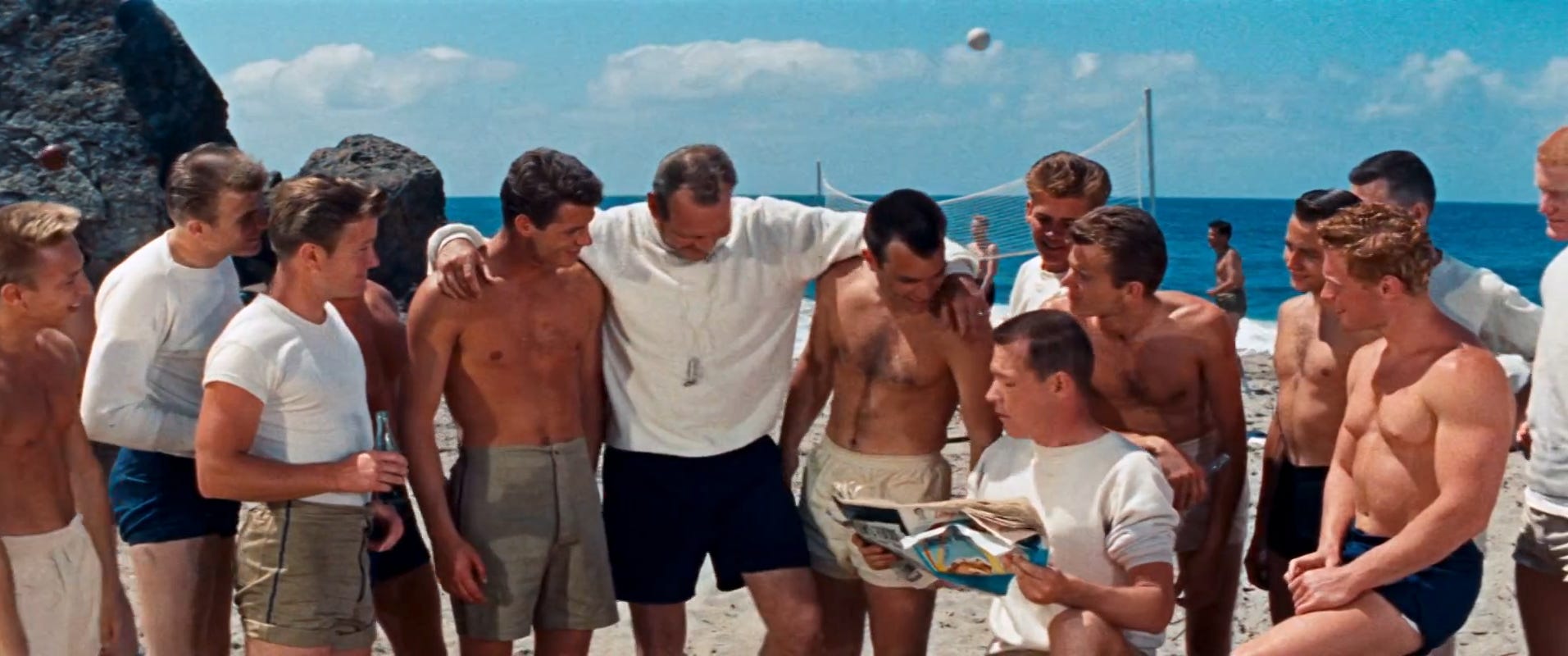
Yet her husband in the movie is possibly the gayest character.
Her husband is a closet case. Yeah. It’s very, very clearly written as a closet case. Yeah and you’re right. Deborah Kerr, you think that she’s doing that kind of sexless schoolmarm, but she’s actually quite the opposite. She initiates a quite controversial sexual congress in the climax. There are conversations that I have in the book of letters by Deborah Kerr written to Vincent Minnelli when they were talking about the silliness of it, knowing exactly what they were making and then kind of having to pretend that they weren’t.
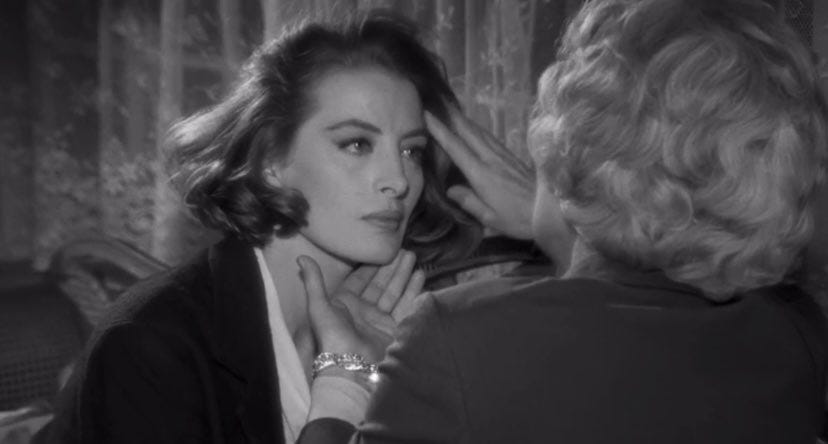
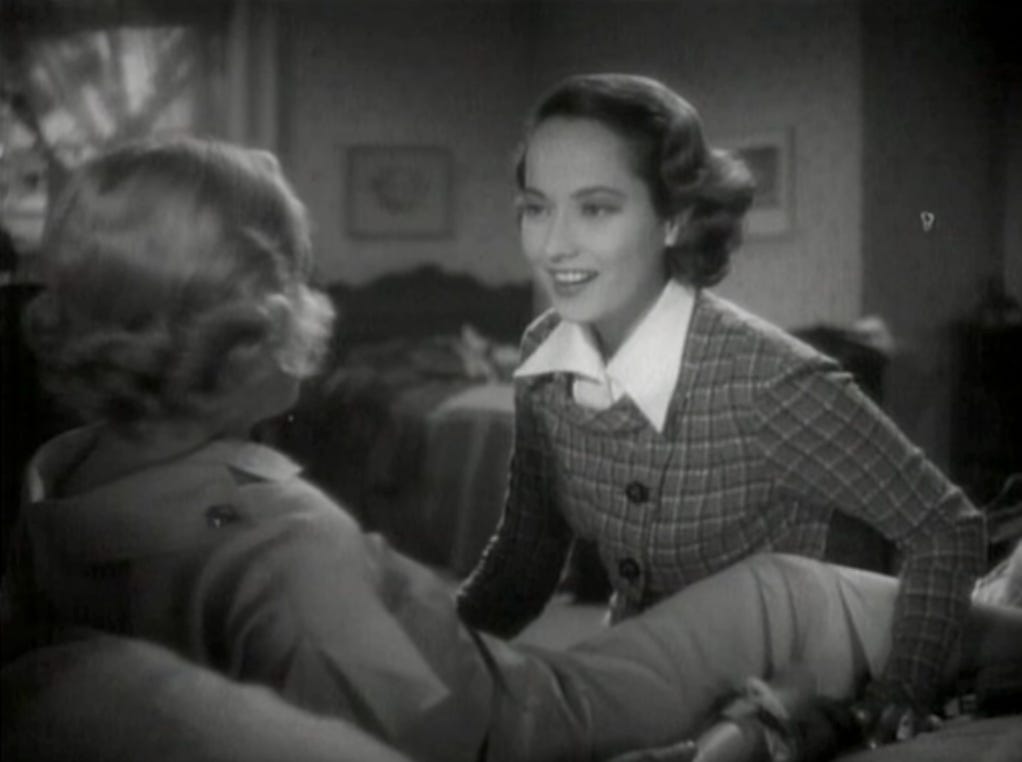
But again, the performances betray all that, right? Even going back to These Three, I try to make the case that Miriam Hopkins and Merle Oberon knew exactly what they were doing—certainly Miriam Hopkins, who was known in the pre-code era to be a very sexually forthright performer. It’s very silly to think that you can cast Miriam Hopkins in the main role of The Children’s Hour movie and think that she’s not going to bring her sexual being and her awareness of the part to that, no matter how much you change it. These Three is a sexier movie than The Children’s Hour because everything had to be sort of under the surface.
The fact that Miriam Hopkins agreed to come back for the second adaptation is maybe indicative of her boldness in that area. I know in the biography of Merle Oberon, she has some excuse like, “oh, I don’t want to revive the past” or whatever, but I also wonder if something about more straightforwardly addressing the themes of the play made it scarier.
I think so. I’ve talked about that a bit with [Merle Oberon biographer] Mayukh Sen and I wouldn’t want to put words in his mouth, but she definitely was much more of a conservative person in that area.
To wrap this up, are there any films that you considered putting into this and didn’t end up making the cut, but that you would suggest people watch?
Most of the things that I think are part of this history and that I would have devoted more space to if I thought they were truly part of a larger narrative I wanted to tell are still in the book in small ways. The Uninvited is a movie that I do discuss for a couple pages at least. It’s a 1944 ghost story. Even more than Rebecca, I think it’s the ultimate ghostly lesbian haunting film, and it just blows my mind every time. There are really interesting Production Code letters about being aware that lesbian audiences kept going back to the movie over and over again. That’s as close as you get to actual data, you know?
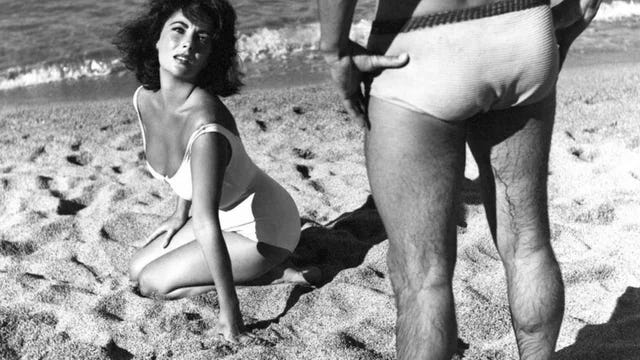
There’s a movie that I considered doing called Desert Fury. This is a noir that’s just about a gay couple. “How did you guys meet each other?” “It was 3 a.m. in Times Square at the Automat and we were getting a sandwich and he came back to my apartment.” I was like, wait, what? It’s a great movie. Imogen Sara Smith, who’s a friend of mine and a great cinephile, is the one who introduced me to it. I felt like the story that I wanted to tell wasn’t just “look at all these coded films and look at these cool readings we can do.” I really wanted to tell a history of Hollywood through these people, so I erred on the side of larger names and larger productions. I felt like Desert Fury would have been just sort of like a fun little aside as opposed to a main thing. But I love that movie.
Comments
Nothing yet. Say the first thing.
Sign in to join the conversation.