
CASP competition that launched AlphaFold to Nobel Prize fame gets a lifeline from Google’s DeepMindas as NIH funding expires
From Hype to Hospital: OpenAI's Kenyan Copilot Study Shows LLMs Finally Earning Their Keep
The Cold Chain Breaker - Why Sanofi Just Dropped $1.15B on a University Spinout With Zero Revenue
Not yet a member of our super awesome slack community of ~10,000? Join HERE 🤗
DeepMind funds its alma mater as CASP protein prediction contest secures 12-month reprieve
In an twist of scientific funding fate, Google DeepMind has stepped in to provide emergency funding for CASP—the very competition that catapulted its AlphaFold system to international recognition and Nobel Prize glory. The Community Wide Experiment on the Critical Assessment of Techniques for Protein Structure Prediction faced imminent shutdown after its NIH grant (approximately $639,000 annually) expired without renewal, despite organizers submitting an $800,000 renewal application last year. CASP co-founder John Moult confirmed that DeepMind's one-time gift will support the organization for roughly 12 months, allowing UC Davis to cancel layoff notices for the competition's two full-time employees and continue normal operations while seeking stable long-term funding. This funding crisis highlights a concerning pattern where breakthrough scientific infrastructure loses government support just as it proves most valuable—CASP has evolved from a simple benchmarking exercise to hosting competitions for drug-target binding prediction and protein complex structure determination. The competition's biennial blind tests have driven decades of progress in computational biology, with CASP14 in 2020 marking AlphaFold's dramatic breakthrough that "essentially solved" single protein folding. DeepMind's rescue of its former proving ground underscores both the value of sustained scientific competitions and the precarious nature of government research funding, even for programs that spawn Nobel-worthy innovations.
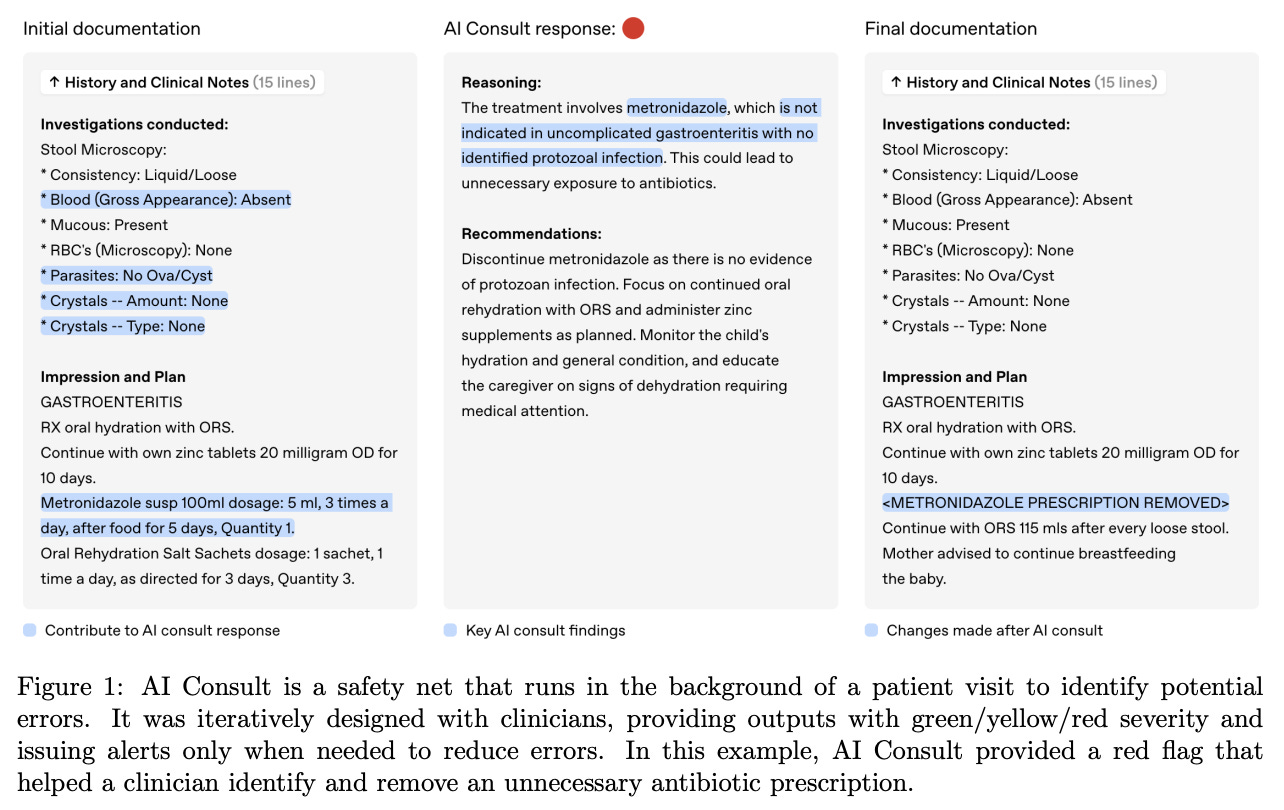
From OpenAI: Real-world clinical LLM trial in Kenya shows boost in note quality and care efficiency
OpenAI and Penda Health partnered to evaluate a GPT-powered clinical copilot during 39,849 patient visits across Kenyan health centers. In a retrospective analysis comparing 20K traditional clinician notes to 19K GPT-assisted ones, the study found a 42–58% improvement in documentation accuracy and completeness, along with a >25% reduction in time to complete notes. Modest gains were also noted in early warning scores and treatment adherence. Clinicians reported that the tool supported workflow and reduced cognitive load, though all outputs remained subject to human review. The results highlight the potential for LLMs to improve clinical documentation and efficiency in low-resource settings. OpenAI plans to offer the model to additional nonprofits and health ministries.
Behind the Deal: Sanofi Acquires Vicebio for $1.15B — A High-Stakes Play on Thermostable Vaccine Tech
Sanofi’s $1.15 billion acquisition of Vicebio stands out not just for its size, but for its bold timing. The target, a University of Queensland spinout, has no marketed products and only early-stage clinical assets—yet commanded a valuation typically reserved for commercial-stage biotechs. At the heart of the deal is the Molecular Clamp™, a structural biology platform that locks viral proteins in their immunogenic prefusion shape while enabling room-temperature vaccine stability. That feature alone answers one of the major logistical failures exposed during COVID-19: the cold-chain bottleneck.
The deal marks a decisive shift for Sanofi, which has lagged in the mRNA race and now appears determined to differentiate through vaccine thermostability and dual-pathogen formats. Vicebio’s lead RSV/hMPV candidate remains in early development, but Sanofi is clearly underwriting the broader platform potential—particularly in pandemic response and global access applications. That the company chose a full acquisition at this stage, rather than a structured licensing deal, suggests a strategic premium on platform control. In an M&A environment still characterized by risk sensitivity, the Vicebio buy reflects rare conviction: a top-tier price paid not for revenue, but for vaccine infrastructure built for the next global crisis.
Baker Lab's AI breakthrough targets over 50% of human proteome previously deemed impossible to drug
Researchers at the University of Washington in David Baker's lab have cracked one of drug development's most vexing challenges: targeting intrinsically disordered proteins (IDRs) that make up over half the human proteome. Using complementary AI approaches—RFdiffusion and a method called "logos"—the researchers achieved 91% success rates (39 of 43 targets) with nanomolar to picomolar affinities that "match nature's strongest interactions." The breakthrough targets include dynorphin for chronic pain, BRCA1 variants for breast cancer, and amylin for type 2 diabetes, with designed binders actually dissolving amyloid fibrils in lab tests. Baker notes this approach has become "almost easier" than targeting ordered proteins due to induced fit flexibility—a delicious irony given these shapeshifting "spaghetti-like" molecules have tormented drug hunters for decades. The tools are now freely available online, potentially unleashing a wave of therapeutics against previously untouchable disease drivers. While the lab plans to tackle post-translational modifications next, this represents nothing less than doubling the druggable universe overnight.
Nvidia’s La-Proteina scales atomistic protein generation to 800 residues with state-of-the-art performance
There is a new protein foundation model every week, and NVIDIA has no plans on being left out! Its researchers have unveiled La-Proteina, a generative AI model that directly tackles the notoriously difficult challenge of joint sequence-structure generation for fully atomistic proteins—achieving over 75% co-designability while scaling to unprecedented 800-residue chains. The breakthrough stems from a clever "partially latent flow matching" architecture that explicitly models alpha-carbon backbones while capturing sequence and side-chain complexity through fixed-dimensionality latent variables, effectively sidestepping the variable-length challenges that have plagued previous approaches. La-Proteina's performance metrics are impressive: it doubles the success rate of existing tools in producing viable, foldable proteins and demonstrates superior structural validity via MolProbity assessments, generating more physically realistic structures than baseline methods. The model particularly excels at atomistic motif scaffolding, producing 2-3x more unique viable scaffolds than competitors like Protpardelle with near-perfect motif recovery rates—a capability crucial for enzyme active site design and custom binder development. While current implementation focuses on single-chain proteins, the scalability to 800-residue generation (where most baselines collapse entirely) positions La-Proteina as a potentially transformative tool for de novo protein design applications. As the field witnesses an arms race between specialized AI tools—from AlphaFold 3 to RFdiffusion 2—La-Proteina's atomistic precision could prove decisive in bridging the gap between computational predictions and wet-lab reality.
Alphabet spinoff teams with immunotherapy specialist for aggressive 18-month timeline targeting deadliest brain tumor
Alphabet’s SandboxAQ and Florida-based iOncologi are racing to crack glioblastoma—the brain cancer that typically grants patients less than two years of survival. The collaboration marries SandboxAQ's Large Quantitative Models (LQMs) for drug discovery with iOncologi's precision immunotherapy platform, targeting a lead therapeutic candidate for clinical trials within just 18 months. The stakes couldn't be higher: glioblastoma affects 300,000 new patients annually worldwide, accounting for 15% of all primary brain tumors and over 200,000 deaths yearly. SandboxAQ's AQBioSim platform, which the company claims works 100 times faster than traditional virtual screening, will optimize high-fidelity mRNA vaccines designed to reprogram immune systems against tumors shielded by the blood-brain barrier. iOncologi brings clinical execution chops and expertise in overcoming immune tolerance—critical given glioblastoma's notorious resistance to treatment. While the 18-month timeline appears optimistic given typical development cycles, both companies are banking on AI-driven acceleration to finally move the needle on this devastating diagnosis.
Duchenne gene therapy maker capitulates to FDA pressure after initially refusing to halt shipments following patient deaths
In a dramatic about-face that underscores growing gene therapy safety concerns, Sarepta Therapeutics agreed Monday to pause all Elevidys shipments after initially rejecting the FDA's Friday request—a rare regulatory standoff with few precedents. The crisis centers on three patient deaths from acute liver failure: two teenage Duchenne patients treated with approved Elevidys, and a 51-year-old limb-girdle muscular dystrophy patient who received experimental SRP-9004 in clinical trials. The FDA has now revoked Sarepta's platform technology designation for its AAVrh74 viral vector and placed clinical holds on all LGMD trials, citing "unreasonable and significant risk." What makes this particularly damaging is Sarepta's initial lack of transparency—the company didn't disclose the third death publicly until forced to by Wall Street analysts' fury over the omission. The reversal comes at a precarious time for the gene therapy field, already struggling with adoption hurdles and investment headwinds. For the Duchenne community that championed Elevidys through controversial approvals, this safety crisis threatens to fracture support for a therapy that represented their best hope against a devastating disease.
AI-powered RADR platform vindicated as LP-284 achieves complete metabolic response in therapeutically exhausted patient
Lantern Pharma has reported a dramatic clinical outcome, lending credibility to AI-driven drug development: a 41-year-old patient with aggressive Grade 3 DLBCL achieved complete metabolic response after just two cycles of LP-284, having previously failed standard R-CHOP chemotherapy, CAR-T therapy (liso-cel), and CD3xCD20 bispecific antibody treatment (glofitamab). The response represents a remarkable turnaround for a patient presenting with extensive multifocal bony lesions across spine and hips—precisely the kind of therapeutically exhausted scenario where LP-284's synthetic lethal mechanism was designed to excel. Lantern's RADR platform identified and optimized LP-284 in under three years for approximately $3 million, a strikingly efficient timeline compared to traditional pharmaceutical development. The next-generation acylfulvene exploits DNA damage repair deficiencies through computationally-guided precision, targeting malignant cells while preserving healthy tissue function. With multiple FDA Orphan Drug Designations already secured and enrollment continuing in the Phase 1 dose-escalation study (NCT06132503), LP-284 is positioned to address a critical gap in the $4 billion global B-cell cancer market, where DLBCL affects approximately 200,000 patients annually and represents the largest aggressive lymphoma subtype with substantial unmet need in refractory settings.
When the AI Bubble Meets Legal Reality: Tempus Faces the Music
In a particularly brutal move, Tempus AI (NASDAQ: TEM) became the latest casualty in the AI-washing securities litigation wave, with a class action lawsuit filed June 12 following Spruce Point Capital's damning May 28 report that torched nearly 20% of the company's market value in a single day. The lawsuit, covering the period from August 2024 to May 2025, alleges the precision medicine company inflated contract values through related-party deals, engaged in suspicious "round-tripping" with its SoftBank joint venture to manufacture revenue, and acquired Ambry Genetics despite its "aggressive and potentially unethical billing practices." The complaint also targets CEO Eric Lefkofsky's track record and questions the company's actual AI capabilities versus its marketing narrative. With multiple prominent plaintiff firms including Robbins Geller circling and an August 12 lead plaintiff deadline looming, Tempus finds itself defending not just its business model but its entire AI-first positioning. While the company dismisses the suit as "frivolous" recycling of short seller claims, the case underscores growing judicial scrutiny of AI-heavy valuations in healthcare—though courts have historically viewed short seller-driven litigation with considerable skepticism. The proceedings could set important precedents for how AI capabilities are disclosed to investors, particularly as seven AI-related securities cases have already emerged this year alone.
Federated learning reaches pharma as Elix launches collaborative AI platform with data from 16 competitors
In a heartening display of industry collaboration, Japan's Elix and the Life Intelligence Consortium (LINC) have launched the world's first commercialized AI drug discovery platform utilizing federated learning technology trained on confidential data from 16 pharmaceutical companies. The platform, now integrated into Elix Discovery™, represents a significant breakthrough in addressing one of AI drug discovery's biggest challenges: data scarcity. Using federated learning—which enables collaborative model training without companies sharing sensitive compound structures externally—the system was trained on over 1 million compounds and 10 million data points, unprecedented in global scale. The initiative emerged from Japan's government-funded DAIIA project, which concluded in March 2025 after involving 17 pharmaceutical companies, RIKEN, Kyoto University, and around 10 AI companies. What makes this particularly noteworthy is the rare instance of competing pharma companies actively sharing data "for the benefit of patients," as LINC's Yasushi Okuno noted. Several pharmaceutical companies have already adopted the platform, with Elix CEO Shinya Yuki positioning it to become the "de-facto standard" for AI drug discovery in Japan. This federated approach could serve as a template for collaborative AI development across industries where data privacy is paramount.
Omega defies biotech VC drought with $647M eighth fund close
In a characteristically bold move, Otello Stampacchia's Omega Funds has bucked the brutal biotech VC downturn by closing its eighth fund at $647 million, exceeding its $600 million target despite the sector's worst fundraising environment in a decade. The Boston-based firm stands virtually alone in 2025's barren VC landscape, where only 46 biotech funds closed last year compared to the pre-pandemic norm of 150-300 annually. Omega's track record speaks for itself: since launching in 2004, the firm has deployed $2.5 billion across 50 M&A exits and 47 IPOs, including recent high-profile acquisitions like Scorpion Therapeutics (Eli Lilly) and Amunix Pharmaceuticals (Sanofi). The fund's oversubscription signals continued LP confidence in Stampacchia's strategy of "creating and investing in innovative life sciences companies targeting severe, unmet medical needs" across the US and Europe. While the $647 million haul nearly matches their 2021 fund size, it comes against a backdrop of 20% year-over-year decline in Q1 biopharma venture funding. This successful raise positions Omega as one of the few well-capitalized players ready to capitalize on attractive valuations in a market where capital scarcity is forcing out weaker competitors.
Down Under's Biotech Kingmaker Secures A$439M to Back Next Generation of Antipodean Innovation
In a resounding endorsement of Australia's life sciences sector, Melbourne-headquartered Brandon Capital closed its sixth fund at a record A$439 million ($287M USD), bringing the firm's total assets under management past the A$1.25 billion milestone and cementing its position as Australasia's dominant biotech investor. The final close, significantly larger than the initial A$270 million target announced in June 2024, was anchored by a substantial A$150 million commitment from the National Reconstruction Fund Corporation alongside new backing from the Western Australian Government and continued support from major super funds including Hesta, Host Plus, and the Queensland Investment Corporation. Founded in 2007, Brandon Capital has built an impressive track record across more than 60 investments spanning therapeutics, medical devices, and healthtech companies, with notable exits and a proprietary deal flow system through its Brandon BioCatalyst network of over 50 research institutes across Australia and New Zealand. The fund's dual mandate targets both early-stage innovations and growth-stage scale-ups, with international expansion already underway through offices in London and the US, including recent European successes like Myricx Bio's £90M Series A and CatalYm's $150M Series D. Co-founder and managing partner Dr. Chris Nave emphasized the fund's commitment to "unwavering scientific rigor and disciplined capital allocation," while the NRFC's investment signals growing government recognition of biotech as a strategic national priority—potentially positioning Australia to capture more value from its world-class medical research infrastructure.
The Immunotherapy Dream Team Raises $216M to Take on Cancer's Final Boss
Dispatch Bio officially launched today with a hefty $216 million Series A led by ARCH Venture Partners and the Parker Institute for Cancer Immunotherapy (PICI), assembling an all-star scientific founding team that reads like a who's who of immunotherapy royalty. The Philadelphia and San Francisco-based startup brings together CAR-T pioneer Carl June (UPenn), structural biology legend Chris Garcia (Stanford), immuno-oncology rising star Andy Minn (MSKCC), and synthetic biology innovator Kole Roybal (UCSF) around their proprietary "Flare" platform designed to crack the solid tumor nut that has stymied cell therapies. Their ambitious approach combines viral vectors that tag tumor cells with a universal antigen while simultaneously breaking down the immunosuppressive tumor microenvironment, followed by engineered CAR-T cells programmed to hunt the tagged cells—potentially addressing the 90% of cancers that current immunotherapies struggle to touch. With Bristol Myers Squibb, University of Pennsylvania, Stanford, and Alexandria Venture Investments also backing the venture, CEO Sabah Oney (who doubles as an ARCH partner) acknowledged the "very difficult" fundraising environment while positioning the company for first-in-human trials by 2026. While the universal solid tumor treatment remains biotech's holy grail, the combination of proven scientific leadership, substantial capital ($100M raised in two tranches), and PICI's track record of spinning out 17 biotechs with over $4B raised suggests this ambitious moonshot may have the firepower to succeed where others have faltered.
Hong Kong giant acquires Shanghai biotech riding high on lucrative Merck and AstraZeneca partnerships
In a telling sign of China's biotech maturation, Sino Biopharmaceutical is acquiring LaNova Medicines for up to $951 million—netting itself a treasure trove of Western pharma partnerships in the process. The deal (net $501 million after LaNova's $450 million cash reserves) brings Sino ownership of LM-299, the PD-1xVEGF bispecific that Merck paid $588 million upfront for last November, plus up to $2.7 billion in milestones as a potential Keytruda successor. LaNova also has an AstraZeneca partnership around ADC candidate LM-305 ($55 million upfront, $545 million in milestones) targeting multiple myeloma. This represents a rare China-on-China acquisition in a sector historically dominated by foreign buyouts of Chinese biotechs—think AstraZeneca-Gracell or BioNTech-Bioetheus. The timing capitalizes on the PD-1xVEGF dealmaking frenzy that's seen Pfizer pay $1.25 billion for 3SBio's asset and Bristol Myers pledge $3.5 billion for BioNTech's candidate. For Sino, which generated $4 billion in 2024 revenue with 37% from oncology, this acquisition significantly accelerates its international competitive position while bringing eight clinical programs in-house.
See our handy dandy Lu.ma event calendar HERE, please RSVP so folks can plan accordingly!
Minneapolis-St Paul Get Together, Thursday, July 24th
Thank you to Brian Repko for organizing!
Bits in Bio at Seattle Tech Week
Biotech Rooftop Happy Hour, Monday, July 28th
Innovating at the Intersection of Tech & Bio, Tuesday, July 29th
Biotech Startup Showcase, Wednesday, July 30th
Thank you to Jag Singh and Nermeeta Dhillon for organizing!
SIMB After Hours: Bits in Bio X Friends & Founders in Fermentation, Monday, July 28th in San Francisco
Thank you to Aaron Blotnick for organizing!

Automation Engineer at Pioneer Labs
Research Scientist – Statistical Genetics at Isomorphic Labs
ML Research Engineer at Isomorphic Labs
Contract Computational Biologist at Sift Biosciences
Feedback: How is the Newsletter doing? We’re trying different formats/content. In case the hyperlink above didn’t get your attention, maybe a bright orange button will!
Volunteer: Want to get involved with Bits in Bio, meet new members across the community, and learn about the ecosystem? We are looking for volunteers to help us create great content and manage the community.
We want to deliver what matters most in Bio AI and would love your feedback on how we can do better. Please weigh in as anon here or DM me directly!
No posts
Comments
Nothing yet. Say the first thing.
Sign in to join the conversation.