
Welcome to the Tsonnet series!
If you’re not following along, check out how it all started in the first post of the series.
In the previous post, we implemented methods:
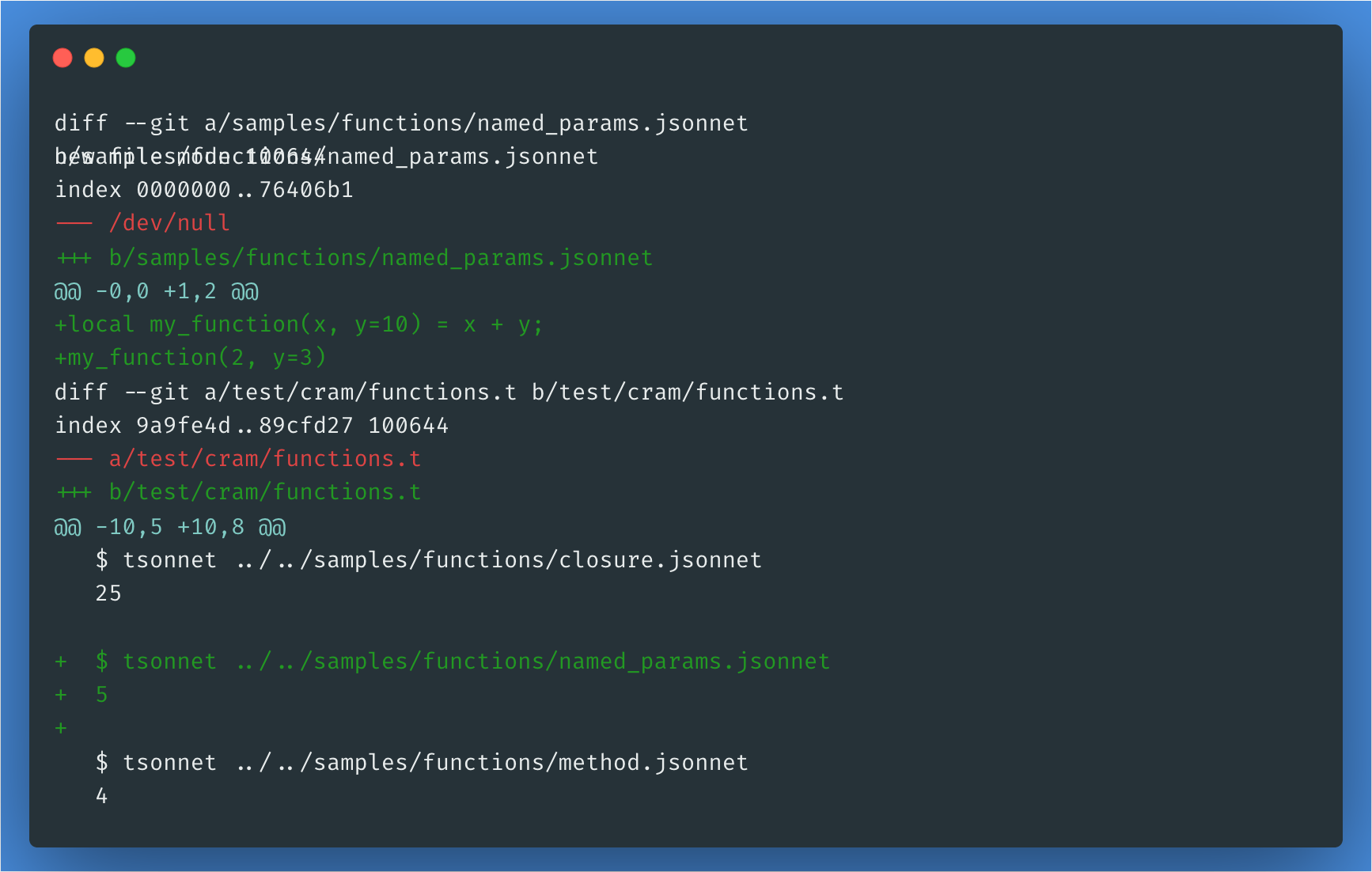
After all this work implementing functions and methods, there’s still one thing missing: function calls with named parameters. I implemented the definition, but not the call site when named parameters are present.
// samples/functions/named_params.jsonnet
local my_function(x, y=10) = x + y;
my_function(2, y=3)
This calls for a new type variant: call_arg.
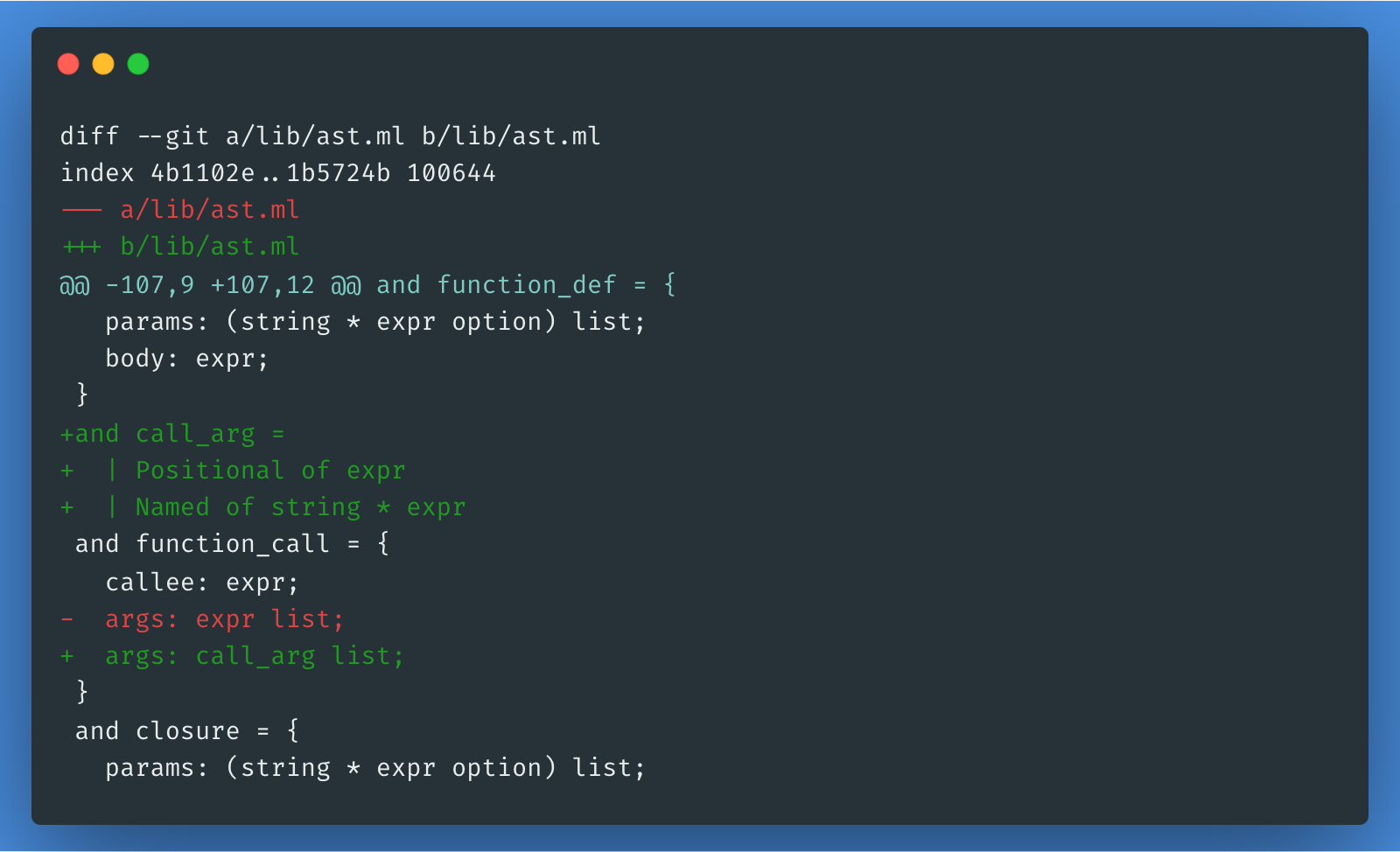
This way we can leverage the expressiveness of the OCaml type system to enforce a Positional or Named argument.
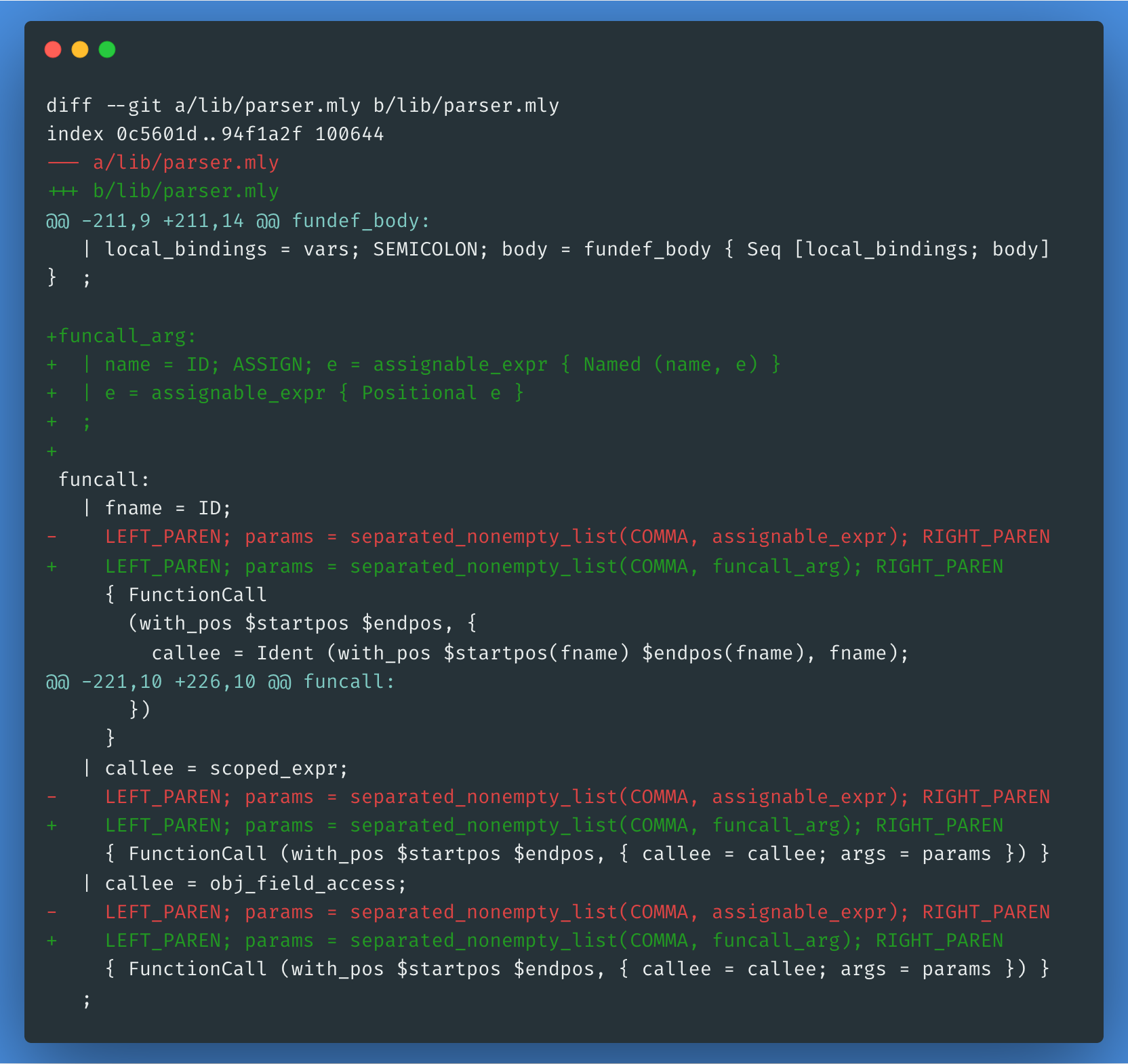
The parser needs a little tweaking:
With the addition of named parameters to function calls, they need to be translated by the type checker:
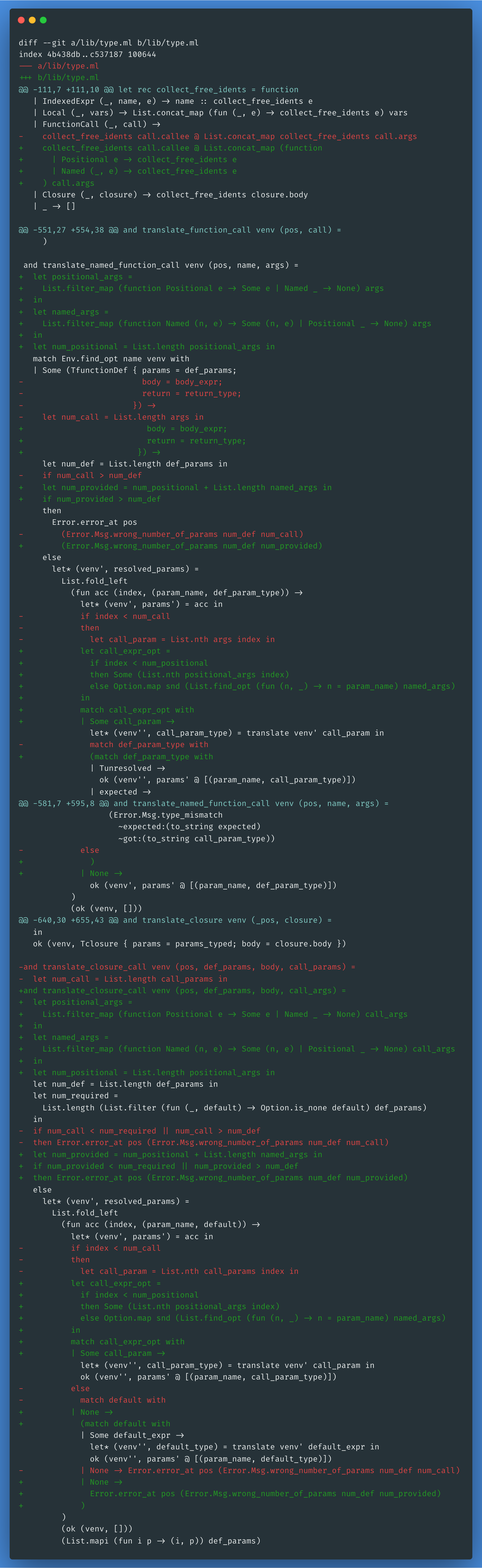
I feel like translate_named_function_call and translate_closure_call could be unified, similar to what I did with apply_function in the interpreter. They differ in subtle ways though, so I’ll leave that for another day.
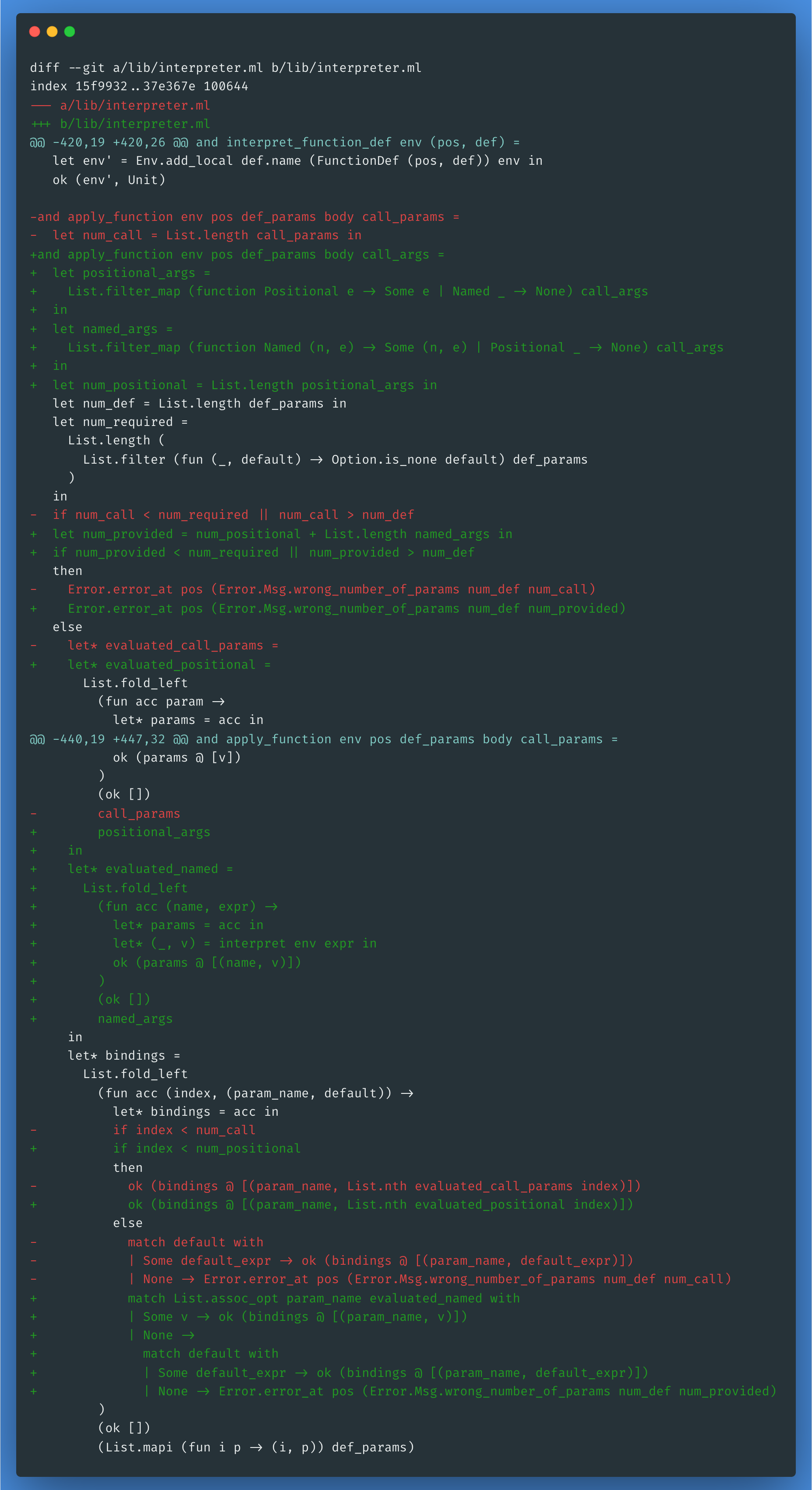
The interpreter changes are only following the new type variant addition:
With that I can put a closure (pun intended) to the function tutorial.
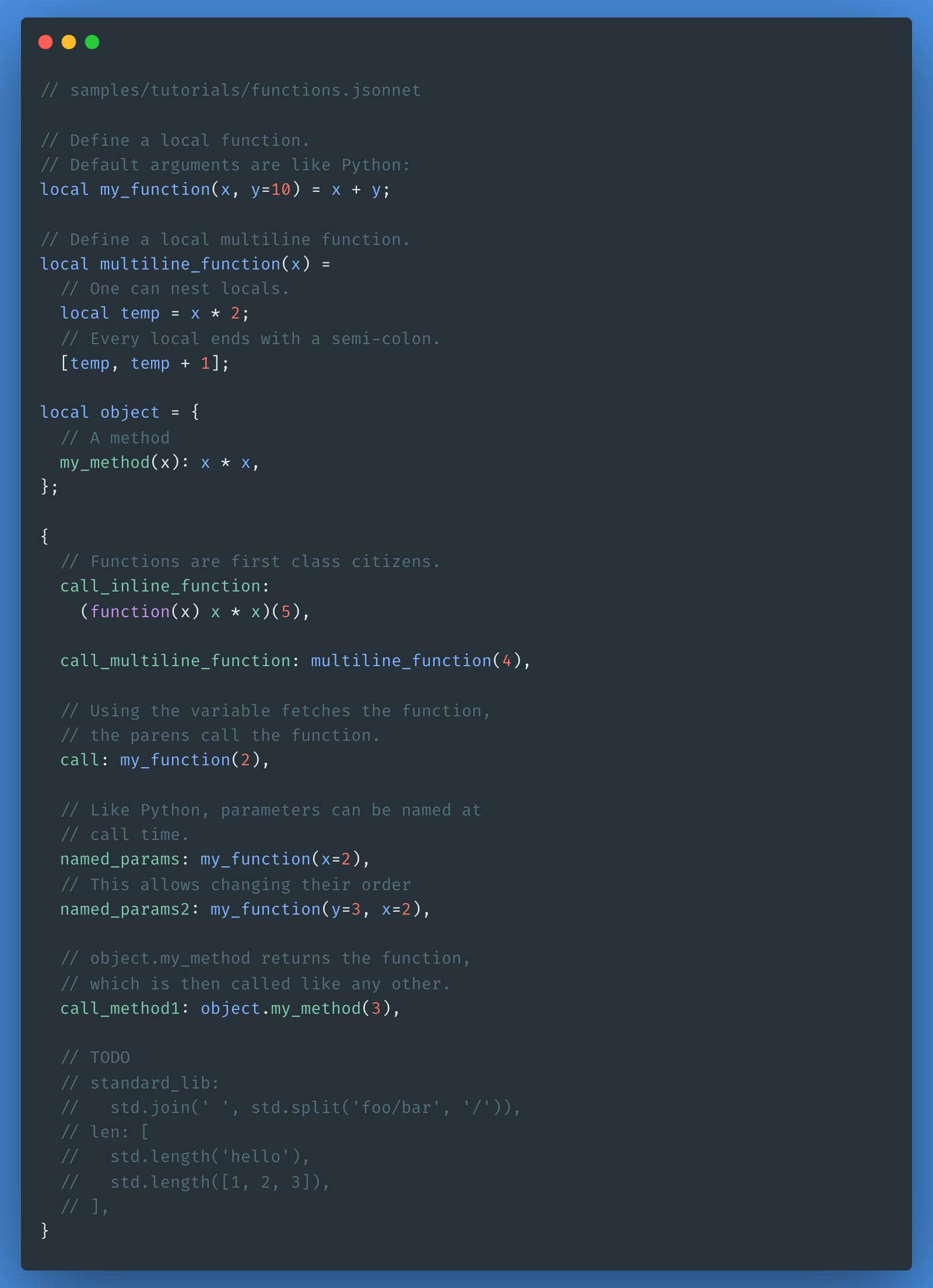
The standard library has to wait. We must implement other building blocks, such as conditionals, for loops, etc — the usual stuff we can’t live without in a programming language.
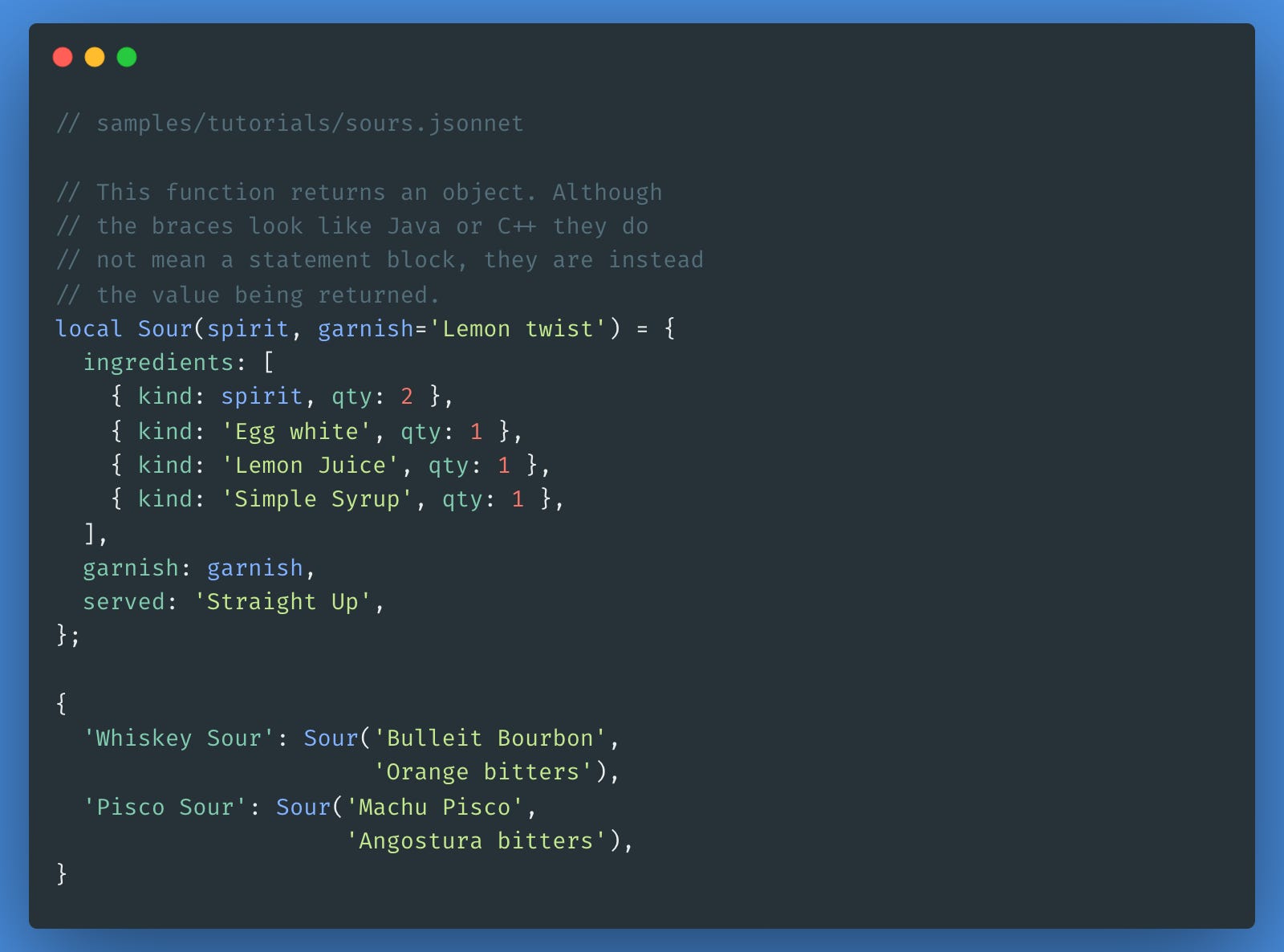
Have you tried Pisco Sour already? If you’re into alcoholic drinks, give it a try. It has a tasty flavour.
Ta-da! Cram tests in place:
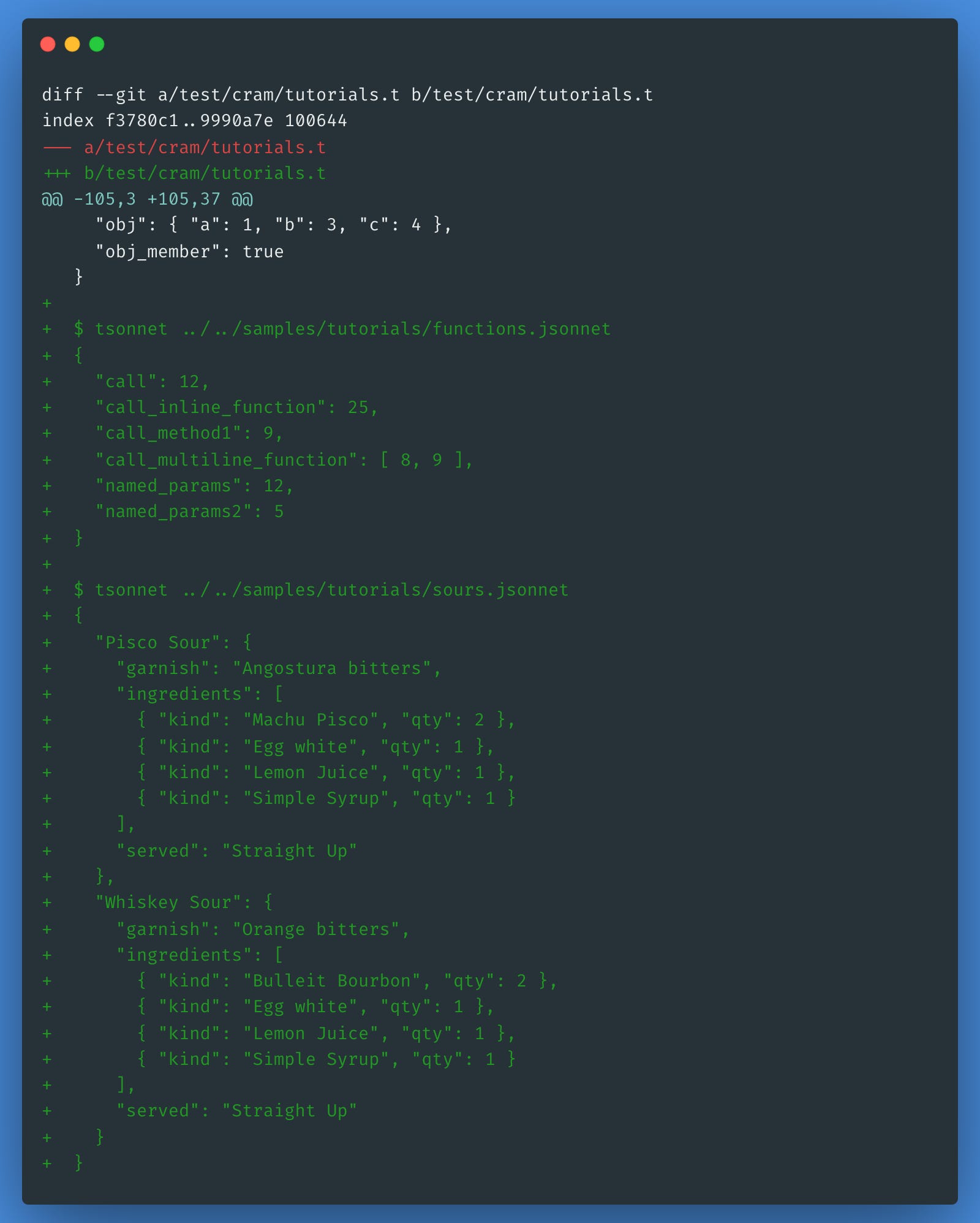
And that’s a wrap on Tsonnet’s function support (for now). Named parameters, default values, closures, methods — it’s all there. The type checker knows how to count positional arguments, match them against names, and fill in defaults. Not bad for a type system that started life unable to tell a function from a hole in the ground.
This closes the chapter on functions in the Jsonnet tutorial too. We went from bare locals all the way to my_function(y=3, x=2) working correctly, with a Pisco Sour to show for it.
Here is the entire diff.
Comments
Nothing yet. Say the first thing.
Sign in to join the conversation.