
You’ve probably heard of Central Bank Digital Currencies (CBDCs).
If not, let me first share my experience working in China, getting paid in renminbi, and the difficulty of trying to take it out of China.
I was working consistently on various film, TV, and commercial productions in mainland China. I worked with many famous actors and directors, not many of them recognizable to most in the west. For entertainment value, you can watch some highlights by clicking HERE.
For every production, receiving payment was easy. But moving money across the border? I had to jump through hoops!

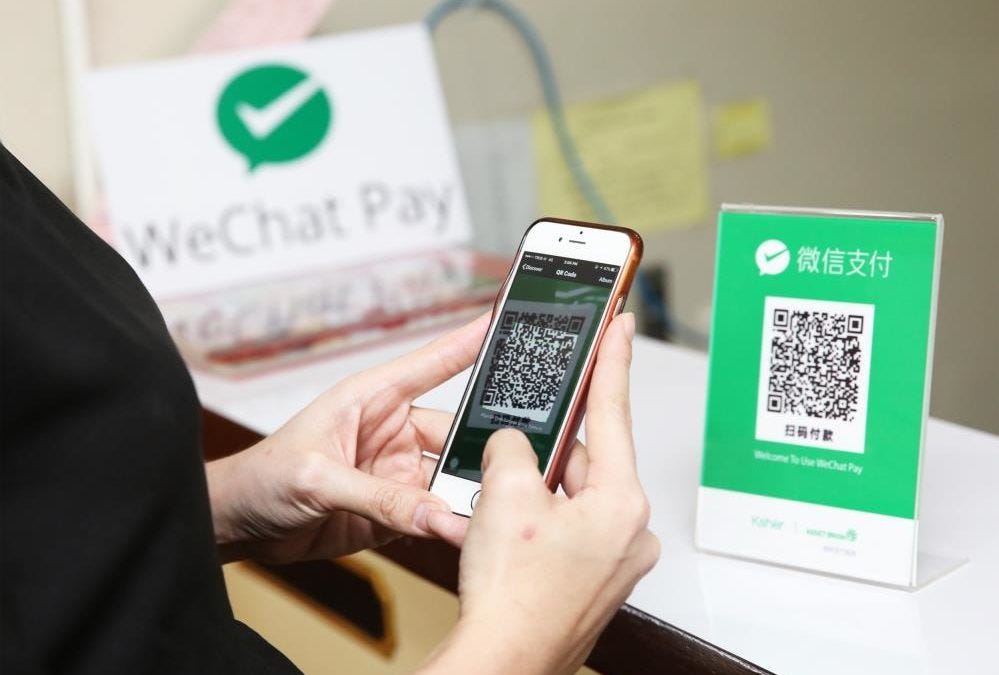
When you travel and work in China, every money transaction is done through one of two apps, WeChat and Alipay. These are no cash transactions in China.
NONE.
I got paid through one of these apps.
Then I would digitally transfer the wechat payment to my mainland bank.
In 2014, I was fortunate to be able to set up a bank account within China and transact and work there as a local. Now foreigners are no longer allowed to open mainland bank accounts.
WeChat Pay is integrated with the Digital Currency Electronic Payment (DCEP) system, which is the country's central bank digital currency. This means that when you receive a payment on WeChat, the funds are denominated in DCEP, which is backed by the People's Bank of China.
The Chinese government has full power to exercise control and censor these platforms.
You see where I’m going with this. This is China’s version of a CBDC.
I walked it across the border to Hong Kong. This is legal to do and at that time the maximum undeclared amount was HKD$125,000 (USD$15,000).
Trouble was that the largest denomination of cash you could withdraw from a bank was a RMB100 bill (USD$12). And you could only withdraw RMB4000 (USD$500) per day.
So that’s what I did. Withdrew my maximum daily, walked the stacks of 100s across the border and exchanged them with money changers in Hong Kong.
I wasn’t the only person doing this, it was common practice to stand in line at a money changer in Hong Kong with stacks of 100s.

Cross border payments are nearly impossible.
Out of the 20 or more productions I worked with, only one was able to get the paperwork done and have government approval for a cross-border money transfers.
I had to sign stacks of paper too. And I had to go to the local government bureau several time to verify I was a real person.
These restrictions aim to stabilize the value of the Chinese currency, the renminbi, and prevent depletion of foreign exchange reserves.
It’s still not easy to move money out of China.
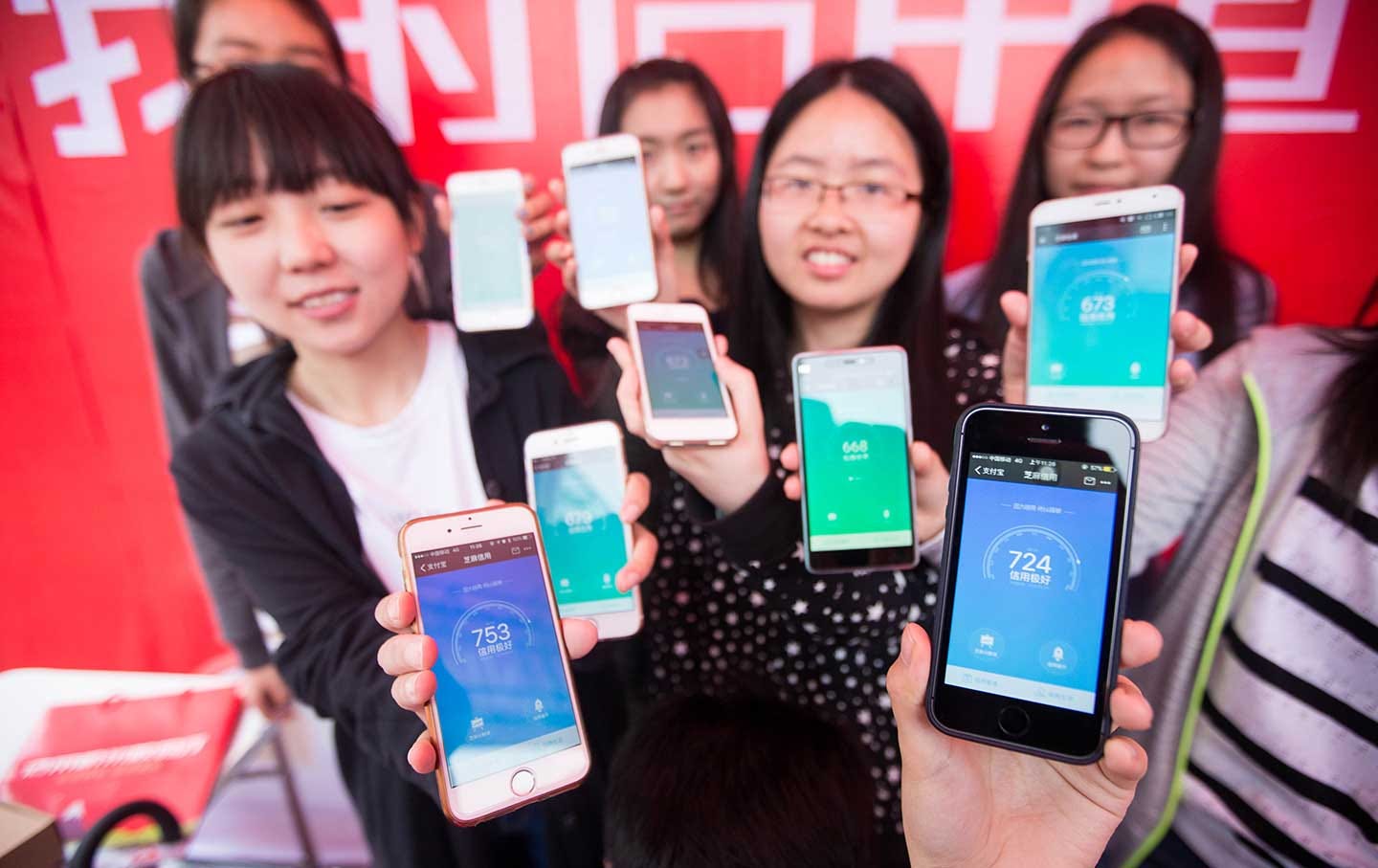
Here’s another thing that is a reality. Since everyone transacts through a government controlled app with a government controlled digital currency, they are able to monitor every activity of every citizen and rate them.
This is full infringement on privacy.
Your score shows up on your cell phone and is constantly updated. It’s common to publicly show your high social scores too!
I know you’re thinking this could never happen in your own country, but it could. Governments could use CBDCs as a tool for social engineering and censorship disguised as a money upgrade.
As more and more people are saving and transacting with Bitcoin, central banks are getting worried.
Enter CBDCs, the Central Banks’ centralized answer to decentralized money.
Similar to digital USD today, except the government has complete control. If your views and actions stray too far from the mainstream narrative, your money could be turned off.
114 countries are exploring this option right now. But why?
Even some fed officials are wondering what problems a CBDC solves! Watch here.
Case in point with ‘Britcoin’.
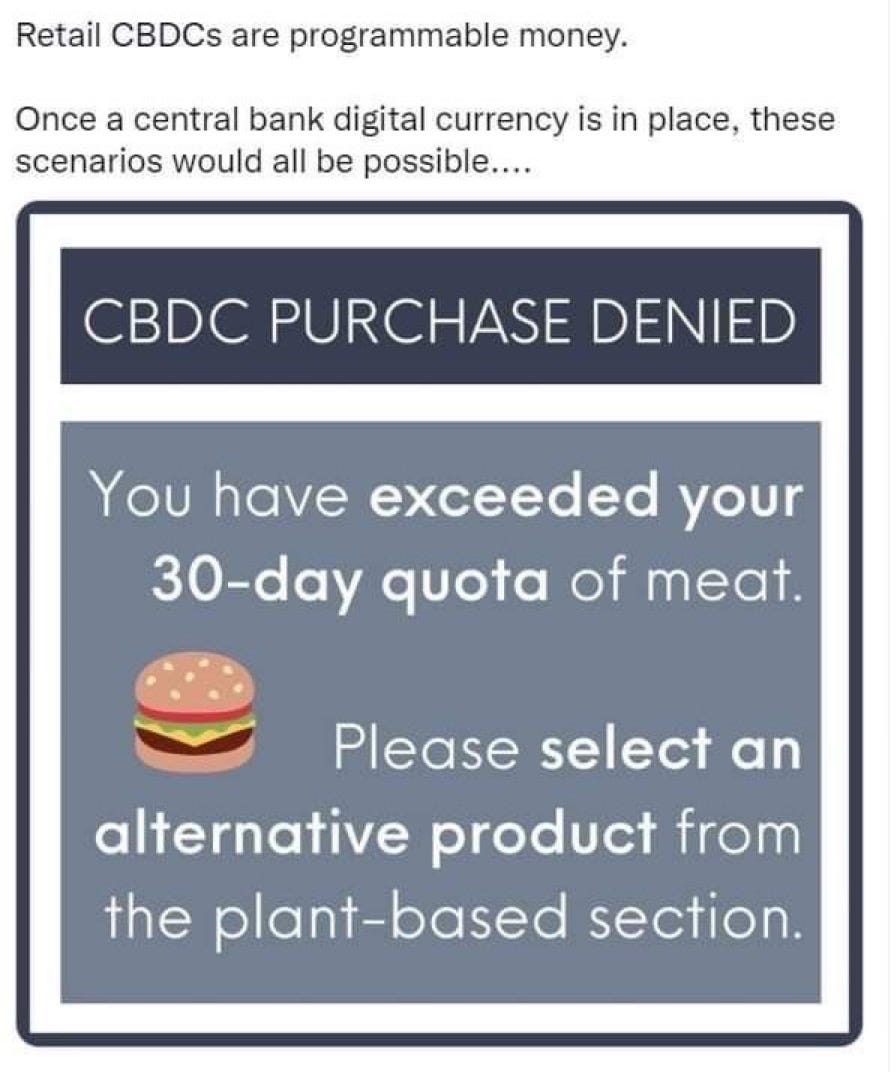
What if this happened with gas consumption? Or electricity?
Concerned? I would be.
Your every financial transaction can be monitored, changed or cancelled.
Your every purchase can be modified, changed or stopped completely.
Imagine your money could be turned on and off with a flip of a switch. It can be programmed to expire in 7 days, enforce quotas, and be used to control users.
I have more cautionary tales to tell!
Leave a comment below if you want to know how the ‘Leave Home Safe’ app worked in Hong Kong during the pandemic. All I can say is that it didn’t feel good knowing that my every movement was monitored through an app.
Final thoughts CBDCs vs BTC:
CBDCs require government mandates and forced adoption.
Over 100 million people have voluntarily adopted Bitcoin and it’s growing exponentially.
I know which one I’m betting on.
Use the link below to receive $10 free Bitcoin to get you started.
Get $10 of Bitcoin when you sign up
This newsletter is for educational purposes. It is not financial advice.
Comments
Nothing yet. Say the first thing.
Sign in to join the conversation.