
A couple of months ago I had an issue with a webinar I was preparing. I wanted to use examples of the types of posts I see on social media, but without naming and shaming people. But not wanting to name and shame gets in the way of the law that says you need to cite your sources if you use other people’s content. So I couldn’t use other people’s content and hide their username - but I really didn’t want to get personal with anyone, it’s not my style. So what to do? One sleepless night, as I was tossing and turning in the heat, it came to me: This is how I could make good use of AI! So the next day I logged on and asked an LLM to make me “a 10 slide, generic social media post about nervous system regulation”. That was the whole prompt (not very sophisticated, I know). And the LLM came back with this. I’ll include a couple of the slides below.
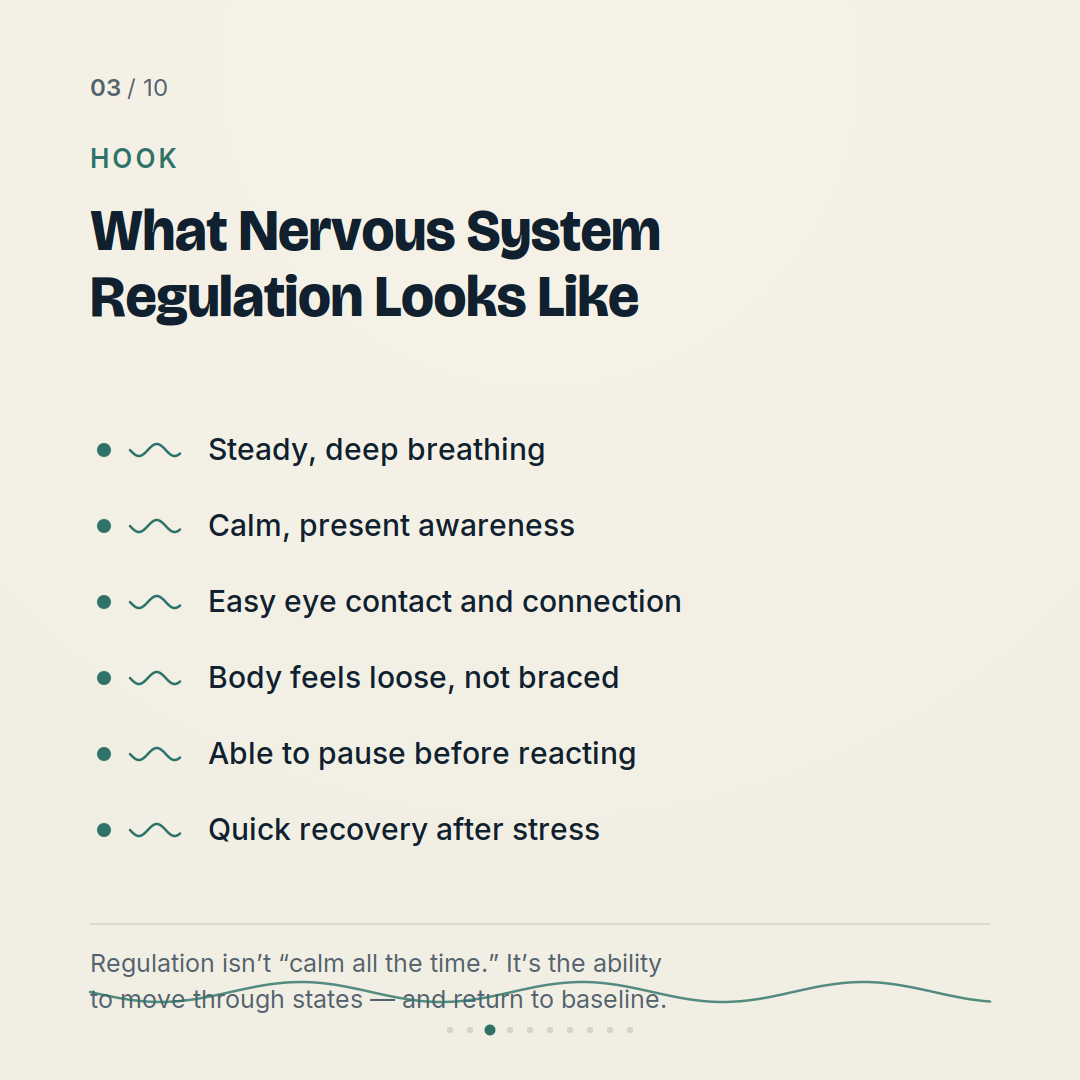
At first I was happy because it was exactly what I needed for my webinar: pretty representative of the content I regularly come across. Then I got frustrated. This post is essentially a collection of a lot of the things I worry about when it comes to mental health misinformation on social media. And people do go to LLM’s, as well as social media to find out more about how their mind and brain work. They take this information and run with it - either to self-treat or to a mental health professional, creating expectations and insecurity. A therapist might not be certain about exactly how our brains and bodies create our experiences either. They might use a search engine, or, worst case, an LLM to try and find out. Therapists are humans, too. And for a lot of them, their expertise lies in the practical part, the talking, the applying techniques, the building of relationships, not in the ins and outs of the autonomic nervous system. And it doesn’t have to, either. And when they search the internet or ask an LLM, then this seems to be what they will find.
But how does this work? I think by now, a lot of people are fairly clued up about how to check whether information we find online is based on evidence or not, even though it has become a lot harder in some instances to tell science from pseudoscience. LLM’s, on the other hand, are advertised as having “intelligence”, as possessing “the entirety of human knowledge”. And when we use it, it’s confident, it tells us how it is - or does it?
It doesn’t actually. I’m no expert on AI and its algorithms but I do know this: It takes all the information it has been fed (mostly reddit posts, apparently), ranks the words and regurgitates them on the basis of which word is *most likely* to follow the previous one (does that actually make it the average of all human knowledge?). That means what we get out, if we use a crappy prompt like the one I used (which is possibly quite a common-quality prompt to an LLM), is what is talked about most often in the information that an LLM has been fed.
LLM’s also don’t have any quality control. They don’t have the ability to think critically or double-check the information they pass on against any kind of standards or scientific rigour. They just give us the most likely answer to what we asked for - based on what they’ve been fed.
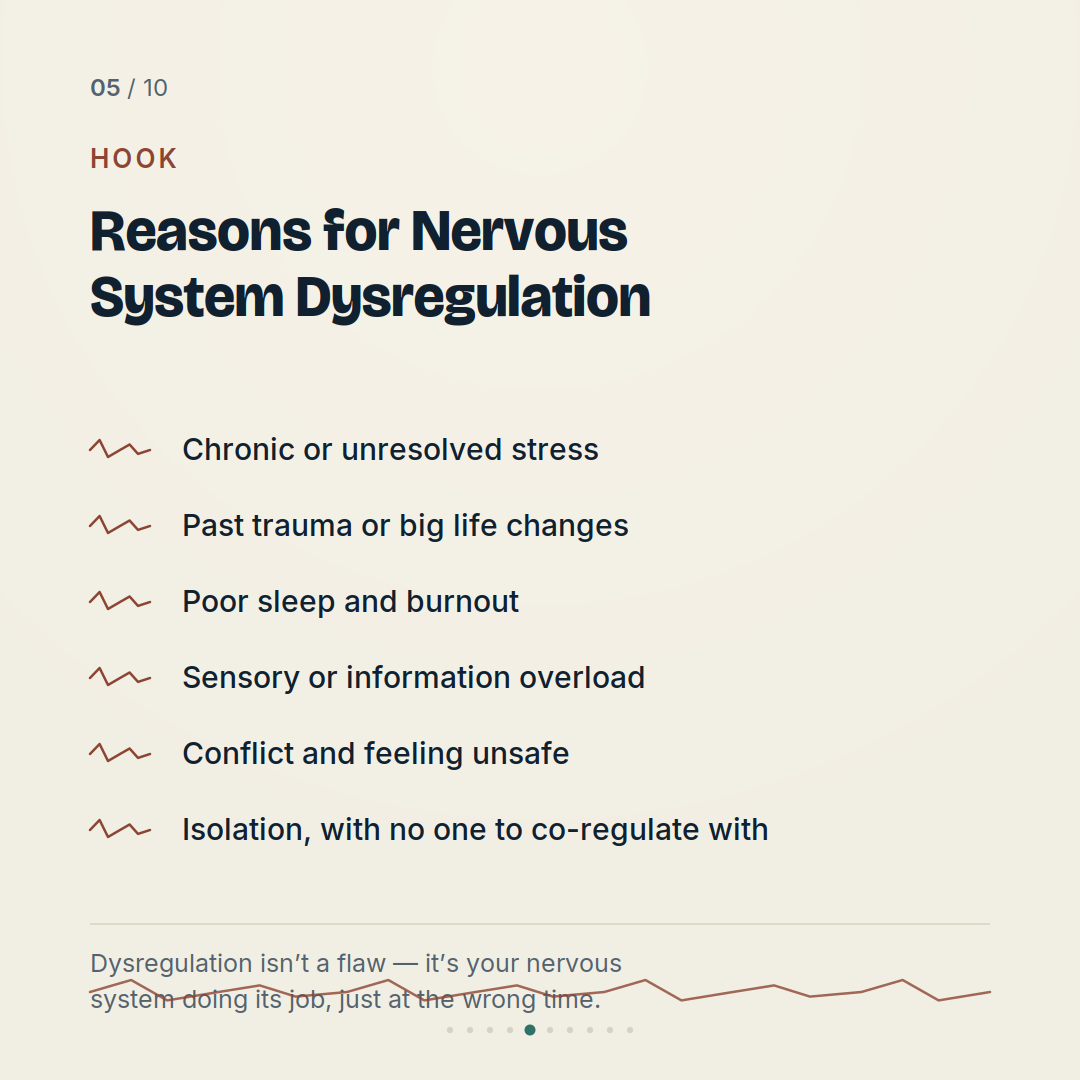
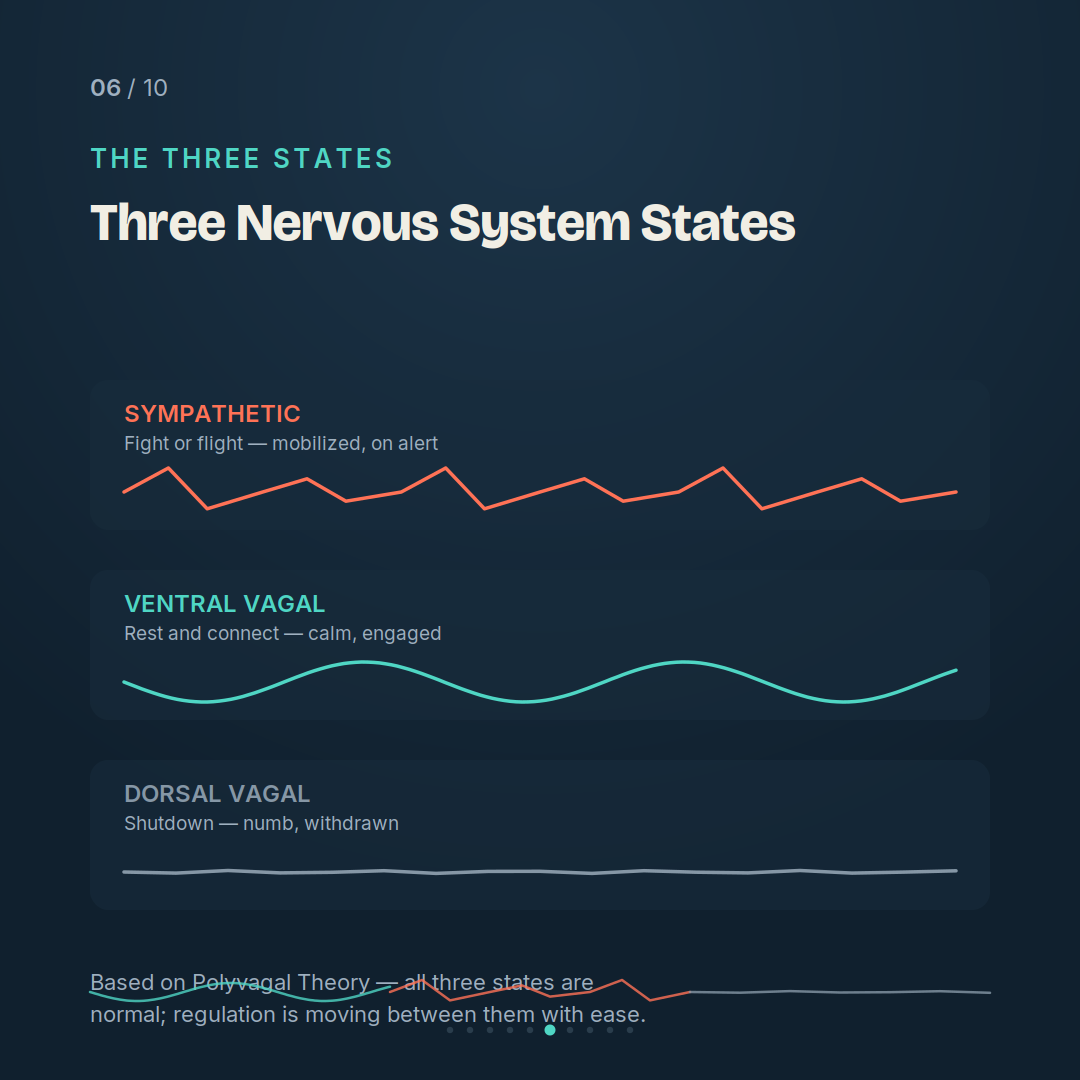
So in my little exercise, the LLM I asked gave me a post that described a lot of the nervous system drivel that is based, to the best of my understanding, largely on polyvagal theory. What does that tell us? It tells us how popular these concepts are, and how widespread. And it also tells us that evidence-based information on the nervous system is underrepresented in the content that the LLM’s were given to “learn”.
In the first instance, this made me want to give up. Am I fighting a losing battle here? Is the nuance merely a grain of sand on a beach of nervous system misinformation? Am I, really, shouting into the void (a feeling that is almost ever-present, especially when I create content for the other platform that I won’t name right now.. Where rage-bait seems to be a prerequisite to reach.)?
But then I thought something that I’ve thought a lot in the last couple of years of doing this. “Just. Keep. Going.”. The fact that this kind of information evidently prevails online, tells me that mine, and other people’s work in this space is needed more than ever (I also know this because people do tell me, normally around the time when I seriously consider getting off the other platform again - and then I stay. Thank you for telling me).
Finally, it also tells me one thing that I think we should all remember in everything we see on social media these days (because none of us can be an expert on everything and experts in one area can still fall for misinformation in another). We should familiarise ourselves with these LLM styles (this one is pretty recogniseable, I’d say) and when we see them, it might be a good idea to be extra sceptical about the content. Now I’m not saying that all LLM-generated content is bad, I’m sure people do use LLM’s to make evidence-based posts. I choose not to do it, mostly for ethical reasons but also because I actually enjoy going down research rabbit holes and making science understandable and useful for people. But that’s anyone’s choice. With the little experiment of posting these slides on my Instagram profile, I just wanted to show, practically, what an LLM churns out when we don’t put in any work. Now the followers who engaged and commented did show me that what I’m doing is useful - they were shocked to the point of being “enraged” and worried that I had turned to the dark side. They knew exactly what was up and that made me happy. I kind of hoped that Instagram would show the post to non-followers, too, to lure them in and create a teaching moment - I don’t think it did. So it stays in my bubble.
One final anecdote to end with: One follower sent me a message telling me that this is exactly the kind of content I would post to tell my followers that I have been kidnapped. So if you ever see me talk about nervous system healing or dorsal and ventral vagal states, seemingly unironically, come and look for me (thanks for that comment, medienmonolog).
I have recently launched an in-depth course on the psychology and neuroscience of emotion, aimed at clinicians. Knowledge is our best defense against misinformation and good psychoeducation might help clinicians explain how the real science differs from popular narratives. It’s a six-week course, starting on the 27th of September in English and the 28th of September in German. The first cohort gets it at a reduced price in return for your collaboration in making this as good as it can be for the next participants. Find out more here or get in touch!
No posts
Comments
Nothing yet. Say the first thing.
Sign in to join the conversation.