
The Texas coast is not what most people would call beautiful. It is raw, open, and functional — a working landscape dotted with oil refineries, dystopian windmills, and retention ponds. Yet it serves as a vital stopover for often overwhelming numbers of birds. Farther south in the Rio Grande Valley, the word “beautiful” feels even less fitting. The region is chaotic and intensely hot, yet thousands of birders visit every year. We are here not so much for the landscape, but for the fantastic bird scene.
On this year’s trip, we really only had two goals in mind: chase state birds that weren’t too far off the route, and enjoy the birding. With BirdingApp target alerts set, our day-to-day summary follows:
Day 1: Texas City
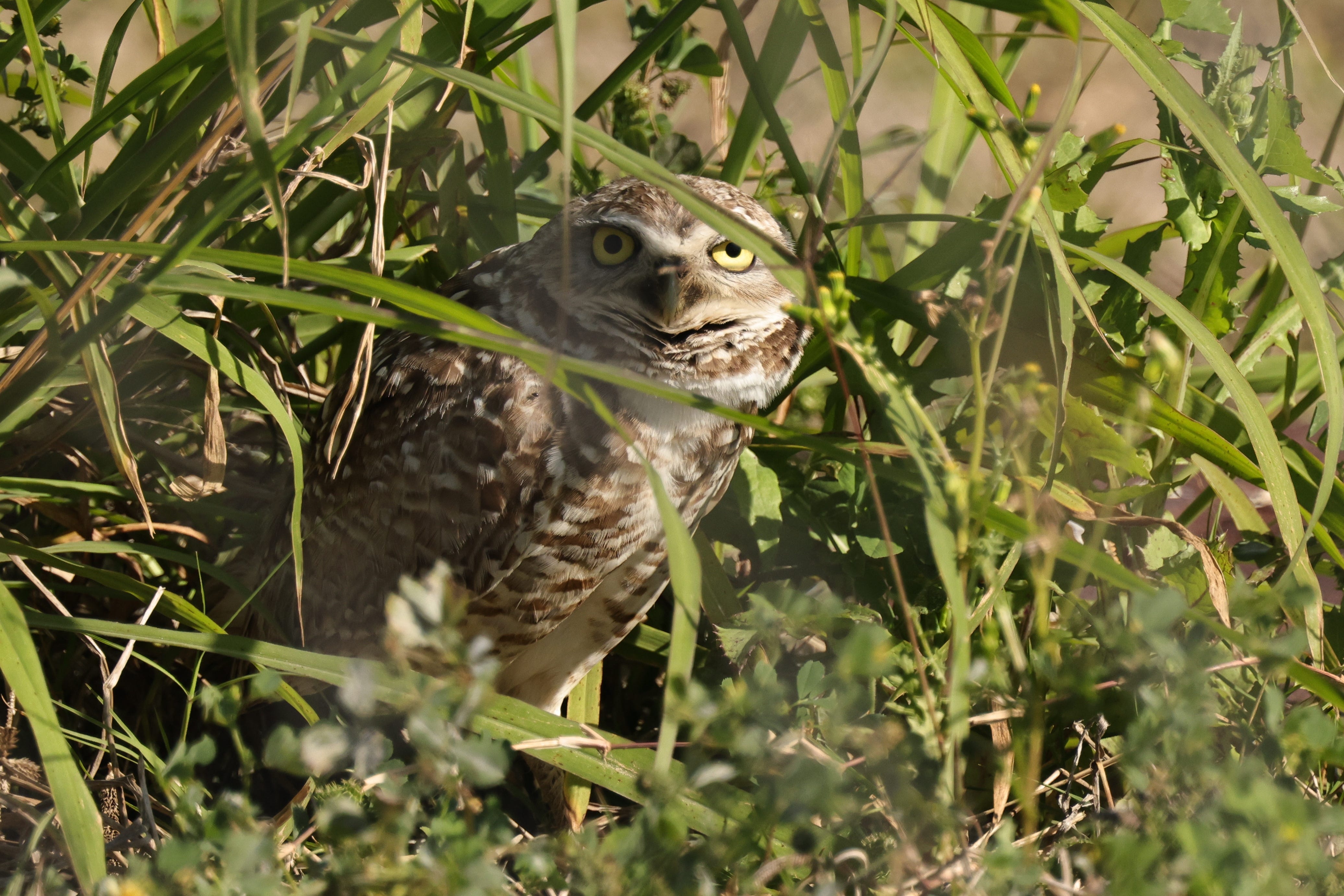
As I sat munching on an In-N-Out Burger (yes they’ve made it to Texas!), I realized the boundary between Houston and Texas City had grown increasingly nebulous over the years. We decided to stop for food before continuing to the Texas City dike to go for the Red-throated Loon and Western Grebe that everyone was seeing. The landscape now morphs almost seamlessly from sprawling shopping centers to oil refineries. I couldn’t help but think of the 1947 disaster that devastated the city. Thankfully, that tragedy is not even a memory for most locals. The attendant at the entrance simply waved us through after we paid the $10 fee. I decided it was worth it, especially with one county and one state bird all but guaranteed here. Yet looking out at the whitecaps, I felt uneasy about our prospects. We drove all the way to the end, where a Marbled Godwit and Long-billed Curlew loafed side by side, offering a perfect comparison. Before reading the recent reports, we had incorrectly assumed the birds were on the calm side of the dike, but it turns out they were enjoying the wild wave pool on the south side. For the next hour or so, we scanned every area where these birds had been reported. The whitecaps successfully hid just about anything on the water, and after two hours we gave up and headed into Galveston. A Burrowing Owl glaring at us in a restaurant parking lot was my consolation county bird.
Day 2: Galveston to Rockport
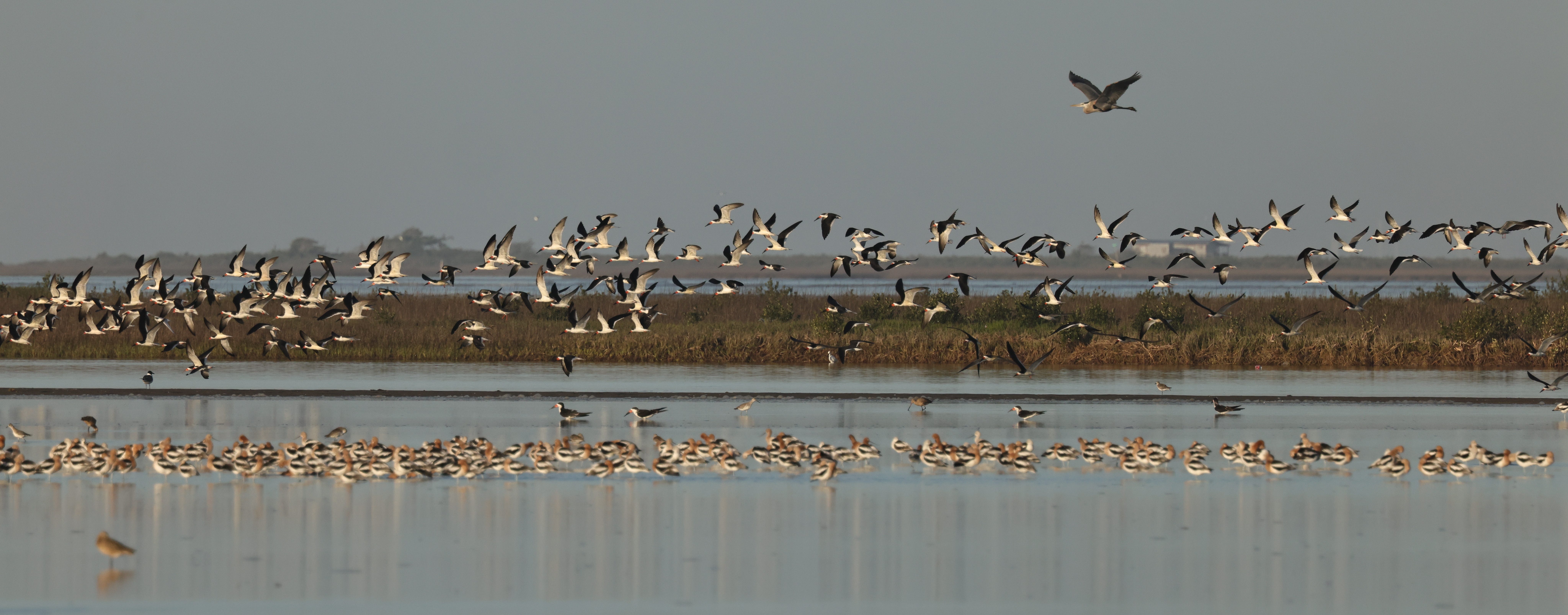
I regretted the decision not to re-chase the loon and grebe the next morning until I arrived at San Luis Pass to see hundreds of American Avocets and other waterbirds. Many of the shorebirds were dowitchers. It’s hard enough to identify one, let alone hundreds. Any locals in the BirdingApp nearby chat would know which species is typical, I thought.
When we arrived in Rockport that evening, BirdingApp notified us of a nearby Red-footed Booby, which changed our original plans of taking the ferry to the long-staying American Flamingo in the morning. After seemingly just a few water crossings, Cardinals morphed into Pyrrhuloxias, and Tufted Titmice became Black-crested. This localized and surprising biodiversity is a major allure of birding in south Texas.
Day 3: Corpus Christi to Flamingo
At 11:35, we arrived at the Booby location. For a little over an hour, we watched the birds enjoying the water while the hot sun beat down. Then we tried another spot farther down the bay. Finally the bird appeared out of nowhere, gliding gracefully across the battle-gray background of the USS Lexington, an enormous aircraft carrier. From the shade of a gazebo, we later watched the bird sleep on a rocky jetty, as Monk Parakeets squawked nearby.
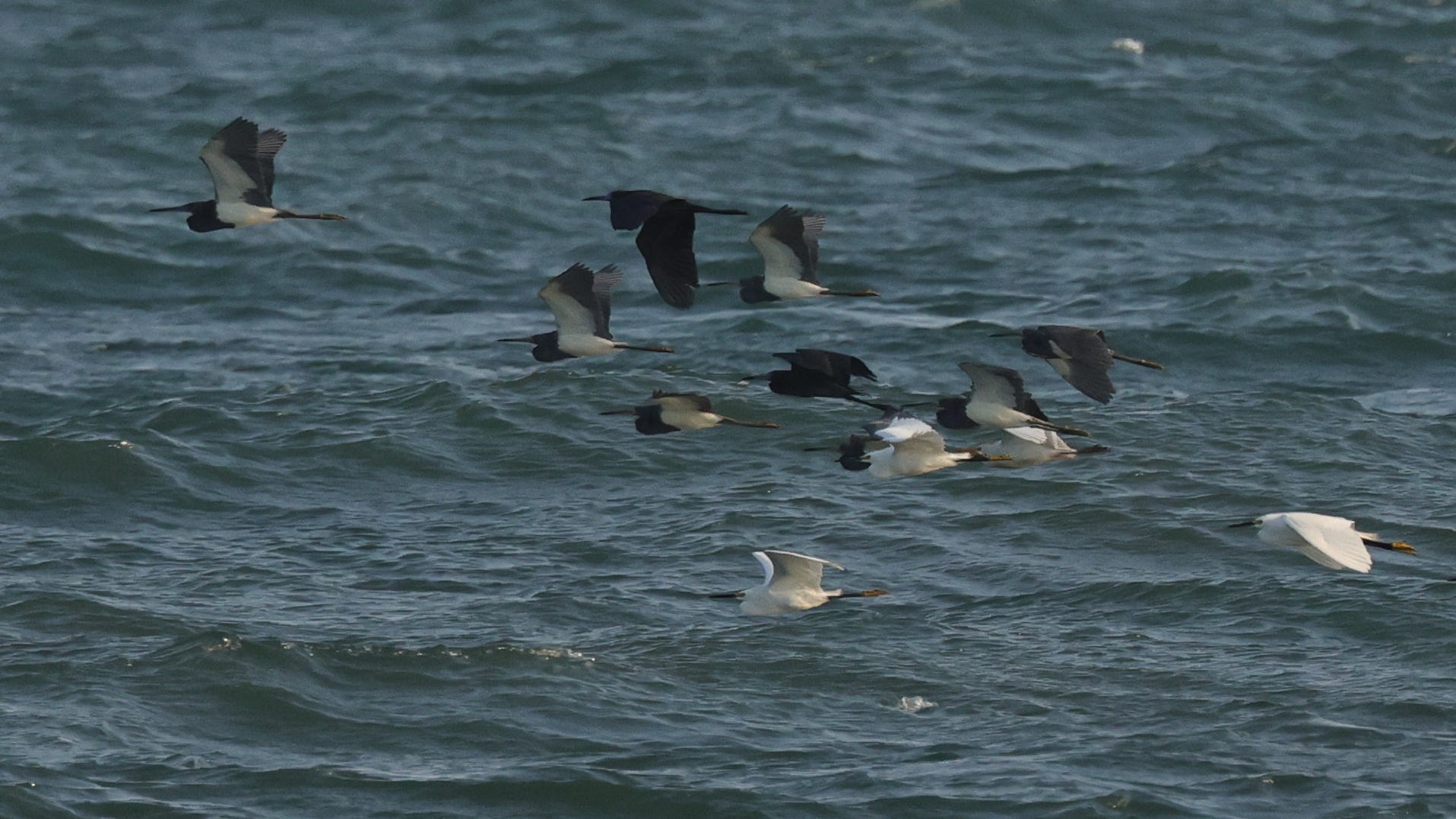
On the way to Port Aransas we spotted an Aplomado Falcon on a wire over the bleak landscape of southern Mustang Island. Finally, we arrived at Charlie’s Pasture, and trekked out to the tower where Alex quickly spotted the pink dot of the Flamingo on the flats. This spot is much better visited in the morning because of the bittersweet combination of harsh backlight, excessive distance, and thousands of birds in the afternoons. So for sunset we hiked out to the end of the Port Aransas jetty, where, of all things, a migration of groups of mainly Tricolored Herons was streaming up the coast!

I looked it up on Birds of the World, which states that “birds move between Florida and Cuba and between Florida and Central America. Regular appearance of migrants in Bermuda indicates this species' capacity to cross large expanses of water.” I had no idea! You never really know what you’re going to see migrating out on the gulf.
Day 4: Port Aransas to Harlingen
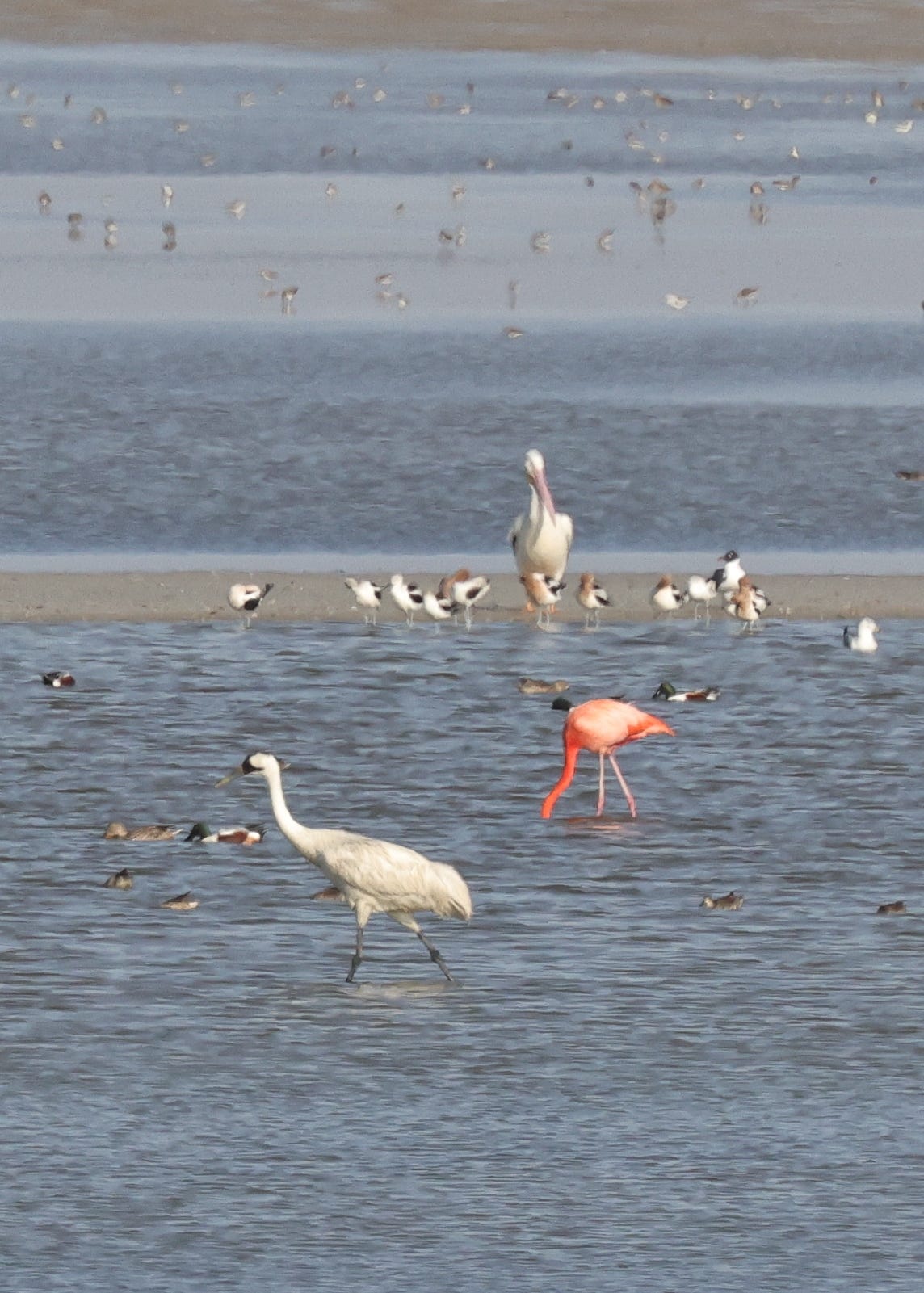
Morning birding at the pasture was fantastic now that the light worked in my favor, and I was able to capture a shot of three giant birds in one frame—the resident Flamingo, a lingering Whooping Crane, and an American White Pelican!
That afternoon we continued south through Corpus Christi and then onto a route that was unfamiliar to me. Alex seemed to know exactly where he was going, so I kept quiet until we pulled up beside a vast expanse of grass and I yelled out, “Turf farm!” Texas turf farms are second only to wastewater ponds as favored birding spots. This particular farm turned out to be Alex’s Birding Arena hotspot for the day, netting him 8 points and boosting his position on the BirdingApp leaderboard. We also saw some pretty nice birds, including Upland Sandpipers and over one-hundred American Golden Plovers.
Farther south toward the Valley, we stopped at the Sarita Rest Area, where a creepy dead owl lay on the ground. The folks on iNaturalist identified it as Great Horned Owl. We decided to stay in the Great-tailed Grackle heaven of Harlingen for the next two nights, as it’s centrally located to all of the great birding spots. I birded at sunset at the Harlingen Thicket World Birding Center, as Long-billed Thrashers and Pauraques ushered in the night in a cacophonous musical jumble.
Day 5: Santa Ana, Starbase, and South Padre
I knew we were in for a long day, so I made it even longer by waking up well before sunrise and driving 45 minutes to the legendary Santa Ana National Wildlife Refuge. After leaving the parking area, I headed toward Pintail Lakes looking for shorebirds. Somehow I ended up walking right in front of a tour group when an Olive Sparrow popped up and perched out in the open right in front of me. Knowing that doesn’t happen often, I waited for the group to catch up and (probably needlessly) pointed it out to the guide. Later, I found myself in front of the same group again, this time trying my best not to flush a large flock of Roseate Spoonbills. As it turned out, a border patrol helicopter took care of that for me and flushed them all anyways.
In the afternoon we drove east to Boca Chica beach, now Starbase. I was telling Alex that on my last visit there in 2010, we drove down a long, deserted road lined with White-tailed Hawks until we finally reached a massive beach where we drove all the way down toward Mexico. Things have changed. The road is now lined with hundreds of Cybertrucks, and the Starship launch site is right at the beach entrance. The sand was too soft to drive on this time. I tried a brief seawatch to look for Gannets but the viewing conditions were pretty awful.

Later in the afternoon we made it to South Padre Island and walked the fantastic boardwalk at the convention center. I had also planned another seawatch for the evening, but the pier was closed, so we gave up and treated ourselves to an amazing dinner at Henriettas instead. As we ate, Black Skimmers and Laughing Gulls streamed past in the fading light, heading to their roosts, as towering windmills churned steadily on the horizon.
Day 6: Crimson Collar
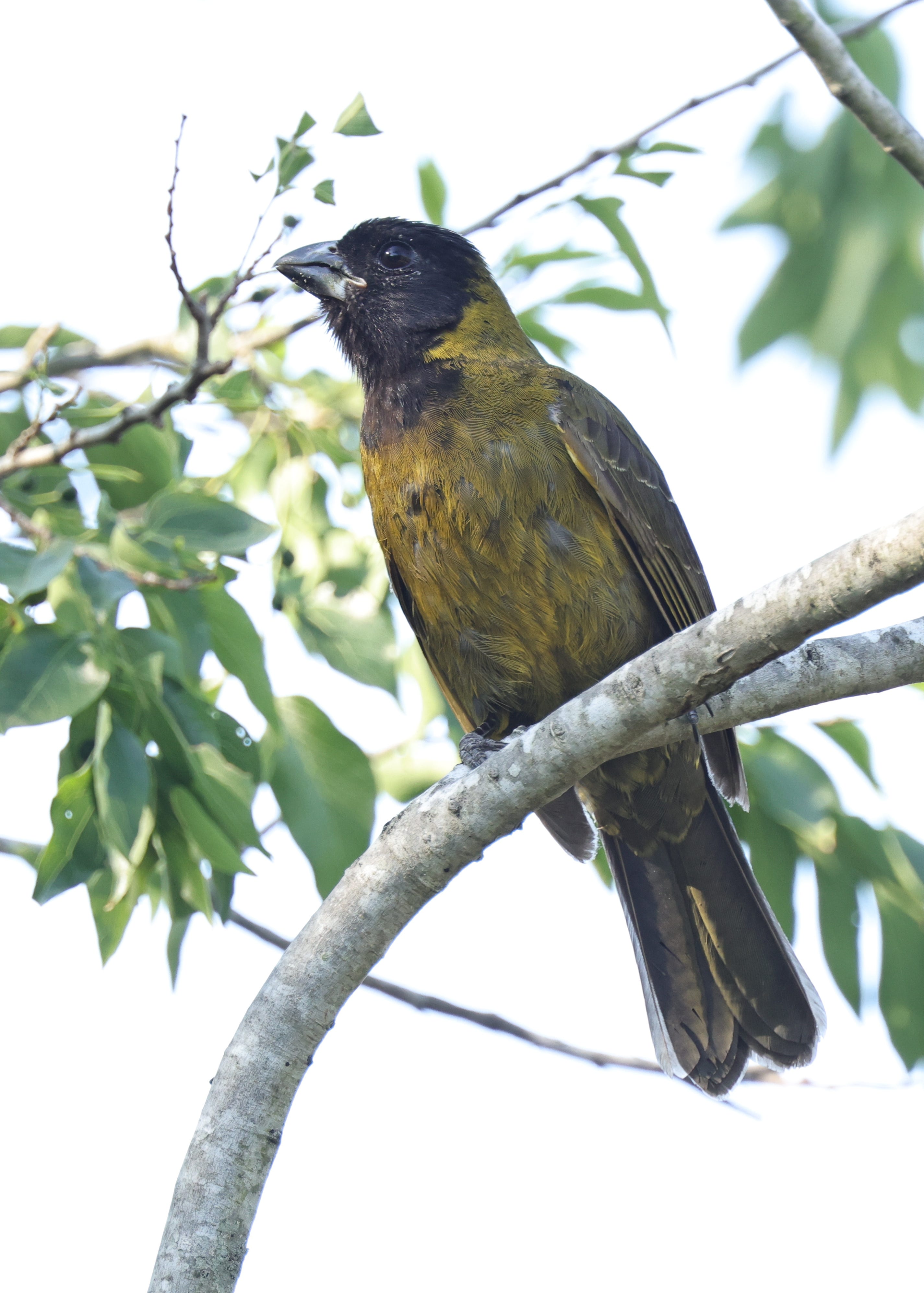
I woke up early again, grabbed coffee at Sovereign Coffee, and drove 40 minutes to the Edinburg Scenic Wetlands World Birding Center with one main goal: finally seeing my lifer Crimson-collared Grosbeak. I had missed it on my last trip to the Valley and wasn’t about to let that happen again.
After paying the very reasonable $3 entrance fee, I wandered the grounds, bumping into other birders on the same mission, some from as far away as Colorado. Eventually I found a mixed flock that included a singing Blue-headed Vireo and several Yellow-rumped Warblers, including a spiffy male Audubon’s. Then I heard a grating, repeated call that sounded oddly like a cowbird. It took me a moment to realize it was the grosbeak! It was notably larger than I had expected, and everyone nearby eventually got excellent looks.
We made a quick, fun stop at Harlingen City Lake and did some driving around for parrots before heading north back to Corpus Christi. The winds were finally shifting, and I wanted to be back on the coast in case any early migrants were arriving. Thanks to the BirdingApp maps, we somewhat randomly found a productive inland shorebird spot south of Corpus where where a mystery Tringa, likely just a Lesser Yellowlegs, was with two Wilson’s Phalaropes, the first Franklin’s Gull of the trip, and several other unexpected species. We finished the day with a spectacular sunset at Indian Point Park, a wonderful spot on Corpus Christi Bay that feels like it was designed specifically for birders.
Day 7: Mangrove Yellow
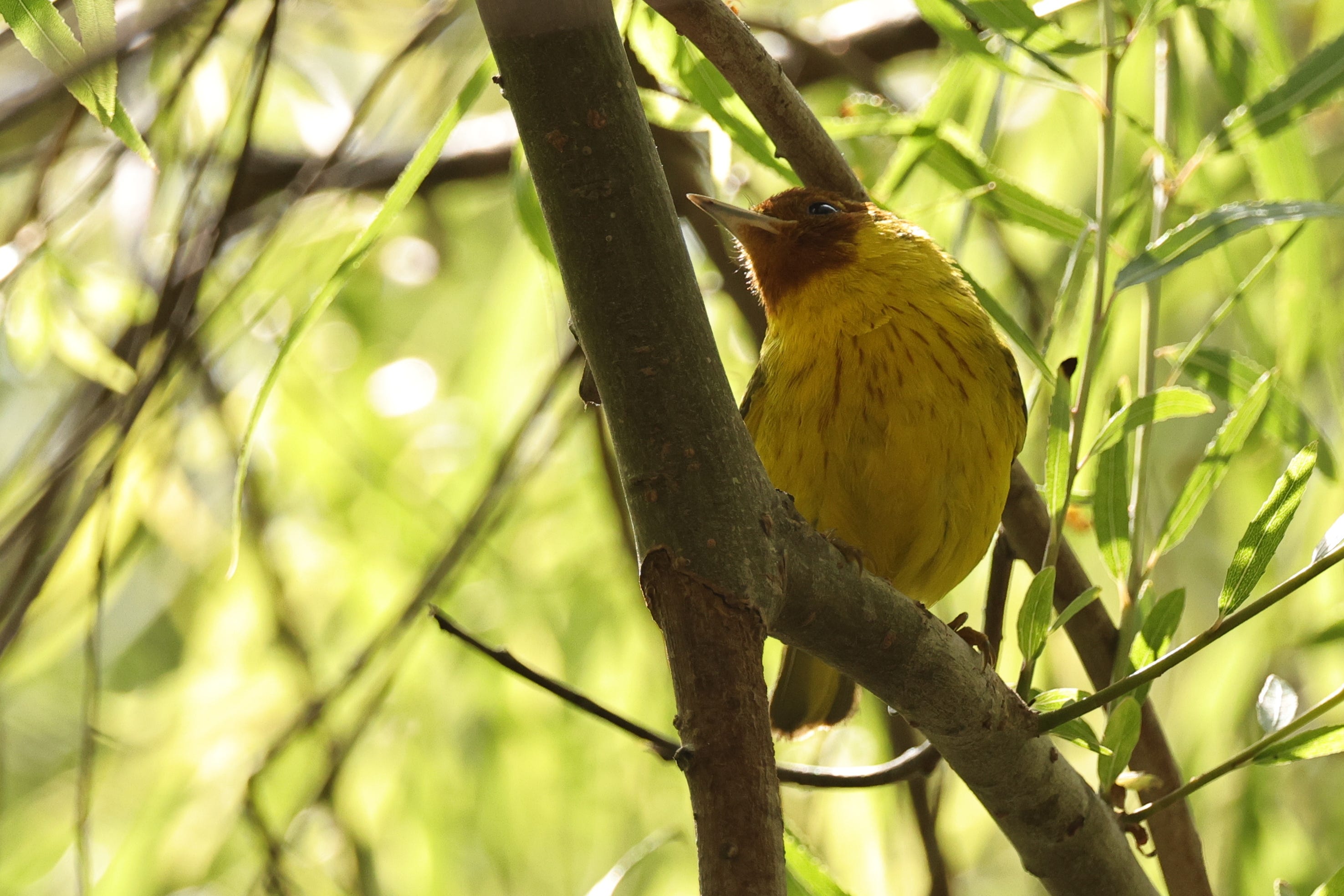
On our last day we were finally able to take the ferry across (missed the Frigatebird) to Port Aransas, and revisited many of the same spots. We received a BirdingApp alert about a Mangrove Yellow Warbler at the legendary Willows hotspot, so we headed there as soon as possible after getting some obligatory Waves Coffee frappes. I’ve learned from experience that this tiny patch of willows can be packed with a dozen birders lining the edges and three or four sitting inside, and it can still take at least an hour to find a bird you know is there! This visit was no different. After a couple false alarms, the patience paid off when I heard a soft zeep that is not given by the other warblers I had already seen. I looked up and saw the bright red head of the Mangrove Yellow Warbler! This was one of only a handful of records for Nueces County.
Final Thoughts
I honestly couldn’t imagine taking this trip without BirdingApp—the maps, the real-time alerts, messaging people I haven’t talked to in ages because I found out they’re also in Texas, the fun of the daily hotspot challenges, etc. Texas is one of our fastest-growing states, but if you know birders who still aren’t using it, we always truly appreciate folks spreading the word! And I hope all of you will make it out to Texas some time soon.
Comments
Nothing yet. Say the first thing.
Sign in to join the conversation.