
In 2019, a small team began weaving. Their territory was Le Bocage Ornais, a distinctive hedgerow landscape within the Orne watershed in Normandy, France. They started where most systemic change starts: with conversations. Sitting with farmers, cooperative leaders, and local entrepreneurs to understand what the territory needed and who was already working toward it. Their goal was something slower and more essential than a project plan or a funding bid: the slow building of a shared territorial vision among people who were genuinely complementary and committed to the same place.
Seven years later, that foundation is becoming something more. BWL Colina, aiming to span the entire Orne Watershed, is now a full member of the Bioregional Weaving Labs Collective. Through the ResiliAnce Partnership, a collaboration between the BWL Collective, WireGroup, and Commonland, it is also one of the sites where a Bioregional Financing Facility (BFF) is being prototyped: a blended finance structure designed to channel complementary forms of capital toward the regeneration of a whole territory.
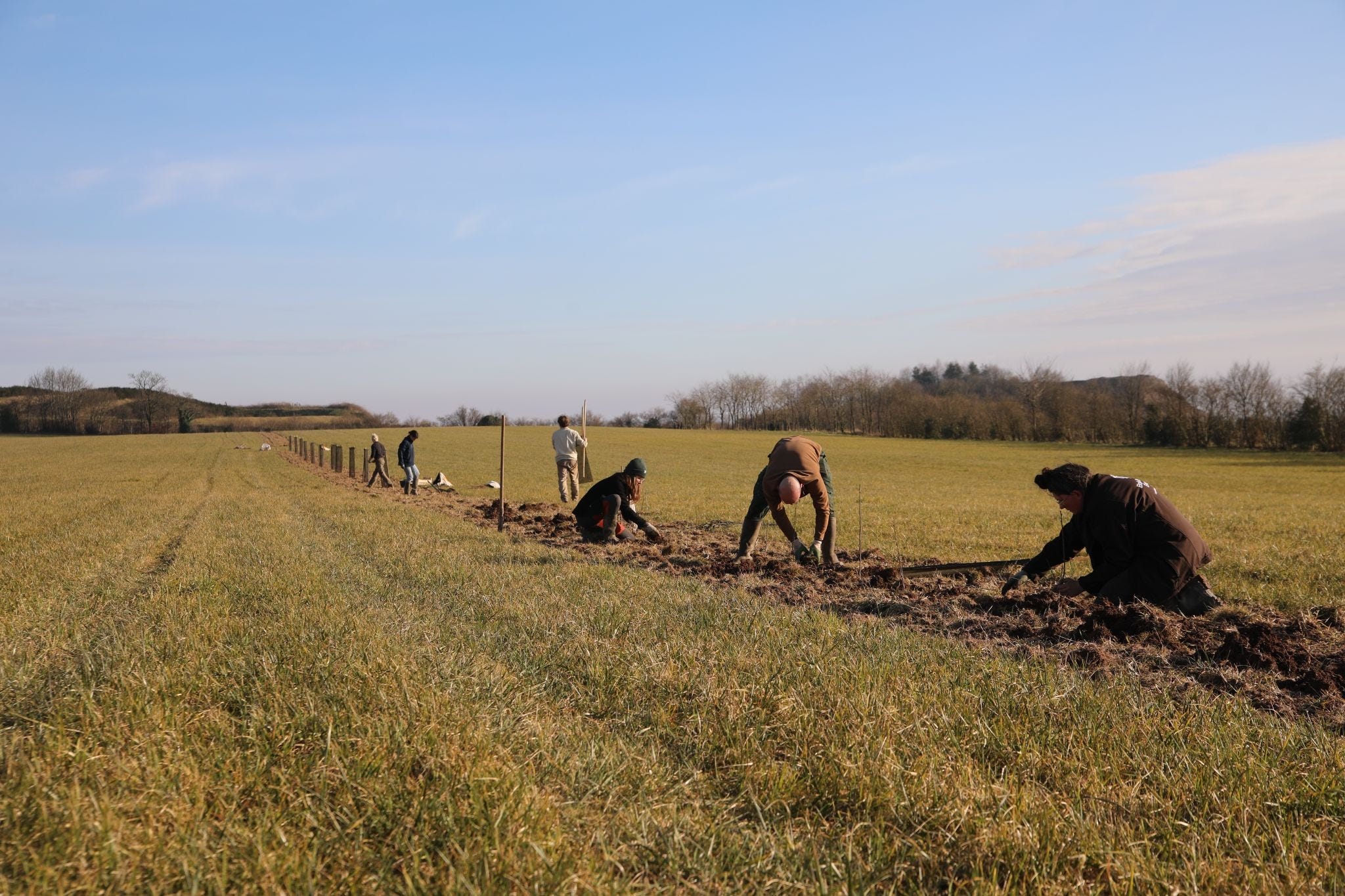
The ResiliAnce Partnership assesses landscapes and bioregions across Europe against six criteria, looking for places where a BFF could have the greatest potential, building on existing local processes and embedding into existing networks rather than arriving from the outside.
Overall bioregion characteristics: the size, defining features, and key themes of the bioregion, to help identify the types of challenges a portfolio of systemic innovations could address
Multi-stakeholder process: the maturity of stakeholder engagement, local buy-in, and development of a shared vision and priorities
Team: the strength and expertise of the local weaving team and systemic innovators, including existing knowledge and experience in business development and financing
Portfolio: the extent to which an emergent portfolio of systemic innovation already exists, and the potential to expand it for transformative impact
Regulatory and government context: whether the local environment is conducive to establishing a financing facility, including precedents for innovative public and private funding
Transferability: the potential for learnings from this bioregion to be replicated or scaled across similar bioregions
Across these six dimensions, one quality emerged above all others in this bioregion: a community already in motion. A weaving team has been active since 2019, quietly building the kind of relational infrastructure that takes years of patient work to develop. The idea of a financing facility had already taken root among local actors. The collaboration with the BWL Collective and ResiliAnce Partnership accelerated its translation into practice.
Originally rooted in Le Bocage Ornais, the team made a deliberate decision in 2025 to re-scope their work to the entire Orne Watershed, reflecting both the maturity of the collaboration and the scale of the vision. With that expansion came a new name: BWL Colina. The Cooperation Hub now brings together six organisations dedicated to the relocalisation of agricultural, food, energy, and reuse supply chains. Together, they pursue a shared ambition: contributing to living well in the region, at the scale of the watershed. They form the portfolio foundation on which the BFF prototype is being built.
The six members are:
↗ La Coop des Territoires – A cooperative fostering local cooperation and guiding local governments through community mobilization projects and incubation of local social enterprises
↗ Bois Bocage Énergie – An agricultural cooperative transforming hedgerow wood into local renewable energy
↗ Bocage Zéro Carbone – An initiative guiding local companies to act together for the carbon neutrality of the “Bocage Ornais”
↗ Les Fourmis Vertes – A resource recovery center and social integration enterprise developing a reuse sector within the Bocage area
↗ Apidés – A shared workspace hosting a community of about 30 local social entrepreneurs
↗ Rhizome – An agricultural Activity and Employment Cooperative (CAE) enabling individuals to test their business and plan before a guided, phased establishment
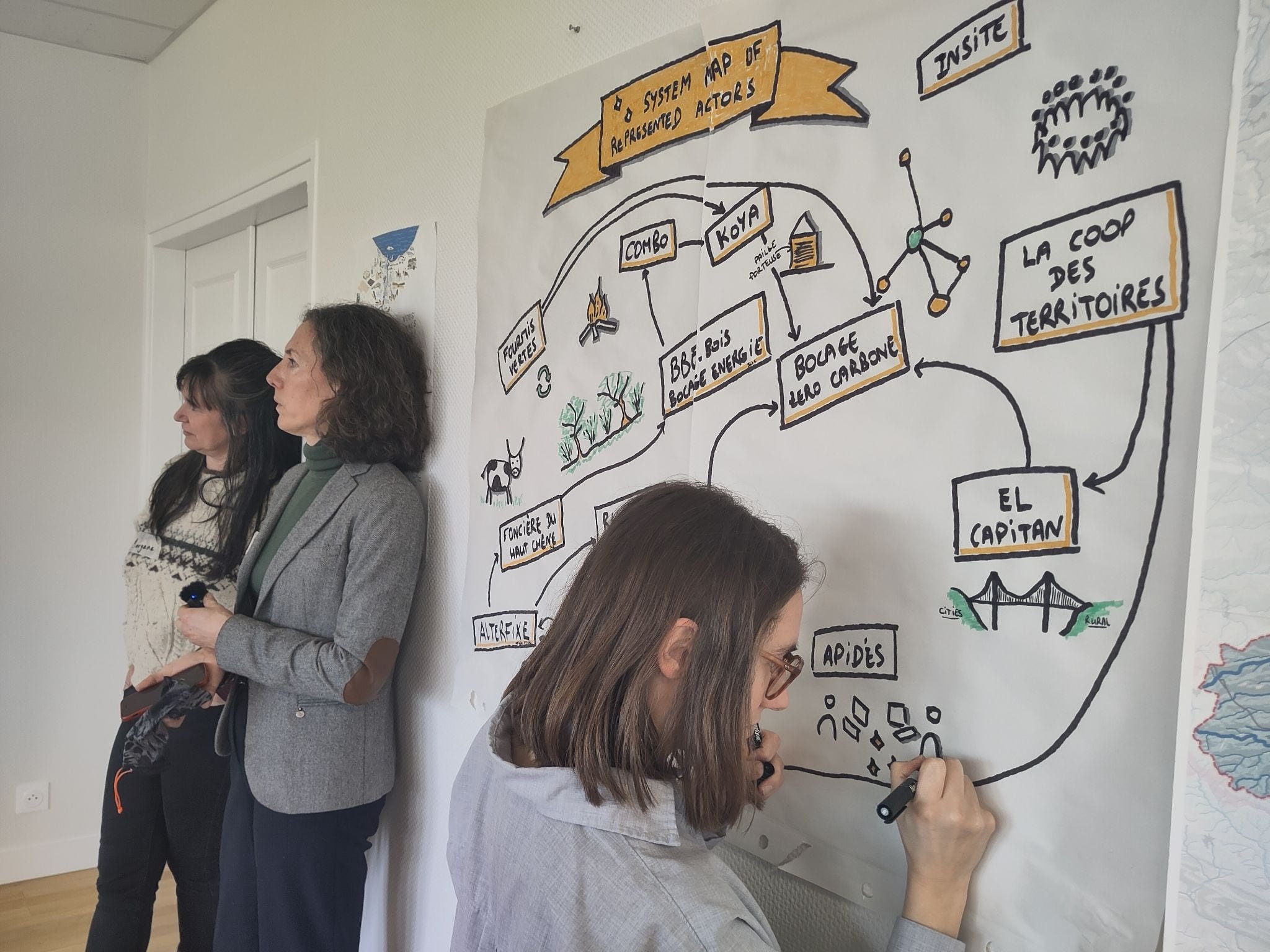
Each member addresses a different dimension of the same territorial challenge: energy, carbon, food, reuse, entrepreneurship, and collective action. Each strengthens the conditions the others depend on. Together, they make visible a portfolio of systemic innovation that no single organisation could represent alone.
The Hub emerged from shared needs: to act concretely together, and to pool tools and resources for more cost-efficient collaboration across the territory. It is recognised as a Territorial Hub for Economic Cooperation (PTCE) by the French State. It has been supported through national funding programmes, receiving €100,000 over 2024 and 2025, alongside support from the Normandy Region, the DRAC, and the BWL Collective. Its overall annual budget stands at approximately €120,000.
Despite this strong foundation, member organisations face financing needs that conventional systems struggle to meet. Three gaps stand out consistently.
Seed funding for new projects is often considered too high-risk for a risk-averse banking sector.
Scaling and securing land requires significant investment, while banks demand guarantees and co-financing that early-stage organisations rarely have.
Financing the infrastructure of cooperation - the long-term, ecosystem-level investments that allow the whole system to function, remains stubbornly outside what conventional funding frameworks were designed to support. falls into a category that most funders have no instrument for. The work that holds everything together is precisely the work that gets undervalued.
The BFF is designed to address all three. By combining public and private investment, grants, philanthropy, and citizen capital within a shared governance structure, it seeks to reduce the overall cost of capital for projects with high systemic impact. Crucially, it is designed to leverage what the territory already has: deep local knowledge, established relationships, and the kind of community trust that de-risks projects in ways that conventional due diligence rarely can.
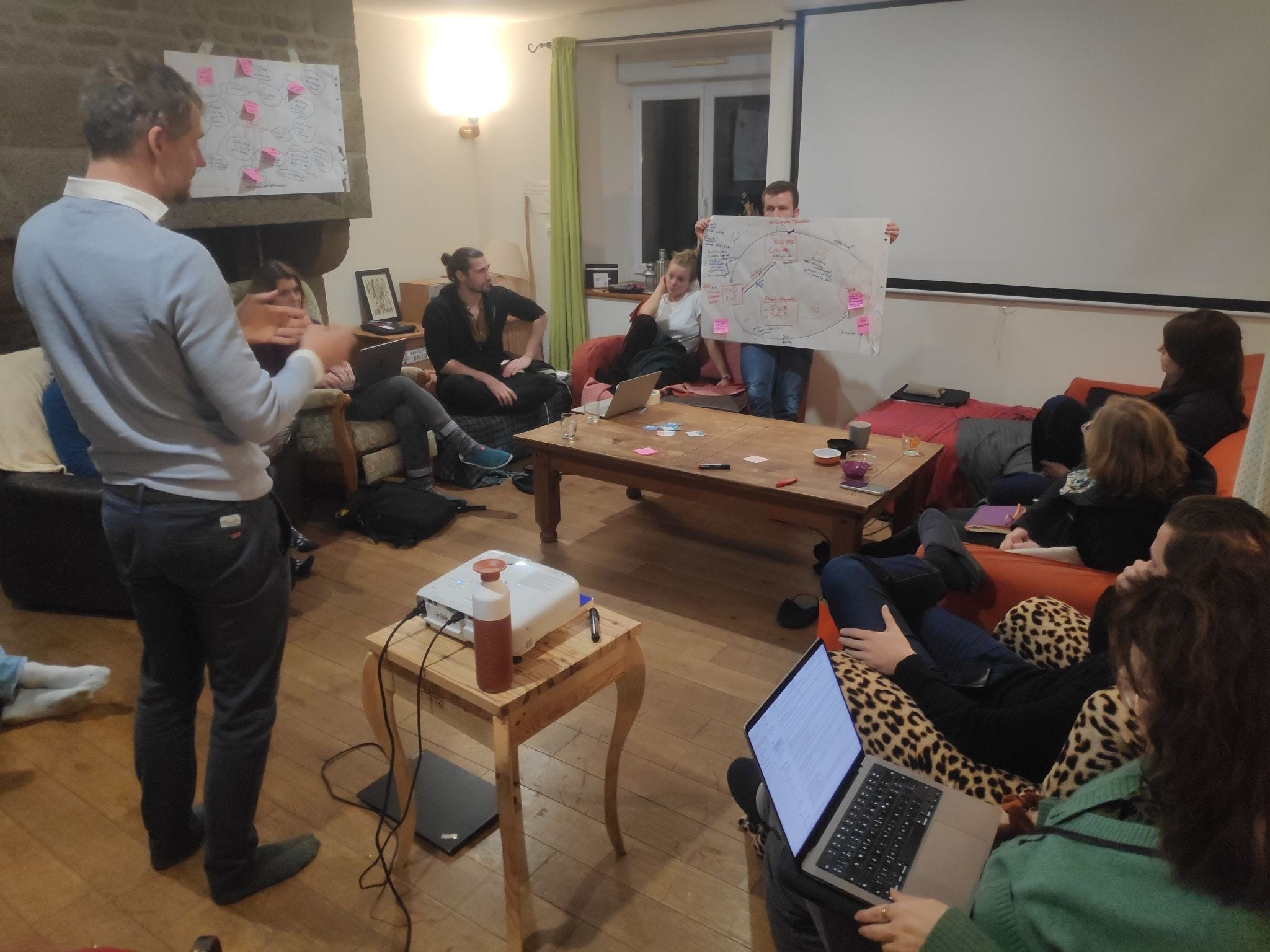
The ecosystem around the BFF prototype is being deliberately expanded to include investors, institutions, local authorities, and community actors. This broader engagement serves multiple purposes: challenging assumptions, filling technical gaps, and deepening collective reflection on how the facility can best serve the territory.
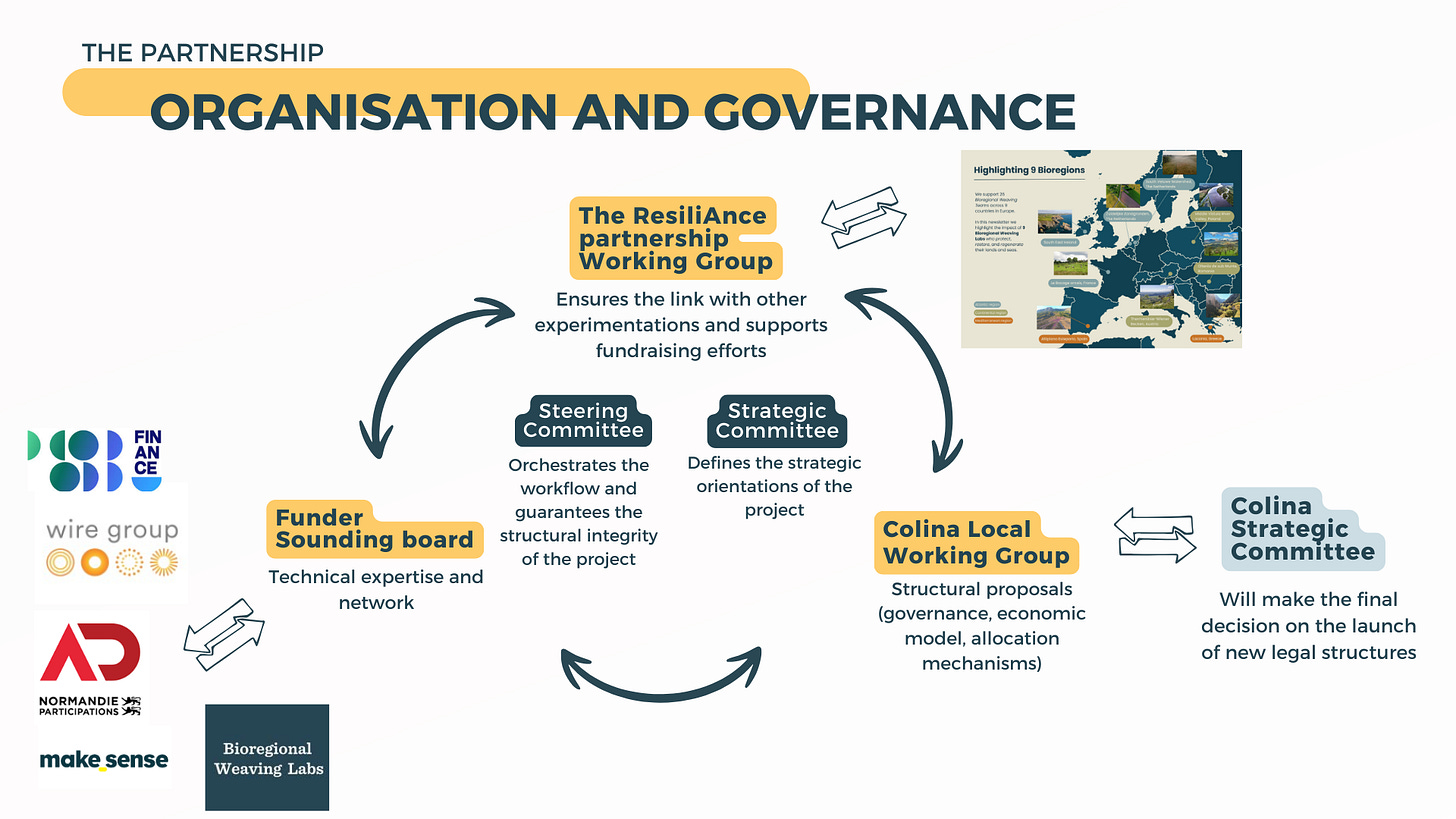
Three structures are taking shape, each serving a distinct purpose.
The ResiliAnce Partnership Working Group is the ‘engine room’ of the BFF prototype. Bringing together two members of BWL Colina’s weaving team (Igor Louboff & Jeanne Allard), two members of the pan-European BWL support team (Karin Müller & Leon Seefeld), and two members of WireGroup (Michiel Lenstra & Hadewych de groot van Embden), it is laying the groundwork for the financing vehicle itself: exploring the legal structures needed for blended finance, and establishing a governance framework for collective decision-making before any capital enters the system.
The Funder Sounding Board widens the circle. It is providing diverse funder/investment perspectives and expertise, challenging the project’s strategic direction and connecting the project to a broader network to advance the initiative. It brings together a member of a regional development agency (Franck Murray/Normandie Participations), an individual with vast experience in impact investing (Anne Gerset/MakeSense) and an expert in private, systemic investments (Iyas Ait Benhiba/ PSBL). They are regularly meeting with representatives of the Working Group.
The Colina Steering and Strategic Committee holds everything together. It consists of representatives from BWL Colina. It oversees the workflow and ensures structural integrity across governance, legal structures, and the economic model.
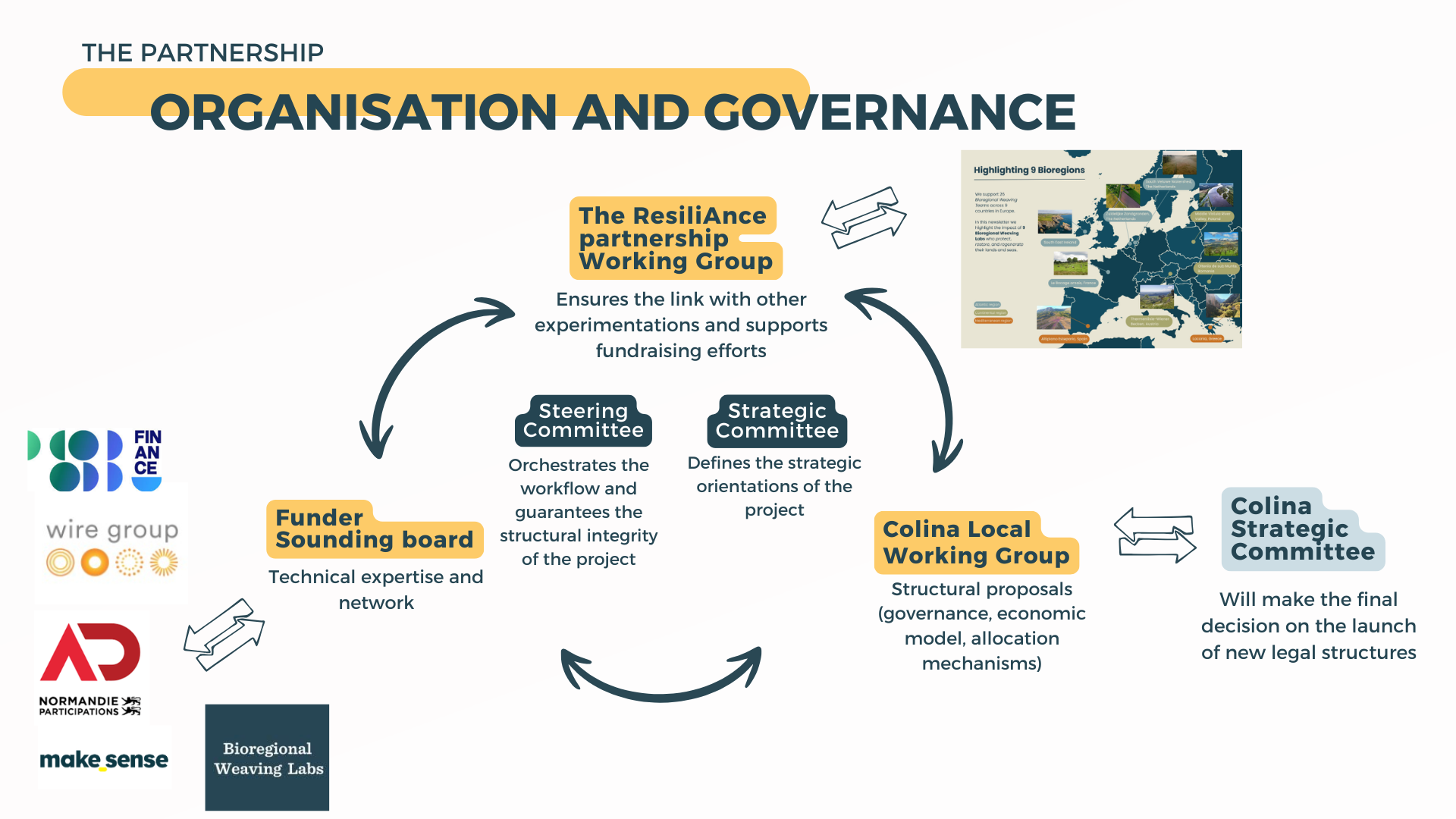
For readers interested in how these structures operate in practice, we invite you to explore this page.
An Invitation, Grounded in Place
The weavers of Le Bocage Ornais started with conversations in 2019. Seven years on, those conversations are becoming a financing facility, a collective governance structure, and a growing network of people committed to support regeneration of natural and social ecosystems in their territory.
In the coming articles, we will continue to unpack what this process reveals. We share this work as a grounded example of how a team can build collective governance, allow a specific place and its people to shape both the process and what emerges from it, and move from readiness to reality one careful step at a time.
We invite everyone thinking along similar lines to join the conversation.
📸Images courtesy of BWL Colina.
Invitation: reach out with your questions & ideas, share your own learnings & cases, or connect us with others who should be part of this prototyping journey.
Thanks for reading on the Learning Series of Prototyping BFFs in Europe! This post is public so feel free to share it.
Comments
Nothing yet. Say the first thing.
Sign in to join the conversation.