
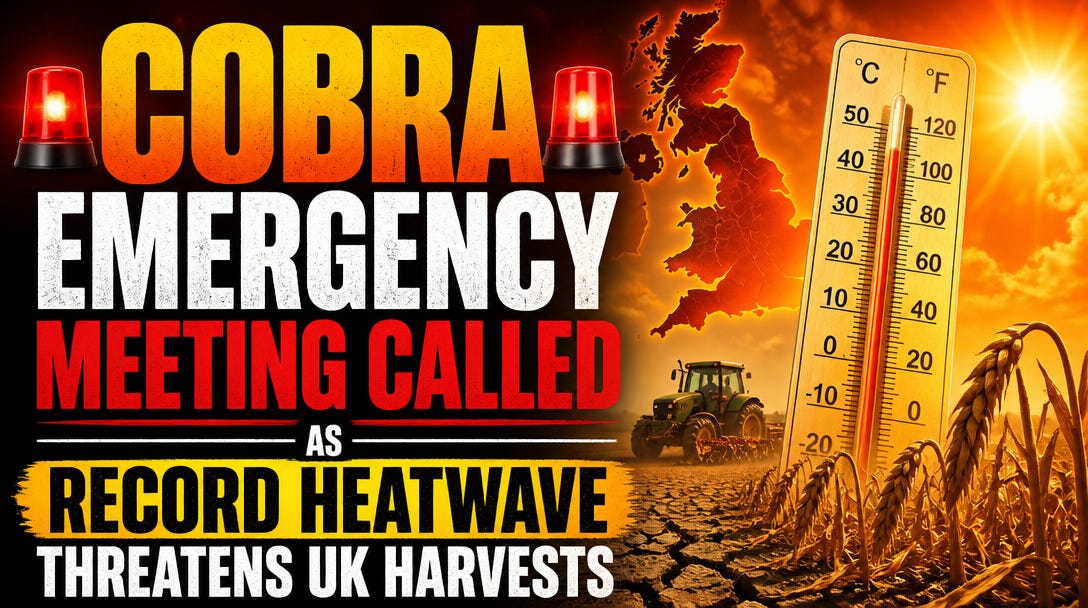
Script reader Stephen Sakur at Times News outlines the impacts of the current UK heatwave and NFU chair Tom Bradshaw says Britain's food production is facing an existential threat from extreme climate events, and relying on foreign imports is no longer a viable safety net.
No one can deny parts of England have been exceptionally warm in 2026 but how much has this impacted food growing compared to previous years and is this an unprecedented crisis?
Since 1990 twice before has the average UK wheat yield dropped below seven tonnes.
2026= early estimates puts the average UK wheat yield at 6.8 t/ha.
2012= the average wheat yield was 6.7 t/ha.
One in ten farms are reporting yields higher than their own five-year averages.
Do you see any evidence of a wheat/oil seed rape crop crisis over the last 50 years caused by man made climate change?
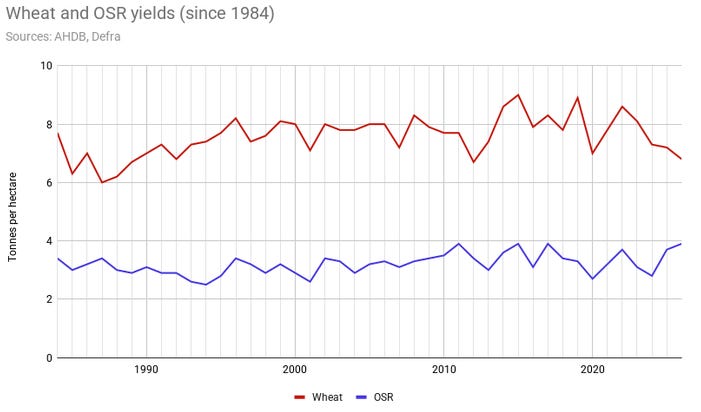
‘Oilseed rape is bucking the general production trend. Following on last year’s improvement in OSR yields, this year we’re seeing another rise to 3.9 t/ha, based on 73% completion. If this is maintained through the rest of harvest, it would match the highest OSR yield Defra has on record.’
source: hectaretrading.com
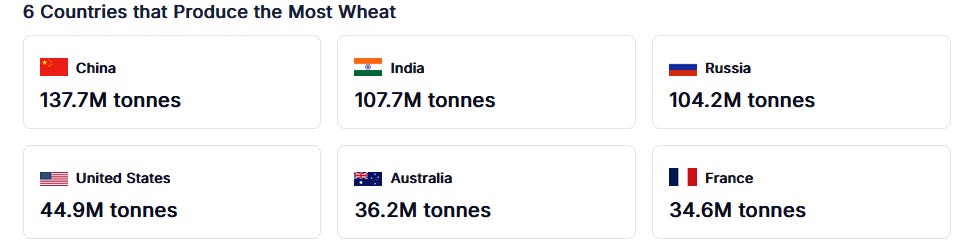
It’s worth noting China and India and the world’s top growers of wheat. India has an average annual temperature of 25.6 C (80F). The average yearly temperature across the UK is around 9 to 11 degrees Celsius (48 to 52F).
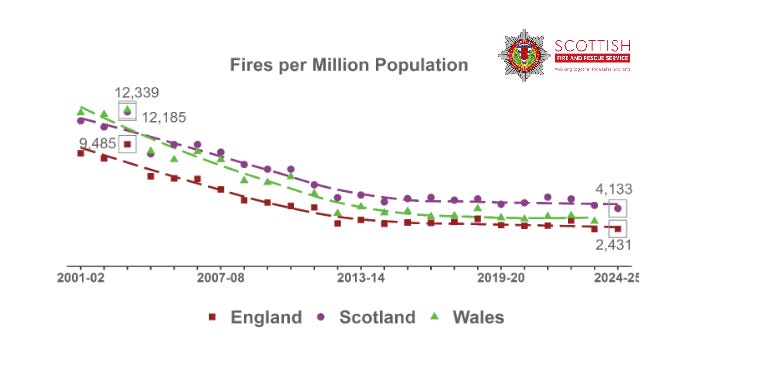
The latest statistics (-2025/2026) show fires from all causes have been in decline for decades and as of 2024-2025 were at all time record lows UK wide.
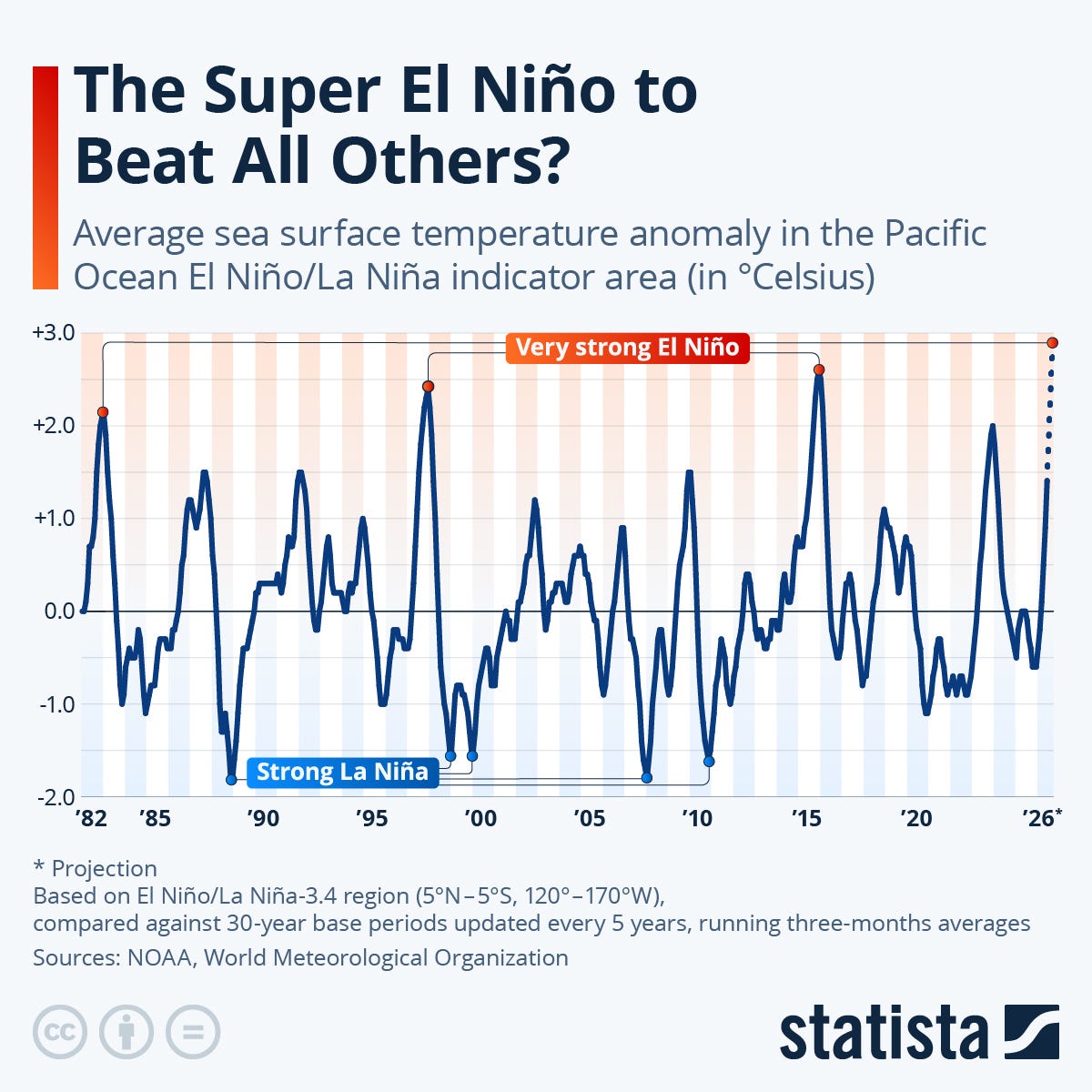
A phenomenon that has occurred for decades. Note the 2026 doted line projection (2.9) vs actual (1.4).
‘There have been three episodes of very strong average El Niño temperature anomalies of +2° Celsius or more recorded since 1950 – in 1982 at +2.1° C between November and February, in 1997 at +2.4° C from November to January and in 2015 at +2.6° C’’
Thanks for your attention
All feedback welcome.
End
Comments
Nothing yet. Say the first thing.
Sign in to join the conversation.