
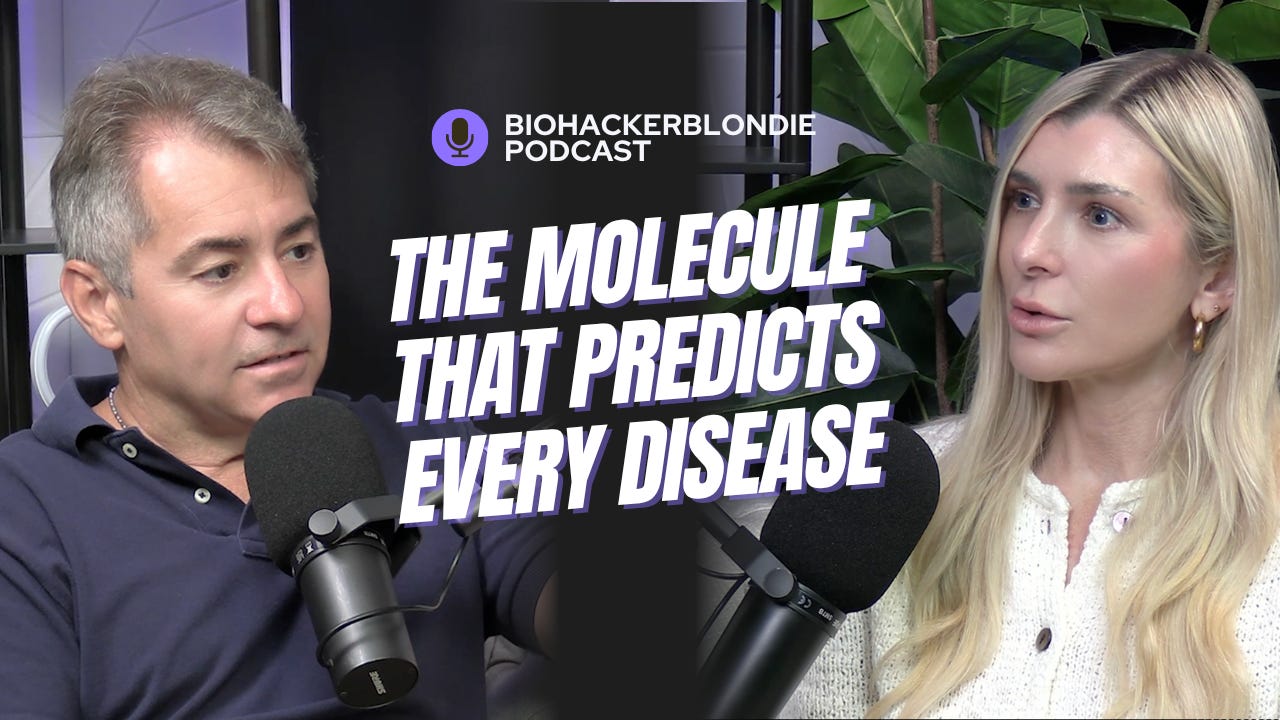
What if the earliest warning sign of almost every age-related chronic disease was a single molecule your doctor never tests for? This week I sit down with Dr. Nathan Bryan, one of the world’s foremost experts on nitric oxide, for a conversation that completely reframes how I think about energy, aging, blood pressure, and prevention.
We get into why nitric oxide is foundational to your entire body, why most “nitric oxide” supplements (beet powders, gummies, arginine, citrulline) are useless, how your mouthwash and toothpaste could be quietly raising your blood pressure, the truth about cholesterol and heart disease, and the exact daily habits Dr. Bryan uses to keep his own nitric oxide optimal. This one is packed. Grab a notebook.
About Dr. Nathan Bryan
Has spent nearly 30 years researching nitric oxide, beginning as a first-year medical student at LSU School of Medicine right after a Nobel Prize was awarded for the discovery of nitric oxide as a signaling molecule
Holds a degree in biochemistry from the University of Texas and completed his PhD in roughly two and a half years
Developed analytical techniques to detect nitric oxide metabolites across organ systems, giving his lab tools no one else in the field had, and went on to publish 8–10 papers a year in high-impact scientific and medical journals
Nitric oxide is one of the most researched molecules in medical history, with more than 200,000 published papers
Inventor and product developer: a solid-dose nitric oxide lozenge that generates 20–30 parts per million of nitric oxide gas, a dual-chamber topical nitric oxide serum, a fluoride-free nitric-oxide-friendly toothpaste, and a fermented beet powder engineered to actually produce nitric oxide
Currently developing nitric-oxide-based drugs through the FDA for heart disease and Alzheimer’s, plus a topical drug for diabetic ulcers
Author of six books, including his latest, The Secret of Nitric Oxide: Bringing the Science to Life (Brick Tower Press), an Amazon bestseller
This Substack is reader-supported. To receive new posts and support my work, consider becoming a free or paid subscriber.
Topics Covered
What nitric oxide is and why Dr. Bryan calls it the foundational molecule for health, longevity, and disease prevention
Why the functional loss of nitric oxide is the earliest event in nearly every age-related disease
Why nitric oxide isn’t part of the standard doctor–patient conversation, and how it can actually be tested
The full symptom hierarchy of nitric oxide deficiency
The truth about beet powder, gummies, arginine, and citrulline
The oral microbiome: how mouthwash, fluoride, and antacids shut nitric oxide down
The cholesterol and heart disease debate
How nitric oxide relates to Viagra and sexual function
Nitric oxide for skin, wound healing, and hair transplants
Dr. Bryan’s complete personal daily protocol
Why Nitric Oxide Is Foundational
Nitric oxide is a gas your body produces that’s gone in less than a second, yet it governs an enormous amount of your physiology. Dr. Bryan explains that it:
Acts as a vasodilator, opening blood vessels for better circulation, blood flow, and oxygen delivery
Mitigates inflammation in the lining of the blood vessels and helps prevent atherosclerosis (plaque)
Signals your own stem cells to mobilize and differentiate
Helps prevent telomeres from shortening (shorter telomeres are linked to shorter lifespan)
Induces mitochondrial biogenesis, so you generate more energy more efficiently, even with less oxygen
His bottom line: nearly everything we know about health, longevity, human optimization, and disease prevention is determined by the body’s ability to produce nitric oxide. And the earliest event in the onset and progression of disease, whether it’s Alzheimer’s, heart disease, diabetes, autoimmune, liver, or pulmonary disease, is the functional loss of nitric oxide.
Why Your Doctor Isn’t Talking About It
Despite 200,000+ papers, nitric oxide isn’t part of standard care, and Dr. Bryan explains why:
It’s not on your standard blood labs. Because nitric oxide is gone in under a second, there’s no simple blood draw like vitamin D
There are almost no FDA-approved nitric-oxide-based drugs. The exceptions are nitroglycerin (used for angina for ~200 years, discovered in the 1970s to be metabolized into nitric oxide) and inhaled nitric oxide, which is only approved for premature babies with pulmonary hypertension
How it can be tested: Dr. Bryan points to flow-mediated dilation, where blood flow is occluded in the brachial or femoral artery for about five minutes, then an ultrasound probe measures how well the downstream vessels dilate. It’s an FDA-cleared, reimbursable test that runs roughly $100–150, but most physicians simply don’t use it.
Who Needs Nitric Oxide
Dr. Bryan’s line says it all: “There’s only two people in the world who need nitric oxide. People who are sick and want to get well, and people who are healthy and don’t want to get sick.” He’s taken his own nitric oxide product for more than 25 years, “not because I need it, it’s because I don’t want to need it.” Rather than testing everyone, he doses based on symptoms.
The Symptom Hierarchy of Deficiency
As nitric oxide production declines, Dr. Bryan describes a predictable progression:
Erectile dysfunction in men and female sexual arousal disorder in women (often the very first sign, because you can’t dilate the blood vessels of the sex organs)
Rising blood pressure (two out of three Americans have an unsafe elevation in blood pressure)
Insulin resistance and metabolic disease (he notes 93% of Americans are metabolically unfit; nitric oxide is part of insulin signaling)
Exercise intolerance and shortness of breath
At the far end, dementia and Alzheimer’s, which he frames as a vascular-metabolic disease
The functional loss of nitric oxide can precede the structural changes we call disease by 10, 15, even 20 years. If you already have plaque in your blood vessels, he says, you’ve likely been nitric oxide deficient for many years.
His Own Numbers: Optimal, Not “Normal”
Dr. Bryan practices what he preaches. About six weeks before this episode he had a Cleerly scan in Miami (which looks at both calcified and soft, vulnerable plaque). At 52 years old, there was zero detectable plaque in any of his coronary arteries, something he says the cardiologist and radiologist had never seen. He also tests ApoB and Lp(a) and draws labs about twice a year, aiming not for “normal” but for optimal.
The Cholesterol Debate
Dr. Bryan argues we’ve been misled for 50 years about cholesterol causing heart disease. Despite treating cholesterol since the 1980s, he points out that the incidence of heart disease has gotten worse, and makes the case that treating cholesterol won’t prevent heart disease.
Viagra and Nitric Oxide
Viagra and similar drugs are phosphodiesterase inhibitors. They don’t produce nitric oxide, but they potentiate its effects. Nitric oxide raises a second messenger called cyclic GMP; phosphodiesterase enzymes break cyclic GMP down. Viagra blocks that breakdown, potentiating vasodilation, but without nitric oxide there’s no cyclic GMP for it to work on. Dr. Bryan notes the drugs were approved in 1998 and that about 50% of men prescribed Viagra don’t respond, because they aren’t making enough nitric oxide. Restore nitric oxide, he argues, and you can both convert non-responders and eliminate the need for the drug entirely.
The Supplement Myths
Beet powder: Most commercial beet powders are made by concentrating the beet into a molasses-like “high brix” concentrate, then drying it under high heat and pressure. Since most of the nitric-oxide-relevant compounds are water soluble, Dr. Bryan says they’re lost in processing, leaving a “dead beet powder” with no nutrient value, no nitric oxide activity, and a load of oxalates (which can contribute to kidney stones, gout, and inflammation). He says he’s tested the products on the market and found “zero” nitric oxide.
Arginine & citrulline: These are semi-essential amino acids the body makes via the urea cycle, so a true deficiency is rare. A 2010 paper from his lab showed the cell uses L-citrulline to make arginine, which makes nitric oxide with citrulline as a byproduct, not a precursor. His take: if a product contains arginine or citrulline as its nitric oxide strategy, the company doesn’t understand the science.
Gummies & chews: He calls these among the worst formats, essentially “seed oil and sugar,” that can’t deliver an active dose. His grape seed extract example: the sugar in a gummy can bind the active compounds so they can’t even activate the receptor.
Test strips: Dr. Bryan actually developed salivary nitric oxide test strips 15 years ago, then abandoned the patents. Beyond the aging chemistry, he found false positives: people with every symptom of deficiency could test “optimal” because an active oral infection lit up the strip.
He adds that he tests every product on the market, most contain zero nitric oxide, and that he’s been sued by companies over it.
The Oral Microbiome Connection
A huge theme: a big part of nitric oxide production depends on bacteria in the crypts of the tongue that convert dietary nitrate. Dr. Bryan says the modern routine sabotages this system:
73% of people in the US have fluoride in their drinking water
Two out of three Americans use antiseptic mouthwash
200 million prescriptions are written for antacids each year, and three out of four Americans report taking an OTC antacid
His lab published more than a decade ago that mouthwash kills the good bacteria, decreases nitric oxide, and raises blood pressure, and high blood pressure is the number one driver of the number one killer worldwide. A 2019 paper on resistant hypertension (where blood pressure meds like ACE inhibitors, ARBs, or calcium channel blockers don’t work in about half of patients) traced much of it to oral dysbiosis. When patients eliminated fluoride and mouthwash, filtered their water, and fed the good bacteria, their blood pressure came down and many got off medication, something he says has essentially never been the conversation in Western medicine.
He also recommends an oral microbiome test (around $100) to see which bacteria you need, and notes his team is working to test for beneficial commensal bacteria, not just pathogens, so therapy doesn’t kill the good guys along with the bad.
The Oral–Systemic and Gut Link
Dr. Bryan calls it the oral-systemic link: bad oral health means bad systemic health. Every time you swallow saliva you inoculate your gut, so poor oral bacteria drive gut dysbiosis. We discuss fecal transplants (which changed my own digestive system), C. diff, and how much of the bloating and gas people struggle with traces back to the microbiome. As he puts it, we’re 10 times more bacteria than human, so if you’re killing off your bacteria, you’re harming the human.
Food, Soil, and Sugar
Geography matters. A 2015 paper from his lab found vegetables grown in places like Los Angeles and Dallas can have 10–50x more nitrate than the same vegetable grown in New York, Raleigh, or Chicago.
Conventional vs. organic. Conventionally grown vegetables (with nitrogen fertilizer) have far more nitrate; organically grown vegetables can have 5–10x less, and are often more nutrient depleted. The darker green the vegetable (kale, spinach), the higher the nitrate.
It’s less about what you eat, more about what you don’t. Dr. Bryan’s biggest dietary lever is eliminating sugar. Sugar sticks to things: it binds hemoglobin (measured as A1c) and also glues together the enzyme that makes nitric oxide, preventing it from functioning. Ultra-processed food destroys the microbiome and lowers saliva pH. Cut the sugar, he says, and you release the brakes on nitric oxide production.
Beyond Blood Vessels: Skin, Wounds & Hair
The origin story. Dr. Bryan never intended to get into skincare. In 2014 his father, a paraplegic since a 1984 car accident, developed an infected stage-four pressure ulcer and nearly died of sepsis. After wound-care doctors and 40 sessions of hyperbaric oxygen failed, Dr. Bryan treated the wound himself with a nitric-oxide-releasing gauze, achieving ~50% closure in six weeks and fully healing a four-year non-healing wound in six months by restoring circulation, recruiting capillaries, killing bacteria, and mobilizing stem cells.
The serum. That led to a dual-chamber topical nitric oxide serum (one pump from each side mixes to generate nitric oxide gas). The skin visibly turns pink from improved blood flow. He cites seven published clinical trials and results across age spots, acne, rosacea, dermatitis, wound healing, and even polycystic and teenage acne.
Hair. Hair loss can stem from loss of follicles or loss of blood supply. Dr. Bryan had a hair transplant about a year ago with Dr. Alan Bauman, 45 individual follicular transplants, and the nitric oxide serum is part of the protocol to establish blood flow to newly transplanted follicles and improve graft success. He also discusses exosomes, banking his own follicle-derived stem cells, monthly microneedling with acorn secretome, and how nitric oxide helps prevent ischemia-reperfusion injury in transplants.
What People Notice When They Start
According to Dr. Bryan, common early changes include:
Blood pressure coming down (e.g., 140/90 toward 120/80)
Lower perceived exertion in workouts, feeling like you can go longer, stronger, faster
Improved insulin sensitivity (better fasting insulin and glucose)
Improved sexual function
On hormones, he calls nitric oxide a foundational molecule and a hormone itself. It won’t directly raise low testosterone, but by improving circulation to the endocrine glands (testes, ovaries, thyroid), it helps them “sample” the body better and respond, and he says you get a better response to hormone replacement therapy when nitric oxide is normalized first.
Dr. Bryan’s Complete Daily Protocol
Fasting: an 18-hour fast every day (stops eating at 6pm, eats again at noon), plus a 24-hour fast once a week, for better energetics, lower glucose and fasting insulin, and to help induce longevity genes
Morning: works out as soon as he wakes up, taking his beet powder as a pre-workout; in Miami he watches the sunrise, gets first light, and walks or works out on the beach
Mindset: reads scripture, prays, meditates, and plans his day
Sunlight: 20–30 minutes a day
Nasal breathing: the NOS enzyme in the nasal epithelium produces nitric oxide gas; mouth breathing shuts this down. He suggests mouth taping at night, but only after seeing an airway specialist if you may have an obstruction
Diet: high-protein, lots of red meat, some chicken, very little seafood, low-glycemic carbs
Supplements: wild bison organ meat capsules (6 in the morning, doesn’t break his fast), salmon roe from Wild Mamas (sold as a prenatal), chlorella/spirulina and algae products, and magnesium at night. He avoids omega-3 supplements, which he says are often oxidized/rancid, in favor of eating salmon
His Top Suggestions & His Toothpaste
His number one instruction is to stop the things that disrupt nitric oxide, starting with fluoride toothpaste (he calls fluoride a neurotoxin that can suppress thyroid function). Dr. Bryan spent years developing his own fluoride-free, hydroxyapatite-based, prebiotic “Breath of Life” toothpaste (nitric oxide is the “breath of life”), with a nitric-oxide-friendly mouth rinse launching in the coming months. After using it, he went to the dentist for the first time in three years and was told it looked like his teeth had just been cleaned, with zero plaque and no pathogens on dark-field microscopy. He says his team has hundreds of reports of people getting off blood pressure medication simply by changing their toothpaste.
On Stress and Mindset
We close on mindset. Dr. Bryan made a conscious decision years ago not to worry about things he can’t control. He’s turned the TV off, doesn’t follow the noise, and channels his energy into the longevity space where he can actually make a difference.
Products & Brands Mentioned
Product / Brand Use N1O1 Dr. Bryan’s nitric oxide lozenge, fermented beet powder, and topical serum N1O1 “Breath of Life” toothpaste Fluoride-free, hydroxyapatite-based, oral-microbiome friendly (mouth rinse coming soon) Hydroxyapatite toothpaste Fluoride alternative that helps remineralize teeth Cleerly Heart scan for calcified and soft plaque Wild bison organ meat capsules Dr. Bryan’s daily nutrient source Wild Mamas salmon roe Omega-3s and prenatal nutrients Chlorella / spirulina / algae Balancing land and sea nutrients Magnesium Taken at night before bed
People & Experts Mentioned
Dr. Nathan Bryan — nitric oxide researcher and guest
Dr. Alan Bauman (Bauman Medical) — hair restoration physician behind Dr. Bryan’s transplant
Dr. Mark Hyman — referenced regarding beet powder in smoothies
Key Takeaways
Nitric oxide is a foundational signaling molecule, and its functional loss is the earliest event in most age-related disease, often decades before symptoms.
“Normal labs” can miss it entirely, because nitric oxide isn’t part of standard blood work.
You can measure vascular function with flow-mediated dilation, an FDA-cleared, reimbursable ~$100–150 test most physicians don’t use.
Deficiency progresses from erectile dysfunction / low arousal to high blood pressure, insulin resistance, exercise intolerance, and eventually dementia.
Most commercial beet powders and “nitric oxide” supplements Dr. Bryan tested showed zero nitric oxide activity.
Arginine or citrulline as a nitric oxide strategy is a red flag that a company doesn’t understand the science.
Gummies and chews are poor delivery formats, and their sugar can inactivate the active ingredient.
Antiseptic mouthwash, fluoride, and antacids disrupt the oral bacteria you need to make nitric oxide.
Some cases of “resistant” high blood pressure improved dramatically by fixing the oral microbiome, and people got off medication.
Dr. Bryan questions the 50-year focus on cholesterol as the driver of heart disease.
About 50% of men don’t respond to Viagra because they aren’t making enough nitric oxide.
Nitric oxide underpins circulation to the skin, wounds, and even transplanted hair follicles.
The oral–systemic link means poor oral health drives gut and whole-body health issues.
Where and how your vegetables are grown dramatically affects their nitrate content.
Lifestyle is powerful: an 18-hour daily fast, morning sunlight, nasal breathing, exercise, and cutting sugar all support nitric oxide.
Connect with Dr. Nathan Bryan
Instagram: @drnathansbryan
Company & website: n1o1.com
Book: The Secret of Nitric Oxide: Bringing the Science to Life
About Jenny Jones (BiohackerBlondie)
Jenny Jones is the founder of Happier Health Fitness and Happier Health Supplements, host of the BiohackerBlondie Podcast, health coach, and author of Biohack For Life. Based in Miami, Florida, Jenny is on a mission to help people optimize their health through biohacking, functional medicine, and real food.
Connect with BiohackerBlondie
📱 Instagram: @biohackerblondie
🎙️ Podcast: BiohackerBlondie — Spotify, Apple Podcasts & YouTube
🌐 Website: biohackerblondie.com
Exclusive Offers for BiohackerBlondie Listeners
Chief Nutrition — Code: BIOHACKERBLONDIE for 10% off
Ion Layer - Code biohackerblondie for 25% off NAD Pen
Ultra Life Peptides — Code: BIOHACKERBLONDIE
Happier Health Supplements — Code: HAPPY20 for 20% off
Prolon — Link for 25% off your first order
TryKepos — Code: BIOHACKERBLONDIE for 15% off
Pulsetto — Code: BIOHACKERBLONDIE
Jinfiniti NAD Testing — Code: JENNY10
These statements have not been evaluated by the FDA. This podcast is for educational purposes only and is not intended as medical advice. Always consult a qualified healthcare provider before starting any supplement, peptide, or health protocol.
Comments
Nothing yet. Say the first thing.
Sign in to join the conversation.