
I test my biomarkers regularly, eat clean, move my body, optimize my sleep, and stay on top of my supplement routine. Most of my numbers look great. But there was one area that kept nagging at me — my hormones were imbalanced and my cycles were inconsistent.
Then I looked more closely at my Oura Ring one day and there it was — over 8 hours of stress most days last year.. My nervous system was stuck in overdrive and it was showing up directly in my hormones — low T3, low testosterone, imbalanced hormones..
Chronic stress is one of the most underestimated hormone disruptors there is. It does not just make you feel anxious — it physically hijacks your endocrine system. Cortisol steals resources from your reproductive hormones. Progesterone gets converted to cortisol. Testosterone drops. Thyroid slows. The entire hormonal cascade gets thrown off — all because your nervous system thinks it is in survival mode.
Here is what happens in the body when cortisol is chronically elevated:
Progesterone gets stolen — your body uses progesterone as a precursor to make cortisol. The more stressed you are, the more progesterone gets diverted away from its actual job of regulating your cycle
Testosterone drops — chronic cortisol suppresses testosterone production in women, affecting energy, libido, mood, and body composition
Thyroid slows down — stress directly suppresses thyroid function, reducing the conversion of T4 to active T3
Estrogen becomes imbalanced — disrupted cortisol rhythm throws off the entire estrogen-progesterone ratio, leading to dominance, irregular cycles, and PMS
LH and FSH get disrupted — the hormones responsible for triggering ovulation and regulating your cycle are directly impacted by stress signals from the brain
When I saw that 8+ hours of daily stress on my Oura Ring, I realized I needed to do something and take action..
This sounds simple. It is not.
I looked honestly at everything in my life that was contributing to that stress score and I started eliminating it. Commitments that drained me. Relationships that cost more than they gave. Obligations that were not aligned with where I was going. Anything and anyone that was consistently adding to my nervous system load — I let go of.
I started protecting my energy like it was my most valuable asset. Because when it comes to hormonal health — it is.
Within weeks my Oura Ring stress score dropped significantly. And eventually it came down to around 1 hour a day. That shift alone — from 8+ hours of stress to 1 — changed my biomarkers, my sleep, my mood, and my cycle more than anything else I had tried.
But I also added specific tools to actively support my nervous system — not just remove stressors, but help my body get out of fight or flight faster and stay out of it longer.
One of the most impactful tools I added this year was Pulsetto — a vagus nerve stimulation device that I now use almost every evening.
Your vagus nerve is the longest nerve in your body. It runs from your brainstem through your neck, chest, heart, lungs, and gut — and it is the primary driver of your parasympathetic nervous system, your rest and digest mode. When it is well activated, your body can efficiently shift out of fight or flight. When it is chronically underactivated — which is exactly what happens during sustained stress — cortisol stays elevated and your hormonal system stays disrupted.
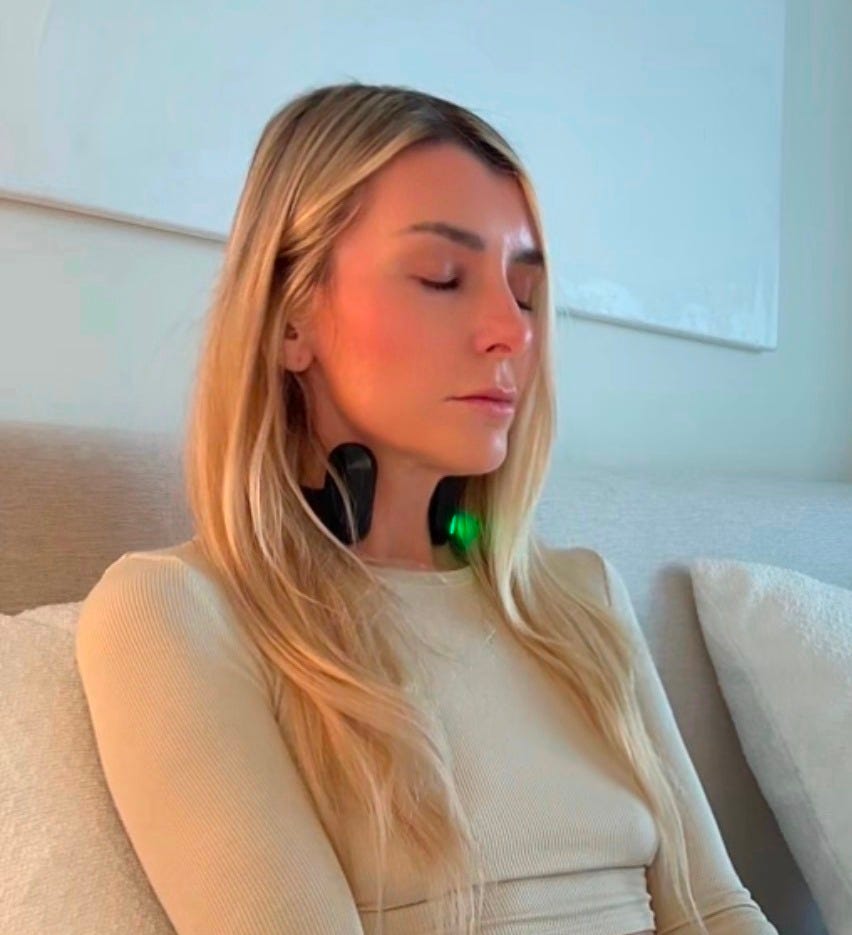
Pulsetto delivers gentle electrical pulses to the vagus nerve through the skin on your neck, triggering the parasympathetic response within minutes. Heart rate slows. Cortisol drops. Your nervous system receives the signal that it is safe to calm down.
I use it most evenings for about 10 minutes — either the stress relief or sleep support program. The impact on my Oura Ring data is measurable. HRV improves on nights I use it. Resting heart rate is lower. Deep sleep increases. And over time, my baseline stress levels have come down significantly.
For anyone whose stress is showing up in their hormones — this is one of the most practical, science-backed tools I have found. It does not replace lifestyle changes, but it accelerates them.
👉 Use code BIOHACKERBLONDIE at checkout at pulsetto.tech
This is the one most people have never heard of. And it may be the single most important thing I have added to my protocol for hormonal and cycle regularity.
Kisspeptin is a naturally occurring peptide hormone produced in the hypothalamus. It is often called the master regulator of the reproductive axis — because it sits at the very top of the hormonal hierarchy and controls the entire cascade beneath it.
Here is how it works. Kisspeptin stimulates the release of GnRH — gonadotropin-releasing hormone — from the hypothalamus. GnRH then signals the pituitary gland to release LH (luteinizing hormone) and FSH (follicle-stimulating hormone). Those two hormones travel to the ovaries and regulate ovulation, your menstrual cycle, estrogen, and progesterone production.
Kisspeptin is the first signal in that entire chain. Without it firing correctly, everything downstream gets disrupted — no matter what you do at the hormone level itself.
And the primary thing that suppresses kisspeptin? Chronic stress. Which is exactly why addressing the nervous system first is so critical before anything else.
What Kisspeptin supports:
Cycle regulation — kisspeptin is essential for the LH surge that triggers ovulation. Restoring proper signaling helps normalize cycle timing and consistency
Irregular or absent cycles — particularly cycles disrupted by stress, under-eating, or overtraining. Research shows kisspeptin can restart ovulatory cycles by reactivating the hormonal cascade at its source
Hormonal feedback loops — estrogen, progesterone, LH, and FSH are all regulated downstream of kisspeptin signaling
PCOS support — clinical studies have demonstrated kisspeptin’s ability to help normalize LH/FSH ratios and improve ovulatory function in women with PCOS
Estrogen and progesterone balance — by restoring proper LH and FSH signaling, kisspeptin supports balanced sex hormone production
Mood and libido — both are directly downstream of the sex hormones kisspeptin helps regulate
Fertility — a 2025 clinical review in the Journal of Clinical Medicine concluded that kisspeptin shows significant promise in restoring fertility and is being actively investigated in IVF protocols as a safer alternative to conventional ovulation induction drugs — without the risk of ovarian hyperstimulation syndrome
What makes kisspeptin so powerful compared to other hormonal interventions is that it works with your body’s own signaling system rather than replacing it. It does not give you hormones. It tells your body to make them itself — in a natural, physiological way.
Since adding kisspeptin to my protocol, my cycle regularity has improved significantly.
I source mine through UltraLife Peptides — FDA-registered, GMP-certified, third-party verified for purity.
👉 ultralifepeptides.com | Code: BIOHACKERBLONDIE
When I ran my full blood panel, one of the deficiencies that showed up was iodine. And this was quietly responsible for my low T3 — the active form of thyroid hormone — which affects everything from metabolism to muscle maintenance to mood.
Iodine is the primary building block of thyroid hormones. Your thyroid literally cannot make T4 or T3 without it. And iodine deficiency is far more common than most people realize — especially in women who eat clean, avoid processed food, and do not use iodized salt. The cleaner you eat, the more at risk you can actually be.
Low T3 affects:
Metabolism — how efficiently your body converts food to energy and maintains healthy body composition
Muscle gain and maintenance — T3 is essential for protein synthesis and lean mass development
Energy levels — low T3 is one of the most common and overlooked causes of chronic fatigue
Mood and cognitive function — T3 directly influences neurotransmitter activity including serotonin
Hormone balance — thyroid dysfunction is directly linked to estrogen imbalance, cycle irregularity, and low progesterone
After adding iodine supplementation — and confirming through testing that I was actually deficient before I started — my thyroid markers began improving and my energy and metabolism responded noticeably.
Important: Always test before supplementing with iodine. Too much iodine can also cause thyroid problems. Know your levels first.
This is something most women — and even most doctors — do not know. Iron is not just for energy and anemia. Iron is essential for thyroid function.
Specifically, iron is a required cofactor for thyroid peroxidase (TPO) — the enzyme that produces T4 and T3. When ferritin (your iron storage protein) is low, TPO activity drops, thyroid hormone production slows, and T4 cannot be efficiently converted to the active T3.
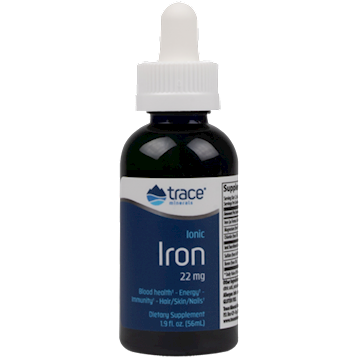
A 2023 systematic review confirmed that individuals with low iron status had significantly lower free T3 and free T4 compared to those with normal iron status. And the relationship between ferritin levels and thyroid hormone profiles is direct — the lower your stores, the more impaired your thyroid function becomes.
Low ferritin also increases production of reverse T3 — an inactive form of thyroid hormone that blocks active T3 from binding to receptors. So you can have normal-looking thyroid labs on paper and still feel terrible — because your ferritin is quietly sabotaging the whole system at the cellular level.
What low ferritin does to hormones:
Impairs thyroid hormone production and T4 to T3 conversion
Drives up reverse T3 — blocking active T3 from working
Mimics hypothyroidism even when the thyroid itself is functioning
Compromises energy at the cellular level
Contributes to hair loss, brain fog, fatigue, and mood instability
Impairs the utilization of iodine — meaning iodine supplementation is less effective without adequate iron
Important: Test your ferritin, serum iron, and TIBC before supplementing. Too much iron is toxic. This is not something to guess on.
I will keep saying this until everyone truly internalizes it — sleep is not a lifestyle preference. It is the biological foundation of hormonal health. And for cycle regulation specifically, it is non-negotiable.
While you sleep your body does the hormonal work that cannot happen during the day:
Cortisol resets — your cortisol rhythm is anchored to your sleep/wake cycle. Disrupted sleep means disrupted cortisol which means disrupted everything downstream
Progesterone and estrogen balance — both are profoundly affected by sleep quality and duration
Growth hormone releases — essential for cellular repair and body composition
Testosterone produces — in women as well as men, primarily during deep sleep
T4 converts to T3 — thyroid hormone conversion is more efficient during adequate, quality rest
Leptin and ghrelin regulate — the hunger hormones that affect appetite, cravings, and body composition are set during sleep
This year I made sleep a high priority in my protocol. Consistent bedtime. Tracking with my Oura Ring to hold myself accountable to actual quality, not just time in bed. And the hormonal impact has been one of the most significant changes I have made.
Beyond the five things above, here is what I also pay attention to and would recommend considering:
Magnesium — involved in over 300 enzymatic reactions including progesterone production and cortisol regulation. Magnesium glycinate before bed supports both sleep and nervous system function simultaneously. Deficiency is extremely common and almost never tested.
Vitamin D — functions more like a hormone than a vitamin. Low levels are directly associated with estrogen imbalance, irregular cycles, and thyroid autoimmunity. Most people are deficient, especially those living in northern climates or spending limited time outdoors.
Selenium — essential for converting T4 to active T3 and protecting the thyroid from oxidative damage. Also shown to reduce TPO antibodies in Hashimoto’s patients. Iron and iodine work better when selenium is adequate.
Zinc — supports progesterone production, regulates estrogen metabolism, and is critical for ovulation. Deficiency is common in women, particularly those who exercise regularly.
Blood sugar regulation — insulin dysregulation is one of the most overlooked drivers of hormonal imbalance. Blood sugar spikes drive cortisol spikes, which drive estrogen dominance, which disrupts progesterone. Protein with every meal, reduced refined carbohydrates, and movement after eating are foundational.
Liver support — your liver is responsible for clearing excess estrogen. When it is overburdened by toxins, alcohol, or processed food, estrogen backs up — creating estrogen dominance, PMS, cycle irregularities, and mood disruption. Milk thistle, dandelion root, and cruciferous vegetables all support liver detox pathways.
Adaptogens — ashwagandha, rhodiola, and holy basil all support the adrenal-HPA axis, helping the body adapt to stress and modulate cortisol over time. Particularly useful during the transition period when you are reducing stress but the nervous system has not fully recalibrated yet.
Cycle syncing — aligning your nutrition, exercise intensity, and recovery to the four phases of your menstrual cycle is one of the most powerful and underutilized tools for hormonal balance. Your hormonal environment changes significantly week to week. Your protocol should adapt accordingly.
Everything I have shared came from understanding my own data — not from following a generic protocol.
Without testing I would never have known my iodine was low. I would never have known my ferritin was impacting my thyroid. I would have continued supplementing randomly and wondering why my cycles were still inconsistent.
The baseline every woman should have:
Full thyroid panel — TSH, Free T3, Free T4, Reverse T3, TPO antibodies
Iron panel — ferritin, serum iron, TIBC, transferrin saturation
Iodine — 24-hour urine is the most accurate measure
Sex hormones — estrogen, progesterone, testosterone (free and total), DHEA-S, LH, FSH
Vitamin D, magnesium, zinc, selenium
Inflammatory markers — CRP and homocysteine
I use Function Health for my comprehensive panels — over 100 biomarkers with a retest at 3-6 months to track progress. It is the single most important investment I make in my health every year.
Combined with daily Oura Ring tracking — HRV, resting heart rate, sleep stages, and stress score — I have a complete picture of what is actually happening in my body. And that data tells me what to adjust, what is working, and where to go next.
Your hormones are not randomly broken. They are responding — intelligently and predictably — to the inputs they receive.
Chronic stress tells them to prioritize survival. Nutrient deficiencies tell them they do not have the building blocks to function properly. Poor sleep tells them the recovery cycle is broken. A dysregulated nervous system tells them the threat is constant.
Address those inputs — and your hormones respond.
Test your levels. Address your stress. Give your nervous system the support it needs.
🧘 Pulsetto — vagus nerve stimulation for nervous system regulation and stress reduction pulsetto.tech | Code: BIOHACKERBLONDIE
🧬 Kisspeptin via Ultra Life Peptides — the master switch for hormonal cascade and cycle regulation ultralifepeptides.com | Code: BIOHACKERBLONDIE
🧪 Function Health — comprehensive blood panel, 100+ biomarkers, retest in 3-6 months
⚡ Oura Ring — daily tracking of HRV, resting heart rate, sleep stages, and stress
💊 Happier Health — my own mitochondrial energy supplement stack happierhealth.co | Code: HAPPY20
This post is for informational and educational purposes only and does not constitute medical advice. Always consult a qualified healthcare provider before beginning any new health protocol, supplement, or peptide therapy. Test before supplementing.
Jenny Jones is the host of the Biohacker Blondie Podcast and a functional medicine health coach. Follow on Instagram @biohackerblondie.
No posts
Comments
Nothing yet. Say the first thing.
Sign in to join the conversation.