
August is almost here and the first two months of summer have revealed what worked in the garden and what did not. Growing food is many things to me:
A fun hobby where I get to be a science nerd.
A source of high quality nutritious food that I could not buy in our local supermarket that keeps us healthy and out of the doctor’s office.
A race against time to get ahead of the slow collapse of global supply chains by building local food sovereignty, in other words, serious prepping.
I will report on my results so far with all three of these in mind.
If I did not love learning and science, I would lose some of my motivation for the hard work of growing food, because it’s not always easy. The failures can be discouraging and leave you feeling like it would be much easier to spend your time searching out good food at farmer’s markets and organic grocery stores. But you would also miss out on the real joy of it all.
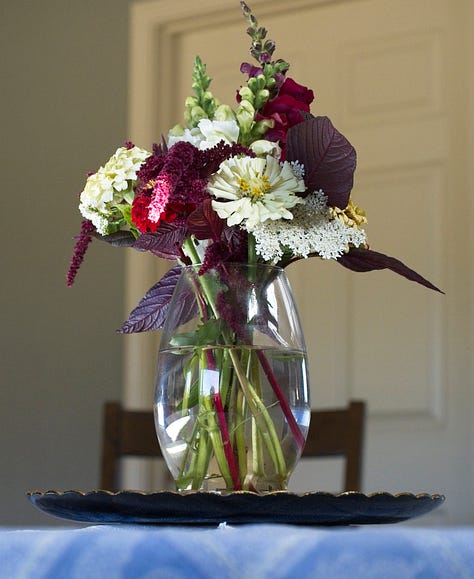
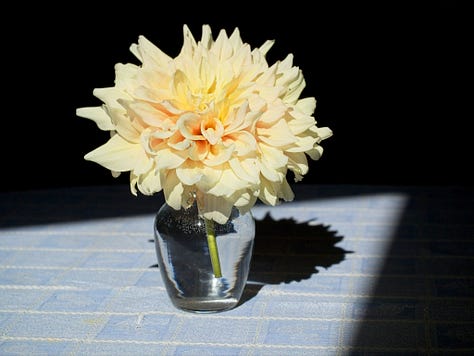
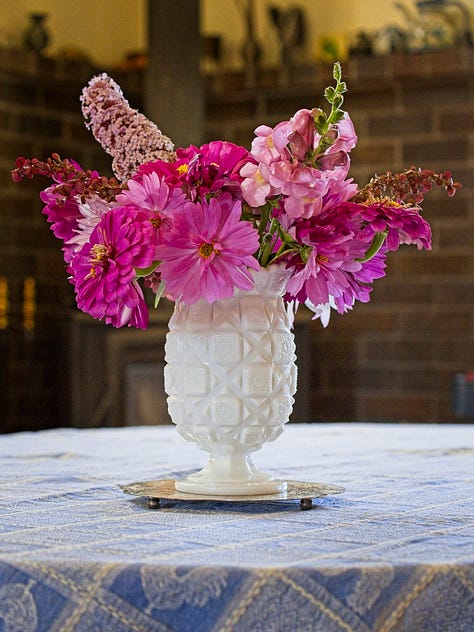
There is joy in work and in being outdoors in the sunshine glorying in the colors of nature. Here is one of our first wins - the flowers!
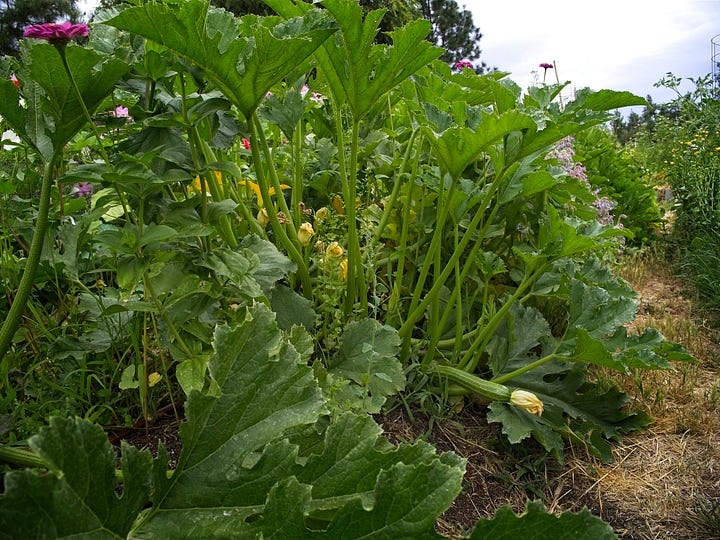
Zucchinis are almost always a win and this year especially! We have been desperately trying to keep up. I have made zucchini pizza, zucchini oven fries, zucchini lasagna (thin-sliced zukes instead of pasta), zucchini bread (many batches now in the freezer), zucchini burgers, zucchini in every salad, and finally zucchini grated and packed in bags in the freezer. I even made a fermented zucchini drink from the liquid I get when I salt it to de-water it. The jury is still out on that one.
When all else fails, you go to town and find an unlocked car and throw zucchinis in the back seat! Big ones that get away can become food for chickens and dogs.
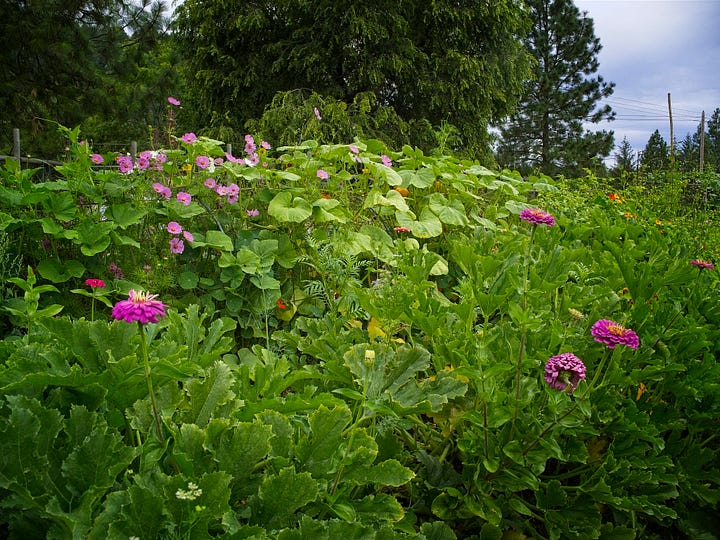
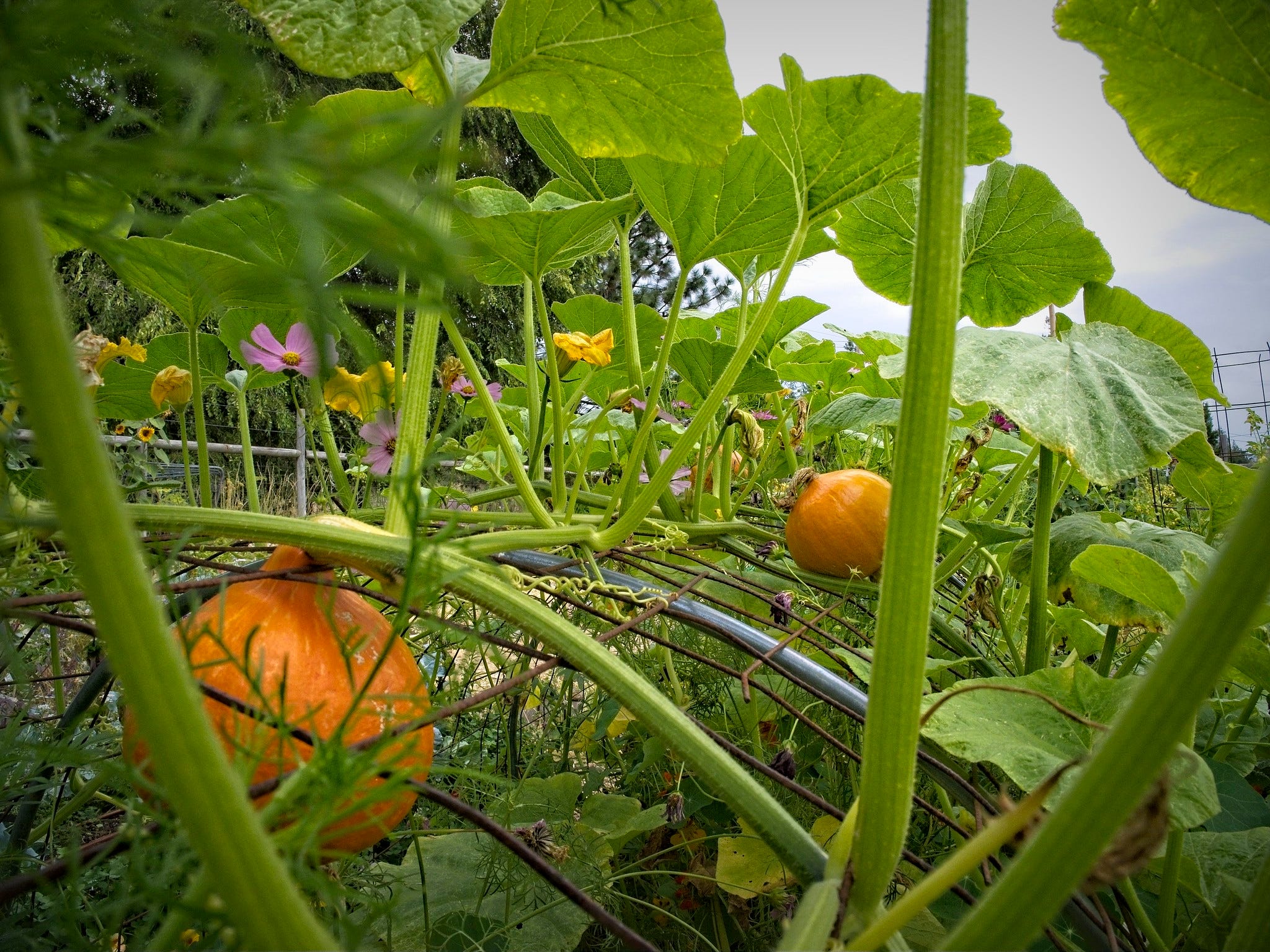
The Red Kuri squash arbor is doing very well. I counted almost 20 of these delicious winter squash on the vine. They look done at this point, but we will leave them till mid-September to harvest so they get nice and sweet.
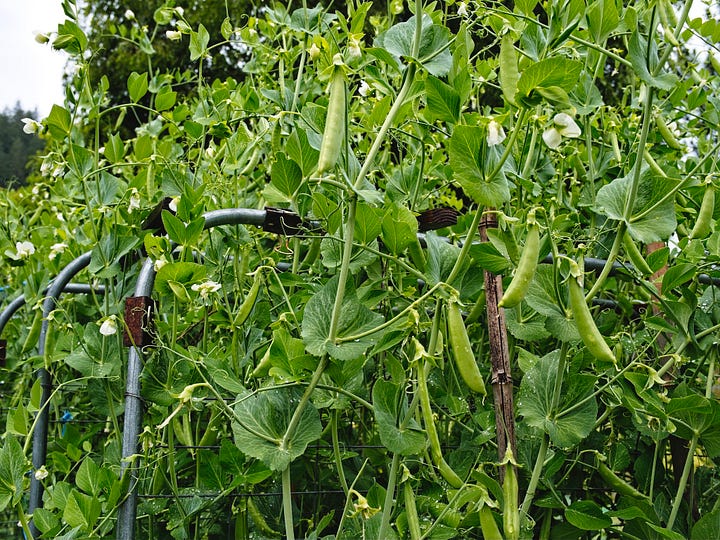
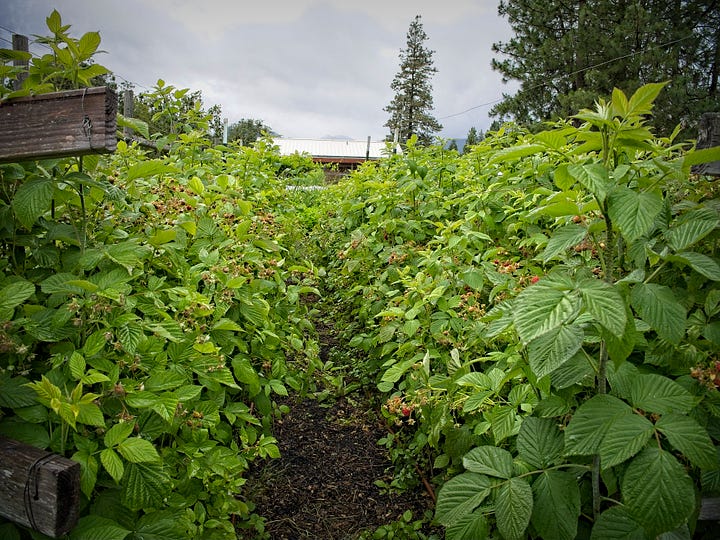
Peas and raspberries were abundant this year. June is the peak season for both and after eating our fill, we have bags of them filling the freezer.
Corn is looking to be a huge win this year. It has never looked so good. That could be partly down to the variety. I planted Damaun from Territorial Seeds. This is a de-hybridized version of hybrid sh2 super sweet corn that is now open pollinated so I can save the seed. I don’t know if is the seed or the soil, but it looks to be super vigorous.
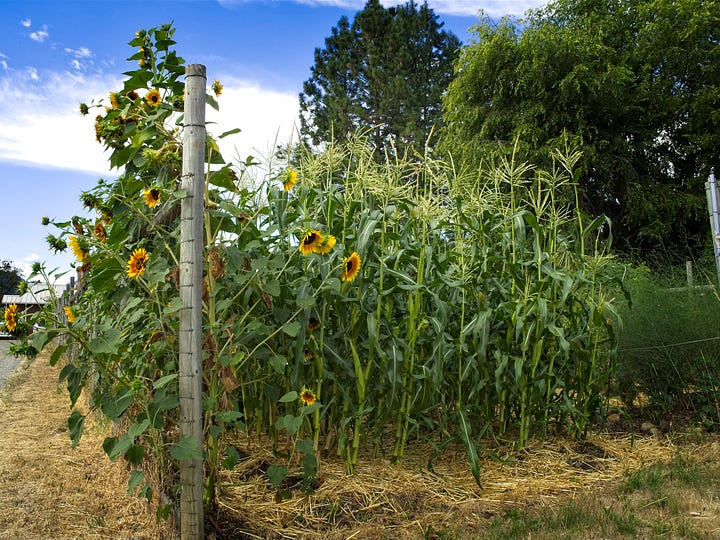
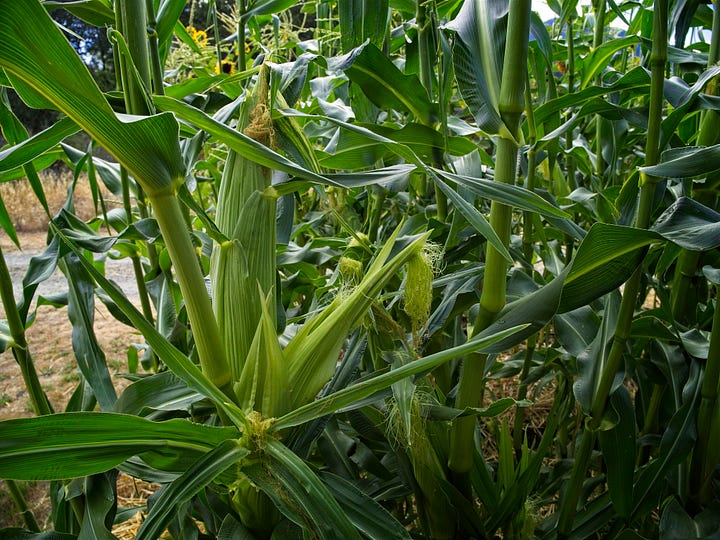
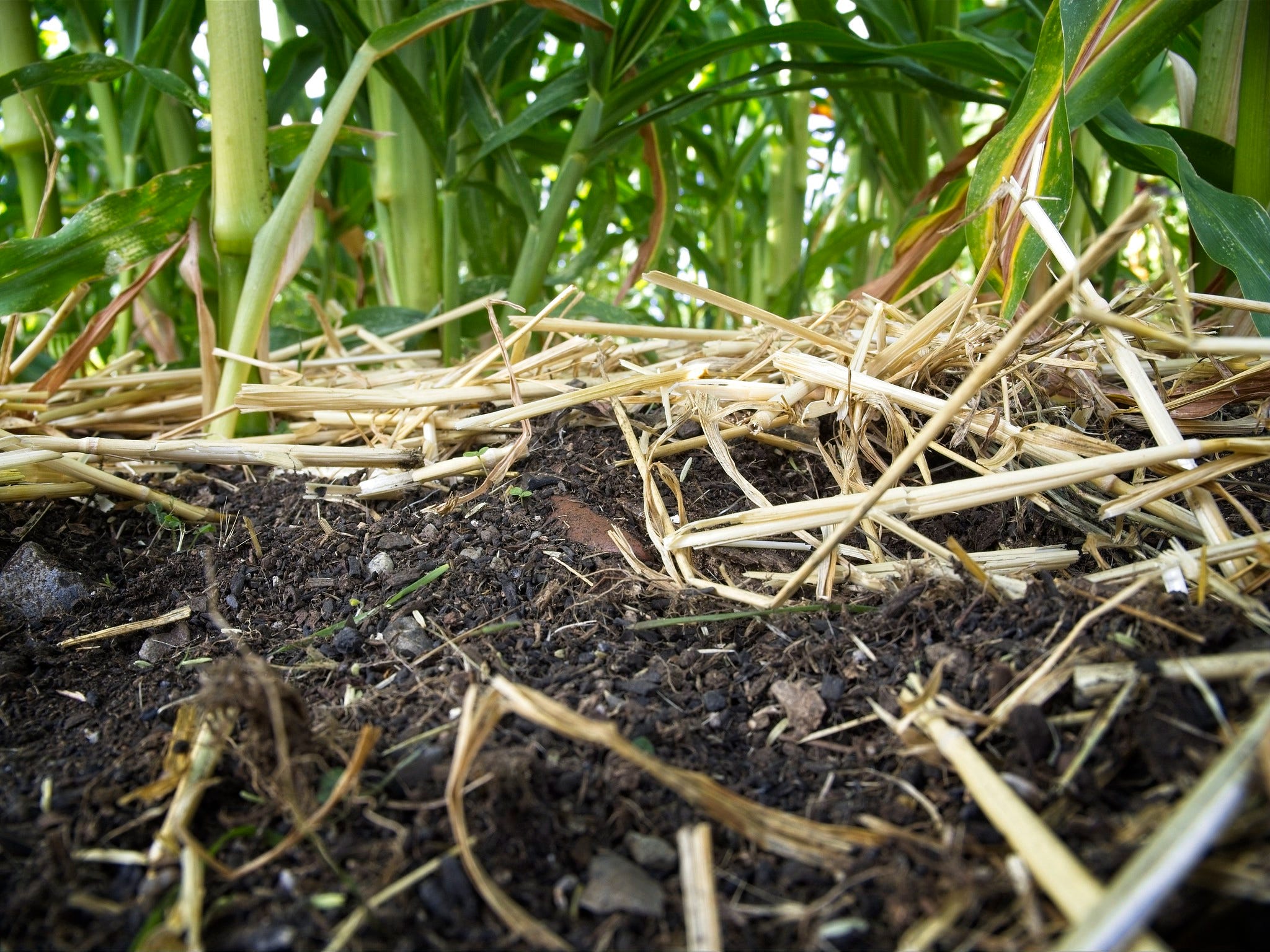
I planted the corn closely spaced, only 8 inches apart. That is 72 plants in two 4 x 8 foot beds. Looks like I may get three ears per plant, so 216 ears of corn! Better make room in the freezer, or maybe I will try canning corn.
If you are wondering about the fertilizer I use, it is just my compost and some seed meal based organic fertilizer with a bit of kelp and feather meal. I have done two soil drenches with liquid fish, and that’s it. Get the pot boiling, I am ready to pop in some ears and feast on my favorite summer treat.
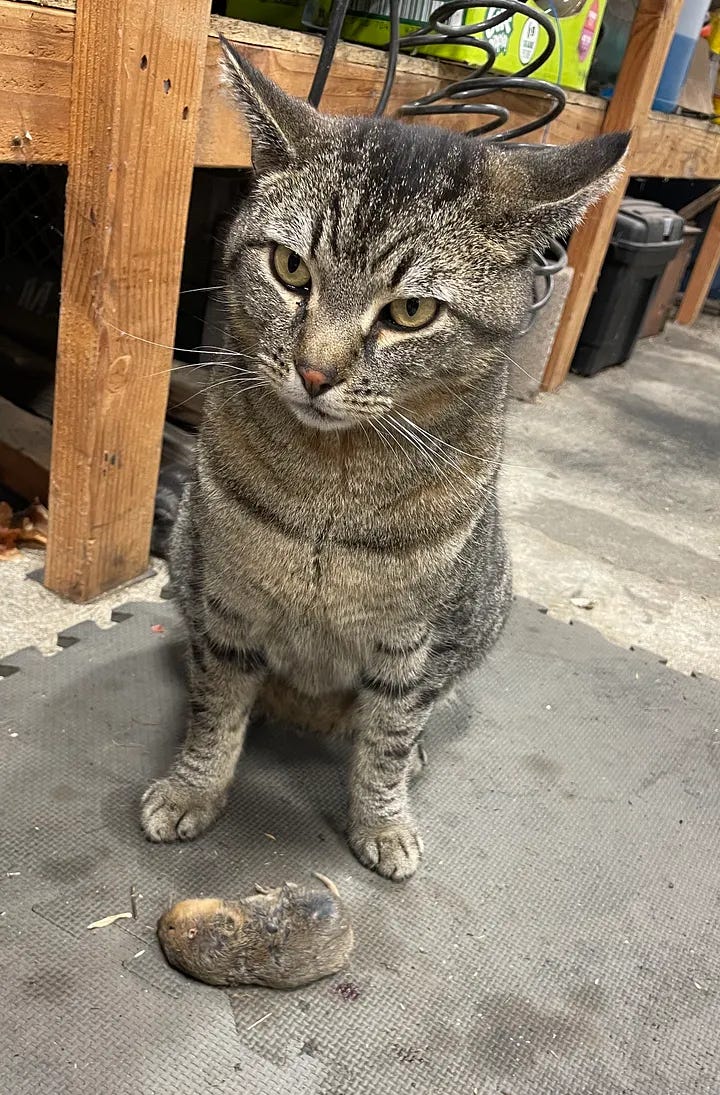
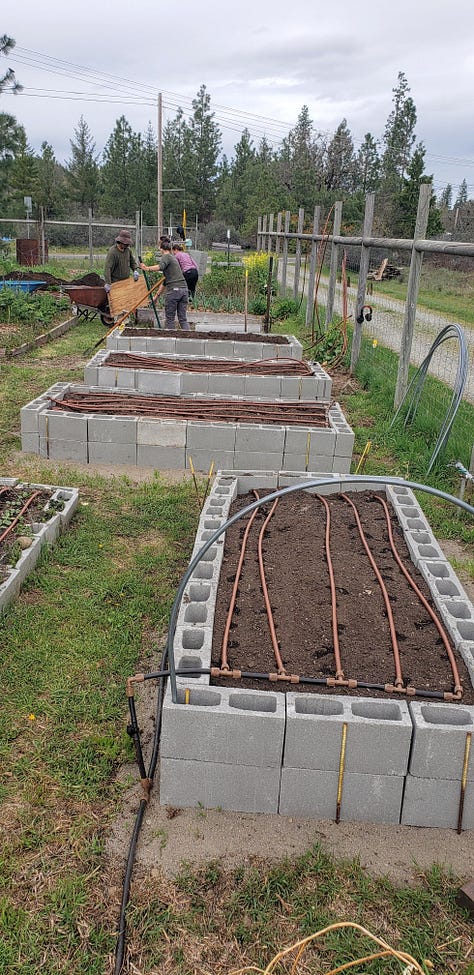
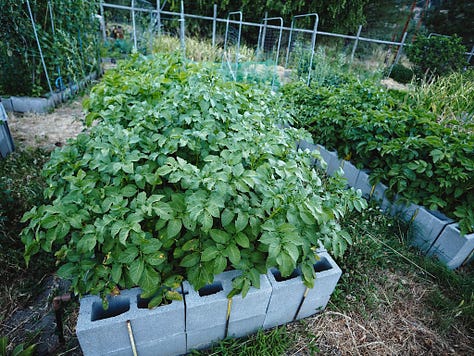
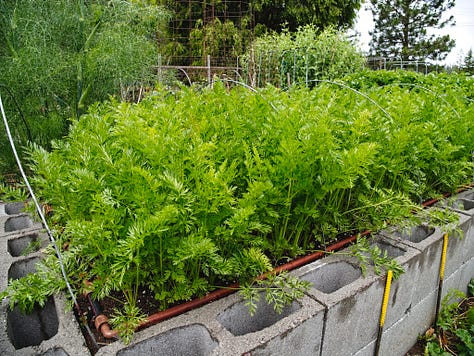
Other wins this year include the all important carrots and potatoes. The main innovation is new beds built to withstand the depredations of the voles. I call them my Vole Vaults and they are made with cement blocks on top of stainless steel 1/4 inch hardwood cloth. Last year the voracious voles consumed more than half of our potato crop. No more fooling around. Building these beds was a monumental effort and expensive as well but this is an investment in future food security. If this does not work we may have to escalate to 24/7 armed guards and security lights!
Some garden failures are beyond your control, like the late freeze that killed most of my figs. Others happen because you are a moron. That was the story with the broccoli this year. Normally I blame broccoli failures on all the root maggots, cut worms, and caterpillars that weaken and take down broccoli plants. This year I had the bright idea of making a strong spray of insecticidal soap combined with wood vinegar to take out these pests once and for all.
Took out the pests, all right, and the broccoli plants with it. I should have started with a light application to see how well it worked first. But no, I figured if putting something on was good, putting more on would be better. I was a moron.
Luckily, it was still May, and kind of late for broccoli, but I found some really nice, large seedlings in the garden store and popped those in the ground. The broccoli is late and the heads are small, but I will still get my side shoots all fall and I am grateful for that.
The next problem is existential. When harvesting the garlic we found one bed was half full of black rot. OMG! For one thing, I have always bragged that my biochar prevents all soil-borne fungal diseases. That has been the case up till now, but as my neighbors told me, who have dealt with this black rot before, when we have late spring rain, as we did this year, the fungus gets out of control and the garlic succumbs to it.
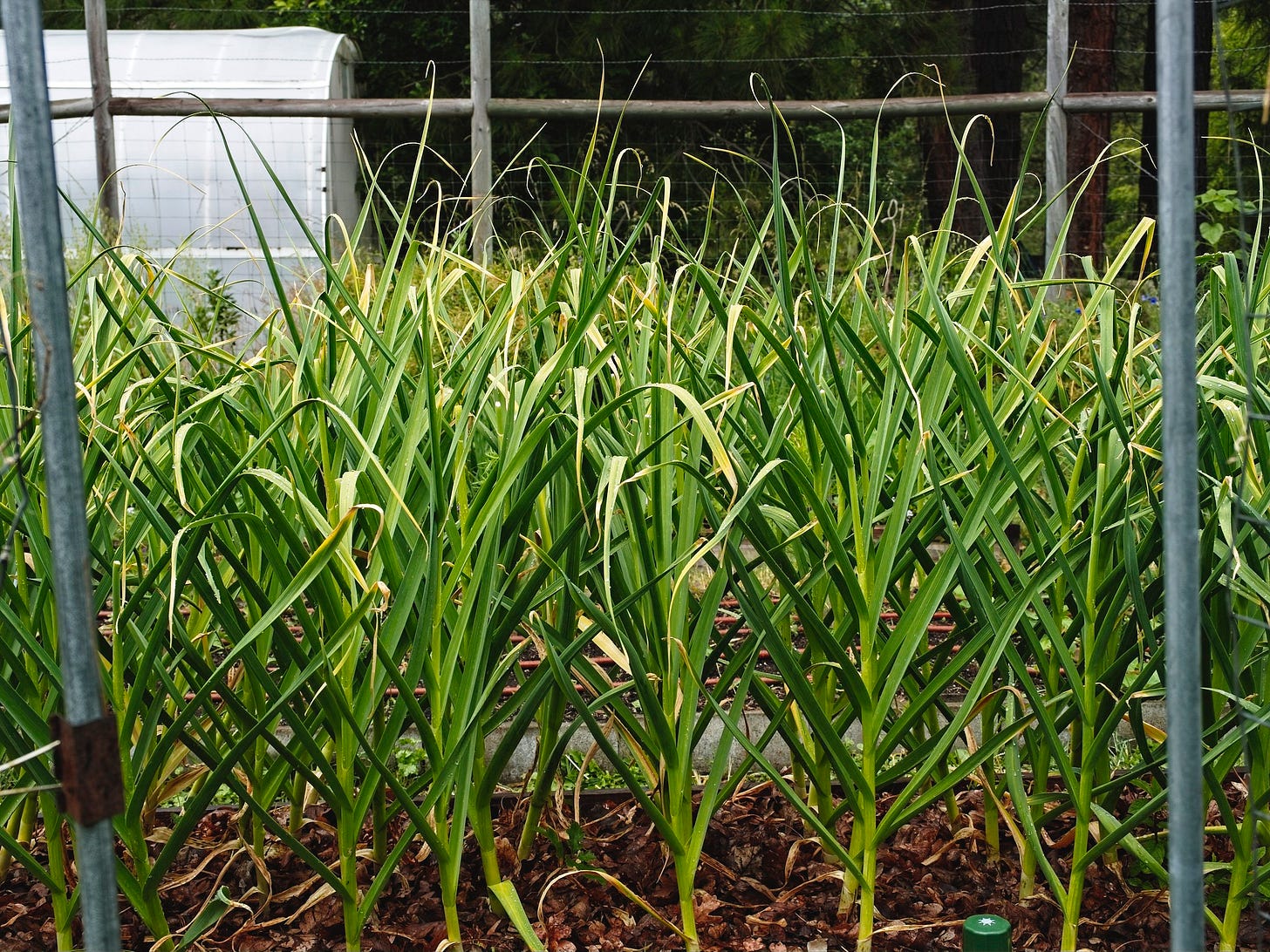
Luckily it was only in one bed and I will plant a mustard cover crop in there and add some sulphur, rotate my garlic more often and cover the beds with a cloche if we get late rain again. At least I have some things to try to keep it at bay.
Another partial failure is my onions. I have one bed that is doing well, but an irrigation glitch dried out the other bed and so the onion harvest will be meager. The water is back on there now, but onions are very sensitive to day length so they are on track to develop and finish on schedule but with very small onion bulbs. I am hoping to salvage the onion situation by planting a lot of fall leeks.
The tomatoes are not as good as last year. What can I say? Every tomato year is different. This year, I got a late start with the seedlings and we had very cool nights well into June. They were not happy campers out in the cold. Should have kept them in the greenhouse a bit longer. But with 40 plants, we will still get plenty of tomato goodness. I mean, I still have not finished all the dried tomatoes and sauce we put up last year.
I said I like the science nerd part of growing food and I got to do a lot of that this year. One experiment I will share here is my biochar drought experiment. We know biochar holds water in soil so I thought I would test this at different application rates against a control.
I had twelve Cherokee Purple tomato seedlings that I could not find room for in the garden and I used those for the experiment, potting them up from 4 inch pots to half gallon pots with different soil mixes.
Control - Fox Farms Ocean Forest Potting Soil
Biochar compost - a 50:50 mix of my biochar compost and Fox Farms soil
Biochar 25% - a 25:75 mix of charged biochar and Fox Farms soil
Biochar 50% - a 50:50 mix of charged biochar and Fox Farms soil
The charged biochar was made with five gallons of Rogue Biochar soaked in 5 gallons of water, 1/2 cup of fish hydrolysate, 1/2 cup of EM-1, and 1/4 cup of wood vinegar. Soaked for 24 hours and then drained and sat for 12 hours before adding to the soil.
I let the plants grow for three weeks and then cut off all the water. Sitting in their pots in the hot July sun, they started to wilt. Here is what they looked like after five days:
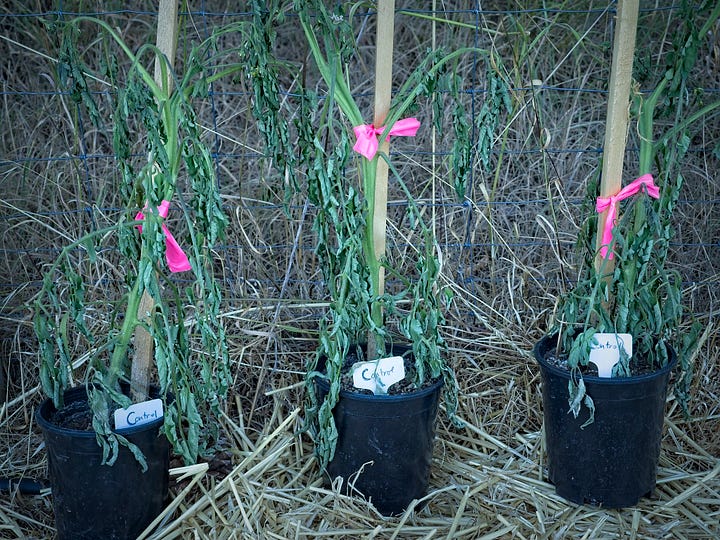
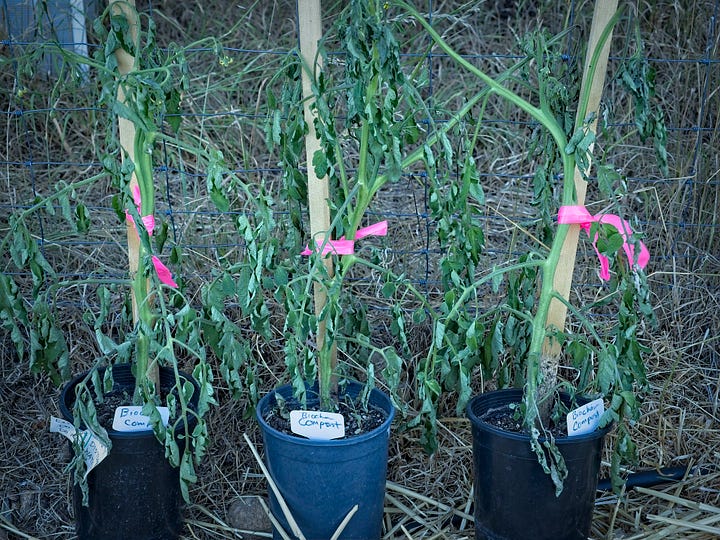
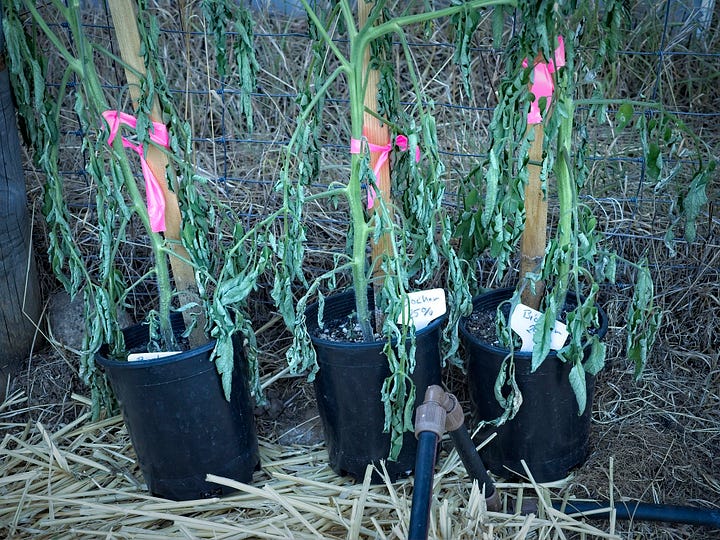
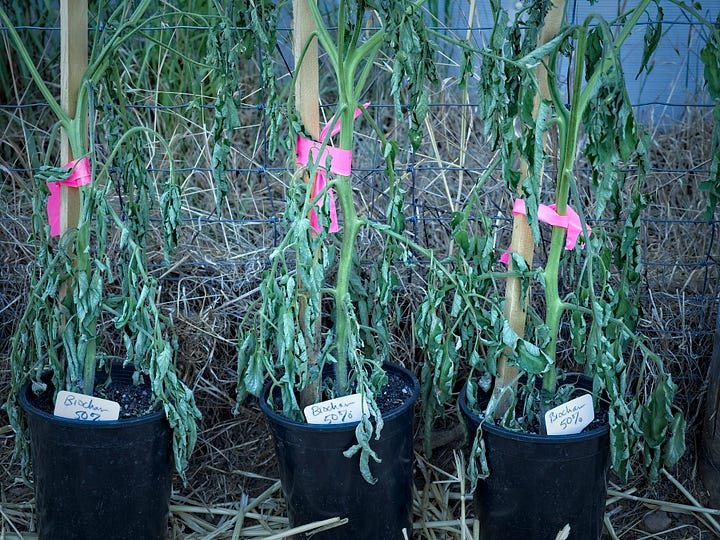
To my eyes, the control is the only one that is clearly different and worse than the others. I also think that #2, the biochar compost did a little better than the biochar at 25% and 50%. I did not see much between the two biochar application rates.
Interesting! I was expecting to see more dramatic results but then I realized that the Fox Farms Potting Soil is a premium product full of perlite and other ingredients formulated for holding on to soil moisture and nutrients. If I had made the comparison to a cheap potting soil from the grocery store, or to plain dirt from the yard, I think the differences would have been much greater.
Even so, the biochar still helped and my conclusion is that every truly premium potting soil manufacturer should add biochar to the mix.
That’s all for now. I you want to learn more of my biochar tips and tricks, check out The Biochar Handbook. You need it for your gardening library!
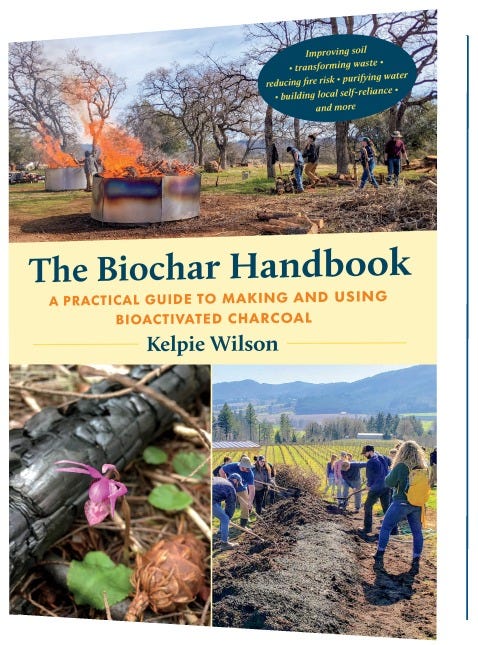
The Biochar Handbook at Amazon.com
The Biochar Handbook at Bookshop.org
Purchase Kelpie’s Practical Biochar Course
Order your Ring of Fire Biochar Kiln®: RingofFire.earth
Check out my YouTube channel: www.youtube.com/@KelpieWilson
Biochar On Site network for practitioners of stewardship biochar
No posts
Comments
Nothing yet. Say the first thing.
Sign in to join the conversation.