
The rains have come. The soil is moist. The piles are piled, and it’s time to make some biochar in the woods. Here’s a short round up of my biochar activities over the past couple of weeks.
We started at Stacey’s house, snuggled down in the deep woods by the river. It’s a beautiful location, but the thick undergrowth is too close to the house so Stacey has been working hard on her defensible space. Our job was to turn thick piles of freshly cut laurel, vine maple, and fir into soil-healing biochar without setting the woods on fire.
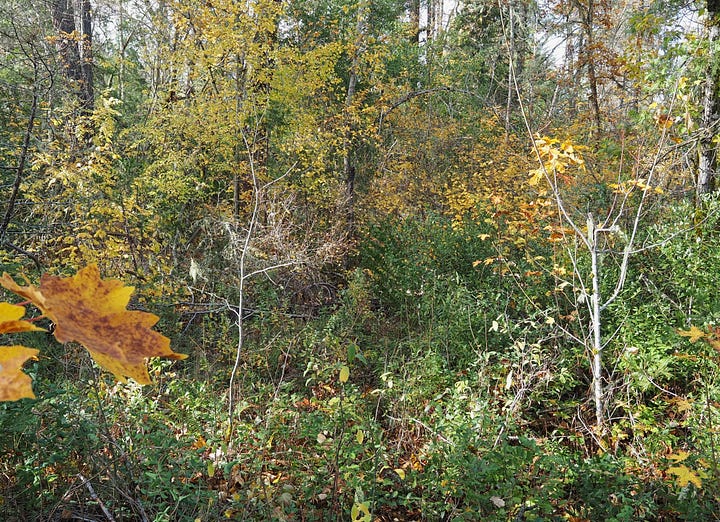
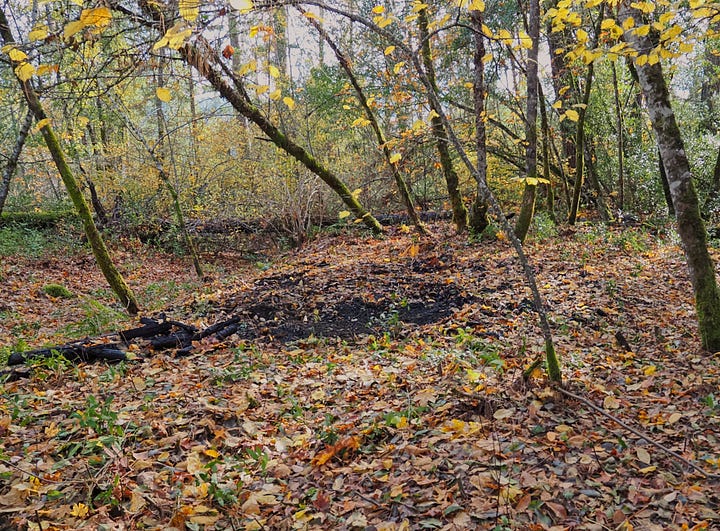
Here are the before and after pictures. This thick understory was just a few yards from Stacey’s house, and now it is defensible space.
See the Ring of Fire Kiln in action. Notice how the flames swirl in vortices. This swirling keeps the flame lengths low, which is important when there are tree branches overhead. It also helps burn the smoke for a clean burn. Notice also that we are cutting green brush and tossing it right in the kiln. Once the kiln is hot, it handles green material easily.
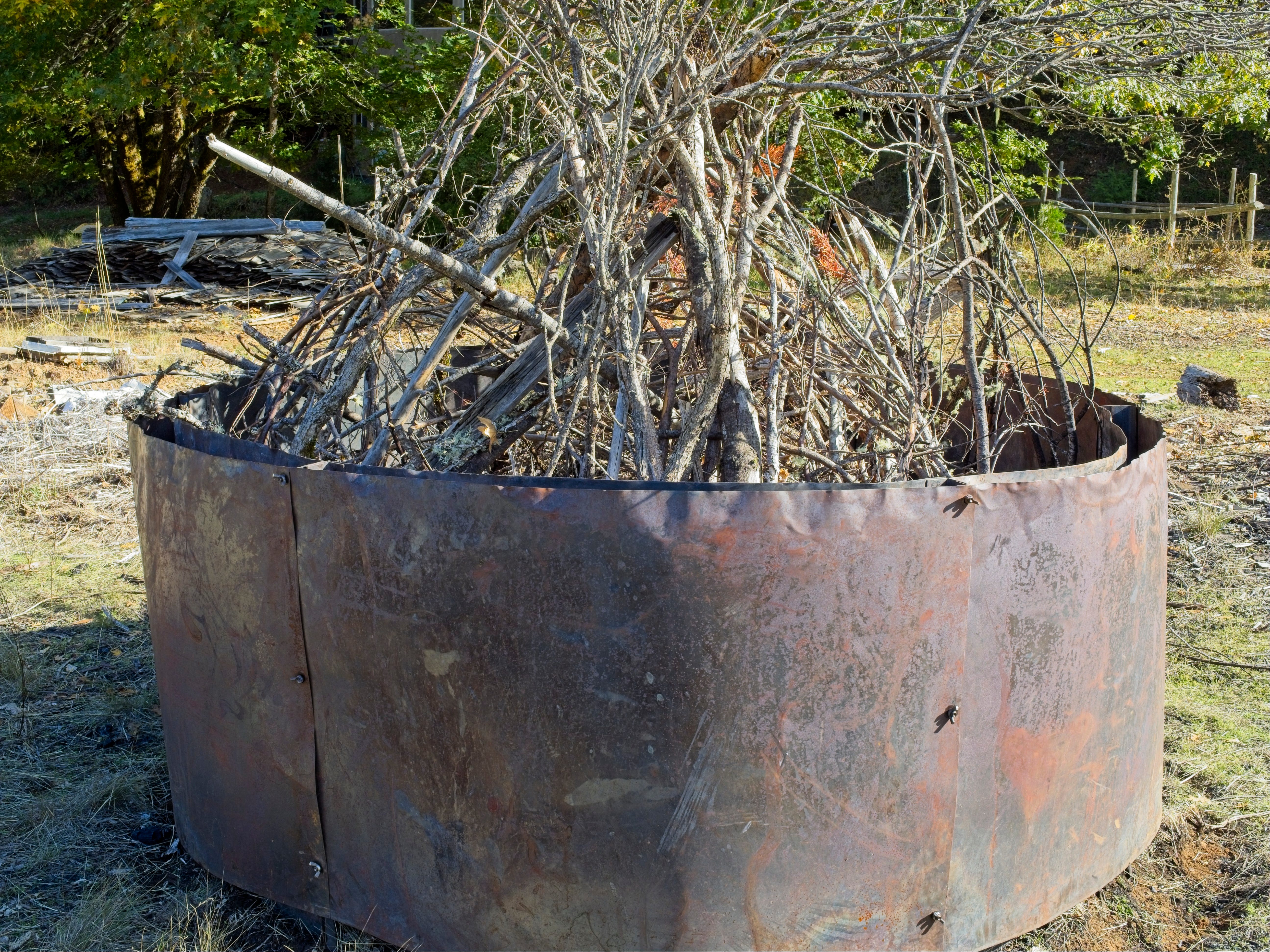
After Stacey’s we moved on to Leo’s place the next day. Leo had a good pile of branches to burn, and some of them were way too long to fit down in the kiln. That’s ok though, because I like to start the kiln with longer branches arranged in a teepee shape. This gets a good hot flame established right away. The flame is our heat source, so we want to make sure it is good and strong the whole time. The flame also burns the smoke, so it’s important to establish the flame cap as soon as possible to prevent smoke emissions.
Here you can see how, just after lighting the teepee, the flame is trying to pull the smoke back into the kiln. As the branches burn down further into the kiln, the smoke starts to clear up as it is increasingly burned in the flame.
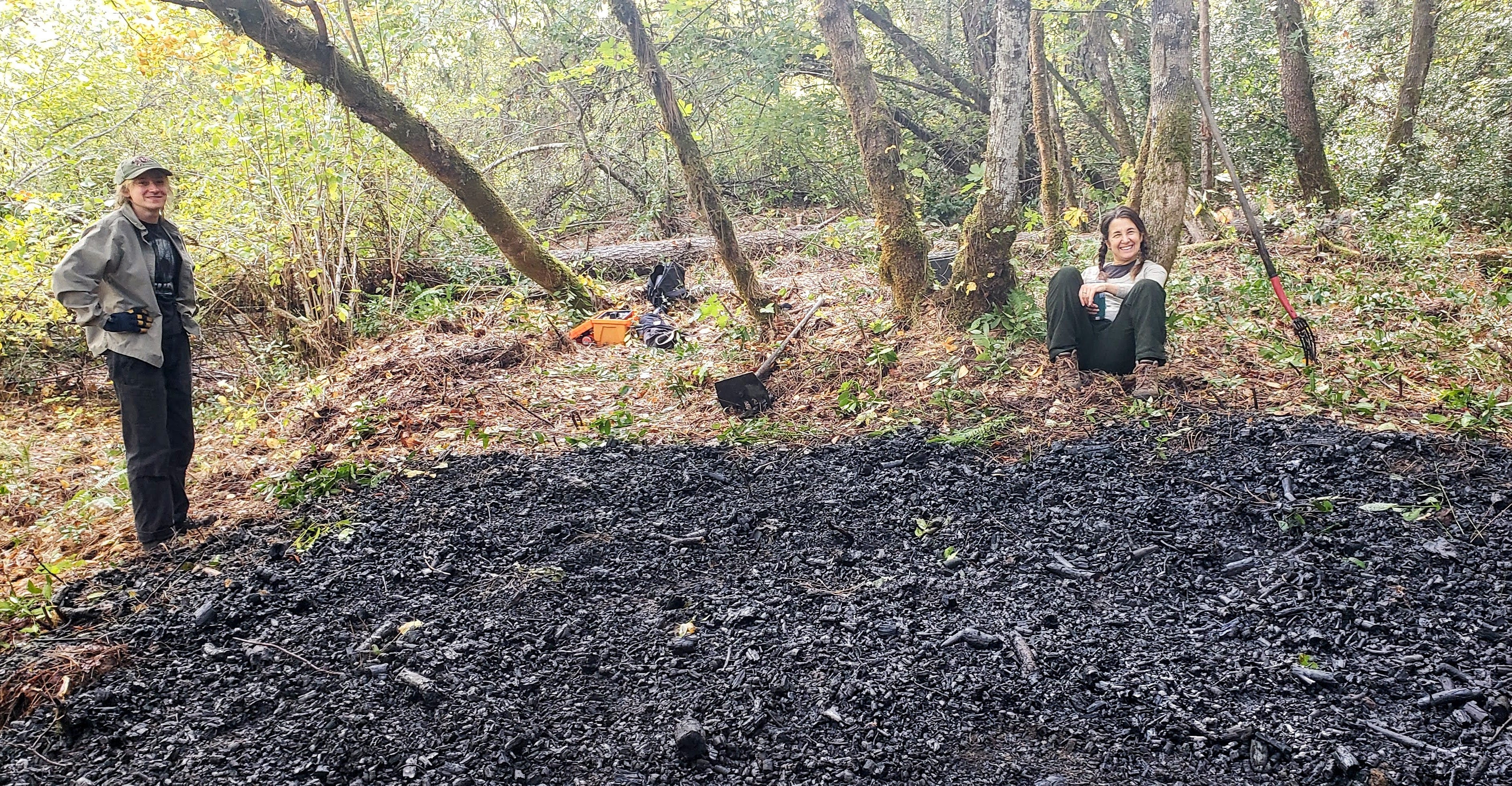
Then we headed over to John’s to see how he was doing with a giant brush pile he was loading into the kiln with his excavator. The machine allowed him to really pile it on and as a result, he made a huge pile of biochar. This would have been challenging to rake out and quench by hand. Excavator to the rescue - the machine made short work of spreading the char thin to loose heat while we sprayed it with water for the final quench.
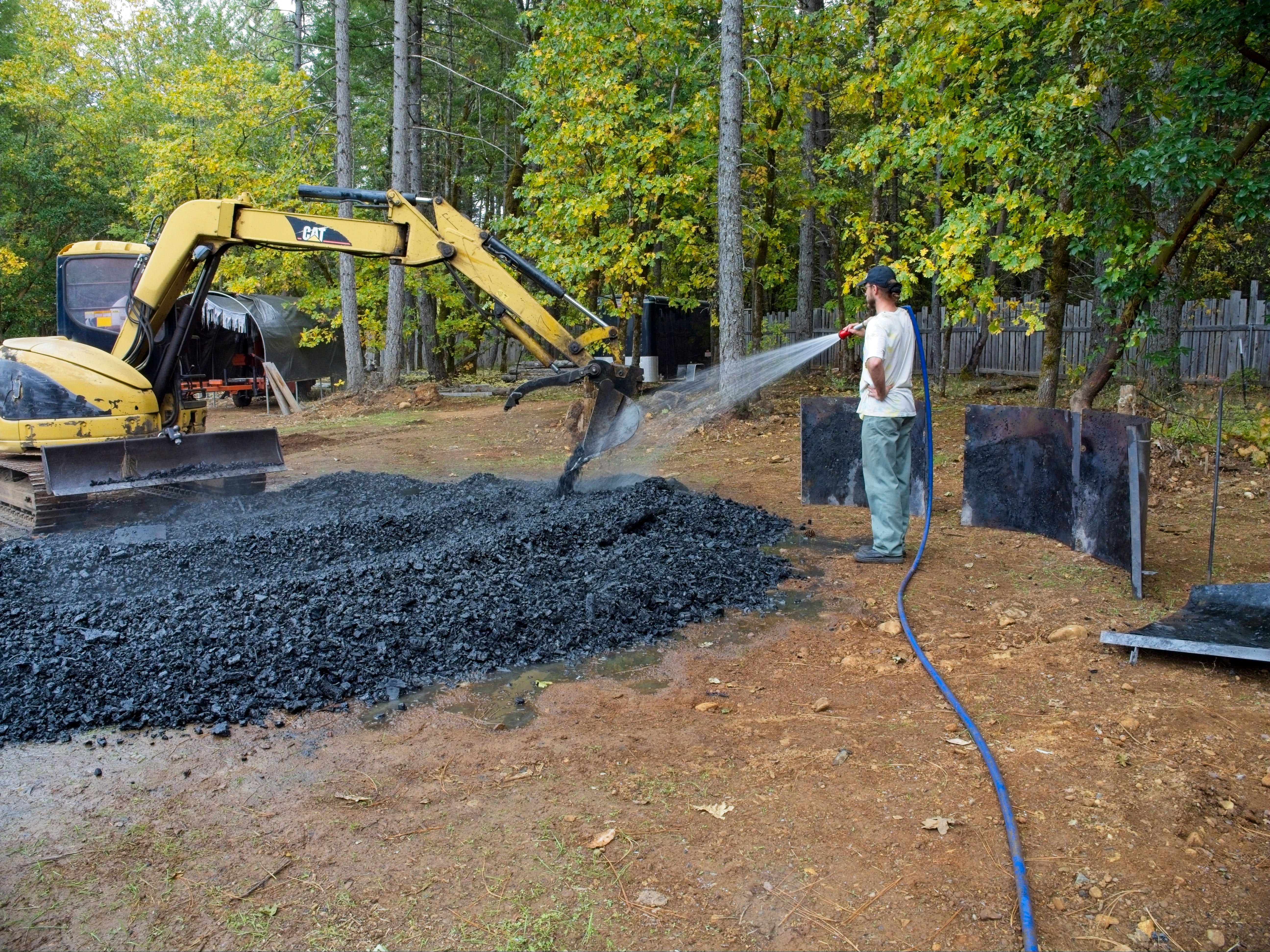
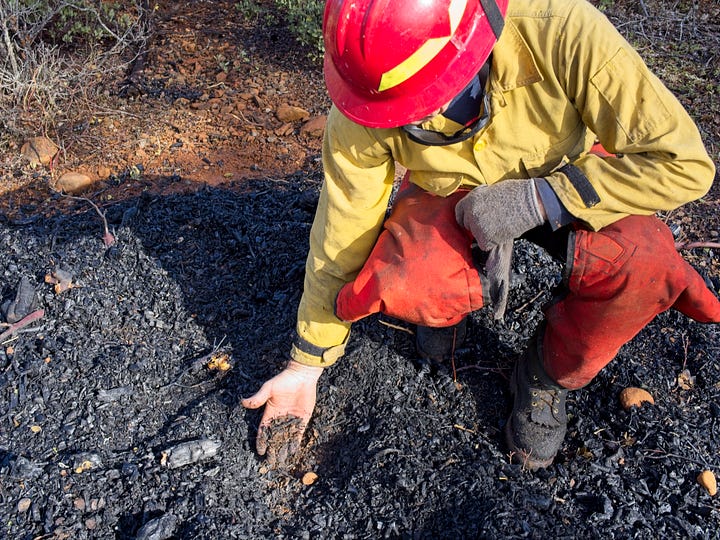
I have worked with Grayback Forestry crews for years now. Thanks to Base Commander Sean Hendrix, we have been able to experiment with different techniques for making biochar. The crews are wildland firefighters who do prevention work in the off season, and they really care about their work and what they can do to restore forest health. I visited them when they were working at a neighbor’s property clearing fire breaks and thinning thick brush. Instead of burning it all to ash, they are making biochar in burn piles.
All that’s needed for that is one of the company’s water tenders to put the piles out and save the char. Normal practice is to leave the piles to finish burning down to ash at the end of the day, so it’s great to go home at night and not have to worry about a stray ember spreading fire. And we are all happy to avoid the long lasting damage that a burn scar does to soil.

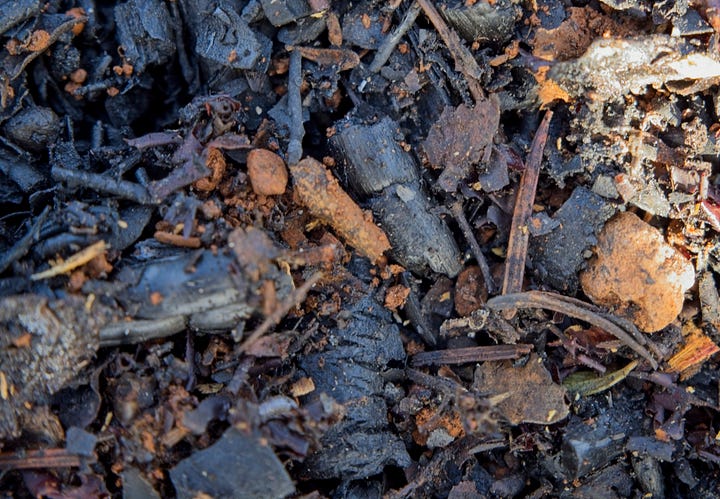
This has been a mast year in Southwest Oregon, where the oaks have produced a glut of acorns. They do this to overwhelm the acorn-eaters and make sure that at least some acorns will escape the hungry jaws of squirrels and woodpeckers so they can survive to become mighty oaks some day.
KC and I gathered up a bucket of these delicious acorns and took them out to some char piles in the field behind my house to see if we could help them get established. We planted about 50 acorns in 3 different char piles.
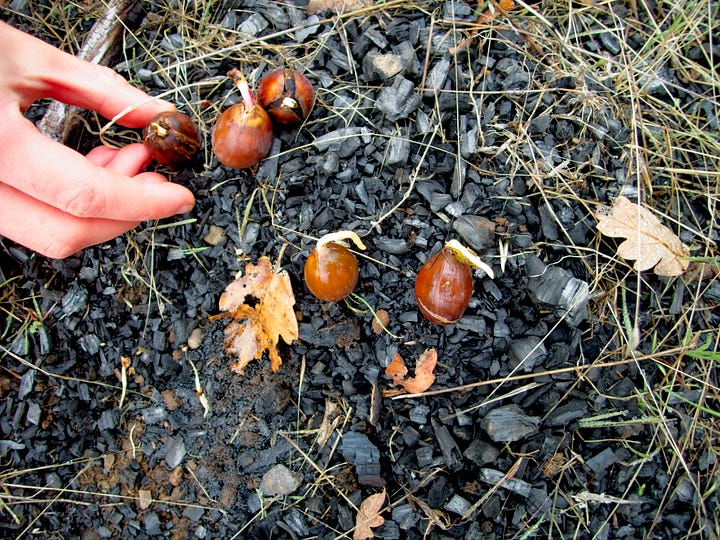
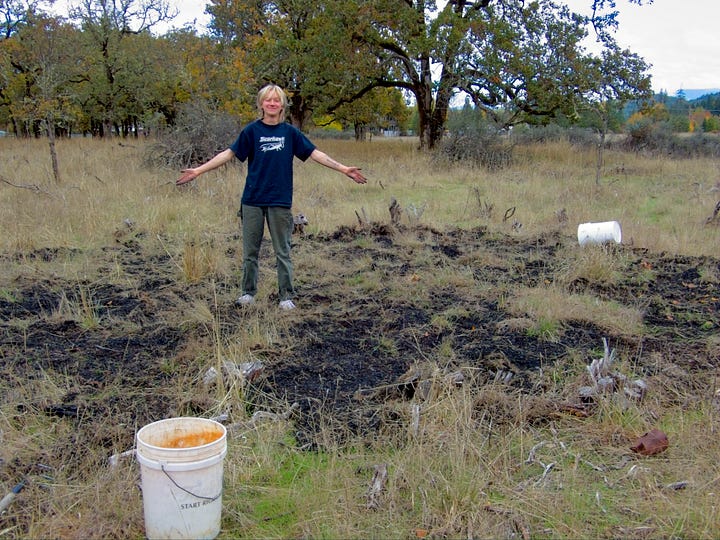
This field is on the edge of an oak savannah, so my hope is that we can expand the oak forest into the field. Oaks are vital sources of food for wildlife, and for people too. Acorn mush and deer meat fed the native Takilma people who lived here. As a Biochar Prepper, I am interested in keeping this resource alive for whoever becomes indigenous here in the future.
Speaking of Mighty Oaks and other trees, I was greatly inspired by this post from Practical Self Reliance on how she gathers acorns, butternuts, walnuts, hazelnuts and other wild nuts and spreads them around to grow more nut trees for the future. I’ll be following her for all kinds of useful prepper tips.
Please, if you want to learn more about practical biochar tips and tricks for growing your own food, or you are interested in stewardship biochar for restoring natural ecosystems and biodiversity, check out some of my links below:
The Biochar Handbook at Amazon.com
The Biochar Handbook at Bookshop.org
Purchase Kelpie’s Practical Biochar Course
Order your Ring of Fire Biochar Kiln®: RingofFire.earth
Check out my YouTube channel: www.youtube.com/@KelpieWilson
Biochar On Site network for practitioners of stewardship biochar
No posts
Comments
Nothing yet. Say the first thing.
Sign in to join the conversation.