
You've probably had your feeds saturated with WWDC25 news.
That's why I waited a bit. Instead of rehashing what many already covered, I'll focus on what interested me most, and what you can expect from me this summer.
First, let's quickly get this out of the way: I like Liquid Glass!
I've always been nostalgic for the iOS 6 and below skeuomorphic style. Sure, flat design improved many aspects, but we lost so much personality along the way.
So when dimensionality makes a comeback? I'm here for it.
Of course, there are still issues with the new design, especially around legibility and contrast. But I'm confident most issues will be fixed before the final release.
UI/UX is interesting, but these days my main interests lie in ML and AI.
I went in with low expectations. I'll admit it, I still got really excited about the new APIs and frameworks.
Let me break down what piqued my interest and what I intend to do about it (and thus, what you can expect during the summer).
Apple is introducing a local LLM that runs on all devices (macOS, iOS, iPadOS, visionOS) equipped with Apple Intelligence
You might underestimate Foundation Models. I certainly did at first. But think about it this way:
It's free
It's fast (runs on the Neural Engine, as opposed to MLX models that run on the GPU and/or CPU)
It's unlimited
It's built into the OS (it won't bloat your app binary)
It's offline and private
It can be used with built-in adapters or fine-tuned with your own use cases
It supports tool calling
It supports structured output natively compatible with Swift
It's validated by Apple (potentially fewer app review shenanigans)
Even considering the downsides, namely that the model is limited in its context window and relatively small compared to state of the art server LLMs, I would still say that it's a good start and that there are a ton of use cases that can be covered.
Apple finally entered the vibe-coding arena with Xcode 26.
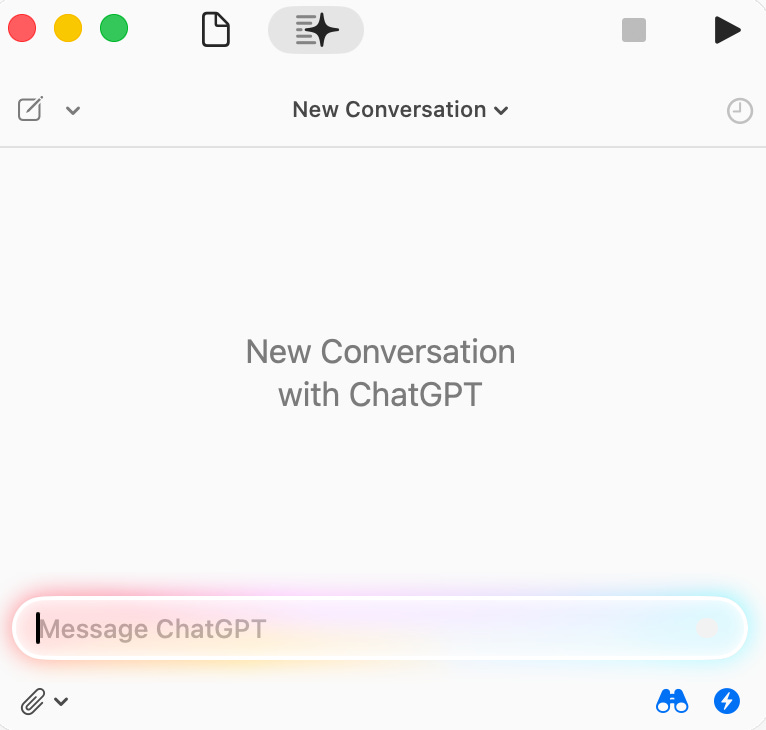
Some might say it's a timid entry. I'd argue this is exactly the Apple way, they didn't claim and they will probably never claim to have the best AI-coding setup.
What they offer instead is a baseline that's easily usable by most developers.
Apple excels at making gateway technologies. (Same could be said for Foundation Models, by the way.)
And for experts who want to go further? Advanced tools like Cursor, Windsurf, Aider, and Claude Code still exist.
One API that really excited me is the overhaul of SFSpeechRecognizer into SpeechAnalyzer/SpeechTranscriber.
Apple is seriously entering the ASR (automatic speech recognition) arena, and it looks like the new transcription API aims to be a top contender. I definitely intend to put that to the test!
If you've followed my build-in-public series around Summiqo, you might have noticed that many of these APIs could be game-changers for my app.
What this means first: I can hugely cut costs. And yes, of course I'll pass those savings to my users. I'm really excited about that as well!
Quick note about my publishing schedule: Medium is better suited for tutorials and coding content, hat's why most of my tutorials and guides will live there. But if you're subscribed here, I'll notify you at least once a week about my writings over there.
Pro tip: Subscribe to both to avoid missing anything. 😉
Here's what I'm planning to write about:
Foundation Models Series:
Getting started with on-device AI with Foundation Models (for developers that are newcomers to ML APIs)
Going further with Foundation Models: basic tool calling with guided generation (I have some spicy ideas!)
Advanced tool calling: integrating world knowledge, interact with other LLMs, and making agent-like architectures
Using adapters and training your own (along with best practices)
AI-Assisted Coding Series:
Learning to code with AI-assistance (aimed at people wanting to learn to code)
Getting started with AI-assisted coding in Xcode (for already established developers, but first-timers when it comes to AI-assistance)
Advanced AI-assisted coding with Xcode (custom providers, local setup with LMStudio, context management)
Speech-to-text APIs:
Transcribing with SpeechAnalyzer and SpeechTranscriber (with advanced use cases)
Summiqo Updates:
Following up my build-in-public series: How Summiqo can leverage local models.
So what are you most excited about?
For now, those are just plans and ideas, and I would be surprised if I actually write about all of this.
However I would love to hear your feedback and know what you'd like to see covered first! Feel free to comment or reach out to me directly.
Thanks for reading Indie iOS Playbook! This post is public so feel free to share it.
No posts
Comments
Nothing yet. Say the first thing.
Sign in to join the conversation.