
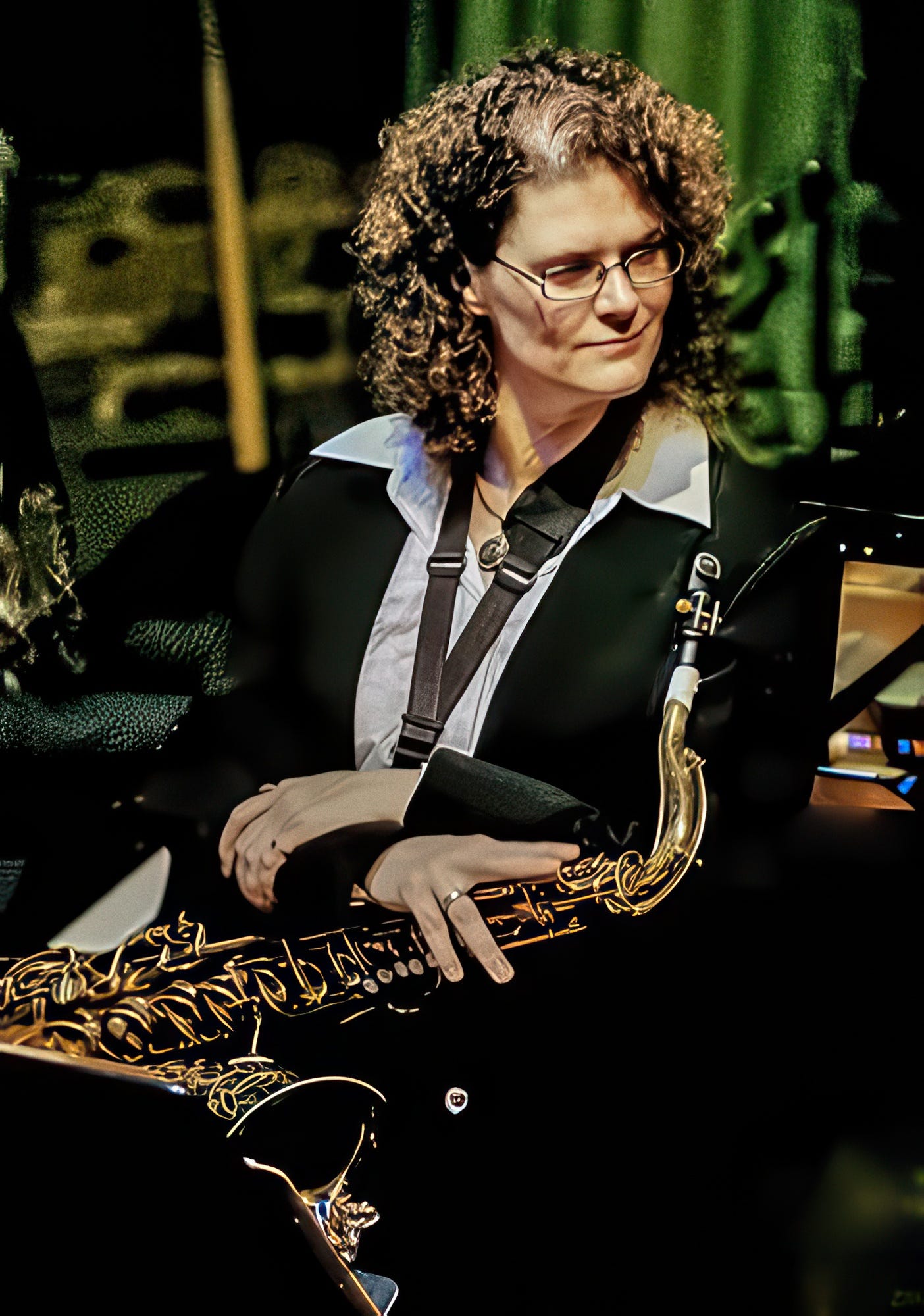
Bill King Photography. Dr. Kira Payne
Every writing life begins somewhere unglamorous, and mine began with a stamp.
Back in the 1970s and ‘80s, when a letter still travelled by envelope and took its time getting there, I sent mine to the Toronto Star. Letters to the editor, mostly — small flares sent up against whatever injustice seemed too loud to leave alone. Occasionally, one landed in print. There was a particular satisfaction in that, the kind you don’t get anymore, now that an opinion can be launched and forgotten inside a minute. Back then, seeing your own words set in newsprint carried weight. It meant that somebody at a desk had read what you wrote and decided it was worth keeping.
Publisher John Norris at Canadian Musician, who did what editors used to do — he noticed a voice and gave it a place to go. John asked me to write a keyboard column, and I said yes before I’d fully considered what that meant. Suddenly, I was on a page alongside pianists whose records I owned, trying to translate something I only half understood that music had already given me a language, and now I had to learn to lay that language down flat, in sentences, for people who couldn’t hear the thing I was describing.
By 1988, when I founded Jazz Report Magazine, the writing had stopped being a hobby and had become a discipline. Features, record reviews, editorials, interviews — an ongoing argument and conversation with the musicians and recordings shaping the culture around me. The magazine held its ground internationally for eighteen years. It was unglamorous, deadline-driven work. But it kept me standing close to the music and to the people who made it, which, I’ve come to believe, is the only vantage point worth having.
What I hadn’t found yet was literature — and that arrived, as the important things often do, sideways.
I was in my forties, subbing in the Bobby Herriot Orchestra at the Old Mill for a fine pianist named Brian Murphy. It was a grinding gig: one hour on, fifteen off, four sets a night. Most players used those fifteen minutes to smoke, or complain, or stare at nothing. I used mine to talk to Kira Payne.
Kira was twenty-seven then, an honours graduate in literature from the University of Toronto, and a musician herself, which is how we’d found each other in the first place. She was a voracious reader, the kind of person who already understood, long before I did, that books could open doors I didn’t know were there. Those fifteen-minute breaks became a standing appointment. Books. Literature. She fed me an appetite I didn’t know I had.
I made myself a rule after that: read only the greatest writers you can find, and ask yourself, relentlessly, what it is they’re doing that produces the magic. At night’s end, Kira would drive me home, and we’d stop for pizza and keep talking — Tennessee Williams, Hemingway, J.M. Coetzee, Ann-Marie MacDonald, Michael Ondaatje, Yann Martel, Mordecai Richler, V.S. Naipaul, Rohinton Mistry, Austin Clarke. Kristine and our son Jesse had always been the readers in our house. I was the constant music man — until, gradually, I wasn’t only that anymore.
I wrote a short story and handed it to Kira: The Last Piano Lesson, about a young girl who has outgrown her teacher and is about to be let go, forced to move on. I wanted it to be a portrait of two women — one barely into her teens, one carrying decades of history — who find common ground through a piano and a Nat King Cole record. Kira read it and told me, flatly, to write. Write, write, write.
That’s the sentence that redirected everything.
Ryerson came next, night classes with the novelist Eliza Clark, two years that turned reading into a discipline and writing into an instrument with its own demands — patience, listening, the courage to revise something you were originally proud of. I learned something else in that room, something about writing itself: most people, given the chance, can’t bring themselves to say what’s actually true on the page.
I remember walking out of class one evening beside a woman who was a sitting judge. “I can’t say what you say,” she told me. “I can’t bear anything. I’m a judge.” I asked why she’d taken the course at all. “I thought I’d become a better writer,” she said. “But I can’t do this.” I’ve thought about that exchange for thirty years. The craft, it turns out, is the easy part. The exposure is what most people can’t survive.
Not long after, Kira asked me to write her a reference letter — she was applying to medical school. She graduated first in her class. Became a physician, then a psychiatrist. Honours in everything she touched. She was stricken with cancer and died in 2016, at fifty.
She was my literary angel. My coach. My mentor, in the fullest human sense of that overused word. When I read a phrase that comes from the Gods, I think of her.
The recognition came later, the way it usually does — after the thing itself no longer needs it. Four nominations for Jazz Journalist of the Year, the National Jazz Awards, and four more for Jazz Photographer of the Year and two captures. Writing and photography settled into being companion pursuits — one holding the voice and the story, the other catching a gesture under a stage light before it disappeared.
Late in 2019, I self-published my first collection of interviews, Talk! Conversations in All Keys: The Canadians, followed soon after by my first memoir of the sixties, Coming Through the ‘60s: A Rock & Road Story. A second Talk! volume turned toward the business of Canadian music; a third, The Americans, carried the conversation south of the border. Each one grew out of the same habit Kira set in motion at the Old Mill all those years ago: listening — not only to the music, but to the people behind it, the artists, producers, and broadcasters whose lives explain how music actually survives.
From there came Sound & Reason, this newsletter, and a companion essay collection, Notes for the Soul. It now reaches close to five thousand readers a day — a place where music, memory, and the ordinary passing parade get to sit at the same table. Sixteen years as a staff writer with Cashbox Canada, FYIMusicNews.ca and Billboard, a column for Dreamscapes Travel and Lifestyle Magazine — all of it traceable, if you follow the thread back far enough, to a stamp, an envelope, and a woman who wouldn’t let me stop at good enough.
From those early letters came columns. Magazines. Interviews. Reviews. Editorials. Memoirs. Books. Essays.
And still, most nights, fifteen minutes feels about right for the truth to get said.
Comments
Nothing yet. Say the first thing.
Sign in to join the conversation.