
Imagine a family with a solid income but no budget discipline. Every paycheck disappears into overpriced groceries, spur-of-the-moment splurges, and contractors who never face a second bid. The result is that little is left for what matters in the long term—better housing, opportunities for the kids, or a comfortable retirement.
San Francisco is just like that family. The city consumes its more-than-ample $15.9 billion budget on high operating costs, leaving residents with heavy taxes and few of the long-term investments that could make life more affordable and the city more competitive.
The signs of budget bloat are everywhere:
The highest per-capita budget in America. San Francisco spends more than $19,000 per resident each year—roughly what the federal government spends per American, and more than any other combined city-county in the U.S. Adjusted for inflation, the budget has grown by 54% since 2012, even as the population has remained flat.
A growing public workforce with rising costs. Since 2011, the number of city employees has grown by about 7,000, even without population growth. That works out to nearly four city workers for every 100 residents—well above Los Angeles, San Jose, or New York. Meanwhile, average compensation per employee has risen 56% in real terms, far outpacing inflation.
Expanding contracts and grants. Each year San Francisco directs billions to outside contracts and nonprofit grants, often with limited accountability. Even after Mayor Lurie’s recent reductions, grant spending—much of it for social services—remains more than $600 million above pre-pandemic levels.
Deficits looming on the horizon. Although the latest budget closed an $800 million shortfall, structural gaps remain. Independent projections show annual deficits approaching $1 billion by 2027–28 and nearly $1.5 billion by 2029–30 unless deeper reforms take hold.
The consequence of this budget bloat can be best understood not in abstract dollars but in opportunities lost. A leaner budget would free resources to address the issues San Franciscans feel most directly: the cost of living, the pace of downtown recovery, and the city’s neglected infrastructure. With better fiscal discipline, we could have:
A more affordable city. San Franciscans already shoulder some of the highest locally controlled taxes in the nation—sales taxes, business levies, property transfer fees, and more. A disciplined city government that reduced its operating budget by even 20% could lower these burdens, leaving families with more disposable income for rent, childcare, savings, or simply a buffer against the high cost of living.
A faster downtown business recovery. Among the most distortionary of San Francisco’s locally controlled taxes are those on employers—gross receipts, commercial rents, and payroll. These not only deter new investment but also slow the return of jobs downtown. Cutting rates, while simultaneously streamlining regulations and approvals, would restore the city’s comparative advantage as a hub for commerce and innovation.
Better infrastructure. A leaner operating budget would also unlock the capacity to pursue long-deferred capital projects. A subway under Geary Boulevard, connecting the Richmond to downtown in minutes, or an extension of the T-line into North Beach would reshape mobility and knit neighborhoods together. Perhaps we could even invest a few billion in a new hyperloop train to Los Angeles!
In short, the choice is between dissipating wealth on present consumption or channeling it into affordability and long-term assets that expand opportunity.
Describing the problem is the easy part. The harder challenge is to finally break through longstanding barriers to reform.
Political scientists have long noted that concentrated benefits and diffuse costs create powerful obstacles to reform. In San Francisco, the beneficiaries of city spending—public employee unions, contractors, and nonprofit service providers—are highly organized and motivated to defend their revenue streams. Ordinary residents, by contrast, face only modest individual savings from budget restraint, even though the collective gains would be substantial. This imbalance makes it difficult to mobilize a constituency for fiscal discipline. As a result, the city’s budget politics are skewed toward protecting the status quo, even when it leaves San Franciscans poorer and the city less competitive.
The answer is to build a new kind of civic coalition—one that connects fiscal discipline to everyday affordability concerns. When residents see that controlling government spending directly affects their rent, their taxes, and their utility bills, they have a stronger reason to engage. This Affordability Coalition could bring together homeowners worried about rising utility costs, renters squeezed by the cost of living, small-business owners burdened by fees, and civic leaders concerned about competitiveness. It would appeal not only to voters across the ideological spectrum, but also to the broad majority who care most about making daily life more manageable.
As San Francisco approaches the 2026 budget season and midterm elections, the Coalition could start by fighting for budget reductions to make San Francisco more affordable and business-friendly. That means electing Supervisors committed to controlling payroll costs, reining in grant spending, and prioritizing long-term investments. It also means backing candidates for BART Board and School Board who are committed to reducing budget bloat in their respective institutions. By linking fiscal responsibility to tangible benefits—lower taxes, more efficient services, stronger economic recovery—the Coalition can give voters a new kind of choice in 2026.
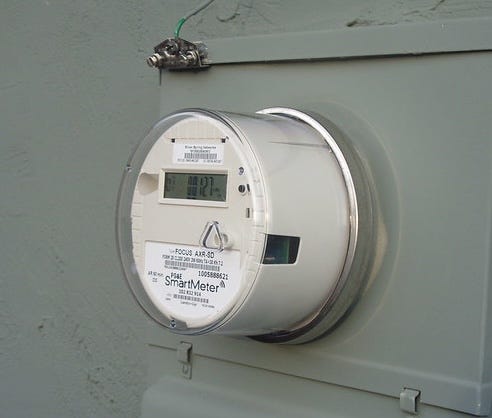
Utilities are where the abstract problem of government cost growth becomes painfully concrete. PG&E electricity rates have increased 56% in just three years, and more than doubled over the past decade. The SFPUC projects that water and sewer bills will rise over 100% in the next decade, with a 28% hike in the next three years alone. These increases hit every household and business directly, often more painfully than rising taxes. By targeting rapid utility cost escalation alongside government overspending, the Affordability Coalition can broaden its appeal and strengthen its impact.
In the end, San Francisco faces the same dilemma as the family we began with. A household that spends too freely on day-to-day indulgences sacrifices the chance to invest in a better home, better opportunities, and a better future. So too with our city: unless we control operating costs, we will forfeit the chance to lower burdens on families, invest in world-class infrastructure, and strengthen our business competitiveness. With discipline, San Francisco can choose the better path—a city that is more affordable, more livable, and more prosperous for ourselves and our children.
No posts
Comments
Nothing yet. Say the first thing.
Sign in to join the conversation.