
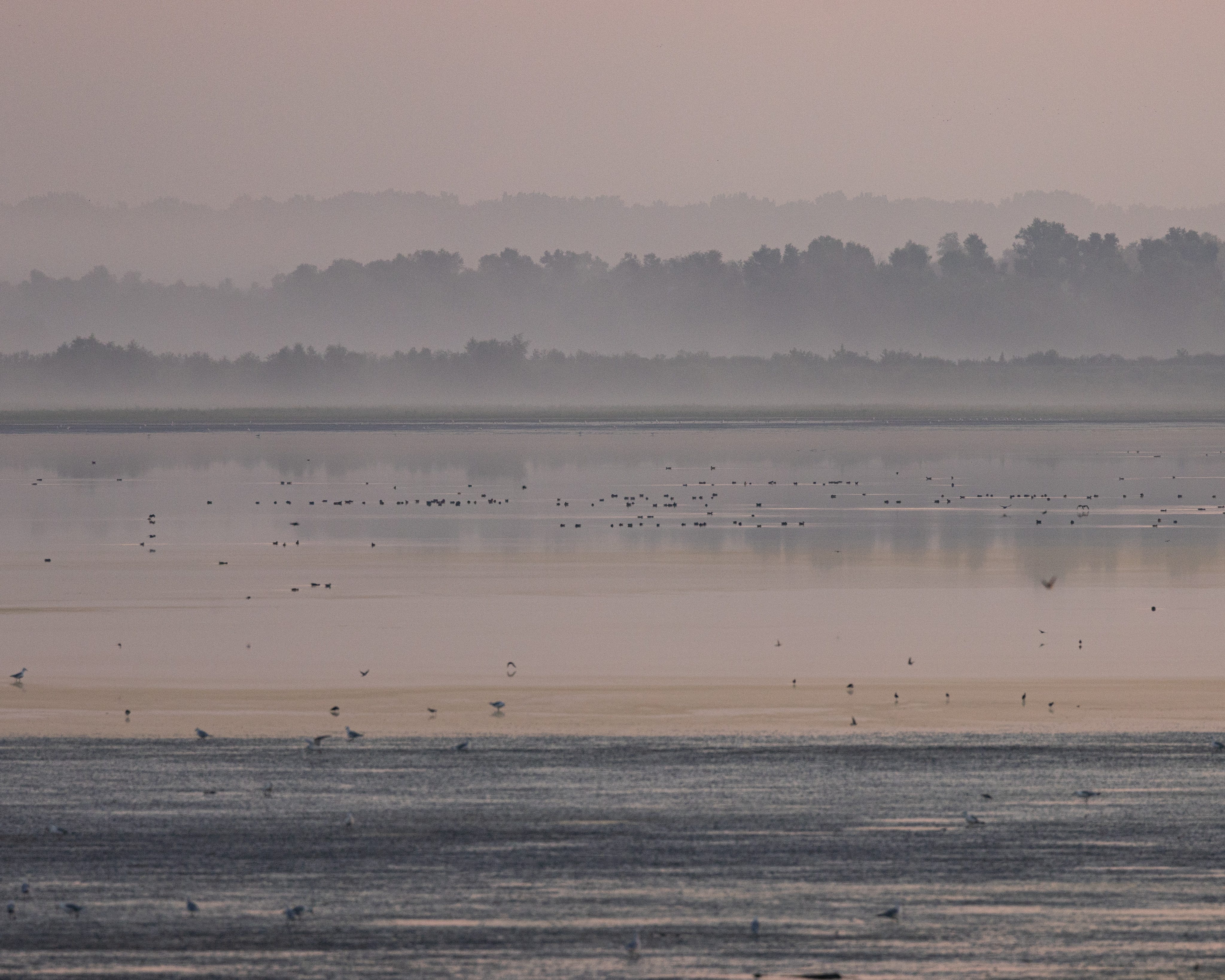
You hear them before you see the water. Driving in toward the refuge the sky begins to fill, ragged lines of waterfowl crossing low over the road, flock after flock wheeling off toward the river, and by the time the wetland comes into view the air itself seems to be moving. On a good day in fall you come up over the rise and the water is not water at all but birds, thousands of them, a shifting skin of ducks and geese and pelicans laid across the whole surface, and the murmur of content voices comes across the flats in waves, the gabble and whistle and honk of all of them at once, birds lifting and circling and settling, more coming in overhead the whole time. It is one of the great sights in Illinois. Emiquon and Chautauqua, two wildlife refuges set side by side along the Illinois River, hold this kind of abundance every spring and every fall, and most people in this state have no idea it is here.
I have stood at the edge of that and wanted, more than I can easily explain, to be among it. To be close. And I have not been able to.
The birds are out there, but they are at a remove, hundreds of yards across open water, swimming in and out of the heat shimmer that smears them into color. And the moment you try to close the distance, the whole thing comes apart. There is no blind, no cover, no fold of ground to hide behind, so the instant you come into the open the nearest birds go up, and their going lifts the next, and the alarm rolls outward across the flat until the air is full of everything you came to be near, all of it leaving. Then you wait. You stand still and small at the edge and wait for them to forget you and drift back, and it takes thirty minutes and it only works at all if you have not picked up an escort, a pair of Canada geese who have decided you do not belong and pace back and forth in front of you scolding, announcing you to every bird on the water. Which happens as often as not.
I went through a season of refusing that, of trying, really trying, to get down among them. At Chautauqua you can walk off the levee toward the water, but the levee is armored with riprap, and you go down a steep face of loose shifting boulders, and at the bottom there is a wall of willow between you and the shallows, so you wade into the mud and stand in the thicket and hope. One hot afternoon I pulled on knee-high boots and waded out into the open mud and set a folding chair down in the thin vegetation and lowered myself into it to wait, hidden as well as I could manage, doing everything I knew to do. The water was still twenty yards off. And as I sat there in the sun, the chair began to sink. I felt it go, slow, the legs settling down into the muck under my weight, a little at a time, until the seat met the surface of the mud and the warm reeking water of the marsh came up through the fabric and soaked into me.
I stayed in the wet chair a while anyway. The birds never came close.
The abundance of waterfowl stands against the scarcity of grassland birds. These two groups of birds are on opposite trajectories, yet they are part of the same story.
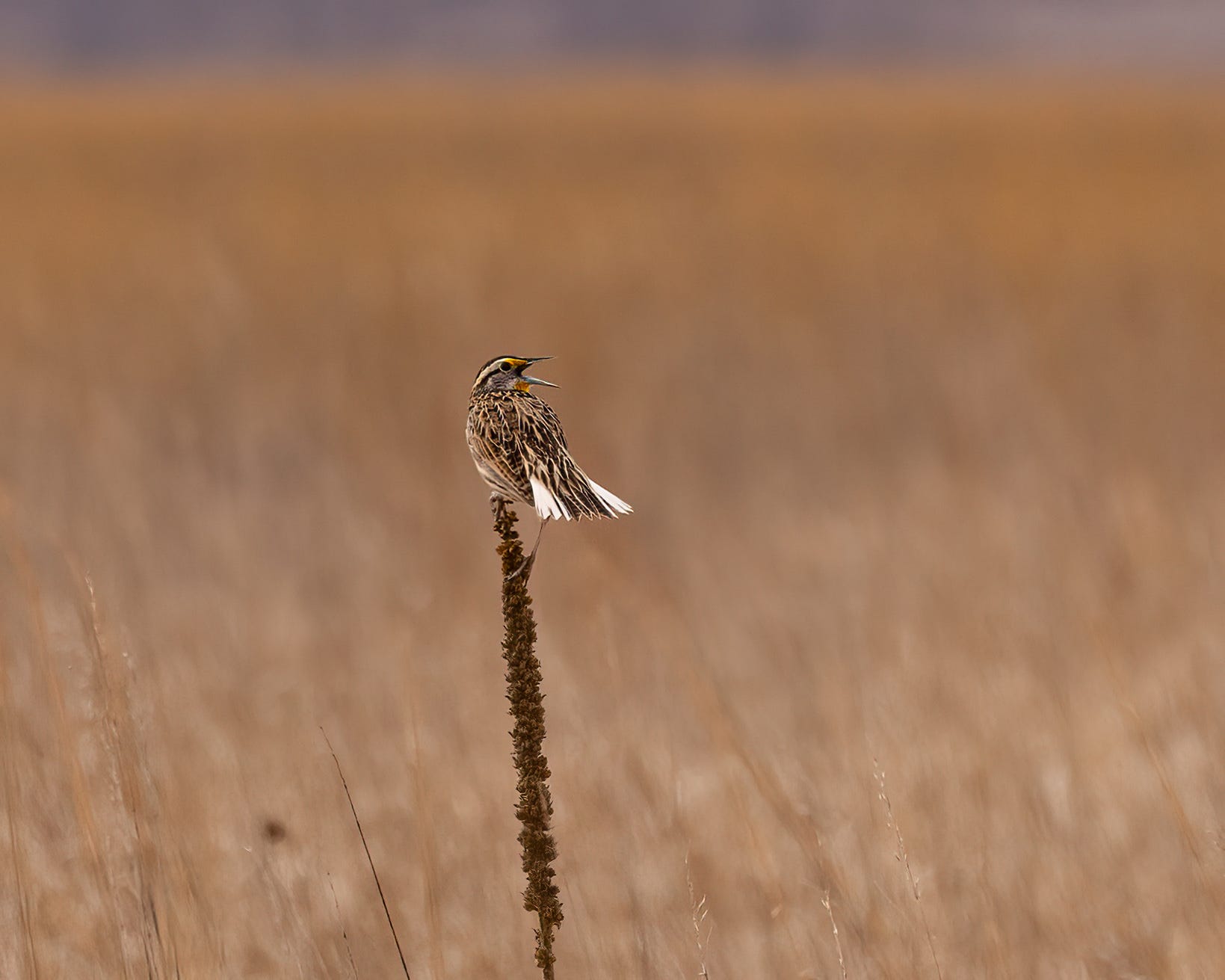
Since 1970 North America has lost nearly three billion birds, close to a third of all the birds that were here. The steepest losses are in the open country. Grassland birds have fallen by more than half, and the Eastern Meadowlark, that rusty whistle over every pasture I knew growing up, is down to one in four. Three of every four meadowlarks, gone. And in those same fifty years, one kind of bird went up. Waterfowl rose by more than half. Wetland birds are the only group on the continent that gained ground.
Same years, same country. Grassland birds collapse while Waterfowl thrive, and the difference is not in the birds. It is in us. The duck was saved on purpose, by people who taxed themselves to do it. In 1934, with the marshes drying up in the Dust Bowl, duck hunters backed a law requiring themselves to buy a federal stamp every year before they could hunt. In the ninety years since, the Duck Stamp has raised more than a billion dollars and put over six million acres of wetland into permanent protection. A few years later the same community got behind an excise tax on their own guns and ammunition, and across the decades that tax has sent something near nineteen billion dollars to wildlife. Hunters voted to tax themselves, again and again, because they understood themselves as people who wanted to give back to the thing they love.
The Meadowlark had no such constituency. There is no stamp you must buy to watch a bird, no tax on the money Americans spend to look at them. And the scale of that money is the part that should cause us to pause. The federal government counts it every five years, and the last count, in 2022, found that about fourteen million Americans hunted and spent some forty-five billion dollars doing it, while a hundred and forty-eight million watched wildlife and spent two hundred and fifty billion. Ten watchers for every hunter. More than five dollars spent watching for every dollar spent hunting. Wildlife watching alone, by itself, outweighs all the hunting and fishing in the country combined. And little of that vast watching economy is required to restore the land. It runs through the cash registers and evaporates. The hunters, fewer and spending less, built a machine that has protected six million acres.
Birders have hardly been idle. They built the Audubon societies and the land trusts, fought for the refuges, fund the counts and the science that told us the birds were vanishing in the first place. A great deal of what we know and much of what we have saved, we owe to them. But almost all of it runs on what people choose to give, and giving, however generous, has not been enough to turn the tide. The hunters built something that does not wait to be chosen. The tax collects whether anyone feels generous that year or not.
But there is a deeper reason the Duck’s solution cannot save the Meadowlark, and once you see it the whole question turns. You can save a duck by buying a marsh. A wetland is a discrete thing; you acquire it, you flood it, the ducks come. The meadowlark does not live in a place you can fence off. It lives in working farmland, in pasture and hayfield and grassy margin, on the land that grows our food. We have lost ninety percent of the native grassland on this continent, and what is left of the grassland birds is squeezed in around the agriculture. You cannot buy the Meadowlark a marsh. The only way to save it is to change how the farmland itself is farmed.
I have farmed, and I know farmers who would tell you the truth if you caught them tired enough. Most are not getting rich. A lot are barely hanging on, working land they do not fully own to grow a crop they sell at a price somebody else sets, on margins thin enough that a bad year is a real threat. And many do not love what the system makes them do to the land. They watch the soil wash, they tear out the last fencerow for four more rows of corn, and some part of them grieves it even as they do it, but math does not leave room to do otherwise.
That trap is the thing. The bird’s crisis and the farmer’s crisis are not two problems. They are one. The grassland emptied because the farm got squeezed, and the farm got squeezed by the same forces that emptied the grassland. Which means they might share a way out. The thing that pays the farmer to keep the bird might be the same thing that lets the farmer keep the farm.
That sounds like wishful thinking until you go look at the places where it is already happening. In Sussex, a farm called Knepp spent generations losing money on heavy clay until its owners stopped pushing, let the land go back toward something wilder, and began charging people to come and see it. It now runs a nature-tourism business that turns a profit the conventional estates around it cannot match. The farm that lost money growing crops makes money growing wildness.
Closer to home, in the Nebraska Sandhills, the Switzer family ran cattle on a spread that could not quite carry three generations. There were greater prairie chickens on the ranch, a grassland grouse in trouble across its range, and it had never occurred to anyone the birds were worth a dime until a guest said people would pay to watch them dance. In 2007 they ran their first tours anyway, sitting visitors in blinds at dawn to watch the males boom and stamp on the lek, and it worked. One month of birding now brings in about a quarter of the year’s tourism revenue. And the added income is part of what made it possible for the next generation to come home to the ranch. The birds brought the children back to the land.
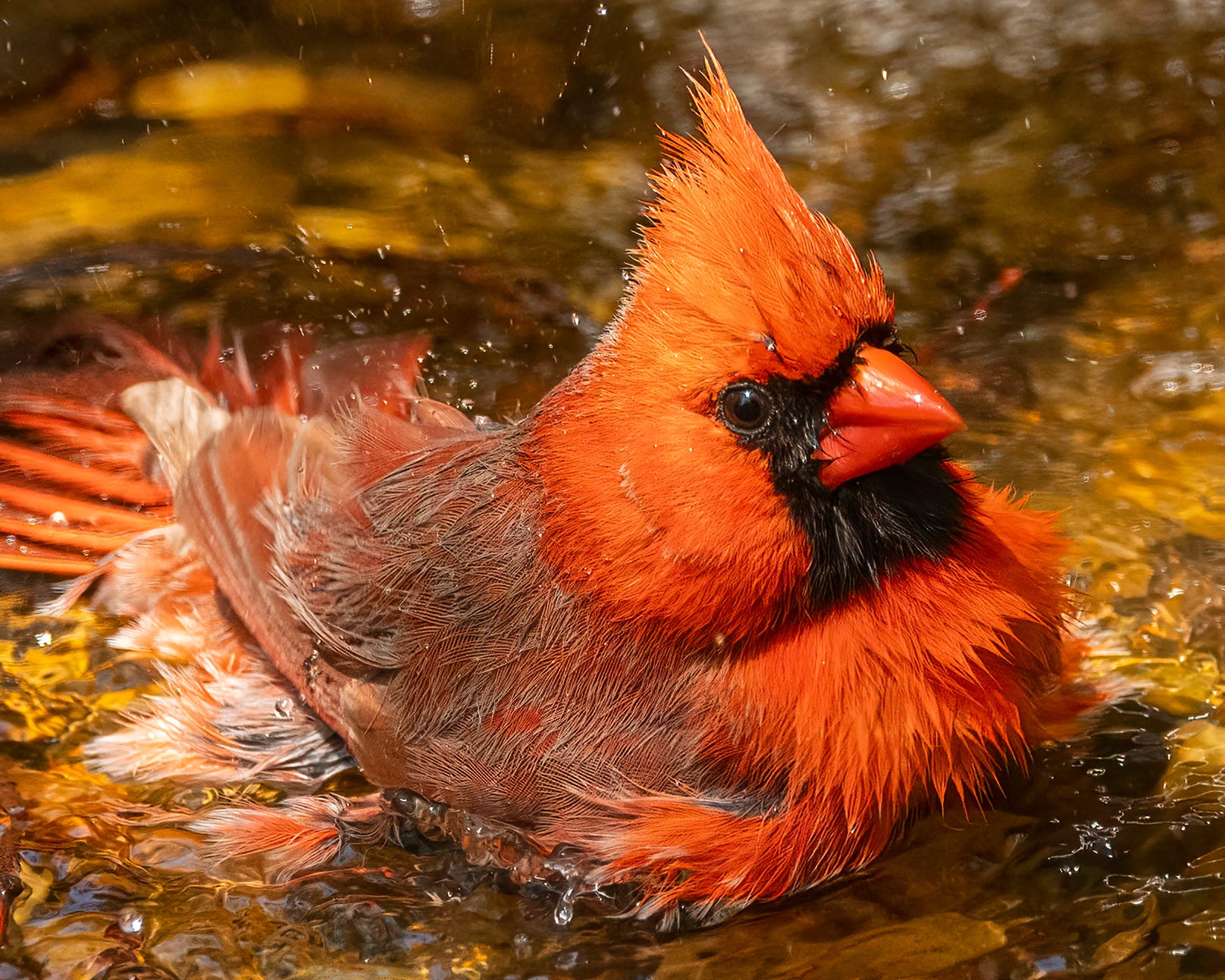
The Switzers and Knepp are large and charismatic. The question that matters to me is whether this works on an ordinary farm, on a few hundred acres, with common birds. For that the best evidence is in south Texas, where ranches no bigger than a single farm have turned themselves into bird-photography destinations. The owners dug small ponds and built low blinds at the water, set so the light comes clean, and photographers fly in and pay a daily rate to sit in them. Look at what they are paying to photograph. Cardinals. Buntings. Sparrows, Finches, Woodpeckers. Backyard birds. People drive hundreds of miles and pay by the day to photograph a Cardinal, and they come back.
They are not paying for a rare bird. They are paying for the view. The Cardinal eight feet away instead of twenty, at eye level, in good light, while they sit hidden and comfortable and the bird behaves as though they are not there. That experience is almost impossible to get on your own, and it is entirely manufactured. The pond is dug, the perch placed, the blind built, the light accounted for. None of it depends on the bird being unusual. All of it depends on someone having taken the trouble to make the meeting close and easy and beautiful.
There is an objection I can feel coming, because I have had it myself. It is fine for Texas, fine for the Sandhills. But I live in the middle of Illinois, and nobody comes here. I could dig the pond and build the blind and not one stranger would ever drive out to look at a bird in my back forty.
It is a reasonable doubt, and I know it is mostly wrong, because of what happened this spring a few miles from my house. Out near El Paso, in Woodford County, a low place in a farm field took on water in the spring rains and held it. Four acres. Not a refuge, not a restoration. A wet spot in a cornfield, the kind of thing a farmer curses because he cannot get the planter across it. It held water for a couple of weeks, and that was enough.
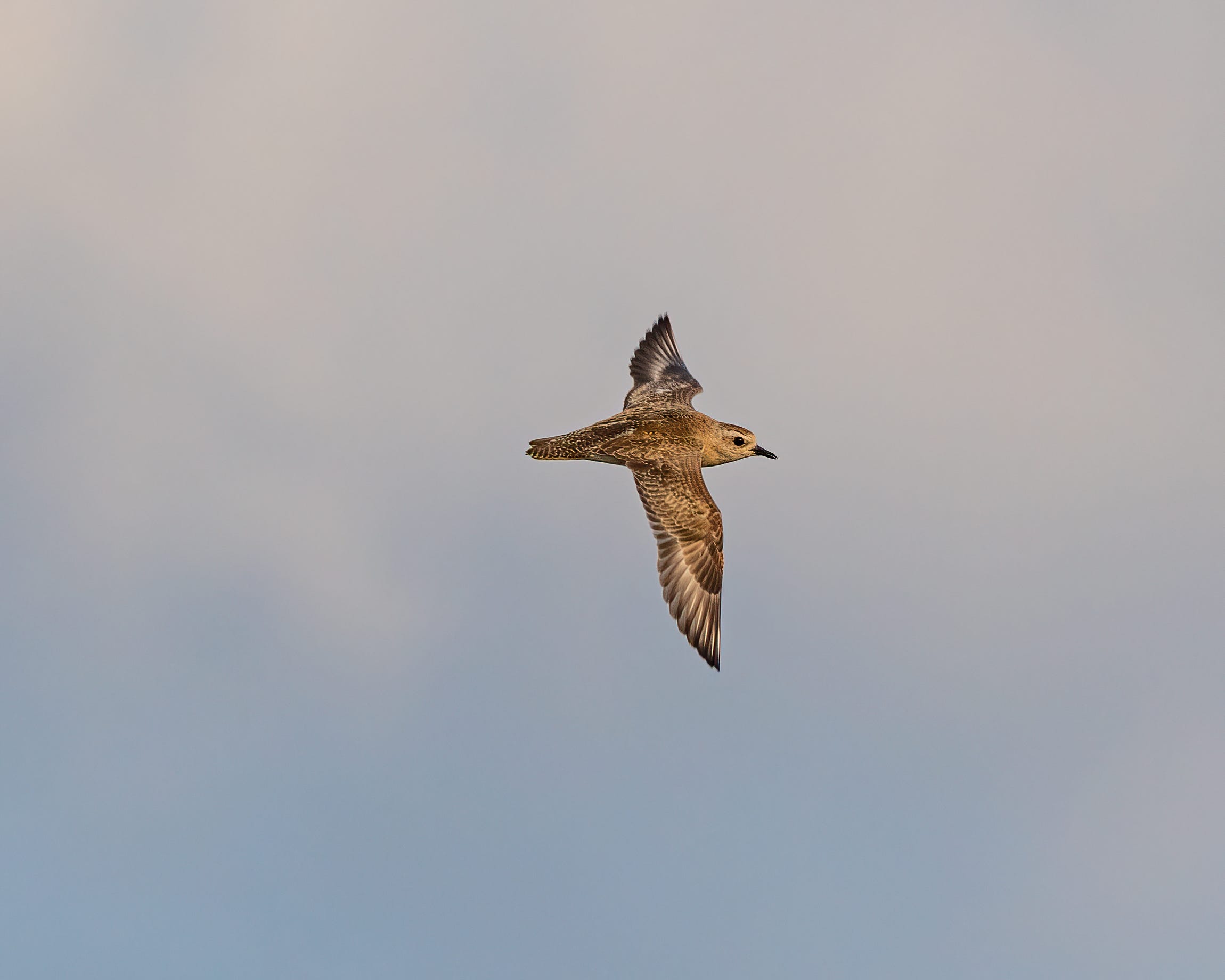
The birds found it almost at once, because the flyway runs over us every spring whether we offer it anything or not, and all that was ever missing from that field was the water. Shorebirds working the mud. White Ibis and Glossy Ibis probing shallow water. An Eared Grebe diving for food, a Marbled Godwit working the water’s edge, and the biggest attraction of all—a Cinnamon Teal, a duck of the western marshes, swimming amidst a flock of Blue-winged Teal. And over all of it the yellowlegs and the American Golden-Plovers, restless, never quite settling, lifting and circling and crying their wild high notes as they chased and foraged and wheeled around the wetland, animating the whole scene. These were birds in the middle of enormous journeys, the golden-plovers bound from one end of the earth nearly to the other, stopping here a few days on four accidental acres because the water was exactly what they needed, exactly when they needed it. And then the people found the birds. They came from Chicago and Indiana and all over the state, and you can watch them arrive in the record, because birders log what they see, and the checklists from this wetland stacked up day after day. They parked on the gravel shoulder and stood in the wind looking at a sheet of water that would be dry by June. Nobody built them a thing. There was nowhere to sit, no reason to stay past the bird. They came anyway, for four accidental acres in a place where, supposedly, nobody comes.
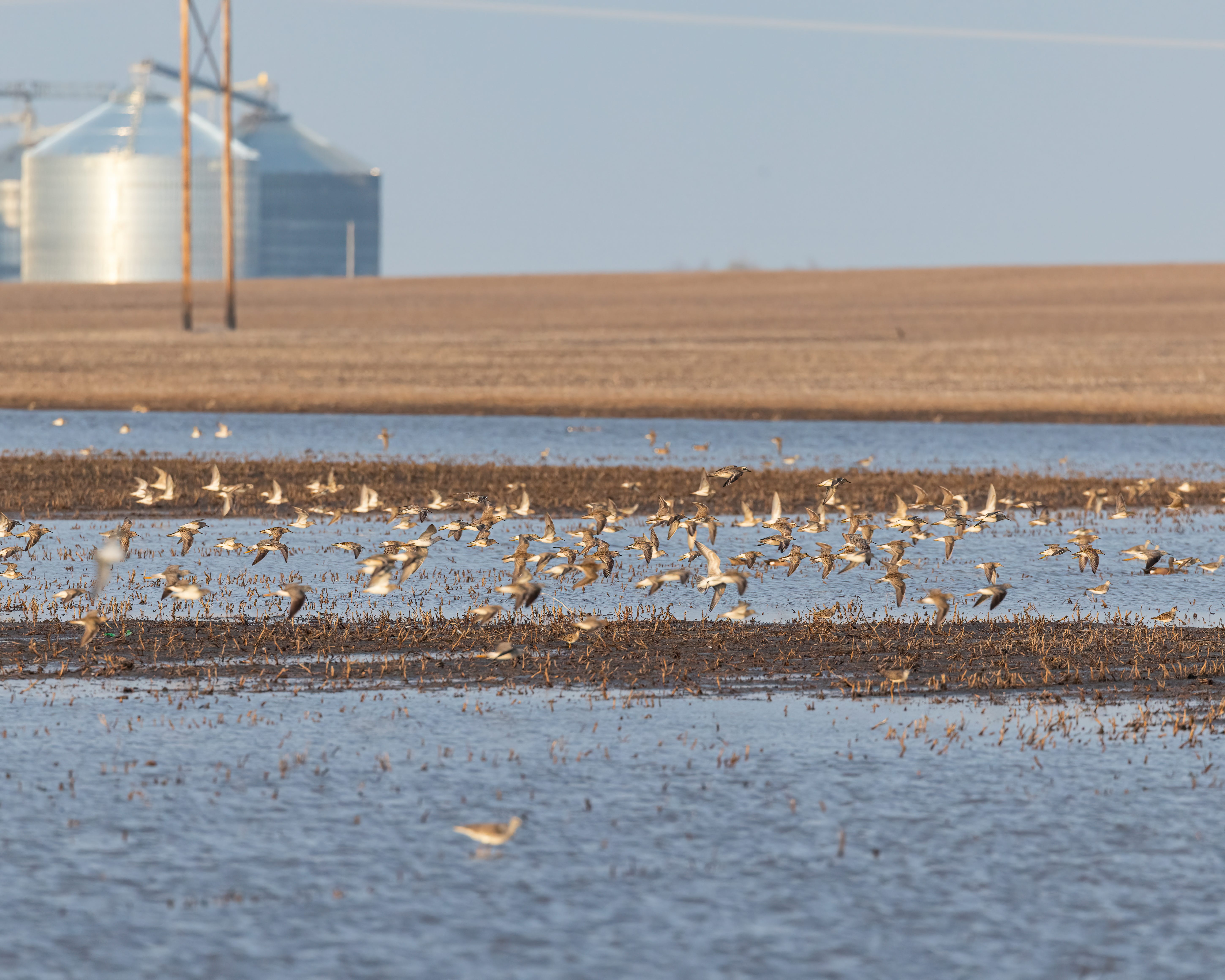
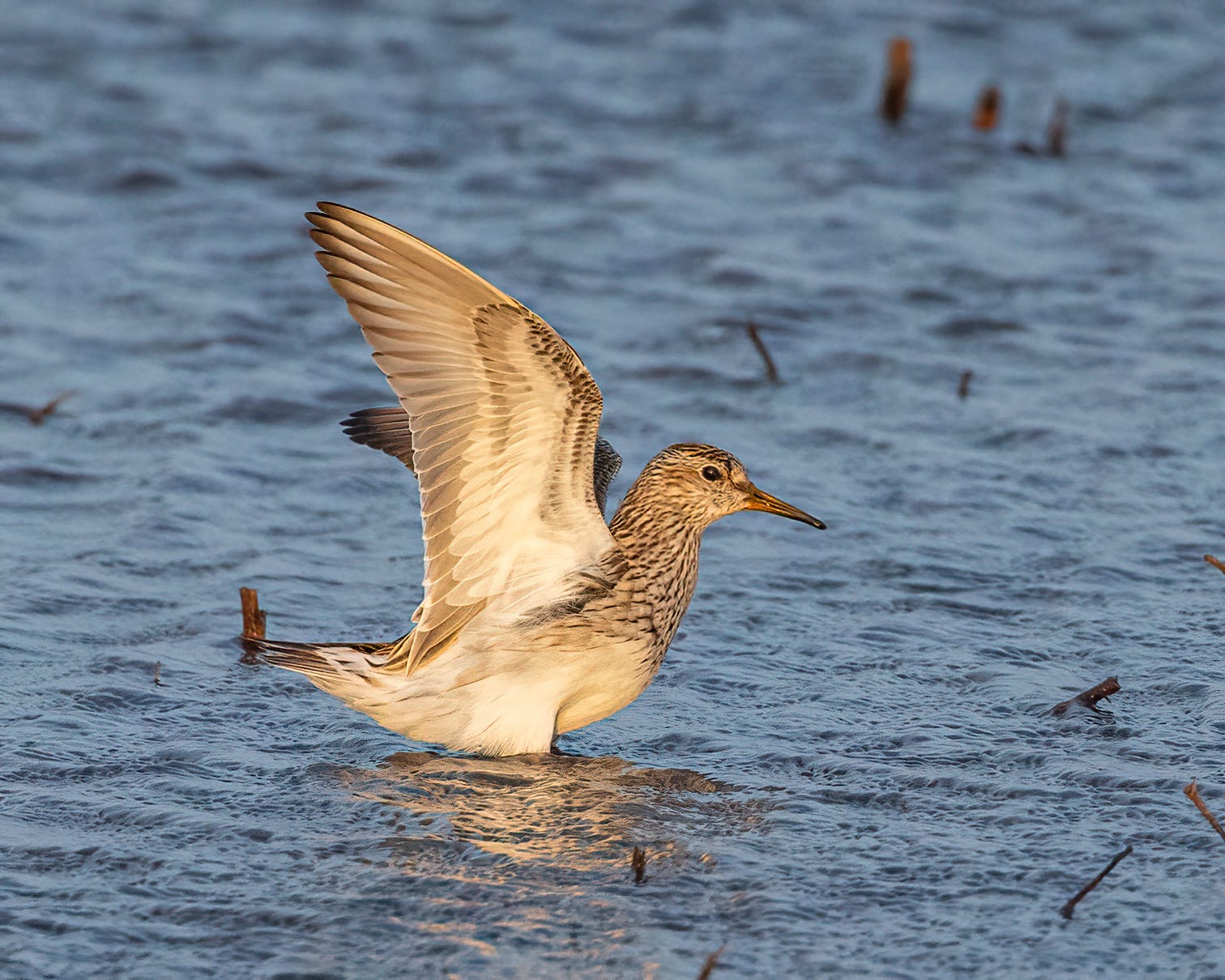
So I have a hard time with the doubt anymore. If four acres of water that nobody dug can pull birders out of three states, then the question was never whether people will come to the middle of Illinois. They already do. The question is only whether anyone will give them a reason to stay, and a place to sit while they do.
I have come to think the thing standing in the way is not the birds and not the people. It is a failure of nerve, a kind of faithlessness we wear so close we mistake it for realism. We live out here under one of the great flyways on the continent and we have convinced ourselves that the good thing happens somewhere else, that abundance is a property of famous places, that the warblers are for Ohio and the cranes are for Nebraska and what we have is just corn. The mind leans that way on its own, but it has had help. A farmer who believes the land can be only one thing, who believes the margins are thin because that is simply how things are, is a farmer who plants fence to fence and buys what he is told to buy and sells at the price he is given, and never sets aside the back forty, and never imagines the birds are worth a dime. Scarcity keeps him small and alone and a little afraid, and a great deal depends on his staying that way. The belief is useful to someone. It is just not true.
Because the birds are already here. That is the part the faithlessness cannot take in. Every night in spring the sky over my house fills with them, millions of birds moving north in the dark, unseen, passing over the corn and the closed-up towns, looking down the whole way for the thing they always look for, water and cover and a place to rest. They are not a hope. They are traffic, nightly, overhead. The El Paso puddle did not summon them out of nothing. It offered, by accident, the one thing they were already searching for, and down they came. The flyway does not need me to believe in it. It needs me to put out the water.
Still most farmers think you cannot run a lodge on a hobby, it would never pencil out. I want to show them the thing they say cannot exist is already operating two counties over. In the creek bottoms of west-central Illinois there are farms that have built lodges, real ones, with a chef in the kitchen and cabins that rent for three and four hundred dollars a night and a booking calendar that fills a year out. Hunters fly in from other states and pay two thousand, twenty-five hundred dollars for the chance at a single animal. The whole apparatus exists to monetize the White-tailed Deer, and it is built almost entirely around the rut, around about two weeks in November.
Two weeks. If a farm can build a lodge and a kitchen and a brand around fourteen good days of deer, I cannot make the objection hold that it could never work for spring and fall migration. And look at what these operations do with their land. The serious ones plant hundreds of acres of food plots, deliberately, at real cost, taking commodity acres out of production and managing it for an animal because the animal is worth more than the corn. They have already run the calculation at the center of everything I am trying to say. They just ran it for Deer.
So the objection was never really true. It was never that Midwestern farmers will not manage land for wildlife or build the lodge or trust that strangers will come. They will. They have been doing it for thirty years. The objection was only that stewardship needs a buyer, and for a long time the only buyer at the door came in November with a bow or gun. What I am proposing is gentler. It asks the same farm, the same bottomland, the same lodge, to face a different season and a far larger crowd. There are something like ninety-six million birdwatchers in this country. There are not ninety-six million people who will fly to Illinois to shoot a buck. The smaller market built the lodges. The larger one has not yet been invited in.
For most of my life the answer to who would build this in the Midwest was nobody, and the reason was not that the birds or the people were missing. It was that the two halves never found each other. The farmer had no way to reach the stranger, and no taste for marketing, and the birder had no way to know the farm existed. That gap is finally closing, because the birders close it themselves, for free, and cannot help it. They log what they see into a public record anyone can search, and the moment a good bird turns up somewhere the report goes out and the next wave comes and files their own. The El Paso puddle is the whole engine in miniature. Nobody advertised that field. The checklists were the advertising.
Build something real and that engine runs for you in a way no paid ad can match, because it compounds and does not stop. An ad quits the day you stop paying; a place’s record only grows, and that history belongs to the land forever. You would be the only private farm for a hundred miles playing this game. You would not be buying attention. You would be building an asset that appreciates, and it appreciates because birders appreciate birds, which is the steadiest demand I know. The price of corn rides on wars and weather and a board in Chicago that will never know the farmer’s name. The longing to see a living bird does not trade on any exchange. When the corn price guts the year, the warblers still come north, and the people who love them still want to be near them.
And a farmer does not have to carry the cost of that land alone while it grows into something worth visiting. The scaffolding already exists. The Conservation Reserve Program pays a farmer to take marginal acres out of production and put them back to grass and wetland, which is precisely the habitat the grassland birds need, and a conservation easement can do the same in perpetuity while easing the tax burden of holding the land. These were built to keep working ground in cover, not to start bird-tourism businesses, and the rules around earning income on enrolled acres are their own thicket a farmer should walk through with his FSA office before he counts on anything. But the bones of the support are there. A back forty in CRP, restored and held, is already half of what a blind needs to look out on.
There is a second engine bolted to the first, and it runs on something a checklist cannot carry. A list is text. It tells a birder the ibis is there, and that is enough to put him in the car, but it does not travel beyond the people who keep lists. A photograph does. When a photographer comes home from a morning in a good blind and posts the image he got, the bird close and sharp and lit, the water beaded on its back, the eye looking almost into the lens, that picture goes out into a world ten times larger than the birding world, onto the feeds where people who have never kept a list in their lives stop scrolling and stare. And the first thing they wonder is where that was, and the second is whether they could see a bird like that themselves.
The roadside puddle and the built blind put the same bird on the same list, but they do not produce the same photograph, and the photograph is the part that spreads. From the gravel shoulder, scope braced against the wind, you get a smudge, proof you were there, and nobody shares the smudge. From a low blind at the edge of the water with the light coming clean, you get the picture a photographer has wanted his whole life, and that one he posts, and that one travels. The very thing he is paying for, the closeness, is the same thing that turns his picture into your advertisement. Every photographer who sits in your blind walks out and markets the place for you, for free, simply by showing the world what he saw.
I will not pretend the engine runs on wishes. It runs on birds. The record amplifies whatever is actually out there, and if the habitat is thin the lists will say so as plainly as they would sing if it were rich. You cannot fake your way onto that map. You earn it by restoring land that truly produces, which means the marketing and the conservation turn out to be the same act. There is a Farm Bill being written this year that will decide for the next five whether the programs that pay a farmer to put a back forty into prairie grow or shrink. I notice the duck hunters got their stamp because they organized and asked, and I notice that ninety-six million of us go looking for birds every year and have asked for almost nothing.
I keep coming back to what the photographers in Texas are really buying, because I do not think it is only a photograph, and I do not think it is only a bird.
Most of us come to birds through the list. You learn the names and start to keep them, and the keeping is its own clean pleasure, the new bird, the rare one, the checkmark. I do not want to talk anyone out of that. The list is the appetite that gets you out of bed before light. But the list is the surface of birding, and there is a floor under it that most of us never drop through, and the way down is not a rarer bird. The way down is closeness.
A blind is a small room built for paying attention. It asks one thing of you, and it is the hardest thing. Stay. Get low, get quiet, stop reaching, and let the world come to you instead of chasing it down. And here is what I have learned the slow way, which is the only way I seem to learn anything. You cannot do that if you cannot sit still, and you cannot sit still if you are not, at least a little, at peace with your own company in the dark. The bird will not come near a restless person. The stillness the blind asks of you is the same stillness the rest of a life keeps asking for and rarely gets, and most of us never give it, because being quiet and alone with ourselves is the one thing we have arranged our whole days to avoid.
But sit there long enough, still enough, and a cardinal you have seen ten thousand times lands eight feet away in clean morning light and turns its head, and something in you goes quiet that is almost never quiet. You understand with a small shock that you have never actually looked at this bird before. You knew the name. You did not know the bird. And it does not matter at all, in that moment, whether it is the commonest bird in the county or one you will never see again, because the rarity was never the point. The point is that you got close enough to drop into the present and meet yourself there.
That is what the photographers are really buying, and what the rest of us are after whether we have the words for it or not. Not the rare bird held at arm’s length. The near one. The common miracle, met up close, by someone who has gotten quiet enough to receive it. We are starved for that, and not only in our birding. We live at a great distance now from nearly everything we say we love, craning over each other’s shoulders at something far off and bright while the close thing goes unwatched behind us. The cure is not a better view of the far thing. It is the patience to get near the thing already here.
My hope is that a few farms along our river restore wetlands in the right corner of a restored bottom and set a low blind to the morning light. I want the grosbeak and the bunting and the ordinary passing warbler, seen that close, to be worth enough to a quiet stranger that the farmer can keep the land in birds, make a living doing it, and give his children a reason to come home. For a long time those looked to me like different things, even competing things, the birds or the crop, the stewardship or the income, the farm or the freedom to leave it. They are not. The birds and the crops and the family are one thing wearing three faces. They are what the land gives back the moment we stop insisting it can be only one thing, the moment we trade the scarcity we were handed for the abundance that was here the whole time. And I want the strangers who come to sit in those blinds to carry the harder half of it home. That the treasure was never the rare bird chased across the county. It was the common one, met in stillness, by a person who had finally learned to sit quietly enough to be met in return.
The meadowlark is still out there on the fencepost, for now, singing her rusty falling song over a field that does not yet pay anyone to keep it. I would like to live long enough to sit in a blind at the edge of that field and watch a stranger see her well for the first time, close enough to go quiet inside, and know that the seeing was what saved her.
This week's essay began with me sinking into the mud at a wildlife refuge, trying and failing to get close to birds I could see but never reach, and became an argument that closing that distance might save the grassland birds, the family farm, and something in ourselves at once: the treasure was never the rare bird chased across the county, but the common one, met in stillness. Paid subscribers make this kind of slow, reported work possible, and if Easy by Nature has given you a reason to look closer, I'd be grateful for your support.
Comments
Nothing yet. Say the first thing.
Sign in to join the conversation.